
Payment
The message is always short, always urgent, and almost always arrives at the point where the deposit is already committed.
Contents
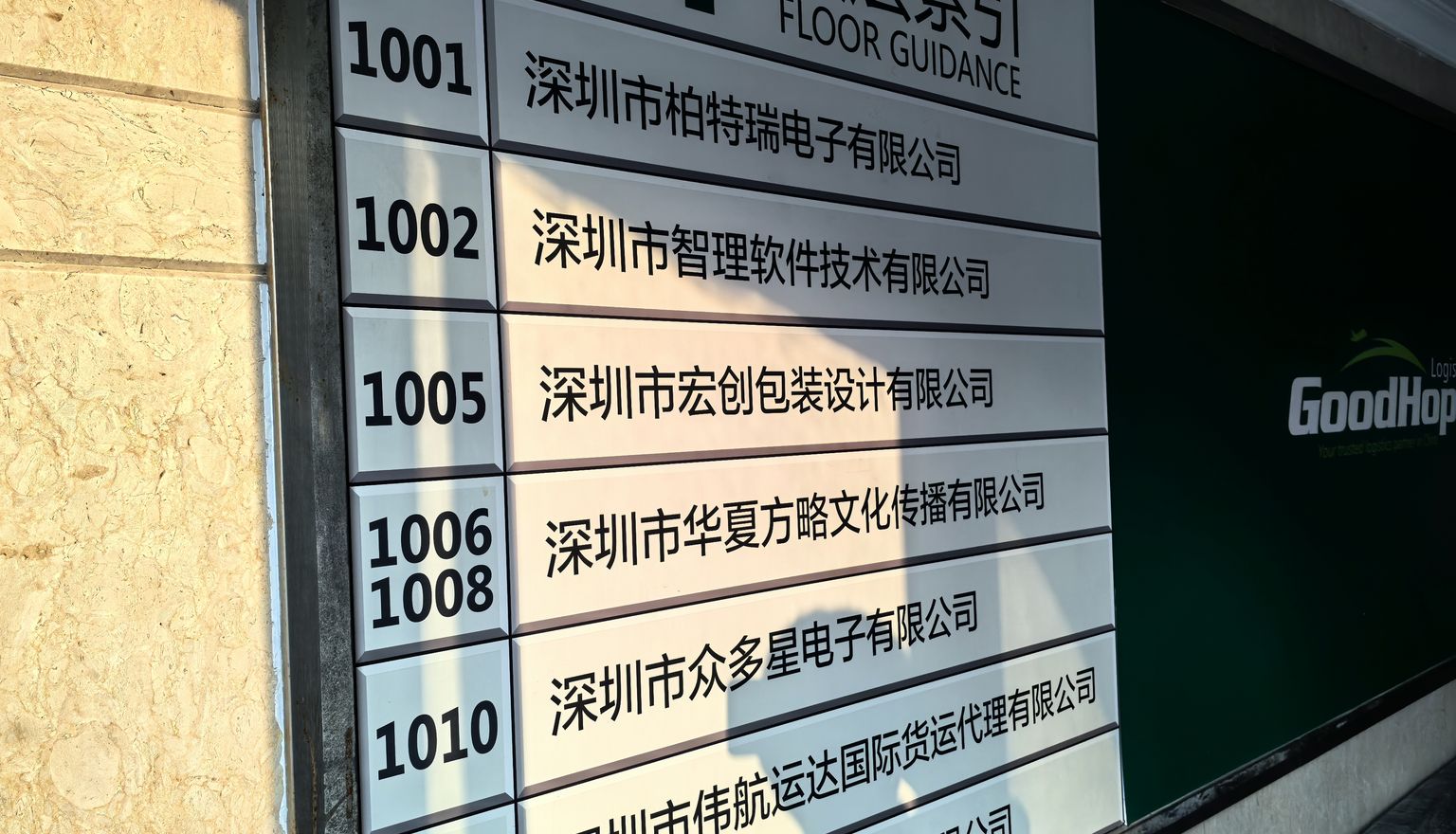
The pattern is consistent enough to be recognisable. A short email, often from an address that looks almost right, saying the company's bank account has changed, that the old account is under audit or closed, and that the balance should be paid to a new account before the goods can be released.
The details vary. Sometimes the account is in Hong Kong, sometimes in another province, sometimes under a company name that resembles the supplier's. The urgency is the constant, and the urgency is the mechanism: it compresses the time available to check.
Two things are true at once. Payment-diversion fraud is common in international trade, and legitimate suppliers do sometimes ask for a different account. The only way to tell them apart is a verification that does not use the channel that brought the request.
A bank transfer moves money to an account, and an account belongs to a named holder. When the holder is not the party you contracted with, the payment has left your contractual relationship and entered someone else's.
If the supplier later fails to deliver, your claim is against the company on the contract. That company never received the money. Recovering it means proving the third party was acting for them, which is a legal argument rather than a banking one, and it is expensive.
This is why the mismatch itself is the warning, regardless of whether fraud is involved. A legitimate arrangement can produce a mismatch, and it produces a document trail that explains it. An illegitimate one produces urgency and nothing else.
The practical rule is short: the beneficiary name on the transfer instruction should match the contracting party, or you should be holding a signed explanation of why it does not.
There are real arrangements where the payer or the payee is not the obvious party.
Group treasury is the first. A manufacturer with several plants may centralise receipts in a group finance company or the trading arm. The evidence is a letter on the group's letterhead, signed by a director, naming the contracting entity and the receiving entity and confirming they are in the same group.
Factoring is the second. The supplier sells its receivables to a financial institution, and the invoice tells you to pay the factor. This is legitimate and it is usually disclosed on the invoice itself, with a notice of assignment. It is also the arrangement most often imitated, so the notice has to be verified with the factor, not with the supplier.
The third is a named export agent. Some smaller factories export through a licensed trading company that handles the declaration and the foreign exchange. The contract, the invoice and the customs documents should all name that agent consistently, and the factory should confirm the arrangement in writing.
Verification is a normal procurement step, and it can be framed that way.
Use a channel you already had. The phone number on the contract, the WeChat contact who has handled the order since the sample, the email address that has been in the thread since the quotation. Not the reply-to on the new message, and not a number printed in the new message.
Ask a question only the real party can answer: the amount of the last deposit, the date the sample was sent, the name of the forwarder on the previous shipment. A fraudster holding a compromised mailbox can often answer none of these.
Then ask for a document rather than an assurance: a bank letter confirming the account holder's name, a stamped and signed amendment to the contract, or an invoice reissued with the new details and the company seal. Anyone can type an email. A sealed document with a consistent name is harder to fake and impossible to fake casually.
Your own bank is the last checkpoint, and it is a useful one if you use it deliberately.
For a payment to China, banks routinely ask for the contract, the commercial invoice and sometimes the customs declaration or bill of lading. That documentation requirement exists partly for exchange control and partly because it forces a name comparison. A payment instruction whose beneficiary differs from the invoice will usually be queried, and the query is the moment to stop.
Ask the bank to confirm the beneficiary name it holds against the account number before releasing funds. Banks will do this on request for a first payment to a new beneficiary, and some will flag a mismatch automatically.
For a first payment to any new account, send a small test amount and confirm receipt before sending the balance. It costs a transfer fee and it converts an assumption into a fact.
Currency rules add a layer that buyers rarely see until a payment is returned.
In China, a company receiving foreign currency for an export is expected to match the receipt to a customs declaration for that export, under the name of the exporting entity. A payment arriving at a company that is not the exporter on the declaration creates an explanation problem at the receiving end, which can delay or block the credit.
That is one reason legitimate suppliers are cautious about third-party receipts. A factory that cheerfully agrees to receive money on another company's account is either using an agent with a proper arrangement, or it is not thinking about the consequence.
Rules in this area change, and the practice differs between banks and regions. Treat any specific requirement as something to confirm with the supplier's bank and your own at the time, rather than as a fixed rule.
Speed decides the outcome, and the first hours matter more than the first days.
Call your bank immediately and ask for a recall or an amendment of the transfer. If the funds are still in the correspondent chain and have not been credited, a recall is sometimes possible. If they have been credited and withdrawn, the bank cannot reverse the credit without the recipient's agreement.
In parallel, notify the supplier through a channel you trust, report the matter to the police in your own jurisdiction, and put the facts in writing to your bank so the file exists. Where the fraud involved a compromised mailbox, the email provider's abuse process is worth starting as well, because it may preserve evidence.
Most recoveries are partial and slow. The effort is better spent on the next payment, which is why the verification clause belongs in the contract before the first deposit rather than in the correspondence after the second.
One paragraph in the purchase order does most of the work.
State that payment will be made only to the bank account named in the contract, that any change requires a written amendment signed by an authorised representative of the seller and confirmed by the buyer through a separately verified channel, and that a request received by email alone will not be acted on.
Add that the beneficiary name must match the contracting party, and that a different beneficiary requires a signed assignment or a group treasury letter attached to the amendment. Add that the buyer is not liable for delay caused by a request that could not be verified.
Then tell the supplier, at the start of the relationship, that this is how payments will be handled. A supplier who objects to that clause is telling you something about how they handle money. Most will simply agree, because it protects them too.
Q Can a Chinese supplier legally invoice from a different company?
Yes, where there is a real arrangement: an export agent, a group trading arm, or an assigned receivable. The documents should be consistent, the invoice should name the contracting party, and there should be a signed notice explaining the relationship. An invoice from an unrelated company with no explanation is a different matter.
Q Is it safe to pay a Hong Kong account for a mainland supplier?
It can be entirely normal, because many Chinese exporters invoice through Hong Kong entities. It is also the most common structure used in payment fraud. Verify the Hong Kong company's ownership and get written confirmation from the mainland entity you contracted with, on a channel you already trusted before the request arrived.
Q What is a beneficiary name mismatch?
It is when the account holder's name differs from the payee on the contract or invoice. Banks flag it, and it is the single clearest indicator that a payment instruction has been altered. Some banks will hold the payment until the discrepancy is explained.
Q Can a SWIFT transfer be reversed?
Only with the recipient bank's cooperation, or before the funds are credited. Once the money is in the beneficiary's account and withdrawn, a recall becomes a legal recovery. The practical window is measured in hours, which is why the first call is to the bank rather than to the supplier.
Q Why does the bank ask for the contract and invoice?
Because cross-border payments are documented transactions. The bank is checking that the payment matches a real shipment and that the parties named are consistent. That check is also your protection, which is why it is worth letting it happen rather than routing around it.
Q What if the supplier insists on the new account?
Ask for a signed amendment with the company seal, a bank letter confirming the account holder, and confirmation through a channel that predates the request. If any of those cannot be produced, do not pay. A supplier who cannot document a change of account is a supplier with a problem that is not yours to solve by transferring money.
Related pages
If a payment is holding up a release, tell us the shipment and the party involved. We can check what the carrier or the warehouse is actually waiting for, which is sometimes a different problem from the one being described.
Email sales8015@goodhopefreight.com | WhatsApp & phone +86 133 9216 2503