
Home / Shipping to Chile / How to Ship from China to Chile
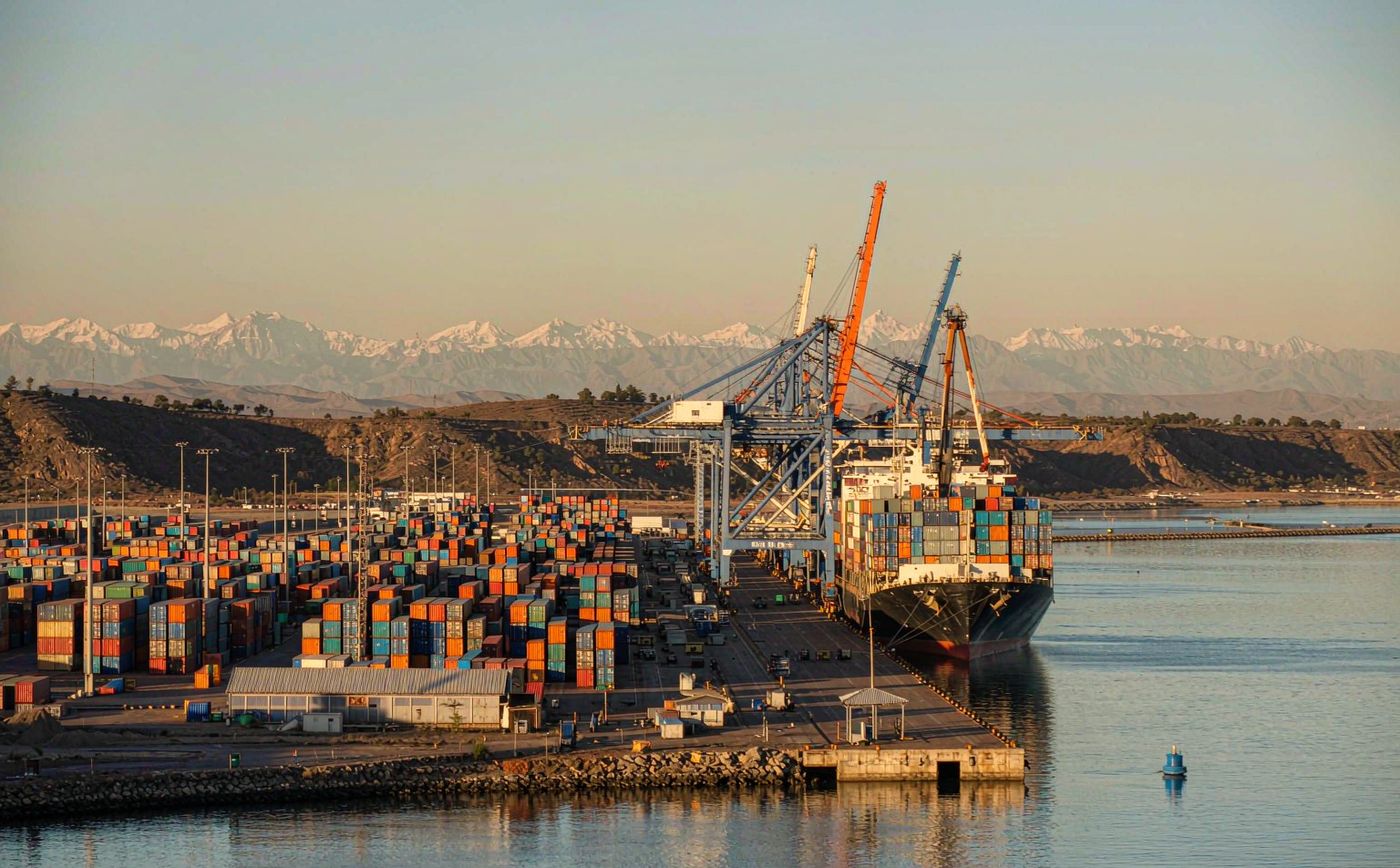
How to Ship from China to Chile: San Antonio, Form F & IVA
Chile is the easiest tax calculation in South America, and the easiest one to get wrong. There are only two lines on the bill — duty at six percent of the CIF value, and IVA at nineteen percent on top of it. There is no stack of federal contributions, no statistical levy layered over a freight surcharge, no advance withholding taken at the till the way there is across the Andes. If you have ever costed a Brazilian or an Argentine import, Chile will look almost suspiciously simple.
The catch is that the six percent is optional, and it is optional on a piece of paper. The China–Chile free trade agreement has been in force since 2006 and was upgraded in 2019, and it takes the great majority of tariff lines to zero. But the preference is not applied automatically. It is claimed with a certificate of origin — Form F — and if that certificate is missing, late, or inconsistent with the rest of your paperwork, the zero becomes six and Chile generally does not hand the money back afterwards. One document, issued before the vessel sails, is the difference between a profitable container and a marginal one.
The third thing worth knowing before you start is that Chile is a very long, very thin country. It runs roughly 4,300 kilometres down the Pacific coast, from the Atacama Desert to Patagonia. Where your cargo lands determines how far it then has to travel overland, and on a narrow country with one main north–south highway that distance is real money and real days. Picking the port is a decision you make early, not a detail you leave to the carrier.
At a glance
Duty: 6% ad valorem on CIF as the standard rate; zero on most tariff lines with a valid Form F under the China–Chile FTA. · IVA: 19%, charged on CIF plus any duty, and recoverable as input tax credit for a registered business. · Broker: a licensed agente de aduanas is compulsory above US$1,000 FOB. · Declaration: the Declaración de Ingreso (DIN), filed electronically through the SICEX single window. · Main gateways: San Antonio, Valparaíso, Iquique (free zone), Antofagasta / Mejillones, Lirquén / San Vicente. · Air gateway: Santiago (SCL). · Sea transit: roughly 28–40 days FCL port to port. · Air transit: roughly 3–7 days airport to airport.
How your cargo moves: China to Chile
Eight steps from your supplier's door to yours. The last four are the ones shaped by local rules.
- Pickup from your supplierWe collect the goods anywhere in China and bring them to our consolidation point.
- Export clearanceChina customs declaration filed and released before the goods move to the port.
- Loading and departureContainer loaded, sealed and handed to the carrier at the Chinese port.
- Main carriageOcean, air or rail movement booked on the route agreed for your cargo.
- Arrival at the gatewayDischarge at the port or airport of entry, recorded on the carrier's manifest.
- Import clearanceCustoms declaration filed locally, with duty and tax assessed on the declared value.
- Customs releaseGoods released into free circulation once duty and tax are settled.
- Final deliveryOnward movement to your delivery address, warehouse or nominated depot.
Duty rates, VAT rates and clearance times move, and the figure that applies to your goods is the one set for your commodity code on the day of clearance. We check the current position against your code before your goods sail and confirm it to you in writing — ask for that check when you request a quote.
What this guide covers, and who it is for
This is written for a buyer outside China who is organising a shipment from a Chinese supplier into Chile and wants to understand what actually happens between the factory gate and the warehouse door. It assumes you have found a supplier and agreed a price, and that you are trying to work out what happens next: who has to be registered, who files what, which port, how long, and what the tax bill looks like.
We cover sea freight in full containers and in consolidated loads, air freight into Santiago, the customs declaration and the inspection channels, the free trade agreement and the certificate that unlocks it, the ports and the free zone, the agricultural and product-safety regulators that can add days, and the points in the Chilean calendar where schedules slip.
We do not quote freight rates here. Rates on the China–South America trades move with fuel, capacity and season, and a number printed on a page is stale before it is useful. For a live figure on your lane, use the quote request and we will price the actual shipment. Where a figure in this guide is one you should double-check against current official sources before relying on it, it is marked.
The tax number, and why the invoice has to carry it
Every commercial import into Chile is filed against a RUT — the Rol Único Tributario, the single tax number issued by the Chilean tax authority, the Servicio de Impuestos Internos. It is the identifier that ties the shipment to a taxpayer, and it has to appear on the import documentation: the commercial invoice has to carry the importer's RUT, and the transport document has to show the consignee's.
That requirement was tightened in October 2025, when the RUT became mandatory across all import paperwork rather than on selected forms. A missing or mismatched RUT now triggers additional verification, which in practice means the container sits while somebody resolves an administrative question that should never have arisen. Get the number before you place the order, and give it to your supplier so it goes onto the invoice at the time the invoice is written — not afterwards, on a corrected copy, which is exactly the kind of inconsistency that invites a documentary review.
If you are not a Chilean resident or do not have a Chilean entity, obtaining a RUT is still possible: a foreign legal entity can be registered through an authorised Chile-domiciled representative under the tax authority's rules for foreign taxpayers. But understand what the number does and does not do. It lets customs identify you as the importer. It does not by itself solve your local VAT filing position, your bookkeeping obligations, or the question of who is liable if the goods are later reassessed. Most first-time importers either incorporate locally or work through an importer-of-record arrangement with a specialist, and which of those is right depends on whether this is a one-off purchase or the start of a programme.
Practical step: before you place the order, confirm three things with your broker — that your RUT registration is in place and active, that the tariff classification you intend to use is the right one, and that no product-specific permit applies to what you are buying. All three are cheaper to settle in week one than in week six.
The broker, and the US$1,000 line
Chile requires a licensed customs broker — an agente de aduanas — for any commercial import valued above US$1,000 FOB. This is not a formality you can opt out of. The broker is a sworn auxiliary of the customs service, authorised to prepare and lodge the import declaration and to represent the importer before customs, and the declaration is filed in the broker's name acting on your authorisation.
Below that threshold an importer can in principle file alone. In practice almost nobody does, because the declaration is electronic, it is filed through the SICEX single window, it is in Spanish, and the fields have to reconcile with the invoice, the transport document and the certificate of origin to the letter. The one-thousand-dollar line is also low enough that most genuine commercial shipments are comfortably over it anyway.
Worth being clear about what the broker does and does not take responsibility for. The broker prepares and files the declaration and holds the entry records. The importer remains the party the declaration is filed against, the party the tax is assessed against, and the party customs will pursue if the classification or the valuation turns out to be wrong. Choosing a broker on price alone is a false economy on this lane; what you are buying is judgement about classification and origin, and that judgement is where the money is.
The single window everything runs through
Chilean trade is processed through SICEX, the integrated foreign trade system that brings customs together with the other border agencies — the agricultural service, the public health institute and others — into one electronic channel. The import declaration itself is the Declaración de Ingreso, universally shortened to the DIN.
Two consequences follow from that. First, the filing is electronic only; there is no paper route to fall back on. Second, because the agencies share the platform, a permit that belongs to SAG or to the health authority is not a separate errand you run after customs — it is part of the same record, and a missing permit will stop the declaration just as surely as a missing invoice. The system calculates the duty and the IVA from the classification and the declared value, and the importer pays through the broker to the treasury.
The eight-digit subpartida, and the rate behind it
Before any of the tax arithmetic means anything, your product has to sit in the right box in the tariff. Chile classifies goods to an eight-digit subpartida, and that number determines four separate things at once: the duty rate, the preference available under the China–Chile agreement, whether any permit or regulator applies, and whether any trade-remedy measure attaches to the line.
Classification is the broker's call to make, but it is your call to inform. The broker knows the tariff; you know what the thing is made of, what it does, and how it is sold. A photograph, a specification sheet, the material composition and the intended use are usually enough to settle it, and they cost nothing to supply early. A misclassified line that customs later reassesses produces a bill for the difference plus penalties, and the conversation is not a pleasant one.
The one category on this lane where classification has an extra edge is steel. Chile's trade-remedy machinery is active, and provisional anti-dumping duties have been imposed on certain Chinese steel mill products, including steel bar and grinding media for mineral processing, at rates in the region of twenty-five to thirty-five percent depending on the product and the producer. These are product-specific and case-by-case — the same authority has declined to impose measures in other proceedings — so do not assume your line is covered, and do not assume it is clear. Check it.
Zero duty across most of the tariff, and how to claim it
The China–Chile free trade agreement has been in force since 2006 and was upgraded in 2019. Its headline result is that the large majority of tariff lines — commonly cited as around ninety-eight percent of manufactured goods — come into Chile at zero duty.
What trips up new importers is the next sentence: the preference is claimed, not granted. Nothing in the system looks at your goods, notices they are Chinese, and applies zero. The zero is applied because a certificate of origin was presented with the declaration, and if no certificate was presented the standard rate applies and that is the end of it. Chile's standard rate is six percent, so the cost of a missing document is six percent of CIF, plus the nineteen percent IVA charged on that six percent.
There is a recovery route worth knowing about. If the certificate genuinely should have existed — the goods meet the origin rules — but it was not presented at the time of import, the importer can claim a refund within a year of importation. That is better than nothing, but it ties up cash for months and it depends on being able to produce the certificate retrospectively, which in turn depends on a supplier in China who is still answering your emails. Treat the refund as a fallback, never as the plan.
The goods have to actually qualify
Zero duty is not a statement about where the ship sailed from. It is a statement about where the goods originated, and the agreement's origin rules decide that. Broadly, goods qualify either because they were wholly obtained in China or because they were substantially transformed there — through a change in tariff classification or by meeting a regional value content threshold. There is also a direct consignment rule: routing the cargo through a third country for transhipment is fine, but clearing it into commerce in a third country on the way is not.
In practice, most Chinese manufactured goods qualify without difficulty. The problems arise with traded goods — a Chinese factory assembling something from substantially imported components — and with anything where the paperwork has been produced by a supplier who treats the certificate as a formality rather than a legal declaration. If your product is in that grey zone, ask your supplier where the inputs come from before you price the order, not after.
Form F, and the certificate people confuse it with
The certificate for the China–Chile agreement is Form F. Say that clearly to your supplier, because the failure mode here is specific and it happens constantly: China issues several different preference certificates for different agreements, and Form E is the one for China–ASEAN. A supplier who ships to both Southeast Asia and South America will produce a Form E out of habit, it will look entirely official, and it will do nothing at all in Chile. You will pay the six percent and discover why at clearance.
Check the letter. Chile takes Form F. Not Form E, not a generic certificate of origin, and not a certificate made out to a different agreement. If your supplier has sent you a PDF, open it and read the form reference before you let the container load.
Two more rules on timing and content. The certificate has to be issued before the vessel sails — a certificate dated after departure is a problem, not a formality. And every field has to reconcile with the rest of the document set: the HS code, the description, the quantity and the consignee on the certificate must agree exactly with the commercial invoice, the bill of lading and the declaration. Mismatches are the single most common reason a preference is denied, and they are entirely within your control to prevent.
Why a preference claim gets refused
It is worth naming the failure modes plainly, because they are all mundane and all avoidable.
| What goes wrong | What it looks like at clearance | How to prevent it |
|---|---|---|
| The wrong certificate form | Form E, or a generic certificate, is presented for a China–Chile claim. No preference; six percent applies. | Read the form reference yourself before loading. Specify Form F in the purchase order. |
| Fields that do not reconcile | HS code, description or quantity on the certificate differs from the invoice or the bill of lading. The claim is denied and the file often goes to documentary review. | Have your broker or forwarder cross-check all four documents against each other before departure. |
| Certificate issued after sailing | The date is wrong relative to the vessel departure, and the claim fails on timing. | Make the certificate a condition of release. Order it with the goods, not after them. |
| Goods do not meet the origin rules | Assembled product with substantial non-Chinese inputs; the preference does not apply and the claim fails on substance. | Check input origin with the supplier at quotation stage for anything assembled from imported components. |
| Under-declared value | Chilean customs publishes minimum reference values and will hold cargo for inspection when a declared price falls below market. | Declare the real transaction value. Under-declaring to offset a lost preference is the worst available response. |
That last row deserves emphasis. The temptation when a preference claim fails is to trim the declared value to recover the difference. Chilean customs publishes reference values, its risk systems compare declared prices against them, and a declaration that falls below the reference does not quietly pass — it attracts inspection. You end up with the original tax, a delay, and a file flagged for closer attention next time.
Six percent, and the nineteen on top
Here is the whole calculation, and the reason Chile is pleasant to cost. Take the CIF value — goods, insurance and freight to the Chilean port. Apply duty: six percent as the standard rate, or zero where the preference is claimed and allowed. Then apply IVA at nineteen percent to the CIF value plus whatever duty was payable.
| Illustration on a hypothetical CIF of US$10,000 | With a valid Form F | Without the certificate |
|---|---|---|
| CIF value | US$10,000 | US$10,000 |
| Duty | 0% | 6% — US$600 |
| IVA base | US$10,000 | US$10,600 |
| IVA at 19% | US$1,900 | US$2,014 |
| Cost of the missing document | US$714 on one modest container — and it recurs on every shipment | |
That is arithmetic on an assumed CIF, not a freight quote, and it exists to make one point: the number that matters is not the headline six percent, it is the recurring cost of a document you did not chase. Across a year of monthly containers it is a five-figure sum, and no negotiation over the price per kilogram will recover it.
Note also what is not in that table. There is no separate statistical levy, no freight surcharge folded into the tax base, no additional federal contribution. Compare that with the layered structure in Brazil, where several charges stack on top of each other and one of them applies to the ocean freight itself, and you can see why Chile is the friendlier of the two to model.
The nineteen percent you get back
The IVA is the largest single number on that table, and for a properly registered Chilean business it is not a cost. Import IVA is claimed back as an input tax credit in the same way IVA on a domestic purchase is, offset against the IVA you charge when you sell the goods.
The consequence is worth stating plainly to any buyer you are quoting. For an importer registered for IVA, whose goods qualify for zero duty under the agreement, the genuinely unrecoverable tax in a China–Chile import is close to nothing. What remains is a cash-flow timing effect: the IVA leaves your account at clearance and comes back through the credit mechanism afterwards. Buyers who have only ever imported into markets where the tax is dead money routinely over-estimate the cost of a Chinese import, and showing them the mechanism makes your offer look considerably better than the headline rate suggests.
There is an obvious condition attached. The credit mechanism works if you are registered and filing. If you are importing through an arrangement where you are not the registered party, or where your local filings are not in order, the credit is not yours to claim — and the nineteen percent becomes exactly as expensive as it looks.
Picking a port by where the goods actually go
Chile's shape makes the port decision unusually consequential. The country is long and narrow, the Andes run down one side and the Pacific down the other, and the main north–south corridor is a single highway. Landing in the wrong place means hundreds of kilometres of inland haulage, and the cost and the days show up in your budget rather than the carrier's.
| Gateway | Best for | Why it is chosen |
|---|---|---|
| San Antonio | Santiago and central Chile | The largest container gateway in the country, handling around sixty percent of national container traffic, with the deepest draft and the most direct Asia calls. The default for the capital. |
| Valparaíso | Central Chile, as an alternative | The historic port serving the same central region. Routinely used when San Antonio is congested or affected by industrial action. |
| Iquique | The far north, and regional re-export | Hosts the ZOFRI free zone. Goods can be held, re-sorted and re-exported without triggering Chilean duty or IVA. |
| Antofagasta / Mejillones | Mining, the mineral north | The gateways for Chile's copper and lithium regions. Importing heavy machinery and supplies here avoids a very long haul from the central ports. |
| Lirquén / San Vicente | Forestry, agriculture, the Biobío south | Serve the southern agricultural and forestry economy directly, rather than trucking from the centre. |
| Punta Arenas | The far south | Patagonian gateway, with its own free zone regime for the extreme south. |
San Antonio is the largest of these and continues to be expanded, with a major outer-port project approved to add capacity over the coming decade. Size is not the argument, though. If your consignee is in Antofagasta and your forwarder quotes delivery via San Antonio without comment, that is a signal they have not thought about your cargo — it means roughly 1,300 kilometres of inland haulage that a different routing would have avoided.
One geographic note for anyone planning beyond Chile: the Paso Los Libertadores tunnel connects central Chile with Argentina across the Andes, and it is the route for cargo moving between the two. It closes in bad winter weather. If your plan involves Chile as a staging point for Argentina, build that into the schedule.
Iquique, and holding stock inside the free zone
ZOFRI, the Iquique free zone in the far north, is the most useful structural tool available on this lane, and most first-time importers have never heard of it. The rule is simple: while goods remain inside the zone they are treated as though they were still abroad. No Chilean duty, no IVA, no import charge of any kind applies, and there is no fixed limit on how long they can stay.
Three things follow from that, and they are worth walking through.
Hold stock ahead of a season
You can land a season's worth of inventory in the zone and draw it into Chile as you sell it, paying duty and IVA only on what actually enters the domestic market. For an importer with a pronounced peak — Chilean retail has a clear end-of-year season — that converts a large upfront tax payment into a series of small ones timed to sales.
Re-sort and repack a mixed container
A container can be landed, opened, sorted and re-packed inside the zone under customs oversight. If you buy mixed assortments from several Chinese suppliers, this is where they become sellable units — and you only pay Chilean tax on the portion that eventually crosses into Chile.
Re-export without ever paying Chilean tax
Goods re-exported from the zone into Bolivia, Peru, Paraguay and beyond leave Chile without Chilean import tax being assessed at all. For a distributor covering several Andean markets from one container, this is the whole business model: one clearance, several destinations, and Chilean duty paid only on what stays.
It is not free, of course. Zone warehousing, handling and administration are charged, and the economics depend on how long stock sits and how much of it is eventually drawn into Chile. But for the right profile — regional distribution, seasonal stocking, or assortments that need re-sorting — it changes the shape of the cash-flow enough to be worth modelling properly rather than dismissing.
Following a shipment from Yantian to a warehouse in Santiago
Abstract descriptions are harder to hold onto than a concrete one, so here is what an ordinary shipment actually looks like, end to end.
Order, and the documents that start now
You agree an order with a supplier in Guangdong on FOB Yantian terms. At this point, before production finishes, three things should already be settled: your RUT, the tariff classification, and the fact that you need a Form F. The Form F is ordered now, not when the goods are ready.
Production, packing list, and the cut-off
The supplier finishes and sends the packing list with real carton weights and dimensions. You book the sailing; on the China–Chile trades in the September-to-December window, three to four weeks of lead time is realistic. Verified gross mass is filed, and the cut-off is confirmed against actual weights rather than estimates.
Loading, and the certificate travels with the file
The container loads at Yantian. The Form F is in hand and dated before sailing, the commercial invoice carries your RUT, and the bill of lading is issued. Before the vessel departs, someone — your forwarder or your broker — has checked that the four documents agree with each other on HS code, description, quantity and parties.
The voyage
The box is on the water for roughly thirty to thirty-eight days to San Antonio, port to port. You have the tracking reference and an estimated arrival. This is the longest single block of time in the whole exercise, and the only one where nothing much can be done except watch it.
Arrival, and the declaration goes in
The container discharges into a customs storage facility, and from that moment storage charges accrue — which is why a fast filing matters. Your broker lodges the DIN through SICEX with the invoice, the bill of lading, the packing list and the Form F attached, and the system calculates the duty and the IVA.
A channel is assigned
Customs assigns green, yellow or red. Green releases on the documents; yellow goes to documentary review and usually resolves in a day or two; red is a physical inspection and takes longer. Roughly one shipment in eight goes to physical inspection. The odds improve dramatically with paperwork that reconciles.
Payment and release
You pay the duty and IVA through the broker to the treasury. On payment being confirmed, customs releases the goods, the terminal releases the container, and inland transport takes it the hundred-odd kilometres to your Santiago warehouse. If it was LCL, there is a deconsolidation step before that.
Add it up and a clean sea shipment runs roughly five to seven weeks from factory to warehouse door, of which the voyage is the large majority and clearance is a small and fairly predictable slice. The slice that varies most is not the clearance — it is how well the documents were prepared in China before the vessel left.
How long the container takes on the water
Transit times on this lane are long, because the route is long. These are port-to-port figures for full container loads, and they need origin handling at the front and clearance and delivery at the back added to them.
| Origin | Mode | Typical port-to-port transit |
|---|---|---|
| Shanghai / Ningbo → San Antonio | Sea FCL | 28–40 days |
| Shenzhen / Yantian → San Antonio or Valparaíso | Sea FCL | 30–38 days |
| Qingdao → San Antonio or Valparaíso | Sea FCL | 32–40 days |
| Any major origin → Chile | Sea LCL | 35–45 days, plus 2–5 days for consolidation and deconsolidation |
| Major Chinese gateway → Santiago (SCL) | Air freight | 3–7 days airport to airport |
| Major Chinese gateway → Chile | Express courier | 2–6 days door to door |
Two qualifications. First, these are port-to-port, and the honest planning figure for a commitment to a customer includes clearance and inland delivery at the destination end. Second, the Asia–South America trades are among the more schedule-volatile out of China; transhipment routings and congestion at either end move these numbers. Treat the range as a range, and tell your customer a date that sits inside it.
When the air rate is worth it
Air into Santiago is three to seven days airport to airport against thirty-plus days by sea — a difference of roughly a month, bought at a multiple of the sea cost per kilo. It is the right answer in a specific set of circumstances and the wrong one in most others.
Air earns its cost when
- The goods are high-value relative to their weight, so the freight is a small fraction of the landed cost.
- A production line or a retail launch is waiting, and a month of delay costs more than the freight difference.
- You are shipping samples, spare parts, or a first small batch to test a market before committing to containers.
- The product has a short shelf life or a season that is closing.
Sea is almost always better when
- The cargo is dense and heavy — air freight bills on chargeable weight, and dense goods punish you twice.
- Volumes are container-sized. Once you are near twelve to fifteen cubic metres, a twenty-foot container is usually cheaper per unit than any air option.
- The goods are bulky and low-value, where freight is a large share of the landed cost.
- You have the lead time to plan, which is the normal case for repeat programmes.
The middle case, and it is common, is a mixed strategy: air the urgent ten percent to keep a launch on schedule, sea the remaining ninety percent for the replenishment. That is usually cheaper than airing everything and faster than waiting for one boat. If you want both options costed side by side for a specific shipment, our air freight and sea freight service pages set out what we handle on each, and the quote form will price your actual cargo.
Consolidating, and what LCL costs you at the far end
If your volume does not fill a container, it travels as LCL — less than container load — sharing space with other importers' goods. The freight is charged by volume, and the transit is longer than FCL because of the consolidation at origin and the deconsolidation at destination.
The part new importers underestimate is the destination end. LCL cargo incurs deconsolidation and handling charges at the Chilean port that full containers do not, and those charges are not small relative to the freight on a modest shipment. It is entirely possible for three or four cubic metres to cost nearly as much all-in as a twenty-foot container would have, once the destination fees are counted.
The rule of thumb: once your volume approaches twelve to fifteen cubic metres, price a twenty-foot FCL against the LCL quote before you book. You will often find the container is cheaper per unit, and it avoids the consolidation handling and its associated delays at the same time. Our warehouse and consolidation service exists precisely for importers sourcing from several Chinese suppliers who want to combine into one container rather than ship several small LCL lots.
The agricultural inspection that adds days
SAG — the Servicio Agrícola y Ganadero, the agricultural and livestock service — is the border agency most likely to add unplanned time to a Chilean import. It inspects food, plant material, animal products, seeds, wood packaging and some categories of consumer goods, and it does so inside the same SICEX record as the customs declaration, so a missing SAG clearance stops the whole filing.
What it needs depends entirely on what you are importing. Plant products may require a phytosanitary certificate from China, and for a plant product not previously approved for import, a pest risk analysis assessed at origin — a process measured in weeks, not days. Food and food-contact goods may require sanitary registration and a health certificate issued close to shipment. Pesticides and certain chemicals require approval from SAG directly. Start these early: a permit that takes three weeks to obtain is not a problem if you knew about it at order placement, and a disaster if you found out at arrival.
The two-week rule. For any regulated category — food, cosmetics, plant material, chemicals, telecoms equipment — ask your broker what permit applies before you place the order, and assume the permit takes two to four weeks. Almost every long Chilean clearance we see traces back to a permit somebody discovered late.
Wood packaging, and the stamp on the pallet
This one applies to almost every sea shipment and it is cheap to get right. Any wood packaging entering Chile — pallets, crates, dunnage, wooden bracing — has to be treated against pests and marked accordingly under the international standard, ISPM-15. The mark is the IPPC stamp, and it is what the inspector looks for.
Unmarked wood does not get a warning. It gets the shipment held, and in the worst case the packaging is ordered destroyed or the whole consignment re-exported, at your cost. And because this is a SAG matter rather than a customs one, it is not solved by having perfect commercial paperwork.
The practical instruction to give your supplier is short: either use ISPM-15 stamped wood and be able to show the stamp, or use non-wood packaging — plastic pallets, or pressed-wood composite materials, which are outside the rule. Confirm which one before the goods are packed, not after they are loaded.
Electrical goods, wireless kit and health products
Beyond SAG, several product-safety regulators have a say in what can be imported, and each one adds a step. The ones that come up most often on China–Chile lanes:
| Authority | What it covers | What that means for you |
|---|---|---|
| SEC — electricity and fuels | Electrical products, appliances, gas and fuel-burning equipment | Products need to meet Chilean electrical safety standards and carry the required certification before they can be sold. Check at sourcing stage, because certification cannot be retro-fitted at the port. |
| SUBTEL — telecommunications | Wireless and radio equipment, anything with a transmitter | Devices using the radio spectrum need authorisation. A consignment of wireless products without it does not clear into commerce. |
| ISP — public health | Pharmaceuticals, medical devices, cosmetics, some food | Registration and health documentation apply. Timelines are measured in weeks, so begin before shipping. |
| ACHIPIA — food safety | Food and feed | Sanitary registration, and for some products documentation on the manufacturing facility. |
| INN — standards | Technical standards and metrology | Relevant where Chilean technical norms apply to the product category. |
Two categories deserve a specific mention because they are common and they catch people. Lithium batteries and products containing them need a safety data sheet and the UN38.3 test report, and they are dangerous goods for carriage purposes — they must be declared as such on booking, not discovered at the terminal. Textiles and apparel need Spanish-language fibre content and care labelling permanently attached before customs release, which is a factory-floor instruction, not a port-side one.
Chile also runs REP — extended producer responsibility — obligations across several product categories. If you import electrical goods, batteries, packaging or tyres, ask whether the regime attaches to you before you commit to a programme.
Second-hand goods, and the surcharge on them
This is the single most under-priced risk on the China–Chile lane. Goods declared as used or second-hand attract an additional surcharge on the duty assessed against them, set at around fifty percent of that duty.
On a line that would otherwise come in at zero under the free trade agreement, that is a material change to the landed cost, and it is the kind of thing that turns a working margin into a losing one. It applies to used machinery, used vehicles, and graded second-hand stock alike — which matters, because a good deal of trade into South America is exactly that.
The instruction is simple: if any part of your consignment is not new, say so at quotation stage. The surcharge belongs in the landed cost calculation before you commit to the order, not in a phone call from your broker three weeks later. Note also that used vehicles and used machinery attract their own documentation — title, registration, maintenance history for machinery — on top of the tax question.
Small parcels, and the VAT relief that was withdrawn
If your model is e-commerce rather than containers, one change matters more than any other on this page. Chile withdrew the low-value VAT exemption at the end of October 2025. Previously, small imports below a modest threshold escaped IVA; now, imports are subject to IVA regardless of value.
There is still a duty distinction. Goods below roughly US$500 in value may be free of customs duty, but they are no longer free of IVA, and the declaration has to account for it. For anyone building unit economics on small parcels into Chile, that line has to be in the model from the beginning — a nineteen percent charge on every unit changes what can profitably be sold.
The other practical note for parcels is the one that has not changed: the consignee's RUT is required. A private individual without a tax number is very hard to clear in Chile. If you are building a direct-to-consumer channel, understand how your parcels will be declared before you launch, because a channel that cannot clear is not a channel.
Business inventory, and household goods into Chile
Commercial stock and personal effects are genuinely different exercises, and conflating them causes problems.
Commercial inventory is imported against a RUT, declared by a licensed broker, taxed at the duty rate for its subpartida plus nineteen percent IVA, and — for a registered business — the IVA is creditable. It is a taxable transaction in the ordinary course, and everything above this line describes it.
Household goods and personal effects belong to a person relocating rather than to a business selling on. They are assessed on a different basis, they usually require a inventory declared in Spanish and evidence that the owner is moving residence, and second-hand status is inherent rather than exceptional — which brings the surcharge question into view. Used household effects are generally treated more favourably than commercial second-hand cargo, but the treatment is not automatic and the paperwork decides it.
If you are moving a household rather than buying stock, say so at the outset. It changes the declaration route, the document set, and in some cases the tax outcome.
The Chilean calendar, and when the schedule slips
Chile is a country of long weekends and fixed holidays, and the schedule notices. The most important dates to plan around:
- 18 and 19 September — the Fiestas Patrias and Army Day. A genuine shutdown, not a quiet Friday. Nothing moves.
- November and December — the peak season. Capacity into Chile tightens, space has to be booked further ahead, and rates reflect it. Three to four weeks of booking lead time is realistic in this window.
- January and February — the Chilean summer holiday period, when decision-makers and, to a degree, port and transport capacity are on holiday.
- Chinese New Year — the origin-side shutdown. Production stops before it and ramps slowly after it; a shipment that just misses the cut sails weeks later than one that made it.
- Easter week and the long weekends that punctuate the Chilean year, several of which are moved to create four-day breaks.
Two structural risks sit on top of the calendar. The first is industrial action at the Chilean ports, which is a recurring feature rather than a hypothetical one; Valparaíso in particular has a history of stoppages, which is part of why the two central ports are used as alternatives to each other. The second is that the Asia–South America trade is volatile on schedule — transhipment routings add days when connections are missed, and congestion at either end adds more.
The mitigation is unglamorous and it is the same one that works everywhere: book earlier than feels necessary, keep a week of buffer in any date you give a customer, and get the documents right in China so that the only variable left is the voyage.
Paying for the goods, and who carries the exchange rate
Two separate money questions sit behind every shipment, and they are worth separating.
The first is how you pay your supplier. Chinese suppliers typically quote in US dollars, and the usual pattern is a deposit before production and the balance before or shortly after shipment. The mechanism matters less than its traceability: whichever channel you use, you want a clean record of payment against the invoice, because the declared value on the import declaration has to be defensible. Chile, like every customs administration, compares declared values against reference data, and a declared value that cannot be reconciled with a payment record is an invitation to a review.
The second is who carries the exchange rate between the US dollar, in which your supplier and your freight are almost certainly priced, and the Chilean peso, in which your buyer will pay you. That is a commercial decision, not a logistics one, but it belongs in the landed cost model. A peso that moves against you between placing the order and paying the duty can absorb a thin margin by itself, and on a thirty-five day voyage plus clearance there is a lot of time for it to move.
Neither of these is a reason to under-declare. It is worth saying once more, because it is the most tempting bad idea on this lane: declaring below the real transaction value to offset a lost preference or a currency move does not work. Reference values exist, inspection follows, and the penalty is worse than the tax.
What to hand your forwarder before the cut-off
Almost every avoidable delay on a China–Chile shipment traces back to something that happened — or did not happen — before the vessel sailed. Here is the set to have in hand.
| Document | What it has to do |
|---|---|
| Commercial invoice | Show exporter, importer's RUT, HS codes, unit values and the terms of sale. Values must match what was actually paid. |
| Packing list | Carton count, dimensions and weights per item — real figures, not estimates, because VGM depends on them. |
| Bill of lading or air waybill | Consignee shown with RUT. Telex release or original, agreed in advance, not discovered at destination. |
| Form F certificate of origin | Issued before sailing, dated accordingly, and reconciling line by line with everything else. |
| Permits and certificates | SAG phytosanitary or sanitary documentation, ISP registration, SEC or SUBTEL certification, as the product requires. |
| Dangerous goods documentation | MSDS and UN38.3 for lithium batteries or cells; a dangerous goods declaration where the cargo is classed. |
| ISP M-15 evidence | Confirmation that wood packaging is treated and stamped, or that no wood was used. |
The single discipline that prevents most problems is a cross-check. Before the vessel sails, have one person put the invoice, the packing list, the bill of lading and the Form F side by side and confirm that the HS code, the description, the quantity and the parties are identical on all four. It takes twenty minutes. It is the difference between a two-day clearance and a nine-day one.
Related pages
Frequently asked questions
Do I need a Chilean company to import from China?
You need a RUT tax number from the Chilean tax authority, and for commercial shipments above US$1,000 FOB a licensed customs broker to file the declaration. A foreign legal entity can obtain a RUT through an authorised Chile-domiciled representative, but the number alone does not cover your local filing obligations. Most first-time importers either incorporate locally or work through an importer-of-record arrangement.
Is a customs broker really compulsory in Chile?
Above US$1,000 FOB, yes. The agente de aduanas is a sworn auxiliary of the customs service, authorised to prepare and file the Declaración de Ingreso and to represent the importer. Below the threshold an importer can in principle act alone, but the filing is electronic, through SICEX, and in Spanish — so almost nobody does.
What is Form F and how is it different from Form E?
Form F is the certificate of origin for the China–Chile free trade agreement. Form E belongs to the China–ASEAN agreement and has no effect in Chile. Suppliers serving both regions send the wrong one regularly, and the importer pays six percent for no reason. Check the form letter before the vessel sails.
How much duty and tax will I pay importing from China into Chile?
Duty is six percent ad valorem on CIF as the standard rate, falling to zero on most tariff lines with a valid Form F. IVA of nineteen percent is then charged on CIF plus any duty payable. There is no additional levy stack for ordinary goods — it is one of the simplest calculations in South America.
Can I get the nineteen percent IVA back?
If your Chilean business is registered for IVA, import IVA is claimed back as an input tax credit against the IVA you charge on sales. For a compliant importer whose goods qualify for zero duty, the genuinely unrecoverable tax cost is close to nil — the IVA is a cash-flow timing item, not a cost.
Which port should I ship to in Chile?
Choose by destination. San Antonio is the largest container gateway and the default for Santiago and central Chile; Valparaíso serves the same region as an alternative; Antofagasta and Mejillones serve the mining north; Lirquén and San Vicente the agricultural south; Iquique hosts a free zone for duty-free storage and regional re-export.
How long does sea freight take from China to Chile?
Full container loads run roughly twenty-eight to forty days from Shanghai or Ningbo to San Antonio, thirty to thirty-eight days from Shenzhen or Yantian, and thirty-two to forty days from Qingdao, port to port. LCL runs longer, around thirty-five to forty-five days, plus two to five days for consolidation and deconsolidation.
What is ZOFRI and is it worth using?
ZOFRI is the Iquique free zone. Goods inside it are treated as though still abroad — no Chilean duty, IVA or import charge, with no fixed limit on how long they stay. It is used to hold seasonal stock, to re-sort mixed containers, and to re-export into Bolivia, Peru and Paraguay without Chilean import tax ever being assessed.
Are used or second-hand goods treated differently?
Yes. Goods declared as used attract an additional surcharge on the duty assessed against them, set at around fifty percent of that duty. If any part of your consignment is not new, tell your broker at quotation stage so the surcharge is in the landed cost rather than a surprise at clearance.
Do small parcels from China still get a VAT exemption in Chile?
No. The low-value VAT exemption was withdrawn at the end of October 2025, so imports are now subject to IVA regardless of value. Goods below roughly US$500 may still be duty-free, but they are no longer IVA-free — and the consignee's RUT is required, which matters for any direct-to-consumer model.
Why importers use Goodhope on this lane
Six things that are different about working with us on China to Chile shipments.
Honest cases to Chile
Five shipments bought in China and delivered into Chile, told end to end — where the order came from, how it moved, where it nearly went wrong, and how it finished. Client names are withheld at their request; the situations and the handling are what we deal with on this lane.
Form F refused · first container · Shenzhen to San Antonio
The purchase. A buyer new to importing had a preference certificate and assumed that was the end of it.
The move. Full container, with the Form F checked line by line against the commercial invoice before it was lodged.
Where it nearly went wrong. A preference claim is refused on detail, not on intent: a code that does not match the invoice, a consignee that is not the importer, or a certificate issued outside the window. Refusal puts the standard six per cent back on the invoice.
How it finished. We checked the certificate against the invoice before sailing. The claim was accepted and he paid zero duty.
The agent line · split shipments · Yiwu to Santiago
The purchase. A first-time buyer split a larger order into several consignments, each under the value at which a customs agent becomes compulsory, believing he had avoided the requirement.
The move. Air and sea split, with the agent appointed and the declaration filed in one entry.
Where it nearly went wrong. Splitting to stay under the threshold is read as what it is. Each consignment still needs an entry, and a pattern of split declarations invites exactly the comparison the tax office runs on declared values.
How it finished. We consolidated into one declaration with a licensed agent. He paid one fee and stopped generating the pattern.
Iquique · holding stock · Ningbo to the free zone
The purchase. A buyer serving northern Chile was shipping everything to San Antonio and trucking it north.
The move. Full container into Iquique, held inside the free zone and withdrawn as orders came in.
Where it nearly went wrong. The free zone lets you defer the duty and the tax until the goods leave it. Importers serving the north use it as a stocking point rather than paying everything up front and hauling it twelve hundred kilometres.
How it finished. He now holds three months of stock in the zone and withdraws against orders. His cash conversion improved by a full cycle.
Agricultural inspection · days added · Qingdao to Valparaiso
The purchase. A buyer importing goods with wooden packaging and some agricultural content did not expect a separate inspection.
The move. Full container, with ISPM-15 compliant packaging and the inspection window built into the schedule.
Where it nearly went wrong. Chile inspects agricultural and animal content separately, and the inspection adds days that are not customs delay. Booking a delivery date without that window in it is how a first shipment misses its commitment.
How it finished. We added the inspection days to the transit estimate. His customer commitments have held ever since.
Second-hand · surcharge · Guangzhou to Chile
The purchase. A buyer sourcing used machinery priced it as if the duty treatment matched new equipment.
The move. Full container, declared accurately with the surcharge on used goods worked into the landed cost.
Where it nearly went wrong. Second-hand goods carry their own treatment and a surcharge on top of the standard rate. Declaring them as new to avoid it is undervaluation, and Chile compares declared values against its own data.
How it finished. We declared correctly and quoted the surcharge. He priced it into the deal and the machinery released without a value query.
Why importers use Goodhope on this lane
Six things that are different about working with us on China to Chile shipments.
Request a quote on your Chile shipment
Tell us what you are shipping, from where, how much it weighs and measures, and where in Chile it needs to arrive. We will come back within 24 hours with an itemised plan — sea or air, transit time, the duty and IVA position for your tariff line, and what documents your shipment will need.
Get a Free Quote Explore Chile Services