
Home / Shipping to Colombia / How to Ship from China to Colombia
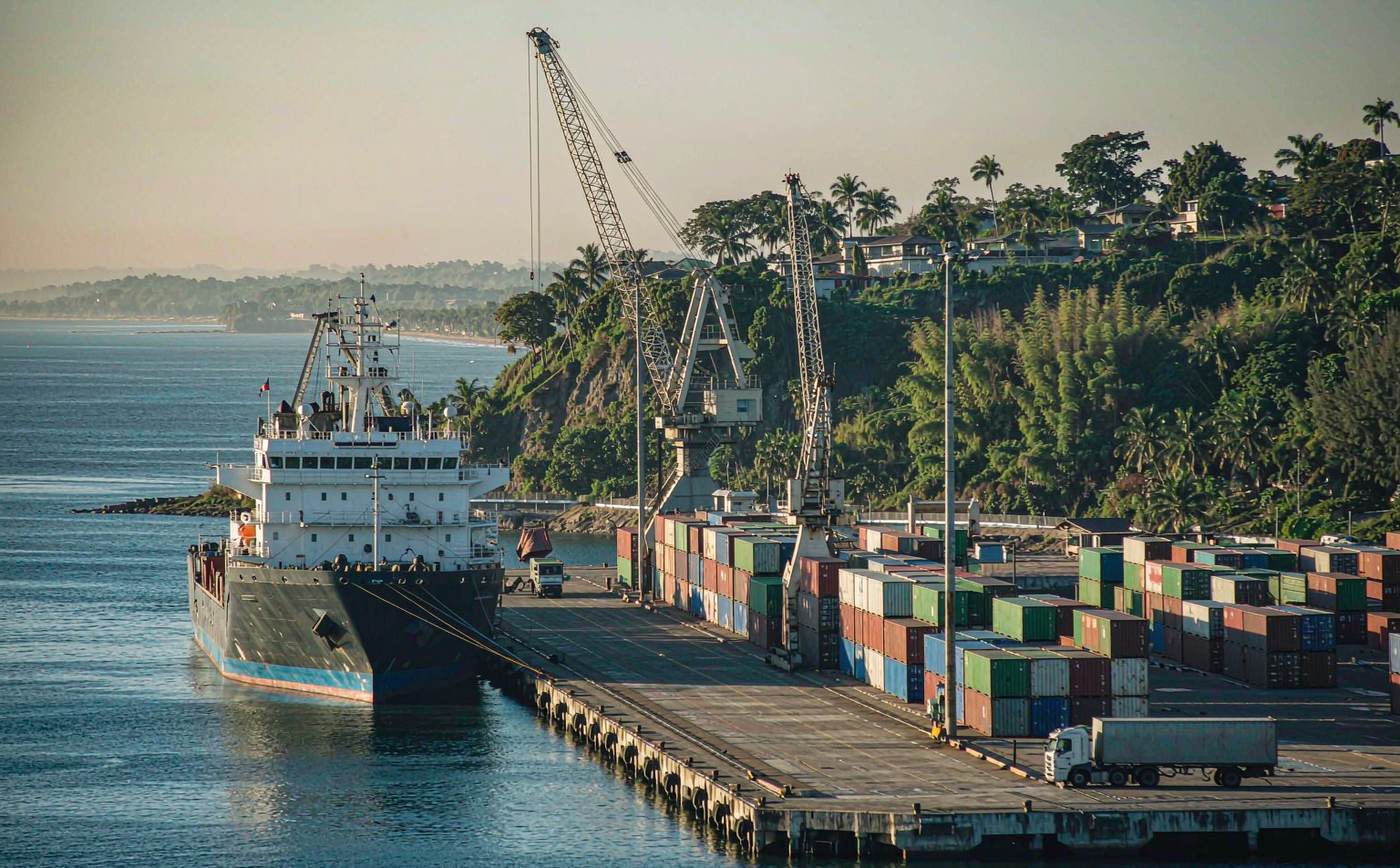
How to Ship from China to Colombia: Buenaventura, DIAN & IVA
Colombia is the one major market on the Pacific side of South America with no trade agreement with China. Chile has one. Peru has one. Ecuador has one. Colombia does not, which means Chinese goods enter at standard rates and the duty is a permanent line in your landed cost rather than something a certificate of origin removes. If you have costed a shipment into Chile or Peru and are now pricing the same goods into Colombia, that difference alone is the biggest number on the page.
The second thing is stranger, and it catches experienced importers as often as new ones. Several Colombian anti-dumping measures are written as a minimum FOB price per kilogram rather than as a percentage. Ceramic tableware is the clearest case. If you declare below the floor, the duty is the difference — which means the cheaper you declare, the more duty you pay. Every instinct built up from importing elsewhere points the wrong way here.
The third thing is that Colombia has two coastlines, and the hard part is in the middle. The Andes split into ranges across the country, and the inland leg from the Pacific port to the capital crosses a mountain pass that is slow in good weather and unreliable in the rainy seasons. Choosing between Buenaventura and Cartagena is not about the voyage — it is about the road on the far side.
At a glance
Trade agreement: none with China — standard duty rates apply. · Arancel: commonly 0–20% of CIF by ten-digit tariff code; raw materials and capital goods at the low end, consumer goods higher, textiles and footwear higher still. · IVA: 19% on CIF plus duty. · Exchange rate: the tax office publishes its own official rate, and the customs value in pesos is struck at it. · Declaration: advance filing required, with a deadline measured in hours before arrival. · Registrations: RUT, VUCE, a digital signature, and a licensed customs agent. · Gateways: Buenaventura (Pacific) and Cartagena (Caribbean), plus Barranquilla and Santa Marta. · Air gateway: Bogotá (BOG). · Power: 110V at 60 Hz.
How your cargo moves: China to Colombia
Eight steps from your supplier's door to yours. The last four are the ones shaped by local rules.
- Pickup from your supplierWe collect the goods anywhere in China and bring them to our consolidation point.
- Export clearanceChina customs declaration filed and released before the goods move to the port.
- Loading and departureContainer loaded, sealed and handed to the carrier at the Chinese port.
- Main carriageOcean, air or rail movement booked on the route agreed for your cargo.
- Arrival at the gatewayDischarge at the port or airport of entry, recorded on the carrier's manifest.
- Import clearanceCustoms declaration filed locally, with duty and tax assessed on the declared value.
- Customs releaseGoods released into free circulation once duty and tax are settled.
- Final deliveryOnward movement to your delivery address, warehouse or nominated depot.
Duty rates, VAT rates and clearance times move, and the figure that applies to your goods is the one set for your commodity code on the day of clearance. We check the current position against your code before your goods sail and confirm it to you in writing — ask for that check when you request a quote.
What this guide covers, and what makes Colombia different
This is written for a buyer outside China bringing goods from a Chinese supplier into Colombia who wants to understand the route end to end. It assumes the commercial terms are agreed and you are now working out the logistics, the compliance and the money.
We cover the duty position that follows from having no trade agreement, the tariff bands and the ten-digit code, the anti-dumping measures and the floor-price mechanism that inverts normal pricing logic, IVA and the official exchange rate, the advance declaration deadline, the registrations you need before a shipment can be consigned, choosing between the two coastlines, the port storage trap, transit times by sea and air, the permit gates, and the practical document discipline that separates a three-day clearance from a three-week one.
We do not publish freight rates. Rates into Colombia move with fuel, capacity and season, and a printed number is stale before it is useful. For a live figure, send the details through the quote request and we will price the actual cargo. Any figure in this guide you should re-check against current official sources before relying on it is marked.
There is no preferential certificate on this lane
It is worth stating plainly, because it is the structural fact everything else follows from. Colombia has no free trade agreement with China. There is no certificate of origin that takes your goods to zero. The MFN tariff applies, in full, on every shipment.
Compare that with the neighbours. Into Chile, a Form F takes most lines to zero. Into Peru, the agreement does the same for around ninety percent of Chinese goods. Into Colombia, the duty line on your calculation is what it is, and no amount of paperwork changes it.
Two consequences worth internalising. First, the duty is a cost, not a cash-flow item. IVA is recoverable by a registered business; duty is not. On a market where the tariff genuinely bites, that distinction is the difference between a viable margin and an unviable one. Second, the tariff code matters more here than it does in a zero-duty market. Where everything arrives at zero anyway, a classification argument is largely academic. Where the rate runs to twenty percent, the code is money.
Price it before you commit. On this lane the duty belongs in the quotation you give your customer, not in a conversation with your broker after the container lands. Confirm the ten-digit code and the rate for it before you place the order.
The tariff bands, and the ten-digit code behind them
Colombian import duty, the arancel, is an ad valorem charge on the CIF value set by tariff code. Rates generally run from zero to twenty percent, and where they fall depends entirely on what the goods are.
| Broad category | Typical range | Comment |
|---|---|---|
| Raw materials, machinery, many capital goods | 0–5% | The low end, and the reason industrial equipment is often viable here |
| Most manufactured consumer goods | 5–20% | The middle, where the duty is a real but manageable line |
| Textiles, footwear, leather goods | Higher, sometimes 15–40% or subject to minimum price thresholds | Protected sectors. Confirm the rate before quoting, and expect anti-dumping questions |
The classification is made to a ten-digit code in Colombia's tariff schedule — a finer granularity than the eight digits used in some neighbouring markets, which means a line that looks right at the six- or eight-digit level can still resolve to a different rate here. Confirm the full ten digits with your broker and have them appear on the commercial invoice.
Misclassification is not a slap on the wrist. The tax and customs authority treats an incorrect code as a substantive error, with fines and, in serious cases, seizure. And because the rate spread is wide on this lane, the incentive to stretch a classification is exactly where the enforcement looks.
There is also a live tariff environment to keep an eye on. Decrees adjusting rates on specific lines are issued periodically — ceramic tile under heading 6907 was raised substantially by decree in March 2026, for example. Note how specific that was: tile, not tableware. Headline figures move around and get reported loosely; check your own subpartida.
Anti-dumping as a floor price, not a percentage
Most anti-dumping measures people encounter are a percentage added to the duty. Colombia uses that form too, but one of its most commercially significant measures works differently, and the difference matters more than it sounds.
The measure on ceramic tableware from China was renewed for five years by a resolution issued at the end of December 2025. It works as a minimum FOB price per kilogram:
| Product | Subpartida | Minimum FOB price |
|---|---|---|
| Earthenware tableware and kitchenware | 69.12.00.00.00 | US$1.71 per kilogram |
| Porcelain tableware and kitchenware | 69.11.10.00.00 | US$2.88 per kilogram |
The rule is: if your declared FOB value is below the floor, the anti-dumping duty equals the difference. Declare at or above the floor and the measure does not bite at all. It is not a tax on the goods — it is a tax on the gap.
Why this inverts the normal logic
Think about who this hits. A buyer importing clearance stock, surplus inventory or entry-level product is buying precisely because the unit price is low. On a percentage-based measure, low price means low duty. On a floor-price measure, low price means high duty — the cheaper the cargo, the bigger the gap, the larger the bill.
Worked on a hypothetical: twenty thousand kilograms of porcelain declared at US$1.90 per kilogram against a US$2.88 floor is a shortfall of US$0.98 per kilogram, which is roughly US$19,600 of anti-dumping duty on a single container. The entire cost advantage of buying cheap is collected back at the border.
There is a second-order effect too. Because the duty is the gap, declaring honestly at market value is not merely the compliant choice here — it is often the cheaper one. On most lanes, under-declaring is tempting and wrong. On this one, it is also arithmetically self-defeating.
Why buying cheaper can cost you more at the border
The floor-price mechanism is worth a section of its own because it contradicts a habit that importers carry from every other market. Elsewhere in this guide series the advice is consistent: declare the true transaction value. Here, that advice has a sharper edge, because the consequence of declaring low is not a penalty for dishonesty — it is a larger duty by design.
What it means practically:
- Price the landed cost at the floor, not at your purchase price. If you are buying below the floor, model the duty as the gap. If the resulting number kills the deal, it was never the deal you thought it was.
- Consider whether a neighbouring material avoids the measure. Metal cookware and aluminium lines are not ceramic tableware. Where the product function allows it, the subpartida decides whether the floor applies at all.
- Get the classification confirmed in writing before shipping. Whether your line falls under 69.11, 69.12 or somewhere else entirely is the question that decides whether this section applies to you. Headline coverage of Colombian tariff changes frequently conflates ceramic tile with ceramic tableware; they are different headings with different treatments.
- Do not try to split the consignment to game the weight. The measure works per kilogram; the arithmetic does not improve by dividing it up.
The broader lesson generalises beyond ceramics. Colombia uses trade-remedy instruments actively, and the form those instruments take varies by product. Ask what form applies to your line, not merely whether a measure exists.
Steel wire, and the measures that landed in 2026
To show the other form Colombian measures take, and how recently they change: in May 2026 the commerce ministry issued a resolution imposing provisional anti-dumping duties on low-carbon steel wire from China. These are percentage-based, levied on the declared FOB value:
| Product | Subpartidas | Provisional duty |
|---|---|---|
| Annealed wire, alloyed and non-alloyed | 7217.10.00.00, 7229.90.00.00 | Around 29% per net ton |
| Galvanised wire, low carbon | 7217.20.00.00, 7229.90.00.00 | Around 98% per net ton |
A provisional duty of around ninety-eight percent roughly doubles the customs cost of the affected product. Provisional measures run for a limited period while the investigation continues and a final resolution follows, so the rates and the product scope can change — which is precisely why the instruction is to verify rather than assume.
One detail in that resolution deserves attention because it closes a door many importers try. It includes non-preferential rules of origin aimed at preventing circumvention: routing the goods through a third-country intermediary does not help if the steel was melted or drawn in China. Changing the supplier on the invoice is not a solution where the measure looks at where the metal was actually worked.
The general point for any steel, textile, footwear or ceramics importer on this lane: Colombian trade remedies are live, product-specific and changeable. Check your line before each programme, not once.
Nineteen percent, and the exchange rate the tax office applies
IVA in Colombia is 19%, charged on the CIF value plus the duty — not on the invoice value alone. For a business registered for IVA it is creditable as input tax, so like everywhere else in the region it is a cash-flow item rather than a cost. But it is a large cash-flow item, and it is charged on a base that includes a duty you cannot remove.
| Illustration on a hypothetical CIF of US$10,000, duty at 15% | Amount |
|---|---|
| CIF value | US$10,000 |
| Arancel at 15% | US$1,500 |
| IVA base | US$11,500 |
| IVA at 19% | US$2,185 |
| Total duty and IVA | US$3,685 — roughly 37% of CIF |
Set that against the equivalent calculation for Chile, where a valid Form F takes the duty to zero and the total is nineteen percent of CIF, and the structural gap between the two markets is visible in one line.
Now the part that is specific to Colombia and catches people out. The tax office publishes its own official exchange rate, and the customs value is converted into pesos at that rate rather than at whatever rate your bank gave you. The practical consequence: if the peso weakens, your landed cost in pesos rises even though your invoice is unchanged in dollars. A currency movement you did not make and cannot hedge through your supplier shows up in your customs bill.
Build a currency margin into any quotation you give a Colombian buyer, and ask your broker to calculate the tax at the current official rate rather than at an assumed one.
The declaration deadline, and the penalty for missing it
Colombia requires the import declaration to be filed before the vessel arrives, and the advance filing requirement has been tightened to a deadline measured in hours rather than days — commonly cited as around forty-eight hours before arrival.
The consequence of missing it is not a delay. It is a fine calculated as a percentage of the CIF value, reported to run from one percent up to twenty percent depending on the circumstances, and in worse cases the goods can be seized.
What this means in practice is simple and it changes how you plan: the documents have to be with your broker and accepted well before estimated arrival, not at arrival. On a lane with a thirty-day voyage, that is easy to forget, and it is the kind of thing that turns a routine clearance into a penalty.
Working rule: have the complete document set with your customs agent a week before estimated arrival. That gives room to fix a discrepancy — and a discrepancy found a week out is an email, while one found on arrival is a fine.
Who can import: the tax register, the trade window and the digital signature
Before a commercial shipment into Colombia can be declared at all, four things have to be in place. All four are administrative, none of them are exotic, and every one of them is cheaper to arrange in week one than in week six.
The tax register
The RUT — the Registro Único Tributario — issued by the tax and customs authority, DIAN. It is the identifier the declaration is filed against, and it has to be active before the declaration can be lodged.
The foreign trade single window
Registration on the VUCE — the Ventanilla Única de Comercio Exterior — the platform through which import declarations and the sector permits that attach to them are processed.
A digital signature
A firma digital, issued by a certified Colombian provider. Declarations are signed electronically, and without a valid signature nothing can be filed. This one surprises foreign buyers most often, because it is a credential you obtain locally rather than something your supplier or forwarder can supply.
A licensed customs agent
A agente de aduanas is required for a formal import. The agent prepares and files the declaration, manages the channel the authority assigns, and handles release.
If you have no Colombian entity, the same structural question arises as in Peru: the importer of record has to be a party that can hold these registrations. Settle it before the goods sail. Discovering at the terminal that the named consignee cannot file is among the more expensive ways to learn it, because the container is ashore and the storage clock has started.
Choosing a port when the mountains are in the way
Colombia has both a Pacific and a Caribbean coastline, and the choice between them is one of the more consequential routing decisions on any South American lane — because the voyage is only half the journey.
| Gateway | Coast | Best for | The inland reality |
|---|---|---|---|
| Buenaventura | Pacific | Cali and Pacific-region distribution; the shorter ocean leg from China | To Bogotá is roughly 1,000 km across the Andes, typically two to four days, via a mountain pass that is congestion-prone and weather-dependent |
| Cartagena | Caribbean | Bogotá and Medellín via better roads; the Caribbean coast | To Medellín or Barranquilla is roughly a day. The ocean leg from China is longer, but the road is shorter |
| Barranquilla | Caribbean | The Caribbean coast and the Magdalena river region | Regional gateway, used where the destination suits it |
| Santa Marta | Caribbean | Northern Caribbean coast | Smaller, serving regional and bulk traffic |
The way to decide is to quote both, delivered to your door. A shorter voyage into Buenaventura is worth less than it looks if the inland leg adds three days and a mountain crossing, and for Bogotá in particular the two-coast comparison frequently surprises people. Cartagena's longer ocean leg is often more than offset by a road that works.
One seasonal factor belongs in any Colombian schedule. The country has two rainy seasons, broadly in April–May and October–November, and landslide risk on the mountain corridors rises with them. A journey that takes twelve hours in August can take three days in November. If you are delivering into the interior on a fixed date, build that in.
The storage trap: free time at the port is not free time from the carrier
This is the single most common unpleasant surprise for first-time importers into Colombia, and it comes from a distinction almost nobody explains in advance.
What you assume
Your shipping line grants container free time — the period you can keep the box before demurrage starts. It is generous, often measured in weeks, and it is what most importers think of as "free time".
What actually bites
The terminal grants storage free time, and it is far shorter — commonly only a few days. Once it expires, bodegaje is charged daily and compounds quickly.
Both clocks start at discharge and they are not the same length. A shipment can be comfortably inside its carrier free time and simultaneously several days into terminal storage, accruing charges the importer never budgeted for.
Ask for both numbers in writing. Before you book, get your forwarder to state the terminal's storage free time and the carrier's container free time separately. If they quote only one, they are quoting the longer one, and the difference will appear on your invoice.
The defence is the same as everywhere and it works better here than most places: file early and collect inside the terminal window. Because Colombia already requires an advance declaration, the paperwork discipline that avoids the penalty is the same discipline that avoids the storage bill. Two problems, one habit.
Following a container from Shanghai to a warehouse in Bogotá
Here is what an ordinary shipment looks like end to end.
Code confirmed, and duty priced
Before ordering, your broker confirms the ten-digit subpartida and the rate, including whether any anti-dumping measure attaches and in what form. On this lane this step is not optional — it is what makes the rest of the arithmetic real.
Registrations in place
RUT active, VUCE registration done, digital signature issued, customs agent appointed. All four done now, because none of them can be done at the terminal.
Order, and the invoice carries the code
The order goes in with a supplier in Zhejiang on FOB Shanghai. The commercial invoice shows the full ten-digit tariff code and the true transaction value. There is no certificate of origin to chase, because there is no agreement to claim under.
Permits, if the product is regulated
Food-contact goods, cosmetics, medical devices or agricultural products need an authorisation processed through the single window, filed by the Colombian importer. These take weeks. Starting them now is what makes the advance declaration deadline achievable later.
Loading, and the voyage
The container loads at Shanghai. To Buenaventura the run is roughly twenty-eight to thirty-three days; to Cartagena, thirty-two to forty. You have the tracking reference and an estimated arrival.
Declaration filed, before arrival
Your agent files the advance declaration through the single window well ahead of the deadline — comfortably before the hours-before-arrival cutoff, which is why the documents were with them a week earlier.
Discharge, duty and IVA, release
The container discharges. Duty and IVA are assessed — the IVA on a base that includes the duty, and the whole amount converted at the official rate. On payment, customs releases and the terminal releases.
Collected inside the terminal window
The container is collected before terminal storage free time expires, because the declaration was filed early. This is the step that separates a clean shipment from an expensive one, and it was decided three steps ago.
Inland across the Andes
From Buenaventura, the haul to Bogotá is roughly a thousand kilometres and two to four days over a mountain pass. In the rainy seasons, longer. The container arrives, the seal is checked against the bill, cartons are counted against the packing list, and any damage is photographed before anything is signed for.
Add it up and a clean door-to-door sea shipment into Bogotá runs roughly five to seven weeks, of which the voyage is the largest block, the inland leg is the most variable one, and clearance is a slice that is small if the paperwork was right and expensive if it was not.
Transit times, and the two oceans
These are port-to-port figures, and they need origin handling, clearance and inland delivery added at both ends.
| Routing | Mode | Typical transit |
|---|---|---|
| Shenzhen / Guangzhou → Buenaventura | Sea FCL | 25–30 days |
| Ningbo / Shanghai → Buenaventura | Sea FCL | 28–33 days |
| Shenzhen / Shanghai → Cartagena | Sea FCL | 32–40 days |
| Major Chinese ports → Colombia | Sea LCL | 30–45 days, plus 3–5 days for deconsolidation |
| Major Chinese gateway → Bogotá (BOG) | Air freight | 3–12 days depending on service and routing |
| Major Chinese gateway → Colombia | Express courier | 3–7 days door to door |
Two qualifications. Transhipment routings — through Manzanillo, Balboa or Panama — add one to two weeks against the direct figures, so ask which you are being quoted. And clearance plus inland delivery into the interior adds several days on its own, more in the rainy seasons.
Air freight, and when it is the only sensible option
Air into Bogotá saves roughly a month against the sea option. That is a large saving, and on this lane the air premium is often large too — so the decision usually turns on something other than the freight comparison.
Air earns its cost when
- A stockout, a missed retail window or a contractual penalty clause is the alternative.
- The goods are high-value and light, so freight is a small share of landed cost.
- You are shipping samples or a first small order to test the market.
- Spare parts are holding up equipment that is already installed.
Sea is almost always better when
- The cargo is dense or bulky and the duty line is already significant.
- Volumes approach container size — around fifteen cubic metres and above.
- The goods are regulated and need permits regardless, so speed at the airport buys nothing.
- There is no deadline a five-to-seven week schedule would break, which is the normal case.
Our air freight and sea freight pages set out what we handle on each mode, and the quote form will price both against your actual cargo.
Less than container load, and the deconsolidation delay
Below container volumes, cargo travels as LCL, sharing space with other importers and charged by volume. On this lane LCL runs noticeably longer than FCL — thirty to forty-five days against twenty-five to thirty-five — and then adds three to five days for deconsolidation at the destination.
That deconsolidation step is where the Colombian storage trap is sharpest. Deconsolidated LCL cargo typically gets a shorter terminal storage window than a full container, and it cannot be collected until it has been separated out. The two things that cause storage bills — short free time and a wait before collection — meet precisely here.
Above roughly fifteen cubic metres, price a twenty-foot container against the LCL option before booking. And if you are buying from several Chinese suppliers, consolidating them into one container at origin is usually better again — which is what our warehouse and consolidation service is for.
Undervaluing, and the data the tax office compares against
On a lane where duty is a real and unavoidable cost, the temptation to trim the declared value is greater than it is in a zero-duty market. It is worth being blunt about why that is a bad idea here specifically.
The Colombian tax and customs authority compares declared values against reference prices for comparable goods and against trade data for the same products. A declared value that falls below what the authority expects does not quietly pass — it attracts scrutiny, and the outcomes range from reassessment to aprehensión, the seizure of the goods, together with fines and a legal process measured in months rather than days.
And recall the floor-price mechanism described earlier. On an affected line, declaring lower does not even reduce the anti-dumping duty — it increases it, because the duty is the gap to the floor. Under-declaring on such a line is not merely risky; it is self-defeating.
The defence is a clean file. Pay through a traceable channel, keep the payment record against the invoice, make sure the commercial invoice, packing list and bill of lading agree exactly, and have the ten-digit code right. Those four things answer most questions before they are asked.
Health and agriculture: the two permit gates
Beyond the tariff, two regulators decide whether regulated goods can enter, and both require action from the importer rather than the supplier.
| Authority | What it covers | What it needs from you |
|---|---|---|
| INVIMA — health | Food and food-contact articles, cosmetics, pharmaceuticals, medical devices | Registration filed by the Colombian importer, supported by composition declarations and test reports from the supplier — for food-contact goods, heavy-metal migration testing from an accredited laboratory |
| ICA — agriculture | Plant material, animal products, agricultural inputs, seeds | Phytosanitary and sanitary documentation, and in some cases an import permit processed in advance |
The structural point is that these are importer-side obligations processed in Colombia. Your supplier cannot obtain them. The test reports and composition declarations come from China, but the registration is filed locally and it takes weeks.
Two categories deserve a specific note. Food-contact goods — cookware, tableware, kitchen utensils — are regulated as food-contact material, with lead and cadmium migration the principal concern; have migration reports from an accredited laboratory that match the goods exactly. And telecommunications and radio equipment require their own authorisation before they can be sold.
Start these before the goods sail. Combined with the advance declaration deadline, a permit discovered late does not merely delay the shipment — it makes the deadline unachievable and converts a timing problem into a penalty.
Wood packaging, and the ISPM-15 mark
Any wood packaging entering Colombia — pallets, crates, dunnage, bracing — must be treated against pests and marked under ISPM-15, whose mark is the IPPC stamp. This is inspected by the agricultural authority, and unmarked wood does not attract a warning.
It attracts a hold, and at worst an order to destroy the packaging or re-export the consignment at your cost. Because this is an agricultural matter rather than a customs one, perfect commercial paperwork does nothing to resolve it — and the hold lands precisely while the terminal storage clock is running.
Instruct your supplier before the goods are packed: either use treated wood that carries the stamp, or use non-wood packaging such as plastic pallets or pressed-wood composites, which fall outside the rule.
One hundred and ten volts, and why that matters
Colombia runs on 110V at 60 Hz. That is a genuine exception in South America — Chile, Peru, Argentina and Brazil are all at 220 volts — and it is the kind of detail that ruins containers.
Confirm the voltage and frequency requirement with your supplier before production starts. A container of appliances, machinery or anything with a motor or a transformer built for the wrong voltage is not a logistics problem that can be solved at the destination; it is a write-off, or an expensive rewiring exercise.
Flat-pin plugs of the North American type are standard. Specify the plug you want rather than assuming, particularly if you are shipping from a supplier whose default export market is Europe.
Free trade zones, and deferring the tax
Where the duty is a significant and unrecoverable cost, Colombia's free trade zones — the zonas francas — are worth understanding, because they address exactly that problem.
The principle is the same one that makes the Iquique free zone useful in Chile: goods held inside a zone are not treated as having entered the country for tax purposes. Duty and IVA are assessed when the goods leave the zone for domestic consumption, not when they arrive. For an importer holding stock, that converts a large upfront tax payment into a series of smaller ones timed to sales.
It also enables re-export: goods that leave the zone for another market never attract Colombian import tax at all. For a distributor covering several markets from one container, that is the whole point.
It is not free. Zone warehousing, handling and administration are charged, and the economics depend on how long stock sits and how much of it eventually enters Colombia. Model it against your actual profile rather than assuming it helps.
Trade stock, and household effects into Colombia
Commercial stock and personal effects are different exercises, with different rules and different paperwork.
Trade stock is imported against a RUT, declared by a licensed agent through the single window, taxed at the duty rate for its subpartida plus IVA at nineteen percent on the duty-inclusive base, and the IVA is creditable for a registered business. The duty is not. It may additionally attract an anti-dumping measure, in percentage or floor-price form.
Household effects and personal property belong to someone relocating rather than to a business reselling. They are assessed differently, they require a detailed inventory and evidence that the owner is changing residence, and they are inherently second-hand — which brings valuation scrutiny. Used household effects are generally treated more favourably than commercial second-hand cargo, but the treatment is not automatic.
If you are moving a household rather than buying stock, say so at the beginning. It changes the declaration route, the document set and the tax outcome.
The Colombian calendar, and the rainy seasons
Colombia's schedule has the usual shape plus one factor that is specific to the country.
- Chinese New Year — the origin-side shutdown. Production stops before it and ramps slowly afterwards. Missing the pre-holiday cut costs weeks.
- Holy Week — observed seriously, with several days effectively lost. In Colombia this is a major holiday period, not a quiet Friday.
- Mid-year and December — holiday periods and the retail peak. Capacity tightens and terminal congestion follows.
- April–May and October–November — the two rainy seasons. This is the distinctive one: landslide risk on the mountain corridors rises, and inland legs that normally take a day can take several.
The practical consequence is that the inland leg deserves the buffer, not the voyage. On most lanes the voyage is the variable. On this one, a thirty-day ocean leg is fairly predictable and the two-to-four-day mountain crossing is not.
Book earlier than feels necessary, get the documents to your agent a week before arrival, and put the buffer where the weather is.
The documents your broker needs, and when
Because Colombia requires an advance declaration with a tight deadline, the timing of this set matters as much as its contents.
| Document | What it has to do |
|---|---|
| Commercial invoice | Show the exporter, the importer's details, the ten-digit tariff code, unit values and the true transaction value. Values must match what was actually paid. |
| Packing list | Carton count, dimensions and weights — real figures, because verified gross mass depends on them, and because anti-dumping floors are calculated per kilogram. |
| Bill of lading or air waybill | Consignee and notify party that hold the registrations required to import. |
| Sector authorisations | INVIMA for health-regulated goods, ICA for agricultural, plus telecoms where applicable — filed by the importer, weeks in advance. |
| Dangerous goods documentation | Safety data sheet and test report for lithium batteries or cells; a dangerous goods declaration where the cargo is classed. |
| ISPM-15 evidence | Confirmation that wood packaging is treated and stamped, or that none was used. |
There is no certificate of origin on this lane — there is nothing to claim. Which is a small mercy: the document set is shorter than Chile's or Peru's, and what remains is the discipline of making the documents agree with each other and arrive early.
One check prevents most of the rest. Before the vessel sails, put the invoice, the packing list and the bill of lading side by side and confirm that the description, quantity, weights and parties are identical on all three. On a lane where a discrepancy can mean a missed declaration deadline, that check is worth more here than almost anywhere else.
Related pages
Frequently asked questions
Is there a free trade agreement between China and Colombia?
No. Chile, Peru and Ecuador all have agreements with China that take most tariff lines to zero. Colombia does not, so Chinese goods enter at standard rates and the duty is a permanent line in your landed cost rather than something a certificate removes.
How much import duty and tax does Colombia charge?
Duty generally runs from zero to twenty percent of CIF depending on the ten-digit tariff code, with raw materials, machinery and capital goods at the low end and consumer goods higher. IVA of nineteen percent is then charged on the CIF value plus the duty. Textiles, footwear and leather sit well above the standard bands, and some products carry anti-dumping measures on top.
What is the anti-dumping floor price and why does it matter?
Some Colombian measures set a minimum FOB price per kilogram rather than a percentage. Ceramic tableware is the clearest case: if the declared FOB value falls below the floor for the subpartida, the duty equals the difference. Declaring at or above the floor means no anti-dumping duty. The result is that declaring lower increases the duty rather than reducing it.
What is the forty-eight hour advance declaration rule?
Colombia requires the import declaration to be filed before the vessel arrives, with a deadline measured in hours rather than days. Missing it exposes the shipment to fines calculated as a percentage of the CIF value and, in worse cases, to seizure. Have the complete document set with your agent well before estimated arrival.
What do I need to be registered before importing into Colombia?
A RUT tax registration from DIAN, registration on the VUCE foreign trade single window, a digital signature from a certified Colombian provider, and a licensed customs agent for the formal import. All four should be in place before the goods sail.
Should I ship to Buenaventura or Cartagena?
Buenaventura is the Pacific gateway with the shorter ocean leg, suiting Cali and Pacific distribution. Cartagena is on the Caribbean with better inland roads to Bogotá and Medellín. The deciding factor is usually the inland haul: Buenaventura to Bogotá crosses the Andes in two to four days, while Cartagena to Medellín is about a day. Quote both delivered to your door.
What is bodegaje and how do I avoid it?
It is terminal storage charged once the storage free window expires. The trap is that the carrier's container free time and the terminal's storage free time are different, and the terminal's is much shorter — a few days rather than weeks. File early and collect inside the terminal window. Get both free-time periods in writing before you book.
How long does sea freight take from China to Colombia?
Shenzhen or Guangzhou to Buenaventura runs around twenty-five to thirty days, Ningbo or Shanghai to Buenaventura twenty-eight to thirty-three days, and to Cartagena thirty-two to forty days, port to port. LCL takes thirty to forty-five days plus three to five for deconsolidation, and inland delivery adds several more.
Is it safe to declare a lower value to reduce the duty?
No. The tax and customs authority compares declared values against reference prices and trade data, and discrepancies can lead to seizure, fines and months of legal process. On an affected line the floor-price mechanism makes it worse still: a lower declaration widens the gap and increases the anti-dumping duty.
Does Colombia use 110 or 220 volts?
Colombia runs on 110 volts at sixty hertz — an exception in South America, where most neighbours are at 220. Confirm the voltage and frequency with your supplier before production, because equipment built for the wrong voltage is a write-off rather than a problem to solve later.
Why importers use Goodhope on this lane
Six things that are different about working with us on China to Colombia shipments.
Case notes on the China to Colombia lane
Five shipments bought in China and delivered into Colombia, told end to end — where the order came from, how it moved, where it nearly went wrong, and how it finished. Client names are withheld at their request; the situations and the handling are what we deal with on this lane.
No preference certificate · first container · Shenzhen to Buenaventura
The purchase. A buyer new to importing asked whether a certificate of origin would zero his duty, as it does on some other Latin American lanes.
The move. Full container into Buenaventura, with the duty position worked out on the ten-digit code before the goods sailed.
Where it nearly went wrong. There is no preferential trade agreement on this lane, so the standard tariff applies. Assuming a preference exists is how a first order is priced at zero duty and invoiced at up to twenty per cent.
How it finished. We gave him the actual band on his codes before he quoted. He priced the order correctly and won it.
The hours deadline · declaration · Ningbo to Cartagena
The purchase. A first-time buyer treated the advance declaration as paperwork that could be filed when the vessel berthed.
The move. Sea freight with the declaration prepared and lodged inside the pre-arrival window.
Where it nearly went wrong. The filing deadline here is measured in hours before arrival, and missing it carries a penalty rather than a warning. It is the tightest clock on any lane we work.
How it finished. We built the lodgement into the pre-arrival checklist. He has not taken a penalty since.
Anti-dumping · cheaper is not cheaper · steel wire into Colombia
The purchase. A buyer sourced a lower-priced line from a second factory and assumed the duty would fall with the invoice value.
The move. Full container declared at the true transaction value, with the anti-dumping measure checked against the code first.
Where it nearly went wrong. Anti-dumping here works as a floor price rather than a percentage. Below the floor, a cheaper invoice does not reduce the duty; it triggers the measure and adds to it.
How it finished. We checked the measure before he switched factories. He kept the original supplier and avoided a cost that would have exceeded his saving.
The storage trap · free time · Shanghai to Barranquilla
The purchase. A buyer negotiated free time with the port and assumed that covered him at the terminal.
The move. Full container with both clocks tracked separately from discharge.
Where it nearly went wrong. Free time from the port and free time from the carrier are two different allowances that run at the same time and end on different days. Counting only one of them produces a storage bill the buyer believes he is entitled to dispute, and is not.
How it finished. We quoted both windows on the booking. He plans collection against the shorter of the two.
Declared value · undervaluation · Yiwu to Bogota
The purchase. A buyer asked whether declaring a lower value would reduce the duty on a repeat order.
The move. Full container declared at the transaction value, with the supporting payment evidence in the file.
Where it nearly went wrong. The tax office compares declared values against its own reference data on the same codes. A value that sits below the reference does not reduce the assessment; it opens one, and it follows the importer on later shipments.
How it finished. We declared the true value. His entries clear without reference checks.
Why importers use Goodhope on this lane
Six things that are different about working with us on China to Colombia shipments.
Request a quote on your Colombia shipment
Tell us what you are shipping, from where, how much it weighs and measures, and where in Colombia it needs to arrive. We will come back within 24 hours with an itemised plan — Buenaventura against Cartagena with the inland leg on each, transit time, the duty and IVA position for your ten-digit code including any anti-dumping measure, and the documents and permits your shipment will need.
Get a Free Quote Explore Colombia Services