
Home / Shipping to Fiji / How to Ship from China to Fiji
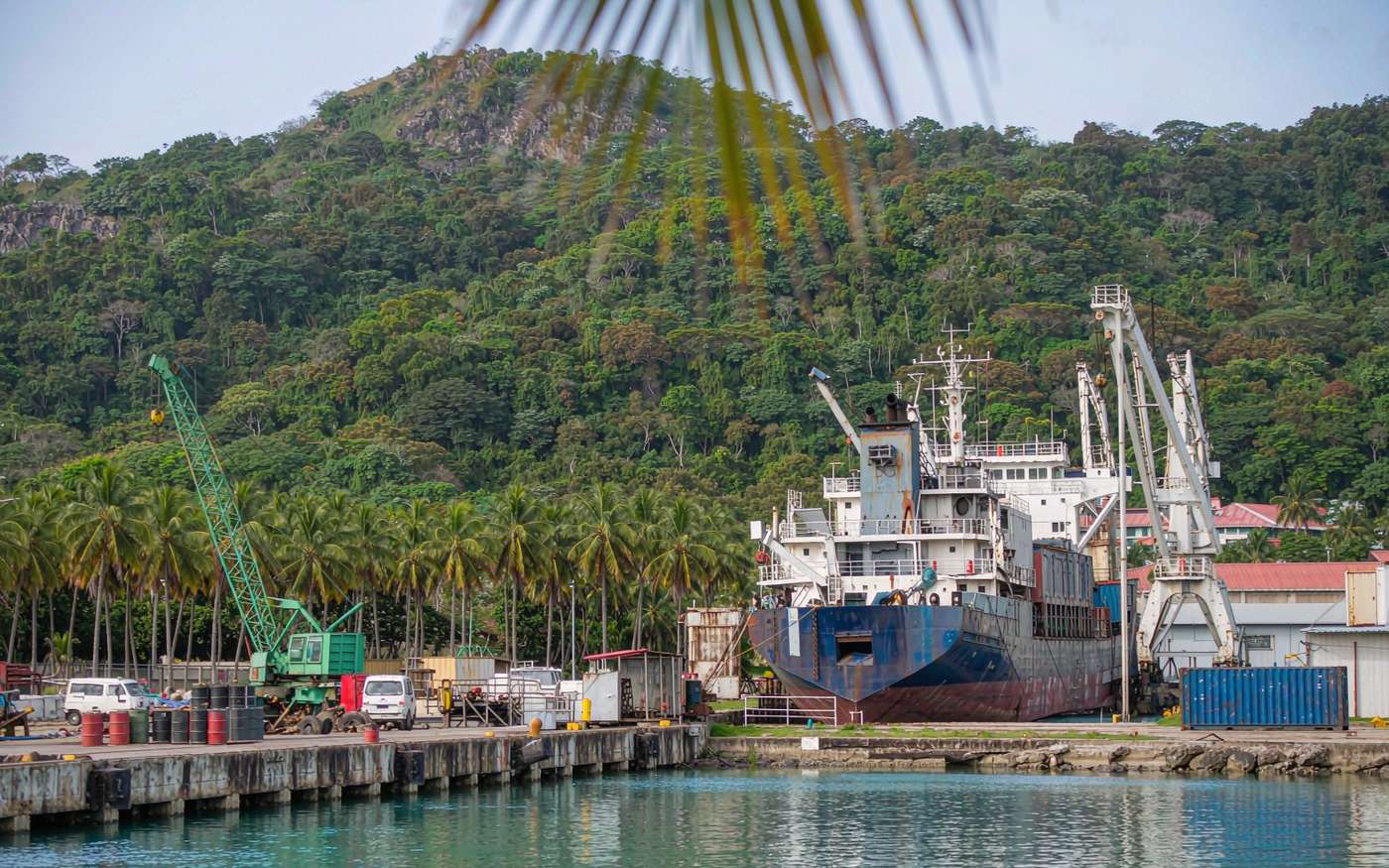
Shipping from China to Fiji, step by step
Goodhope Freight is a licensed NVOCC based in Shenzhen, registered as GD20230925153335, and has been moving cargo out of China since 2012. To Fiji we run full containers and shared containers port-to-port into Suva and Lautoka, air freight airport-to-airport into Nadi International, and express parcels dispatched from our depot. Every service stops at the port, the airport or the depot. Your consignee arranges import clearance and collection.
Fiji is the most developed customs environment in the South Pacific, and that is genuinely useful: the Fiji Revenue and Customs Service runs on ASYCUDA World, entries are filed electronically, and a clean file with a licensed broker clears quickly. What it does not do is make the island easy to reach. There is no nonstop cargo service from mainland China, so everything relays through Australia, New Zealand or a regional hub.
Three things decide whether a Fijian shipment goes well. The first is the tax structure, where fiscal duty and 15 per cent VAT stack on the CIF value. The second is biosecurity, which is the strictest in the region and applies to a courier carton as firmly as to a container. The third is the cyclone season, which quietly reshapes every schedule between November and April.
At a glance
Main ports: Suva, the principal container gateway, and Lautoka on the western side of Viti Levu · Main airport: Nadi International (NAN) · Currency: Fijian dollar · Customs authority: Fiji Revenue and Customs Service, entries on ASYCUDA World · Fiscal duty commonly nil to 32 per cent of CIF · Value-added tax at 15 per cent on the CIF value plus duty · Excise on alcohol, tobacco and fuel · A tax identification number is required for commercial importers · Biosecurity clearance by the Biosecurity Authority of Fiji
How your cargo moves: China to Fiji
Eight steps from your supplier's door to yours. The last four are the ones shaped by local rules.
- Pickup from your supplierWe collect the goods anywhere in China and bring them to our consolidation point.
- Export clearanceChina customs declaration filed and released before the goods move to the port.
- Loading and departureContainer loaded, sealed and handed to the carrier at the Chinese port.
- Relay through Australia, New Zealand or a regional hubThere is no nonstop cargo service from mainland China, so the connection sets the arrival window.
- Discharge at Suva or LautokaContainers are worked at the two main ports; air cargo is handled at the Nadi cargo terminal.
- Entry filed on ASYCUDA WorldYour broker lodges the declaration electronically with the commodity codes and the CIF value from your invoice.
- Duty, excise and the 15 per cent tax assessedCharges are assessed on the CIF value plus duty and settled with the revenue service.
- Biosecurity clearance and releasePlant, food, animal and timber packaging are inspected. Once both are satisfied, goods are released for collection.
Duty rates, VAT rates and clearance times move, and the figure that applies to your goods is the one set for your commodity code on the day of clearance. We check the current position against your code before your goods sail and confirm it to you in writing — ask for that check when you request a quote.
Suva, Lautoka and Nadi: picking the gateway
Suva is the principal container port and the regional hub for most of the cargo that moves through the country. Lautoka on the western side of Viti Levu handles containerised cargo for the west and for the sugar and tourism corridors. Nadi International is the air gateway and handles essentially all international air cargo.
Choosing between Suva and Lautoka is not a matter of preference, it is a matter of where your consignee and their broker are. A container landed at the wrong port means a road movement across Viti Levu, and on an island where the road follows the coast that is a real cost. Confirm the discharge port before we book and make sure it appears on the bill of lading.
Choosing a service on a long Pacific lane
Below roughly 15 cubic metres a shared container is the practical answer, rated by volume with a weight conversion and a one cubic metre minimum. Between about 15 and 28 cubic metres, run the comparison between a 20GP and the per-cubic-metre rating both ways. Above that, a 40GP or 40HC normally wins for bulky light cargo.
Air freight into Nadi works from about 45 kg and suits electronics, medical supplies, urgent spares, perishables and resort equipment with a fixed opening date. There is no nonstop freighter service from mainland China, so consignments connect through Australia, New Zealand or a regional hub, and the connection rather than the flying time sets the transit. Express courier handles documents, samples and single cartons, and ends at the depot.
Fiscal duty, and the bands that decide it
Fiji charges what it calls fiscal duty rather than a conventional customs tariff, and the rate is set by the commodity code. Industrial machinery and parts commonly sit at nil to 5 per cent, raw materials and general consumer goods in the 5 to 15 per cent range, and clothing, textiles, furniture and vehicles at the top of the scale, up to 32 per cent on protected lines.
The spread is wider than most importers expect, which is why classification matters more here than on a lane with a narrow band. Get the commodity code confirmed by your broker before you place the order, not after the goods have sailed.
How the 15% tax is worked out on a Fijian entry
Value-added tax is charged at 15 per cent and it is assessed on the CIF value plus the duty, not on the invoice value alone. The rate was raised to 15 per cent from a lower figure, so any costing you built from an older published guide will understate the bill.
Excise duty applies separately to alcohol, tobacco and fuel, and it feeds the same base. Because duty and tax compound, a shipment with a moderate duty rate can still land with a total tax charge well above the figure a buyer estimated from the invoice. We model the whole assessment against your commodity codes before the goods sail.
Why biosecurity clears or rejects a Fijian entry
The Biosecurity Authority of Fiji enforces some of the strictest import controls in the South Pacific, and this is where shipments are held rather than at the tariff. All food, plant and animal products are inspected, an import permit is required for a defined list, and phytosanitary or health certificates accompany the entry.
The rule that catches the most importers is timber packaging. Wood pallets and crates must meet the international standard for treatment and be marked accordingly, with the fumigation certificate in hand before the vessel sails. Without it, cargo is held at the port, and the remedies are expensive re-export or destruction. Confirm the certificate with your supplier at packing, not at booking.
Cyclone season, and the buffer it demands
From November to April, tropical cyclones regularly disrupt vessel schedules across the South Pacific. Ports suspend cargo operations during an event, and the backlog afterwards can take a week to clear. This is not a rare exception, it is the seasonal norm.
The practical response is to add a buffer to sea freight timelines during those months and to book earlier if the shipment overlaps with Chinese New Year or the October holiday. If your goods are needed by a fixed opening, plan against the slow end of the range rather than the middle.
Packing that survives humidity and extra lifts
Every relay adds a lift. Goods are handled at the Chinese port, at the transhipment hub and again on discharge, and cartons boxed for a single journey do not survive three cycles intact. Palletise or strap wherever the commodity allows, and box rather than bag anything dense.
Humidity and salt air do the rest. Internal moisture protection for textiles, paper goods, electronics and anything with a metal finish costs very little and prevents the most common arrival complaint on Pacific lanes. Timber packaging must meet the international standard, for the biosecurity reason set out above rather than for handling reasons.
Documents, the TIN and the import entry
- Commercial invoice with a specific description, quantities, values, currency and country of origin.
- Packing list matching the invoice, with weights and dimensions.
- Bill of lading for sea freight or air waybill for air freight.
- Certificate of origin, including the regional preference form where the buyer asks for one.
- Import permit, phytosanitary or health certificate where the commodity requires one.
- Fumigation certificate for any timber packaging, issued before the vessel sails.
Commercial importers need a tax identification number registered with the revenue service, because every declaration is linked to it. Get that sorted while the goods are on the water rather than after they discharge.
Transit, and why the calendar matters
Sea freight from South China into Suva typically runs in the region of 18 to 32 days port-to-port depending on the origin port and how the service connects, with northern Chinese origins at the longer end. Air cargo to Nadi is governed by the connection through Australia or New Zealand and is typically a matter of days once it moves.
Clearance itself is quick with a clean file and a licensed broker, often measured in days rather than weeks. The delays on this lane come from inspection rather than from paperwork, which is another way of saying that biosecurity preparation at origin is the highest-value thing you can do.
What we handle, and what your buyer handles
We handle collection from your supplier, consolidation and loading in Guangdong, export declaration, and the main carriage into Suva, Lautoka or Nadi. We issue the transport document, send status updates at each handover, and name the relay on the quote rather than hiding it behind a single transit figure.
Your consignee registers for a tax identification number, appoints a licensed broker to file the entry, settles the fiscal duty, any excise and the 15 per cent tax, satisfies biosecurity and collects. We set all of that out before the goods sail so nothing arrives as a surprise. We do not offer door-to-door delivery to Fiji.
Starting a first Fiji consignment
Send us the commodity, the volume and weight, the pickup address in China and which port the consignee will collect from. We will show the relay options, quote the charges line by line, and set out how fiscal duty, excise and the 15 per cent tax combine on your codes.
Ask two questions before you book: is there any timber packaging in the consignment, and does the commodity appear on the biosecurity permit list. Those two answers determine whether the shipment clears in days or sits on the quay.
Real moves across Fiji
Five shipments bought in China and delivered into Fiji, told end to end — where the order came from, how it moved, where it nearly went wrong, and how it finished. Client names are withheld at their request; the situations and the handling are what we deal with on this lane.
Resort refurbishment, 40HC out of Foshan
The purchase. A resort was refurbishing rooms and public areas, buying case goods, outdoor furniture, lighting and joinery from three factories in Guangdong.
The move. We collected from all three, consolidated into one 40HC, shipped port-to-port to Suva with the relay named at booking, and pre-alerted the broker before the feeder sailed.
Where it nearly went wrong. Furniture and joinery sit at the top of Fiji's fiscal duty scale, and the buyer had costed the order from a general consumer goods rate. The difference was enough to change the margin on the whole refurbishment.
How it finished. We modelled the assessment against the actual commodity codes before the container sailed and walked the buyer through it. The order went ahead on the corrected number, and the goods cleared and were collected inside the free time.
A container held over timber packaging
The purchase. A buyer imported mixed building materials, with the supplier packing the heavy lines onto timber pallets of the sort used for domestic shipments.
The move. One 20GP, shipped port-to-port to Suva, entered by the consignee's licensed broker.
Where it nearly went wrong. The pallets were not treated and marked to the international standard, and no fumigation certificate had been issued. Biosecurity held the container rather than customs, and the remedy on offer was re-export or destruction.
How it finished. On the repeat order we made treated and marked timber packaging a condition of collection and checked the certificate before the container was sealed. The second shipment cleared without a hold.
Cold chain and pharmaceutical supplies by air
The purchase. A distributor needed vaccine carrier equipment and diagnostic consumables moved quickly from Guangdong.
The move. Roughly 240 kg booked as air freight, connecting through Australia into Nadi, collected at the cargo terminal.
Where it nearly went wrong. Air freight is rated on chargeable weight, whichever is greater, actual or volumetric, and insulated packaging is bulky. The buyer had quoted on actual weight alone, and the consignment also needed health documentation prepared before departure.
How it finished. We had the supplier reduce outer carton sizes before collection, quoted on the chargeable figure, and held the booking until the health paperwork was in hand. It moved on the first available connection and cleared on arrival.
Cyclone season, and a container that waited
The purchase. A retailer was restocking ahead of the peak season and booked on the fastest routing available at the time.
The move. Two consolidated routings were quoted side by side, one faster and one slower, both relaying through Australia.
Where it nearly went wrong. The faster routing was quoted on a schedule that assumed normal weather. The shipment fell inside the cyclone window, the port suspended cargo operations during an event, and the backlog added more than the transit time saved.
How it finished. On the next order we planned against the slow end of the range and shipped earlier in the window rather than buying a faster service. The stock landed before the season without paying for a premium that weather would erase anyway.
Retail replenishment where the tax base was misread
The purchase. A buyer was comparing two forwarders and had built a landed-cost model from an older published guide.
The move. One 20GP of mixed consumer goods, shipped port-to-port to Lautoka because the consignee's warehouse sits on the western side of the island.
Where it nearly went wrong. The model used a lower value-added tax rate than the 15 per cent now in force, and applied it to the invoice value rather than to the CIF value plus duty. Both errors pointed the same way, and the gap was material.
How it finished. We set out the full assessment against the commodity codes before booking and explained the compounding. The buyer re-costed the order, and the landed figure matched the plan when the container cleared.
Why importers use Goodhope on this lane
Six things that are different about working with us on China to Fiji shipments.
Get a Fiji shipment priced
Tell us the commodity, the volume, the pickup address in China and which port your consignee will collect from. We will name the relay, check the biosecurity position for your goods, and quote fiscal duty, excise and the 15 per cent tax as separate lines.
Get a quote Talk to usRelated pages
Frequently asked questions
Is there a direct sea freight service from China to Fiji?
There is no nonstop cargo service from mainland China. Containers relay through Australia, New Zealand or a regional hub, and we quote port-to-port to Suva or Lautoka with the relay named on the quotation.
What is the VAT rate on imports into Fiji?
Value-added tax is charged at 15 per cent, assessed on the CIF value plus the duty rather than on the invoice value alone. The rate was raised to 15 per cent from a lower figure, so any costing built from an older guide will understate the bill.
What duty will my goods attract?
Fiji charges fiscal duty by commodity code, commonly from nil to 32 per cent of the CIF value. Machinery and raw materials sit at the bottom of the range and clothing, textiles, furniture and vehicles at the top. Confirm the classification with your broker before you place the order.
Why was my container held by biosecurity rather than customs?
The Biosecurity Authority of Fiji inspects food, plant and animal products and enforces the timber packaging standard strictly. Untreated or unmarked wood pallets and crates without a fumigation certificate are the most common cause of holds, and the remedies are expensive re-export or destruction.
Does the importer need to be registered?
Yes. Commercial importers need a tax identification number registered with the Fiji Revenue and Customs Service, because every declaration is linked to it. Arrange it while the goods are on the water rather than after they discharge.
Which airport does air cargo arrive at?
Nadi International (NAN) handles essentially all international air cargo. There is no nonstop freighter service from mainland China, so consignments connect through Australia or New Zealand and the connection sets the transit time.
Do you offer door-to-door delivery to Fiji?
No. Sea freight is port-to-port to Suva or Lautoka, air freight is airport-to-airport to Nadi, and express courier dispatch ends at the local depot. Your consignee appoints a licensed broker, settles the charges, satisfies biosecurity and collects.
How long does sea freight take from China to Fiji?
From South China into Suva, typically in the region of 18 to 32 days port-to-port depending on the origin and the connection, with northern Chinese origins at the longer end. Add contingency during the cyclone season from November to April.
Can lithium batteries be shipped to Fiji?
Built-in and packed-with lithium batteries can be carried subject to proper documentation and packaging. Standalone battery shipments and other dangerous goods classes are assessed case by case and must be declared at quotation stage so we can book with a carrier that accepts the class.
What details do you need to price a shipment?
The commodity, the volume and weight, the pickup address in China, and the port your consignee will collect from. We will show the relay options, check the biosecurity position, and quote the charges line by line.