
Home / Shipping to Iran / How to Ship from China to Iran
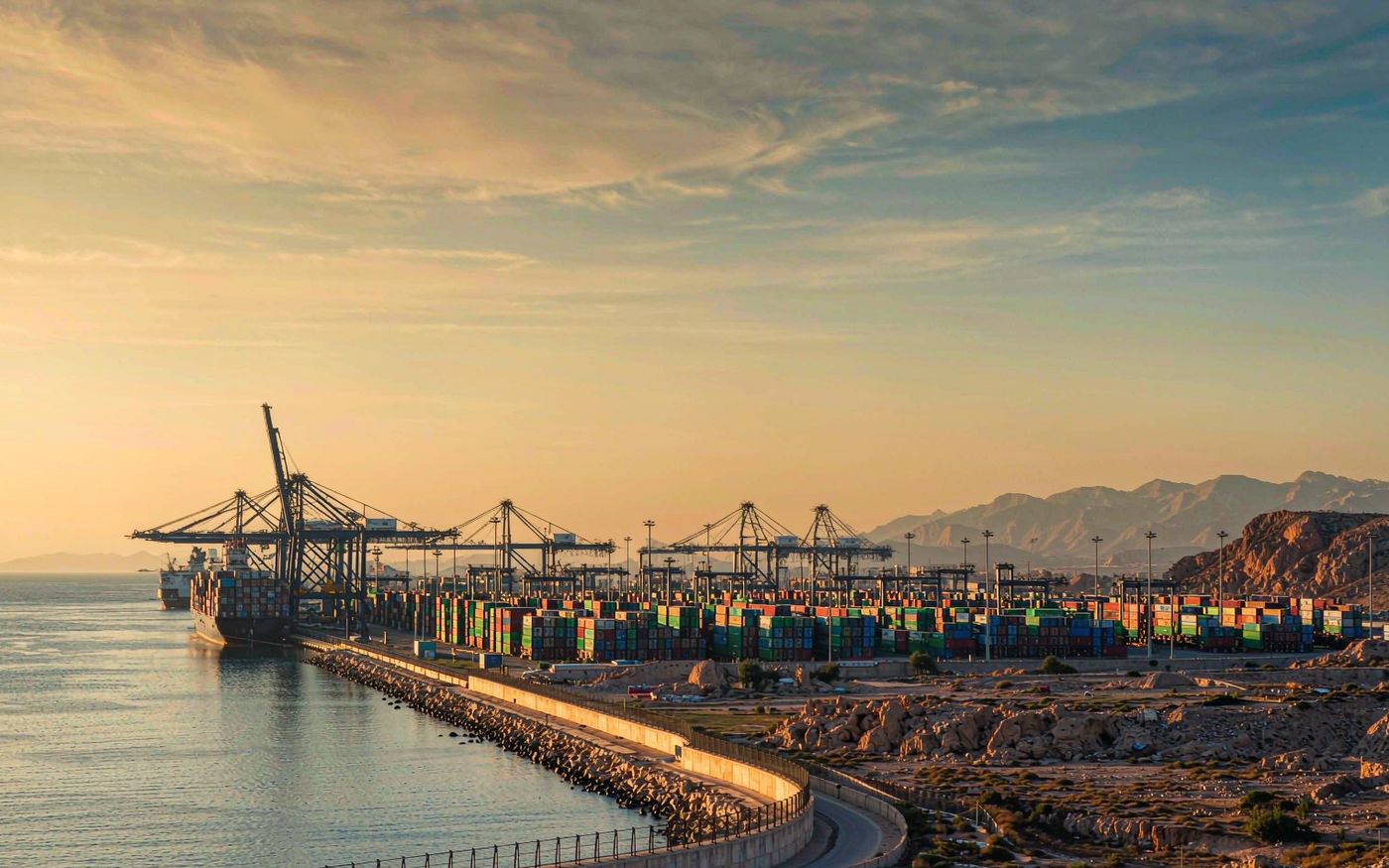
How to Ship from China to Iran: Bandar Abbas, the Licence Category & the 9% VAT
Read this first. Iran is subject to comprehensive sanctions regimes imposed by the United States, the European Union and others, and their scope changes over time. Whether a given product may be traded, and by whom, is a legal and compliance question — take your own qualified advice before you contract. Everything below is operational: ports, documents, sequencing and timing. It is not legal advice and not a compliance clearance.
On this lane the first question is not which carrier. It is whether your product sits in an import category that is allowed to enter at all. Published guidance describes Iran as operating a comprehensive import licensing system with a priority classification, with essential goods, raw materials and industrial machinery given priority and many consumer goods reported as banned or restricted. A buyer who books the vessel first and asks the category question second has turned a compliance question into a demurrage bill.
The second is the tariff. Iranian customs duty is assessed by HS code across a very wide span — published references commonly quote roughly four to one hundred percent, with consumer goods often cited between five and forty, industrial machinery around five to fifteen, electronics roughly fifteen to fifty-five, and motor vehicles at one hundred. On top of the duty sits value added tax at nine percent, charged on the CIF value plus the duty, and additional surcharges. This is a protectionist tariff, and it is the largest single line in your landed cost.
The third is that the hard part of this lane is not freight. Published guidance describes international payments as extremely difficult, with limited correspondent banking access and a currency trading at more than one rate. Banking is the constraint that decides whether the shipment happens, and it needs to be solved before the booking rather than after it.
At a glance
Country: in Western Asia on the Persian Gulf, the Gulf of Oman and the Caspian Sea, bordered by Turkey, Iraq, Armenia, Azerbaijan, Turkmenistan, Afghanistan and Pakistan; capital Tehran. · Currency: the Iranian rial, with multiple exchange rates reported. · Duty: by HS code across a very wide band, commonly quoted as roughly 4–100 percent; consumer goods often 5–40 percent, machinery around 5–15 percent, electronics roughly 15–55 percent, motor vehicles 100 percent. · VAT: 9 percent on the CIF value plus duty, with basic food and medicines reported as exempt or reduced. · Surcharges: additional charges apply on top of duty. · De minimis: sometimes quoted near USD 50, not meaningful for commercial imports. · Customs: the Islamic Republic of Iran Customs Administration, IRICA, with an electronic declaration system. · Main port: Shahid Rajaee at Bandar Abbas, reported to handle more than 85 percent of container imports. · Air: Tehran's international airport.
How your cargo moves: China to Iran
Eight steps from your supplier's door to yours. The last four are the ones shaped by local rules.
- Pickup from your supplierWe collect the goods anywhere in China and bring them to our consolidation point.
- Export clearanceChina customs declaration filed and released before the goods move to the port.
- Loading and departureContainer loaded, sealed and handed to the carrier at the Chinese port.
- Main carriageOcean, air or rail movement booked on the route agreed for your cargo.
- Arrival at the gatewayDischarge at the port or airport of entry, recorded on the carrier's manifest.
- Import clearanceCustoms declaration filed locally, with duty and tax assessed on the declared value.
- Customs releaseGoods released into free circulation once duty and tax are settled.
- Final deliveryOnward movement to your delivery address, warehouse or nominated depot.
Duty rates, VAT rates and clearance times move, and the figure that applies to your goods is the one set for your commodity code on the day of clearance. We check the current position against your code before your goods sail and confirm it to you in writing — ask for that check when you request a quote.
Whether the goods are allowed in comes before the routing
Every country has restricted categories. Iran's difference is one of degree and structure: published guidance describes a comprehensive import licensing system with a priority classification of around ten categories, in which the category determines whether and how the goods may enter. Priority is described as going to essential goods, raw materials and industrial machinery, while many consumer goods are reported as banned or restricted outright.
The practical instruction for a supplier in China is to establish the category before you accept the order, and to get it in writing from the importer and their broker. If the product falls outside the permitted categories, no amount of documentation will move it, and the container will be sitting at Bandar Abbas while that is established.
Sequence: category confirmed → licence applied for → payment route agreed → then book. Reversing that order is the single most common cause of loss on this lane.
Shahid Rajaee and the other Iranian gateways
Shahid Rajaee, at Bandar Abbas on the Strait of Hormuz, is reported as handling the large majority of Iran's container imports — often cited at more than eighty-five percent. Imam Khomeini port and Bushehr are among the other sea gateways. Air freight generally arrives at Tehran's international airport.
From China, published lane guidance describes direct services to Bandar Abbas as well as transhipment through regional hubs such as Jebel Ali, Dubai or Salalah. Which is available at any given time depends on the carriers willing to serve the lane, and that changes — so confirm the rotation at booking rather than working from a published average. Major international couriers are reported as not serving the country normally, which rules out the express channel most buyers would otherwise default to for samples.
The priority category system behind the import licence
The licence is not a single document issued on request. Published guidance describes a system in which goods are grouped by priority, and in which the category determines the treatment: what requires a licence, what is restricted, what is banned, and what gets priority in processing. Pharmaceuticals, food and agricultural goods, chemicals and dual-use items are among those described as needing specific authorisation.
| Reported treatment | Typical goods | What it means for you |
|---|---|---|
| Priority | Essential goods, raw materials, industrial machinery | The categories this lane is built around; the smoothest path |
| Licensed | Pharmaceuticals, food, chemicals, agricultural goods | Specific authorisation from the relevant ministry before shipping |
| Restricted | Many consumer goods, western luxury brands, cosmetics with volume limits | Confirm before quoting; assume additional scrutiny |
| Effectively barred | Motor vehicles at 100 percent duty, alcohol | Do not build a quotation around these |
What duty and the 9 percent VAT add up to
The calculation is a stack, and the stack is tall. Duty comes first, at the HS code rate, then VAT at nine percent on the CIF value plus the duty, then surcharges on top. A buyer who looks up the duty rate and stops there will under-budget by a wide margin.
CIF value
The base. Cost, insurance and freight, evidenced by the invoice and the supporting payment and freight documents.
Customs duty
By HS code, across a very wide published band. Machinery is the friendliest end; vehicles the least.
VAT at 9 percent
On the CIF value plus the duty. Basic food and medicines are reported as exempt or reduced.
Surcharges
Additional charges are described as applying on top of customs duty. Ask the broker to name them rather than discovering them at assessment.
Published rates vary considerably between sources, and the tariff book is updated annually. Treat every figure here as a planning range and get your own codes checked by a licensed broker working from the current book.
The document set IRICA builds the entry on
The Islamic Republic of Iran Customs Administration works through an electronic system, and published guidance describes pre-arrival declaration as optional but recommended because it materially shortens clearance. The entry is built from a document set, and the set has to be complete rather than assembled after arrival.
- Commercial invoice — complete description, value and HS code.
- Packing list — contents of each container, with weights.
- Bill of lading or airway bill.
- Customs declaration — filed electronically, ideally before arrival.
- Certificate of origin — where preferential treatment is claimed; issued in Iran by the chamber of commerce, industries, mines and agriculture.
- Import licence — where the category requires one.
- Pre-shipment inspection certificate — required for some product categories, and it has to be arranged before the goods sail.
- Health and phytosanitary certificates — for food and agricultural products.
- Insurance certificate and any product-specific technical certificates.
Two of these are pre-departure tasks. The pre-shipment inspection certificate and the licence both have to exist before the goods leave China. Neither can be produced at Bandar Abbas.
Product standards, certification and the prohibited list
Beyond the licence, product standards apply, and published guidance notes that conformity certification may be required depending on the type of goods. Where your product needs a technical or conformity certificate, arrange it during production rather than at the port — the same rule that applies on every lane in this series, and the consequence of ignoring it is storage charges rather than a fine.
On the prohibited list, published sources are consistent: narcotics, explosives and flammable materials, weapons and ammunition, counterfeit goods and counterfeit currency, and alcohol under Islamic law. Restricted with permits: medicines and pharmaceuticals, food and beverages, plants and seeds, electronics containing lithium batteries, and perfumes and cosmetics with volume limits. Western luxury brands are described as heavily restricted.
Banking and payment, the part that is not freight
Here is where most Iran plans actually fail. Published guidance describes international payments as extremely difficult, with limited correspondent banking access, a currency that has lost substantial value, and more than one exchange rate in circulation. Major couriers are reported as not serving the country, and postal channels as very slow.
The operational consequence is that payment is a lead time. Agree the payment route, the currency and the timing with banks and advisers before you commit to a production slot, and do not allow the buyer's assumption about how easy it will be to set your delivery date. If the payment cannot be routed, the freight plan is academic.
From Bandar Abbas to Tehran, the inland leg
This is a big country and the port is at one end of it. Published lane guidance puts Bandar Abbas roughly 1,000 kilometres from Tehran, with road transit of around twelve to fifteen hours to Tehran, six to eight to Shiraz, eight to ten to Isfahan and sixteen to eighteen to Mashhad. Rail is described as an emerging alternative.
Two things follow. First, the inland leg is a genuine cost and scheduling line and should be quoted separately rather than folded into a freight rate. Second, insure it separately — the exposure on a 1,000 kilometre road leg is different in kind from the sea voyage, and a policy that stops at the port leaves the longer leg uncovered.
Three shipments into Iran, and what each one taught
Industrial machinery for a factory outside Isfahan. This is the category the system is designed to favour, and it ran closest to plan. What made the difference was that the licence and the pre-shipment inspection were finished during production, so the declaration was filed before the vessel arrived. The inland leg to Isfahan was the longest single line on the schedule.
A container of consumer electronics. The tariff was the lesson. Electronics are reported at the punitive end of the band, with televisions cited far above smartphones, and the nine percent VAT applied on top of a duty the buyer had not budgeted for. The goods cleared; the margin did not survive it. Get the codes checked before you quote, not after.
A mixed shipment that included a restricted category. Everything about the freight worked and the container still waited, because one line in it sat in a category that required an authorisation nobody had applied for. The paperwork was perfect and irrelevant. Establish the category per line item, not per container.
What to settle in China while the goods are being made
- Confirm the import category line by line, in writing, from the importer's broker.
- Apply for the licence before the vessel is booked.
- Arrange the pre-shipment inspection where the category requires it — it is a departure-side task.
- Get the certificate of origin issued where preferential treatment is claimed.
- Agree the payment route and currency before committing to a production slot.
- Have the HS codes checked against the current annual tariff book, not a summary.
- File the declaration in advance where the system allows it.
- Quote the inland leg separately and insure it separately.
Why importers use Goodhope on this lane
Six things that are different about working with us on China to Iran shipments.
Check the licence category before you book the vessel
Tell us what you are shipping, the HS codes if you have them, the packed dimensions and gross weight, the pickup city in China and the delivery city in Iran. We will confirm the current rotation to Bandar Abbas or the regional transhipment option, tell you plainly which documents have to be completed in China before the goods sail — licence, pre-shipment inspection and certificate of origin — flag any line that looks like it sits in a restricted category, and quote the sea leg and the inland leg separately so you can see both. We do not advise on sanctions; we will tell you when to take that advice before you contract.
Get a quote Talk to usRelated pages
Frequently asked questions
Can I legally ship to Iran?
Iran is under comprehensive sanctions regimes that change over time. That is a legal and compliance question — take qualified advice before contracting. This page covers operations only.
Which port is used?
Shahid Rajaee at Bandar Abbas, reported to handle more than 85 percent of container imports. Imam Khomeini and Bushehr are alternatives; air goes to Tehran.
What is the priority category system?
An import licensing classification of around ten categories. Essential goods, raw materials and machinery get priority; many consumer goods are restricted.
How are duty and VAT calculated?
Duty by HS code across a very wide band, then 9 percent VAT on the CIF value plus duty, then surcharges on top.
What documents are required?
Invoice with HS code, packing list, bill of lading, declaration, certificate of origin where claimed, import licence, pre-shipment inspection where required, and health or phytosanitary certificates for food.
How long does clearance take?
Published references range from 3–10 days to 7–30 days or more. File the declaration in advance to shorten it.
How do I pay?
Payment is reported as extremely difficult, with limited correspondent banking and multiple exchange rates. Agree the route before booking — it is a lead time.
What is prohibited?
Narcotics, explosives, weapons, counterfeit goods and currency, and alcohol under Islamic law. Medicines, food, plants, lithium-battery electronics and some cosmetics need permits.
How far is the inland leg?
Bandar Abbas is about 1,000 km from Tehran — roughly 12–15 hours by road, 6–8 to Shiraz, 8–10 to Isfahan, 16–18 to Mashhad.
Is there a duty-free threshold?
Some references quote around USD 50. It is not meaningful for a commercial import.