
Home / Shipping to Kiribati / How to Ship from China to Kiribati
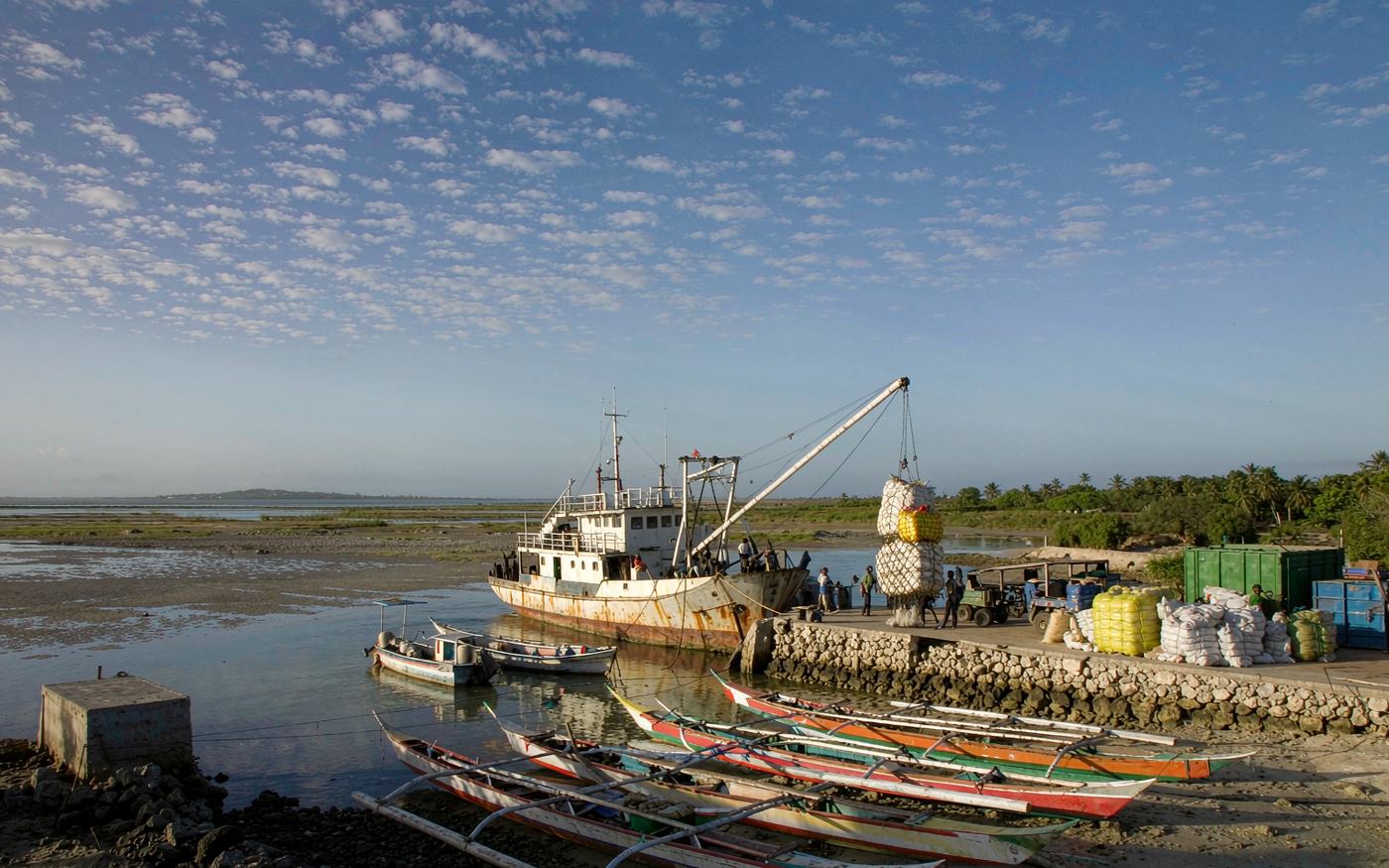
Shipping from China to Kiribati, step by step
Goodhope Freight is a licensed NVOCC based in Shenzhen, registered as GD20230925153335, and has been moving cargo out of China since 2012. To Kiribati we run full containers and shared containers port-to-port into Betio on Tarawa, air freight airport-to-airport into Bonriki International and Cassidy International, and express parcels dispatched from our depot. Every service stops at the port, the airport or the depot. Your consignee arranges import clearance and collection.
Kiribati made a deliberate choice that shapes every import into it. After a tax reform begun in 2014, all tariff rates were reduced to zero, so the country today sits among the most open trading economies anywhere. The revenue that tariff used to raise is collected instead through a value added tax at 12.5 per cent and an excise on a defined list of imports considered harmful.
That combination catches buyers out in both directions. Some assume the import will attract duty and abandon a sourcing plan that would have worked, while others find a figure taken from an older guide, budget for duty alone, and meet the tax for the first time at the border. Neither is necessary once you know which of the two is doing the work.
This guide is written for a buyer who has never imported from China before. It covers the geography that dominates every routing decision, how the zero tariff and the tax interact, what registration is required before a first consignment moves, what sits on the restricted list, and how to think honestly about reaching an island that is not Tarawa.
At a glance
Main port: Betio on Tarawa, operated by the Kiribati Ports Authority, with a secondary port on Kiritimati · Main airports: Bonriki International (TRW) on Tarawa and Cassidy International (CXI) on Kiritimati · Currency: Australian dollar · Customs authority: Kiribati Customs Services, Ministry of Finance and Economic Development · Tariff rates set at zero under the policy adopted after the 2014 tax reform · Value added tax at 12.5 per cent under the Value Added Tax Act 2013 · Excise on imports judged harmful · Electronic clearance on ASYCUDA World under the Customs Act 2019 · Import permits from the environment ministry for plants and agricultural goods · Thirty-three atolls spread across three and a half million square kilometres of ocean
How your cargo moves: China to Kiribati
Eight steps from your supplier's door to yours. The last four are the ones shaped by local rules.
- Pickup from your supplierWe collect the goods anywhere in China and bring them to our consolidation point.
- Export clearanceChina customs declaration filed and released before the goods move to the port.
- Loading and departureContainer loaded, sealed and handed to the carrier at a Chinese port.
- Relay through Australia, Fiji or a Pacific hubThere is no nonstop cargo service from mainland China, so the connection determines your arrival window.
- Discharge at BetioContainers are worked by the Kiribati Ports Authority; air cargo arrives at Bonriki or Cassidy.
- Entry lodged on ASYCUDA WorldYour broker files electronically with the commodity codes and the CIF value from your invoice.
- Excise and the 12.5 per cent tax assessedExcise applies first where it is due, then the tax on the assessed value.
- Biosecurity clearance and releasePlant and agricultural lines are inspected under the permit issued by the environment ministry. Once satisfied your buyer collects.
Duty rates, VAT rates and clearance times move, and the figure that applies to your goods is the one set for your commodity code on the day of clearance. We check the current position against your code before your goods sail and confirm it to you in writing — ask for that check when you request a quote.
Betio first, and thirty-three atolls behind it
Kiribati spreads across thirty-three low coral atolls, most of them barely above sea level, scattered over roughly three and a half million square kilometres of the central Pacific. The practical consequence for a shipper is blunt: almost everything enters through one working port, Betio on South Tarawa, operated by the Kiribati Ports Authority. There is a secondary port on Kiritimati, in the Line Islands far to the east, which matters because Kiritimati is much closer to Hawaii than to Tarawa. If your consignee sits on Kiritimati, routing everything via Betio and then hoping to move it onward is expensive and slow. It deserves a routing decision of its own. Tarawa itself carries a causeway-linked string of islets with the only developed road network in the country. Bonriki International Airport sits at one end of it, Betio at the other, so collection within Tarawa is straightforward. Everything outside that strip is a different project entirely.Why the tariff is zero and the tax is still real
The government decided in 2014 to reform the tax system by replacing import duties with a value added tax and excise, and tariff rates were reduced to zero as part of that reform. The current policy is to maintain that zero tariff position, which places Kiribati among the most open economies in the world. This is worth stating plainly because it is so often misunderstood abroad. If you have been quoted a duty rate for Kiribati from a general reference source, it probably predates the reform or assumes a reinstatement that has not happened. The policy retains the right to reinstate tariffs if an import surge threatens a domestic industry, but that is a contingency, not the current position. Zero tariff does not mean a cheap landing. The value added tax and excise are real, they are assessed on a value that includes freight, and they are collected at the border. The correct mental model is not a low-tax destination but a differently-taxed one.How the 12.5% VAT is assessed at Betio
Value added tax is charged at twelve and a half per cent under the Value Added Tax Act 2013. It is an indirect consumption tax on most goods and services supplied in Kiribati, and on imports it is assessed on the customs value. Because that value is built up from the CIF position rather than read straight off your invoice, the base is larger than buyers expect. Registration is not automatic for everyone. A person whose total value of taxable supplies exceeds one hundred thousand dollars in a tax year is required to register. Registered businesses issue tax invoices showing their tax number, charge the tax on taxable supplies and file returns. The certificate has to be displayed and the invoices must be in the prescribed form. Excise sits alongside the tax rather than inside it. It applies to imports considered to have negative impacts for the community, which in practice means tobacco, alcohol and sugary products, and it is assessed before the value added tax. There are exempt supplies and zero-rated supplies, but the assumption should be that an ordinary commercial import is taxable.Getting a TIN issued before you order
Registration comes before shipping, not after. The tax division within the Ministry of Finance and Economic Development handles registration, issues a tax identification number and sends a confirmation letter setting out which taxes apply. Individuals and companies are both required to register for a number. The application needs proof of identity and bank confirmation, and it is measured in days rather than weeks when the paperwork is complete. Doing this after your container has sailed means no entry can be lodged cleanly, and an unentered container accrues storage rather than simply waiting. A registered business then carries continuing obligations: quarterly returns filed within fifteen days of the end of the quarter, tax invoices in the prescribed form, and the display of the registration certificate. If your buyer has never imported before, walk them through this before the purchase order rather than after the arrival notice.ASYCUDA World, and the electronic entry
Customs clearance runs through ASYCUDA World, which went live in December 2021, under the Customs Act 2019. Kiribati Customs Services, within the Ministry of Finance and Economic Development, administers it. Levels of national infrastructure and administrative modernisation have carried the border agencies with them, so the entry is electronic rather than paper-based. Electronic lodgement rewards accuracy. Codes and values entered once are validated automatically, and a declaration built from a supplier's vague description fails validation in a way that a clerk working on paper would once have quietly resolved with a phone call. The practical fix is upstream: get the description right before it reaches the broker. Export declarations run through the same system, and certificates of origin are issued for coconut oil and fish products. Fish exports additionally require species-based licensing and certificates under the endangered species convention. Importers rarely need those, but anything involving live fish does.The restricted list, including soil and sand
Kiribati restricts imports only on grounds of health, safety or security, and its restrictions are unusually specific. Absolute and ethyl alcohol are restricted. Earth, soil, loam, sand, mud, dust, clay, ashes and similar substances are restricted unless they originate from Hawaii, Fiji, Solomon Islands or Australia, which is a rule written by people who understood exactly how disease and pests travel between atolls. Prohibited items are listed separately: counterfeit coins, food unfit for human consumption, indecent or obscene goods, prohibited animals, matches containing white or yellow phosphorus, prepared opium and opium pipes, dangerous knives, imitation firearms, gambling machines, fictitious postage stamps, goods bearing the emblem of Kiribati without authority, falsified origin markings and anything otherwise illegal. None of this is historical language left in the statute by accident. These lists are maintained because the country has reason to keep them, and officers apply them as written. Getting a line wrong is expensive when the nearest replacement supply is weeks away by sea, so check your commodity against the list before you buy rather than at the quay.Moving beyond Tarawa: barges, ferries and small aircraft
Getting goods from Betio to an outer island is a second project with its own costs, timeline and risks. Inter-island vessels and barges serve the Gilbert group, and small aircraft reach some strips. Sailings are scheduled rather than frequent, they move with weather, and cargo capacity competes with passengers and essential supplies. The sensible approach is to price and schedule the onward leg as a distinct stage rather than to treat it as a short extension of the sailing from China. If your consignee is on an outer atoll, build that leg into both the budget and the timeline from the outset, because it will very likely dominate both. For a first shipment, consigning to Tarawa and having your buyer arrange the onward leg locally is usually better than trying to manage it from China. Local operators know which vessel is actually sailing, which no amount of published schedule will tell you.Packing for a humid, salt-laden two-stage move
The oxide and chloride load in a tropical atoll environment is extreme. Anything metal that is left unprotected will show it, anything hygroscopic will take up moisture, and both will do so during a long relay in which cargo regularly sits exposed to rain and spray. Waterproof inner linings, vapour protection for metal lines, export-grade strapping and correctly-filled voids should be treated as standard. Pallets and crates must meet the international standard for treatment and marking, with a certificate in hand, because plant quarantine inspection is a real barrier and remediating timber at Betio is slow. Reinforced stacking strength also matters more here. Cargo travelling onward by barge is lifted by sling and projects more move-count than the direct equivalent to a container yard, so corrugated cases rated for palletised handling in a warehouse often do not survive the second leg.What we do, and what only your consignee can
We handle everything up to arrival. Collection anywhere in China, export clearance, consolidation, loading, the booking through to Betio, Bonriki or Cassidy, and the document set that makes an accurate electronic entry possible. Your buyer handles everything after: registering for a tax number, appointing a broker, lodging the entry, paying excise and the value added tax, satisfying biosecurity, paying port charges, and collecting. Nothing moves door-to-door, and nothing moves to an outer island without a separate arrangement. We quote line by line so that duty, tax, local handling and freight can be compared separately. With tariff at zero, the comparison between two forwarders here is really about document accuracy and schedule reliability rather than about rate.Starting a first Kiribati consignment
Send us the commodity, the volume and weight, the pickup address in China, and tell us plainly whether your consignee is on Tarawa, on Kiritimati, or on an outer atoll. That single piece of information changes the routing more than anything else. Confirm your buyer has a tax identification number before you place the order. It is the most common cause of a stalled first entry and the cheapest thing on this list to fix early. Start with one shared container bound for Tarawa. It takes years off the learning curve compared with trying to solve outer-island logistics, excise classification and tax registration in a single full container order.Real shipments on the China to Kiribati lane
Five shipments bought in China and delivered into Kiribati, told end to end — where the order came from, how it moved, where it nearly went wrong, and how it finished. Client names are withheld at their request; the situations and the handling are what we deal with on this lane.
Building materials for a church hall on Tarawa
The purchase. A congregation building a hall on Tarawa ordered cement, roofing sheet, timber-framed window units, fixings and paint from suppliers in Guangdong and Fujian.
The move. We collected from both suppliers, consolidated into one 40HC and shipped port-to-port to Betio, with the relay through Australia named at booking and the broker pre-alerted before departure.
Where it nearly went wrong. The window units arrived crated on raw untreated timber, which plant quarantine would not accept, and cement bags had been stacked directly against container walls where condensation formed during the relay.
How it finished. We made treated and marked timber a condition of collection and required the cement to be palletised clear of the walls on the repeat order. The second shipment landed clean and cleared without a quarantine hold.
Solar equipment under the zero tariff policy
The purchase. A development project tendered for off-grid solar across several outer-island sites and priced panels, mounting hardware, cabling and storage batteries from Jiangsu and Guangdong.
The move. Two 40HC booked port-to-port to Betio with the battery lines declared properly so we could place them with a carrier that accepts the class, plus air freight for commissioning spares into Bonriki.
Where it nearly went wrong. The project budget had been built from an older sourcing guide listing Kiribati duty at double-digit rates. That turned the whole tender uncompetitive on paper, and the batteries were again described by the factory as ordinary electrical equipment.
How it finished. We set out the zero tariff position in writing while the equipment was still in China and corrected the battery declaration before booking. The tender was re-scoped on the true duty and the project proceeded.
A grocery order and the restricted list
The purchase. A wholesaler on Tarawa ordered a mixed grocery range including cooking alcohol, canned goods and dry staples from two suppliers in Zhejiang and Shandong.
The move. One 20GP consolidated to Betio, with the lines declared individually so that each could be treated correctly at entry.
Where it nearly went wrong. Absolute and ethyl alcohol sit on the restricted list. Declared as ordinary grocery, the whole container risks being held on one line while the rest of the stock sits exposed at the port.
How it finished. We required each line to be separately described and the alcohol quantified before the container was sealed. The consignee's broker handled the restricted line on its own footing and the rest cleared normally.
School furniture routed to Kiritimati instead of Tarawa
The purchase. A supplier won an order for desks, chairs and teaching materials destined for a school on Kiritimati, and the buyer assumed everything would route through Betio.
The move. The cargo was re-consigned directly to the secondary port on Kiritimati rather than hauled back across of the Line Islands after landing.
Where it nearly went wrong. Kiritimati lies far closer to Hawaii than to Tarawa, so routing through Betio first would have meant hauling the whole consignment thousands of kilometres back east by inter-island vessel, with schedule risk on top of the cost.
How it finished. We raised the geography at quotation stage and the buyer accepted the direct routing. The furniture landed considerably closer to the school and saved the onward leg entirely.
Refrigeration units for a fishing co-operative
The purchase. A fishing co-operative on Tarawa ordered freezer units, chill room panels and refrigerant handling equipment from suppliers in Shandong and Guangdong.
The move. One 40HC plus refrigeration spares by air into Bonriki, timed around the co-operative's peak season.
Where it nearly went wrong. The co-operative had no tax identification number, so no entry could be lodged on arrival, and the container began accruing port storage from day one. The panels had also been packed without adequate protection against salt air.
How it finished. We flagged the registration gap before the goods sailed so there was time to apply, and the number was issued while the container was still at sea. The packing was upgraded for the repeat order, and the units went into service on schedule.
Why importers use Goodhope on this lane
Six things that are different about working with us on China to Kiribati shipments.
Get a Kiribati shipment priced
Tell us the commodity, the volume, the pickup address in China and whether your consignee is on Tarawa, Kiritimati or an outer atoll. We will confirm the routing, set out how excise and the 12.5 per cent value added tax apply to your codes, and quote each charge on its own line.
Get a quote Talk to usRelated pages
Frequently asked questions
What import duty does Kiribati charge?
Tariff rates were reduced to zero following the tax reform decided in 2014, and current policy is to maintain that zero tariff position. Kiribati therefore sits among the most open trading economies anywhere, so imports carry no customs duty under normal conditions.
What tax applies instead?
Value added tax is charged at twelve and a half per cent under the Value Added Tax Act 2013, assessed on imported goods at the customs value. Excise applies on top for imports considered harmful, principally tobacco, alcohol and sugary products, and is assessed before the value added tax.
Does my buyer need to register for tax?
Yes. Businesses and individuals register with the tax division of the Ministry of Finance and Economic Development for a tax identification number, supplying proof of identity and bank confirmation. Registration above the turnover threshold also brings obligations to charge the tax, issue compliant tax invoices and file quarterly returns.
Which port does sea freight arrive at?
Betio on South Tarawa, operated by the Kiribati Ports Authority. There is a secondary port on Kiritimati in the Line Islands, which deserves its own routing decision because Kiritimati is far closer to Hawaii than to Tarawa.
Which airports handle air cargo?
Bonriki International (TRW) at the eastern end of Tarawa, and Cassidy International (CXI) on Kiritimati. There is no nonstop service from China, so consignments connect through Australia, Fiji or another Pacific hub.
How is customs clearance handled?
Electronically, through ASYCUDA World, which went live in December 2021, administered by Kiribati Customs Services under the Customs Act 2019. Electronic lodgement rewards accurate descriptions and codes, so a vague invoice causes more trouble here than it would at a paper-based border.
What goods are restricted or prohibited?
Restricted items include absolute and ethyl alcohol, and earth, soil, sand, clay, dust and similar substances unless originating from approved sources. Prohibited items include unfit food, counterfeit currency, certain animals, dangerous knives, imitation firearms, gambling machines and illegally marked goods.
Can cargo move beyond Tarawa?
Yes, but treat it as a second project. Inter-island vessels, barges and small aircraft serve the outer islands on scheduled rather than frequent sailings, competing for space with passengers and essential supplies. For a first shipment, consigning to Tarawa and letting your buyer arrange the onward leg locally is usually the better approach.
Do you offer door-to-door delivery?
No. Sea freight is port-to-port to Betio, air freight is airport-to-airport to Bonriki or Cassidy, and express courier dispatch ends at the depot. Your consignee registers for tax, appoints a broker, pays any excise and value added tax, satisfies biosecurity and collects.
What are the packing requirements?
Goods face extreme humidity, salt air and multiple lifts, so export-grade strapping, dunnage, moisture barriers and treated marked timber packaging with a certificate in hand are essential. Corrugated cases rated only for warehouse stacking frequently fail the onward movement by barge.