
Home / Shipping to Lebanon / How to Ship from China to Lebanon
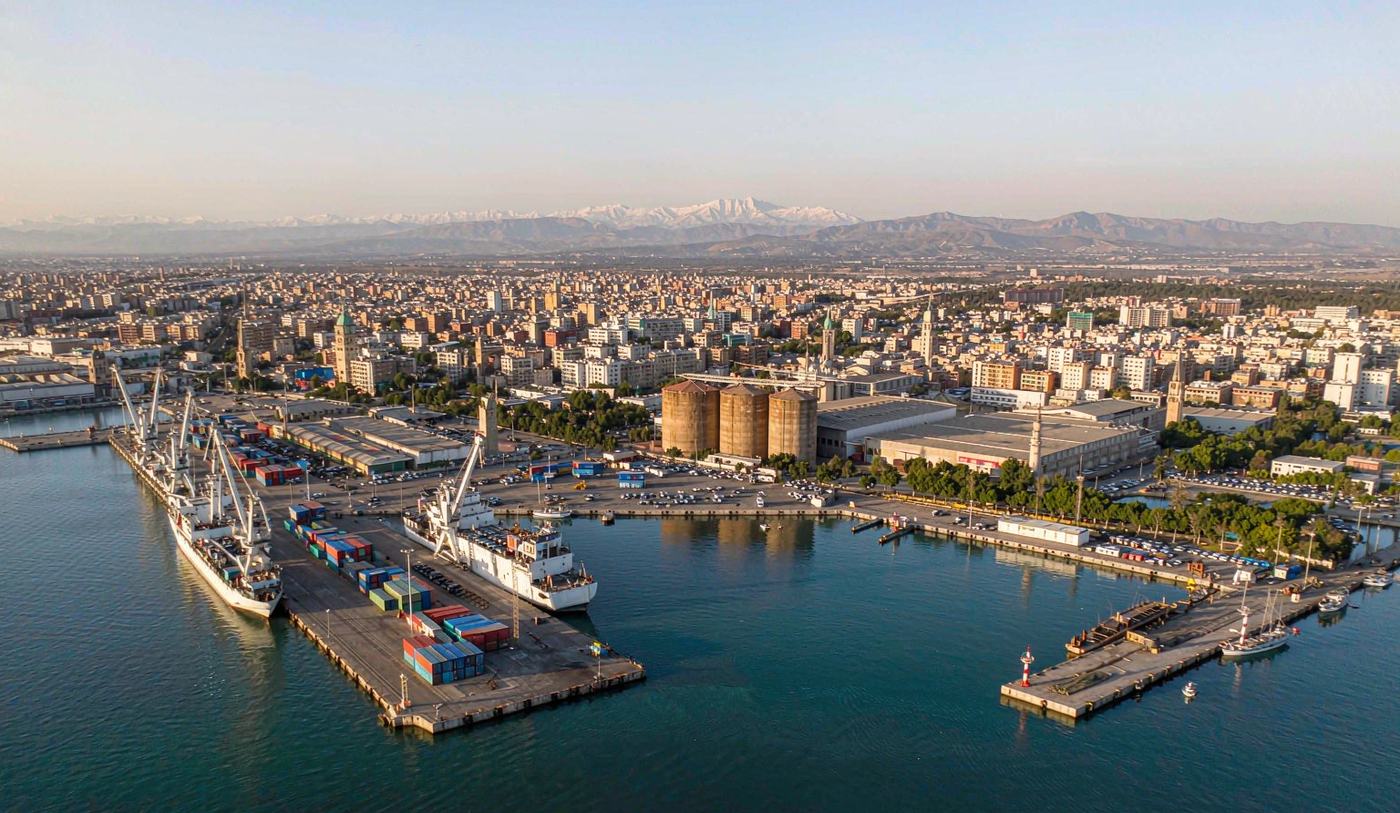
How to Ship from China to Lebanon: Beirut, ASYCUDA & the Exchange Rate
On most lanes the question is "what is the tax rate". On this one the question before that is "at what rate does my dollar invoice become the currency the tax is assessed in". Your supplier bills in US dollars; Lebanese customs assesses in local currency. Published commentary notes that since 2023 VAT on imports and many domestic supplies has been calculated at the market or Sayrafa rate rather than the former official peg — after the currency lost most of its value. In practice, that means an import costed months earlier on a stale rate can be assessed very differently, and it means the landed cost should be confirmed close to the shipment date, not at the planning stage.
Then there is the rate itself. Customs duty is assessed as a percentage of the CIF value using the HS code, running from zero on essential goods to genuinely high numbers on protected categories — published tariff data shows five percent for many goods, and rates as high as thirty-five or seventy percent on certain food categories. There is no flat rate to assume. The HS code is the answer, and nothing else.
On top of duty comes VAT at eleven percent, charged on the CIF value plus the duty. It was raised from ten percent in 2018 and has stayed at eleven through a sovereign default, a banking collapse and a currency collapse. Essential goods — food staples, medicines, books, agricultural inputs — are exempt.
At a glance
Country: on the eastern Mediterranean, bordered by Syria and Israel; capital Beirut. · Currency: the Lebanese pound, with the US dollar widely used in commerce; the currency lost most of its value over the crisis years and the economy is heavily dollarised. · Duty: by HS code on the CIF value, from zero on essential goods to high rates on protected categories; published tariff data shows 5 percent for many goods and up to 35 or 70 percent on some food categories. · VAT: 11 percent on CIF plus duty, raised from 10 percent in 2018; essential goods exempt. · Valuation: since 2023 import VAT is calculated at the market or Sayrafa rate rather than the former official peg. · Customs: Direction Générale des Douanes, declarations through ASYCUDA World with green, yellow and red channels. · Broker: only a licensed customs broker may submit a declaration. · Gateways: Port of Beirut, Tripoli, Rafic Hariri International Airport, and the Beirut Free Zone. · Clearance: sea green 2–3 working days, yellow 3–5, red 5–10; air green 1–2, perishables same day. · Transit: sea roughly 25–38 days, air 5–9.
How your cargo moves: China to Lebanon
Eight steps from your supplier's door to yours. The last four are the ones shaped by local rules.
- Pickup from your supplierWe collect the goods anywhere in China and bring them to our consolidation point.
- Export clearanceChina customs declaration filed and released before the goods move to the port.
- Loading and departureContainer loaded, sealed and handed to the carrier at the Chinese port.
- Main carriageOcean, air or rail movement booked on the route agreed for your cargo.
- Arrival at the gatewayDischarge at the port or airport of entry, recorded on the carrier's manifest.
- Import clearanceCustoms declaration filed locally, with duty and tax assessed on the declared value.
- Customs releaseGoods released into free circulation once duty and tax are settled.
- Final deliveryOnward movement to your delivery address, warehouse or nominated depot.
Duty rates, VAT rates and clearance times move, and the figure that applies to your goods is the one set for your commodity code on the day of clearance. We check the current position against your code before your goods sail and confirm it to you in writing — ask for that check when you request a quote.
The exchange rate is the variable nobody budgets for
Nobody importing into Lebanon for the first time expects the currency conversion to be the largest unknown in the costing. It usually is, and it works like this:
You are invoiced in dollars
Your Chinese supplier quotes and invoices in US dollars, as does your freight.
Customs assesses in local currency
The CIF value has to be expressed in the assessment currency before duty is calculated.
The conversion rate is set administratively
Published commentary describes the move since 2023 to the market or Sayrafa rate for import VAT rather than the former official peg.
The tax is charged on the converted figure
Duty, then VAT at eleven percent on the duty-inclusive amount, both on that converted base.
What to do about it: do not treat a landed-cost estimate for Lebanon as valid for months. Confirm the rate basis with your broker close to the shipment date, and ask which rate will actually be applied to your declaration. On a lane where the rate basis has moved once already, an old costing is a guess wearing a decimal point.
Duty by HS code, from zero to very high
Lebanon uses the Harmonised System, and the applicable rate depends entirely on the code. Published tariff data shows five percent for many ordinary goods, zero for essentials, and rates reaching thirty-five and seventy percent on certain food categories. The spread is wide enough that classification is not an administrative detail.
- Essential goods sit at or near zero. Food staples, medicines, books and agricultural inputs are published as exempt or very low.
- Protected categories sit very high. Certain food groups are published at 35 and 70 percent, which is a commercial decision rather than a costing adjustment.
- Excise applies on top for some categories.
- Preferential arrangements exist — Lebanon is party to the Greater Arab Free Trade Area — but whether one applies to your HS code has to be confirmed before you rely on it.
VAT at eleven, on the CIF plus duty
VAT is charged on the CIF value plus any customs duty, so the two taxes compound in the same way they do almost everywhere. A worked example at a CIF value of US$10,000 with duty at five percent: duty is US$500, the VAT base is US$10,500, and VAT at eleven percent is US$1,155 — a total tax of US$1,655, or 16.6 percent of CIF.
Two things about it. It is a single flat rate with no reduced band, so there is no scheduling to learn. And essential goods are exempt, which on this lane is worth checking properly, because the categories that are exempt are exactly the categories a first-time importer often brings in.
Beirut port, the airport and the free zone
Port of Beirut
The main sea gateway and the one your container will use. It sits next to the free zone and to the city, and it handles the container traffic. Plan for congestion and for public holidays in your schedule rather than assuming the published clearance time is the whole story.
Rafic Hariri International Airport
The air gateway, and materially faster to clear than the port. Document-complete air shipments are often released in one to two working days, and priority perishable handling can be same day. It is the mode for urgent, high-value and low-volume cargo.
The Beirut Free Zone, adjacent to the port, is the third option and the one most first-time importers never consider. Goods can be stored, processed or re-exported there without paying Lebanese import duty until they formally enter Lebanese territory. It suits three situations: regional distribution to other Middle East markets, deferring duty until a buyer is confirmed, and re-export operations where the goods will leave Lebanon without being consumed locally.
What clearance actually takes at Beirut
| Scenario | Published time |
|---|---|
| Sea freight, complete documents, green channel | 2–3 working days |
| Sea freight, documentary review (yellow) | 3–5 working days |
| Sea freight, physical inspection (red) | 5–10 working days |
| Air freight, complete documents, green channel | 1–2 working days |
| Air freight, perishables, priority lane | Same day to 1 working day |
| Incomplete or incorrect documents | Indefinite until corrected |
Read the last row carefully. On most lanes a missing certificate costs days. On this one it costs an unknown number of days, and the goods accrue storage throughout. Preparing the complete document set before the vessel sails is the single biggest lever an importer has here.
Only a licensed broker can file
This is a hard rule rather than a recommendation: only a licensed customs broker may submit declarations on behalf of an importer. The broker does four things you cannot do yourself:
- Lodges the declaration through ASYCUDA World with the correct classification and valuation method.
- Reviews the assessment before payment, which is where an error in the duty calculation gets caught.
- Arranges payment through a licensed customs bank and presents proof of payment.
- Coordinates examination and release, including container devanning and re-stuffing where a physical inspection is ordered, then collects the release note.
Choosing a broker with a long-standing daily presence at the port and the airport is, practically, choosing your clearance outcome.
The documents, and the origin certificate endorsement
| Document | Note |
|---|---|
| Bill of lading (sea) or airway bill (air) | Original or telex-released; match it to the invoice |
| Commercial invoice | Unit values, currency and Incoterm stated |
| Packing list | Packages, weights and dimensions |
| Certificate of origin | Endorsed by the chamber of commerce in the country of origin — a common cause of delay when missed |
| Import permit | Food, chemicals, pharmaceuticals and commodity-dependent categories |
| Health or phytosanitary certificate | Food, plants and animals |
| Conformity or quality certificate | Where Ministry of Economy requirements apply |
| Dangerous goods documentation | Where applicable |
Get the origin certificate endorsed before the goods sail. Lebanese customs requires proof of origin for foreign goods, and the endorsement has to come from the chamber of commerce in the country of origin. An unendorsed certificate is not a small problem — it is the kind of problem that turns a three-day clearance into an open-ended one.
Packing and insurance in a port still rebuilding
Two practical notes for this specific gateway. Containers selected for physical inspection are devanned and re-stuffed, so pack for the possibility that the cartons will be opened and handled twice. And because storage accrues from the moment free time expires, cargo insurance and a realistic buffer in your schedule cost far less than the alternative.
Why importers use Goodhope on this lane
Six things that are different about working with us on China to Lebanon shipments.
Straight cases bound for Lebanon
Five shipments bought in China and delivered into Lebanon, told end to end — where the order came from, how it moved, where it nearly went wrong, and how it finished. Client names are withheld at their request; the situations and the handling are what we deal with on this lane.
Which currency you plan in · first order · Shenzhen to Beirut
The purchase. A buyer new to importing costed the order in his own currency and assumed the conversion was a formality.
The move. Full container with the landed cost set out in a currency both sides could plan against.
Where it nearly went wrong. Import tax here has been calculated at the market rate rather than the former official peg since 2023, so the converted figure moves. Quoting your own customer in a currency you have not thought about is the fastest way to lose the margin.
How it finished. We build the landed cost in freely convertible currency now. His margins have held.
Licensed broker · before booking · Ningbo to Beirut
The purchase. A first-time buyer planned to file himself to save the fee.
The move. Sea freight with a licensed customs broker appointed before departure.
Where it nearly went wrong. Only a licensed broker can file here, and that is not a preference you can argue past. Discovering it after arrival means the entry does not exist while you appoint one.
How it finished. He appointed the broker during booking. Every entry since has been accepted first time.
Origin certificate · endorsement · Guangzhou to Lebanon
The purchase. A buyer sent a certificate of origin that had not been endorsed, having never been asked for one before.
The move. Consolidated sea freight with the certificate endorsed before departure.
Where it nearly went wrong. The certificate needs endorsement rather than merely existing. An unendorsed document is treated as missing, and getting one endorsed after the goods sail costs more than getting it right beforehand.
How it finished. We made endorsement a supplier condition. No document query since.
Packing · port conditions · Yiwu to Beirut
The purchase. A buyer packed to his usual standard and met heavier handling than he had planned for.
The move. Full container packed and insured for the handling conditions at the port.
Where it nearly went wrong. Packing and insurance decisions here should follow how cargo is actually worked rather than how it is usually handled. Damage claims fail when the packing was specified for a different port.
How it finished. We specified packing and cover together. Nothing has arrived damaged since.
The code sets everything · quoting · Shanghai to Lebanon
The purchase. A buyer applied one duty figure across a mixed consignment.
The move. Full container with each line worked out on its own code.
Where it nearly went wrong. Duty runs from zero on essential goods to high rates on protected categories, and the rate follows the code rather than the invoice. A blended figure across a mixed consignment is wrong on most of its lines.
How it finished. We classify line by line. His landed costs have matched the assessment every time.
Why importers use Goodhope on this lane
Six things that are different about working with us on China to Lebanon shipments.
See the landed cost in a currency you can plan with
Tell us what you are shipping, the HS codes if you have them, the packed dimensions and gross weight, the pickup city in China and the delivery address in Lebanon. We will confirm the duty rate for your code before anything is filed, tell you which exchange rate basis will be applied to your declaration, arrange the certificate of origin with chamber endorsement before the goods sail, and set out duty and the eleven percent VAT so you can see the landed cost in a currency you can actually plan against.
Get a quote Talk to usRelated pages
Frequently asked questions
Why does the exchange rate matter so much?
You are invoiced in dollars; customs assesses in local currency. Since 2023 import VAT has been calculated at the market or Sayrafa rate rather than the former official peg, so a costing based on a stale rate can be materially wrong. Confirm the basis close to shipment.
What duty and VAT will I pay?
Duty by HS code on the CIF value, from zero on essentials to 35 or 70 percent on some food categories, with 5 percent common for many goods. Then VAT at 11 percent on CIF plus duty. Essential goods are exempt.
Which port does cargo arrive at?
The Port of Beirut for sea, with Tripoli secondary, and Rafic Hariri International Airport for air. The Beirut Free Zone allows storage and re-export without paying import duty until goods enter Lebanese territory.
How long does clearance take?
Sea green channel 2–3 working days, yellow 3–5, red 5–10. Air green 1–2, perishables same day. Incomplete documents mean indefinite delay.
What are the ASYCUDA channels?
Green is automatic release, yellow is documentary review, red is physical inspection including devanning and re-stuffing. Which you get depends on risk profile and document quality.
Can I file myself?
No — only a licensed customs broker may submit declarations in Lebanon. The broker also reviews the assessment, arranges payment through a licensed customs bank, and coordinates examination and release.
What documents are required?
Bill of lading or airway bill, commercial invoice with Incoterm, packing list, a certificate of origin endorsed by the chamber of commerce in the country of origin, plus import permits, health or phytosanitary certificates, and conformity certificates where applicable.
Is the free zone worth using?
For regional distribution, deferring duty until a buyer is confirmed, or re-export where goods will leave Lebanon, yes. It defers the duty rather than removing it.
How long does shipping take?
Sea from China to Beirut roughly 25–38 days depending on origin and transhipment, with LCL adding consolidation time. Air 5–9 days including handling. Add clearance time for your channel.
Is there a trade agreement that helps?
Lebanon is party to the Greater Arab Free Trade Area and has an EU association agreement from 2006. Whether one applies to your HS code has to be confirmed before you rely on it.