
Home / Shipping to Oman / How to Ship from China to Oman
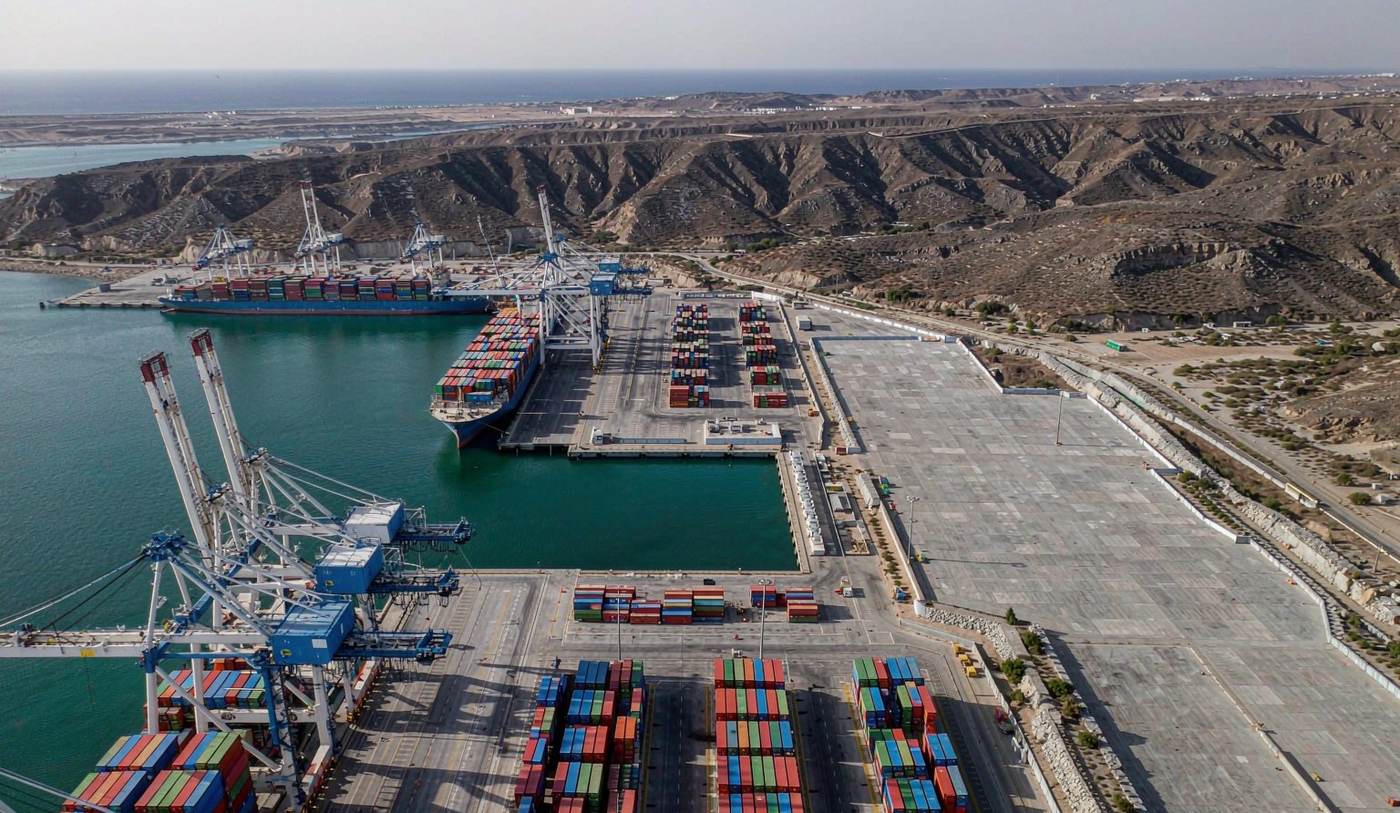
How to Ship from China to Oman: Sohar, Bayan & the Five on Top of Five
Oman is one of the easier Gulf lanes to understand, which is exactly why people under-prepare for it. The tax position really can be stated in one line: five percent duty on the CIF value under the GCC common external tariff, then five percent VAT on the duty-inclusive value, giving an effective burden of roughly 10.25 percent for a standard commercial import.
What catches importers out is not the arithmetic. It is the three things around it: Bayan, the electronic platform that insists on twelve-digit HS codes and will not accept paper; the two percent deposit that lands on unattested documents; and the weeks behind a product approval, particularly for telecom and wireless goods. Those are administrative, and they are where the time goes.
The third thing worth knowing before you start is that Oman has four working ports that are not interchangeable — Sohar, Salalah, Duqm and Muscat — and picking the wrong one adds a domestic leg that nobody quoted.
At a glance
Country: around five million people on the south-eastern coast of the Arabian peninsula; capital Muscat; a GCC and WTO member. · Currency: the Omani rial, pegged to the US dollar. · Duty: the GCC common external tariff, generally 5 percent of CIF on most goods; higher on defined categories — tobacco, alcohol, energy drinks and pork reported at 100 percent, carbonated drinks at 50 percent; textiles and clothing reported at 5 to 12 percent; anti-dumping duties possible on steel. · VAT: 5 percent, in force since April 2021, charged on the CIF value plus duty. · Combined: about 10.25 percent of CIF on a standard import. · Customs platform: Bayan, with electronic filing described as mandatory and twelve-digit GCC HS codes enforced. · Registration: MOCIIP commercial registration with an import activity, customs registration on Bayan and an importer code, plus Oman Chamber of Commerce and Industry membership. · Ports: Sohar, Salalah, Duqm and Port Sultan Qaboos at Muscat. · Airport: Muscat International, with Salalah and Sohar also served. · Clearance: 1 to 3 business days clean and non-regulated; 2 to 5 business days where regulated approvals are in place. · Transit: sea to Sohar 12 to 20 days, LCL adding 5 to 9 days, air 4 to 6 days.
How your cargo moves: China to Oman
Eight steps from your supplier's door to yours. The last four are the ones shaped by local rules.
- Pickup from your supplierWe collect the goods anywhere in China and bring them to our consolidation point.
- Export clearanceChina customs declaration filed and released before the goods move to the port.
- Loading and departureContainer loaded, sealed and handed to the carrier at the Chinese port.
- Main carriageOcean, air or rail movement booked on the route agreed for your cargo.
- Arrival at the gatewayDischarge at the port or airport of entry, recorded on the carrier's manifest.
- Import clearanceCustoms declaration filed locally, with duty and tax assessed on the declared value.
- Customs releaseGoods released into free circulation once duty and tax are settled.
- Final deliveryOnward movement to your delivery address, warehouse or nominated depot.
Duty rates, VAT rates and clearance times move, and the figure that applies to your goods is the one set for your commodity code on the day of clearance. We check the current position against your code before your goods sail and confirm it to you in writing — ask for that check when you request a quote.
The GCC tariff, and the VAT that sits on top of it
The duty is assessed on the CIF value — not on the factory invoice, and not on the FOB value. Oman applies the GCC common external tariff, and for the great majority of goods that means a flat five percent. That predictability is the good news, and it makes landed-cost modelling easier here than on most lanes.
The second layer is VAT at five percent, in force since April 2021, and charged on the duty-inclusive value rather than on CIF alone. So the sequence is: duty on CIF, then VAT on CIF plus duty. For a standard import that works out at about 10.25 percent of CIF in total. If you are VAT-registered in Oman, the import VAT is generally recoverable through your return — which is why the number matters differently to a registered trader than to an end user.
Duty on the CIF value
GCC common external tariff, generally 5 percent. Higher on defined categories; zero for qualifying GCC-origin goods with a valid certificate of origin.
VAT on the duty-inclusive value
5 percent on CIF plus duty, since April 2021. Recoverable through your VAT return if you are registered.
Clearance and delivery
Broker fee, port and terminal handling, and inland delivery. Small relative to the tax, and easy to forecast.
The categories that break the five percent pattern are worth knowing because they are steep: tobacco, alcohol, energy drinks and pork products are reported at 100 percent, carbonated drinks at 50 percent, with excise tax applied on top where it applies. Textiles and clothing are reported in a band of roughly 5 to 12 percent by HS code, and steel can attract anti-dumping duties. Confirm your own line rather than assuming the flat rate.
A trap worth naming: goods manufactured or substantially transformed inside a GCC state can come in at zero duty, but goods merely re-exported through a Gulf free zone do not qualify. Chinese electronics stored in a Dubai free zone and shipped on to Oman are still Chinese-origin and still pay the five percent. A Gulf transhipment does not confer Gulf origin.
Bayan, and the twelve-digit code it will not accept without
Bayan is Oman's integrated electronic customs platform, run under the Directorate-General of Customs. Your broker files the declaration there — importer and exporter details, HS classification, cargo description, the CIF breakdown, transport details, and the supporting documents as attachments.
Three practical points:
- Electronic filing is the route. Published guidance describes declarations as being required electronically through Bayan, with paper declarations no longer accepted at border crossings. There is no fallback to a counter.
- Twelve-digit HS codes. Bayan enforces the twelve-digit GCC code, which is longer than the six or eight digits most suppliers work with. This is the single most common reason a declaration is rejected the first time.
- Risk channels. The system assigns a clearance channel on a risk basis — green for auto-clearance, yellow for document review and red for physical examination. Published figures describe roughly 60 percent green, 25 percent yellow and 15 percent red.
The consequence is that classification has to be settled before the declaration is filed, not during it. An eight-digit code from a supplier is not enough; it has to be extended to the twelve-digit GCC level and validated. That is the work we do before the booking, and it is why we ask for the HS code early.
Sohar, Salalah, Muscat or Duqm
Sohar
The working container gateway on the northern coast, and the one most China services use. It is a deep-water port with a substantial industrial and free-zone complex alongside it, and it sits close to the UAE border and to Muscat by road. For most general cargo from China, this is the default.
Salalah
In the far south, and primarily a transhipment hub on the main east-west trunk routes rather than a local import gateway. It has its own free zone. Worth using where the service calls there directly or where the delivery address is in the south.
Duqm is the newer port and special economic zone on the central coast, developed for industry and logistics, and relevant for project and industrial cargo rather than routine container imports. Port Sultan Qaboos at Muscat has largely moved towards tourism and general cargo; it is not where your container is likely to go.
How to choose: confirm the port against the service that actually calls there and the delivery address, not against a map. Shipping to Sohar for a Salalah delivery adds a domestic road leg across the country; shipping to Salalah for a Muscat delivery does the same in reverse.
The two percent deposit on unattested paperwork
This one is small in money and large in annoyance, and it is entirely avoidable.
Where supporting documents are submitted without the required attestation — the certificate of origin attested by the chamber of commerce in the exporting country being the usual case — Oman customs may apply a surcharge described as a deposit of two percent of the customs duty. It can be reclaimed by producing the original attested documents within the stated window, commonly quoted as ninety days.
What that means in practice: attest the commercial documents before the declaration goes in. The cost of getting a certificate of origin properly attested in China is trivial compared with tying up a deposit and a reclamation process, or with the delay while it is sorted out.
Registration that has to predate the container
Commercial importing into Oman needs setup on the Omani side before there is anything to declare. Published guidance describes the following as the working requirements:
- Commercial registration with an import activity, issued through MOCIIP. The full licence process, when documents are complete, is commonly quoted at two to four weeks.
- Registration with the customs authority on Bayan, which produces the importer code referenced on every declaration. Registration asks for the commercial registration certificate, tax card, chamber membership and a signed application from the authorised signatory.
- Oman Chamber of Commerce and Industry membership, which is a prerequisite for trade certificates and for certain port approvals.
- Approved Bayan users, so that someone in the business can actually authorise declarations.
Missing registration is the most common reason a first shipment stalls. It is not a freight problem and it cannot be fixed by a forwarder at the border — it has to be done before the cargo sails.
Telecom and wireless: the approval measured in weeks
If your product has radio, cellular, Wi-Fi, Bluetooth or satellite functionality, this section probably matters more than the freight.
Oman requires TRA type approval for telecoms and wireless devices, and then a TRA customs release permit number entered into the Bayan declaration for each shipment. Published lead times put type approval for a new device with no existing approval at three to five weeks from complete documentation.
Other sector approvals follow the same pattern of being slow and easy to forget:
| Product | Approval | Note |
|---|---|---|
| Telecom and wireless devices | TRA type approval plus a per-shipment customs release permit | Type approval quoted at 3–5 weeks; the permit number goes into Bayan |
| Low-voltage electricals and toys | Gulf G-Mark conformity, meeting GSO standards | Confirm whether your product is in scope before shipping |
| Medical and healthcare goods | Ministry of Health permit | Establishment and device class affect the route |
| Food, agricultural and animal products | MAFWR SPS certificate or import permit | Plan the certificate before the cargo sails |
The rule that follows from all of these: lead times for approvals belong before the booking, not after it. A container that arrives without its product approval does not wait politely — it waits in the yard, at your cost.
Free zone or mainland, and why the answer changes the entry
Oman's free zones at Sohar, Salalah and Duqm are genuinely useful for staging, re-export and light processing. Goods held inside a zone are generally outside the customs territory and not subject to duty or VAT while they remain there.
The part people get wrong is what happens next. Moving goods from a free zone into mainland Oman is a separate import, with its own declaration, its own duty and its own VAT. Arriving in a free zone does not complete an Omani import — it postpones it.
So the question to settle early is whether the goods are meant to stay in the zone, be re-exported, or enter the mainland. Those are three different customs routes with three different cost profiles, and treating a zone arrival as the final import is a common and expensive misreading.
How long Oman clearance takes and what moves it
| Scenario | Published clearance time |
|---|---|
| Non-regulated air or sea freight, complete documentation | 1–3 business days |
| Regulated or telecom shipment with the approval already in place | 2–5 business days |
| New device requiring TRA type approval | 3–5 weeks from complete documentation |
| Free zone to mainland transfer | Additional, depending on the customs route and documents |
The variables are consistent: whether the twelve-digit code was validated before filing, whether the documents were attested, whether product approvals exist, and whether the goods enter the mainland directly or come out of a zone. All four are decided before the vessel arrives.
The document file that earns a green channel
| Document | What it has to do |
|---|---|
| Commercial invoice | Twelve-digit GCC HS code, CIF value and a full product description — not "parts" or "electronics" |
| Packing list | Carton count, weights and dimensions, matching the invoice |
| Certificate of origin | Attested by the chamber of commerce in the exporting country; unattested documents attract the 2 percent deposit |
| Bill of lading or air waybill | Consignee matching the registered importer behind the importer code |
| Customs declaration | Filed through Bayan with twelve-digit codes |
| TRA customs release permit | Per shipment, for telecom and wireless goods |
| Sector permits | Ministry of Health, MAFWR SPS, or conformity certification as the product requires |
| Insurance certificate | Not less than 110 percent of CIF |
| ISPM 15 evidence | Stamp on every wooden pallet or crate |
Where a Muscat broker earns the fee
Because the duty arithmetic is simple and the platform is efficient, it is tempting to treat Oman as a lane that runs itself. It mostly does — until it does not.
The value a broker adds here is concentrated in four places: getting the twelve-digit code right before filing so the declaration is not rejected, having the importer registration and Bayan users in place before the first shipment, knowing which products need an approval and starting it weeks early, and choosing the right customs route where a free zone is involved. None of that is freight, and all of it decides whether a container clears in two days or sits for two weeks.
Why importers use Goodhope on this lane
Six things that are different about working with us on China to Oman shipments.
Honest cases when importing into Oman
Five shipments bought in China and delivered into Oman, told end to end — where the order came from, how it moved, where it nearly went wrong, and how it finished. Client names are withheld at their request; the situations and the handling are what we deal with on this lane.
Twelve digits · rejected filing · Shenzhen to Sohar
The purchase. A buyer new to importing supplied the six-digit code he used everywhere else.
The move. Full container declared against twelve-digit regional codes before filing.
Where it nearly went wrong. The customs platform enforces the twelve-digit regional classification and rejects a declaration without it. Getting the extension right is a pre-shipment task, not something the system will resolve for you.
How it finished. We extended the codes during production. Every filing since has been accepted.
Attestation · two per cent · Ningbo to Oman
The purchase. A first-time buyer sent documents that had not been attested and met a deposit requirement he had not budgeted for.
The move. Consolidated sea freight with documents attested before departure.
Where it nearly went wrong. Unattested paperwork attracts a percentage deposit against the declaration. It is avoidable entirely, and it is the kind of charge that makes a first shipment feel more expensive than it needed to be.
How it finished. We attest before shipping. He has not paid a deposit since.
The high bands · quoting · Guangzhou to Oman
The purchase. A buyer applied the standard rate to a consignment that included drinks.
The move. Consolidated cargo with each line rated correctly, including the much higher bands.
Where it nearly went wrong. Some categories carry rates far above the standard one, with drinks and tobacco reported at the top of the schedule and carbonated drinks set high as well. Applying the standard rate across a mixed invoice is the largest single quoting error on this lane.
How it finished. We rate line by line. His landed costs have matched the assessment every time.
Wireless approval · weeks · Yiwu to Oman
The purchase. A buyer importing telecoms hardware assumed approval could run while the goods were in transit.
The move. Sea freight with the equipment approval obtained before booking.
Where it nearly went wrong. Telecom and wireless equipment needs its approval, and it is measured in weeks rather than days. Cargo arrives to wait rather than to clear when that approval was never started.
How it finished. We start approval at quotation now. Nothing has waited on it since.
Free zone or mainland · the entry changes · Shanghai to Oman
The purchase. A buyer running a distribution operation imported everything onto the mainland.
The move. Cargo entered under the regime that matched what happened to it next, with the difference documented.
Where it nearly went wrong. Free zone and mainland entries are different procedures with a different outcome, and which one you want depends on whether the goods are re-exported or consumed. Choosing by habit rather than by purpose costs duty you did not need to pay.
How it finished. He splits inbound cargo by destination now. Duty on re-exported lines stopped being a cost.
Why importers use Goodhope on this lane
Six things that are different about working with us on China to Oman shipments.
Ask us to check the HS code before you order
Tell us what you are shipping, the HS codes if you have them, the packed dimensions and gross weight, the pickup city in China and the delivery address in Oman. We will validate the twelve-digit GCC code before anything is filed, tell you which port fits the service and the address, flag any product approval your goods need and how long it takes, and set out the five percent duty plus the five percent VAT so you can see the landed cost before you commit.
Get a quote Talk to usRelated pages
Frequently asked questions
What duty and tax will I pay?
The GCC common external tariff at generally 5 percent of CIF, with higher rates on tobacco, alcohol, energy drinks and carbonated drinks. VAT at 5 percent then applies to the duty-inclusive value. Combined, a standard import lands at about 10.25 percent of CIF. Recoverable if you are VAT-registered.
Which port should I ship to?
Sohar is the working container gateway most China services use. Salalah is primarily a transhipment hub in the south. Duqm is the newer special economic zone. Port Sultan Qaboos at Muscat has moved largely to tourism and general cargo. Choose against the service and the delivery address.
What is Bayan?
Oman's integrated electronic customs platform. Declarations are filed there by the importer or an authorised broker, electronic filing is described as mandatory, and it enforces twelve-digit GCC HS codes strictly. Settle the code before filing.
How long does clearance take?
Published figures: 1 to 3 business days for clean non-regulated cargo, 2 to 5 business days where regulated approvals are already in place. Anything needing a new product approval is much longer, and a free zone to mainland transfer adds its own step.
Do I need to be registered first?
Yes — commercial registration with an import activity through MOCIIP, customs registration on Bayan with an importer code, and Oman Chamber of Commerce membership. Missing registration is the most common reason a first shipment stalls.
What is the two percent deposit?
A surcharge described as a deposit of two percent of the customs duty where documents are submitted unattested. Recoverable by producing original attested documents within the stated window, commonly ninety days. Avoidable by attesting in China first.
Do telecom or wireless products need approval?
Yes. TRA type approval, plus a TRA customs release permit number entered into Bayan per shipment. Type approval for a new device is quoted at three to five weeks from complete documentation.
Does a free zone avoid duty?
While goods stay inside the zone, they are outside the customs territory and not subject to duty or VAT. Moving them into mainland Oman is a separate import with its own declaration. A zone arrival does not finish the import.
Does routing through Dubai give zero duty?
No. Only goods manufactured or substantially transformed within a GCC state qualify, and you must prove it with a valid certificate of origin. Chinese goods merely stored in a Dubai free zone remain Chinese-origin and pay the standard 5 percent.
How long does shipping take?
Sea freight to Sohar is published at roughly 12 to 20 days, LCL adding another 5 to 9 days for consolidation and deconsolidation, and air at about 4 to 6 days. Add 1 to 3 business days for a clean clearance.