
Home / Shipping to the Philippines / How to Ship from China to the Philippines
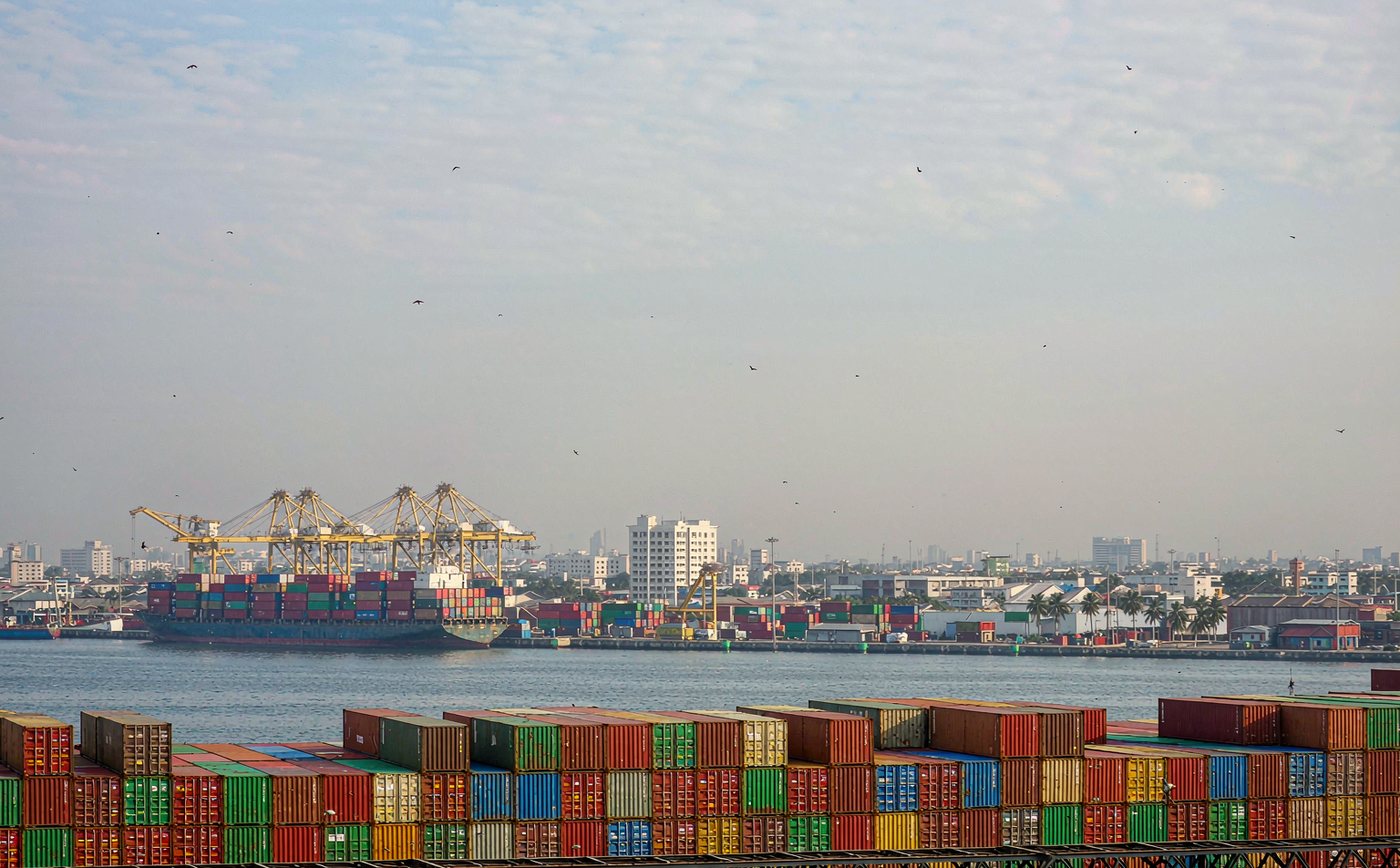
How to Ship from China to the Philippines: Manila, VAT & Entry Types
The Philippines sorts imports by a number before it sorts them by anything else. The declared value decides which of three procedures your shipment goes through, and that in turn decides whether you can file it yourself or need a licensed broker, whether duty and VAT are charged at all, and how much documentation the Bureau of Customs expects. Ten thousand pesos is one line. Fifty thousand pesos is the other. They are not administrative details — they change how the shipment is handled.
The second thing is geography. The Philippines is an archipelago, and the crossing from China is the easy half. A container reaches Manila in a few days and then waits for a feeder or a roll-on roll-off vessel to Cebu, Davao or Cagayan de Oro, on a schedule with its own bottlenecks. Importers who quote to Manila and promise to Cebu are the ones who get caught.
The third thing is that the small-parcel exemption here is generous and it is being argued about. Goods at or below ten thousand pesos enter free of duty and VAT, which is a higher threshold than most of the region still offers. Retail bodies have publicly pushed for it to be revisited during 2026. Nothing has been enacted, but a business model that only works below the line is a business model with a policy risk attached.
How your cargo moves: China to the Philippines
Eight steps from your supplier's door to yours. The last four are the ones shaped by local rules.
- Pickup from your supplierWe collect the goods anywhere in China and bring them to our consolidation point.
- Export clearanceChina customs declaration filed and released before the goods move to the port.
- Loading and departureContainer loaded, sealed and handed to the carrier at the Chinese port.
- Main carriageOcean, air or rail movement booked on the route agreed for your cargo.
- Arrival at the gatewayDischarge at the port or airport of entry, recorded on the carrier's manifest.
- Import clearanceCustoms declaration filed locally, with duty and tax assessed on the declared value.
- Customs releaseGoods released into free circulation once duty and tax are settled.
- Final deliveryOnward movement to your delivery address, warehouse or nominated depot.
Duty rates, VAT rates and clearance times move, and the figure that applies to your goods is the one set for your commodity code on the day of clearance. We check the current position against your code before your goods sail and confirm it to you in writing — ask for that check when you request a quote.
Three ways in, decided by a peso figure
| Declared value (FOB or FCA) | Procedure | What it means in practice |
|---|---|---|
| 10,000 pesos or less | De minimis | No customs duty and no VAT. Simplified declaration through an accredited courier or the postal service. Still subject to prohibited and regulated goods rules. |
| Above 10,000 and under 50,000 pesos | Informal entry | Simplified documentation, and no licensed customs broker required. Duty and VAT are assessed and paid. |
| 50,000 pesos and above | Formal entry | Filed electronically by a licensed customs broker, on an accredited importer's record. The full documentation set, plus any agency permits. |
Two misconceptions are worth clearing up before you build anything on that first row. The threshold is per consignment, not per item, and Philippine customs applies aggregation rules precisely to catch one order split into several parcels. And the exemption covers duty and VAT only — it does not switch off a permit requirement. A cosmetic or a radio device below ten thousand pesos still needs its FDA notification or its type approval.
Manila, Batangas, Cebu and Davao
| Gateway | Region served | Notes |
|---|---|---|
| Manila | Metro Manila and Luzon | Handles the bulk of containerised imports. Also where congestion concentrates: the yard runs close to full in the months before Christmas, and container dwell then extends well beyond the usual. |
| Batangas | Calabarzon, south of Manila | Worth asking about for Laguna, Batangas and Quezon destinations, and often faster than trucking everything out of Manila. |
| Cebu | The Visayas | The main southern hub, reached either by direct service or by feeder from Manila. |
| Davao | Mindanao | Serves the southern island, usually through a transhipment or feeder leg. |
| Subic and Clark | Their own zones | Useful where the consignee sits inside the relevant zone. |
| Manila, Cebu and Clark airports | Air freight | Manila takes most air cargo, with Cebu and Clark as alternatives depending on destination. |
Choose by the delivery address, not by habit. A Batangas call can remove a day of Metro Manila trucking, and a Cebu direct service can remove a whole feeder leg if one is available for your volume.
How long into the Philippines by vessel and aircraft
| Mode | Typical transit | When it fits |
|---|---|---|
| Ocean FCL | From South China into Manila commonly around three to six days port to port; East China origins commonly around six to twelve depending on the service | Regular volume, and the default for anything above roughly 15 cubic metres. |
| Ocean LCL | Vessel time plus consolidation and deconsolidation | Trial orders and part loads. Ask what deconsolidation costs at the Manila end before you commit. |
| Air freight | One to three days airport to airport into Manila | Urgent, high value density, samples, components. |
| Express courier | A few days door to door | Documents, samples and small parcels, subject to the ten thousand peso line. |
| Inter-island leg | Feeder and roll-on roll-off services to Cebu, Davao and Cagayan de Oro add several days and their own schedule | Anything outside Luzon. This is the leg that breaks delivery promises. |
Clearance on a complete file is commonly around three days, and three to ten where the declaration is examined. We do not publish freight rates here. Ask for base freight, origin charges in China, destination charges in the Philippines, duty, VAT and inland or inter-island delivery as separate lines so you can see what moved when the price changes. See our local charges page.
The second leg: inter-island, and where the week goes
Shipping to Manila and shipping to the Philippines are not the same thing. Once the container is discharged, anything bound for the Visayas or Mindanao travels again, on a domestic network with its own constraints.
- Feeder and roll-on roll-off services carry containers between the islands, operated by domestic lines. Sailings are not daily to every port.
- Feeder space tightens before Christmas, with loading in the weeks beforehand, and again before the pre-typhoon restocking period in the middle of the year.
- Weather cancels sailings. During typhoon season a domestic leg can slip by days with no notice.
- Quote to the door, not to the port. A forwarder quoting to Manila for a Davao consignee has not quoted the shipment.
Incoterms, and the accreditation that lets you file
The trade term divides cost and risk. It does not confer accreditation, and it does not remove an agency permit.
- EXW — you collect at the supplier's door and carry everything including Chinese export formalities. Rarely sensible for a first import.
- FOB — the supplier loads and clears Chinese export; you take over at the Chinese port. The usual choice for experienced buyers.
- CIF — the supplier pays freight and insurance to the Philippine port, risk passes in China, and you still clear. Not delivered.
- DAP — delivered to a named place in the Philippines with you handling clearance, duty and VAT.
- DDP — the seller carries duty and taxes too, which requires a Philippine party with accreditation and a licensed broker to file. Ask who holds the record and who is liable.
The Importer Clearance Certificate and the entry you file in E2M
Philippine customs runs entries through its electronic system, and access to it is tied to accreditation rather than to the shipment.
Accredit the importer and the broker
Both importers and customs brokers have to be accredited with the Bureau of Customs. Regular importers hold an Importer Clearance Certificate obtained through the Client Profile Registration System. Without accreditation there is no access to the filing system, so this comes before the first booking rather than during it.
Classify at ten digits
Goods are classified under the ASEAN Harmonised Tariff Nomenclature. The code drives the duty rate, whether the product is regulated, and whether a preferential certificate will help. Misclassification is one of the most common triggers for a post-clearance assessment, so take the code from someone who will be liable for it.
File the entry electronically
The import entry and internal revenue declaration is lodged through the electronic customs system, usually by a licensed broker through a value added service provider. Note that the system does not handle permits issued by other agencies — those are applied for separately and attached.
Let the selectivity system decide the lane
Low risk goes green and releases without review. Moderate risk goes yellow for a document review. High risk goes red for document review and physical examination, which adds working days. There is also a blue lane, for a shipment released but flagged for later audit. Goods stay in customs custody until duties, taxes and charges are settled and any permits are produced.
Keep the records
Philippine customs can run a post-clearance audit for years after the entry. Keep invoices, certificates of origin, specifications and proof of value from the start, because reconstructing them later is far more expensive than filing them once.
A container from Shekou, followed through to a door in Laguna
Laguna and the Calabarzon belt south of Manila hold a large share of Philippine manufacturing. This is a routine shipment into one of them.
Decide the entry type from the value
Before anything else, the declared value tells you whether this is an informal entry or a formal one, and therefore whether you need a broker and an accredited importer on the record.
Check the permits, not the freight
If the goods are food, cosmetics, appliances or anything with radio, the agency clearance is the long lead item. A type approval for a new model can take weeks, and it is needed before release rather than after.
Apply for the certificate in China
Form E under the ASEAN–China agreement, or the RCEP certificate where the RCEP rate for the code is lower. Both are arranged before departure, and both reduce duty only — the VAT is still payable.
Load a compliant pallet and write a real description
Wood packaging meets ISPM 15, with heat treatment preferred. The invoice describes the goods rather than calling them merchandise. Vague descriptions are a reliable way to earn a physical examination.
Discharge, clear and deliver
Discharge at Manila or Batangas depending on the service, entry filed and taxes paid, release issued, then the haul into Laguna. On a clean file this is a move measured in days from arrival.
Duty, the twelve percent VAT, and the excise that sits on top
| Charge | Basis | Notes |
|---|---|---|
| Import duty | Customs value, at the rate for your code | Commonly zero to around thirty percent for ordinary consumer goods, with higher rates on some lines. Information technology products such as laptops and phones enter at zero under the technology agreement. |
| VAT | 12% on the landed cost | The landed cost includes the customs value, the duty and any excise tax. Charged on commercial imports at any value above the de minimis line. |
| Excise tax | By category | Alcohol, tobacco, petroleum products, jewellery, perfumes and some vehicles. It sits inside the VAT base, so it is taxed twice over. |
| Import processing and documentary stamp | Fixed or banded charges | Modest in absolute terms, but they are real lines on the assessment. |
The compounding is worth seeing once: an excise-taxed product pays excise, then VAT on a figure that already includes the excise. That is why a luxury or alcohol line can land materially higher than a 12% headline suggests.
The ten thousand peso line, and why it is being argued about
Under the Customs Modernization and Tariff Act, goods with a free on board or free carrier value of ten thousand pesos or less per consignment enter free of duty and VAT. The threshold was raised to that figure in 2016 from a level that had stood for decades, and it applies across air, sea, courier and postal channels.
Two things are true about it in 2026. It is still in force. And it is under public pressure: retail bodies have argued during the year that the threshold is now among the highest in the region and outdated given the scale of e-commerce, and the direction of travel elsewhere in Asia has been to cut or scrap low value exemptions. Nothing has been enacted.
Plan without it. If your margin only works because shipments land under the line, you are one policy change from a rebuild. Two things are worth doing regardless: learn the certificates of origin, because a preferential rate down to zero is far more durable than a threshold that can be legislated away, and consolidate properly rather than splitting orders into parcels engineered around a number.
FDA, BPS and NTC: permits that outrank the value
FDA Philippines
Food, drugs, cosmetics and medical devices fall to the Food and Drug Administration. The importer needs a licence to operate, and each product needs a notification or registration — a cosmetic product notification, or a certificate of product registration for higher risk categories. Registration for a new product is commonly quoted in months.
Practitioners also note that small quantities genuinely for personal use are treated differently from commercial quantities, and that exceeding the informal limit reclassifies the goods as commercial with the full requirements attached.
BPS and NTC
The Bureau of Philippine Standards runs the product certification regime: a Philippine Standard mark or an import commodity clearance for regulated consumer products, which include many appliances and building materials. Note that the abbreviation ICC is used for two different things in Philippine importing — an Import Commodity Clearance from BPS, and the Importer Clearance Certificate from customs. They are unrelated.
Anything with radio needs type approval from the National Telecommunications Commission, and new models can take several weeks. Obtain it before booking.
Form E and RCEP, and taking the lower of the two rates
The Philippines sits inside both the ASEAN–China Free Trade Area and RCEP, so there are two certificates to compare and the answer differs by product. The sequence is the same one that works everywhere: get the Philippine classification first, look up the rate under each agreement, and apply for whichever is lower.
Why it matters is easiest to see on consumer electronics. Laptops, tablets and phones enter at zero under the technology agreement regardless of origin, so the certificate changes nothing on the duty line. A television does not: the general rate is ten percent, and the preferential schedules bring it down substantially for eligible origin. Same shipment category, completely different answer to "is the certificate worth it".
Whichever you use, the certificate is applied for in China before departure, and it reduces the duty only. The twelve percent VAT is charged on the landed cost in every case.
Wood packaging and the description on the invoice
ISPM 15, and heat treatment preferred
All solid wood packaging — pallets, crates, dunnage — must be treated and carry the IPPC mark. Heat treatment is the preferred method over fumigation. Non-compliant wood packaging is subject to re-export or destruction at the importer's expense, which is a disproportionate penalty for a cheap item.
Describe the goods, or invite an inspection
Descriptions like "gift", "merchandise" or "daily items" are a well known cause of a physical examination. Philippine customs also maintains historical price data and will question an invoice value that looks implausible against it, so declare what was actually paid and be able to prove it.
Ordering from a listing, and ordering from a factory floor
Through a marketplace
Below ten thousand pesos a parcel clears simply and without tax, and for a sample or a one-off that is genuinely convenient. Above it, the importer still needs accreditation, and regulated goods still need their permits.
The risk is structural: the threshold is under review, and the platform route gives you no classification control and no certificate of origin. It is a way to test demand, not a supply chain.
Through a factory
You choose the classification, own the certificate, control the packing and the description, and build a file that will survive a post-clearance audit years later. It is more work at the start and much cheaper per unit at scale.
For anything recurring above informal entry value, this is the only route that gives you the preferential rate.
Sending goods to a business, and sending a balikbayan box
Commercial imports are declared, assessed and released for resale or for use, with duty and VAT accounted for by the importer. Personal shipments have their own treatment, and one Philippines-specific category is worth knowing: the balikbayan box, through which qualified overseas Filipinos may send personal effects free of duty and tax up to a substantial declared value per shipment, a limited number of times a year. It is a genuine concession and it is frequently misunderstood as a general import channel. It is not.
For everything else personal, the ten thousand peso line applies and the rules about splitting shipments apply to it. Where a consignment is genuinely a household relocation, there is separate treatment, and it has to be claimed properly.
The China forwarder and the Philippine broker
What happens in China
Collecting from the factory or from several factories, consolidating where volume justifies it, Chinese export clearance, the verified gross mass, booking the service, issuing the bill of lading or air waybill, and tracking. We also check that the invoice, packing list and certificate describe the same goods in the same words, because Philippine customs reads descriptions closely.
What happens in the Philippines
A licensed customs broker files the entry through the electronic system on the accredited importer's record, settles duty and VAT, answers examination or audit queries, and arranges release. BOC accreditation, the Importer Clearance Certificate, FDA registration, BPS certification and NTC type approval belong to the importer of record and their advisers.
Goodhope works port to port on ocean freight and airport to airport on air freight, naming the terminal rather than quoting a generic estimate. We coordinate with your broker and we do not pretend to do their job.
Checking a forwarder on a Philippines booking
- Have they asked what the declared value is? It decides the entry type, and therefore whether a broker is needed at all.
- Which port — Manila, or Batangas for the southern belt? It should follow the delivery address.
- If the consignee is outside Luzon, have they quoted the inter-island leg? Quoting to Manila for a Davao delivery is not a quote.
- Is the product regulated, and has the permit lead time been counted? Type approval and product registration are the slow items.
- Which certificate, and is it being applied for before departure? Form E or RCEP, whichever rate is lower.
- Are duty, VAT and any excise shown separately? A single all-in number hides the compounding.
Red flags: a rate quoted before you have said what the goods are; a DDP offer with no Philippine importer named; advice to split an order into parcels to stay under ten thousand pesos, which is exactly what the aggregation rules exist to catch; and any suggestion of declaring a lower value.
Three shipments into the Philippines, and the reason for each
The examples below are illustrative. They describe typical decisions on this lane, not specific customer shipments.
Appliances that were held for a clearance, not for a container
A container of household appliances into Manila. The freight, the duty and the VAT were all routine. What held the shipment was the product certification: regulated consumer products need certification or an import commodity clearance before they can be sold, and the application had been started after booking rather than before it. The container moved from the yard into storage.
Phones where the certificate changed nothing, and the approval changed everything
Air freight of handsets into Manila. Duty was zero under the technology agreement, so the certificate question was moot. The binding constraint was type approval from the telecoms regulator, which for a new model can take several weeks. The importer who applied before booking cleared in days; the one who applied after spent them in storage.
Furniture for a Cebu showroom that was two shipments, not one
An LCL consignment bound for Cebu. The China to Manila leg was quick and uneventful. The Manila to Cebu leg added its own schedule, its own fees and, because it was booked in the run-up to Christmas, its own delay. The consignee had been quoted to Manila and promised delivery to Cebu, and the gap between those two numbers was the whole problem.
Typhoon season, Christmas and the Manila yard
- Typhoon season, roughly June to November, can close ports and airports for days, and it disrupts inter-island sailings even where the weather is not severe at the destination.
- Christmas is the longest holiday season in the country. Government offices close, and the run-up is the busiest period of the year for the Manila yard, where utilisation runs close to full and container dwell extends.
- Feeder space tightens before the peak, with loading in the weeks beforehand, and again before the mid-year restocking period.
- Holy Week closes much of the country in the spring.
- Chinese New Year stops production on the Chinese end.
Check our holidays page when you are fixing a production date, and add weather slack to any Philippine delivery promise made between June and November.
What Goodhope handles on the Philippines lane
- We ask the value question first — because it decides de minimis, informal entry or formal entry, and therefore who has to file.
- Ocean freight port to port and air freight airport to airport — into Manila, Batangas, Cebu or Davao by sea and Manila, Cebu or Clark by air, with the terminal named rather than a generic estimate.
- We quote the island you are actually going to — including the inter-island leg where the consignee is outside Luzon.
- We ask for the ten digit classification before we quote — because it drives duty, whether the product is regulated, and which certificate pays.
- We flag the permit calendar — FDA registration, BPS certification and NTC type approval identified early, because they are the slow items.
- We chase the certificate before departure — Form E or RCEP, whichever rate is lower for your code.
- We check the cheap things — ISPM 15 on the wood, and a description on the invoice that will not invite an inspection.
- Consolidation across suppliers — several factories, one container, one consistent document set. See our consolidated shipment and warehouse and consolidation pages.
- Regulated cargo handled properly — see our dangerous goods, reefer containers to the Philippines and quarantine inspection pages.
- Plain answers on what we do not do — BOC accreditation, the Importer Clearance Certificate, FDA, BPS and NTC approvals, duty and VAT belong to the importer of record and their broker. We coordinate with them and we do not pretend otherwise.
- NVOCC licensed, since 2012 — see our why partner with Goodhope page.
Why importers use Goodhope on this lane
Six things that are different about working with us on China to the Philippines shipments.
Ask for a Philippines quote with the entry type named
Send us the product and its classification if you have it, the carton count and total weight or volume, the declared value, the supplier's city, and the delivery address in the Philippines — including the island. We will name the terminal, tell you whether this is an informal or a formal entry, flag any permit the product needs, and show duty, VAT and any excise as separate lines.
Frequently asked questions
What is the de minimis threshold for importing into the Philippines?
Under the Customs Modernization and Tariff Act, goods with a free on board or free carrier value of ten thousand pesos or less per consignment are exempt from customs duty and the 12% VAT. The figure was raised from a very low level in 2016 and applies across air, sea, courier and postal channels. Two caveats matter. It is per consignment, not per item, and Philippine customs applies aggregation rules to catch orders split into several parcels. And it is a tax exemption, not a clearance exemption: prohibited and regulated goods are still prohibited and regulated below the threshold. The figure is also under public review in 2026, so a business model that depends on it should not be the only plan you have.
What is the difference between informal and formal entry in the Philippines?
The declared value decides the procedure. Below ten thousand pesos the shipment clears as a de minimis import with no duty or VAT. From roughly ten thousand to under fifty thousand pesos it moves on an informal entry, which uses simplified documentation and does not require a licensed customs broker. At fifty thousand pesos and above it requires a formal entry, which is filed electronically by a licensed customs broker through the Bureau of Customs system. Above that line you also need an accredited importer, and regulated goods need agency permits at any value.
Do I need to be accredited with Philippine customs to import?
Yes for commercial importing. Both importers and customs brokers must be accredited with the Bureau of Customs, and regular importers hold an Importer Clearance Certificate obtained through the Client Profile Registration System. Accreditation is what gives access to the electronic filing system. A foreign business with no Philippine entity typically works through a licensed broker and an importer of record, or sells onward to a Philippine company that holds its own accreditation.
How much duty and VAT will I pay importing into the Philippines?
Import duty is assessed on the classification, with rates commonly running from zero to around thirty percent for ordinary consumer goods and higher on some lines, and with information technology products such as laptops and phones entering at zero under the technology agreement. VAT is charged at 12% on the landed cost, which is the customs value plus duty plus any excise tax. Excise tax applies to alcohol, tobacco, petroleum products, jewellery, perfumes and some vehicles, and it sits inside the VAT base. A valid certificate of origin under an applicable agreement can take the duty to zero or close to it on many lines.
How long does shipping from China to the Philippines take?
Ocean freight from South China into Manila is commonly quoted at around three to six days port to port, with East China origins in the range of six to twelve days depending on the service. Air freight into Manila is one to three days airport to airport. Clearance on a complete file is commonly three days, stretching to three to ten where the declaration is examined. If the consignee is outside Luzon, add the inter-island leg: feeder and roll-on roll-off services to Cebu, Davao and Cagayan de Oro add several days and their own schedule.
Which port does cargo from China arrive at in the Philippines?
Manila handles the bulk of it, through the international container terminal and the harbour terminals, and Manila is also where congestion concentrates. Batangas serves the Calabarzon industrial belt south of the capital and is worth asking about for Laguna and Batangas destinations. Cebu serves the Visayas, Davao serves Mindanao, and Subic and Clark serve their own zones. Air freight arrives mainly at Manila, with Cebu and Clark as alternatives.
What permits do regulated products need in the Philippines?
Food, drugs, cosmetics and medical devices need the Food and Drug Administration, which requires a licence to operate for the importer and a product notification or registration for each product. Many consumer electrical and building products need certification or an import commodity clearance from the Bureau of Philippine Standards before they can be sold. Anything with radio in it needs type approval from the National Telecommunications Commission, which practitioners report can take several weeks for a new model. Plants and animal products have their own bureaus. These are prerequisites to release, not paperwork to tidy up afterwards.
What documents does Philippine customs require?
A commercial invoice, packing list, and bill of lading or airway bill, plus a declaration on valuation and, where required, permits from the sector agencies and a certificate of origin for preferential rates. Vague descriptions are a well known cause of inspection, so describe the goods rather than labelling them as merchandise or gifts. Wood packaging must comply with ISPM 15, and heat treatment is the preferred method; non-compliant wood can be re-exported or destroyed at the importer's expense.
Does Form E reduce duty into the Philippines?
Yes. The Philippines is inside the ASEAN–China Free Trade Area, so a valid Form E moves the entry from the general rate onto the preferential schedule, and on many lines that is zero. The Philippines is also in RCEP, so where the RCEP rate for your code is lower, the alternative certificate is available. The practical instruction is to get the Philippine classification first and compare the two rates, because the answer differs by product. Note that the certificate reduces the duty only; the 12% VAT is still payable.
Are there seasonal risks on the China to Philippines lane?
Several. Typhoon season runs roughly from June to November and can shut ports and airports for days at a time. Christmas is the longest holiday season in the country, government offices close and the Manila yard is at its most congested in the months running up to it, with container dwell times extending. Holy Week closes much of the country in the spring. Inter-island feeder space tightens before the Christmas peak and again before the pre-typhoon restocking period.