
Home / Shipping to Qatar / How to Ship from China to Qatar
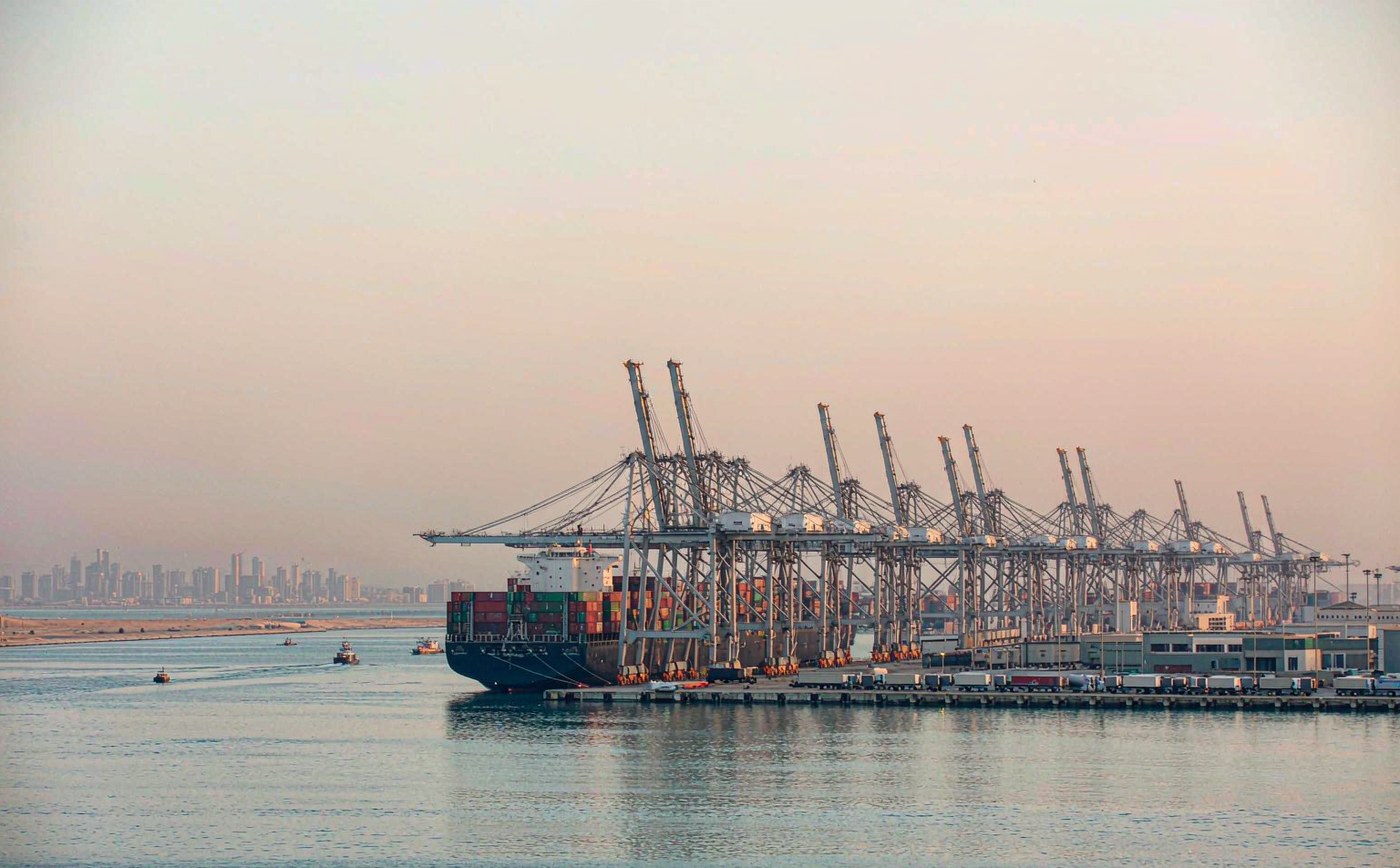
How to Ship from China to Qatar: Hamad Port, 5% Duty & No VAT
Qatar is the easiest Gulf market to model and the one where importers most often model it wrongly. There is no VAT on imports here. Not a reduced rate, not an exemption for some categories — no value added tax at all. You pay the GCC customs duty of 5% on the CIF value for most goods, excise on a narrow list of categories, and port and clearance charges. There is no second layer stacked on the duty the way there is in the UAE, and nothing like Saudi Arabia's 15%.
That makes the tax arithmetic simple, and it shifts the risk somewhere else: classification. Qatar moved to twelve-digit commodity codes under the integrated GCC customs tariff, and a code carried over from an older shipment may not resolve in the system. Where the difficulty lies in other Gulf markets, here it is in getting the code right and the paperwork consistent.
The geography helps too. Hamad Port handles well over ninety percent of the country's trade, it is a modern deep-water terminal, and nowhere in Qatar is far from it — Doha and the main industrial areas are an hour or two away. Compared with Saudi Arabia, where the inland leg can run to nearly a thousand kilometres, the domestic move here barely registers.
Finally, clearance is genuinely fast. Al Nadeeb, the electronic single window run by the General Authority of Customs, is paperless, and a compliant declaration can release within hours. Which is another way of saying that the delays that do happen are self-inflicted: a code that does not match, an invoice inconsistent with the bill of lading, or an approval nobody applied for.
This guide is written for buyers importing from China for the first time. It covers the tax position and how long it may last, Hamad Port and the two free zones, transit times and the transhipment question, trade terms and who may clear, duty and excise and the categories that carry them, the twelve-digit codes, conformity and CRA approval, the documents and the attestation behind them, the commercial registration, Ramadan and summer heat, and how to tell whether a forwarder genuinely works this lane.
How your cargo moves: China to Qatar
Eight steps from your supplier's door to yours. The last four are the ones shaped by local rules.
- Pickup from your supplierWe collect the goods anywhere in China and bring them to our consolidation point.
- Export clearanceChina customs declaration filed and released before the goods move to the port.
- Loading and departureContainer loaded, sealed and handed to the carrier at the Chinese port.
- Main carriageOcean, air or rail movement booked on the route agreed for your cargo.
- Arrival at the gatewayDischarge at the port or airport of entry, recorded on the carrier's manifest.
- Import clearanceCustoms declaration filed locally, with duty and tax assessed on the declared value.
- Customs releaseGoods released into free circulation once duty and tax are settled.
- Final deliveryOnward movement to your delivery address, warehouse or nominated depot.
Duty rates, VAT rates and clearance times move, and the figure that applies to your goods is the one set for your commodity code on the day of clearance. We check the current position against your code before your goods sail and confirm it to you in writing — ask for that check when you request a quote.
The Gulf market with no VAT on imports
Worth stating plainly, because it changes the landed-cost sheet: on a standard-rated commercial import into Qatar you are looking at duty at 5% of CIF, excise only if your product is on the short list, and clearance and port charges. No VAT.
| Market | Duty | VAT on imports | Combined effect |
|---|---|---|---|
| Qatar | 5% of CIF for most goods | None | The lowest tax stack in the Gulf |
| United Arab Emirates | 5% of CIF | 5%, on a base including the duty | Around 10.25% of CIF |
| Saudi Arabia | 5% of CIF | 15%, on a base including the duty | Roughly 20% of CIF |
Two caveats, both worth holding. First, the tax authority has been building readiness for a VAT system, and implementation has been expected for years without arriving — but the position should be confirmed with your broker before you fix prices for a year, not assumed permanent. Second, "no VAT" does not mean "no cost": port charges, terminal handling, clearing agent fees and inland delivery are all still there, and for some shipments they exceed the duty.
The other consequence of no VAT is procedural. In markets with VAT, much of an importer's early admin is about registration and reclaim. Here that work does not exist, which is genuinely simpler — but it also means import duty is a straightforward cost with no recovery mechanism, so it belongs in your unit economics from the first quote.
One port takes almost all of it, and nowhere is far from it
| Gateway | Role | Notes |
|---|---|---|
| Hamad Port | The main commercial port, south of Doha | Handles well over ninety percent of Qatar's trade. Deep-water berths and heavy automation, opened in 2017. Most China services call it. |
| Doha Port | Secondary | Smaller vessels and project cargo. |
| Mesaieed Port | Bulk and petrochemicals | Industrial shipments rather than general container cargo. |
| Hamad International Airport | Air cargo | The air gateway, with the Ras Bufontas free zone adjacent. |
Because one port dominates, you are not really making a port decision. What you are deciding is whether the service calls Hamad directly or tranships — most often through Jebel Ali — and that choice moves the arrival date more than anything else on the lane.
The inland leg is short. From Hamad Port, Doha and the main industrial areas are typically one to two hours, the northern developments two to three, and the western industrial outposts three to four. Qatar is a small country with good roads, so distance is rarely the problem here. Clearance speed and document accuracy are.
Qatar also runs two free zones under the Qatar Free Zones Authority: Ras Bufontas beside the airport and Umm Alhoul beside the port. Both allow full foreign ownership and duty-free import, which makes them the natural base for regional distribution or light assembly. If your business is re-export rather than domestic sale, that is the structure to look at.
Ways into Qatar, and the schedules behind them
| Mode | Typical transit | When it fits |
|---|---|---|
| Sea freight FCL, direct service | Around 16 to 25 days port to port from Shanghai or Shenzhen to Hamad | The default for commercial volume, and the fastest sea option. |
| Sea freight, via transhipment | Around 22 to 32 days on the sea leg, commonly through Jebel Ali | Sometimes cheaper or the only space available; always slower. |
| Sea freight LCL | Vessel time plus five to eight days for consolidation and deconsolidation | Trial orders and small volumes. |
| Air freight | Around 5 to 10 days door to door via Hamad International | High value density, deadlines, spare parts. |
| Express courier | Around 3 to 6 days door to door | Samples, documents and small parcels. |
Regional routing conditions have affected schedules on this lane too, so treat any figure as tied to a specific rotation. We do not publish freight rates here; what matters is the structure — base freight, origin charges in China, destination charges at Hamad, duty, and inland delivery. See our local charges page for how the destination side is built up.
Trade terms on a Qatari shipment, and who may clear it
The trade term decides who pays and where risk transfers. It does not change the requirement that goods cleared in your own name need a Qatari commercial registration and a customs registration, with a licensed clearing agent filing the declaration.
- EXW — you collect at the supplier's door and carry everything, including Chinese export formalities. Least useful for a first import.
- FOB — the supplier loads and clears Chinese export; you take over at the Chinese port. The term most experienced buyers use.
- CIF — the supplier pays freight and insurance to Hamad, risk passes in China, and you still clear. Not delivered.
- DAP or DDU — delivered to a named point, duty for you.
- DDP — duty paid, which means a registered Qatari party is acting as importer of record. Ask who.
Port to port, airport to airport. Goodhope's ocean service runs port to port and our air service runs airport to airport. We handle the international leg and the export side in China; Qatari import clearance, the commercial registration, conformity and CRA approvals and the duty payment belong to the importer of record. We coordinate with their clearing agent directly.
From a Shanghai factory to a warehouse in Doha
The commodity code is confirmed in twelve digits
Under the integrated GCC tariff, Qatar uses twelve-digit codes. A code from an older shipment may not resolve, so confirm the classification against the current tariff before anything is filed — this is the single most common cause of a stalled declaration here.
Regulated products are identified, and approvals started
Work out whether the product needs a conformity certificate, CRA type approval for anything with a radio, a Halal certificate for food, or a ministry permit. Start these while the goods are in production.
Collection and consolidation in China
We collect from one factory or several and consolidate where the volumes justify it, turning multiple suppliers into one container, one declaration and one certificate set. See our consolidated shipment page.
Export clearance, VGM and the sailing
Chinese export customs and the verified gross mass are completed and the vessel sails. This is the point to confirm whether the call at Hamad is direct or a transhipment, because it decides the arrival date.
Declaration on Al Nadeeb
The clearing agent files electronically with the invoice, packing list, bill of lading, certificate of origin and any approvals. Nothing is presented on paper. A compliant declaration can release within hours.
Duty and excise, then release
Duty is assessed on the CIF value, excise is added where the category carries it, and payment is made before release. There is no VAT line.
The short inland leg
One to two hours to Doha and the main industrial areas. This is the one Gulf lane where the domestic move is genuinely a footnote.
Import duty, excise on a few goods, and the tax that is not there
| Charge | Rate | Applies to |
|---|---|---|
| Customs duty | 5% of CIF | Most goods under the GCC common external tariff |
| Duty exemption | 0% | Essential goods including many food staples, medicines and books |
| Tobacco and alcohol | Very high rates | Alcohol additionally requires a licence and is tightly controlled |
| Excise tax | 100% on tobacco and energy drinks, 50% on carbonated drinks | Charged at import on a narrow list |
| VAT | None | No VAT on imports as of 2026 |
For small consignments, a low-value relief exists for personal parcels with a threshold set in Qatari riyals. Reported figures for that threshold differ between sources, so confirm the current number with your broker or carrier before relying on it, and treat commercial shipments as assessed regardless of value.
Twelve-digit codes, and why classification bites here
This is the technical detail most likely to cost you time, and it is worth a paragraph of its own. Qatar adopted twelve-digit commodity codes under the integrated GCC customs tariff, up from eight digits, with the change taking effect at the start of 2025.
What that means in practice:
- Old codes may not resolve. A classification that worked last year can fail in the system now, and a declaration that will not resolve is a declaration that does not clear.
- The description has to match the code. "Machine parts" or "accessories" is not a classification. A specific description that matches the code is what gets a shipment through.
- The duty rate follows the code. With no VAT to argue about, the code is the whole tax question. Get it right and the rest is arithmetic.
- Your supplier needs to know it. Give the factory the code you intend to declare, so the invoice, packing list and any certificate describe the same thing.
Confirm your codes against the current tariff before you file. Do not reuse a code from an older shipment without checking it, and do not let a supplier classify the goods on your behalf without seeing what they wrote.
Conformity, CRA approval and the permits behind regulated goods
Qatar's own standards body enforces conformity requirements on many consumer goods — electronics and appliances, toys, and building materials are the categories that come up most often. If your product is regulated, approval before shipment is the difference between a clearance measured in days and one measured in weeks.
Alongside that:
- CRA type approval — the Communications Regulatory Authority regulates telecom and radio equipment. Anything with Wi-Fi, Bluetooth or cellular capability needs approval before it clears.
- Ministry of Public Health authorisation — pharmaceuticals and some health products.
- Halal certification — required for food and beverage imports, from an accredited body. Arrange it with the factory before production.
- Safety data sheets — for chemicals and dangerous goods, plus a correct DG or non-DG classification made in China. See our dangerous goods page.
- Phytosanitary certificates — for agricultural goods.
Certain categories are prohibited or tightly controlled: pork products, alcohol without a licence, narcotics, gambling equipment and obscene material are prohibited, and items such as drones and some vaping products require permits. If your product might sit near one of those lines, check before you ship rather than after.
The documents Qatar Customs wants, filed on Al Nadeeb
- Commercial invoice — must match the bill of lading and packing list exactly, with a specific product description, the commodity code, value and origin.
- Packing list — carton-level contents, dimensions and gross and net weights.
- Bill of lading or air waybill — original or telex release.
- Certificate of origin — certified in China, typically through the China Council for the Promotion of International Trade, and in some cases legalised by a Qatari embassy. Confirm the attestation level before the goods ship, because obtaining it afterwards is slow.
- Conformity certificate — for regulated consumer goods.
- Sector documents — Halal, safety data sheet, phytosanitary, CRA approval, as applicable.
Wood packaging must meet ISPM-15 and carry the stamp. Our import clearance documents page lists what we ask for and why.
A commercial registration, and what a foreign business cannot do
To clear goods in your own name you need a Qatari commercial registration plus a customs registration, and a licensed clearing agent normally files the declaration on Al Nadeeb. A foreign business without those cannot simply file.
The routes available are:
- Set up or use a Qatari entity. Straightforward if you are committing to the market, and necessary if you want to import repeatedly in your own name.
- Import through a distributor. They import on their registration and you buy from them locally.
- Use a free zone entity. The Qatar Free Zones Authority operates Ras Bufontas and Umm Alhoul, both allowing full foreign ownership and duty-free import, which suits regional distribution and light assembly.
- Use an importer of record arrangement. Common for sporadic imports and for testing the market. Ask who the licensed party is, because they carry responsibility for the declaration and the duty.
An individual can receive goods, and parcels are assessed subject to the low-value relief. An individual cannot act as a commercial importer of record.
Buying from one supplier or several, and how the order ships
- Online sourcing — Alibaba and 1688 orders tend to be small and single-factory, so LCL, air or courier for the first shipment. Small shipments still need the correct classification and any approval that applies; the absence of VAT does not remove the conformity question. See our Alibaba and 1688 sourcing page.
- Several suppliers at once — consolidate in China into one container so you have one declaration, one certificate set and one clearance. See our warehouse page.
- Samples — sent by courier, assessed like any import above the threshold. Warn the recipient.
The forwarder and the clearing agent on one shipment
- The China-side forwarder collects from the factory or factories, consolidates, clears export and files the VGM, books the service, issues the bill of lading, prepares the documents the Al Nadeeb declaration depends on, and tells you early when a code or an approval is going to be a problem.
- The Qatari clearing agent holds the local licence, files on Al Nadeeb, arranges or holds the conformity and CRA approvals, handles inspection, pays the duty and arranges delivery.
The gap between them is where delays start: a bill of lading issued before the code was confirmed, an invoice that does not match the packing list, an origin certificate without the attestation. Goodhope works the China end, hands documents over early, and coordinates directly with your agent.
Checking a forwarder on a Qatar booking
- Is the call direct or via transhipment? On this lane that single fact moves the arrival date by a week or more.
- Have they asked for the commodity code? With twelve-digit codes and no VAT, the code is effectively the whole tax question.
- Do they know whether your product needs conformity, CRA or a ministry permit?
- Have they mentioned Al Nadeeb? Anyone who has cleared here will.
- What is the free time at Hamad, and who pays demurrage?
- On a DDP quote, who is the importer of record?
Red flags: a rate quoted before you have said what the goods are; "everything included" with no clearing agent named; an eight-digit code offered without comment; and any suggestion that a missing approval can be resolved after arrival.
Product lines that need approval before they load in China
| Category | What is required or checked |
|---|---|
| Electronics and appliances | Conformity certification from the Qatari standards body, with testing where required. Start before shipment. |
| Wireless and telecom devices | CRA type approval before clearance, in addition to anything else the category needs. |
| Toys and children's products | Conformity certification against the applicable standard. |
| Building materials | Conformity requirements on cables, steel, cement and fittings; documentation is checked. |
| Food and beverages | Halal certification from an accredited body, plus labelling requirements. |
| Pharmaceuticals and health products | Ministry of Public Health authorisation before import. |
| Chemicals | A safety data sheet and a correct DG or non-DG classification, decided in China. |
| Tobacco, energy drinks, carbonated drinks | Excise at import, at high rates. Confirm the category before you price anything. |
| Anything on wood | ISPM-15 compliant pallets and crates, with the stamp visible. |
Three shipments into Qatar, and the reason for each
The examples below are illustrative. They describe typical routing decisions on this lane, not specific customer shipments.
A direct-service container of consumer goods for a Doha distributor
Booked on a service calling Hamad directly rather than a cheaper one transhipping through Jebel Ali, because the buyer had a fixed promotion date. The direct call saved roughly a week. The goods cleared quickly on Al Nadeeb because the twelve-digit codes had been checked in advance and the invoices matched the packing list exactly — which, on this lane, is what the speed actually depends on.
A re-export operation based in Umm Alhoul
A trader importing for onward movement set up in the free zone beside Hamad Port, so the goods came in duty-free and could be stored and re-exported without Qatar duty ever being paid. The alternative — importing into the domestic market and claiming anything back — does not really exist here, because there is no VAT to reclaim. The free zone is the mechanism, not a refund.
A small trial order that went LCL
Below container volume, so LCL, with the buyer accepting the extra consolidation time in exchange for not paying for unused space. The product was unregulated and the codes were straightforward, so the shipment cleared without friction. Had it been a regulated category, the same small shipment would still have needed conformity approval before loading — the volume does not change the requirement.
Ramadan, summer heat and the calendar that moves cargo
- Ramadan. Customs and port processing slow significantly during the holy month, with shorter working hours across government and business. Build margin around it.
- Summer heat. July and August are brutally hot, and temperature-sensitive goods and some chemicals face seasonal handling restrictions. Reefer cargo needs planning, and anything heat-sensitive should be routed with the season in mind.
- Peak seasons. Chinese New Year stops production in China; demand for construction and consumer goods rises before Eid and ahead of the year-end. Carrier peak-season surcharges typically land in the second half of the year.
- Hamad Port congestion. Vessel bunching can add berth delays and demurrage risk even when your documents are perfect.
Check our holidays page when you are fixing a production date.
How Goodhope works the China end of a Qatar shipment
- We model the tax honestly — duty at 5%, excise where it applies, and no VAT line, with a reminder to confirm the VAT position before you commit to long-term pricing.
- Ocean freight port to port and air freight airport to airport — into Hamad Port by sea and Hamad International by air, with the service named and whether it calls direct or tranships.
- We ask for the commodity code before we quote — because with twelve-digit codes in force, the classification is the tax question.
- Consolidation across suppliers — several factories, one container, one declaration, one certificate set. See our consolidated shipment and pick up pages.
- Documents prepared for Al Nadeeb, not for the file — invoice, packing list and origin documents in the form your clearing agent needs, prepared in China while there is time to fix them.
- Regulated cargo handled properly — see our dangerous goods and quarantine inspection pages.
- Plain answers on what we do not do — Qatari import clearance, the commercial registration, conformity and CRA approvals and the duty payment belong to the importer of record and their agent. We coordinate with them and we do not pretend otherwise.
- NVOCC licensed, since 2012 — see our why partner with Goodhope page.
Why importers use Goodhope on this lane
Six things that are different about working with us on China to Qatar shipments.
Get a Qatar quote with the code and the routing settled
Send us the product and its commodity code if you have it, the carton count and total weight or volume, the supplier's city, and the delivery address in Qatar. We will name the service, tell you whether it calls Hamad directly or tranships and what that does to the arrival date, and flag the approvals and attestations that apply before anything is loaded.
Frequently asked questions
Does Qatar charge VAT on imports?
No, not as of 2026. Qatar applies the GCC customs duty of 5% on the CIF value for most goods, plus excise on a narrow set of categories, but there is no value added tax charged on imports. That makes the tax stack lower than the UAE, where 5% VAT sits on top of the duty, and far lower than Saudi Arabia, where the rate is 15%. The tax authority has been building readiness for a VAT system, so this is a position to confirm with your broker before you finalise pricing rather than a permanent guarantee.
How much duty will I pay importing into Qatar?
Standard customs duty is 5% of the CIF value under the GCC common external tariff. Essential goods including many food staples, medicines and books are exempt, while tobacco and alcohol carry very high rates and alcohol additionally requires a licence. Excise tax applies at import to tobacco products and energy drinks at 100% and to carbonated drinks at 50%. Beyond duty and excise, importers face port and clearance charges rather than a tax layer.
Which port does cargo from China arrive at in Qatar?
Hamad Port, south of Doha, handles well over ninety percent of Qatar's trade and is the port almost every China service uses. It opened in 2017 and is a deep-water, heavily automated terminal. Doha Port takes smaller vessels and project cargo, and Mesaieed handles bulk and petrochemical shipments. Air cargo lands at Hamad International Airport. Because one port dominates, the port question is effectively settled for you; what varies is whether the service calls directly or tranships through Jebel Ali.
How long does shipping from China to Qatar take?
A direct service from Shanghai or Shenzhen to Hamad Port is commonly quoted at around 16 to 25 days port to port. Services routed through Jebel Ali take longer, around 22 to 32 days on the sea leg, and LCL adds a further five to eight days for consolidation and deconsolidation. Air freight into Hamad International is around 5 to 10 days door to door depending on the service, and express courier around 3 to 6 days. Confirm the rotation, because transhipment changes the arrival date more than any published schedule suggests.
What is Al Nadeeb and how fast is clearance?
Al Nadeeb is Qatar's electronic single window for customs declarations and duty payment, run by the General Authority of Customs. Nothing needs to be presented on paper at a counter. For a compliant shipment with complete documentation, release can be a matter of a few hours from submission, and one to three days is a realistic planning figure for the clearance step overall. The delays that occur are almost always documentary: a classification that does not match, an invoice inconsistent with the bill of lading, or a missing conformity or sector approval.
Do I need a Qatari company to import?
To clear goods in your own name you need a Qatari commercial registration and a customs registration, and a licensed clearing agent normally files the declaration. A foreign business without those can still receive goods, but it needs an importer of record arrangement or a distributor that imports on its own registration. The alternative is a free zone entity: the Qatar Free Zones Authority operates Ras Bufontas next to the airport and Umm Alhoul next to the port, both allowing full foreign ownership and duty-free import.
What changed about commodity codes in Qatar?
Qatar moved to twelve-digit commodity codes under the integrated GCC customs tariff, up from eight digits, with the change taking effect at the start of 2025. A classification carried over from an older shipment may not resolve in the system, which stalls the declaration. Confirm your codes against the current tariff before you file rather than reusing a code that worked last year, and make sure your supplier's description matches the classification.
What documents does Qatar Customs require?
A commercial invoice that matches the bill of lading and packing list exactly, a packing list with carton-level contents and weights, the bill of lading or air waybill, a certificate of origin certified in China and in some cases legalised by a Qatari embassy, and sector documents where they apply: a conformity certificate for regulated consumer goods, a Halal certificate for food, a safety data sheet for chemicals, and a phytosanitary certificate for agricultural goods. Wood packaging must meet ISPM-15.
Is there a duty-free threshold for small parcels into Qatar?
A low-value relief exists for personal parcels, with a threshold set in Qatari riyals, and reported figures for it differ between sources, so confirm the current number with your broker or the carrier before you rely on it. Commercial shipments are assessed regardless of value. If you are sending samples or e-commerce parcels into Qatar, ask how they will be treated before you dispatch rather than after the recipient is billed.
What does a Chinese freight forwarder handle on a Qatari shipment?
On the China side we collect from the factory or from several factories, consolidate where that makes sense, handle export customs clearance and the verified gross mass, book the service and issue the bill of lading or air waybill, and provide tracking. Goodhope works port to port on ocean freight and airport to airport on air freight, names the service and whether it calls Hamad directly or tranships, and coordinates with your Qatari clearing agent. Qatari import clearance, the commercial registration, conformity and CRA approvals and the duty payment belong to the importer of record.