
Since 2012 NVOCC GD20230925153335 24h Response
+86 13392162503 sales8015@goodhopefreight.com Login
Goodhope Freight
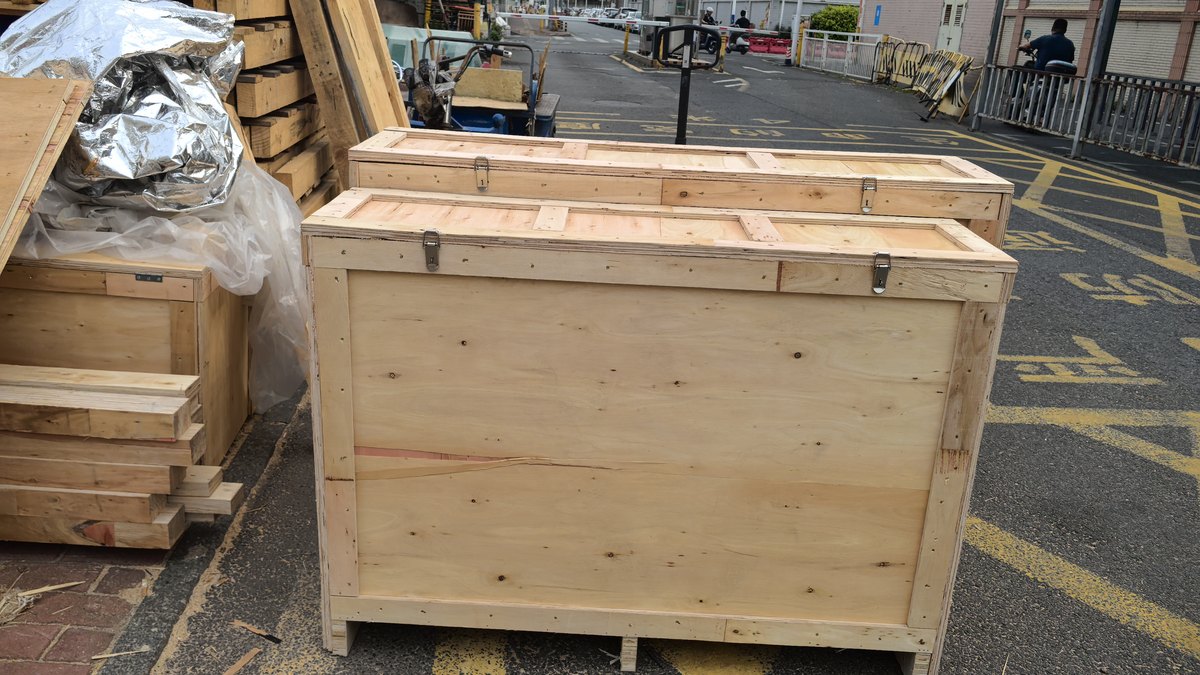
Wooden crate export packaging prepared for shipment to Australia

Australian Customs Regulations on the Import of Masks

Australia was one of the friendliest mask destinations in 2020: ordinary-goods clearance, no special certificates, no quantity cap.

Required documents

  • Air waybill or bill of lading
  • Commercial invoice

Requirement

There were no special regulatory requirements for mask clearance: ordinary disposable masks, disposable medical masks and KN95/N95 masks alike were imported as ordinary goods. Shippers were not subject to customs restrictions, and neither individuals nor companies had to fear seizure.

The 1,000 AUD threshold

When preparing the commercial invoice in China, a declared value under 1,000 Australian dollars cleared through the faster mail/formalities path; a value above 1,000 AUD required a separate commercial import declaration. Both paths worked — the clearance mode just differed.

Taxes

  • Import GST: 10 percent — calculated as (goods value + freight + insurance + duty) × 10 percent
  • Import duty: about 5 percent
  • Customs system fee: charged per consignment, independent of the goods value

Shipping channels

DHL international express was the fastest China–Australia option; FedEx, TNT and UPS offered comparable services with slightly longer transits. Express was recommended for individuals, with the carrier providing Australian clearance and the consignee paying the taxes. For commercial imports by air to Sydney or Melbourne, the local air freight forwarder provided clearance and delivery; air freight rates on the lane rose steeply during 2020 and space had to be booked in advance.

China customs imposed no restrictions on normal trade exports of masks, so shippers did not need to worry about the goods being confiscated at origin.

Dated guidance: this page preserves the 2020 policy snapshot. Confirm current requirements with the Australian Border Force before shipping.

Frequently asked questions

Does Australian customs require special documents for masks?

No. Masks - ordinary, medical or KN95/N95 - were imported as ordinary goods with just an air waybill or bill of lading and a commercial invoice.

What is the 1,000 AUD threshold in Australia?

A declared value under 1,000 AUD cleared through the simplified import path; above that, a separate commercial import declaration was required. Both cleared normally.

How much tax does Australia charge on imported masks?

10 percent GST on (value + freight + insurance + duty), about 5 percent import duty, and a per-consignment customs system fee.

Is there a limit on mask quantities imported into Australia?

The 2020 snapshot imposed no quantity cap on personal imports; duty became payable once the previous duty-free allowance had been used.

What was the fastest channel from China to Australia for masks?

DHL international express, with the carrier providing Australian clearance. Air freight to Sydney or Melbourne worked for commercial volumes but needed advance booking.

Ship with Goodhope Freight

Goodhope Logistics (China) Limited is a Shenzhen-based international freight forwarder and NVOCC (license GD20230925153335), moving express shipments, air cargo and sea freight out of China since 2012. Send your commodity, gross weight, volume and destination, and we will confirm the best channel, the all-in rate and the transit time: sales8015@goodhopefreight.com or WhatsApp / WeChat +86 13392162503.

Frequently asked questions about shipping from China to Shipping To Australia

What does a China to Australia shipping cost depend on?
The cost breaks into four parts: the freight from the origin port or airport, the origin charges, the destination charges and the inland leg. Two quotes on the same lane can differ by a wide margin because one prices port to port and the other prices door to door. Comparing them line by line is the only reliable way to see which is cheaper.
Sea freight or air freight for Australia?
Sea freight carries volume at a low unit cost and suits cargo that can wait; air freight pays for speed and is chosen when the stock-out cost exceeds the freight difference. LCL works under about 15 cubic metres and FCL takes over above that, where the container rate stops scaling with volume.
Which Incoterm should I use for Australia?
FOB suits buyers who want control of the main freight and the insurance, and CIF or CFR suits buyers who prefer one price to the destination port. DDP only works where the seller can clear import duty and tax in the destination country; where that is uncertain, DAP keeps the customs obligation with the buyer.
Which documents are needed to ship to Australia?
The commercial invoice, packing list and bill of lading or air waybill form the base set, and the invoice has to match the packing list line by line. A certificate of origin is added where a preferential duty rate is claimed, and restricted goods carry their own permits. Destination customs may also ask for a fumigation certificate where solid wood packaging is used.
Will I pay duty and tax in Australia?
Import duty is assessed on the customs value, which is normally the transaction price plus international freight and insurance, and VAT or sales tax is added on top of the duty-paid value. The rate depends on the tariff code rather than on the product name, so classification is settled before the shipment leaves rather than after arrival.
When should I book for Australia?
Space tightens before Chinese New Year and around the autumn peak, when rates and rollovers both rise. Booking two to three weeks ahead holds the rate and the sailing; a booking made in the last week is likely to be rolled to the next vessel, which costs more than the rate difference.
How do I track a shipment to Australia?
Tracking runs from the bill of lading or air waybill number rather than from the order number, and the carrier milestone is the authoritative status. A container that shows no movement for several days is usually waiting at a transhipment port, which is worth confirming with the carrier instead of waiting for the next scan.
Should I insure cargo to Australia?
Cargo insurance is optional and priced on the declared value, normally at 110 percent of the invoice value. The carrier liability limit under the conventions is far below the goods value, so insurance is the only way to recover a full loss. Claims need the survey report at the destination, which is why damage is recorded before the container leaves the terminal.