
Home / Shipping to Mexico / How to Ship from China to Mexico
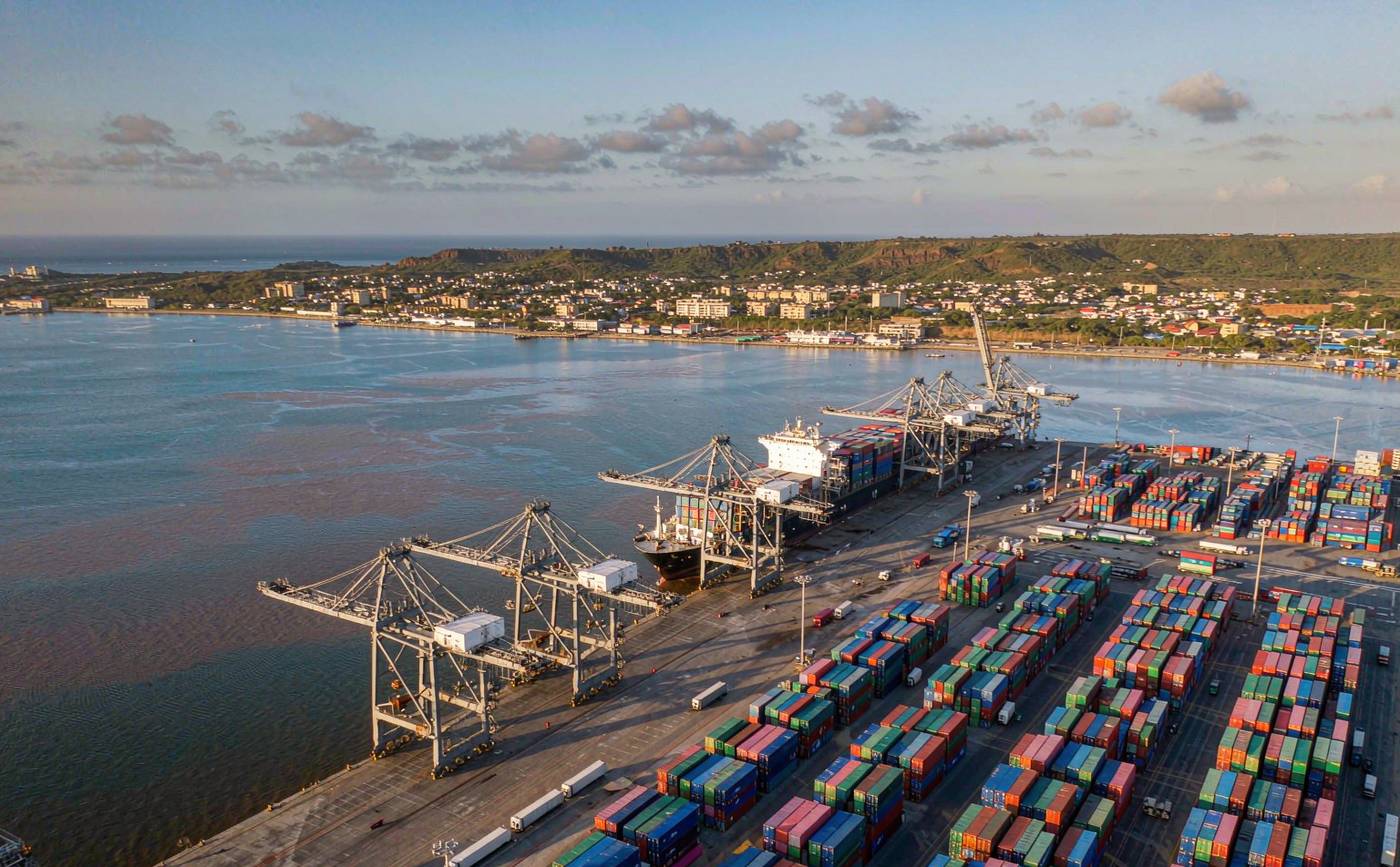
How to Ship from China to Mexico: Choosing Your Gateway After the 2026 Tariff Reset
Mexico has become one of the most consequential destinations in global trade. Nearshoring pulled factories and warehouses into the country, and Mexican imports from China reached roughly USD 130 billion in 2024 — second only to what Mexico buys from the United States. That volume is exactly why the rules changed.
From 1 January 2026, Mexico raised import duties on about 1,463 tariff lines from countries with which it has no free trade agreement, China included. In March 2026 those increases were folded into the permanent framework of the General Import and Export Tax Law rather than left as temporary measures. For any buyer sourcing in China, the landed cost of a Mexico-bound shipment is no longer a detail you settle at the port — it is something you have to model before you place the order.
This guide covers the part most shipping articles skip: which Mexican gateway actually fits your cargo, what the new tariff bands mean in money, who is legally allowed to be the importer, and which documents decide whether your container clears in two days or sits for three weeks. It is written for overseas buyers purchasing from Chinese suppliers, not for freight insiders.
What you need before anything moves. A Mexican consignee with an active RFC and, for many sectors, a Padrón de Importadores entry; the correct HS code for every line item; a commercial invoice that will survive a valuation check; and a licensed customs broker (agente aduanal) who will file the pedimento. Freight is the easy half of this route.
How your cargo moves: China to Mexico
Eight steps from your supplier's door to yours. The last four are the ones shaped by local rules.
- Pickup from your supplierWe collect the goods anywhere in China and bring them to our consolidation point.
- Export clearanceChina customs declaration filed and released before the goods move to the port.
- Loading and departureContainer loaded, sealed and handed to the carrier at the Chinese port.
- Main carriageOcean, air or rail movement booked on the route agreed for your cargo.
- Arrival at the gatewayDischarge at the port or airport of entry, recorded on the carrier's manifest.
- Import clearanceCustoms declaration filed locally, with duty and tax assessed on the declared value.
- Customs releaseGoods released into free circulation once duty and tax are settled.
- Final deliveryOnward movement to your delivery address, warehouse or nominated depot.
Duty rates, VAT rates and clearance times move, and the figure that applies to your goods is the one set for your commodity code on the day of clearance. We check the current position against your code before your goods sail and confirm it to you in writing — ask for that check when you request a quote.
Which Mexican port your cargo should land in
The single most common mistake buyers make on this lane is comparing ocean freight rates to "Mexico" as if it were one port. Mexico has two coastlines with completely different economics, and the inland leg from the wrong port can cost more than the ocean freight you saved.
| Gateway | Routing from China | Typical port-to-port | Best when your cargo ends up in |
|---|---|---|---|
| Manzanillo | Direct trans-Pacific | 20–25 days from East China, 19–24 days from South China | Mexico City, Guadalajara, western and central Mexico. The default choice and the busiest container port in the country. |
| Lázaro Cárdenas | Direct or via hub | 22–28 days from East China, 21–27 days from South China | Monterrey, Querétaro, the Bajío industrial belt. Deep-water port with direct rail into the north and centre — usually the smarter pick for heavy, rail-friendly cargo. |
| Ensenada | Direct Pacific, Baja California | 18–24 days | Tijuana, Mexicali and the maquiladora belt. Often the cheapest option because it removes the mainland trucking leg entirely. |
| Veracruz | Via the Panama Canal | 30–35 days from East China | Gulf states, Puebla, Yucatán and Mérida. Slower and dearer on the water, but it can delete a 700 km-plus inland truck. |
| Altamira | Via the Panama Canal / Gulf | 30–38 days | The Monterrey and Saltillo corridor from the Gulf side. |
Ranges above are port-to-port and reflect commonly published carrier schedules on this lane. Plan on the door-to-door number: customs clearance and inland trucking together typically add a further one to two weeks, and Manzanillo yard congestion in peak windows can add several days to gate-out on its own.
Price the port and the inland leg together, never the ocean rate alone. A box routed to Veracruz can look expensive next to Manzanillo and still be cheaper landed — if your consignee is in Mérida, the Manzanillo option still needs a very long truck.
The 2026 change that alters a Mexican quote
Mexico's government moved on two fronts. First, it raised duties across roughly 1,463 tariff lines for countries with no free trade agreement — China, South Korea, India, Vietnam, Thailand, Indonesia, Russia, Turkey, Brazil, the UAE and South Africa among them. Second, in March 2026 it made those measures permanent by writing them into the General Import and Export Tax Law (LIGIE), rather than leaving them as a temporary decree that would quietly expire.
| Sector | What the 2026 reset looks like |
|---|---|
| Passenger vehicles | Duty moved from 20% to 50%. |
| Auto parts and inputs | Broadly 7% to 36%, with engines, gearboxes and other core components clustered around 30–36%. |
| Steel and certain steel products | Up to 50% on the highest band. |
| Textiles, apparel and footwear | Typically 15% to 35%, arriving on top of earlier measures. |
| Household appliances, furniture, toys | Roughly 15% to 35%. |
| Plastics, aluminium, glass, paper and board, cosmetics, soaps, motorcycles | Also inside the covered list, with rates set per tariff line. |
The design is deliberately selective. USMCA partners — the United States and Canada — along with the EU, the UK, Japan and other FTA partners continue to receive preferential or zero-duty treatment. Goods from non-FTA Asia carry the increase. The stated policy goals are protecting domestic employment, narrowing the trade deficit, and raising tariff revenue; the practical effect for a buyer is that origin and HS classification now drive cost more than freight does.
The impact is already visible: Chinese vehicle exports to Mexico fell about 25% year-on-year in the first half of 2026, and Mexico slipped from China's largest vehicle export destination to outside the top five. If you are importing anything in the covered sectors, treat the tariff as a first-order input to your sourcing decision, not a customs formality.
Do not budget from a summary table. Rates are set per tariff line, and the lists have been amended repeatedly since 2024. Before you commit to a landed price, have your Mexican broker confirm the current rate against your exact 8-digit HS code in the official tariff.
Sea, air or courier: how to decide
| Mode | Typical transit | Suits | Watch out for |
|---|---|---|---|
| Sea FCL (20ft / 40ft / 40HQ) | 20–36 days port-to-port; roughly 28–42 days door-to-door | Consolidated, heavy or high-volume cargo. The workhorse of this lane. | Chassis and yard congestion at Manzanillo; inland trucking bottlenecks around Mexico City at year-end. |
| Sea LCL | 24–40 days port-to-port; roughly 32–48 days door-to-door | Trial orders and volumes that do not justify a full container. | Deconsolidation at Manzanillo adds handling and days. LCL is billed on chargeable weight or volume, whichever is greater. |
| Air freight | 3–7 days airport-to-airport; 5–10 days door-to-door | High-value electronics, automotive prototypes, urgent spares, samples. | Clearance at Mexico City, AIFA, Guadalajara or Monterrey; air freight is priced on chargeable weight, so bulky light cargo is expensive. |
| Express courier | 2–5 days | Documents, small spares, e-commerce parcels. | Single rate of about 19% applies to courier shipments from non-FTA origins, and the low-value VAT relief was removed from 1 January 2025. |
See our pages on sea freight FCL, LCL consolidation, air freight and international express for how each is costed, and use the volumetric weight calculator before you compare an air quote against a sea quote.
Incoterms, and who can legally be the importer
Mexico is not a market where a foreign seller can simply declare its own goods. The pedimento — the electronic customs entry — must name an importer that holds a Mexican tax identity, and it must be filed by a licensed customs broker.
RFC — Registro Federal de Contribuyentes
The Mexican tax ID. It appears on every pedimento. A Chinese company cannot simply obtain one to import on its own behalf; in practice the buyer's RFC is used, or a local entity or compliant service provider acts as importer of record.
Padrón de Importadores
The importer registry, which must be active. Textiles, footwear, chemicals, electronics and auto parts additionally sit on sectoral registries — if your buyer's registration has lapsed for your category, the entry will not be accepted.
How this maps onto Incoterms:
- FOB or CFR/CIF — the Mexican buyer is the importer of record, supplies the RFC and pays duty and IVA. Cleanest for first-time buyers who already import.
- DAP — you deliver to a named place in Mexico, but the buyer still clears and pays taxes. This is where many disputes start, because "delivered" and "cleared" are not the same thing in Mexico.
- DDP — the seller takes on duty and taxes, which means someone has to be the importer of record in Mexico. Only workable through a local entity or a properly structured broker arrangement, and the tariff exposure in 2026 makes accurate classification non-negotiable. Read our DDU and DDP page before you quote DDP into this market.
If you are selling to a buyer without an RFC. The shipment has no legal importer. It will be held or returned, and storage accrues daily. Confirm the buyer's RFC status and sectoral registry before the goods leave China — not after the vessel arrives.
FOB, CIF, DAP, DDP: which term works in Mexico
Your supplier will quote a price with a three-letter term attached. That term decides who pays for the freight, who is legally the importer, and who carries the risk — and in Mexico the importer question is the one that matters most, because only a Mexican tax-registered party can appear on the customs entry.
| Term | Who pays the freight | Who is the importer | When risk transfers to you | Fit |
|---|---|---|---|---|
| EXW | You, from the factory door | You — but you cannot be, without Mexican tax status | At the supplier's premises | Avoid. You inherit Chinese export formalities and an import you cannot legally make. |
| FOB | You arrange the main freight | Your Mexican buyer, or your appointed importer | On loading | The cleanest structure. Transparent, and you control the shipment. |
| CIF | Supplier pays to the Mexican port | Your buyer or appointed importer | On loading | Convenient looking, but the supplier chooses the carrier and destination charges often surprise you. |
| DAP | Seller delivers to the address | You clear and pay taxes | On arrival | Only with a compliant importer of record already in place. "Delivered" is not "cleared". |
| DDP | Seller pays everything | Seller's side, through a local importer | On arrival | Often the only workable route if you have no Mexican entity — but check who is actually named on the entry. |
| Port to port | You pay the ocean leg only | You at both ends | Port to port | When you have your own arrangements at each end. |
| Airport to airport | You pay the air leg only | You at both ends | Airport to airport | The air equivalent, usually into Mexico City, Guadalajara or Monterrey. |
The Mexican catch. On most lanes the trade term is mainly about money. Here it is also about legality: if nobody with a Mexican tax identity is named on the customs entry, there is no legal import and the goods sit. Confirm who that is before you book, not when the vessel arrives. Our DDU and DDP page explains how the structures differ.
The landed-cost formula, with real numbers
Mexican import tax is built up in layers rather than applied as one percentage. The base is the customs value, generally derived from the CIF value. On top of that sit:
- IGI — the general import duty, set by HS code. Historically 0–20% for most manufactured goods, and higher on lines caught by the 2026 increases.
- DTA — the customs processing fee, around 0.8% of the declared value.
- IEPS — excise duty on specific categories such as alcohol, tobacco, fuels and sweetened drinks.
- IVA — value-added tax at 16%, applied to the running total (customs value plus IGI, DTA and IEPS).
Worked example — a shipment with a CIF value of USD 30,000 and an IGI rate of 20%:
| Component | Basis | Amount (USD) |
|---|---|---|
| Customs value (CIF) | — | 30,000 |
| IGI at 20% | on CIF | 6,000 |
| DTA at 0.8% | on declared value | 240 |
| IVA at 16% | on 30,000 + 6,000 + 240 | 5,798 |
| Total duties and taxes | 12,038 | |
| Landed, before inland delivery | 42,038 |
That is roughly 40% on top of the CIF value — and if your HS code is inside the 2026 bands, the IGI line moves from 20% to 35% or 50% and the whole stack grows with it, because IVA is charged on the duty-inclusive total. This is why classification now matters more than freight negotiation on this lane.
The example is illustrative. The definitive calculation appears on the pedimento prepared by your agente aduanal, and DTA in particular has its own basis and caps. Treat any pre-shipment estimate as an estimate.
Your first Mexico shipment, from factory to warehouse
Confirm who can legally import
Before anything else: a Mexican tax identity, an active importer registration, and a licensed broker to file the entry. Without these there is no legal import, whatever the freight arrangement says.
Agree FOB and settle the HS code
Agree FOB with your supplier so you control the shipment, and confirm the HS code for every line. With the current duty bands, the classification drives more of your cost than the freight does.
Collect and consolidate in China
Your forwarder collects from one supplier or several, and consolidates at a warehouse. Combining factories into one container means one customs entry instead of several.
Prepare documents and file the export declaration
Commercial invoice in Spanish, packing list, and the Chinese export declaration. Any NOM certificate or sector permit has to be obtained here, in China, before the goods leave.
International leg
Vessel across the Pacific to Manzanillo or Lázaro Cárdenas, or via the Panama Canal to Veracruz or Altamira; or air freight to Mexico City, Guadalajara or Monterrey.
Customs entry, duty and taxes
The broker files the pedimento electronically with the importer's tax ID, HS code and customs value. Duty, the processing fee and value-added tax are assessed and paid, and customs either releases the cargo or selects it for inspection.
Release and inland delivery
Once released, trucking or rail from the port to your warehouse — which on this lane is often the largest single cost after the goods themselves.
The documents that decide whether you clear in two days or three weeks
| Document | What Mexican customs expects |
|---|---|
| Pedimento de importación | The electronic customs entry filed through VUCEM, Mexico's single window. It carries the importer's RFC, the HS code, the customs value and the taxes payable, and it must agree with the commercial invoice. |
| Commercial invoice | Spanish is strongly preferred and often required. It must show HS code (at least six digits), origin (China), transaction value, Incoterm, and buyer and seller details — and it must match the pedimento. |
| Bill of lading / air waybill | Transport contract and title document. For land movement inside Mexico, the Carta Porte CFDI complement is mandatory. |
| Packing list | Package count, contents, weights and dimensions, consistent with the invoice. |
| Certificate of origin | Required if any preferential treatment is claimed. Note that Chinese-origin goods generally do not qualify for preference in Mexico. |
| NOM certificates | Sector-specific; see section 7. |
| COFEPRIS / SENASICA permits | Food, supplements, cosmetics, medical devices, and plant or animal products. |
| ISPM-15 fumigation | Any wooden packaging must be heat-treated or fumigated and stamped. |
Two failure modes cause most of the pain. The first is a mismatch: an HS code that does not describe the goods, an invoice that disagrees with the pedimento, or a declared value that invites a valuation challenge — in which case you will be asked to produce the original factory invoice and proof of payment. The second is a missing sector certificate, which usually means the goods cannot be cleared at all absent paperwork that should have been arranged in China weeks earlier.
A third, quieter risk is routing commercial cargo as personal mail. Mexican authorities share data with the postal operator, and repeated shipments of similar goods to the same recipient can be reclassified as commercial imports, with back taxes and penalties attached.
Our import clearance documents page lists what we collect before a booking is confirmed, and Documents covers the Chinese export side.
NOM, sector permits and the certificates you must arrange in China
NOM — Norma Oficial Mexicana — is the Mexican mandatory standard system. Whether you need one depends entirely on the HS code, and the certificate is far easier to obtain in China before shipment than to resolve at a Mexican port.
- NOM-001-SEDE and NOM-003-SCFI — electrical and electronic product safety, the standards most Chinese electronics imports run into.
- NOM-015-SCFI — toy safety.
- NOM-050-SCFI — commercial information and labelling. Consumer goods sold in Mexico need Spanish labelling, and this is the NOM most often overlooked.
- COFEPRIS — registration or permits for food, supplements, cosmetics and medical devices.
- SENASICA — phytosanitary and zoosanitary clearance for plant and animal products.
- Used machinery and vehicles — prior import permits apply; do not assume a used equipment shipment behaves like a new one.
Testing is normally arranged through accredited laboratories in China. Build the lead time into your production schedule — a certificate obtained after the vessel sails is a certificate that does not help this shipment.
IMMEX, PROSEC and the nearshoring route
If you are not just importing into Mexico but manufacturing there, a second set of tools exists.
IMMEX is the maquila programme. It allows a Mexican manufacturer to temporarily import raw materials, components and machinery without paying IGI, on condition that the finished goods are exported. It is built for producers, not for traders importing to sell domestically — and it has teeth: in December 2024 the government suspended 302 finished-garment tariff lines (chapters 61, 62 and 63, plus 9404.40 and 9404.90) from the programme after finding that goods admitted under IMMEX were not being re-exported. Apparel importers should not assume IMMEX solves a tariff problem.
PROSEC offers preferential input duties to specific industries, and the certified-company registries (including the CIVA and authorised-economic-operator schemes) reduce inspection frequency and simplify compliance for established importers.
Practical point for overseas buyers: if you are buying from a Chinese supplier and shipping to a Mexican plant that operates under IMMEX, the paperwork trail is different from a standard import. Tell us at quotation stage, because the temporary-import documentation has to be right from the Chinese factory onward.
Can an individual import into Mexico?
This is one of the most common questions we get, and the answer is more restrictive than most buyers expect.
As an individual
Private individuals cannot simply act as importer of record for commercial goods. The customs entry must name a holder of a Mexican tax identity, and a foreign individual generally cannot obtain one for this purpose. In practice, an individual buying from China either buys on terms where a Mexican entity imports, or uses a door-to-door structure where a compliant local importer and broker handle the entry.
As a company
A Mexican company needs its tax ID plus an active importer registration, and for many sectors a sectoral registry as well. A foreign company with no Mexican entity cannot import under its own name — it needs a local entity or a compliant service provider to act as importer of record. This is why most overseas buyers selling into Mexico either sell to a Mexican distributor on FOB terms, or use DDP with a properly structured importer.
Do not route commercial orders as personal mail. Mexican tax and customs authorities share data with the postal operator, and repeated shipments of similar goods to the same recipient get reclassified as commercial imports — with back taxes and penalties attached.
Online orders and exhibition finds: two ways into Mexico
Online marketplaces and platforms
Marketplace sellers often start with cross-border parcels and graduate to containerised stock once volumes justify it. Some platforms offer shared imp arrangements that lower the compliance barrier, but the moment you ship your own inventory you are back to needing a proper importer of record. Note that the low-value relief that used to make small parcels attractive has been removed, so model the tax into your listing price.
Trade fairs
Samples come home with you by courier, and the first production order usually follows within weeks. If you are exhibiting in Mexico rather than buying, ask about temporary import treatment before shipping — converting a standard import into a temporary one after arrival is not possible.
Who handles what on a China–Mexico shipment
This lane needs two professionals, not one. Your Chinese forwarder controls origin handling, consolidation, export clearance and the ocean or air booking. Your Mexican agente aduanal controls the pedimento, the tax calculation and the relationship with customs. A single party claiming to do both end-to-end usually means one half is subcontracted and less accountable than it appears.
What to ask the China side
- Do you actually run regular services to the gateway I need, or do you book through a third party?
- Can you show the full cost breakdown — ocean or air freight, origin charges, and the destination charges I will face in Mexico?
- Do you pre-check documents before the vessel sails, including HS classification and NOM exposure?
- Who is my named contact, and what happens outside Chinese office hours?
What to ask the Mexican broker
- Are you a licensed agente aduanal, and can I see the licence?
- Will you confirm the current duty rate against my exact HS code before I commit to a landed price?
- How do you handle a red-light inspection, and what is your realistic clearance time at my gateway?
- Can you support IMMEX or PROSEC if my operation qualifies?
Mexican customs works on a traffic-light system. Green releases without inspection; yellow means a document review; red sends the container to physical inspection. Red lights are rarely random — they follow the documentation problems listed above.
How to spot a China forwarder who actually understands Mexico
Mexico punishes generalists. The paperwork is Spanish, the broker relationship is mandatory, and the 2026 duty changes mean classification errors are expensive. Ask these questions:
- Who files the customs entry in Mexico? If the answer is vague, they are not set up for this lane. A competent forwarder names the licensed broker they work with.
- Can you confirm the current duty rate against my exact HS code? With rates on some lines now running far above the old tariff, "roughly" is not good enough.
- Do you check NOM exposure and Spanish-language invoicing before the vessel sails? Both should happen in China.
- Have you handled IMMEX cargo? If your goods feed a Mexican plant, the temporary-import paperwork starts at the Chinese factory, not at the border.
- Do you price the inland leg with the ocean leg? On this lane the inland truck often decides the total cost.
Warning signs are the same anywhere — an implausibly low rate, no questions about the cargo, and any suggestion to under-declare — but on Mexico they carry heavier consequences, because a valuation challenge here means producing factory invoices and proof of payment while the container sits.
Three Mexico-bound shipments and why each was routed differently
Automotive components to a Monterrey plant
Route through Lázaro Cárdenas and rail north rather than trucking from Manzanillo — the inland leg is where the time and money go. The 30–36% duty band on core components means the tariff, not the freight, decides whether the programme works. Confirm whether the plant operates under IMMEX, because that changes the temporary-import paperwork at the Chinese factory, not just at the Mexican border.
Household goods for a marketplace seller in Mexico City
Manzanillo, then inland trucking. First orders usually move LCL; once volumes justify it, FCL is cheaper per unit and avoids deconsolidation delays. If the seller has no RFC, DDP with a compliant importer of record is the only structure that moves — and the tariff band on appliances and furniture has to be priced into the listing, not discovered at clearance.
Trade-show samples and prototypes
Air freight to Mexico City or Guadalajara, 3–7 days airport-to-airport. Do not send commercial samples as personal mail. If the goods will re-export after the show, ask about temporary import treatment before shipping; converting a standard import into a temporary one after arrival is not possible.
Frequently asked questions
Which Mexican port should I ship to from China?
Manzanillo is the default for central and western Mexico and has the fastest Pacific transit from China. Lázaro Cárdenas is usually better for rail-served cargo heading to Monterrey or Querétaro. Veracruz and Altamira are Gulf ports reached via the Panama Canal; they cost more and take longer on the water but can remove a long inland trucking leg if your consignee is in the Gulf states, Puebla or Yucatán. Ensenada suits the Tijuana and Mexicali maquiladora belt.
What changed for Chinese goods entering Mexico in 2026?
From 1 January 2026 Mexico raised import duties on roughly 1,463 tariff lines from countries with no free trade agreement, including China. Rates run from about 5% to 50%, with passenger cars moved from 20% to 50% and engines and gearboxes clustered around 30% to 36%. In March 2026 these measures were folded into the permanent framework of the General Import and Export Tax Law. Always have your Mexican broker confirm the current rate against your exact HS code before you quote a landed price.
Can a Chinese company clear customs in Mexico under its own name?
Not without a Mexican tax identity. The pedimento must name an importer holding an RFC and be filed by a licensed agente aduanal. Chinese exporters normally either sell on FOB or CIF terms and let the Mexican buyer import, or use a DDP structure where a local importer of record and broker handle clearance and taxes on their behalf.
Is there still a duty-free threshold for small parcels into Mexico?
Effectively no. Mexico removed the relief that had exempted low-value shipments from VAT, and from 1 January 2025 goods arriving by courier from countries without a free trade agreement are subject to a single rate of about 19%. Commercial cargo sent as personal mail is a separate and much larger risk: Mexican tax and customs authorities share data with the postal operator, and repeated shipments of similar goods can be reclassified as commercial imports with back taxes and penalties.
How is import tax calculated in Mexico?
The base is customs value, generally built up from the CIF value. On top sit the general import duty (IGI, historically 0 to 20% for most goods and higher on lines hit by the 2026 increases), the customs processing fee (DTA, around 0.8% of the declared value), any IEPS excise on goods such as alcohol, tobacco or sweetened drinks, and VAT (IVA) at 16% calculated on the running total. Your agente aduanal issues the definitive calculation on the pedimento.
Do I need NOM certification to import from China into Mexico?
It depends on the HS code. Electrical and electronic products commonly fall under NOM safety standards such as NOM-001-SEDE and NOM-003-SCFI, toys under NOM-015-SCFI, and almost all consumer goods must meet NOM-050-SCFI labelling in Spanish. Food, supplements, cosmetics and medical devices need COFEPRIS registration or permits, and plant or animal products need SENASICA clearance. Testing is usually arranged in China before shipment through accredited laboratories.
What is IMMEX and can a trading company use it?
IMMEX is Mexico's maquila programme: it lets a Mexican manufacturer temporarily import raw materials, components and machinery without paying IGI, provided the finished goods are exported. It is designed for producers, not for traders who simply import to sell domestically. Since December 2024, 302 finished-garment tariff lines were suspended from the programme, so apparel importers should not assume IMMEX will solve a tariff problem.
Why do Mexico-bound shipments get held at customs?
The most common causes are documentation, not the cargo itself: an HS code that does not match the goods, a missing NOM certificate, a commercial invoice that disagrees with the pedimento, buyer RFC or Padrón de Importadores data that is inactive, and under-declared values that trigger a valuation challenge. Mexican customs works on a traffic-light system where a red light sends the container to physical inspection and can add several days.
What Goodhope actually does on the China–Mexico route
We start at the factory, not the port
Goods are collected from your suppliers across China, consolidated at our warehouse, and documented before the vessel sails. That is where HS classification errors and missing certificates get caught — while they are still cheap to fix.
We quote the whole route
Ocean or air freight, origin charges, and the destination charges you will actually face in Mexico. No low headline rate that reappears as a surprise at Manzanillo.
We work with licensed brokers
We coordinate with a licensed agente aduanal at your gateway rather than improvising clearance. If the shipment involves dangerous goods or DG cargo to Mexico, that is handled at booking, not on arrival.
Since 2012, NVOCC licensed
NVOCC licence GD20230925153335. One named contact for the whole shipment, from pickup in China to delivery in Mexico.
Goodhope Freight handles sea freight, air freight and express from China to Mexico, including consolidation, export clearance and cargo insurance. We do not act as the Mexican importer of record; we coordinate with your broker and make sure everything on the China side is correct before the cargo leaves.
Why importers use Goodhope on this lane
Six things that are different about working with us on China to Mexico shipments.
Got a Mexico shipment to plan?
Send us the commodity, HS codes if you have them, dimensions and weight, origin city and delivery address in Mexico. We will recommend a gateway, flag any NOM or permit exposure, and quote the full route — not just the ocean leg.