
Home / Shipping to Slovakia / How to Ship from China to Slovakia | EU Customs, 23% VAT & Gateway Ports
How to Ship from China to Slovakia
Slovakia is an EU member state, which means goods from China enter the European Union customs territory and are cleared under EU rules. Once cleared, they move freely to any other member state without a second customs event. That is the single most useful thing to understand before you start: you are not importing into Slovakia alone, you are importing into the Union and choosing Slovakia as the place where the entry happens.
The country is landlocked, so sea freight arrives at a foreign port — usually Koper in Slovenia, or Hamburg, Rotterdam, Rijeka, Gdansk or Constanta — and then moves inland. Rail is a genuinely strong option on this lane thanks to the broad-gauge terminal near the Ukrainian border that connects to China–Europe services. Air freight tends to land at Vienna as often as at Bratislava.
This guide covers the EU entry formalities, classification, the current VAT position, duty and anti-dumping exposure, the gateway and inland choices, and the decision that most affects your cash flow: whether to clear at the port or inland.
At a glance
Inside the EU customs territory — EORI registration required — classification in TARIC — standard VAT 23% since 1 January 2025 — no EU–China free trade agreement — landlocked, gateway ports Koper, Hamburg, Rijeka, Rotterdam, Gdansk — currency EUR — clearance commonly 1–3 working days.
How your cargo moves: China to Slovakia
Eight steps from your supplier's door to yours. The last four are the ones shaped by local rules.
- Pickup from your supplierWe collect the goods anywhere in China and bring them to our consolidation point.
- Export clearanceChina customs declaration filed and released before the goods move to the port.
- Loading and departureContainer loaded, sealed and handed to the carrier at the Chinese port.
- Main carriageOcean, air or rail movement booked on the route agreed for your cargo.
- Discharge at the gatewayYour container lands at Koper, Hamburg or Rotterdam and moves into Slovakia under customs control.
- EU import declarationThe declaration is filed at a Slovak customs office, with duty and 23% VAT assessed on the declared value.
- Release into free circulationOnce duty and VAT are settled the goods are released and can move to any EU member state.
- Delivery to Bratislava or KosiceRoad or rail to your delivery address, with deconsolidation and repacking if the order is LCL.
Duty rates, VAT rates and clearance times move, and the figure that applies to your goods is the one set for your commodity code on the day of clearance. We check the current position against your code before your goods sail and confirm it to you in writing — ask for that check when you request a quote.
Start here: what a first shipment into Slovakia involves
Goods arriving from China enter the EU customs territory, so the declaration, valuation and duty calculation follow EU law rather than Slovak national rules. A single clearance covers onward movement to any other member state, which is why many importers route through one country and distribute across several.
Two procedural items come with this. The first is the ENS advance cargo declaration, which must be lodged before the vessel arrives at the first EU port — your carrier or forwarder handles this, but the data has to come from you, and late or wrong data is a common cause of a container being held.
The second is transit. If your container lands at Koper or Hamburg and you want to clear it in Slovakia, it moves under a transit procedure to a Slovak customs office. That keeps the goods under customs control until they reach the inland office, and it is the arrangement most importers use when they want their own broker handling the declaration.
Fast setup: get your EORI number before you book space
An EORI number — Economic Operators Registration and Identification — is mandatory for customs clearance anywhere in the EU customs territory. It is issued by the national customs authority, it is free, it is valid across all 27 member states, and it is normally issued within a few working days.
Apply before you book the freight, not after the vessel sails. It is one of the simplest parts of the process and one of the most common causes of a delay that could have been avoided entirely. If your company is established in the EU, apply through your national customs authority; if it is established outside, an EORI can still be required and your broker can advise on how it is obtained.
The number is used on the declaration and links the import to your business. Keep it on file with your broker so repeat shipments do not restart the paperwork each time.
The classification that sets every charge that follows
Classification is done in TARIC, the EU's integrated tariff database, which combines the common customs tariff with trade measures such as suspensions, quotas and anti-dumping duties. A full EU commodity code is ten digits, and the tenth digit is the one that often carries the measure that matters.
Confirm the code before you ship, not when the goods arrive. Duty rates, any anti-dumping exposure and any licensing requirement all follow from it, and a code that was accepted once is not a guarantee if the product description changes. Give your broker the technical specification, not just the product name — material, function, power rating and intended use all affect the heading.
Good classification work also protects you on repeat shipments. Customs retains records, and consistency in description and code across consignments is the cheapest defence against a later reassessment.
Import VAT at 23%: what a new business actually pays
The standard VAT rate is 23%, which took effect on 1 January 2025 when it was raised from 20%. Reduced rates apply — commonly cited as 19% and 5% for defined categories such as certain foods, medicines and books. Some sources still describe a 10% reduced rate, so confirm the band that applies to your product with your broker or accountant.
Import VAT is charged on the customs value plus duty plus the cost of transport to the EU border, and it is assessed in euros. VAT-registered businesses recover it as input tax, so for an established importer it is a working-capital item rather than a final cost — but it is a real cash outflow at the moment of clearance and needs to be funded.
There is no VAT-free allowance for commercial imports. The old EUR 22 exemption for import VAT was abolished in 2021, so VAT is charged from the first euro. Budget accordingly and do not rely on a low-value relief that no longer exists.
Categories where duty is charged on top
There is no EU–China free trade agreement, so goods of Chinese origin are assessed at standard most-favoured-nation rates under the common customs tariff. On top of that, a defined set of Chinese-origin products carries anti-dumping duty — certain steel and aluminium products, ceramics, bicycles and electric vehicles are the categories most often cited.
Anti-dumping duty is not a small number. Where it applies it is charged in addition to ordinary duty and VAT, and it can exceed the value of the goods themselves for some lines. If your product is anywhere near these categories, check the TARIC entry for your exact ten-digit code before you commit to an order.
Do not rely on the supplier's view of the code. The measure attaches to the commodity code and the declared origin, and the customs authority applies it whether or not anyone expected it. A written confirmation from your broker before sailing is cheap insurance.
Reliefs that have ended, and what applies instead
Two reliefs that new importers still ask about no longer exist in the form they expect. The EUR 22 import VAT exemption ended in 2021, so VAT applies from the first euro.
The EUR 150 customs duty exemption is also being removed: from 1 July 2026 low-value consignments lose the duty relief and, for consignments up to EUR 150, a temporary flat duty of EUR 3 per item applies, running until 2028. This matters mainly for e-commerce and sample-scale parcels; a commercial container shipment is unaffected because it was never within the relief.
For ordinary commercial imports, the practical rule is unchanged: expect duty at the TARIC rate and VAT at 23%, and treat any relief as something that does not apply to you.
Reliable routing: Koper, Hamburg and Rotterdam into Bratislava
Slovakia has no sea coast, so containers arrive at a foreign port and move inland. Koper in Slovenia is the closest to Bratislava and is the most frequently used gateway; Hamburg, Rotterdam, Rijeka, Gdansk and Constanta are alternatives, chosen on ocean freight rates and inland capacity.
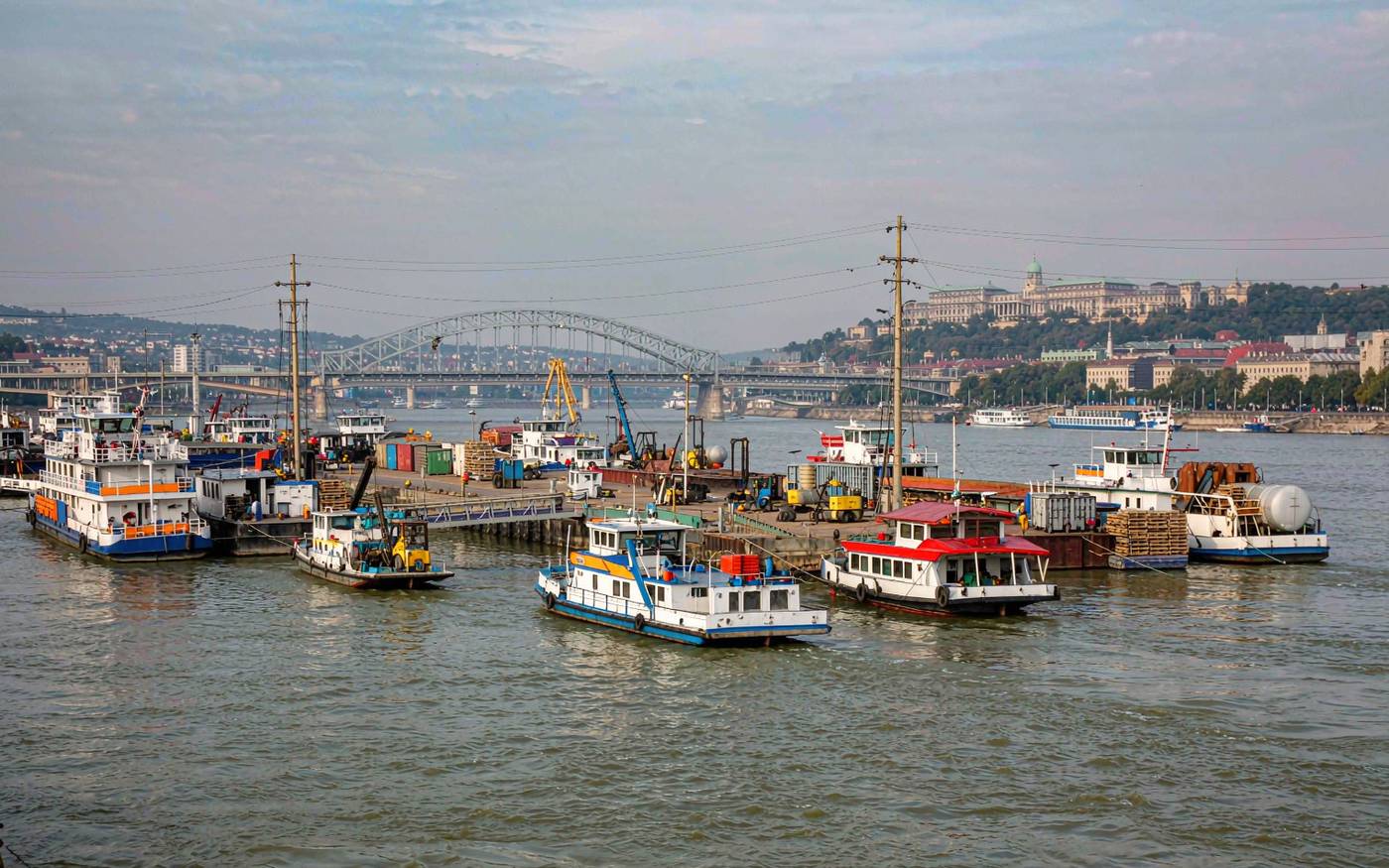
Slovakia does have a Danube port at Bratislava, which can be used for barge movements from Constanta, and it suits certain bulk or project cargo. For most containerised consumer and industrial goods, road or rail from an Adriatic or North Sea port is what actually happens.
The inland run is a significant share of the total cost on this lane, so ask for the ocean leg and the inland leg quoted separately. When they are bundled, you cannot tell which gateway is genuinely cheaper — and that is exactly what you will want to know on the second shipment.
A faster middle option: rail into Kosice via Dobra
Rail is a genuinely competitive option here, more so than in most EU destinations. Container trains run from Chinese inland hubs such as Xi'an, Chengdu and Chongqing to Central Europe, and Slovakia has a broad-gauge terminal at Dobra near Kosice on the Ukrainian border that acts as a gateway for China–Europe services.
Transit times for rail to Central Europe are commonly quoted around 18 to 28 days, with onward truck delivery to Bratislava or Kosice. That places it between sea and air on both cost and speed, and it suits time-sensitive cargo that is too heavy to fly.
The trade-off is capacity. Rail slots are seasonal and can be affected by border conditions and terminal handling, so confirm availability at the time of booking rather than assuming a published schedule holds.
A smooth last mile to Bratislava and Kosice
Bratislava is the main destination and the best served for warehousing, with Kosice the second hub in the east — particularly relevant if you are supplying the automotive and industrial belt around Kosice, Presov and Zilina.
Air freight is interesting here: Bratislava has an airport, but a great deal of air cargo for Slovakia is actually flown into and cleared at Vienna, a short drive away, because of flight availability and handling capacity. If you are quoting air, price both and compare the total door cost rather than just the airfreight rate.
On the last mile, palletised cargo moves faster and cheaper than loose cartons, and delivery appointments matter at industrial sites. Ask your supplier to palletise properly in China, and give the actual delivery postcode when requesting a quote.
Documents that keep your clearance moving
The core set is a commercial invoice, a packing list, and the bill of lading, sea waybill or air waybill. The invoice should carry complete product descriptions, values, the delivery term and the country of origin; the HS or commodity code and the EORI number appear on the declaration.
Add product-specific documents: CE conformity documentation for electrical and electronic goods, certificates for food, plant or animal products, and permits for controlled categories. Your broker may also need a power of attorney to file on your behalf.
Accuracy of weights and dimensions is more important than it looks. Freight is charged on chargeable weight and volume, customs value references the transport cost, and an inaccurate packing list causes problems on both sides at once.
Lower-cost choices: clear at the gateway or inland
You can clear at the gateway port or move the goods under transit and clear in Slovakia. Clearing in Slovakia keeps the consignment under customs control until it reaches Bratislava or Kosice, which suits importers who want their own broker and their own customs office handling the declaration.
Clearing at the port can be faster when your broker or forwarder has an established presence there, and it avoids a transit guarantee. The trade-off is that you lose control over who examines the goods and how quickly queries are answered.
For a first shipment, clearing inland in Slovakia is usually the better choice: you work with a broker you have chosen, queries are answered in your time zone, and any examination happens near your warehouse rather than several countries away. We can set up whichever arrangement suits your routing.
Real moves, from purchase to delivery
Five shipments bought in China and delivered into Slovakia, told end to end — where the order came from, how it moved, where it nearly went wrong, and how it finished. Client names are withheld at their request; the situations and the handling are what we deal with on this lane.
Aluminium profiles · Canton Fair order · Foshan to Koper to Bratislava
The purchase. A Slovak buyer met an extrusion factory in Foshan at the Canton Fair and placed his first container order — one 40-foot container of aluminium profiles for a window system, FOB Shenzhen against a 30% deposit.
The move. We collected from the factory in Foshan, trucked to Shenzhen, sailed to Koper, then moved the container into Slovakia under transit and cleared it inland rather than at the port.
Where it nearly went wrong. The tariff line he had been quoting to himself sits next to categories carrying EU anti-dumping duty on Chinese aluminium. Arriving misclassified would have meant a reassessment plus storage while it was argued.
How it finished. We pulled the ten-digit TARIC code before he paid the deposit, so he knew the real duty exposure while he could still renegotiate with the factory. The container was released in a single working day with no reassessment and no storage charge.
Warehouse racking · Alibaba sourcing · Nanjing to Hamburg to Kosice
The purchase. An e-commerce operator found a manufacturer in Nanjing through Alibaba and ordered enough steel shelving to fill a container — EXW terms, meaning the factory was not going to deliver anything to a port for him.
The move. We collected under EXW, loaded in Shanghai, sailed to Hamburg, then trucked the container to his site east of Kosice.
Where it nearly went wrong. The delivery address had no loading dock and a yard too tight for a standard curtain-sider to turn, and palletised steel cannot be dragged off a truck by hand.
How it finished. We arranged a tail-lift vehicle and a first-thing delivery appointment. The container was unloaded and cleared away in one morning, with no demurrage at Hamburg and no failed delivery attempt to pay for twice.
Exhibition stock · three suppliers · Shenzhen to Vienna to Bratislava
The purchase. A first-time exhibitor had display units and sample cases built by three separate Shenzhen workshops, all of which finished late and none of which had any export experience.
The move. We collected all three, consolidated them at our Shenzhen warehouse, flew the combined shipment into Vienna, cleared customs there and ran it across the border by road the same evening.
Where it nearly went wrong. There were five days left before the fair opened. Bratislava alone could not offer flight timings that worked — routing there first would have cost him the exhibition.
How it finished. Delivered to the exhibition site the day before opening, on the one routing that could still meet the date. He has consolidated through us since.
General merchandise · Yiwu market buying · Yiwu to Dobra to Kosice
The purchase. A retailer walked the Yiwu market and bought across dozens of small stalls — the kind of order no single factory will consolidate for you, and the reason a lot of buyers give up on China sourcing.
The move. We consolidated everything at our Yiwu warehouse, loaded it into a rail container through the broad-gauge terminal at Dobra near the Ukrainian border, then trucked the load into Kosice.
Where it nearly went wrong. His previous forwarder only offered air freight, so every few weeks the whole order flew — and on low-value goods the per-kilo cost was eating most of the margin.
How it finished. We moved him onto a monthly rail slot. Transit became predictable enough to plan stock around, and his freight cost per kilo dropped substantially against the air routine.
Building materials · first import · three factories to one container
The purchase. A contractor moving into importing for the first time had bought bathroom fittings in Taizhou, tiles in Foshan and lighting in Zhongshan — three cities, three factories, each insisting on using its own forwarder.
The move. We consolidated all three at our China warehouse into one container against one bill of lading and one customs declaration into Slovakia.
Where it nearly went wrong. Three separate less-than-container shipments would each have carried their own minimum destination charges and handling fees — exactly what three different factory forwarders are set up to bill for.
How it finished. One customs entry instead of three, one destination handling charge instead of three separate minimums, and one person answerable for the whole shipment rather than three trying to blame each other.
Why importers use Goodhope on this lane
Six things that are different about working with us on China to Slovakia shipments.
Quote a shipment to Slovakia
Send us your commodity details, volume and delivery postcode. We will confirm the TARIC code and duty exposure, the VAT position, and the best combination of gateway port, rail or road inland, and clearance point for your cargo.
Get a quote Talk to usRelated pages
Frequently asked questions
Is Slovakia in the EU customs union?
Yes. Goods from China enter the EU customs territory and are cleared under EU rules. Once cleared they can move to any other member state without a second customs clearance, which is why many importers use one country as the entry point and distribute across several.
Do I need an EORI number?
Yes. An EORI number is mandatory for customs clearance anywhere in the EU customs territory. It is free, issued by the national customs authority, valid across all 27 member states and normally issued within a few working days. Apply before you book the freight.
What is the import VAT rate?
The standard rate is 23%, raised from 20% on 1 January 2025, charged on the customs value plus duty plus transport to the EU border. Reduced rates apply to defined categories, commonly cited as 19% and 5%. There is no VAT-free allowance for commercial imports — the EUR 22 exemption ended in 2021.
How much duty will I pay?
Duty follows the EU common customs tariff by commodity code in the TARIC database, charged on the CIF value. There is no EU–China free trade agreement, so standard rates apply, and certain Chinese-origin goods including some steel, aluminium, ceramics, bicycles and electric vehicles carry additional anti-dumping duty.
Which port should I route through?
Slovakia is landlocked, so containers arrive at a foreign port and move inland. Koper in Slovenia is closest to Bratislava and most frequently used; Hamburg, Rotterdam, Rijeka, Gdansk and Constanta are alternatives. Ask for the ocean and inland legs quoted separately so you can compare gateways properly.
Is rail from China a good option?
Yes, more so than for most EU destinations. Container trains run from Chinese inland hubs to Central Europe, and the broad-gauge terminal at Dobra near Kosice acts as a gateway. Transit is commonly quoted at 18 to 28 days plus onward truck delivery.
Should I clear customs at the port or in Slovakia?
Clearing in Slovakia keeps the goods under customs control until they reach Bratislava or Kosice and lets you work with a broker you have chosen, which usually suits a first shipment. Clearing at the port can be faster where your forwarder has a presence there. Both can be arranged.
What documents are required?
A commercial invoice with full descriptions, values, delivery terms and origin; a packing list; and the bill of lading, sea waybill or air waybill. The commodity code and EORI number appear on the declaration. CE documentation, health certificates or import permits are needed depending on the product.
Does the EUR 150 duty exemption still apply?
It is being removed. From 1 July 2026 the EUR 150 customs duty exemption ends, replaced for consignments up to EUR 150 by a temporary flat duty of EUR 3 per item, running until 2028. This mainly affects e-commerce and small parcels rather than commercial container shipments.
How long does clearance take?
Commonly one to three working days once a complete declaration is filed. Most delays come from incomplete data, a missing EORI number or a classification query rather than from the customs process itself.