
Dangerous goods LCL from China to South Korea: rates and service terms
Hazardous less-than-container load out of Shanghai to Busan and Incheon. Six IMO classes are open for consolidation, sailings leave on Sunday and go direct, and the minimum volume is stated up front because it is charged whether you use it or not.
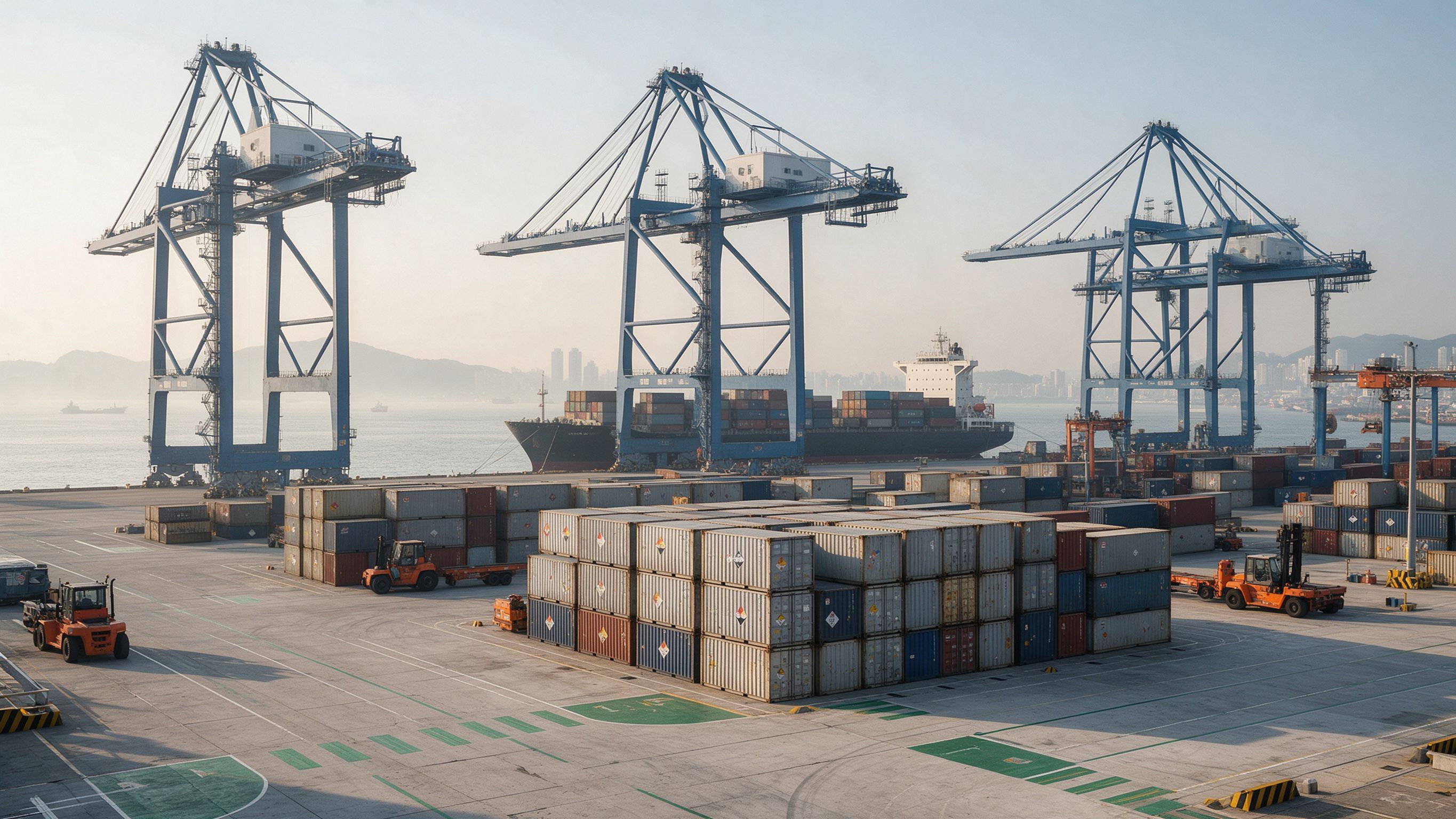
Shanghai to Busan and Incheon, per cubic meter
This is the November 2026 Shanghai export DG LCL sheet, valid for cargo that sails between November 1 and November 14, 2026. Rates are per cubic meter and already carry the USD30 per CBM basis adjustment used across this sheet.
| Destination port | Ocean freight | Minimum volume | Sailing | Direct call | Transshipment port | Transit time | CISF | Transshipment handling |
|---|---|---|---|---|---|---|---|---|
| BusanBUSAN · PUS | USD50per CBM | 2 CBM | Sunday | Direct (Y) | Direct | 2 days | N | N |
| IncheonINCHEON · INC | USD60per CBM | 3 CBM | Sunday | Direct (Y) | Direct | 3 days | N | N |
Swipe the table sideways to see every column.
How to read the sheet. "Direct (Y)" is the direct-call flag as marked on the rate sheet, and the transshipment port column reads "Direct" for both ports because neither box is relayed.
What the rate includes. The figure shown is the base rate on the November 2026 Shanghai export DG LCL sheet with USD30 per CBM added to each cubic meter.
Guangzhou origin. Hazardous LCL on the same lane out of Guangzhou is priced per booking, because space and rate are confirmed shipment by shipment rather than held on a public sheet.
What the RMB all-in covers, and what sits beside it
Freight is quoted in dollars. The China-side handling is quoted in RMB, per bill of lading or per commodity, and it is invoiced separately from the ocean freight.
RMB all-in, per BL or per commodity
- Handling: RMB200 per BL
- Cargo declaration: RMB200 per commodity
- Vessel declaration: RMB100 per commodity
- Out-of-port Class 4.1 surcharge: RMB800 per shipment
- Class 2 destination surcharge: USD200
Fixed charges on this lane
- VGM: USD15 per BL
- BAF and CAF: collected at destination as the default
- CISF: marked N for Busan and Incheon
- Transshipment handling: marked N for both ports
Release and the inland move in Korea
Cargo going past the port of entry is released only after the documents are handed over, the charges are settled and customs is cleared at that port. Nothing moves inland before that sequence is complete.
BAF and CAF are collect at destination unless the booking confirms otherwise, and that confirmation follows the destination conditions on the day of booking.
Inspections and anything outside the flow
A customs or terminal inspection, a hold, restacking, or any handling the rate sheet does not name is billed at actual cost, with the third-party invoice attached to ours.
Paperwork raised late, or a cargo cut-off missed because documents arrived after the deadline, falls into the same bucket.
Which DG classes move as LCL, and when the warehouse will take them
Six IMO classes are open for consolidation on this lane. Anything outside the list has to be quoted as FCL or as a separate project, because a consolidated box cannot carry what the other shippers on that box are not cleared for.
Hot-weather receiving window at the warehouse
- Window
- June 15 - October 15, 2026
- Classes
- 2, 3 and 4.1
- Unloading
- 08:00-10:00 and 16:00-18:00
- Why
- Cargo is taken in the cool hours only
Class 2 cargo pays the USD200 destination surcharge. Out-of-port Class 4.1 cargo pays RMB800 per shipment. Both are declared on the rate sheet rather than absorbed into the freight.
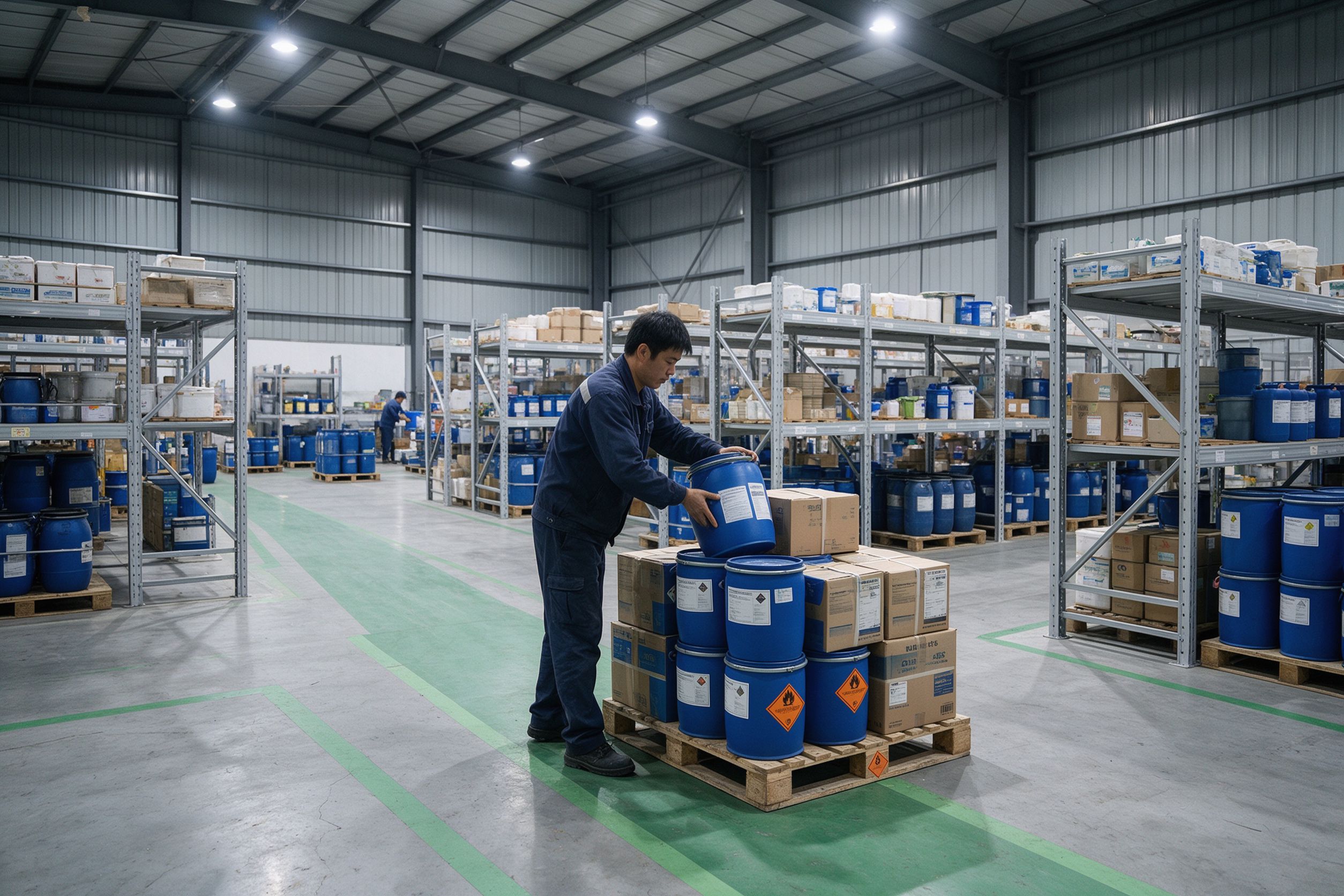
Two ports, one Sunday sailing, no relay
Busan and Incheon are both served direct from Shanghai on the Sunday sailing. Busan is the shorter water leg at two days; Incheon runs three. Neither port carries a CISF or a transshipment handling charge on this sheet.
Busan
Sunday sailing, direct call, two days at sea. USD50 per CBM with a 2 CBM minimum. CISF and transshipment handling are both N, so the invoice stays freight plus the RMB origin charges.
Incheon
Sunday sailing, direct call, three days at sea. USD60 per CBM with a 3 CBM minimum. The same N markings apply, and the extra day is the only difference in service.
DDU and DDP are available to either port. The terms are confirmed shipment by shipment, because the Korean side of a door delivery depends on the importer of record, the commodity and the clearance route rather than on the ocean leg.
The terms that actually decide the invoice and the cut-off
Taken from the remarks printed on the rate sheet. These are the points that change a quote, a deadline or a charge, so they are worth reading before a booking goes in rather than after.
- Validity. Rates apply by ETD, from November 1 to November 14, 2026.
- Basis. Every rate on this page is the sheet base rate with USD30 per CBM added.
- Minimum volume. 2 CBM at Busan, 3 CBM at Incheon. Below that, the minimum is charged and shown on the bill of lading.
- VGM, BAF and CAF. VGM is USD15 per BL. BAF and CAF are collect at destination by default on the Korea lane.
- CISF and transshipment handling. Both columns read N for Busan and Incheon, so neither is billed here.
- RMB all-in. Handling RMB200 per BL, cargo declaration RMB200 per commodity, vessel declaration RMB100 per commodity, out-of-port Class 4.1 RMB800 per shipment, and a USD200 Class 2 destination surcharge.
- Packaging. Every DG piece has to be palletized and carry its hazard marks. If we palletize or mark it for you, that work is quoted separately.
- Warehouse cut-off. Cargo has to be at our warehouse four days before the booked sailing at the latest. The warehouse charges loading and unloading on top of the RMB all-in.
- Booking lead time. DG bookings go in writing ten working days ahead so the carrier can grant space, with the faxed copy of the export DG packaging certificate. Cylinder cargo also needs the export cylinder safety inspection certificate and report.
- Original documents. The original export DG packaging certificate and the DG technical data sheet are due four days before sailing at the latest, together with one original of each customs document.
- In-country transfer in Korea. Documents, payment and customs clearance are handled at the port of entry before the cargo is allowed to move.
- Summer receiving. June 15 to October 15, 2026, Class 2, 3 and 4.1 cargo is unloaded only between 08:00-10:00 and 16:00-18:00.
- Inspection. Where customs or the terminal inspects, or where anything exceptional happens, the cost is passed through at actual.
DG LCL to South Korea, answered from the sheet
Every answer below is built from the November 2026 Shanghai export DG LCL sheet for Korea and the remarks printed on it. No generalities, no rates that are not on the sheet.
01What does DG LCL from China to South Korea cost per cubic meter?
Busan runs USD50 per CBM with a 2 CBM minimum. Incheon runs USD60 per CBM with a 3 CBM minimum. Both figures already include the USD30 per CBM basis adjustment, and both hold for cargo sailing between November 1 and November 14, 2026.
02How often do the sailings go, and how long is the water leg?
One Sunday sailing serves both ports, and both calls are direct. Busan is two days at sea, Incheon is three. Neither port carries a CISF or a transshipment handling charge on this sheet.
03Which dangerous goods classes can be consolidated to Korea?
Classes 2.2, 3, 4.1, 6.1, 8 and 9. Six classes and no others. Cargo outside that list is quoted as FCL or as a dedicated project.
04What is the minimum volume, and how is it charged?
2 CBM to Busan, 3 CBM to Incheon. Ship below the minimum and the minimum is billed anyway, and it is shown on the bill of lading so the consignee sees the same figure you were quoted.
05What do the RMB all-in charges cover?
Handling RMB200 per BL, cargo declaration RMB200 per commodity, vessel declaration RMB100 per commodity, an out-of-port Class 4.1 surcharge of RMB800 per shipment, and the USD200 Class 2 destination surcharge.
06How are VGM, BAF, CAF and CISF handled?
VGM is USD15 per BL. BAF and CAF are collect at destination by default. CISF and transshipment handling are marked N for Busan and Incheon, so neither turns up on the invoice.
07What changes for Class 2 cargo?
Two things. A USD200 destination surcharge applies by default, and between June 15 and October 15 the warehouse only unloads Class 2, 3 and 4.1 cargo in the 08:00-10:00 and 16:00-18:00 windows.
08How far ahead does a DG booking have to be placed, and what goes with it?
Ten working days, in writing, so the carrier has room to release space. Send the faxed copy of the export DG packaging certificate with the booking. Cylinder cargo also needs the export cylinder safety inspection certificate and report.
09When are the originals and the customs paperwork due?
Four days before sailing at the latest: the original export DG packaging certificate, the DG technical data sheet form, and one original of each customs document.
- Customs declaration authorization, three-part form - the first copy is accepted where your company has that arrangement, stamped with the company seal and the legal representative seal in the top right and bottom left.
- Export customs declaration, in the form that matches the trade term, general trade in most cases, with all fields completed.
- Commercial invoice and packing list, in English, with the company seal or a handwritten signature.
- Product description, in Chinese.
10When does cargo have to be at the warehouse, and what does the warehouse charge?
Four days before the booked sailing at the latest. The warehouse bills loading and unloading on delivery, and that is not inside the RMB all-in.
11What packaging is required for DG LCL?
Every piece palletized, every piece carrying its hazard marks. If we handle the palletizing or the marking, the work is quoted as a separate line.
12What has to happen before cargo moves inside Korea?
Documents handed over, charges settled, customs cleared at the port of entry. The inland leg starts after that sequence, not before it.
13Do Shanghai and Guangzhou origins price the same?
No. These figures are the November 2026 Shanghai export DG LCL sheet, effective for ETD November 1-14, 2026. Guangzhou origin is confirmed per booking, because space and rate are set shipment by shipment rather than published on a sheet.
14Can you deliver DDU or DDP to Korea?
Yes, to either port and on to the inland address. Terms are confirmed per shipment, because the import side depends on the importer of record, the commodity and the clearance route rather than on the ocean leg.
15How are inspections and exceptions billed?
At actual cost. Inspection, a hold, restacking or anything else outside the standard flow is passed through with the supporting invoice attached.
Rates, windows and charges on this page are transcribed from the November 2026 Shanghai export DG LCL rate sheet for the Korea lane, valid for ETD November 1-14, 2026, and priced with USD30 per CBM added to the sheet base rate. Beyond that window, confirm by booking.