
Home / Shipping to Thailand / How to Ship from China to Thailand
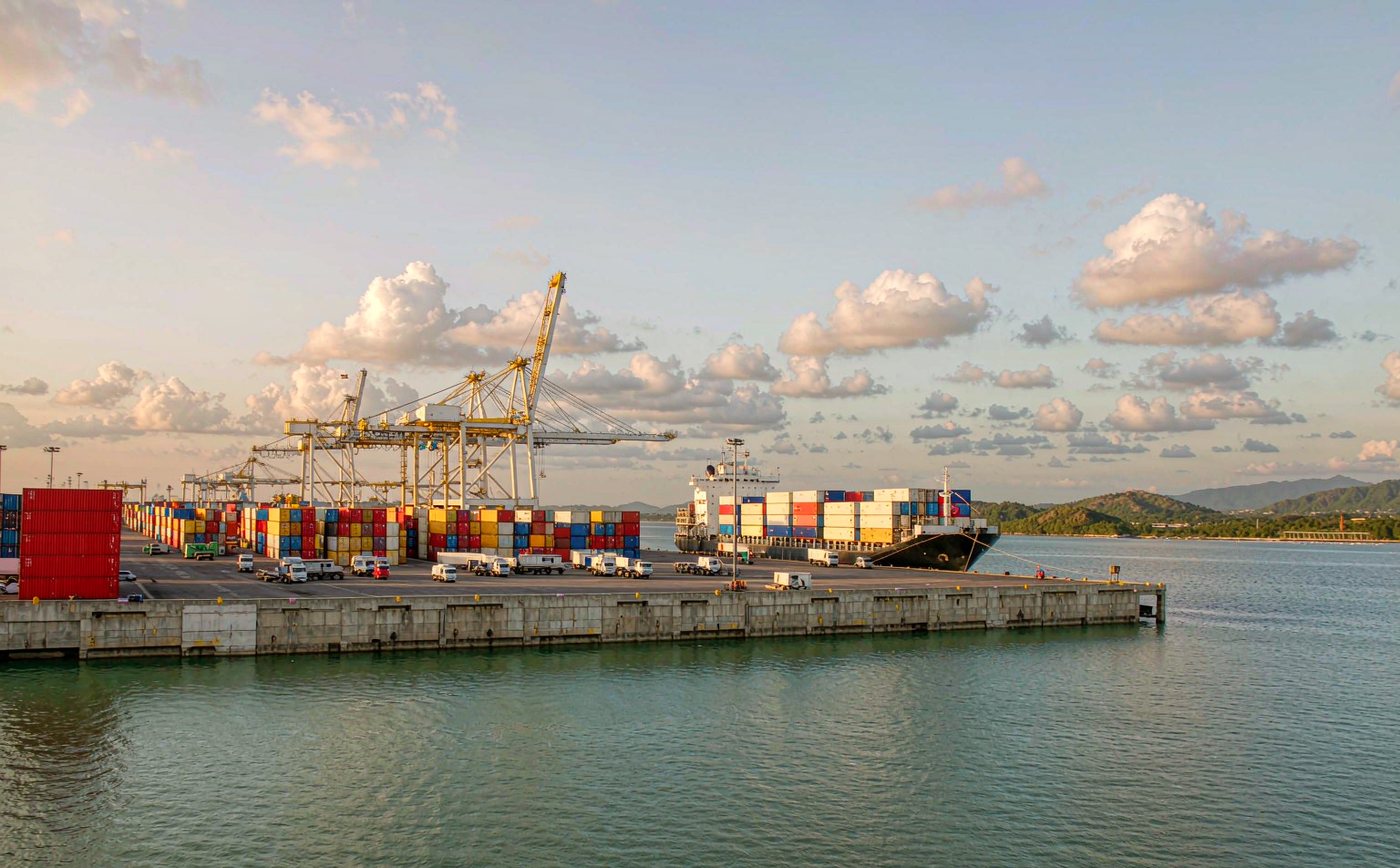
How to Ship from China to Thailand: Laem Chabang, VAT & Form E
Thailand is a short crossing and an expensive border. The sailing from South China to Laem Chabang takes a few days; the money is decided by two things that happen before the vessel moves. The first is the tariff, which is high — Thailand's applied ad valorem rates run from zero to 80 percent, and plenty of ordinary consumer lines sit in the 10 to 30 percent band. The second is the certificate of origin, which is what brings that number down. Under the ASEAN–China Free Trade Area, a valid Form E moves most goods to a zero duty rate. On a mid sized container the certificate is routinely worth more than any freight discount you could negotiate, and it costs almost nothing to obtain.
The third thing is that Thailand puts approvals in front of customs, not behind it. Industrial products, radio devices, food and cosmetics each have their own regulator — the Thai Industrial Standards Institute, the National Broadcasting and Telecommunications Commission, and the Thai FDA. If your product is on one of those lists and the approval does not exist yet, the goods sit at the terminal. A TISI licence is commonly quoted at three to six months to obtain. That, not the vessel schedule, is what sets your launch date.
And from 1 January 2026 there is no small-parcel exemption left. Thailand abolished the de minimis value of 1,500 baht, and imports of one baht and above now carry duty and VAT with a combined floor of roughly 17 percent. If you have been moving samples or small e-commerce restock into Thailand under the old threshold, that arithmetic has changed.
How your cargo moves: China to Thailand
Eight steps from your supplier's door to yours. The last four are the ones shaped by local rules.
- Pickup from your supplierWe collect the goods anywhere in China and bring them to our consolidation point.
- Export clearanceChina customs declaration filed and released before the goods move to the port.
- Loading and departureContainer loaded, sealed and handed to the carrier at the Chinese port.
- Main carriageOcean, air or rail movement booked on the route agreed for your cargo.
- Arrival at the gatewayDischarge at the port or airport of entry, recorded on the carrier's manifest.
- Import clearanceCustoms declaration filed locally, with duty and tax assessed on the declared value.
- Customs releaseGoods released into free circulation once duty and tax are settled.
- Final deliveryOnward movement to your delivery address, warehouse or nominated depot.
Duty rates, VAT rates and clearance times move, and the figure that applies to your goods is the one set for your commodity code on the day of clearance. We check the current position against your code before your goods sail and confirm it to you in writing — ask for that check when you request a quote.
The tariff is high, and the certificate is what lowers it
Thailand classifies imports on the ASEAN Harmonised Tariff Nomenclature, currently the 2022 edition, at eight digits, extended with Thai statistical suffixes in the declaration. The classification is decided by the product, and everything downstream follows from it: the duty rate, whether an agency controls the goods, and whether a preferential rate is available.
| Charge | Basis | Notes |
|---|---|---|
| Import duty | CIF value, at the rate for your code | Applied ad valorem rates run from 0 to 80 percent. Specific rates apply on some lines, and where both apply the higher is charged. |
| VAT | 7% on CIF plus duty | Charged on every import without exception. A VAT registered importer can normally reclaim it as input tax. |
| Excise tax | By category | Alcohol, tobacco, motor vehicles and some luxury goods, on top of duty and VAT. |
| Interior tax | 10% of excise | Applies to selected excise categories. |
Worked once, at a CIF value of 500,000 baht with an MFN rate of 10 percent: duty is 50,000 baht, VAT is 7 percent of 550,000, which is 38,500 baht, and the total tax is 88,500 baht. Present a valid Form E and the duty falls to zero; VAT becomes 7 percent of 500,000, which is 35,000 baht. The tax bill drops from 88,500 baht to 35,000 baht — a saving of 53,500 baht on a single shipment, and the VAT base falls with the duty because VAT is charged on a figure that includes it.
The order of operations matters. Get the Thai classification from your consignee first, because the Chinese export code is not automatically the same. Look up that code under ACFTA and under RCEP. Then decide which certificate to ask for. Deciding after the goods have sailed is how importers end up paying MFN rates they did not budget for.
Laem Chabang, Bangkok Port, and the river port difference
| Gateway | Region served | Notes |
|---|---|---|
| Laem Chabang | Bangkok, Chonburi, Rayong and the eastern seaboard | The main deep water container port and the default for China origin container cargo. The eastern industrial estates sit behind it. |
| Bangkok Port (Khlong Toei) | Bangkok city and the Chao Phraya corridor | A river port with draft and vessel size limits. Used largely by feeder and barge services. Closer to the city, more constrained on what it can accept. |
| Suvarnabhumi (BKK) | Air freight, national | The main air cargo gateway, with Don Mueang as a secondary and Chiang Mai and Phuket for regional deliveries. |
| R3A corridor and the China–Laos railway | Northern Thailand, Chiang Mai and Chiang Rai | Road via Laos, or rail from Kunming to Vientiane and then road. The overland option that exists for Thailand and not for its maritime neighbours. |
For most first time importers the port question is short: Laem Chabang, unless your consignee is in the north and the overland route genuinely serves them better. Bangkok Port is worth asking about only when the service and the vessel both fit its limits. Air cargo into Suvarnabhumi clears quickly because the airport handles high volumes of it, but it is still subject to the same approval gate — an NBTC device without approval waits at the airport exactly as it would wait at the port.
Thailand delivery times by vessel, aircraft and train
| Mode | Typical transit | When it fits |
|---|---|---|
| Ocean FCL | Roughly three to six days port to port from Yantian, Shekou or Nansha to Laem Chabang; about five to eight days from Shanghai or Ningbo; around seven to twelve days from North China ports | Regular stock and volume above roughly 13 to 15 cubic metres. The default on this lane. |
| Ocean LCL | Vessel time plus consolidation and deconsolidation, commonly eight to fourteen days | Trial orders and part loads. |
| Air freight | One to three days airport to airport into Suvarnabhumi | High value density, deadlines, electronics, samples. |
| Express courier | Two to four days door to door | Documents, samples, small parcels. Now taxed from the first baht. |
| Rail plus road via Laos | About seven to eleven days door to door from Kunming through Vientiane to Bangkok | Northern Thailand destinations, and cargo that sits between air and sea on both cost and urgency. |
Customs clearance on a complete file is usually one to three working days. When a shipment is held, the reason is almost always a missing approval or a document that does not match, not the speed of the customs house. That is the practical argument for doing the approval work early: on a lane this short, a two week hold is a larger proportional delay than it would be on a long voyage.
We do not publish freight rates here. Ask for base freight, origin charges in China, destination charges in Thailand, duty, VAT and inland delivery as separate lines so you can see what moved when the price changes. See our local charges page.
Trade terms, and who carries the import in Thailand
The trade term sets who pays and where risk transfers. It does not change the requirement that the importer is an entity with a Thai tax identification number and an e-Customs registration, and it does not remove a product approval that Thai law requires.
- EXW — you collect at the supplier's door and carry everything, including Chinese export formalities. Rarely sensible for a first import.
- FOB — the supplier loads and clears Chinese export; you take over at the Chinese port. The term most experienced buyers use on this lane.
- CIF — the supplier pays freight and insurance to the Thai port, risk passes in China, and you still clear. Not delivered.
- DAP — delivered to a named place in Thailand, with you handling import clearance, duty and VAT.
- DDP — the seller carries duty and taxes too. This only works if the seller can legally act as importer of record in Thailand. If the factory quoting you DDP has no Thai entity, ask who the importer of record actually is, because you may be inheriting a declaration filed in someone else's name.
One more thing worth knowing: Thai customs risk profiles each declaration and routes it to a green line, which is a document review, or a red line, which adds a physical examination. The declaration has to agree with the commercial invoice. A mismatch between the two is a common trigger for a hold and a reassessment, and reassessments carry surcharges and penalties on top of the duty.
The importer registration and the e-Customs channel
Thailand runs a largely paperless import process. To use it, the importer works through three things.
A registered Thai entity with a tax number
Company registration with the Department of Business Development, then a 13 digit tax identification number. VAT registration is also required once turnover passes the Thai threshold, and it matters here: a VAT registered importer can normally reclaim the import VAT as input tax, so the 7 percent is a cash flow item rather than a final cost.
A digital certificate and e-Customs access
The digital certificate is the electronic signature used to authenticate filings, and it is a prerequisite for registering on the e-Customs system and the National Single Window. Registration can be done directly by the importer, through the Customs Trader Portal, or through an agent. Access should be tested and working before the vessel arrives, not arranged while it is discharging.
A licensed customs broker, or in-house filing capability
Most importers file through a licensed customs broker holding its authorisation under the Thai Customs brokerage framework. The broker lodges the entry, pays the duty and VAT, and arranges release. Choose one before the first booking, because the broker is also the party who will tell you whether your product is on a controlled list.
Useful mechanics: goods can sit in a customs bonded warehouse for up to 45 days without an entry being filed, or 60 days where an entry has been submitted, and landing and storage charges have to be settled before release. If the classification is genuinely ambiguous, Thai Customs accepts written applications for an advance ruling on classification or valuation before importation, and those rulings are binding — a far cheaper route than discovering the answer at the border.
A container from Shekou to a warehouse in Chonburi
Here is what a straightforward first FCL import looks like, with the things that actually decide the outcome.
Get the Thai classification before you order
Ask the Thai consignee for the code they intend to declare under. Check the ACFTA rate against the RCEP rate for that code. If the product is an appliance, a radio device, or a food or cosmetic, start the approval conversation now — everything else in this list runs in parallel with it.
Fix the term and the booking
FOB Shekou, booked against a direct service, with the terminal named as Laem Chabang. Confirm whether the transit figure you were given is port to port or door to door; on a lane this short the difference is most of the total.
Collection, export clearance and the verified gross mass
Collect from the factory, or from several factories if you are consolidating. Chinese export clearance and the verified gross mass are completed before loading. See our consolidated shipment and pick up pages.
Sailing and the document set
The bill of lading is issued, and the commercial invoice, packing list and certificate of origin are prepared as one consistent set. The descriptions, quantities and values on all four documents have to agree with each other, because the Thai entry will be checked against them.
Arrival and the entry
The broker files the entry on the National Single Window, attaches the Form E where a preferential rate is claimed, and attaches any electronic licence per invoice the Thai FDA requires. Duty and VAT are assessed and paid. The declaration is routed to the green or red line.
Release and inland delivery
Once released, the container moves by road to the consignee's warehouse in Chonburi — a short haul from Laem Chabang. Door to door on a clean file is commonly around nine to twelve days from collection.
Import duty, VAT, and the tax floor that arrived in 2026
From 1 January 2026 Thailand abolished the de minimis value, the 1,500 baht threshold below which imports entered free of duty. Goods of 1 baht and above now carry both import duty and VAT, with the combined burden set at a floor of roughly 17 percent. Thai Customs has described the change as closing a tax gap between overseas sellers and Thai businesses, and has estimated additional revenue in the region of 3 billion baht a year.
| Category | Duty from | Notes |
|---|---|---|
| Low value goods, general | 10% | Charged on the CIF value as a starting rate |
| Fashion apparel and footwear | Up to 30% | The highest band in the low value schedule |
| Bags and accessories | 20% | |
| Electrical appliances | 10% | |
| VAT on all of the above | 7% | Charged on CIF plus duty |
Worked at 100 baht CIF: duty of 10 baht, then VAT of 7 percent on 110 baht, which is 7.7 baht — 17.7 baht of tax on a 100 baht parcel. Collection runs through three channels rather than one. Postal parcels are marked with the amount and the recipient pays on delivery. Courier shipments are advanced by the courier, which then settles with the recipient. And on 22 December 2025 Thai Customs signed cooperation agreements with five major marketplaces — Lazada, Shopee, TikTok Shop, Temu and Shein — under which the tax is collected at checkout. Customs has also said it will share a whitelist of controlled goods with the platforms so that products needing Thai FDA or TISI clearance are identified earlier, and prohibited items such as e-cigarettes are removed automatically.
If you import commercially, note what did and did not change. Containerised commercial imports always paid duty and VAT; the structure of your entry is unchanged. What changed is the small parcel channel. Samples, spare parts and marketplace restock that used to arrive free now carry tax, and they are now taxed at the point of sale rather than at the border.
TISI, NBTC and the Thai FDA: three gates before customs
These are three separate regimes run by three separate agencies. None of them substitutes for another, and a single product can need more than one.
TISI — industrial products
The Thai Industrial Standards Institute administers mandatory standards across roughly sixty product groups: household appliances, cable, plugs, sockets and switches, LED luminaires and ballasts, cement, steel, PVC pipes, ceramic tiles, toughened glass, tyres, safety glass, motorcycle helmets, gas appliances, toys and some food contact plastics.
Testing is carried out in TISI recognised laboratories in Thailand; overseas CB or IEC reports support an application but do not replace local testing. A full licence runs for three years with annual surveillance and usually involves a factory audit. For a one off small shipment there is a batch certification route at a higher per shipment cost. Certification is commonly quoted at three to six months, longer for steel and for medical devices.
NBTC — radio and telecom equipment
The National Broadcasting and Telecommunications Commission requires type approval for anything that transmits or receives radio: phones, Wi-Fi and Bluetooth devices, IoT hardware, routers, and switches with embedded radio. Three routes apply — Class A for complex devices such as smartphones, Class B for standard devices such as Wi-Fi routers, and a supplier's declaration of conformity for low risk devices.
From 1 February 2026 a Bluetooth device applying under the supplier's declaration route must also submit an electrical safety test report, which was not previously required. Approval is applied for by or through a Thai entity, so the Chinese factory cannot hold it in its own name.
Thai FDA — food, drugs, cosmetics, devices
Thai FDA covers food, pharmaceuticals, medical devices, cosmetics, dietary supplements and hazardous substances. Most processed and packaged food needs registration and a food serial number, the Or Yor number, shown on a Thai language label. Cosmetics need notification or registration before import. Medical devices are licensed by risk class, from a listing at class one through to a full licence with clinical data at class four.
Since 2025 the controls have been linked to customs through the National Single Window and the controlled goods database: the importer needs an electronic licence per invoice matched to the import declaration before release.
Labelling, which is a separate trap
Regulated goods need Thai language labelling covering product name, manufacturer or importer details, country of origin, use instructions and safety warnings, plus batch or expiry details for food and health products, and the relevant certification mark where one applies. A product built and packed for another market, with an English or Chinese only label, is compliant everywhere except Thailand.
Raise this with the factory while the tooling and the print run are still open. Relabelling at the Thai end is expensive and slow, and for food it may not be possible at all without the registration.
The scheduling point, stated plainly: the approval sets the date, the ship does not. A TISI application takes months. An NBTC approval has to exist before air freight is booked. A Thai FDA registration is held by the Thai importer and cannot be started by the Chinese factory alone. Plan these backwards from the date you need stock on the shelf.
Form E, Form R, and the certificate that pays for itself
Thailand has free trade agreements with China under both ACFTA and RCEP, and the certificates are different documents with different rules.
| Form E (ACFTA) | Form R (RCEP) | |
|---|---|---|
| Origin criteria | Wholly obtained, change in tariff heading, or regional value content of at least 40%, plus product specific rules | Same families of criteria, with the addition that value added anywhere in the RCEP region counts towards the threshold |
| Accumulation | Value added within China and ASEAN | Value added across all RCEP members, which helps when inputs come from Japan or Korea |
| Issued by | China Customs or the China Council for the Promotion of International Trade | Same issuing bodies, via the single window |
| Validity | 12 months from the date of issue | 12 months from the date of issue |
| Retroactive issue | Generally not available | Generally available within one year of shipment |
| Practical standing | The certificate Thai officers see most often | Newer, and more likely to be queried |
The decision sequence is short. Take the Thai classification from your consignee. Look up that code under ACFTA and under RCEP. Take the lower rate. Where both are zero, choose Form E, because it clears more smoothly in practice. Choose Form R when the product's supply chain crosses RCEP countries and Chinese value added alone is under 40 percent, or when the goods have already sailed with no certificate arranged — the retroactive route is the only way back to a preferential rate at that point.
Two mechanical points that cause rejections. The certificate carries a six digit code, and it has to be consistent with the code on the Thai entry. And where goods move through a third place such as Hong Kong, the direct consignment rule means you need a non-manipulation certificate to show the goods were not further processed in transit. Finally, note what a certificate does and does not do: it reduces or removes the duty. It does not remove the VAT, which remains payable at 7 percent on the CIF value plus whatever duty is due.
Food, cosmetics and the licences issued per invoice
This is the category where first time importers most often discover a problem at the terminal, because the requirement is not a shipping document at all — it is a product registration held in Thailand.
- Food. Registration with Thai FDA covering the product specification, ingredient list, production process and a free sale certificate issued in China. The registration produces the Or Yor food serial number, which then has to appear on the Thai language label along with the product name, ingredients, net content, manufacturer details, production and expiry dates.
- Cosmetics. Notification or registration before import, a Thai language label, and an electronic licence per invoice linked to the declaration.
- Medical devices. Classified by risk. Class one needs a listing, classes two and three a notification, and class four a full licence with clinical data. The applicant works with a licensed Thai importer, and GMP or ISO 13485 evidence is expected for devices.
- Plant and animal products. Separate quarantine and permit requirements run alongside customs. See our quarantine inspection page.
The pattern is the same in every case: the registration is held by the Thai side, so it cannot be started by the factory, and it has to be finished before the goods are shipped rather than while they are on the water.
Ordering through a marketplace, and ordering from a factory
Through a marketplace
On the five platforms that signed the cooperation agreements with Thai Customs, the duty and VAT are collected at checkout. The buyer sees the tax in the price, and the platform and the carrier handle the collection. It is simple, and for a sample or a small restock it may be the right answer.
What you give up is control: the rate applied is the platform's classification, there is no Form E being claimed on your behalf, and you cannot correct the classification later. It is a consumer channel that businesses sometimes use, not a substitute for a proper import.
Direct from a factory
You are the importer, or you appoint one. You hold the tax number, the e-Customs access and the broker relationship; you choose the classification and claim the Form E; you control whether the product carries the right approvals and the right label.
It takes more setup and it costs less per unit. Anything above a handful of cartons belongs on this side, because the certificate saving alone usually dwarfs the convenience of the other route.
The trap is mixing them. A DDP price quoted by a factory with no Thai entity means someone else's name is on the declaration. When customs later reassesses, the liability follows the import, and the party who cannot produce the documents is the one holding the problem.
Stock for a shop, and goods sent to a person
Commercial imports are entered, assessed, and released for resale, with duty and VAT accounted for by the importer. Goods sent to an individual are now taxed in exactly the same way as everything else, because the de minimis threshold is gone — there is no value below which a parcel enters free. The burden is collected through the postal, courier or platform channel rather than through an entry, but it is collected.
Two things people get wrong. The first is samples: a sample still has a value, and it must be declared at a defensible one. Understating value on a sample is a well known way to turn a routine clearance into a penalty. The second is assuming that "personal" means exempt. It does not. Where goods are genuinely household effects or a relocation, there is separate treatment, but it has to be claimed properly rather than assumed.
The China forwarder and the Thai customs broker
The work splits cleanly, and knowing where the line sits saves time.
What happens in China
Collecting from the factory or from several factories, consolidating where volume justifies it, Chinese export customs clearance, the verified gross mass, booking the service, issuing the bill of lading or air waybill, and tracking. We also check that the invoice, packing list and certificate of origin agree with each other before the documents leave, because that consistency is what the Thai entry is measured against.
What happens in Thailand
Your broker files the entry on the National Single Window, attaches the Form E and any licence per invoice, pays the duty and VAT, handles examination if the declaration goes to the red line, and arranges release and inland delivery. Thai import clearance, the registrations, TISI and NBTC approvals and Thai FDA matters belong to the importer of record and their agent.
Goodhope works port to port on ocean freight and airport to airport on air freight, and we name the terminal and the service rather than quoting a generic estimate. We coordinate with your broker and we do not pretend to do their job.
Checking a forwarder on a Thailand booking
A forwarder who works this lane will ask more questions than you expect, and that is a good sign.
- What is the Thai classification? It drives duty, the preferential rate and control status. If they quote before knowing it, they are guessing.
- Is Form E being applied for, and by whom? It is the largest saving available and it has to be arranged before departure.
- Is the product on a TISI, NBTC or Thai FDA list? If they cannot say, they have not checked.
- Which terminal — Laem Chabang, or a feeder into Bangkok Port? It should match where the consignee actually is.
- Is the transit figure port to port or door to door? On a four day sailing the difference matters.
- Are duty and VAT shown as separate lines? A single "all in" number hides the thing you most need to see.
Red flags: a rate quoted before you have said what the goods are; "everything included" with no broker named; a suggestion that TISI or NBTC can be sorted after arrival; a DDP offer with no Thai importer identified; and any pressure to declare a lower value.
Three shipments into Thailand, and the reason for each
The examples below are illustrative. They describe typical decisions on this lane, not specific customer shipments.
Furniture and fittings where one certificate decided the margin
A 40 foot high cube of flat pack furniture from Foshan, booked FCL into Laem Chabang. The freight was ordinary and the duty was not: at the MFN rate the duty alone was enough to remove the margin on the container. The Form E certificate took the rate to zero and the VAT base fell with it. The whole outcome rested on a document that costs a fraction of the freight, applied for in the week before sailing.
Bluetooth speakers that were an approval problem, not a freight problem
A few hundred kilograms of Bluetooth speakers, air freighted from Shenzhen to Suvarnabhumi. Nothing about the move was difficult. The devices needed NBTC type approval, and from 1 February 2026 a Bluetooth device going down the supplier's declaration route also needs an electrical safety test report. Booking the air freight first would have produced a warehouse bill measured in weeks; obtaining the approval first produced a one day clearance.
Packaged snacks that could not be cleared without a registration
An LCL shipment of packaged snacks, a few cubic metres from Shantou. The deciding item was never the vessel: the food needed Thai FDA registration and an Or Yor serial number on a Thai language label, and the importer needed an electronic licence per invoice linked to the entry. That work sits with the Thai importer and takes weeks. The freight was the easy part, and the label artwork had to be settled before the production run rather than after it.
Songkran, Loy Krathong and the factory shutdown weeks
- Chinese New Year stops production in China and congests the weeks either side of it. It is the single biggest planning constraint on the lane.
- Songkran in mid April closes much of Thailand for several days. Transport, agencies and delivery all slow down, and a shipment timed to arrive into the holiday sits.
- Loy Krathong in November, plus long weekends and the associated bridge days, shorten working weeks repeatedly through the fourth quarter.
- Golden Week in early October affects Chinese factories and bookings.
- The monsoon from roughly May to October affects inland transport and river operations, and peak season from September to November tightens space.
The practical rule: schedule approvals to finish before a shutdown, not across one. Check our holidays page when you are fixing a production date.
What Goodhope handles on the Thailand lane
- We raise the certificate question before you book — which agreement, which rate, and who applies for it.
- Ocean freight port to port and air freight airport to airport — into Laem Chabang or the Bangkok river port by sea and Suvarnabhumi or Don Mueang by air, with the terminal and the service named rather than a generic estimate.
- We ask for the classification before we quote — because it drives duty, the preferential rate and whether an agency controls the product.
- We flag the approval gate — TISI, NBTC and Thai FDA exposure identified early, so the slow item starts first.
- Consolidation across suppliers — several factories, one container, one document set that agrees with itself. See our consolidated shipment and warehouse and consolidation pages.
- Regulated cargo handled properly — see our dangerous goods, non-DG chemicals to Thailand and quarantine inspection pages.
- Plain answers on what we do not do — Thai import clearance, the tax registration and e-Customs access, TISI, NBTC and Thai FDA approvals, duty and VAT belong to the importer of record and their broker. We coordinate with them and we do not pretend otherwise.
- NVOCC licensed, since 2012 — see our why partner with Goodhope page.
Why importers use Goodhope on this lane
Six things that are different about working with us on China to Thailand shipments.
Ask for a Thailand quote with the Form E saving shown
Send us the product and its classification if you have it, the carton count and total weight or volume, the supplier's city, and the delivery address in Thailand. We will name the terminal and the service, tell you whether a TISI, NBTC or Thai FDA approval is likely, and show the landed cost both ways — at the MFN rate and with a valid Form E — so you can see what the certificate is actually worth on your goods.
Frequently asked questions
How much duty and VAT will I pay importing into Thailand?
Import duty is assessed on the CIF value at the rate for your classification, and Thailand's applied ad valorem rates run from zero to 80 percent depending on the product, with many consumer lines in the 10 to 30 percent range. VAT is charged at 7 percent on the CIF value plus the duty, plus any excise. Excise tax applies to alcohol, tobacco, motor vehicles and some luxury categories on top of both. The practical point is that the MFN rate is only the starting figure: the ACFTA Form E certificate is what reduces it, often to zero.
What changed on 1 January 2026 for low value imports into Thailand?
Thailand abolished the de minimis value of 1,500 baht with effect from 1 January 2026. Imports of 1 baht and above now attract import duty and VAT, with the combined burden set at a floor of roughly 17 percent. Low value goods are charged duty from a 10 percent starting rate on the CIF value, with fashion apparel and footwear up to 30 percent, bags and accessories at 20 percent, and electrical appliances at 10 percent. VAT of 7 percent is then charged on the CIF value plus the duty. Collection runs through three channels: the post office marks the tax on the parcel for the recipient to pay, couriers advance the tax and settle with the recipient, and the major marketplaces collect it at checkout.
How long does shipping from China to Thailand take?
Ocean freight from South China ports such as Yantian, Shekou and Nansha to Laem Chabang commonly runs three to six days port to port on direct services, with Shanghai and Ningbo in the range of five to eight days and North China ports around seven to twelve days. LCL adds consolidation and deconsolidation, putting total transit commonly in the range of eight to fourteen days. Air freight into Suvarnabhumi is one to three days airport to airport, express courier two to four days door to door, and the Kunming to Vientiane rail leg plus road into Bangkok is roughly seven to eleven days door to door. Customs clearance on a clean file is usually one to three working days; the delays that happen are approval delays, not clearance delays.
Which port does cargo from China arrive at in Thailand?
Laem Chabang is the main deep water container port and handles the bulk of China origin containerised cargo, serving Bangkok, Chonburi and the eastern industrial estates. Bangkok Port, also known as Khlong Toei, is a river port on the Chao Phraya with draft and vessel size limits, and is used largely by feeder and barge services rather than deep sea mainliners. Air freight arrives mainly at Suvarnabhumi with Don Mueang as a secondary gateway, and there is an overland option through Laos on the R3A corridor and the China–Laos railway.
Do I need a Thai company to import?
A commercial import declaration in Thailand is filed by an entity with a 13 digit Thai tax identification number and an e-Customs registration, so a foreign company with no Thai entity cannot import in its own name. In practice the importer is a Thai registered company, and where a foreign business has no local entity it appoints an importer of record. The importer also needs a digital certificate to use the e-Customs and National Single Window systems, and most importers file through a licensed customs broker holding authorisation under the Thai Customs brokerage announcements.
What is Form E, and how much does it actually save?
Form E is the certificate of origin issued under the ASEAN–China Free Trade Area, known as ACFTA, by China Customs or the China Council for the Promotion of International Trade. Presenting a valid Form E moves the import from the MFN rate to the ACFTA rate, which is zero on most tariff lines. On goods with a CIF value of 500,000 baht and an MFN rate of 10 percent, duty of 50,000 baht falls away and the VAT base drops with it, so the total tax falls from 88,500 baht to 35,000 baht. The certificate costs very little to obtain and the saving is usually larger than anything a freight negotiation would produce.
Should I use Form E or Form R?
Start by getting the Thai classification from your consignee, then look up that code under ACFTA and under RCEP and take the lower rate. Where both are zero, Form E is usually the smoother choice because Thai customs officers see it far more often. Form R has two advantages worth knowing: RCEP allows value added anywhere in the RCEP region to count towards the 40 percent threshold, which helps when a product contains Japanese or Korean inputs and the Chinese value added alone falls short, and it can generally be issued retroactively within a year of shipment, which Form E usually cannot. That makes Form R the rescue option when no certificate was arranged before departure.
What is TISI, and when does my product need it?
The Thai Industrial Standards Institute administers mandatory Thai Industrial Standards for around sixty product groups, including household appliances, cables, plugs and switches, LED lighting and ballasts, cement, steel, PVC pipes, ceramic tiles, toughened glass, tyres, safety glass, motorcycle helmets, gas appliances, toys and some food contact plastics. Regulated products need TISI certification before they can be cleared and sold, testing is done in TISI recognised laboratories in Thailand rather than accepted wholesale from overseas reports, and a full licence runs three years with annual surveillance. For a one off small import there is a batch certification route at a higher per shipment cost. Certification is commonly quoted at three to six months, so it has to start before production, not after.
Does my product need NBTC approval?
Yes if it emits or receives radio. The National Broadcasting and Telecommunications Commission requires type approval for anything with Wi-Fi, Bluetooth, cellular, or any 2.4 or 5 gigahertz module, including phones, routers, IoT hardware, Bluetooth peripherals and switches with embedded radio. There are three routes: Class A for complex devices such as smartphones, Class B for standard devices such as Wi-Fi routers, and a supplier's declaration of conformity for low risk devices. From 1 February 2026 a Bluetooth device applying under the supplier's declaration route must also submit an electrical safety test report, which was not previously required. Applications are made by or through a Thai entity, and air freight booked without the approval in place ends in storage charges rather than in a delivery.
What do Thai FDA and Thai labelling require of food and cosmetics?
Thai FDA regulates food, drugs, cosmetics, medical devices, supplements and hazardous substances. Most processed and packaged food has to be registered and carry a food serial number, known as the Or Yor number, on a Thai language label showing the product name, ingredients, net content, manufacturer, dates and that registration number; a Chinese only label is not accepted. Cosmetics require notification or registration before import. Medical devices are licensed by risk class, from a simple listing at class one to a full licence with clinical data at class four. Since 2025 Thai FDA controls have been linked to customs through the National Single Window and the controlled goods database, so the importer needs an electronic licence per invoice matched to the import declaration before the goods can be released.