
Home / Shipping to Zambia / How to Ship from China to Zambia
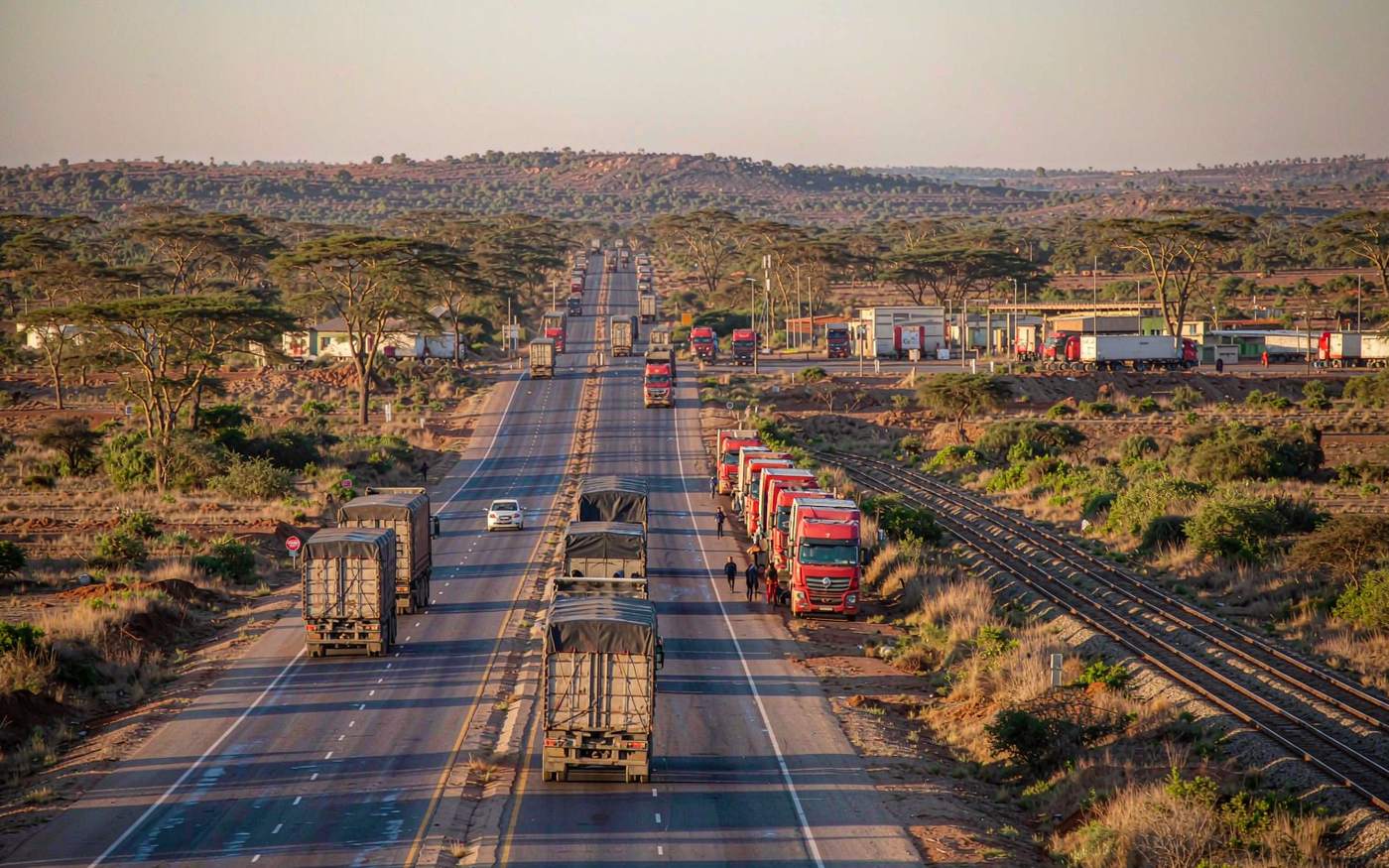
How to ship from China to Zambia
Zambia is landlocked, and that single fact shapes the entire shipment. Your container will be discharged at a port in another country and moved overland across at least one border before it reaches a Zambian warehouse. Choosing the corridor is the first decision, and it matters more here than in any coastal market.
Two rules catch first-time importers out. The first is conformity: Zambia runs a pre-export verification programme under its standards bureau, and regulated goods must be certified before they are loaded, not after they arrive. The second is transit: the container travels under a customs transit regime with its own documents, its own seals and a clock that starts running at the port.
This guide covers how the corridors compare, how transit actually works at the border, the ZABS certificate, how duty and VAT are calculated, what happens to second-hand goods, and the sequence from a Chinese supplier to a Lusaka or Copperbelt address.
At a glance
Customs is administered by the Zambia Revenue Authority, with declarations filed through ASYCUDA World using the single administrative document. Importers need a TPIN taxpayer identification number. Customs duty runs 0 to 40 per cent depending on the eight-digit HS code, VAT is 16 per cent on CIF plus duty, and excise and a carbon levy apply to specified goods including vehicles by engine size. Regulated goods require a certificate of conformity from the Zambia Bureau of Standards, obtained before loading. Zambia's membership of SADC and COMESA does not give Chinese-origin goods preferential rates.
How your cargo moves: China to Zambia
Eight steps from your supplier's door to yours. The last four are the ones shaped by local rules.
- Pickup from your supplierWe collect the goods anywhere in China and bring them to our consolidation point.
- Export clearanceChina customs declaration filed and released before the goods move to the port.
- Loading and departureContainer loaded, sealed and handed to the carrier at the Chinese port.
- Main carriageOcean, air or rail movement booked on the route agreed for your cargo.
- Arrival at the gatewayDischarge at the port or airport of entry, recorded on the carrier's manifest.
- Import clearanceCustoms declaration filed locally, with duty and tax assessed on the declared value.
- Customs releaseGoods released into free circulation once duty and tax are settled.
- Final deliveryOnward movement to your delivery address, warehouse or nominated depot.
Duty rates, VAT rates and clearance times move, and the figure that applies to your goods is the one set for your commodity code on the day of clearance. We check the current position against your code before your goods sail and confirm it to you in writing — ask for that check when you request a quote.
Landlocked, and served by four corridors: how Zambia gets its containers
Every container for Zambia arrives at a foreign port and then travels overland. That means your shipment has two distinct legs with different documents, different risks and different parties responsible. Understanding this before you book is the difference between a shipment you can plan and one you can only react to.
It also means the ocean rate is only part of the cost. The inland leg from the transit port to Lusaka or the Copperbelt is frequently the largest single line in the budget, and it is the line most often missing from a cheap quotation. Always ask whether your quote includes the inland movement, and if it does not, get the inland figure separately before comparing.
The other consequence is time. A delay at the port and a delay at the border are different problems with different fixes, and a forwarder who handles both is worth more here than one who only sells you the ocean leg.
Choosing a corridor: Tanzania, Durban, Beira or Walvis Bay
The Dar es Salaam corridor, through Tanzania, is generally the fastest route to the Copperbelt and northern Zambia, moving by road and on the TAZARA rail line. It is the usual choice for cargo destined for Ndola and Kitwe.
The Durban corridor, through South Africa, offers the most consistent sailing schedules and is the common choice for Lusaka and southern Zambia. The Beira corridor through Mozambique is a further option, and conditions on it should be checked at the time of booking. The Walvis Bay corridor through Namibia serves western Zambia.
| Corridor | Transit port | Usually suits |
|---|---|---|
| Dar es Salaam | Dar es Salaam, Tanzania | Copperbelt, Ndola, Kitwe |
| Durban | Durban, South Africa | Lusaka and southern Zambia |
| Beira | Beira, Mozambique | Eastern and central Zambia, subject to conditions |
| Walvis Bay | Walvis Bay, Namibia | Western Zambia |
Transit times from China to Lusaka are commonly quoted in the region of 40 to 55 days door to door depending on the corridor, with LCL adding consolidation and deconsolidation time. Add buffer in the rainy season, roughly November to April, when inland roads slow down.
Incoterms on a transit shipment, and who owns the risk in between
EXW is the weakest choice here. You would be responsible for the Chinese export declaration and for a transit regime you have no experience of.
FOB keeps the split where most buyers want it: the supplier loads in China, risk passes to you there, and you control the main carriage, the corridor and the forwarder. On a landlocked lane the choice of corridor is a freight decision you want to make yourself.
CIF and CIP cover carriage and insurance to the named port, which on this lane is the transit port, not Lusaka. Read the term carefully: CIF Dar es Salaam does not include the haul to Zambia, and buyers regularly discover this after the fact.
DAP or DDP to a named place in Zambia moves the whole burden to the seller, including the transit formalities and, under DDP, the Zambian duty and VAT. It is convenient, but you are delegating a corridor decision and a customs declaration to somebody else.
From a Chinese port to a Lusaka warehouse, and the borders between
Order confirmed, corridor chosen, trade term agreed
Decide the corridor at quotation stage and write the Incoterms 2020 term into the contract.
Register the TPIN
The Zambia Revenue Authority taxpayer identification number is required for importing. Do this before the vessel sails.
Obtain the ZABS certificate of conformity
Regulated goods are verified in China before loading and a certificate issued. This is a production milestone, not a shipping one.
Pickup, consolidation and export declaration in China
Your forwarder collects or consolidates, declares the export, and provides the seal number and loading photographs.
Ocean leg to the transit port
The container is discharged at Dar es Salaam, Durban, Beira or Walvis Bay. It has not entered Zambia yet.
Transit declaration and customs seal
The clearing agent declares the goods in transit before arrival, a customs seal is applied to the container, and a transit document is issued.
Overland leg and acquittal at the border
At the Zambian border the seals are checked and the transit document is acquitted. A broken seal or an expired transit clock turns a transit movement into a problem.
Import declaration, assessment and payment
The declaration is filed through ASYCUDA World, duty, VAT and any excise are assessed and paid, and the goods are released.
Delivery to the final address
Inland delivery to Lusaka, the Copperbelt or beyond. Keep the container moving; demurrage at a transit port is expensive.
How transit works: seals, acquittal and the clock on a transit document
A transit movement is not an import. The goods are declared as passing through, the container is sealed by customs at the port of entry, and a transit document is issued that has to be acquitted when the goods leave. The declaration is made by a clearing agent before the goods arrive, supported by the invoice, the manifest, the bill of lading and any permits.
At the border the seals are inspected to confirm they are intact, the consignment is examined if selected, and the transit document is acquitted. The container is not opened for trade purposes until the Zambian import declaration is made.
The clock is the part to plan around. Transit goods moved by road are required to report at the port of exit within five days of leaving the customs yard at the point of entry; the corresponding period for rail is thirty days. Miss it and the movement has stopped being transit, and regularising it afterwards is slow and expensive.
Make sure it is clear in writing who is responsible for the transit: the bond, the escort where required, the tracking and the acquittal. Ask for it to be spelled out in the quotation rather than assumed to be included.
Customs duty, VAT, excise and the carbon levy on vehicles
| Charge | Indicative rate | Base |
|---|---|---|
| Customs duty | 0 to 40 per cent by eight-digit HS code | CIF value |
| VAT | 16 per cent | CIF plus duty |
| Excise | Varies | Alcohol, tobacco, cosmetics and others |
| Carbon levy | Varies with engine displacement | Motor vehicles |
The practical range for most Chinese-origin imports is narrower than the headline 0 to 40 per cent: raw materials and capital goods often sit at the low end or at zero, while finished consumer goods, electronics, textiles, footwear and furniture commonly attract 15 to 25 per cent or more. Your HS code determines everything, and a misclassification is one of the most expensive mistakes available.
Duty and taxes are assessed in Zambian kwacha on the CIF value converted at the prevailing rate. Build the currency conversion into your costing rather than assuming the invoice currency.
Zambia is a member of both SADC and COMESA, and buyers sometimes assume that brings a preference. It does not for Chinese-origin goods: those preferences apply to goods originating within those groups. Do not budget for a preference your cargo cannot claim.
The ZABS conformity certificate, obtained before loading
The Zambia Bureau of Standards runs a pre-export verification of conformity programme, and regulated goods must be certified before shipment. The process is handled through authorised inspection companies: the exporter applies with the packing list and proforma invoice, the goods are inspected, and a certificate of conformity is issued.
The controlled categories are broad and include food and agricultural products, chemicals and household products, textiles, footwear, toys and childcare articles, electrical and electronic goods, automotive parts and accessories, and all second-hand goods regardless of type. If you are shipping anything second-hand, assume it is covered.
Without a valid certificate the goods cannot be cleared, and the reported outcomes are detention, fines or re-export at the exporter's cost. On a route as long as this one, that is a serious loss. Book the inspection at order stage and treat it as part of the production schedule.
The certificate details have to match the shipping documents, including the product model and the manufacturer name. A certificate issued for one consignment does not carry over to the next.
Product rules for food lines, electrical goods and second-hand cargo
Food, agricultural products and anything of plant or animal origin need sanitary and phytosanitary certificates, and food and pharmaceutical imports need approvals from the relevant ministries. Electrical and electronic goods must meet the standards set by the Zambia Bureau of Standards, including electrical safety and electromagnetic compatibility testing, and plugs generally follow the South African three-round-pin pattern.
Second-hand goods are treated as a controlled category across the board, not just second-hand vehicles. That is unusual and it catches people out: used clothing, used machinery and used household goods all fall inside the conformity requirement.
Vehicles attract excise and a carbon levy that varies with engine displacement, and age and emissions rules apply. Wood packaging must carry the ISPM-15 treatment mark.
Documents a Zambian entry is checked against
| Document | What it has to show |
|---|---|
| Commercial invoice | Product descriptions, Incoterm, unit and total values, supplier and consignee |
| Packing list | Carton count, weights, dimensions, marks and numbers |
| Bill of lading | Consignee matching the TPIN holder |
| TPIN | Taxpayer identification number of the importer |
| Certificate of conformity | Issued by the standards bureau or its authorised agent before loading |
| Certificate of origin | Issued by CCPIT or China customs |
| Import declaration form | Submitted electronically with the invoice, bill of lading and packing list |
| Permits | Food, pharmaceuticals, plants, chemicals and other controlled lines |
Above a customs valuation threshold, commonly cited around USD 2,000, the declaration has to be made through a licensed clearing agent, which in practice means almost every commercial shipment. Advance information can be submitted up to about seven days before arrival to speed release.
Importing as an individual or as a Zambian company with a TPIN
A private individual can import personal and non-commercial goods. Commercial importing is done by a registered entity holding a TPIN, and the registered route is also the one that allows VAT to be accounted for and recovered.
The VAT difference is material. At 16 per cent on CIF plus duty, the recoverable amount on a full container is significant, and an individual pays it with no route to recovery.
Register before the vessel sails, because the declaration needs the number. If you have no Zambian entity, appoint a licensed clearing agent before the goods ship, agree the scope in writing, and agree who pays demurrage and storage if the file stalls at the port or the border.
Selecting a Chinese forwarder and a Zambian clearing agent
In China your forwarder collects or consolidates, books the space, handles the export declaration, arranges the ZABS inspection, and obtains the bill of lading. At destination a licensed clearing agent declares the goods in transit, manages the acquittal, and files the import declaration through ASYCUDA World.
On a landlocked lane the single most useful question you can ask a forwarder is which corridor they would use and why. A good answer names the destination town, the transit port and the border, and gives a reason tied to schedules or road conditions. A vague answer means they are selling you a rate, not a route.
Judge them on specifics: legal entity name, years trading, a written quotation split into origin charges, ocean freight, the inland leg and the destination charges, and a clear statement of who pays demurrage and storage if clearance is delayed. A quote with no inland line for a landlocked country is incomplete, not cheap.
Warning signs are consistent: pressure to declare a lower value, no written breakdown, an address that is only a phone number, and vagueness about who carries the risk between the transit port and the border.
Three worked examples: Zambia shipments from China
These three examples are illustrative, not client records. They show how the corridor decision follows from the destination.
A 40ft container of mining equipment spares for Kitwe. Routed through Dar es Salaam, which is the faster corridor for the Copperbelt, with the ZABS inspection carried out at the supplier's works before loading and a customs seal applied at the port. The lesson is that the corridor follows the destination town, not the cheapest ocean rate.
Twelve cubic metres of mixed consumer goods for a shop in Lusaka. Consolidated in Shenzhen and shipped as LCL through Durban, which offers the most consistent sailings for southern Zambia. The lesson is that LCL adds days at both ends, and those days sit on top of an already long inland leg.
Two hundred kilograms of medical supplies needed urgently. Air freight to Lusaka, cleared in days rather than weeks. The lesson is that on a landlocked lane air freight saves the overland leg as well as the ocean leg, which makes it more competitive than the rate alone suggests.
Why importers use Goodhope on this lane
Six things that are different about working with us on China to Zambia shipments.
Get your Zambia shipment moving
Send us the commodity, the volume and the delivery town, and we will come back with a corridor-by-corridor comparison that puts the ZABS inspection and the transit clock on the calendar before you book.
Get a quote Talk to usRelated pages
Frequently asked questions
Which corridor should I use for Zambia?
It depends on the destination town. Dar es Salaam is generally fastest for the Copperbelt, Ndola and Kitwe, while Durban offers the most consistent sailings for Lusaka and southern Zambia. Beira and Walvis Bay are further options depending on conditions and location.
How long does shipping from China to Zambia take?
Commonly quoted at 40 to 55 days door to door depending on the corridor, with LCL adding consolidation and deconsolidation time. Add buffer during the rainy season, roughly November to April, when inland roads slow down.
Do I need a certificate of conformity from ZABS?
For regulated categories, yes, and it must be obtained before loading. Controlled categories include food, chemicals, textiles, footwear, toys, electrical goods, automotive parts and all second-hand goods.
What happens if goods arrive without the certificate?
Reported outcomes are detention, fines or re-export at the exporter's cost. On a route this long that is a serious loss, so book the inspection at order stage.
What is a TPIN and do I need one?
The TPIN is the taxpayer identification number issued by the Zambia Revenue Authority, and it is required for importing. Register before the vessel sails, because the declaration cannot proceed without it.
How much duty and VAT will I pay?
Duty runs 0 to 40 per cent by eight-digit HS code, though most consumer goods from China fall in the 15 to 25 per cent range. VAT is 16 per cent on CIF plus duty. Excise and a carbon levy apply to specified goods including vehicles by engine size.
Do SADC or COMESA memberships reduce duty for Chinese goods?
No. Those preferences apply to goods originating within those groups, not to Chinese-origin cargo.
How does transit work at the border?
A customs seal is applied at the port of entry and a transit document issued; at the Zambian border the seals are checked and the document acquitted. Road transit must report at the port of exit within five days, rail within thirty.
Can an individual import commercially into Zambia?
Not really. Personal and non-commercial goods can be imported by an individual; commercial importing needs a registered entity with a TPIN, which is also the route that allows VAT recovery.
Why is the inland leg such a large part of the cost?
Because Zambia is landlocked: every container is discharged in another country and hauled across at least one border. The inland leg is frequently the largest single line in the budget, which is why a quotation without an inland figure is not comparable.