
Home / Shipping to Austria / How to Ship from China to Austria
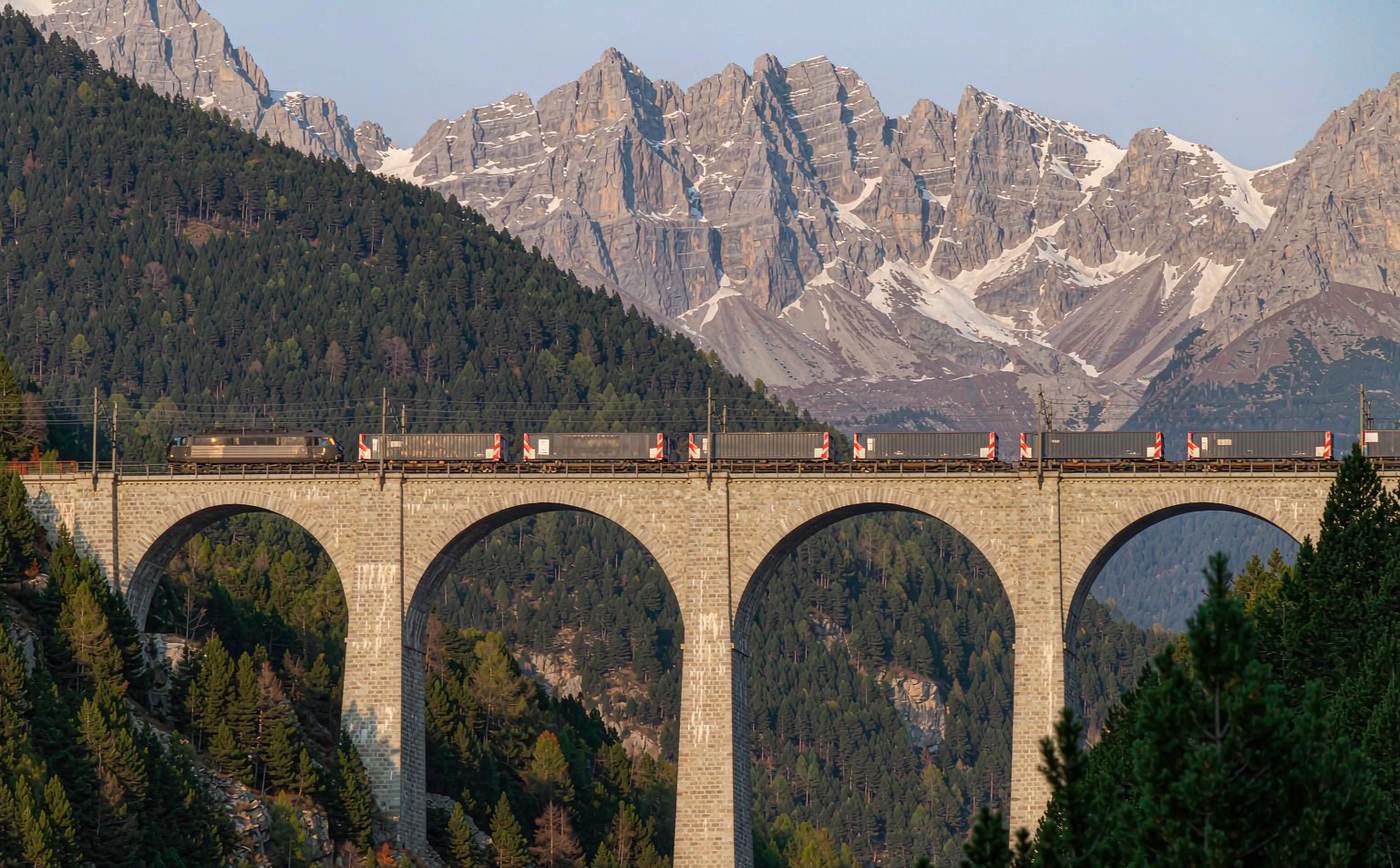
How to Ship from China to Austria: Gateways, Alpine Transit & 20% VAT
Austria is a wealthy, landlocked market of about nine million people sitting directly behind the Alps, and that geography decides almost everything about how your cargo arrives. There is no Austrian seaport. Your container is discharged in Slovenia, Italy, Germany or the Netherlands and then crosses a mountain range to reach you — on roads that are tolled by distance and emissions, and closed to trucks on Saturday afternoons, Sundays, public holidays and every night between ten and five.
None of that is a reason to avoid the lane. It is a reason to plan it properly. Austria has excellent intermodal rail, a genuinely useful set of Adriatic gateways, and one of the more straightforward import tax systems in the EU. Importers who get it right find it reliable. Importers who assume it works like Germany discover the driving bans the hard way.
This guide is written for buyers importing from China for the first time. It covers gateway choice, the Alpine transit problem, realistic timings, trade terms, the process end to end, duty and VAT including Austria's rate quirks, product compliance that has no EU-wide equivalent, and how to tell whether a forwarder actually knows this lane.
Austria at a glance
- Landlocked. Containers are discharged at Koper, Trieste, Hamburg, Bremerhaven, Rotterdam or Antwerp and move overland. Vienna, Linz, Enns and Krems are Danube ports, used mostly for bulk, project and heavy cargo.
- EU member since 1995. EU customs union and EU single market. Duty comes from the TARIC code, commonly 0–12% on consumer goods. No EU–China free trade agreement.
- VAT 20% standard, with 13%, 10% and — from 1 July 2026 — 4.9% reduced rates. Jungholz and Mittelberg apply German VAT at 19% instead.
- Truck bans are real. Nightly 22:00–05:00, Sundays and public holidays 00:00–22:00, Saturdays 15:00–24:00, plus seasonal Alpine corridor bans and 2026 Lueg Bridge works.
- GO-Maut distance-based toll via the ASFINAG GO-Box for vehicles over 3.5 tonnes, rated by axle count, EURO emission class and, since 2024, CO₂ class.
- Rail is a genuine option. China–Europe rail serves Vienna in roughly 18–25 days, and combined transport is exempt from many road driving bans.
- Specific compliance: ARA packaging, WEEE and batteries registration, German-language labelling, and an Austrian hallmark for precious metal goods.
How your cargo moves: China to Austria
Eight steps from your supplier's door to yours. The last four are the ones shaped by local rules.
- Pickup from your supplierWe collect the goods anywhere in China and bring them to our consolidation point.
- Export clearanceChina customs declaration filed and released before the goods move to the port.
- Loading and departureContainer loaded, sealed and handed to the carrier at the Chinese port.
- Main carriageOcean, air or rail movement booked on the route agreed for your cargo.
- Arrival at the gatewayDischarge at the port or airport of entry, recorded on the carrier's manifest.
- Import clearanceCustoms declaration filed locally, with duty and tax assessed on the declared value.
- Customs releaseGoods released into free circulation once duty and tax are settled.
- Final deliveryOnward movement to your delivery address, warehouse or nominated depot.
Duty rates, VAT rates and clearance times move, and the figure that applies to your goods is the one set for your commodity code on the day of clearance. We check the current position against your code before your goods sail and confirm it to you in writing — ask for that check when you request a quote.
Why the last 200 kilometres is the hard part in Austria
On most European lanes the expensive, uncertain part is the ocean voyage. On an Austrian shipment the ocean voyage is the predictable bit. The part that goes wrong is the overland leg from whichever port you chose to wherever in Austria the goods are going, because that leg crosses the Alps on roads that are subject to tolls, bans and seasonal works.
Three consequences follow.
Gateway choice is not a detail. Picking Koper over Hamburg, or the other way round, changes the road distance by hundreds of kilometres, changes which Alpine crossing you use, and changes how exposed you are to Austrian driving bans. It is the single biggest lever on both cost and schedule after the mode itself.
Certain days simply do not move. A container that arrives at the Austrian border on a Friday afternoon can be sitting still until Monday morning, and the summer 2026 works on the Brenner corridor have added Saturday bans on top of the standing weekend rules. If your delivery promises assume continuous trucking, they will be wrong.
Rail looks better here than almost anywhere else in Europe. Austria's intermodal network is well developed, Vienna is served by China–Europe rail, and combined transport — rail for the long leg, road only for collection and delivery — is exempt from many of the bans that would otherwise stop a truck. On this lane, intermodal is often the faster option as well as the cleaner one.
Choosing an Austrian gateway: Koper and Trieste, or Hamburg and Rotterdam
There is no single right answer, and the correct choice depends almost entirely on the delivery postcode.
| Gateway | Best for | What to weigh |
|---|---|---|
| Koper (Slovenia) | Vienna, Graz, southern and eastern Austria | The shortest overland run into eastern Austria and a well-established route for Austrian importers. Rail shuttles out of Koper reduce the road leg further. Fewer direct sailings from China than the North Sea ports, so check the service pattern. |
| Trieste (Italy) | Southern Austria, Carinthia, Styria | Historically Austria's port, with rail connectivity north. Useful when Koper is congested or when the carrier's service calls Trieste rather than Koper. |
| Hamburg and Bremerhaven | Western and northern Austria — Salzburg, Innsbruck, Upper Austria — and importers also distributing into Germany | The most frequent sailings from China and strong rail links south. Longer road distance into eastern Austria, and the routing crosses the full width of Germany. |
| Rotterdam and Antwerp | Consolidations, project cargo, and importers combining Austrian delivery with Benelux or German distribution | Widest choice of services and the deepest consolidation market. The longest overland leg into Austria, so it needs to be priced honestly. |
| Danube river ports — Vienna, Linz, Enns, Krems | Bulk, project, heavy and out-of-gauge cargo | Reachable through the Rhine–Main–Danube corridor, so a barge movement from Rotterdam is genuinely possible. Used less for standard containers, but worth asking about for heavy or oversized cargo. |
A simple rule that works in practice: if the delivery is east or south of Vienna, price Koper first; if it is west of Salzburg, price Hamburg first; and if the shipment is unusual in dimension or weight, ask about the Danube. Then compare on a door-to-door basis, not on the ocean freight.
Danube ports and Alpine corridors: how containers actually reach Austria
Once the container is discharged, it reaches Austria by one of three paths.
Road over an Alpine crossing. The main axes are the A12 Inntal and A13 Brenner for traffic coming up from Italy or heading south, the A10 Tauern for the north–south crossing further east, and the A14 in the far west. All of them are tolled, all of them carry special toll sections, and all of them can be affected by works. The Brenner corridor is the busiest and in 2026 the most constrained.
Rail, or combined transport. Intermodal services run from the Adriatic ports and from the North Sea ports into Austrian terminals, with road used only at each end. This is the option that sidesteps the driving bans, because combined transport is exempt from many of them. It is also, on this lane, often the more reliable schedule.
Inland waterway. The Danube gives Austria genuine water access through the Rhine–Main–Danube corridor, with working ports at Vienna, Linz, Enns and Krems. For standard containers it is slower than road or rail, but for bulk, project and heavy cargo it can be the only sensible option and it is worth asking your forwarder to price.
Austrian truck bans, the Lueg Bridge works and the GO-Maut toll
This is the section most general freight guides skip, and it is the one that changes your delivery date.
The standing bans
Austria bans trucks and articulated vehicles over 7.5 tonnes gross weight, and truck-and-trailer combinations over 7.5 tonnes combined, during the following windows: every night from 22:00 to 05:00; on Sundays and public holidays from 00:00 to 22:00; and on Saturdays from 15:00 to 24:00. Vehicles carrying the low-noise "L" badge may travel during the night ban at reduced speed. An additional night ban applies on the A12 Inntal Autobahn between Kufstein and Zirl through the warmer months.
The 2026 Brenner corridor situation
The general refurbishment of the Lueg Bridge on the A13 Brenner motorway has produced a calendar of additional bans for 2026, including Saturday bans on the A12 Inntal, A13 Brenner and A14 Rheintal/Walgau corridors through much of the year and a concentrated summer programme of Saturday closures. Italy has introduced matching restrictions on its side of the Brenner to prevent queues forming at the border. Exemptions exist for perishable food, press and postal deliveries, emergency and breakdown services, and — importantly — for combined transport, where road legs to and from a rail terminal are permitted.
What to do with this. Ask your forwarder which corridor the routing uses and whether the planned arrival date falls in a ban window. The Austrian driving-ban calendar is published annually, and a good operator checks it. If your timing is exposed, ask for the intermodal option — combined transport is exempt from many of the bans and removes the risk rather than absorbing it.
The toll
Austria charges a distance-based toll, the GO-Maut, on motorways and expressways for vehicles over 3.5 tonnes, operated by ASFINAG through an on-board unit called the GO-Box. The rate depends on axle count, EURO emission class and, since 2024, the vehicle's CO₂ emission class. There are additional special tolls on sections including the Brenner, Tauern and Arlberg routes. For an importer this simply means the inland leg is not a flat number: cleaner vehicles cost less per kilometre than older ones.
Transit times into Vienna, Linz and Graz
| Mode | Typical transit | What the clock includes |
|---|---|---|
| Sea FCL via Koper or Trieste | 30–38 days door to door | Mainline from China to the Adriatic plus a short overland or rail leg into eastern Austria. Usually the fastest sea option for Vienna and Graz. |
| Sea FCL via Hamburg or Rotterdam | 33–42 days door to door | Mainline to the North Sea plus a longer overland leg. More sailings to choose from, but more road distance and more ban exposure. |
| Sea LCL | 38–48 days | The same sea and inland legs plus consolidation at the China warehouse and deconsolidation at the destination, which together commonly add one to two weeks. |
| Rail from China | 18–25 days to Vienna | China–Europe rail to an Austrian terminal. Faster than sea, cheaper than air, and well suited to inland Chinese suppliers. |
| Air freight | 4–8 days airport to airport | Into Vienna, with Linz, Graz, Salzburg and Innsbruck as secondary options. |
| Express courier | 3–6 days door to door | Samples and small parcels, with the carrier acting as broker. |
Treat these as planning figures. Add a buffer to your first shipment, and add more if your delivery date lands in the summer driving-ban season. See our rail freight page for how the rail option works.
Rail from China to Vienna: when the train beats the ship
Austria is one of the few European destinations where rail from China is not a novelty. Vienna is served by China–Europe services, the country's intermodal terminals are well developed, and the onward leg is short compared with a western European destination.
Rail makes sense in three situations. When your supplier is inland — Chongqing, Chengdu, Xi'an, Zhengzhou — because trucking to a coastal port and waiting for a vessel can take longer than putting the container on a train. When your timing sits between sea and air, roughly 18 to 25 days against 35 or more by sea and against air freight pricing you cannot justify. And when you want to avoid the road bans, because the long leg moves by rail and only the collection and delivery move by road.
Be honest about the trade-off: rail capacity and schedules vary with the corridor and the season, and transit is more sensitive to border and gauge-change handling than a vessel is. Ask for rail and sea to be quoted side by side on the same shipment, with the same Incoterm, so you are comparing like for like.
Austrian trade terms: where the Alpine leg lands on you
The trade term decides who pays for each leg, who is the importer of record in Austria, and when risk transfers. On an Austrian shipment the term matters more than usual because the overland leg is expensive and easy to leave unallocated.
| Term | Who arranges main carriage | Who clears in Austria | Risk transfers | Practical read |
|---|---|---|---|---|
| EXW (Ex Works) | You | You | At the factory door | Avoid for a first shipment. You take on Chinese export clearance and inland pickup you cannot manage from Vienna. |
| FOB (Free On Board) | You | You | When goods pass the ship's rail at the Chinese port | The safe default. The supplier clears export and loads; you control the vessel, the gateway and the overland leg, which is where the money is on this route. |
| CIF (Cost, Insurance, Freight) | Seller, to the named port | You | On board at origin | Stops at the port. The Alpine haulage, the tolls, Austrian clearance and final delivery are all still yours. |
| DAP (Delivered At Place) | Seller, to your address | You | On arrival, before unloading | Door delivery with you as importer of record. Usually the best balance for a company that already holds Austrian VAT registration. |
| DDU (Delivered Duty Unpaid) | Seller, to your address | You | On arrival | The older wording for the same idea as DAP. Duty and VAT are yours. |
| DDP (Delivered Duty Paid) | Seller | Seller's agent | On arrival | Easiest to receive and easiest to get wrong. Ask who is named as importer and whether you will receive the customs declaration — without one in your name you have no evidence of import VAT paid and nothing to reclaim. |
Two things to pin down in writing. First, whether the quote is port-to-port or door-to-door — a port-to-port price on a landlocked destination is not comparable with anything. Second, whether the destination charges are itemised: terminal handling at the gateway, overland haulage, tolls, Austrian clearance and final delivery. See local charges.
How a Chinese factory and an Austrian warehouse connect, step by step
Fix the commodity code and the trade term
Before production ends. The TARIC code sets the duty rate and reveals any anti-dumping exposure, and the trade term decides who is responsible for the Alpine leg.
Choose the gateway and the onward mode together
Koper, Trieste, Hamburg, Rotterdam or Antwerp — and then road, rail, combined transport or barge into Austria. Book both legs at the same time, and check the driving-ban calendar against the likely arrival window.
Collect from the factory or consolidate
A full container loaded at the factory, or cartons into a consolidation warehouse alongside other suppliers' cargo. See warehouse and consolidation.
Chinese export declaration
Filed through China's single window. Anything needing inspection, a licence or certification is cleared here, which is why those requirements have to be identified when you book rather than when the truck arrives.
Mainline to the chosen gateway
Roughly 25 to 34 days from China, depending on origin port and service.
Overland into Austria
Road across an Alpine crossing, rail or combined transport, or barge up the Danube. This is the leg most exposed to bans and works.
Austrian import declaration
Filed with the Austrian customs administration under the Federal Ministry of Finance. Duty is assessed from the TARIC code and import VAT at 20% — or the applicable reduced rate — on the customs value plus duty plus supplementary costs to the destination.
Release and final delivery
Once customs releases the consignment the goods move to your premises. Storage starts accruing from arrival, so clearance speed is money. See import clearance documents.
EU duty and 20% Austrian VAT, including the 4.9% food rate
Austria applies the EU Common Customs Tariff, so duty comes from the commodity's TARIC code rather than from anything Austrian. Most general consumer goods from China fall between 0% and 12%. There is no EU–China free trade agreement, so Chinese-origin goods receive no preferential rate. Anti-dumping and countervailing duties apply to specific Chinese product lines and can be several times the ordinary duty, so the commodity code should be checked before you order, not after the goods land.
Import VAT is charged at clearance on the customs value plus duty plus supplementary costs — commission, packing, transport and insurance — incurred after entry into the EU up to the place of destination. A business registered for Austrian VAT recovers it as input tax on its return.
Worked example. An Austrian retailer imports homeware with a customs value of €20,000 and €2,400 of freight and insurance, giving a CIF value of €22,400. Duty at 4% is €896. VAT at 20% applies to €23,296, which is €4,659.
- For a VAT-registered business recovering in full, the real cost is the €896 duty. The €4,659 is a cash-flow item until the return is filed.
- For an unregistered importer, €5,555 in total is simply a cost — around a 25% uplift on the goods value.
Austrian VAT rates are worth knowing precisely, because the reduced categories are broader than in many EU countries:
| Rate | Applies to |
|---|---|
| 20% standard | Everything not covered by a lower rate — electronics, clothing, furniture, cosmetics, alcohol, tobacco, most services. |
| 13% reduced | Live animals, plants and vegetable products, animal fodder, fertilisers, wood, antiques and works of art, firewood, cultural and sporting admissions, domestic flights. |
| 10% reduced | Foodstuffs, water supplies, medicaments, books, newspapers and periodicals, domestic passenger transport, restaurant services excluding beverages, and accommodation. |
| 4.9% super-reduced | From 1 July 2026, a listed group of basic foodstuffs — milk, yoghurt, butter, fresh hen eggs, fresh or chilled vegetables, edible fruit, rice, wheat flour and semolina, uncooked pasta, bread and table salt — for deliveries, identified by their classification in the Combined Nomenclature. |
| 19% territorial | The municipalities of Jungholz and Mittelberg (Kleinwalsertal) are Austrian territory but excluded from Austrian VAT; German VAT applies there instead. |
That 4.9% rate is genuinely useful if you import food, and it is the kind of detail that changes a margin calculation. Confirm the exact commodity coverage with your Austrian tax adviser before pricing a product range around it.
Two Austrian VAT quirks: the 19 per cent enclaves and the small business limit
Beyond the rate table, two Austrian specifics catch importers out.
Jungholz and Mittelberg
These two municipalities are geographically Austrian but are outside the Austrian VAT territory — German VAT, at 19%, applies there instead. If you are delivering into the Kleinwalsertal area, the VAT treatment is not what the rest of your Austrian paperwork assumes. It is a small edge case that causes disproportionate confusion.
The small business exemption
Austria's small business exemption applies up to €55,000 of annual gross turnover under the regime in force since January 2025. Exempt businesses file no VAT returns — but they also cannot deduct input VAT, which means import VAT paid at the border becomes a real cost. If you expect to import regularly, registering voluntarily and recovering input tax is usually the better decision even below the limit.
Two more administrative points. Non-established businesses generally have no turnover threshold for Austrian VAT registration, and in most cases a business established outside the EU must appoint an Austrian tax representative — which is a firmer requirement than in countries such as Ireland. Filing runs through FinanzOnline: the advance return is the U30, filed monthly or quarterly depending on turnover, and the annual return is the U1. Confirm the filing rhythm and the representative requirement with an Austrian tax adviser before your first shipment.
ARA packaging, WEEE, hallmarking and German labels: Austrian compliance
Austria is a high-compliance market with its own national schemes layered on top of the EU rules. Most of these have to be arranged before the goods ship.
| Area | What is required | When to arrange it |
|---|---|---|
| Packaging | Participation in a licensed recovery scheme — in practice ARA (Altstoff Recycling Austria) — under the Austrian Packaging Ordinance, covering sales, transport and secondary packaging | Before you place packaged goods on the Austrian market. This is a licensing obligation, not a voluntary scheme. |
| Electrical and electronic equipment | Registration under the Austrian WEEE rules, with collection and recovery obligations; batteries fall under the separate batteries ordinance | Before import. |
| Gold, silver and platinum goods | An Austrian hallmark (Punzierung) under the Austrian hallmarking law before the goods are offered for sale | Before shipping, if you can arrange it in China; otherwise before sale in Austria. This is the trap that catches watch and jewellery importers who assumed EU rules covered it. |
| Labelling and instructions | German-language instructions for use, safety information and labelling | Before production of packaging and manuals. |
| Food and food contact | Supervision by the Austrian Agency for Health and Food Safety (AGES); compliance with the Austrian Food Codex; organic goods have their own rules | Before ordering. |
| Medical devices | Registration and Austrian-specific obligations alongside the EU MDR requirements | Before shipping. |
| Chemicals | REACH compliance and Austrian chemicals law; safety data sheets in German | Before booking. See non-DG chemicals to Austria. |
| Dangerous goods | Dangerous goods declaration, UN packaging, and compliance with ADR for the road legs across the Alps | Before booking, always. See dangerous goods to Austria. |
| Wood packaging | ISPM-15 treatment with a visible stamp | Tell the supplier in writing before packing. |
| Textiles and toys | Fibre composition labelling; for toys, EN 71 testing, CE marking and an EU responsible person under the General Product Safety Regulation | Before production. |
One structural difference from Switzerland worth knowing: Austria has no free zones. If you were hoping to hold stock without duty or import VAT, the mechanisms available are customs warehousing, inward processing and temporary storage rather than a free-port arrangement. If deferring the tax matters to your business model, raise it early.
Importing as a private person versus an Austrian company
A private individual can import into Austria and be the importer of record. The gate is money, not legality: without VAT registration you pay duty and 20% VAT and cannot reclaim the VAT, and at 20% that is a serious uplift on anything you intend to resell.
As an individual
Possible and straightforward for genuine personal imports. You pay at clearance and recover nothing. Personal effects and relocation goods have their own reliefs with their own conditions — worth checking with Austrian customs or your broker rather than assuming.
As an Austrian company
Register with the tax office for VAT and obtain a UID number, then obtain your EORI for customs. Once registered you recover import VAT as input tax and can look at deferment arrangements. Non-EU-established businesses usually need an Austrian tax representative, so build that into your timeline.
The common sequencing mistake is ordering first and registering afterwards. If your first container arrives before the VAT registration and representative are in place, you pay 20% at the border and then chase a recovery you were not entitled to make. Register first.
Online orders and fair orders: two different shipping plans
Where you found the supplier changes what the first shipment should look like.
Ordering online usually means a small first order, sometimes split across two or three suppliers, with samples first. Air the samples so you can check quality in days, then consolidate the first genuine order into a single LCL shipment from one Chinese port rather than paying three separate clearances — at 20% VAT and Austrian clearance fees, three small consignments cost far more than one consolidated one. Insist on the commodity code and photographs before releasing the balance. Be careful of suppliers who offer to ship "free" by post at a fraction of the real value: that declared value becomes your customs record and under-declaring is your liability.
Ordering from a fair — Canton Fair, a Hong Kong show, or a Yiwu visit — usually means you have handled the product, minimum quantities are real, and the first shipment is more likely to fill a container. Fair orders are big enough that FCL should be priced against LCL, and they often span several factories you met at the same event, which makes consolidation the difference between one container and three. A factory you met once still deserves a third-party inspection before the first container.
Two Austrian specifics apply to both. If the goods will be sold in Austria, the German-language labelling and instructions have to be right the first time, and the ARA packaging obligation has to be covered before the goods go on the market. Put the packing specification — export cartons, ISPM-15 pallets, German labelling — in writing to the supplier.
A Chinese forwarder and an Austrian customs broker are not optional
New importers often ask whether they can book with a shipping line directly. The line sells space from one port to another. It will not collect from your supplier's factory, consolidate three suppliers into one container, file the Chinese export declaration, book the Alpine haulage, check the driving-ban calendar, or tell you that your jewellery needs an Austrian hallmark before it can be sold. Those are the jobs that decide whether the shipment works.
What your Chinese forwarder does
Factory collection and consolidation, export declaration, carrier booking, gateway and onward-mode design, cargo insurance, document preparation, and catching a compliance problem in China while it is still cheap to fix.
What your Austrian broker does
Lodges the import declaration, confirms the TARIC classification and any anti-dumping exposure, handles the VAT position and any deferment, deals with the Austrian customs administration, and knows which terminal and corridor the cargo is actually moving through.
Skipping either side fails predictably. If the Chinese side mis-declares or mis-classifies the goods, no Austrian broker can fix it after arrival. If you have no Austrian broker, you are filing declarations yourself with no support the first time customs asks a question you cannot answer.
Checks before you hand an Austrian shipment to a forwarder
Ask these before you pay. A forwarder who works this lane will answer all of them in one email.
- Which gateway, and how does the cargo get from there to my postcode? Road over which Alpine crossing, rail, combined transport, or barge.
- Have you checked the driving-ban calendar against the likely arrival window? Especially for Brenner corridor routings in summer.
- Is the quote door-to-door, and are the destination charges itemised? Terminal handling, overland haulage, tolls, clearance, delivery. See local charges.
- Have you priced the intermodal option alongside road? On this lane it is often both cheaper over the long leg and exempt from the bans.
- Which commodity code are you quoting against, and is there any anti-dumping exposure? This question alone can save a shipment.
- Can you show me your NVOCC licence and business registration? Ours is NVOCC licence GD20230925153335, and we have operated since 2012.
- Do you check batteries, liquids, magnets, precious metals and food before booking? Discovering them after booking means the booking is already wrong.
- Will I get one named contact and one door-to-door number? You should never have to explain your shipment twice.
Red flags. A price far below the market that is "everything included"; a port-to-port quote on a landlocked destination; no answer on the Alpine routing; refusing to name the carrier or the Austrian broker; asking for payment to a personal account rather than a company account; and a rate that changes after you have booked.
Three Austrian imports and the routing each one needed
These are illustrative composites drawn from the kind of work we do, with names and figures changed. They are here to show how the routing decision is actually made.
A Vienna hospitality fit-out: 40HQ of furniture and tableware
Sourced from Foshan, routed through Koper and railed north rather than trucked from Hamburg — which cut two to three days and a long Alpine run. Duty was low on the furniture lines; VAT at 20%; the packaged food items in the same container fell under the new 4.9% basic food rate from July 2026. What mattered: choosing the Adriatic gateway for an eastern Austrian delivery.
A Tyrol sports equipment importer: 20ft that met a driving ban
Routed via Hamburg and planned to cross on a Saturday in the summer restriction window — the Lueg Bridge programme added a Saturday closure on that corridor. The fix was to switch the long leg to combined transport, which is exempt, and keep road only for collection and delivery. What mattered: checking the ban calendar before the vessel sailed, not after.
A Linz engineering firm: machinery from Xi'an by rail
The supplier was inland, so the choice was rail to Vienna in about three weeks or trucking to a coastal port and waiting for a vessel. Rail won on time and avoided the road leg almost entirely. What mattered: quoting rail and sea side by side instead of assuming sea was the only option.
Frequently asked questions
Which port should I use for shipments to Austria?
It depends on where in Austria the goods are going. Koper in Slovenia and Trieste in Italy are the shortest route into eastern and southern Austria, including Vienna and Graz. Hamburg, Bremerhaven, Rotterdam and Antwerp carry more services and suit western Austria, including Salzburg and Innsbruck, and work better if you are also distributing into Germany. Vienna, Linz, Enns and Krems are Danube ports reachable through the Rhine–Main–Danube corridor and are used mostly for bulk, project and heavy cargo.
How long does shipping from China to Austria take?
Via the Adriatic ports a full container typically takes about 30 to 38 days door to door, and via the North Sea ports about 33 to 42 days. LCL adds consolidation and deconsolidation time, usually 38 to 48 days in total. Rail from China to Vienna takes roughly 18 to 25 days. Air freight into Vienna is about 4 to 8 days airport to airport and express courier about 3 to 6 days door to door.
What VAT rate applies to imports into Austria?
The standard rate is 20%. A reduced rate of 10% covers foodstuffs, water, medicaments, books, newspapers, domestic passenger transport and accommodation, and a reduced rate of 13% covers items such as live animals, plants, wood, animal fodder, antiques, works of art and cultural admissions. From 1 July 2026 a super-reduced rate of 4.9% applies to a listed group of basic foodstuffs. Two municipalities, Jungholz and Mittelberg, apply German VAT at 19% instead of Austrian VAT.
Can I reclaim import VAT in Austria?
Yes, if your business is registered for Austrian VAT and the goods are used for taxable activity. Import VAT is charged at clearance on the customs value plus duty plus supplementary costs to the destination, and a registered business recovers it as input tax on its VAT return. Some importers can arrange deferment rather than paying at each clearance, so ask your tax adviser whether you qualify.
Do Austrian truck driving bans really delay containers?
They can. Austria bans trucks and combinations over 7.5 tonnes every night from 22:00 to 05:00, on Sundays and public holidays from 00:00 to 22:00, and on Saturdays from 15:00 to 24:00, with additional seasonal bans. In 2026 the Lueg Bridge works on the A13 Brenner motorway added Saturday bans on the A12, A13 and A14 corridors through the summer. A truck arriving into one of those windows waits. Combined transport by rail and road is exempt from many of the bans, which is one reason intermodal is worth quoting.
Is there a free trade agreement between the EU and China?
No. Chinese-origin goods imported into Austria are assessed under the EU Common Customs Tariff at the rate set by their TARIC commodity code, with no preferential rate. Anti-dumping and countervailing duties apply to specific Chinese product lines and can be far larger than the normal duty, so check the commodity code before you order rather than after the goods arrive.
Do I need an EORI number and a UID to import into Austria?
You need an EORI number for the customs declaration, issued in Austria and usually linked to your UID VAT identification number. If your business is not established in Austria there is generally no turnover threshold for VAT registration, and in most cases a non-EU-established business must appoint an Austrian tax representative. Confirm this with an Austrian tax adviser before your first shipment.
Can an individual import from China into Austria?
Yes, an individual can be the importer of record. The difference is recoverability: without VAT registration you pay duty and 20% VAT and cannot reclaim the VAT. Anyone importing to resell should register as a business before the goods ship, and should note that Austria's small business exemption, which applies up to EUR 55,000 of annual gross turnover, also removes the right to deduct input VAT.
What Austrian product rules catch importers out?
Packaging must be covered through the ARA system under the Austrian Packaging Ordinance. Electrical and electronic equipment must be registered under the Austrian WEEE rules and batteries under the batteries ordinance. Gold, silver and platinum goods must carry an Austrian hallmark before sale, which is a genuine trap for watch and jewellery importers. Instructions and labelling must be in German, and food is supervised by the Austrian Agency for Health and Food Safety.
Is rail from China to Austria a realistic option?
Yes. Vienna is served by China–Europe rail, and Austria sits on well-developed intermodal corridors, so rail is genuinely competitive when your supplier is inland or when your timing is tighter than sea allows. Expect roughly 18 to 25 days to Vienna. It is also exempt from many Austrian road driving bans on the onward leg, which removes a scheduling risk that a pure road routing carries.
What Goodhope does before your cargo reaches the Alps
Gateway and onward mode decided together
Koper, Trieste, Hamburg or Rotterdam, then road, rail, combined transport or barge — chosen for your delivery postcode and quoted door to door. See our LCL services to Austria.
Compliance checked while it is still cheap to fix
Batteries, chemicals, wood packaging, precious metals and certification identified at quotation stage. See dangerous goods and non-DG chemicals to Austria.
Since 2012, NVOCC licensed
NVOCC licence GD20230925153335. One named contact from factory collection in China through to Austrian delivery, with the destination charges itemised before you commit.
We work with your Austrian broker, we do not replace them
We are not an Austrian customs broker. We make sure everything on the China side is correct before the cargo leaves, and coordinate with your broker on documents, classification and timing.
Goodhope Freight handles sea, rail, air and express from China to Austria, including consolidation, export clearance and cargo insurance. Duty rates, VAT treatment, registration and tax representative requirements should always be confirmed with the Austrian customs administration or your Austrian tax adviser — we give you the shipping side accurately and tell you where to check the rest.
Why importers use Goodhope on this lane
Six things that are different about working with us on China to Austria shipments.
Ready to route a first container toward Vienna, Linz or Graz?
Send us the commodity, HS codes if you have them, dimensions and weight, the supplier's city and your delivery postcode — and tell us whether you already hold Austrian VAT registration. We will price sea and rail side by side, name the gateway and the Alpine routing in writing, flag any compliance exposure, and itemise the destination charges.