
Quality
A part number that fits fourteen models is a marketing achievement. Proving that it fits is a different piece of work.
Contents
Auto parts are the one category at the fair where a sample that fits proves almost nothing. A brake pad that seats correctly on the caliper in front of you fits that car. Whether it fits the 2019 version of the same model, the variant sold in another market, or the facelift with a different caliper, is a question about a database.
Suppliers work from two numbering systems. The original equipment number identifies the part as the vehicle manufacturer specified it. The aftermarket cross-reference maps that number to a supplier's own code and to the range of vehicles it claims to fit. A serious supplier can tell you which OEM numbers their part replaces, which years and which engine variants are covered, and where the exceptions are.
Ask for the cross-reference list in writing, then spot-check three entries against a parts catalogue you trust. Errors in fitment data are common and rarely malicious: a range was copied from a predecessor's catalogue, a variant was added without a test, a year was typed wrong. The cost of the error lands on you, in returns, in a marketplace rating, or in a mechanic's labour claim.
Aftermarket parts are regulated by function, and the regulation follows the safety consequence.
The practical question at a booth is not whether the part works. It is which approval the part carries, which number is on it, and whether the supplier's certificate covers the variant you intend to import. A supplier who answers all three without leaving the stand is a manufacturer or a very well organised trader.
A large share of an auto parts order is not spare parts at all. It is chemicals and energy storage, and both change the transport.
The consequence is a shipment that needs two bookings: general cargo and dangerous goods. Buyers who discover this after the goods are packed at a warehouse in Guangzhou lose a week and pay for repacking, because the dangerous goods have to be segregated, marked and declared separately from the moment they are packed.
The category has a counterfeit problem that is well documented and commercially tempting, because the margin on a branded part is the reason it is copied.
Three situations appear at the fair, and only one of them is safe.
Genuine parts with authorisation. The supplier holds a distribution agreement. Ask to see it, and check whether the territory in the agreement includes your market, because parallel import rules differ and an authorisation for Southeast Asia is not an authorisation for Europe.
Own-brand parts. The supplier makes the part and sells it under their own name, or under yours. This is the ordinary route and the one most buyers use. What matters is the approval marking and the liability if the part fails.
Copies with a brand on them. The part is fine, the box carries somebody else's trademark. Whatever the quality, the goods are infringing, and customs in most major markets will detain them on their own initiative. The supplier will not be the one paying for the storage.
If you are ordering under your own brand, ask who owns the tooling and what happens to it if the relationship ends. In this category tooling is expensive and the argument about who owns it usually starts in year three.
Auto parts are a packing problem before they are a freight problem. The shapes are irregular, the weights are high, and the corners are sharp.
The mark on the carton is part of the product in this category: part number, vehicle application, quantity and gross weight. A warehouse that cannot match a carton to a part number without opening it will open it, and the part comes back damaged.
Two cargo types in one order, pulling in opposite directions.
Brake discs, batteries, suspension components and tools are dense. They reach the container's payload limit early, and a load of them will leave visible space at the door. Body panels, bumpers and lamps are volumetric and fill the box long before the weight matters.
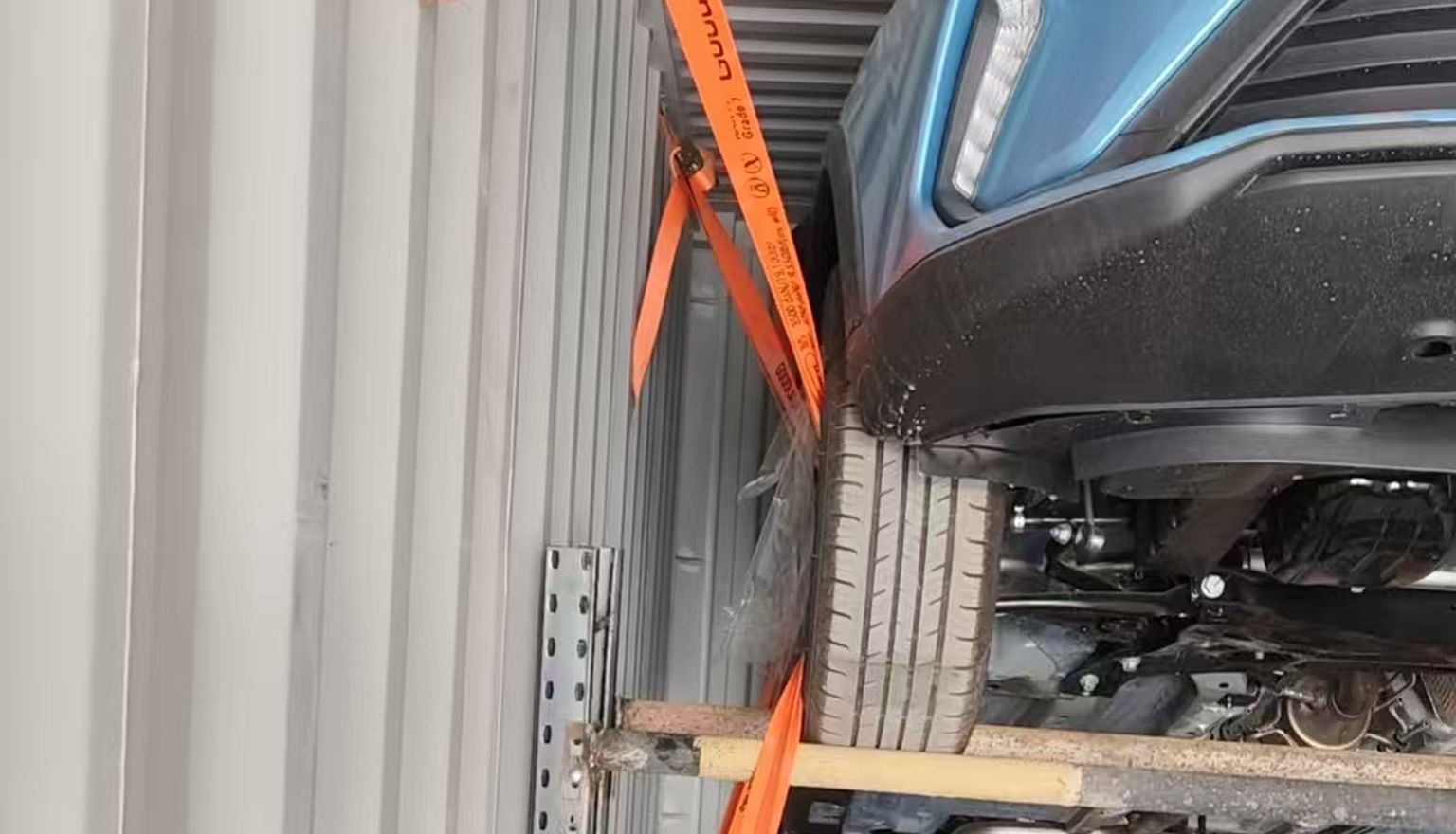
The practical answer is to load them together, and this is one of the few categories where a mixed container is straightforwardly better than two part-loads. Dense parts on the floor, volumetric parts above and around, with the loading plan checked against the floor load limit rather than against the cubic metres alone.
Air freight deserves a mention for a specific case: the emergency replenishment of a fast-moving part, where a distributor is out of stock and the customer is waiting. On a part worth 40 dollars, air rarely works. On a part worth 400, it often does, and the decision is the customer's service level rather than the freight rate.
Five items, and the order matters because the first one is the cheapest to check.
Then measure the carton and weigh it. Auto parts orders are won and lost on the difference between what a supplier says a carton weighs and what the warehouse scale says, and the warehouse scale is the one the carrier will use.
Approval regimes, dangerous goods classifications and restriction dates above reflect the general position in late 2026. Confirm the requirement for the specific part and market before ordering.
Auto parts buyers tend to place a small first order and a much larger second one, and the second one is where the category punishes optimism.
A first order of twenty part numbers is easy to pack and easy to check. A second order of four hundred is a warehouse exercise: cartons that look alike, part numbers that differ by one digit, and a receiver who will not open every box to find out. The marks and the packing list carry the whole load at that point, and both were designed on the first order when nobody was paying attention.
The structure that works is unglamorous. One part number per carton where the value justifies it. A carton mark that carries the part number, the application and the quantity, printed and not written. A packing list that follows the same order as the loading plan. And a photograph of each pallet before the doors close, because the argument about what was loaded is settled by that photograph.
The second container is also where the fitment data gets tested, at scale, by customers who will return the parts that do not fit. That is the moment to know whether the cross-reference list was a database or a catalogue.
Q Do aftermarket brake pads need approval in Europe?
Yes. UN Regulation 90 covers replacement brake pads and linings, requires testing against a standard and puts an approval marking on the product. Pads without it are not legal for road use in markets that apply the regulation.
Q How do I check that a part fits my market's vehicles?
Ask for the OEM cross-reference in writing, covering model years and engine variants, then spot-check three entries against a parts catalogue you trust. Fitment data errors are common and arrive as returns.
Q Can brake fluid ship in the same container as spare parts?
Only with the correct classification, packaging, marking and declaration, and often as a separate booking. Dangerous goods have to be segregated and declared from the moment of packing, not discovered at the terminal.
Q Are used auto parts importable?
Many markets restrict or prohibit used automotive components, and the rules differ by country and by part. Check before ordering, because a container of used parts can be refused at destination regardless of paperwork.
Q Why does my container of brake discs leave space at the door?
Because dense cargo hits the payload limit before the volume limit. The fix is a mixed load, a smaller container, or splitting the shipment rather than paying for air.
Q Who owns the tooling if I order under my own brand?
Whoever the contract says, and the answer should be written before the first order. Tooling disputes in this category usually surface when a buyer tries to move to a second supplier.
Related pages
Send the item list with the dangerous goods marked and we will separate the bookings, check the packing, and tell you what the combined load weighs before the container is ordered.
Email sales8015@goodhopefreight.com | WhatsApp & phone +86 133 9216 2503