
Special Cargo
Almost every battery shipment that fails to move fails on a document, not on a cell. The documents are obtainable from the supplier in an afternoon — if you ask for them while you are still standing at the booth.
Contents
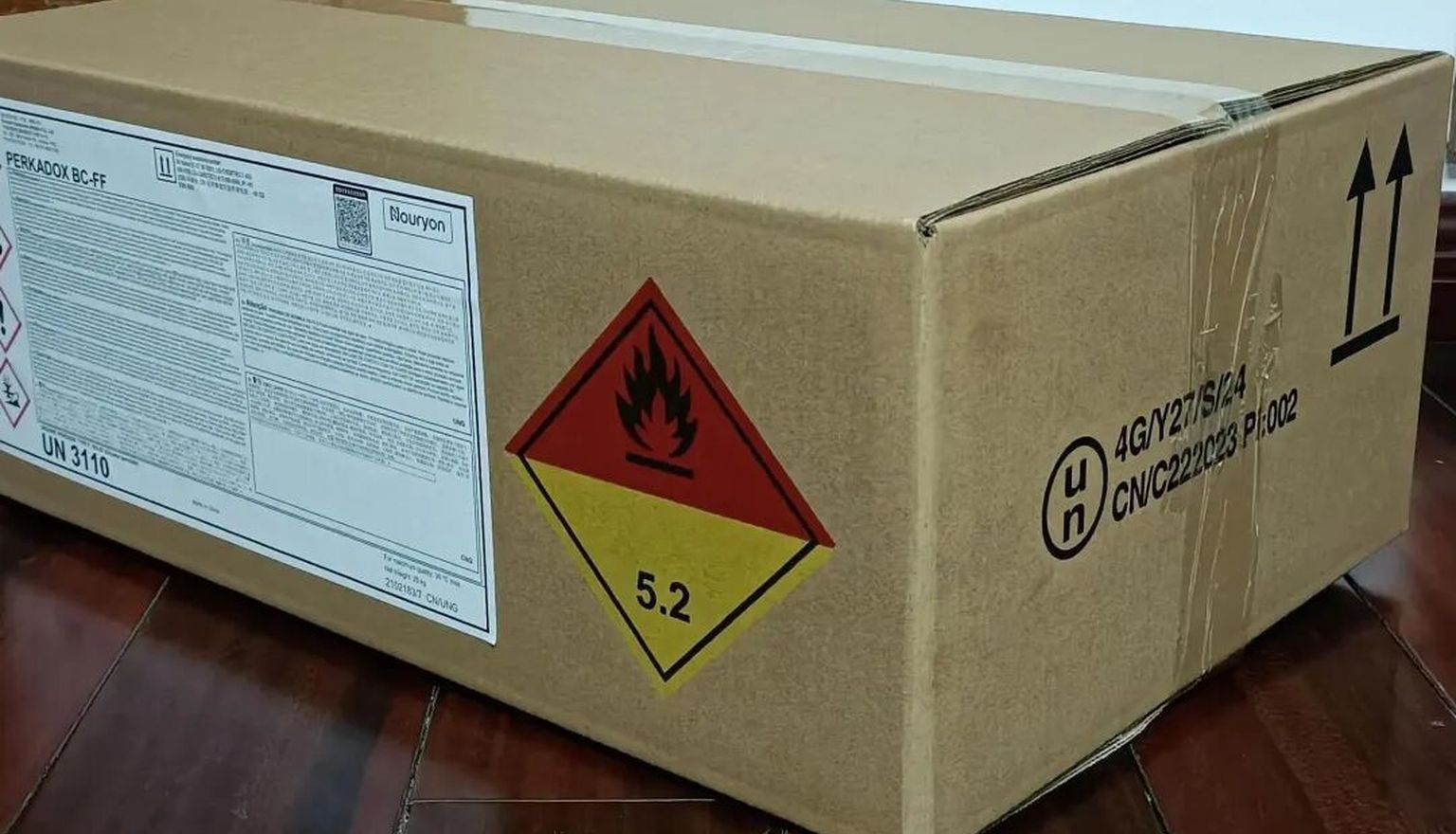
Lithium batteries travel under four UN numbers, and which one applies decides the paperwork, the packaging and often whether the cargo can fly at all.
| UN number | What it covers | Typical product |
|---|---|---|
| UN3480 | Lithium-ion batteries shipped alone | Spare battery packs, power banks without a device |
| UN3481 | Lithium-ion batteries packed with, or contained in, equipment | Laptops, power tools, e-bikes, speakers |
| UN3090 | Lithium metal batteries shipped alone | Button cells, primary cells |
| UN3091 | Lithium metal batteries packed with, or contained in, equipment | Devices with non-rechargeable lithium cells |
Classification follows the packing configuration, not the product category. The same speaker is UN3481 when the cell is inside it and UN3480 when the cells ship in the same carton alongside.
Watt-hours decide more than the UN number. For lithium-ion, cells above 20 Wh and packs above 100 Wh fall into a stricter regime, and above 160 Wh air carriage is generally refused outside approved arrangements. Ask the supplier for the Wh rating per cell and per pack, in writing, before you agree anything.
Buyers routinely treat these as one document. They are three, and a shipment needs all of them.
The most common failure is a complete document set for the wrong model. Buyers send a UN38.3 report for the 5,000 mAh pack and ship the 10,000 mAh one. Carriers check the model against the shipment, and the mismatch stops the cargo at acceptance.
Air carriage of lithium batteries is governed by the ICAO Technical Instructions as implemented by IATA, and the rules are tighter than sea in three ways that matter commercially.
Loose lithium-ion cells and packs shipped alone, UN3480, must be at no more than 30 percent state of charge. That is a manufacturing instruction, not a shipping one, and a factory that charged the packs before packing has to discharge them. Buyers who discover this after the cargo reaches the airport lose a week.
Section IA and IB cargo requires a full dangerous goods declaration and usually a trained shipper. Section II, the simplified route, applies to smaller cells and packs within set limits — but a growing number of airlines and forwarders decline Section II entirely for lithium-ion, so a route that existed last year may not exist this year.
Quantity limits per package are strict and differ by section and by cell chemistry. The practical consequence: a shipment that would be one carton by sea may become four packages by air, and the cost calculation changes with it.
At sea the governing code is the IMDG Code, and lithium batteries are Class 9, packed cargo. The route is more forgiving on state of charge and more forgiving on quantity per package, which is why battery goods that cannot fly often sail instead.
What sea requires is documentation that matches the container. In China, exporting dangerous goods generally involves a packaging performance certificate for the UN packaging used, and a use appraisal certificate issued for the specific consignment, alongside the declaration. The forwarder handling the booking will ask for these, and the factory is the only party who can produce them.
Acceptance also depends on the carrier. Some vessel operators accept Class 9 freely, some require the container to be booked as dangerous goods with a surcharge and a specific stowage position, and some will not carry certain configurations at all. A rate quoted without knowing the UN number is a rate that will be revised.
Every one of the six is checkable before the cargo leaves the factory, and five of them are checkable from the booth, by asking for the UN38.3 summary and the MSDS as a PDF on the spot.
Four routes exist, and the choice is driven by volume, urgency and how willing the carrier is to touch the commodity.
Electronics without batteries have their own hurdles — radio equipment needs type approval in most markets, magnetised components are screened by airlines, and a product with a plug needs the destination's plug and voltage documented. None of those stop a shipment as abruptly as an undeclared cell, but they delay it in the same place: at acceptance.
Q Can I ship lithium batteries from China by air?
Yes, with the correct documents and packaging. Loose lithium-ion cells and packs under UN3480 must be at 30 percent state of charge or less, and many airlines now refuse the simplified Section II route for lithium-ion cargo.
Q Is an MSDS the same as a UN38.3 report?
No. The UN38.3 report proves the cell or pack design passed the UN transport tests. The MSDS describes composition and hazards. A shipment needs both, and they must match the model actually in the carton.
Q What watt-hour limits apply?
For lithium-ion, cells above 20 Wh and packs above 100 Wh fall under stricter rules, and above 160 Wh air carriage is generally not permitted outside approved arrangements. Ask for the Wh rating per cell and per pack in writing.
Q Can battery products go by sea LCL?
Sometimes, but consolidators frequently refuse Class 9 cargo in a shared container. Sea FCL is the more reliable route, and it also avoids the mixing decision being made by someone else.
Q What documents does a battery shipment need from the factory?
UN38.3 test summary, MSDS, and the transport declaration or packing certificate for the applicable packing instruction. For China export by sea, the packaging performance certificate and use appraisal certificate for the consignment are also required.
Related pages
Send us the UN number, the watt-hour rating and the model, and we will tell you which channel accepts it, which documents the factory has to produce, and what the rate looks like.
Email sales8015@goodhopefreight.com | WhatsApp & phone +86 133 9216 2503