
Freight Mode
The choice is not about size. It is about which unit the carrier is billing you in, and how many times your cartons change hands before they reach your door.
Contents
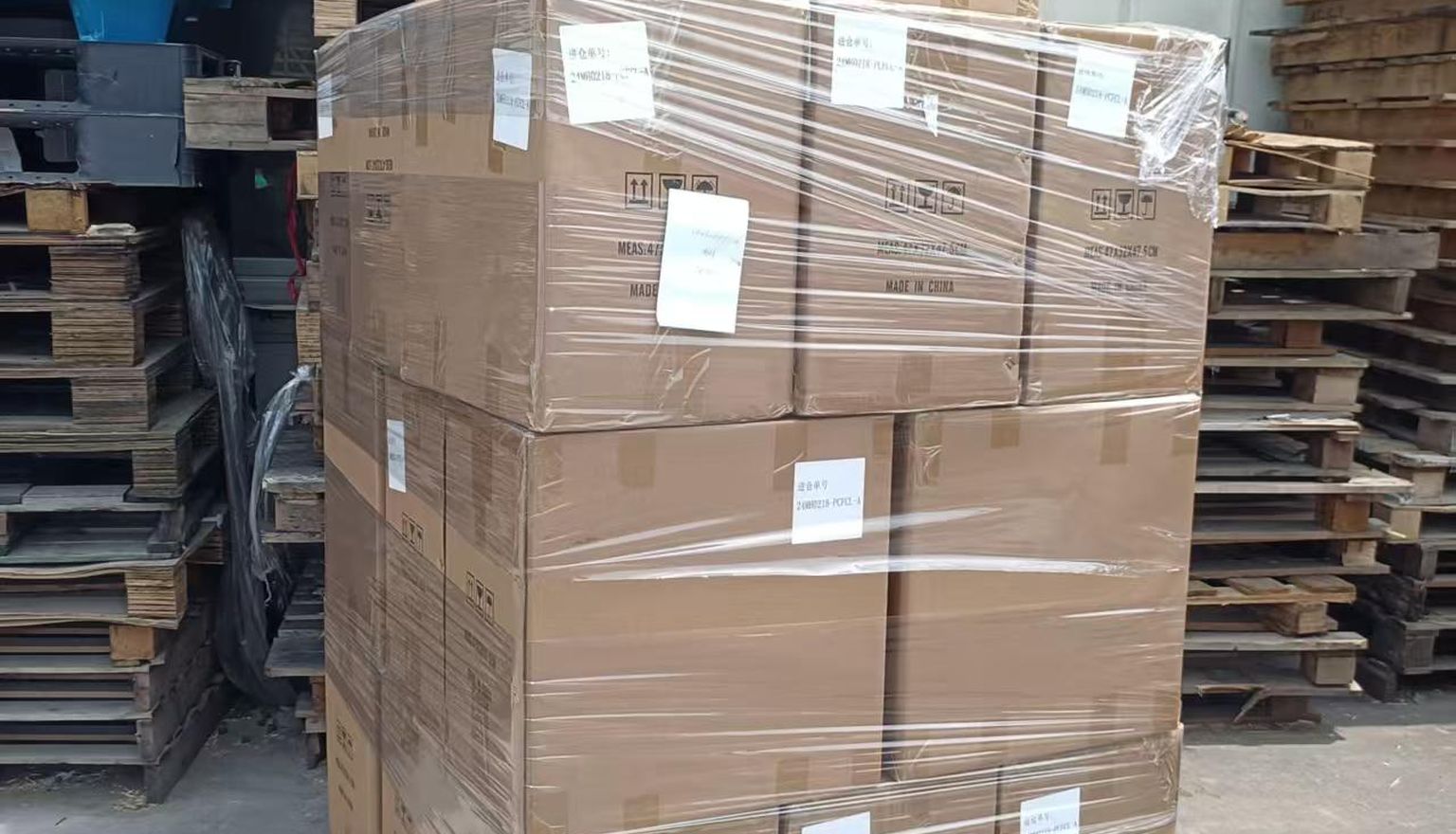
Two different units are being priced. LCL is sold by the cubic metre, or by the tonne, whichever produces the larger number. FCL is sold by the container, whatever you load inside it.
That asymmetry decides the whole comparison. Nine cubic metres weighing four tonnes pays for nine cubic metres, because nine cubic metres of sea freight is charged as 9,000 kilos. Four cubic metres weighing six tonnes pays for six cubic metres, because the weight reads higher than the volume.
So the first number to ask a supplier for is not the price. It is the carton dimensions and the gross weight per carton, multiplied out across the order you are actually placing.
One cubic metre of sea freight is charged as 1,000 kg. A pallet of dense hardware, a crate of tiles or a box of machined parts will be billed on weight, not on the space it occupies — and the container it needs is chosen on the same basis.
Buyers who skip this step end up comparing an LCL rate per cubic metre with an FCL rate per container and concluding that one is obviously cheaper. It usually is. The question is whether it is cheaper for your cargo.
LCL means your cargo shares a container with cargo belonging to other shippers. Your cartons are delivered to a container freight station, loaded into a box alongside someone else's goods, and unloaded at a destination station before delivery.
The commercial appeal is the minimum. Most carriers apply a minimum charge of one cubic metre, so a buyer testing a product can move 300 kilos without paying for a container that is 95 percent air. Departures are frequent, often weekly or better, and several consolidators compete on the same lane.
What you accept in return:
None of that makes LCL wrong. It makes it a mode with a known cost profile, and the profile is only cheap when the volume is genuinely small.
FCL means the container is yours from the depot to the destination yard. You or your supplier load it, a seal goes on the doors, and the seal number travels on the bill of lading. Nobody opens it in transit unless customs does.
Three practical consequences follow. Your cargo is handled twice instead of six times, which matters more than any rate for furniture, glassware, machinery and anything with a finished surface. You control the loading pattern, so you can use the full cubic capacity rather than fitting around a stranger's pallets. And you get free time at destination — typically a few days before demurrage and detention start — which is the window you need to clear customs and arrange delivery.
FCL is also the only mode where packing quality is entirely your own problem, in both directions. If the box arrives with shifted cartons and crushed corners, the cause is on the loading bay in China, not in a shared station.
Rates move, so treat the numbers below as the shape of the decision rather than a quotation. The pattern holds across most South China lanes.
| Loaded volume | What most buyers book | Why |
|---|---|---|
| Under 6 CBM | LCL | The container minimum dominates any per-cubic-metre saving |
| 6–12 CBM | LCL, price both | Close enough that fragility and deadline decide it |
| 12–16 CBM | Price both, then choose | The band where the two invoices land within a few hundred dollars |
| 16–28 CBM | 20GP | Container cost is fixed; every extra cubic metre is free |
| 28–58 CBM | 40GP | Cheaper per cubic metre than two 20fts on almost every lane |
| Over 58 CBM | 40HQ, or two boxes | The high-cube adds roughly 10 CBM for a small premium |
Typical behaviour on South China export lanes. Rates and surcharges vary by carrier, season and port pair — not a commitment.
The crossover sits near 13 cubic metres on many routes, because an LCL rate per cubic metre multiplied by thirteen is roughly the origin charges plus ocean freight of a 20ft box. On lanes where LCL is expensive relative to containers, the crossover drops towards 10. On lanes with cheap groupage and tight container space, it can climb past 16.
Two things shift it further. LCL rates are usually quoted per cubic metre with a minimum, so a 14 CBM shipment is charged as 14 even if it is 13.4. And a 20ft container has a practical ceiling around 28 CBM once pallets and stacking losses are counted, not the 33 CBM in the specification sheet.
A rate comparison treats a cubic metre of glassware and a cubic metre of plastic housings as identical. Physically they are not, and the difference shows up in a claim rather than an invoice.
Every transfer in an LCL chain is a chance for a carton to be dropped, stacked beyond its compression strength, or speared by a forklift. Consolidation stations stack to fill height, and the box on the bottom carries whatever goes above it. If your cartons are rated for eight layers and the station builds twelve, the damage happens in a warehouse nobody photographed.
The fix is packing, not mode. Cartons rated to a stated compression strength, corner protection on anything with a finished face, and a pallet that can be lifted as a unit rather than rebuilt by hand. Tell the supplier the cargo will travel groupage and ask what changes. A supplier who exports regularly will have an answer in one sentence.
Mixed cargo in one box. Consolidators separate incompatible goods, but the separation is commercial, not chemical. A consignment of printed paper sharing a container with a shipment of solvents is a bad outcome waiting for a hot week. If your product is absorbent, food-contact or sensitive to odour, say so before the booking, not after.
Six numbers decide the mode, and all six are available while you are standing at the stand. Ask for them before you discuss price, because the price is quoted against a volume you have not established.
A supplier who cannot give carton dimensions in the meeting is telling you something useful. Either the product is bought in from a third party and they do not control packing, or they have not exported before. Both are workable, but neither should be discovered three weeks after the deposit.
The awkward case is 30 to 40 cubic metres: too much for LCL to be sensible, too little to fill a 40ft box that you are paying for anyway.
Four options, in the order most buyers should consider them.
Fill the box with a second product. If the same supplier makes an adjacent line, adding it costs production time and nothing in freight. The marginal cubic metre is free once the container is booked.
Combine two suppliers into one box. Both factories deliver to a warehouse in Shenzhen or Guangzhou, the goods are loaded together, and one bill of lading covers the lot. This is the same mechanism used for sample consolidation, scaled up.
Book a 20ft instead of a 40ft. Thirty cubic metres fits a 20GP at a practical 28 with a small overflow, or splits cleanly into one 20GP now and one LCL top-up later.
Ship LCL at 30 CBM. Occasionally correct for a light, low-value product where the extra transit is acceptable and the destination charges are known. Usually it is the most expensive of the four once CFS charges at both ends are counted.
Multiply pieces per carton by cartons, divide by the cartons per cubic metre figure your supplier should also be able to give, and you have the volume. Then:
Under 12 cubic metres, book LCL unless the cargo is fragile, high value per kilo, or needed by a date that cannot absorb a two-week buffer. Between 12 and 16, get both prices on the same day and compare the total landed cost rather than the ocean line. Above 16, book a container and stop thinking about it. Above 28, book a 40ft.
One caution on comparing totals. An LCL quote and an FCL quote rarely include the same lines. Groupage quotes often exclude destination CFS, while container quotes often exclude the destination THC and delivery order fee. Put both on one sheet, origin and destination, before the numbers mean anything.
Q Is LCL cheaper than a 20ft container for 10 cubic metres?
Usually yes, but the margin is small on many lanes. At 10 cubic metres an LCL shipment pays ten cubic metres of ocean freight plus CFS handling at both ends; a 20ft container pays a fixed origin and ocean cost that may be only a few hundred dollars higher. Ask for both before assuming groupage wins.
Q How long does LCL take compared with FCL?
Expect five to ten days longer on the same port pair. The consolidator holds the box until it is full, and the destination station takes time to deconsolidate. On a South China to North Europe lane, a direct container might run 30 to 40 days port to port while groupage on the same route runs 38 to 50.
Q Can I ship 2 cubic metres from a Canton Fair supplier?
Yes. Most consolidators apply a one cubic metre minimum, so a two cubic metre shipment is charged as two. Below the minimum you pay the minimum, which is why small sample shipments are often better sent by air or express.
Q What is a destination CFS charge?
A fee raised at the arrival station for unloading your cargo from the shared container and handing it over. It is charged per cubic metre or per tonne with a minimum, and it is frequently missing from the quote you were given in Guangzhou. Ask for it in writing.
Q Does LCL cargo get more damaged than FCL?
It is handled more often, so it is exposed to more risk. The damage itself usually comes from stacking and from packing that was designed for a dedicated container. Cartons with a stated compression strength and pallets that can be lifted as a unit remove most of the exposure.
Q Can I put my own pallets in an LCL shipment?
Yes, but check the station's rules first. Palletised cargo is charged on the greater of volume or weight and the pallet footprint counts as volume, so a pallet that is 1.2 by 1.0 metres by 1.5 metres high is billed at 1.8 cubic metres even if the cartons on it are smaller. Some stations also refuse untreated solid wood.
Related pages
Send the carton dimensions, the carton count and the destination port. We will price both modes on the same sheet so the comparison is honest.
Email sales8015@goodhopefreight.com | WhatsApp & phone +86 133 9216 2503