
Risk
Carrier liability is capped far below the value of most shipments. The gap is yours unless a policy closes it, and the policy has more exclusions than most buyers read.
Contents
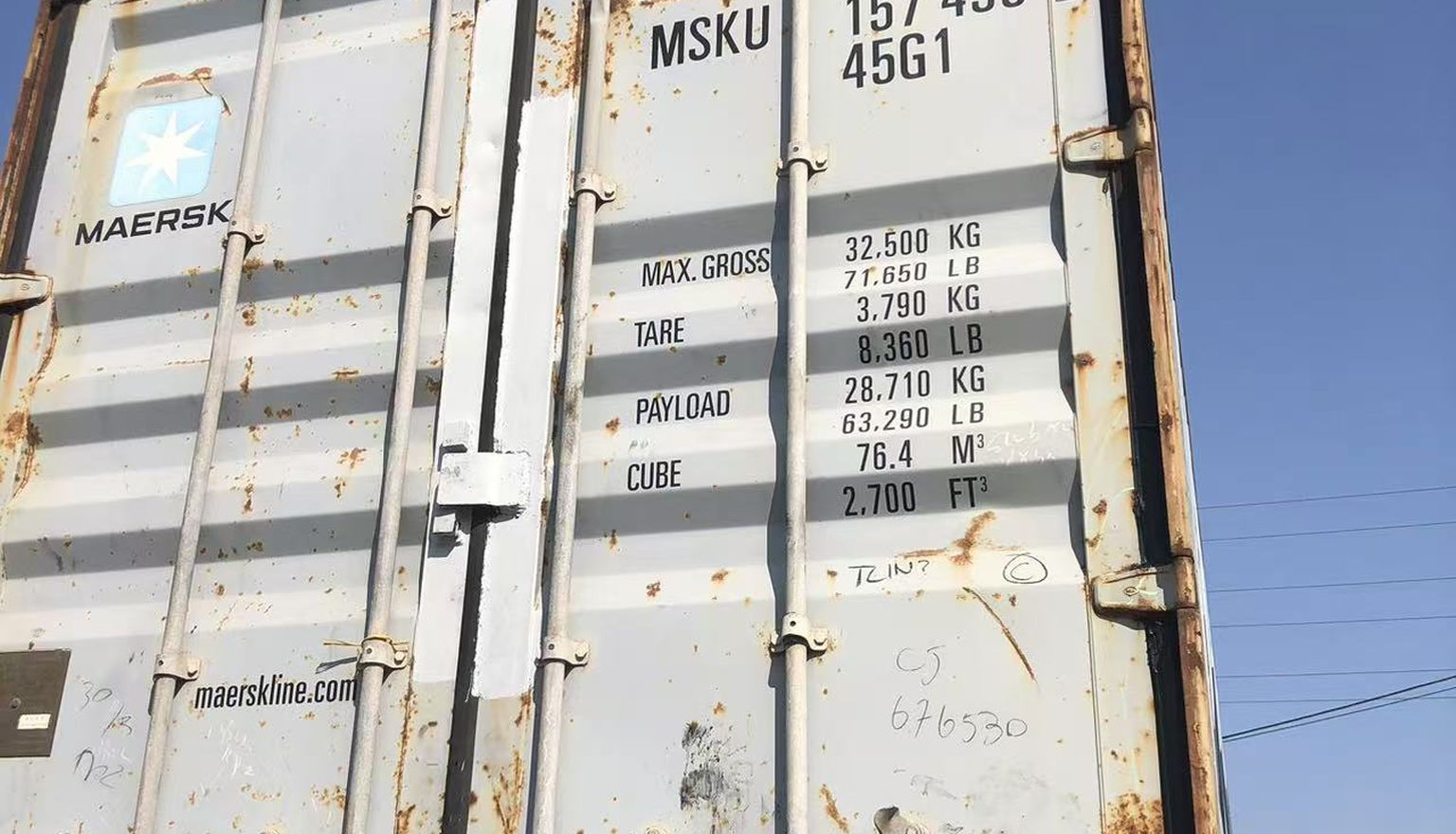
When cargo is damaged at sea, the carrier is liable — but only up to a limit set by international convention, and only if the damage was caused by something the carrier is responsible for. That limit is expressed in Special Drawing Rights per kilogram, which for sea carriage under the Hague-Visby rules works out at roughly two SDR per kilo.
For a container of consumer electronics, that figure is a fraction of the cargo value. For a container of sand, it may be more than enough. The point is that the limit has nothing to do with what your goods are worth.
Air and road carriage have their own conventions with their own caps, and they are all similarly disconnected from commercial value. A forwarder's standard trading terms add further limits and defences on top.
Insurance exists to close the gap. It is not a duplicate of carrier liability; it is the part the carrier does not pay.
Marine cargo cover is written on standard clause sets, and most of the world uses the Institute Cargo Clauses. Three levels are sold, and the difference between them is what has to be proved.
| Clause | Basis | Covers | Typical use |
|---|---|---|---|
| ICC (A) | All risks subject to exclusions | Loss or damage from any cause not excluded | Manufactured goods, electronics, anything with a finished surface |
| ICC (B) | Named perils | Accidents to the vessel, earthquake, water damage, washing overboard | Goods where the main exposure is a transport accident |
| ICC (C) | Named perils, narrower | Major casualties only | Bulk and low-value cargo where cover is a formality |
Summary of the standard Institute Cargo Clauses. The full wording governs, and every policy should be read against the actual clause text — not a commitment on cover.
The practical consequence of B and C is that the burden of proof shifts. Under A, the insurer has to point to an exclusion. Under B and C, you have to show that the loss came from a listed peril. A carton crushed because another consignment shifted is a straightforward A claim and a difficult B claim if it does not fit a named peril.
Cargo is conventionally insured for 110 percent of its CIF value: the goods, the freight and the insurance, plus a tenth to cover the margin you expected to make and the costs of a claim.
The extra ten percent matters more than it looks. If a shipment is lost, you lose the profit it would have earned and you still pay for the handling, the clearance preparation and the administrative time. A policy at invoice value only leaves those unrecovered.
Insure the full CIF value even when you bought FOB. The freight you paid separately is part of what the cargo is worth at the point of loss, and a policy written on the FOB invoice excludes it.
Declare the correct commodity too. A policy that names plastic housewares for a container of lithium batteries is a policy that will not respond, and the premium difference was never worth the argument.
Most declined claims are declined on an exclusion rather than on the peril. The recurring ones:
Two of these are within your control and worth acting on. Packing and marking are decided at the factory, weeks before anyone thinks about a claim.
The photo that saves a claim. A photograph of the container being loaded, showing carton condition and the loading pattern, is the difference between a paid claim and an argument about pre-shipment damage. Ask for it on every consolidated or high-value container.
General average is the oldest idea in maritime law and the one that surprises buyers most. When a ship is saved from a common danger by deliberately sacrificing part of the cargo or spending extraordinary money — jettisoning containers, diverting to a port of refuge, salvaging the vessel — the loss is shared by everyone whose property was on board, in proportion to its value.
The mechanism is a general average bond. Your cargo can be held at destination until you provide a guarantee against your share, even though your own container is undamaged and the danger was nothing to do with you.
Cargo insurance is what responds to that demand. A policy written on the standard clauses covers general average contributions; an uninsured consignment meets the demand from the buyer's own funds, and the amount is not small.
Three things decide whether a claim is paid: notice, evidence and survey.
Notice in time. Damage has to be notified to the insurer or the agent promptly, and the policy states the window. On containerised cargo the practical deadline is often before the container is emptied, which means the claim conversation starts at the warehouse door.
Evidence. The commercial invoice, packing list, bill of lading, delivery receipt, photographs of the damage as found, and a note of the condition of the container and seal at handover. Keep the damaged goods available for inspection; do not repair, dispose or return them before a surveyor has seen them.
Survey. Above a threshold the insurer appoints a surveyor, and the survey report is what the claim is decided on. A joint survey with the terminal or the carrier present is stronger than a unilateral one.
The claim that fails is usually the one notified three weeks later, after the cartons were thrown away and the container returned.
Cover should be in place before the cargo moves, not when the vessel sails. A policy bought on the day of departure may still apply under the warehouse-to-warehouse duration, but the argument about when the loss happened is one you do not want.
For a single shipment, a certificate issued against an open policy is the normal arrangement: the forwarder declares the shipment, the insurer issues a certificate, and the premium is charged on the insured value. For regular shipments, an open cover declares every shipment automatically and removes the risk of forgetting one.
Buy the clause level your product deserves. ICC (A) for manufactured goods, electronics, anything with a finished face or a retail carton. ICC (C) for bulk commodities where the exposure is a total loss. Anything temperature-sensitive, second-hand or shipped in a container that will be transhipped deserves a conversation rather than a checkbox.
Two routes to the same cover. A forwarder can declare your shipment against an open policy and issue a certificate, which takes an email and produces a document that names your cargo, your voyage and your insured value. Or you can place the cover with your own broker at home, usually as part of a marine open cover that already includes your other imports.
The forwarder route is faster and needs nothing from you but the invoice value. The broker route is better when you import regularly, because one policy covers every shipment without anyone remembering to declare it, and because your broker is on your side of the claim rather than the cargo's.
Whichever you use, get the certificate before the cargo moves and keep it with the shipping documents. A certificate that arrives after the loss is a document that will be dated and questioned.
Q Is cargo insurance compulsory?
Not for sea freight in most jurisdictions, but the consequences of shipping uninsured are entirely the cargo owner's. A CIF sale obliges the seller to arrange minimum cover, usually ICC (C), which is often narrower than a buyer assumes.
Q What is the difference between ICC A, B and C?
A covers all risks except those excluded. B and C cover a named list of perils, narrowing from B to C. Under A the insurer has to find an exclusion; under B and C the claimant has to show the loss came from a listed peril, which is a materially harder test.
Q Does the carrier not pay for damage?
The carrier is liable only within convention limits, roughly two SDR per kilogram for sea carriage, and only for causes it is responsible for. On valuable cargo that limit is far below the loss, which is the gap insurance fills.
Q What is general average in plain terms?
A shared bill. If part of the cargo or the ship is deliberately sacrificed to save the voyage, everyone on board contributes to the loss in proportion to the value of their cargo. Your container can be held at destination until you guarantee your share.
Q Can I insure goods bought on FOB terms?
Yes, and you should, but insure the full CIF value rather than the FOB invoice. The freight you paid separately is part of what the cargo is worth at the point of loss, and a policy written on the FOB value under-insures it.
Q What documents does a claim need?
Invoice, packing list, bill of lading, delivery receipt, photographs of the damage as found, and a survey report where the insurer appoints one. Keep the goods available for inspection and notify promptly — late notice is the most common reason a valid claim fails.
Related pages
Tell us what the policy says and what the survey found. We will help you assemble the file the insurer will actually accept.
Email sales8015@goodhopefreight.com | WhatsApp & phone +86 133 9216 2503