
Compliance
Origin marking is not branding. It is a statement the destination customs authority can refuse your goods for, and it is decided by production facts rather than by what the carton designer preferred.
Contents
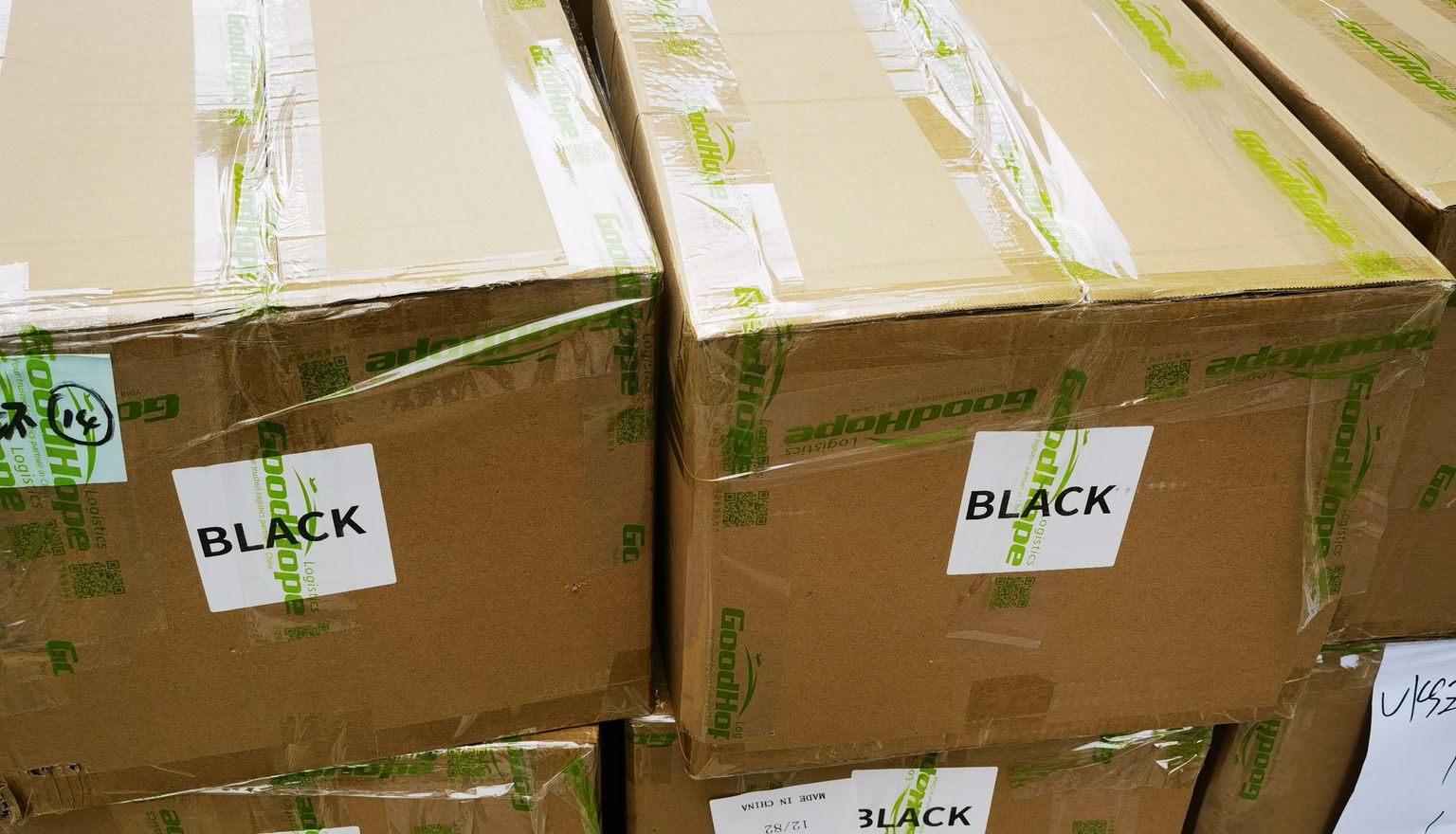
Origin marking exists so that the final purchaser knows where the goods were made before buying them. That is the stated purpose in the United States, and it explains the shape of the rule: the mark has to be visible at the point of sale, not discovered in a warehouse.
For the importer the practical effect is that marking is an import requirement, not a marketing decision. Goods that need a mark and arrive without one can be refused entry, required to be exported, marked under customs supervision at the importer's cost, or assessed a penalty. The remedy is always slower and more expensive than printing the carton correctly.
There is a second reason it matters, less discussed. The mark, the invoice description, the certificate of origin and the tariff code are four statements about the same goods. When they disagree, the file looks unreliable even if each document is individually defensible, and unreliable files get examined.
US rules require every imported article of foreign origin, and its container, to be marked with the English name of the country of origin, legibly, indelibly and permanently, in a way that is visible to the ultimate purchaser. There is a list of exceptions, some general and some for specific goods, and there are statutory exemptions where marking is economically prohibitive or where the goods cannot be marked.
Each word in that sentence is a test. English, so made in China rather than fabrique en Chine. Legible, so a mark in six point type on the underside of a base fails. Permanent, so a sticker that peels in a cold container fails, while a moulded mark, a printed label designed to stay, or a stencil that survives handling passes. Visible to the ultimate purchaser, so a mark on the outer carton is not sufficient where the carton is discarded before retail sale.
The container rule catches buyers regularly. If the outer packaging is what reaches the consumer, it needs the mark. If the product is sold loose from a display, the product itself needs it. If the product is repacked by the importer, the marking obligation can shift but does not disappear.
Marking a product with a US address is a separate trap. An address that suggests a US origin on a foreign made product needs a qualifier, or the marking is misleading regardless of what it says elsewhere.
The European Union has no general requirement to mark the country of origin on imported goods. That surprises buyers who assume marking is universal, and it produces the opposite error: suppliers who print made in China on everything because an American customer once asked.
Where EU rules do require origin information, they tend to be sector specific: food, toys in certain respects, textiles under the labelling regime, and specific product safety rules. There are also member state provisions and, separately, rules on misleading claims, which are enforced against a mark that is inaccurate rather than against the absence of one.
The UK follows a similar position for most goods, with its own sector rules. Northern Ireland applies EU goods rules in the relevant areas.
The consequence is that a single production run sold into several markets needs a marking decision per market, made before the packaging is printed. Printing a mark on everything is safe for admissibility and wasteful for nothing else; leaving it off the cartons destined for the US is a refusal waiting at the port.
Where there is no legal requirement, a mark can still be useful: it supports the certificate of origin, it answers a buyer question, and it satisfies a distributor who wants the information on the shelf. Optional is not the same as pointless.
Marking methods differ in durability and in cost, and the cheapest method that survives the journey is usually the right one.
| Method | Durability | Fits | Fails when |
|---|---|---|---|
| Moulded or cast into the product | Permanent | Plastics, cast metal, ceramics | Tooling cost is not justified by volume |
| Printed on the retail package | Permanent for the package | Consumer goods sold in their packaging | The package is discarded before sale |
| Pressure sensitive label | Depends entirely on adhesive and surface | Most goods, in practice | Cold, damp or dusty surfaces; low grade adhesive |
| Sewn in label | Permanent | Textiles and apparel | The care label and origin label are confused |
| Stencil or stamp on the carton | Permanent for the carton | Industrial and bulk goods | The carton is not what reaches the buyer |
Methods and their typical failure modes. What satisfies a given rule depends on the product and the destination — confirm before printing.
The label adhesive question deserves its own line in the purchase order. A label specified as permanent adhesive on a polyethylene surface behaves differently on a cold container in a northern winter. If the goods travel to a cold climate, ask the supplier which adhesive and which surface treatment, and test a sample in a freezer rather than trusting the specification.
Four failures account for most of the trouble, and none of them are about the words on the label.
Marked before origin is settled. A supplier prints made in China on packaging for goods assembled in China from imported components, then discovers the tariff classification or origin analysis points elsewhere. The mark and the certificate now disagree.
Marked on the wrong surface. The carton is marked, the product is not, and the product is sold loose. Or the product is marked on a removable protective film, which is removed.
Marked inconsistently across a mixed consignment. Three factories, three label designs, one shipment. Nothing is illegal, and the file looks like it was assembled by three people who never spoke, which invites questions about the rest of it.
Marked with something that is not the origin. Designed in California, assembled in Vietnam, shipped from China. The origin is a legal conclusion, and the mark has to state that conclusion, not the supply chain narrative.
Non-preferential origin, which is what marking reflects, is generally decided by where the goods were wholly obtained or underwent their last substantial transformation. Substantial transformation is a test about change, not about cost or effort: a change in name, character or use.
Assembly alone often does not qualify. A product assembled in one country from components manufactured in another may retain the origin of the components. Adding a handle, printing a logo, packaging for retail or testing a finished item are typically not enough.
This is why the marking decision belongs with the tariff and certificate work rather than with the packaging supplier. All three rest on the same analysis, and an origin conclusion that changes after the cartons are printed costs a reprint of every carton in the run, rather than only the cartons already filled.
Where the analysis is genuinely uncertain, get it settled in writing before production. A ruling, or a documented reasoning note from a broker or a trade adviser, is cheaper than a container of cartons that cannot be used.
The order of operations is the whole discipline. Settle origin first, then the tariff code, then the marking, then the printing, then production.
In practice, at a fair or in the weeks after it, the sequence runs like this. Confirm what the product is and where each component is made. Confirm the destination market and whether marking is required there. Choose the marking method against the surface and the journey. Have the artwork checked for the exact wording the destination expects. Then release the packaging print run.
Then reconcile the mark with the invoice and the certificate of origin before the documents are issued. Three documents stating the same country is unremarkable. Two stating one country and a third stating another is a conversation at the border, and the goods wait during it.
Q Do all imports into the EU need a made in China mark?
No. The EU has no general requirement to mark the country of origin on imported goods. Sector rules cover specific categories such as food and textiles, and individual member states have some provisions, but a generic consumer product is not required to carry the mark. The US position is different and is enforced at entry.
Q Is a sticker acceptable as origin marking in the US?
It can be, if it is legible, permanent for the expected life of the product and visible to the ultimate purchaser. In practice stickers fail on adhesion more often than on wording: cold surfaces, dusty surfaces and low grade adhesive are the usual causes. A moulded or printed mark is more reliable where the volume justifies it.
Q Does the mark go on the product or the carton?
It depends on what reaches the ultimate purchaser. If the retail package is what the consumer sees, mark the package. If the product is sold loose or the packaging is discarded before sale, mark the product itself. Marking only the shipping carton is the most common error.
Q What if my product is assembled in China from imported parts?
Assembly alone does not necessarily make China the origin. Non-preferential origin usually turns on where the last substantial transformation happened, which is a test of change in name, character or use rather than of cost added. Get the conclusion settled before the packaging is printed, because the mark has to state it.
Q Can I put my own brand and address on the product?
You can, but a US address on a foreign made product needs a qualifier so the marking is not misleading. The origin statement must remain clear. Branding and origin marking are separate statements and should not be merged into one line.
Q Does origin marking affect duty?
Not directly. Duty follows the tariff code and any preferential claim. Origin marking reflects non-preferential origin, which is a related but separate analysis. They usually agree, and when they do not, the file is the problem rather than the rate.
Related pages
Send the destination and the packaging artwork. We will flag the marking questions that usually come back after the print run, while they are still cheap to change.
Email sales8015@goodhopefreight.com | WhatsApp & phone +86 133 9216 2503