
First Shipment
A lead time is a promise about a queue. The queue has a length, and the length can be counted on the floor in about twenty minutes.
Contents
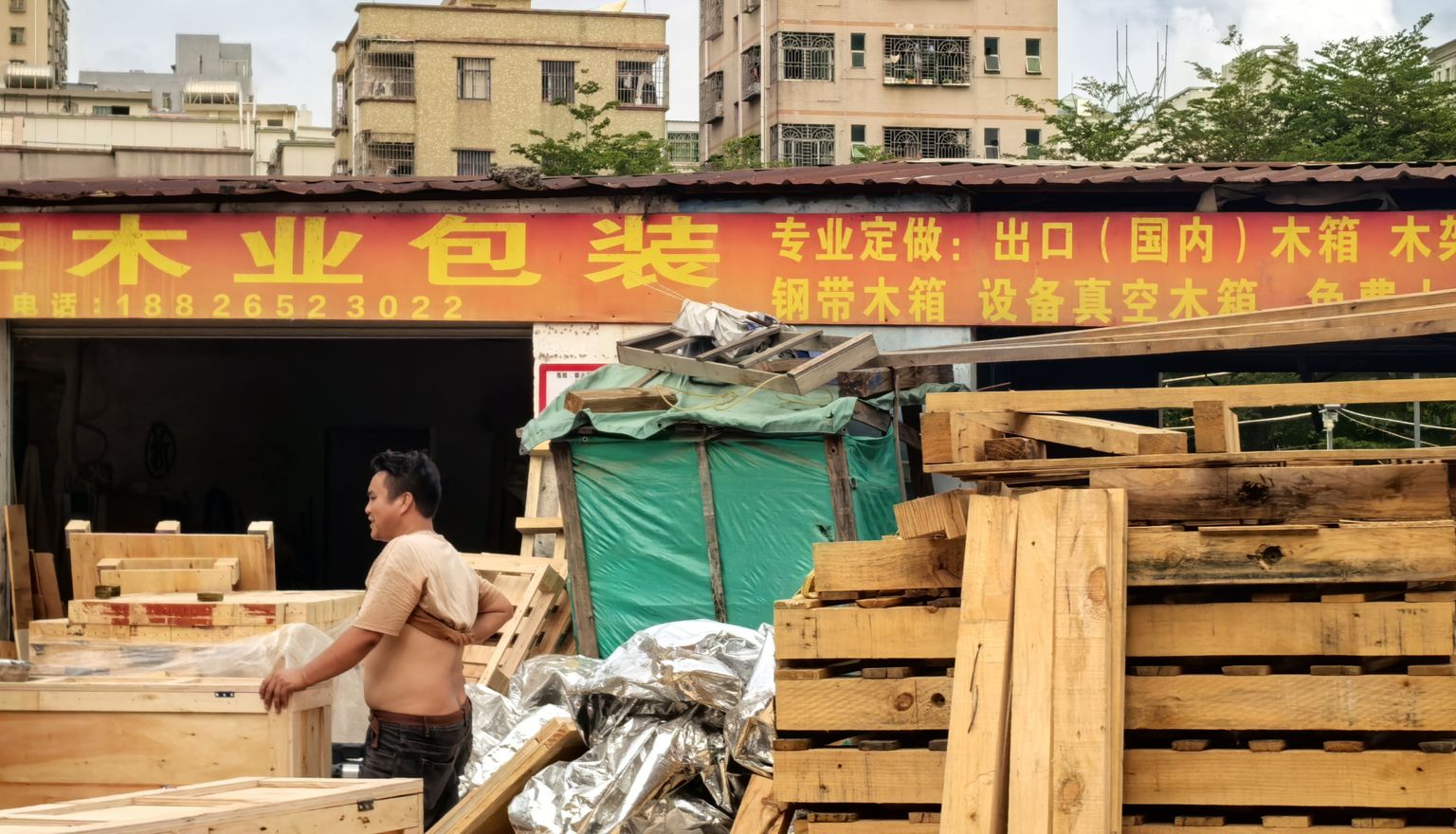
Ask five suppliers for a lead time on the same product and four will answer in the same week, because the answer is not calculated. It is a market convention: thirty days, forty-five days, sixty days. The number survives because most buyers never test it, and because a late first order is usually absorbed by a buyer who has not yet committed to a retail date.
A real lead time is built from four things: how long the raw material takes to arrive, how long the order sits in the queue ahead of yours, how many units per hour the slowest station can pass, and how many working days the plant actually runs in the month you need. Only the third of those is fixed by equipment. The other three move constantly, and they are what your deposit is really buying.
This matters most on a first order, when nothing has been tested. A second order has history: you know what the last one took, and you can argue from it. On the first, the only evidence available is the plant itself, and it is available for free if you are standing in it.
Walk the line before you sit in the meeting room. The floor tells you more in twenty minutes than the presentation does in an hour, and it does not require an audit.
Count the stations that do the actual work, not the ones that move things. On an assembly line, the number of operators at benches is the number of units per cycle. On a moulding floor, count the machines and read the tonnage plate on each. In a sewing plant, count the machines with a bundle on them. Idle machines are either broken, unstaffed, or waiting for material, and each of those is a fact about capacity.
Then look at the work in progress. A plant running near capacity has material stacked between stations: crates of components, trolleys of half-finished units, pallets waiting for the next operation. A plant with thirty percent of its floor empty is either very well organised or thinly loaded. Ask which.
Look at the finished goods area last. Stock sitting in the shipping bay is either an order that has not been collected or product made to forecast. Both tell you the plant is not running to a tight schedule, and that yours may be pushed behind someone else's.
Every plant has one operation that is slower than the rest, and that operation decides what the plant can ship. It is rarely the assembly line, because assembly is easy to staff up. It is usually a machine with a long cycle: an injection moulding press, a curing oven, a printing press, a powder coating line, a heat treatment bath, a CNC cell with one operator and a long program.
Ask the plant manager a single question: which operation limits your weekly output? A good answer names a machine and a number. A weak answer names a total capacity figure that no one on the floor recognises. If the answer is a total, ask how many units pass the slowest machine per hour, and watch whether the number matches what you counted at that station.
Moulding is the clearest case. A plant quoting a hundred thousand units a month from six presses is telling you a cycle time and a cavitation count. Multiply them. If the arithmetic does not reach the number, the extra output is subcontracted, and subcontracted output is the part of your order that arrives late and does not match the sample.
The second question follows: what happens when the bottleneck breaks? A plant with one oven and no spare has a single point of failure that stops every order in the building. A plant with two smaller ovens can keep running at half rate. The difference is visible from the doorway.
Capacity is a rate multiplied by time, and the time is a management decision. A plant on one shift has a third of the hours of a plant on three, even with identical equipment. Ask which shift pattern is running now, and whether the plant can add a shift for your order. Most can. The ones that cannot are already full.
Then look at the calendar for the months your order will occupy. Chinese New Year swallows two to four weeks around the factory, and the weeks before it are the busiest of the year as every buyer tries to ship ahead of the closure. A lead time quoted in December for delivery in March is being quoted across that gap, whether or not the supplier says so.
Two smaller holidays also move dates: National Day in early October and the Labour Day break in early May. Both are published, both shift year to year, and both are worth checking against your production window rather than assuming.
There is a practical test. Ask the plant what its last two weeks of output were, in units, and how many days it ran. A manager who answers without leaving the room is reading from a production report, and that report is the only document on the site that matters.
Your order is not entering an empty plant. It is entering a queue behind whatever else is booked, and the queue is the reason a forty-five day lead time becomes seventy.
Ask directly: how many other orders are in production this month, and what share is export? A plant that is eighty percent domestic is running to a different rhythm, with smaller batches and shorter runs, and your container will be scheduled around them. A plant that is mostly export understands cut-off dates and will plan backwards from a sailing.
Look for the schedule on the wall. Most Chinese plants run a whiteboard or a printed board listing work orders by line and date. It is usually visible from the floor, and it is the single most useful document in the building. If there is no board, the schedule exists in one person's head, and that person's holiday is your delay.
Peak season sharpens all of this. Between August and October, plants making anything for Western retail are booked solid, and the ones that are not booked are worth a second look. A factory with free capacity in September is either new, small, or selling something the market does not want.
Yield, scrap rate, on-time delivery and overall equipment effectiveness are the four numbers that would let you calculate capacity properly. Very few Chinese plants will hand them over, and the ones that will are usually quoting a customer scorecard rather than their own figures.
Read proxies instead. A quality station with a written log, updated by hand through the shift, means someone is measuring. A bin of rejects at the end of the line, with the parts still in it, means rejects are visible to the people making them. A final inspection area with a light box and a gauge means the plant inspects rather than promises.
Count the people who are not producing: inspectors, rework staff, material handlers. A plant with a large rework bench is losing capacity it has already counted as output. That bench is where your delivery date quietly disappears.
The cleanest proxy is a walk through the raw material store. Steel coil, resin pellets, fabric rolls, carton board: the volume on hand tells you how many weeks of production are already paid for and staged. A store that is nearly empty in a plant quoting a fast lead time is a plant buying material against your deposit.
Capacity is negotiated before the deposit, not after. Three clauses carry most of the weight, and all three are ordinary commercial terms rather than demands.
First, a delivery schedule rather than a single date: weekly or fortnightly quantities, so a slow start is visible in week three instead of discovered in week eight. Second, a capacity reservation for the following order, stated as a range, so the plant knows the second order is contingent on the first arriving on time. Third, an explicit remedy for late delivery that reflects your real cost, which for retail goods is usually air freight on the shortfall rather than a percentage penalty.
Add a reporting obligation: a photograph of the production board, or a simple percentage-complete figure, every Friday. It costs the supplier ten minutes and it removes the guesswork from your own planning.
None of this works if the plant has never agreed to a schedule before. Ask on the first visit whether they will accept weekly milestones. The supplier who negotiates the milestones is telling you they can meet them; the one who agrees instantly and never mentions them again is telling you something else.
A trading company answering for a factory is the most common. The office is in a tower in Futian, the plant is somewhere in Dongguan, and the person quoting is not the person who controls the line. This is not fraud and it is often the better supplier for a small buyer, because they consolidate and they speak your language. It does mean the lead time is a second-hand number.
Subcontracted processes are the second. Plating, heat treatment, printing, embroidery and packaging are routinely sent out. Each handover adds a truck ride and a queue, and none of it appears on the quote. Ask which operations leave the building.
The third is a single customer. If seventy percent of the plant's output goes to one buyer, your order is a gap-filler, scheduled when the big account is quiet and moved when it is not.
The fourth is a plant that cannot show you the tooling. Moulds, dies and jigs belong to someone. If the tooling for your product is at another address, the plant you are standing in is an assembly shop, and its capacity is somebody else's capacity.
Q Can I judge capacity without paying for a factory audit?
Yes, for the question you actually need answered. An audit scores systems; a walk scores throughput. Count stations, count machines at the bottleneck, read the production board, and ask for last week's output in units and days. That answers whether the plant can make your quantity, which is a narrower question than whether it is a good supplier.
Q What is a realistic lead time for a first order from a new supplier?
For a product with existing tooling, six to ten weeks from deposit to container is a common range, and it is a range rather than a rule. Add two to three weeks if new tooling is being cut, and add the holiday weeks if the window crosses Chinese New Year. Treat any quote under four weeks on a new relationship as a sales figure until it is tested.
Q Should a purchase order specify weekly quantities?
It should specify something that can be checked before the end date. Weekly or fortnightly milestones do that, and they let you re-plan in week three rather than week eight. A single delivery date tells you nothing until it has already failed.
Q What if the supplier is a trading company rather than a factory?
Then the capacity question moves one step back. Ask which plant will run the order, how many plants they work with, and whether they will name it. A trader with two factories behind them is more resilient than a single plant, provided you know that is what you bought.
Q Can I reserve capacity for my next order?
It is done, usually as a stated monthly range in exchange for a forecast. Plants accept forecasts because it lets them buy material. Keep the reservation tied to a real intention, because a forecast that never converts is ignored the second time.
Q How much buffer should I add to a quoted lead time?
For sea freight to a distant market, add the transit and the port time separately rather than inflating the production number. Production delays and shipping delays are caused by different things, and a single padded number hides which one is eating your schedule.
Related pages
If the goods are booked and the dates are still soft, tell us the product, the quantity and the destination port. We will tell you what the sailing pattern looks like for that production window, and which weeks are already tight.
Email sales8015@goodhopefreight.com | WhatsApp & phone +86 133 9216 2503