
Destination
The bond used to be a document a broker held on your behalf. It is now a number you post in a portal, and without it the duty is paid at the border.
Contents
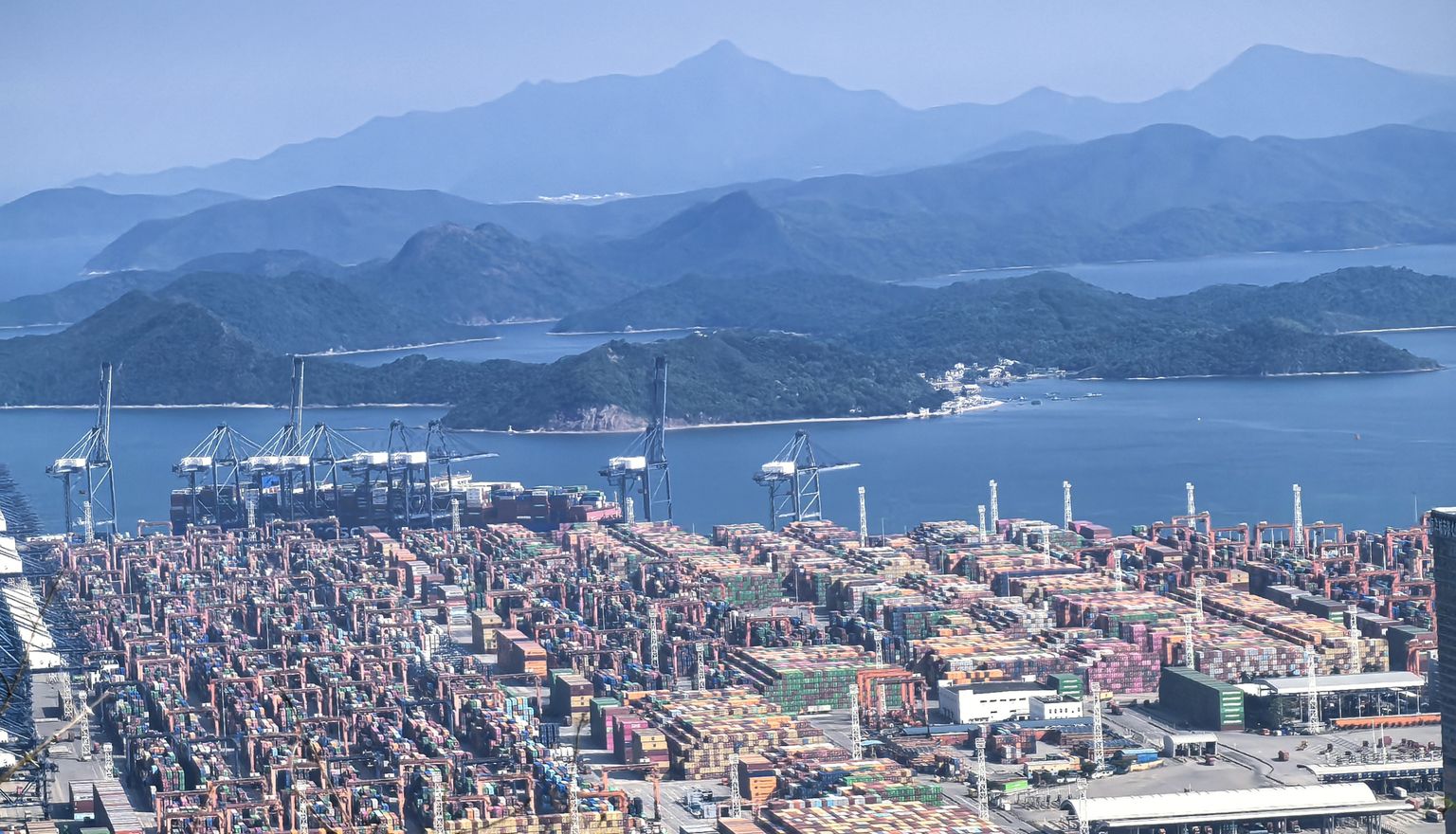
Canada replaced its legacy customs accounting with a system called CARM, and the change was not cosmetic. The importer's account, its security, its declarations and its payments now sit in one portal, and the importer — not the broker — is the account holder.
Before the change, a broker could hold a bond on behalf of many clients, and a buyer could effectively be cleared by the broker's security. After it, the importer posts its own security and authorises the broker to act in the portal. A buyer who has not done that cannot be released before payment, which means duty and tax are paid at the time of release rather than at the end of the month.
For a first-time importer the practical effect is a setup task that sits between the purchase order and the first shipment. It is not difficult, but it takes days, it needs a Canadian business number, and it is not something a forwarder can do on the importer's behalf.
Buyers who shipped to Canada before the change and have not shipped since are the ones who get caught, because their broker's old arrangement no longer covers them and nobody told them.
Everything starts with a Canadian business number, a nine-digit identifier issued by the tax authority, with programme accounts attached to it. Importing requires the import and export account to be attached, and the account number is what the broker quotes on the entry.
A non-resident can hold a business number and an import account, which is what allows a foreign seller to ship DDP into Canada or to act as importer of record. That is a genuine option and it is commonly used, but it brings the same consequence as anywhere else: the seller then owns the duty, the tax and the compliance risk, and the buyer has nothing to reclaim.
The account also determines how the sales tax is handled. Registered importers recover the tax through their returns; unregistered importers pay it as a cost. For a company at the stage of testing the market, that 5% federal plus the provincial component is a real addition to the landed cost.
Registration is free and can be done online, but the processing is not instant, and a business number issued on a Friday will not support a Monday release.
Release before payment is a privilege, not a default. It allows goods to leave the border before duty and tax are paid, and it requires security — a bond or a cash deposit — posted against the importer's account.
The amount of security reflects the duty and tax the importer is expected to incur over a period, which means a new importer posts a modest amount and a growing importer revises it upward. Under-posting is a common problem in the second year: volume doubles, the security does not, and a shipment is held for a reason nobody anticipated.
Where the importer has not posted security, the goods can still be released, but duty and tax are paid at the time of release. For a single container that is a cash-flow inconvenience. For a buyer running a launch, it is a payment that has to be arranged on the day the container arrives, which is the day everything else is also happening.
Security can be posted as a bond from a surety or as a cash deposit. The bond is cheaper in cash terms and requires an application; the deposit is immediate and ties up money.
Customs brokers in Canada are licensed individually and by company, and the entry is filed by a broker acting for the importer. The relationship is created by a written authority, and in the current system that authority is also expressed inside the portal, which is why a buyer who has appointed a broker and not completed the portal step has not actually appointed anyone.
The broker's value is not the filing. It is knowing which entry type applies, which programme the goods qualify for, which permit is needed, and how to correct a declaration that has already been submitted. A cheap broker who files what you send is a data entry service; a good one asks a question before the container arrives.
Two practical points. The broker works in the importer's name, so errors on the declaration are the importer's errors, with the importer's penalties. And a broker change mid-year requires the new broker to obtain the old broker's records, which is a slower process than either party expects.
Where the goods are controlled, the broker will also need the permits and licences before the entry can be transmitted. Those are the importer's to obtain, and they are usually the reason an entry is late.
Duty is set by the tariff item, and Canada has free trade agreements that may reduce or eliminate it — but only for goods that meet the rules of origin. Chinese-origin goods pay the most-favoured-nation rate, and there is no China-Canada free trade agreement.
Sales tax is charged on the value for duty plus duty, at 5% federal, with a provincial component added in the provinces that have a harmonised tax, and a separate provincial tax in the others. Quebec administers its own. The combined rate varies by province, which means the same container has a different landed cost depending on where the warehouse is.
Anti-dumping and countervailing duties are administered under a special imports act, and they cover a list of products including some steel, aluminium and consumer goods. Where an order applies, the duty is based on a normal value determined by the agency, and the importer carries an obligation to report the goods correctly and to pay the difference if the declared value is below normal value. This is the part of Canadian importing that most often produces a large retrospective bill, because the assessment can be made years after the entry.
Ask specifically whether an order covers the product. It is a different question from the tariff rate and it is not visible on a duty calculator.
Not every container is examined, and the ones that are follow a small number of routes. A documentary review resolves a discrepancy on paper. A physical examination opens the container at a sufferance warehouse or a border facility. An intensive examination unpacks and repacks.
Sufferance warehouses are licensed premises where goods can be stored before release, at the importer's risk and cost. Storage is charged daily, and the free period is short. A container waiting for a permit, a payment or a correction sits there, and the bill grows whether or not anyone is working on the problem.
The costs of an exam are therefore rarely the exam. They are the transfer to the warehouse, the storage, the handling, and the days. A routine physical examination typically adds several days, and an intensive one can add two weeks.
What reduces the frequency is consistency: the invoice, the packing list, the bill of lading and the entry agreeing on quantity, description and value. What does not reduce it is a broker who volunteers information nobody asked for, which is how a simple entry becomes a review.
Prepackaged consumer products sold in Canada must carry labelling in both English and French. This is a legal requirement under consumer packaging legislation, and it applies to the product label and to the package, not to the shipping carton.
The requirement covers the product identity, net quantity, and the name and principal place of business of the responsible party. For food, there is a fuller set: nutrition labelling, ingredient listing, allergen declarations, and dating. For cosmetics, ingredient listing in the international nomenclature.
The failure mode is commercial rather than customs-related. The container clears, the goods arrive at the retailer, and the retailer refuses them because the label is English-only. At that point the goods are in the country, the duty is paid, and the remedy is relabelling at the importer's warehouse or a return.
For a private-label order, the label artwork is approved by the buyer before production, so the bilingual requirement has to be in the artwork brief. A supplier printing an English-only label has done what the brief asked for.
There are also specific rules for textile labelling, for children's sleepwear flammability, and for hazardous products, each with its own content requirements. These are checked by the retailer and by the regulator, in that order.
Food, drugs, cosmetics, medical devices and natural health products fall under federal health regulation, and each category has a pre-market step that sits with the importer or the brand owner.
Food importers need a licence under the safe food regulations, and the licence is held by the Canadian importer, not the foreign manufacturer. The manufacturer's facility has to be registered and subject to preventive control requirements, and the importer is expected to verify that. A first shipment of food without a licence does not clear.
Cosmetics require notification to the regulator, generally within a short period after the product is first sold in Canada, along with a list of ingredients and the manufacturer's details. Natural health products need a product number before sale, and obtaining one takes months, which is the single most important timeline in that category.
Children's products, toys and some consumer chemicals fall under product safety legislation with testing and documentation obligations, and the responsible party is the importer or the brand owner in Canada. As with labelling, the check happens at the retailer and the regulator, after the goods have arrived.
The entry is a coded declaration built from the invoice, and the invoice therefore has to carry everything the code needs: vendor and purchaser, the country of origin, the tariff item, a specific description, quantity, unit value, currency, terms of sale and the place named in those terms.
Canada values goods on the price paid or payable, adjusted, and the adjustment rules matter where the buyer supplies materials, tooling or design to the seller at no charge — those assists form part of the value and are frequently omitted. An omission is discovered on a verification visit, years later, with interest.
The packing list needs weights and dimensions per carton, because the carrier's charges and the warehouse's receiving both depend on them.
Then the permits: any controlled goods, any agricultural products, any textile quota items. These are the importer's to hold, and a broker cannot obtain them.
Assemble the set once as a template. The second container is then a matter of filling it in, which is the difference between a routine import and a shipment that consumes a week of somebody's attention.
Q What is CARM and why does it matter to me?
It is Canada's customs accounting system. The importer holds the account, posts its own security and authorises the broker inside the portal. Without an account and security, the goods can still be released but duty and tax are paid at the time of release.
Q Do I need a bond to import into Canada?
To be released before payment, yes. Security is posted against the importer's account, either as a bond or a cash deposit, and the amount reflects the duty and tax the importer is expected to incur. Without it, you pay at release.
Q Can a Chinese company be the importer of record in Canada?
A non-resident can hold a business number and an import account, so yes, in principle. In practice that means the seller carries the duty, the tax and the compliance obligations, and the buyer has nothing to recover.
Q Is duty payable on Chinese goods into Canada?
Yes, at the most-favoured-nation rate for the tariff item. There is no China-Canada free trade agreement. Check separately whether an anti-dumping or countervailing order covers the product, because that is a different regime.
Q Does packaging really need French?
For prepackaged consumer products sold in Canada, yes: English and French on the label and the package. It is enforced by retailers and by the regulator, and the failure usually appears after the goods have cleared.
Q How long does clearance take?
A clean entry typically releases within a day of arrival. An examination, a missing permit or an unpaid security adds several days, and the storage at a sufferance warehouse is charged from a short free period.
Related pages
If the destination is Vancouver, Prince Rupert, Montreal or Toronto, tell us the product and the consignee, and we will set out the account, bond and permit steps that have to be finished before the container arrives.
Email sales8015@goodhopefreight.com | WhatsApp & phone +86 133 9216 2503