
Destination
Latin America is not one border. It is a set of national clearance systems, each with its own registration, its own tax stack and its own idea of what an invoice should say.
Contents
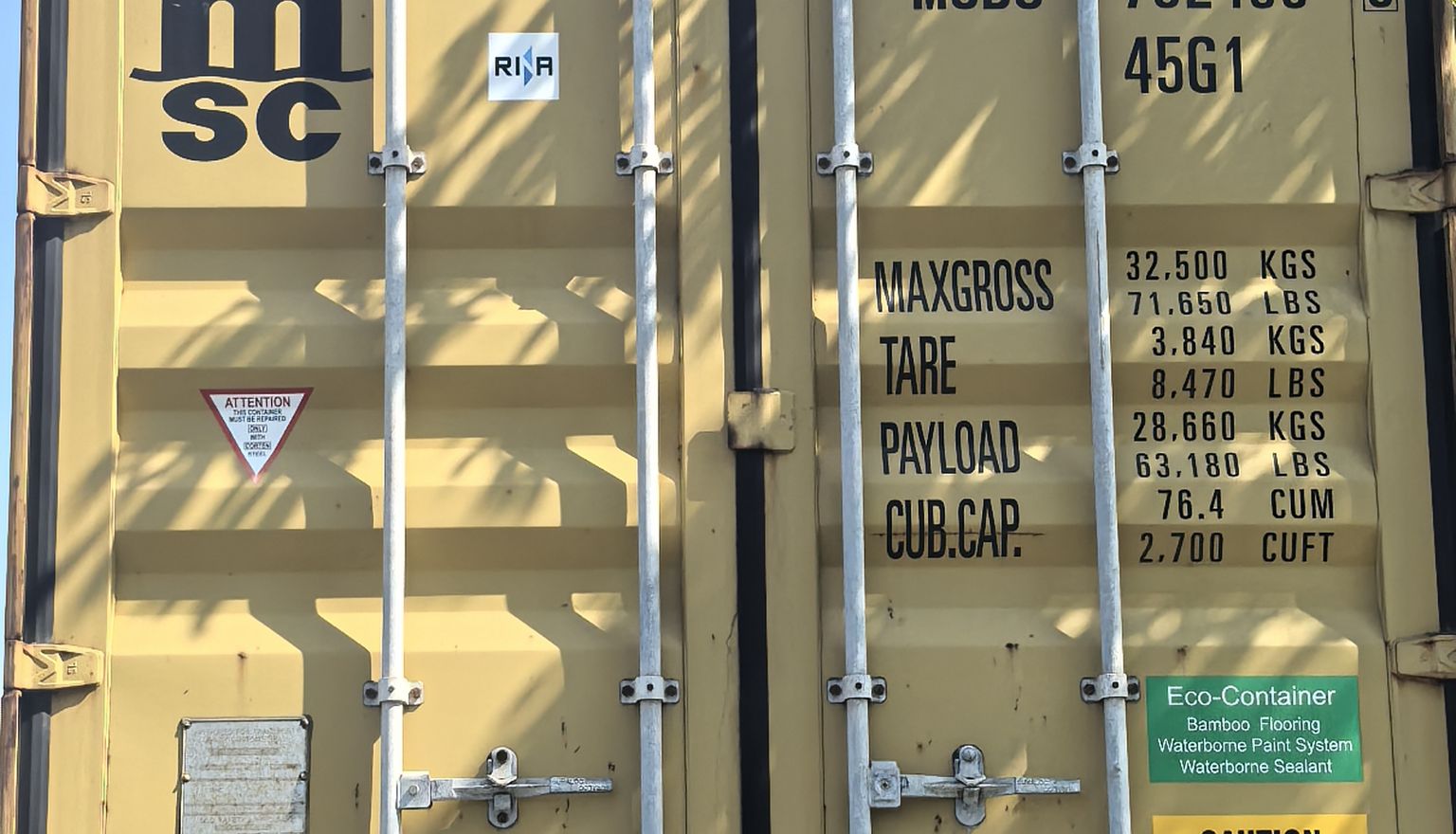
South China to Latin America runs either across the Pacific to the west coast or through the Panama Canal or Suez to the Atlantic side. The choice is made by the destination, not by the freight rate, because a container discharged at Manzanillo and trucked to Mexico City is a different operation from one discharged at Santos.
Pacific services call at Manzanillo and Lázaro Cárdenas in Mexico, Buenaventura and Cartagena in Colombia, Callao in Peru, Guayaquil in Ecuador, San Antonio and Valparaíso in Chile. Atlantic services call at Santos and Rio Grande in Brazil, Montevideo and Buenos Aires in the south, and Cartagena and Kingston act as Caribbean transshipment points.
Transit ranges from roughly three weeks to Mexico's Pacific coast to six or seven to southern Brazil, and the range is wide enough that a generic "Latin America" transit time is meaningless. Port congestion, canal capacity and carrier rotations have all moved in recent years, so the number to plan on is the one your forwarder gives for that specific service this month.
Almost every Latin American market requires the importer to be registered before it can import anything, and the registration is not a formality. Brazil requires a company to be enabled in the customs system before it can operate at all. Mexico requires registration in the importers' register. Argentina, Peru, Colombia and Chile each have their own importer registration tied to the tax identity.
These registrations take time, they are held by the importer, and they cannot be borrowed from a freight forwarder. A Chinese seller shipping DDP into Brazil needs either a local entity or an importer of record service, and the service has to be a real importer with a real registration, not a broker acting as a front.
Some markets add product-level approvals on top of the company registration: Mexico's technical standards for a long list of goods, Brazil's approvals for telecoms and health products, Argentina's certificates for food and cosmetics. Those sit with the importer and take longer than the company registration.
The planning consequence is blunt. If the goods are leaving for a Latin American destination in six weeks and the importer is not yet registered, the container will arrive before the paperwork. Nothing about the freight can fix that.
Classification in the region runs on national extensions of the international system, and the extensions are what the duty is calculated on. Brazil and the Mercosur states use an eight-digit code. Mexico uses an eight-digit tariff line within a ten-digit statistical structure. Getting the national code right is a different exercise from getting the international six digits right.
Brazil's code drives three separate federal taxes and a state tax, so an error is not a rounding difference. Mexico's code drives the tariff and also decides whether a technical standard applies, which means a classification error can turn a product that needed no certificate into one that needed certification before it shipped.
Where the description is ambiguous, the practical route is to ask the customs broker at destination for a classification opinion before the invoice is issued, and to keep that opinion with the shipment file. Retroactive reclassification is common in the region, and it produces assessments for past entries as well as the current one.
The invoice should carry the code per line. An invoice with one code for a mixed container will be reclassified line by line at the border, and the reclassification will be done by someone who has never seen the product.
Brazil is the market where a landed-cost model built on the tariff rate alone fails hardest, because the tariff is one of four or five charges and not the largest.
| Charge | Basis | Recoverable? |
|---|---|---|
| Import duty | Customs value, at the Mercosur common external tariff rate | No |
| Industrial products tax | Customs value plus duty, at a rate set by product | Partly, against domestic sales |
| Federal social contributions | Customs value, at combined rates | Partly, under the non-cumulative regime |
| State VAT | Customs value plus duty plus the federal charges | Yes, as a credit against state VAT |
| Merchant marine renewal fee | A percentage of the ocean freight | No |
Rates and bases change, and the recoverability depends on the importer's tax regime. Ask a Brazilian accountant for a landed-cost simulation on the actual product before pricing a container — this table is a map of the charges, not a calculation.
Two structural points. The state VAT is a state matter, so the rate depends on where the importer is established and where the goods are consumed, and interstate movements have their own rules. And the merchant marine fee is charged on the freight, which means an expensive freight leg increases a tax that is not a tax on goods.
Clearance itself is slow by the standards of any market. A green channel release is fast; a grey or red channel inspection adds days, and the inspection is decided by risk analysis rather than by request.
In Mexico the customs declaration is filed by a licensed customs agent, and the importer cannot file it directly. That is a structural difference from the United States or the EU, and it changes the relationship: the agent is a gatekeeper with legal responsibility, and a buyer without a good one has no route to clearance.
Importers must be registered in the importers' register, which is maintained by the tax authority, and the registration can be sector-specific. A first-time importer often discovers that the register entry for its sector does not exist, and creating it takes longer than the production run.
Technical standards apply to a long list of products, from electronics and toys to footwear and food contact articles. Compliance is demonstrated by a certificate from an approved body, and the certificate has to match the exact model and the exact importer. A certificate issued to a different importer is not transferable.
There is also a customs processing fee charged as a percentage of the value, which is easy to miss in a quote because it is neither duty nor tax. Add it, add the value-added tax, and add the agent's fee, and a container that looked competitive at the tariff rate has a landed cost several points higher.
The southern and Andean markets are smaller and generally simpler, but they share one feature: the importer's tax registration is the gateway, and the clearance channel is decided by risk.
Argentina operates a channel system where declarations are assigned a green, orange or red route. Green releases automatically, orange requires a documentary review, red requires a physical inspection. The assignment is made by the system, and a buyer cannot ask for a different one. Argentina has also changed its import authorisation regime more than once in recent years, so the current procedure is worth confirming rather than assuming.
Chile is comparatively open: the importer registers with the tax authority, files through an electronic declaration, and most goods clear without a licence. Peru works through a single administrative declaration, with the importer identified by its tax number and product approvals where they apply.
Colombia requires importers to be registered and, for some products, to obtain a prior licence or a technical approval. The list of products changes with regulation, and it is the kind of thing that is checked once and then forgotten until a shipment is held.
Across all four, the invoice in Spanish is the norm. A Spanish description prepared by the supplier and checked by the broker is cheaper than a translation done under time pressure at the port.
Latin American destination charges are high, and several markets require them to be settled before release. Terminal handling, documentation, broker fees, storage and the inland leg are billed locally, and in some countries the carrier will not release the container until the destination charges on its own account are paid, independently of duty.
The result is a shipment that can be fully duty-paid and still held, because a terminal or a carrier charge has not cleared. Buyers discover this when the agent asks for a payment that is not in the quote, and the container is already incurring storage.
Currency adds a layer. Several currencies move enough that a three-week delay between quoting and paying changes the landed cost materially, and some markets still have exchange controls that make paying a foreign invoice a process rather than a transfer.
The defence is the same everywhere: a destination charge sheet for the specific port, obtained before booking, with the payment terms stated, and a named contact at the destination agent who can be called when the container is on the water.
Documents in Spanish or Portuguese are the expectation across the region, and some markets require consular legalisation of the commercial invoice or the certificate of origin. The requirement varies by country and by product, and it is one of the few areas where a phone call to the consulate is still part of the process.
The invoice itself needs the importer's tax number, a precise description with the national code, the origin, the Incoterm and the freight and insurance shown separately where the customs value is built on CIF. Some markets require the exporter's signature to be legalised, which means the invoice has to be produced on paper, signed, and sent — a digital copy is not enough.
The certificate of origin has to match the invoice in description and quantity. Where a trade agreement is claimed, the certificate format is prescribed and a generic one is rejected.
Naming the goods precisely is the single highest-value habit. A container described as "hardware" will be inspected, reclassified and delayed; the same container described as "stainless steel cabinet hinges, 96 mm, 50 pairs per carton" clears on the documents.
Port-to-port transit from South China ranges from about three weeks to Mexico's Pacific coast to six or seven weeks to southern Brazil, with Central America and the Caribbean in between. Those are typical ranges on standard services, not commitments, and they move with carrier rotations.
What buyers underestimate is the last mile, in both senses. Clearance in the larger markets routinely takes a week and can take three, and inland trucking from a port to an industrial city is a separate booking with its own availability. A container to São Paulo clears at Santos and then drives; the drive is a day, and the appointment can be a week away.
The working model is: production, then booking, then ocean, then clearance, then inland. For a Brazilian or Mexican destination, six to nine weeks from deposit to warehouse is a realistic plan and eight is a good number to quote internally.
For a buyer shipping several suppliers' goods, consolidating in Shenzhen or Guangzhou before loading remains the single biggest saving, because one entry, one clearance and one inland leg cost far less than four of each.
Q Do I need a local company to import into Brazil?
You need an importer enabled in the Brazilian customs system, which in practice means a Brazilian entity or an importer of record service that holds one. A foreign company cannot simply declare goods into Brazil without a local presence or a representative.
Q Why is the landed cost in Brazil so much higher than the duty rate?
Because duty is one of several charges. Federal taxes, a state VAT and a fee on ocean freight are added on bases that include each other, so the effective burden is a multiple of the tariff. A local accountant's simulation is the only reliable number.
Q Can I file my own customs entry in Mexico?
No. The declaration must be filed by a licensed customs agent. You choose the agent and give it a power of attorney, but you cannot file directly.
Q Which coast should I ship to?
Whichever is nearest the final destination. Mexico, Peru, Chile, Ecuador and Colombia are served from the Pacific; Brazil, Argentina and Uruguay from the Atlantic. Transshipment through Panama, Cartagena or Kingston is normal for smaller ports.
Q Do documents need to be legalised?
Some countries require consular legalisation of the invoice or certificate of origin, and the requirement varies by product. Confirm per shipment, because legalisation is a physical process with a queue.
Q How long does clearance take?
A week is typical in the larger markets and three weeks is not unusual, depending on the channel assigned and whether a certificate was missing. Build the clearance time into the delivery promise rather than assuming it happens while the container is at berth.
Related pages
If several suppliers are shipping to the same Latin American destination, we can collect the cartons at one warehouse in Shenzhen or Guangzhou and load them as a single consignment with one set of documents.
Email sales8015@goodhopefreight.com | WhatsApp & phone +86 133 9216 2503