
Destination
An EU EORI stopped working at the British border, and a decade of practice built on it stopped working with it.
Contents
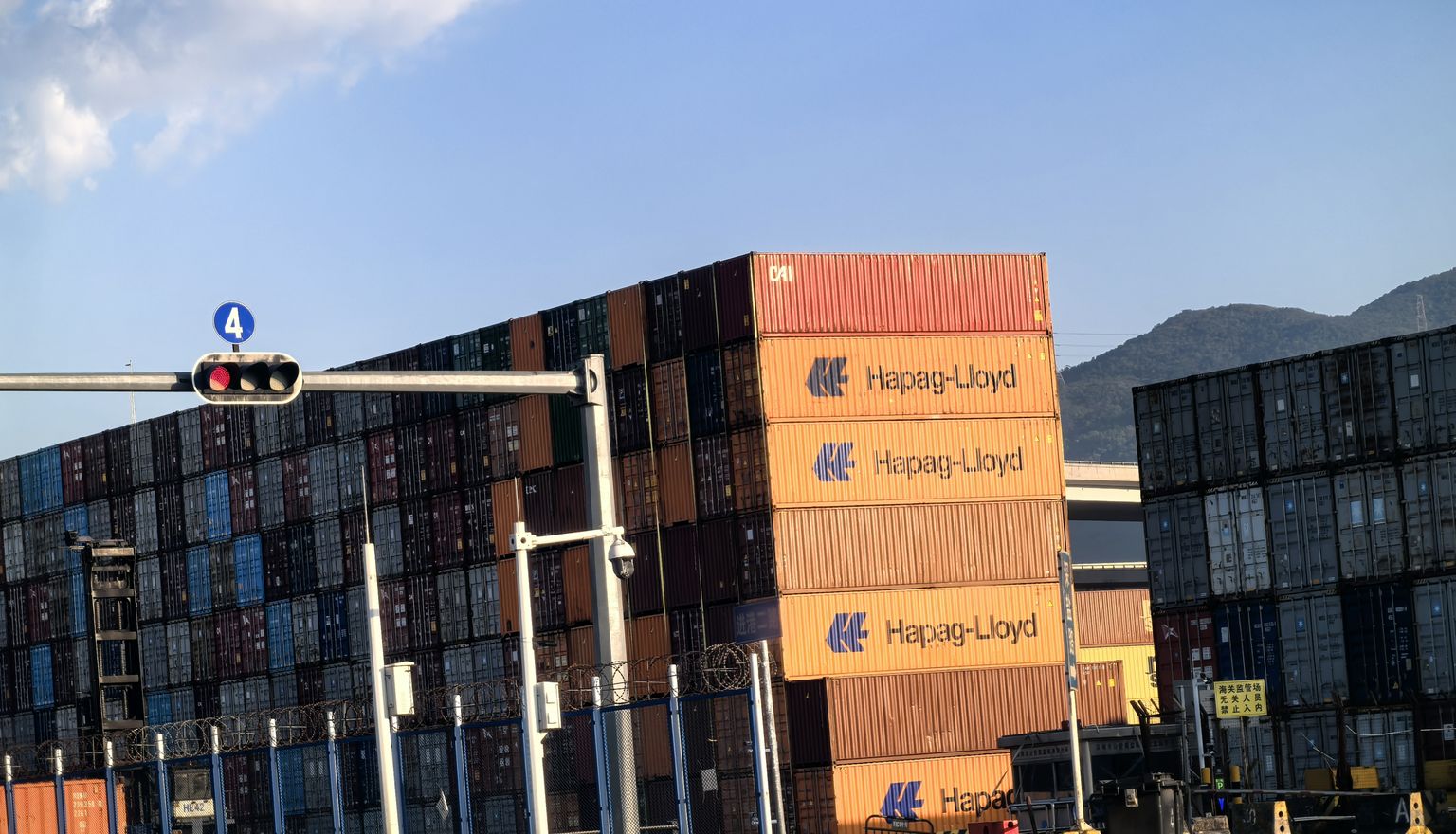
The United Kingdom is a country. Great Britain is England, Scotland and Wales. The customs territory that most buyers mean when they say "the UK" is Great Britain, and Northern Ireland sits inside the EU's goods rules while remaining part of the UK's customs system for goods that stay there. The distinction decides which number goes on the declaration.
For a container discharged in Felixstowe or Southampton, the goods enter Great Britain. They need a GB EORI, a UK import declaration, UK duty and UK VAT. None of the EU arrangements apply, and an EU registration held by the same company is irrelevant at that border.
For goods going to Belfast or Londonderry, the route depends on whether they are at risk of moving onward into the EU. That is a legal test applied through a declared scheme, not a truck driver's judgement, and it has to be settled before the goods move, because the importer is the party that declares the intention.
Northern Ireland follows EU goods rules for goods at risk of entering the EU, and the declaration of intention is what separates the two routes.
A GB EORI begins with GB and is issued by HM Revenue and Customs. It replaced the EU EORI for UK importers, and a company that traded with the UK before 2021 and has not updated its records is still holding a number that the UK system will not accept.
A non-UK company can hold a GB EORI, which is what allows a Chinese seller to ship DDP into Britain or to act as importer of record for its own goods. Holding one does not make the company UK-established for VAT purposes: registration is a separate step, and the two are often confused by sellers who assume the customs number covers the tax.
An XI EORI covers Northern Ireland movements. It is a third number, and using a GB EORI for a Belfast destination produces a declaration that has to be corrected at the port.
Validating the number takes a minute on the HMRC checker. Doing it before the booking is cheaper than doing it after the container has arrived, when the correction has to be made against a live declaration and the terminal is charging storage by the day.
Import VAT is charged on release into free circulation, at the standard rate of 20% on most goods, calculated on the customs value plus duty plus the transport costs to the UK border. It is a real cash payment at the port unless the importer has arranged otherwise.
Postponed VAT accounting is the arrangement that removes the payment. A VAT-registered importer declares the import VAT on its next return instead of paying it at the border, and recovers it in the same return. The cash effect is nil, and the administrative effect is that the declaration has to be evidenced properly, because the entry is the only record of the charge.
Two conditions matter. The importer has to be VAT-registered in the UK, and the entry has to be made in its own name with its own EORI. Goods imported by a freight forwarder or a seller under DDP terms, cleared on someone else's number, do not generate a postponed entry that the buyer can recover. That is the mechanism behind a familiar complaint: the buyer paid the VAT inside a DDP price and has nothing to reclaim.
Where a UK VAT registration does not exist, the 20% is a cost, added to the landed cost of every container. For a buyer testing the market, that is a reason to model the price with VAT included rather than assuming recovery.
The Customs Declaration Service replaced CHIEF, first for imports and later for exports. It is a different data model, not a relabelled form, and it asks for more information per line than its predecessor did. Declarations are filed by a customs agent or by the importer with software, and almost every buyer uses an agent.
What the agent needs from the buyer is the same set as anywhere: commercial invoice, packing list, bill of lading, the GB EORI, the commodity code, and a valuation basis. What CDS adds is a stronger requirement for the data to be consistent across those documents, and a preference for the entry to be built from the invoice rather than reconstructed from the manifest.
Duty deferment accounts let a regular importer pay duty and VAT monthly instead of per shipment. They need a guarantee and a track record, and they are worth arranging before the second container rather than during it.
The failure mode to plan around is the one where the vessel arrives on a Friday and the agent discovers the commodity code is missing. Goods can be held at the port, moved to a temporary storage facility, or cleared under a simplified procedure, and all three cost money that would not have been spent with a complete invoice.
The UK Global Tariff applies to goods that do not qualify for a preference. Rates are set per commodity code and are not identical to the EU's, even where the code is the same, so a landed-cost model built on EU rates is approximately right and occasionally wrong.
There is no trade agreement between China and the UK, so Chinese-origin goods pay the standard rate. The EU-UK Trade and Cooperation Agreement gives zero tariffs only to goods that meet its rules of origin, and goods of Chinese origin do not acquire EU origin by being shipped through Rotterdam or stored in a bonded warehouse. A supplier who suggests otherwise is describing a customs fraud with a friendly face.
Origin is proved by a statement on the invoice for most consignments, and by knowledge of the supply chain behind it. Where a product is assembled in Europe from Chinese components, the origin question becomes a calculation against the product-specific rule, and it is worth a written opinion rather than an assumption.
Anti-dumping measures apply in the UK as they did in the EU, retained and then reviewed. Where a measure covers the product, the duty can be large, and the rate can differ by exporter. Check the specific measure for the specific product.
UKCA marking was introduced as the UK's own conformity mark. Its mandatory date has been extended more than once, and CE marking continues to be recognised across many product areas, which means the practical answer depends on the regulation that covers your product rather than on a single national rule.
What that produces in the field is a supplier who says "CE is fine" and a retailer who says "we need UKCA", and both may be right about their own category and wrong about the other's. The only reliable step is to identify the product regulation, check the current recognition position for that regulation, and then decide what goes on the label.
The underlying technical requirements are largely aligned, because the UK retained the substance of the EU directives at exit. The differences that matter are administrative: which body issued the assessment, who is named as the manufacturer or the UK responsible person, and whether the declaration of conformity cites the UK regulation or the EU directive.
Consumer products also need a UK responsible person with an address in the UK for market surveillance contact, in the same way the EU now requires an EU-based operator. A label printed with only a Chinese address will be refused by a UK retailer's compliance team long before anyone at the border looks at it.
Sanitary and phytosanitary controls were the last part of the border to be rebuilt, and they run under a risk-based model rather than a single rule. Goods are categorised as high, medium or low risk, and the category decides whether the consignment needs a health certificate, a pre-notification, documentary checks, identity checks, physical checks, or nothing at all.
Medium-risk animal products and plants require pre-notification through the UK's import system before arrival, plus certification from the exporting country. High-risk goods face physical inspection at a border control post, and the number of those posts is limited, which is why a high-risk consignment needs a route planned around one rather than a port chosen on freight rate.
Composite products, where a food contains both processed and unprocessed ingredients of animal origin, are the category that most often surprises buyers, because the classification is not intuitive and the certificate depends on it.
For a buyer sourcing food, beverages, supplements, pet food or plant material at the fair, the sequence is: confirm the category, confirm the certificate the exporting establishment can actually obtain, confirm the border control post, then book. Booked in the other order, the goods arrive at a port that cannot inspect them.
Northern Ireland applies EU goods rules. Goods moving from Great Britain to Northern Ireland use a dedicated lane and a scheme for goods that will stay there, and a different lane for goods at risk of entering the EU. The importer declares which, under a registered scheme, and the declaration is the basis for the duty treatment.
For a buyer in Belfast importing directly from China, the entry is made in Northern Ireland under EU rules, with an XI EORI, EU duty, and UK VAT handled under the specific arrangements that apply there. It is not a GB import with a different address.
The practical consequence is that a supplier shipping "to the UK" needs to know whether the delivery address is in Great Britain or Northern Ireland before the booking, because the documents, the code and the duty differ. A delivery to Belfast on a GB entry is a correction at the port, and possibly a second declaration.
It is a small market and a large amount of avoidable paperwork. Ask for the postcode, not the country.
The core set is unchanged: commercial invoice, packing list, bill of lading or airway bill, certificate of origin where one is claimed, and any product certificate the category requires. What changed after Brexit is that the UK documents are separate from the EU ones, and a set prepared for Rotterdam cannot be reused for Felixstowe.
The invoice needs the GB EORI of the importer, the commodity code per line, the Incoterm and named place, the country of origin, and a description specific enough for the code to be checked against it. "Household goods" is not a description; "stainless steel vacuum flask, 500 ml, double-walled" is.
Where the goods are food, the invoice also needs the establishment number of the producing facility, because that is what the health certificate refers to. Where they are plants or wood, the phytosanitary certificate number.
The last item is timing. The entry has to be lodged before arrival, the pre-notification before that, and the certificate before the pre-notification. Working backwards from the sailing date is the only way to see whether the supplier can actually produce the papers in time.
Q Can I use my EU EORI to import into the UK?
No. Great Britain requires a GB EORI. Northern Ireland uses an XI EORI. An EU number is not accepted for a UK declaration, and a company that has not updated its records since 2021 may still be holding one.
Q What is postponed VAT accounting?
An arrangement that lets a VAT-registered UK importer declare import VAT on its return instead of paying it at the border, with recovery in the same return. It requires the entry to be made in the importer's own name on its own EORI.
Q Do Chinese goods pay duty in the UK?
Yes, at the UK Global Tariff rate for the commodity code. There is no China-UK free trade agreement. The EU-UK agreement only removes duty for goods that meet its rules of origin, which Chinese-origin goods do not.
Q Is CE marking still accepted in the UK?
For many product areas, yes, and the UKCA deadline has been extended more than once. The answer depends on the specific product regulation, so check the current position for your category before printing labels.
Q Does a DDP shipment let me reclaim the import VAT?
Usually not. Under DDP the seller or its agent clears the goods in its own name, so the import VAT is not recorded against your EORI and there is nothing for you to recover. Ask for a DAP price if you want the VAT in your own return.
Q Is Northern Ireland the same as the UK for customs?
No. Northern Ireland applies EU goods rules, uses an XI EORI, and has separate arrangements for goods arriving from Great Britain. A delivery to Belfast needs a different entry from a delivery to Manchester.
Related pages
Tell us the UK delivery postcode and the product, and we will confirm the port of entry, the entry type and the papers the UK agent will need before the vessel arrives.
Email sales8015@goodhopefreight.com | WhatsApp & phone +86 133 9216 2503