
Rates
The box is the same size in March and September. What changes is how many other people want one on the same sailing.
Contents
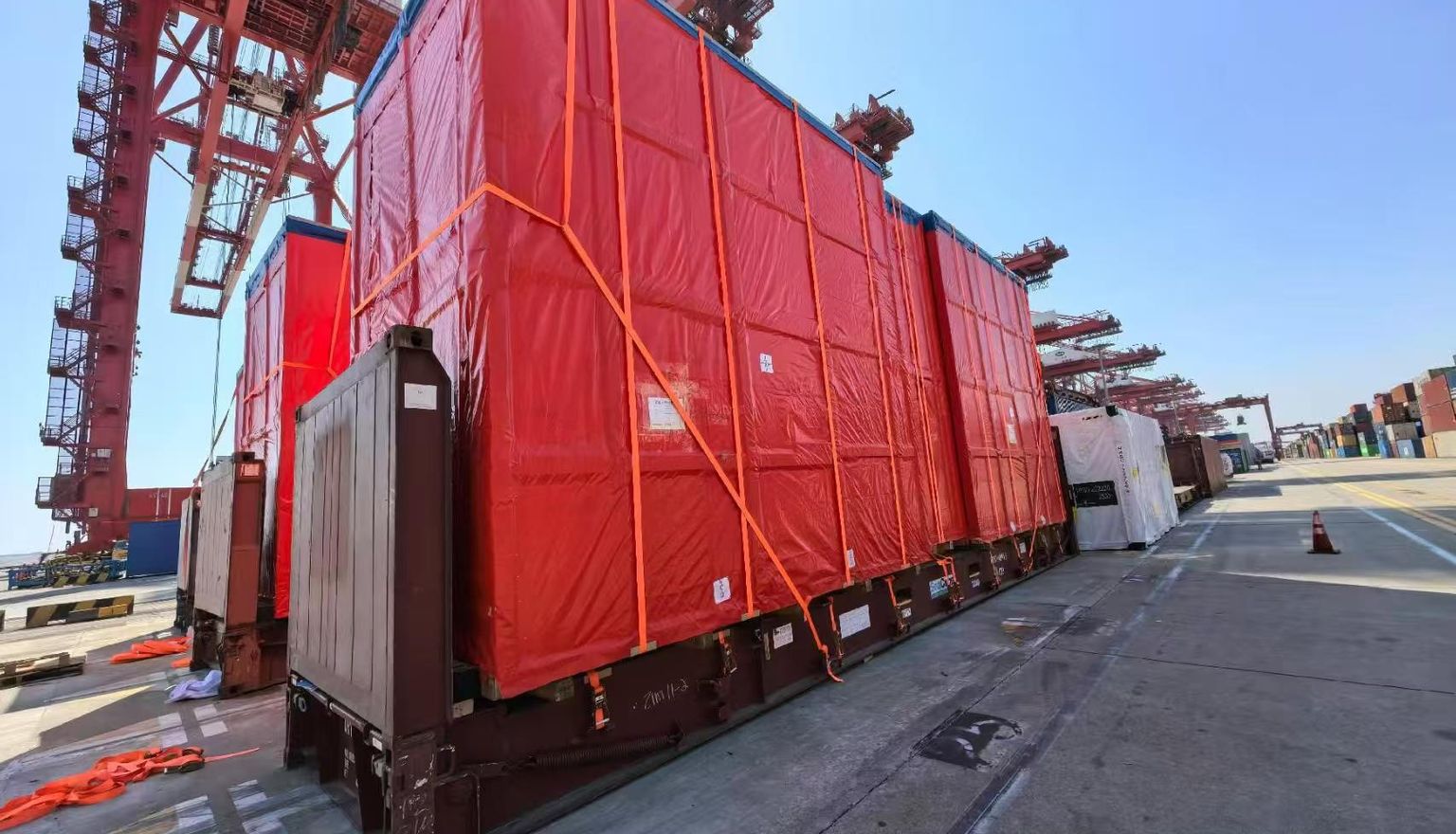
Ocean freight is sold as a price per container, which makes it look like a product with a list price. It is not. It is a price for a slot on a named vessel on a named date, and the number moves because the supply of slots and the demand for them move every week.
Two containers of the same size, leaving the same port in the same month, can carry different rates because one was booked four weeks ahead and one was booked four days ahead. The difference is not service quality. It is the seller's estimate of how likely that slot is to remain unsold.
That is why a rate quoted at the fair in October has a shelf life measured in days, and why a forwarder who quotes without asking for the cargo ready date is guessing. The date is the product. Everything else in the quotation is a description of it.
Two calendars drive the annual shape of the market, and they are not the same calendar. The first is the buying calendar of the destination markets: back-to-school stock ordered in spring, holiday stock ordered in late summer, and the retail year that ends in December. The second is the Chinese production calendar, which pivots on Chinese New Year and on the two week national holiday in early October.
Where those two calendars overlap, rates rise. The worst overlap is the weeks before Chinese New Year, when factories push out every order they can before the shutdown and every buyer in the same supply chain tries to book space in the same fortnight. Rates in that window respond faster than at any other point in the year, and space is allocated to whoever booked first rather than to whoever pays most.
The early-October holiday has a milder version of the same effect. Production stops for roughly a week, and the week before it behaves like a small peak. Cargo that misses the last pre-holiday sailing waits until the factories are running again, which can add two weeks to a schedule that looked comfortable in August.
The practical rule: build the shipping calendar from the holidays backwards, not from the order date forwards. Every year the same four weeks surprise the same buyers.
When demand falls, carriers do not keep sailing empty ships at the same frequency. They withdraw capacity: blank sailings, skipped port calls, services merged or suspended. The effect on a buyer is counter-intuitive. In a soft market, the rate per container falls, but the number of sailings falls too, so the choice of dates narrows at exactly the moment the price looks attractive.
Capacity also leaves for reasons that have nothing to do with your trade lane. A diversion around a disrupted region absorbs vessel days. A port congestion event at a transhipment hub holds ships and containers out of circulation. Both reduce effective capacity on routes that do not touch the disruption, because the same fleet is being stretched somewhere else.
When demand returns, capacity does not come back at the same speed, because restarting a service involves re-positioning empty containers, reinstating port slots and crewing. That lag is why rate increases in a recovering market are steeper than the demand curve suggests, and why buyers who booked early in the recovery pay materially less than those who booked two weeks later.
None of this is predictable from a rate sheet. It is visible in the sailing schedule, which is why the schedule is worth reading before the quotation is accepted.
Most ocean quotations are a base rate plus a list of surcharges, and the surcharges are where a fixed budget quietly fails. Four of them account for most of the movement a buyer sees.
Bunker adjustment. Tracks fuel prices with a lag of weeks. It moves in both directions, and it is the surcharge most likely to be absorbed into an all-in rate on a short validity.
Peak season surcharge. Applied when demand exceeds capacity on a lane, and withdrawn when it does not. It is discretionary in timing, which is why the announcement often arrives after a booking has been confirmed.
General rate increase. A published increase that applies to bookings made after a date. Whether it holds depends on the market; in a soft market, increases announced for a lane are frequently rolled back within weeks.
Congestion and risk surcharges. Applied to specific ports or routes and reviewed frequently. These are the ones that change fastest and are hardest to budget, because they depend on conditions at a terminal that a buyer never sees.
Ask for the surcharge list with its validity dates, not a single total. A quotation that shows one number and no expiry is a number you cannot plan against.
A contract rate is an agreement to move a volume over a period at a fixed price, usually with a minimum quantity and a space allocation. A spot rate is the price for a single booking, valid for a short window. Most small importers sit in neither category, and buy something in between: a nominated rate from a forwarder, holding for a stated period, with no volume commitment behind it.
The trade-off is straightforward. A contract protects against the market rising and exposes you if it falls. A spot booking does the reverse, and adds the risk of no space at the moment you need it. On a first order, spot is usually the right answer, because volume is unknown and the schedule is not yet repeatable.
The mistake is signing a contract rate for a volume the business cannot guarantee, then discovering that the shortfall carries a penalty or that the space allocation is honoured only when the ship is not full. Read the allocation clause: a contract without a space guarantee is a price agreement, not a service agreement.
On a second or third container, the answer changes. Once a monthly quantity exists, a short contract with a named forwarder is usually cheaper than spot plus the productivity lost to rate shopping every booking.
Booking behaviour is the only part of this a buyer controls, and it moves the outcome more than most buyers expect.
Book before the cargo is ready, not after. A booking needs a cargo ready date, and a good forwarder will hold a slot against a date that is two weeks out and confirm it as production finishes. Waiting until the container is loaded to request space puts you at the back of the queue in exactly the weeks when the queue is longest.
Work backwards from the holiday, not forwards from the order. If the factory closes for ten days, the last sailing that matters is the one that leaves at least a week before the closure, because gate-in, declaration and loading all have to happen inside that week.
Accept a slower service when the date is not critical. Direct services and transhipment services trade transit time for price, and in a tight market the transhipment option is often the only one with space. A two-week delay that was planned costs nothing. A two-week delay that was not planned costs a retail window.
Keep one alternative port open. In South China, Yantian, Shekou and Nansha do not share the same sailing pattern, and a booking that is full at one is frequently available at another. The trucking difference is small relative to the cost of missing the week.
Some of the movement in a freight rate has nothing to do with your planning. Vessel schedule reliability on the main east-west trades has been poor for years, and a booking confirmed for a named vessel can be rolled to the next one without anyone asking you. Port congestion at a transhipment hub can add a week that appears nowhere in the transit time.
What you can do is price the uncertainty into the promise you make to your own customer. If the retail date is fixed, book the sailing that arrives two weeks early rather than the one that arrives on time, and treat the difference as insurance. If the date is soft, buy the cheaper routing and accept the variance.
Keep a written record of the booking: the vessel, the cut-off, the gate-in window, the confirmation reference and the date each was given. When a rollover happens, that record is what turns a complaint into a claim, and it is what a forwarder needs in order to argue your case with the carrier.
Rates will move whether or not the plan is good. A plan that names the sailing date, the alternative port and the acceptable delay is the only part of the market a buyer gets to set.
Q Why is my rate different from the rate another buyer got on the same ship?
Because a rate prices a slot on a date, and the two bookings were probably made at different distances from the sailing. Contract volume, container type, whether the equipment is returned to the same depot, and the surcharges in force on the booking date all change the number.
Q When is the cheapest time of year to ship from China?
Broadly, the weeks after Chinese New Year and the weeks in high summer before the pre-holiday build-up, when demand is thinnest and capacity has returned. It is a pattern rather than a calendar, and it moves with the market. It is not a commitment you can build a retail date on.
Q Is a peak season surcharge negotiable?
Sometimes, and mostly not at the moment it is applied. It carries more weight when the booking is part of a volume commitment, or when the forwarder has already bought space. Ask for the surcharge to be shown separately with its validity dates so you can see when it lifts.
Q Should I sign an annual contract for one container a month?
Usually no. An annual contract makes sense when the volume is genuinely predictable and the penalty for shortfall is acceptable. For a small importer, a three-month agreement with a named forwarder, or a nominated rate with a stated validity, keeps the flexibility that a first or second year of importing needs.
Q The rate I was quoted expired in a week. Is that normal?
For a spot quotation, yes. A week is a common validity in a moving market. Anything quoted with a longer validity is usually built on a higher base to cover the risk, so compare the validity period as well as the number.
Q What happens if the container is rolled to the next vessel?
The cargo waits at the terminal or the depot, and storage may start accruing depending on the arrangement. Your forwarder should tell you the new vessel and the revised cut-off as soon as the carrier confirms it. If the rollover breaks a retail date, the record of the original booking is what supports a claim.
Related pages
Give us the cargo ready date, the destination port and the container type. We will tell you which sailings are open in that window, which ones are already tight, and what the next alternative port costs in trucking.
Email sales8015@goodhopefreight.com | WhatsApp & phone +86 133 9216 2503