
Home / Shipping to Cape Verde / How to Ship from China to Cape Verde
How to Ship from China to Cape Verde
Cape Verde is an archipelago in the Atlantic, several hundred kilometres off the West African coast. Almost everything is imported, nothing arrives on a direct service from China, and the last leg is often not a road but a ferry to another island.
The country is an ECOWAS member but it does not apply the UEMOA common external tariff used by its mainland neighbours. It runs its own tariff book and its own currency, the Cape Verdean escudo, which is pegged to the euro. Those two differences are what catch out importers who have shipped elsewhere in West Africa first.
At a glance
Main ports: Porto Grande in Mindelo (São Vicente) and Porto da Praia (Santiago). Most cargo transships through Las Palmas de Gran Canaria, Leixões, Algeciras or Tanger Med. Currency: Cape Verdean escudo, pegged to the euro. Import duty: own national tariff, broadly 0 to 50 per cent by product. VAT: IVA at 15 per cent on CIF plus duty. A despachante (licensed customs broker) handles clearance. Documentation in Portuguese.
How your cargo moves: China to Cape Verde
Eight steps from your supplier's door to yours. The last four are the ones shaped by local rules.
- Pickup from your supplierWe collect the goods anywhere in China and bring them to our consolidation point.
- Export clearanceChina customs declaration filed and released before the goods move to the port.
- Loading and departureContainer loaded, sealed and handed to the carrier at the Chinese port.
- Main carriageOcean, air or rail movement booked on the route agreed for your cargo.
- Arrival at the gatewayDischarge at the port or airport of entry, recorded on the carrier's manifest.
- Import clearanceCustoms declaration filed locally, with duty and tax assessed on the declared value.
- Customs releaseGoods released into free circulation once duty and tax are settled.
- Final deliveryOnward movement to your delivery address, warehouse or nominated depot.
Duty rates, VAT rates and clearance times move, and the figure that applies to your goods is the one set for your commodity code on the day of clearance. We check the current position against your code before your goods sail and confirm it to you in writing — ask for that check when you request a quote.
Nine inhabited islands and two working gateway ports
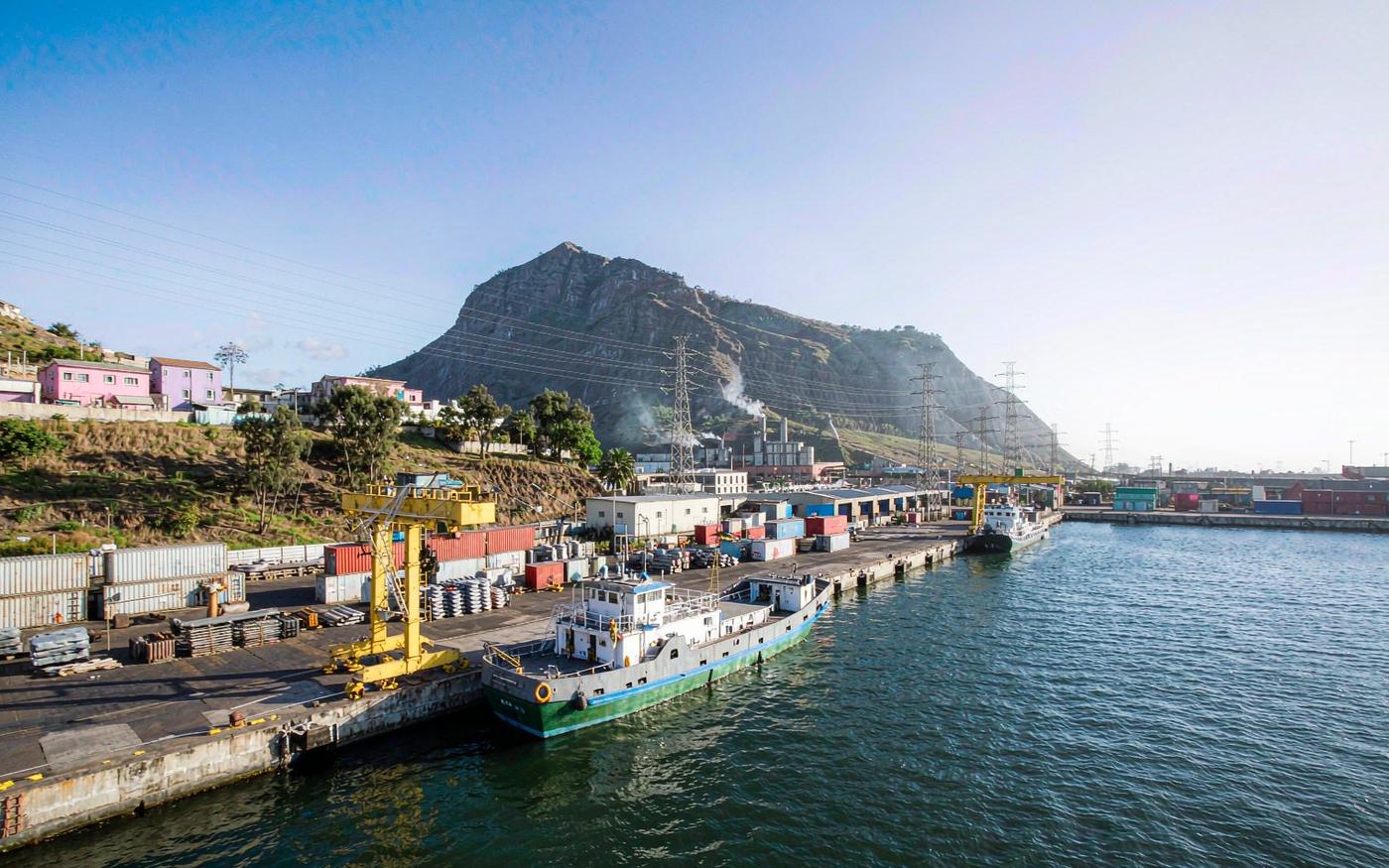
Cape Verde has nine inhabited islands, and for freight purposes almost everything arrives through two of them. Porto Grande in Mindelo on São Vicente is the historic deep-water hub and the one most container services call at. Porto da Praia on Santiago serves the capital and the largest population centre.
Everything beyond those two islands — Sal, Boa Vista, Santo Antão, Fogo and the rest — is reached by coastal ferry or by a small aircraft from the gateway island. That inter-island move is a separate step with its own schedule, and it is the reason the delivery date for a Sal address is not the same as the discharge date at Mindelo.
Decide which island the consignee is on before you book. It determines which port the carrier contracts to, and therefore whether your container needs one more leg or not.
Porto Grande or Praia: choosing the island you clear on
Mindelo has the deeper, better-equipped harbour and a longer history as the country's maritime gateway, so most sea freight is discharged there. Praia is closer to the largest market and to government, and some services and most air cargo go there instead.
The choice is usually made for you by the carrier's rotation rather than by preference. What you should do is confirm which port is on the booking, tell your consignee which one it is, and make sure the despachante licensed there is the one holding your file.
If your consignee is on a third island, add the ferry leg explicitly to the plan and ask who is responsible for it — the sea freight quote normally ends at the gateway port unless door delivery has been agreed.
Why boxes transship at Las Palmas, Leixões or Algeciras
There is no direct container service from China to Cape Verde. Cargo from Chinese ports is transshipped, and two hubs carry most of the volume: Las Palmas de Gran Canaria in the Canary Islands, roughly 1,500 km to the north, and Leixões in northern Portugal. Algeciras and Tanger Med appear as alternatives.
Which hub your cargo passes through is decided by the shipping line and the space it has that week, not by the Chinese port or the Cape Verdean one. Our own LCL bookings on this lane run through Leixões; carriers that feed from the Canaries use Las Palmas. Both keep the same order of transit, so the difference shows up in the feeder schedule rather than in the total days.
The practical effect is on transit time and on the number of handovers. A container routed this way is commonly quoted at several weeks to the gateway port, with the feeder connection and any missed sailing being the main source of variation. Book with that slack in mind, and avoid planning around a tight arrival date.
Transshipment also means the container is handled twice. Pack accordingly, and make sure the seal number recorded at the Chinese port is the one checked at discharge.
Cape Verde keeps its own tariff book, not the UEMOA one
This is the point that surprises importers who have shipped into Senegal or Côte d'Ivoire. Cape Verde does not apply the UEMOA common external tariff. It applies its own national tariff, with rates quoted across a wide range — roughly 0 to 50 per cent depending on the product — and it uses the escudo rather than the CFA franc.
Duty is assessed on the CIF value by HS code. Categories such as alcohol, tobacco, perfume and cosmetics, and vehicles attract heavier treatment, and there is a special consumption tax on goods considered superfluous, luxurious or socially undesirable that can run from 10 to 150 per cent.
Because the tariff is national rather than regional, do not reuse a duty estimate from a neighbouring market. Have your broker classify the goods against the Cape Verdean tariff specifically.
IVA at 15%, plus a consumption tax on top
IVA — Imposto sobre o Valor Acrescentado — is the Cape Verdean value added tax, at a standard rate of 15 per cent on imports, charged on the CIF value plus duty. Used personal effects that qualify for duty-free treatment are generally also relieved of IVA; new goods are not.
On top of IVA, the special consumption tax applies to defined categories. On vehicles this is the Imposto sobre Consumos Especiais, which is scaled by engine displacement and emissions, and it is the single largest lever on the landed cost of a car or a light commercial vehicle in this market.
Put the two together and the effective tax on a finished consumer good is well above the headline duty rate. Ask your broker for a line-by-line assessment before you quote your customer, particularly if the goods sit anywhere near a luxury classification.
Engines, excise, and why vehicle tax depends on displacement
For vehicle imports the excise is calculated by engine size and emissions rather than by value alone. A small-engined compact can carry a dramatically lighter tax load than a large-engined SUV with a similar purchase price, which is why the fleet and taxi market here skews towards smaller engines.
Beyond the excise there is import duty assessed on CIF, IVA at 15 per cent, customs handling charges, the despachante's fee, and then island registration and plates. Cape Verde drives on the right, so left-hand drive is the specification needed.
Age rules are not published as a single hard figure for 2026 and they do change, so confirm the current position with the customs authority or your despachante before committing to a unit.
The despachante: the licensed broker you cannot clear without
Clearance in Cape Verde runs through a despachante, the licensed customs broker who lodges the declaration, responds to queries and arranges release. Commercial cargo is not released to an importer who is not represented, and the broker's fee is a normal line in the landed cost, not an optional extra.
Appoint the despachante before the container lands and send them the documents in advance: passport or company identification, the original bill of lading or air waybill, commercial invoice, packing list, certificate of origin where required, and health or phytosanitary certificates where the goods call for them.
Because the administration is small and the islands are spread out, a broker who already handles your gateway port will move faster than one who has to travel or subcontract.
Selling into Praia yourself or through a local firm
Import operations generally require a commercial operator certificate and, depending on the goods, an import licence; both are issued through the chambers of commerce. A registered company is the importer of record for anything being resold.
Private individuals can import personal effects, and used household goods for someone relocating to Cape Verde on a permanent or long-term basis can qualify for duty-free treatment — provided the items are genuinely used. New items are taxed as commercial cargo and should be declared separately with invoices.
Medicines are subject to sanitary control and non-automatic licensing, food and plant products need health or phytosanitary certificates, and firearms, ammunition and controlled drugs require special licences. Endangered species and their products are prohibited or restricted under CITES.
Freight by air, sea or courier when the last leg is a ferry
Sea freight is the default: it carries the volume and the cost per unit is lowest. From Mindelo or Praia, goods for the other islands move by coastal cargo ferry, which adds a leg with its own schedule.
Air freight is available on a weekly cadence for smaller consignments and lands at the international airports serving Praia, Sal and Boa Vista — useful when the consignee is on an island that the ferry serves infrequently, or when the goods are urgent and light.
Express courier is the only service with genuine door-to-door delivery across the archipelago, and coverage on the smaller islands is thinner than on Santiago and São Vicente. For documents, samples and e-commerce parcels it is usually the right answer despite the higher per-kilo cost.
Three shipments headed for Praia, Mindelo and Sal
Hotel fit-out, full container, to Praia. Furniture, lighting and kitchen equipment for a property on Santiago. Discharged at Porto da Praia, cleared by a local despachante, delivered by truck within the island. Duty and IVA assessed on the CIF value; the luxury consumption tax is worth checking on any high-end finishes.
Solar and water equipment, LCL, to Mindelo. A part-container for an installer on São Vicente, consolidated in China, deconsolidated at Mindelo. Cheaper than a full box, slower at both ends because of the consolidation and deconsolidation.
Spare parts, air freight, to Sal. Small, urgent, high value per kilo, and the consignee is on an island where the ferry is infrequent. Air to Sal avoids the inter-island sea leg entirely, and the saving in days is worth the freight premium.
Portuguese paperwork and the documents customs expects
Documentation is in Portuguese. The standard set is the commercial invoice, the packing list, the original bill of lading or air waybill, a certificate of origin where one is required, and the consignee's identification. Certificates of origin are issued through the chambers of commerce; Cape Verde also has trade arrangements with Portugal and the European Union that may be relevant depending on the goods and their origin.
Sector-specific documents sit on top: health and phytosanitary certificates for animal, plant and food products, ARFA authorisation for pharmaceuticals, and permits for firearms, ammunition and controlled substances. CITES documentation applies to endangered species and their products.
Keep the consignee name identical across the invoice, the packing list and the bill of lading. A mismatch is the most common reason a file is held on this route, exactly as it is on mainland West African corridors.
Delays that are normal on an archipelago route
Expect delay at three points: the transshipment hub, if the feeder connection is missed; the gateway port, if the despachante does not have the documents in advance or the container is selected for inspection; and the inter-island leg, if the ferry schedule does not line up with the discharge.
None of these are unusual and none of them are anybody's fault in particular. The way to absorb them is to plan the delivery date with slack, to send documents ahead of the vessel, and to have one named person on the island who is chasing the file rather than waiting for it.
Why importers use Goodhope on this lane
Six things that are different about working with us on China to Cape Verde shipments.
Getting cargo into Praia without a second transhipment
Tell us the goods and which island they are going to. We will confirm the gateway port, the transshipment routing, and what the despachante needs from your consignee, priced as one landed number.
Get a quote Talk to usRelated pages
Frequently asked questions
Which ports serve Cape Verde?
Porto Grande in Mindelo on São Vicente is the main deep-water container gateway; Porto da Praia on Santiago serves the capital. Goods for Sal, Boa Vista, Santo Antão, Fogo and the other islands move on from there by coastal ferry or by air.
Is there a direct service from China?
No. There is no direct service, so cargo is transshipped. Las Palmas de Gran Canaria in the Canary Islands and Leixões in Portugal are the two hubs that carry most of the volume, with Algeciras and Tanger Med as alternatives. Which one you get depends on the carrier rather than on the Chinese port.
Does Cape Verde use the UEMOA common external tariff?
No, and this is the most important difference from mainland West Africa. Cape Verde applies its own national tariff, with rates roughly 0 to 50 per cent by product, and uses the Cape Verdean escudo, which is pegged to the euro.
What is the VAT rate?
IVA, the Imposto sobre o Valor Acrescentado, is charged at a standard rate of 15 per cent on the CIF value plus duty. Used personal effects that qualify for duty-free entry are generally also relieved of IVA.
What is the special consumption tax?
A tax on goods considered superfluous, luxurious or socially undesirable, quoted between 10 and 150 per cent depending on the item. On vehicles it is the Imposto sobre Consumos Especiais, scaled by engine displacement and emissions, and it is usually the biggest single lever on the landed cost of a vehicle here.
Do I need a customs broker?
Yes. Clearance runs through a licensed despachante. Commercial cargo is not released to an unrepresented importer, so appoint one before the container lands and send the documents in advance.
Can I import personal effects duty free?
Used personal and household items can qualify for duty-free treatment for someone relocating permanently or long term, with the right documentation. Only used items qualify; new goods are taxed as commercial cargo and should be declared separately.
What documents are required?
Commercial invoice, packing list, original bill of lading or air waybill, certificate of origin where required, and the consignee's identification. Health or phytosanitary certificates apply to food, plant and animal products, ARFA authorisation to pharmaceuticals, and CITES documentation to endangered species.
What language should the documents be in?
Portuguese. Plan for translation in your preparation time and keep the consignee name identical across every document, since mismatches are a common cause of files being held.
Which is better, sea, air or express?
Sea carries the volume at the lowest unit cost and ends at the gateway port. Air suits urgent or small consignments and can be better when the consignee is on an island the ferry serves poorly. Express is the only service with true door-to-door delivery across the archipelago, though coverage on the smaller islands is thinner.