
Home / Shipping to Cape Verde / Warehouse, Consolidation & Shipping
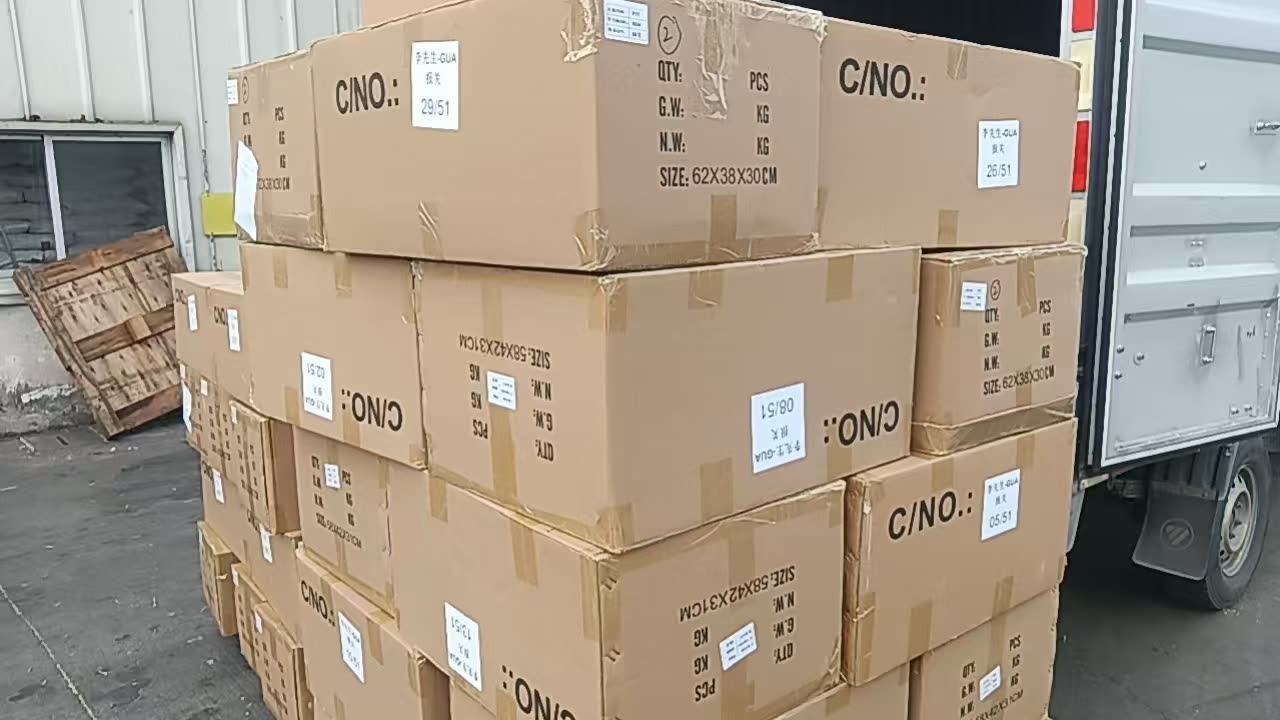
Warehouse, consolidation and shipping services from China to Cape Verde
Few Cape Verde importers buy one product from one factory. A typical order is tiles from Foshan, hardware from Yongkang, packaging from Dongguan and household goods from Yiwu, each on its own production schedule, each with its own delivery terms, each quoted in a different unit. Freight is the smallest problem in that arrangement until the goods are ready. Then it becomes all of them.
We take that cargo in at our warehouse in Nansha, Guangzhou. Suppliers deliver against your booking, or we collect from the factory. Every consignment is counted, checked, photographed, weighed and measured on arrival, then held until the rest of the order is in. When all of it is present, we load one LCL co-load or one full container, declare it for export in China, and put it on a weekly sailing to Praia or Mindelo, transshipped in Portugal or the Canary Islands. Transit runs 50 to 60 days.
At a glance
Why the warehouse sits in Nansha
Nansha is on the western side of the Pearl River estuary, inside the same port complex as the Nansha container terminal, about an hour south of Guangzhou city. Cargo from Foshan, Dongguan, Zhongshan, Shenzhen and Jiangmen reaches it by truck the same day it leaves the factory. Those five cities are where much of the consumer goods leaving Guangdong for Atlantic markets is made, so most of your cargo never travels far before it reaches us. Goods from Zhejiang, Jiangsu and Fujian usually arrive within two to three days, and we allow for that when we set the cargo cut-off.
Being inside Guangdong matters more than the address suggests. Factory collection within the province is priced at RMB 100 per CBM, and a truck that can load two or three suppliers in one run is cheaper and faster than three separate pickups booked from another province.
The full address is issued with the booking, not before. Cartons that arrive without a booking number have no owner in the warehouse system, and they cannot be checked in against your shipment. We send the address, the receiving contact and the marking instruction in one message once the warehouse and the ocean freight are confirmed, so that every supplier works from the same sheet.
From the factory gate to the vessel
Consolidation is a sequence, and each step has a cost and a deadline attached to it. This is the order in which your cargo moves.
Receiving or collection
Your supplier delivers to Nansha against your booking number, or we collect from the factory at RMB 100 per CBM in Guangdong and RMB 200 per CBM from other provinces. The packing list travels with the cargo; where the supplier's list and our count disagree, the count in the warehouse is the one that goes on the bill of lading.
Checking, photographing and measuring
We count the pieces, inspect carton condition, photograph the consignment, and record actual weight and measured volume. You see the photos and the figures before the cargo is loaded. This is the point where a short shipment, a crushed corner or a supplier who shipped 1.2 CBM instead of the 2 CBM he invoiced is found — at the factory end, where it can still be fixed, rather than at Praia where it cannot.
Storage while the order completes
Seven days are free from the day the goods are received. From day eight the charge is RMB 3 per CBM per day. On a 10 CBM consignment that is RMB 30 a day — small in absolute terms, and still the reason we fix the sailing date before the last supplier delivers rather than after.
Consolidation and marking
Cartons from every supplier are sorted by consignee, re-marked with a single shipping mark and loaded either as an LCL co-load from 2 CBM or stuffed into a 20ft or 40ft container when volume justifies it. One mark, one packing list, one bill of lading, one set of documents for the Cape Verde clearing agent to work from.
Export declaration and sailing
We declare the goods for export in China under our own NVOCC licence, load, and release the bill of lading after departure. Sailings are weekly and transit to Praia or Mindelo runs 50 to 60 days.
What the warehouse charges
These are the charges that are fixed and can be published. Ocean freight is not one of them — it moves with the sailing, the carrier and the space available, so it is quoted per shipment.
| Service | Charge | How it is applied |
|---|---|---|
| Storage, first 7 days | Free | Counted from the day each consignment is received |
| Storage, day 8 onwards | RMB 3 per CBM per day | On the measured volume held in the warehouse |
| Factory collection, Guangdong | RMB 100 per CBM | Foshan, Dongguan, Zhongshan, Shenzhen, Jiangmen and the rest of the province |
| Factory collection, outside Guangdong | RMB 200 per CBM | Zhejiang, Jiangsu, Fujian, Shandong and other provinces |
| Ocean freight, LCL | Quoted per CBM | Minimum 2 CBM, billed on measured volume |
| Ocean freight, FCL | Quoted per 20ft or 40ft | When the consolidated volume fills a box, the box is normally cheaper |
| Cargo insurance | 0.1% of cargo value | Declared value, arranged before sailing |
Charges are in RMB and cover warehouse work and origin handling. China export declaration, terminal handling and documentation are quoted together with the ocean freight.
Shipping from Nansha to Praia and Mindelo
There is no direct China–Cape Verde service. Boxes run west to a hub and feed across the Atlantic from there, which is why the transit looks long for the distance involved and why a missed feeder connection adds about a week rather than a day. The hub is Leixões in northern Portugal on the carriers we book most often; lines that feed from the Canaries transship at Las Palmas de Gran Canaria instead. Algeciras and Tanger Med turn up as alternatives on some schedules. Which one applies is a matter of the shipping line and the space it has that week, so it is fixed per booking.
We plan against 60 days either way, and we say at booking when the next sailing looks likely to slip.
| Destination | Island | Routing | Transit | Sailings | LCL minimum |
|---|---|---|---|---|---|
| Praia | Santiago | Nansha → Leixões or Las Palmas → Praia | 50–60 days | Weekly | 2 CBM |
| Mindelo | São Vicente | Nansha → Leixões or Las Palmas → Mindelo | 50–60 days | Weekly | 2 CBM |
Leixões is the routing on the sailings we book most often. Carriers feeding from the Canaries run the same 50–60 day transit through Las Palmas; the hub shown on your booking confirmation is the one your cargo takes.
Those are the two ports we serve. Sal, Boa Vista, São Nicolau, Fogo, Santo Antão and the remaining islands are reached onward from Praia or Mindelo by coastal ferry or inter-island air, and that leg is the consignee's to book. If your customer is on São Nicolau, the cargo still arrives at Mindelo; the difference is a ferry booking you make locally.
For a first indication of the ocean freight, the LCL reference rates for the Cape Verde lane show how the rate is built and how the CBM-to-kilo ratio changes what you pay. They are reference levels for the sailing, not a quotation against your cargo.
Where our responsibility ends
On our side
- Receiving, checking and photographing at Nansha
- Storage within the free period, and consolidation
- Carton marking to the consolidated bill of lading
- China export declaration and origin terminal handling
- Ocean freight to Praia or Mindelo
- Bill of lading issued under NVOCC GD20230925153335
At your end
- Import duty, IVA and any excise on arrival
- Port charges at Praia or Mindelo, raised by the terminal and the line's local agent
- Customs clearance through a Cape Verde despachante
- Onward delivery, and any inter-island transfer
We quote port to port as standard, and we are not a substitute for the clearing agent. Cape Verde customs works in Portuguese, through a licensed despachante, and cargo is not released to an unrepresented importer. Appoint one before the vessel lands, and send the documents ahead of it — a consignee name that differs by one letter between the invoice and the bill of lading is the most common reason a file sits. The country guide covers the clearance side in detail.
If you would rather not run the destination leg yourself, door-to-door is quoted as well; we price it against the consignee address and confirm what the local partner will and will not handle before we commit to a number.
Terms, documents, insurance, payment
| Item | How it works |
|---|---|
| Trade terms | EXW, FOB, CIF or door-to-door. Tell us which basis your supplier's invoice uses and we quote on that basis, so the two sets of figures can be compared directly. |
| China export clearance | Handled by us, including the export declaration and any inspection the customs district requires. |
| Bill of lading | Issued by us as NVOCC GD20230925153335, original or telex release as your bank and agent prefer. |
| Packing list and invoice | Provided by your supplier. The quantities must match what we measured in Nansha, since the bill of lading follows the warehouse count. |
| Certificates of origin and other certificates | Arranged on request. Confirm first with your Cape Verde clearing agent which certificates your product actually needs — requirements differ by commodity and getting this wrong costs a week at destination. |
| Cargo insurance | 0.1% of declared cargo value, arranged before the vessel sails. Without cover, the carrier's liability stays inside the package limitation of the bill of lading, which is far below the value of most consolidated orders. |
| Payment | Bank transfer, normally settled within 14 days of the vessel sailing. |
Batteries, solar panels and liquids
These three are what stop most consolidations, and they stop them at the terminal rather than at the factory. Lithium and lead-acid batteries, solar panels with integrated cells, and liquids are dangerous goods or carry dangerous-goods handling requirements. They cannot share an LCL container with general cargo: one undeclared battery in a co-load shuts the whole box down, and the cost of that is borne by everybody whose cargo is in it.
A full container changes the answer. If the goods travel as your own FCL shipment and the supplier provides the complete compliance file — UN38.3 test summary for lithium cells, safety data sheet, correct classification, packing and marking — the cargo can be exported legally on the proper declaration. Send us the product specification before the goods move, not after they reach Nansha, because the classification decides whether the booking is possible at all.
No reference customer in Cape Verde yet
The Cape Verde lane is new for us, and we do not have an importer there we can name. We could put a logo on this page; it would not be true, and the first thing a serious buyer does is check. What can be checked instead is the warehouse in Nansha, the carrier and routing behind the sailing, and the importers we already move for on other Atlantic and West African lanes. If a local reference matters more to you than the rate, say so at the start and we will tell you plainly where we stand before you spend time on a quotation.
Questions importers ask before the first booking
Can my suppliers deliver goods to your warehouse?
Yes. The warehouse is in Nansha district, Guangzhou. We send the full address and the receiving contact with your booking confirmation, and suppliers should quote your booking number on the delivery note.
Can you combine goods from several suppliers into one shipment?
Yes, that is what the consolidation service is for. Cartons from different factories are checked in separately, sorted by consignee, and shipped under one bill of lading.
How many days of free storage do I get, and what does it cost after that?
Seven days free from the day the goods are received. From day eight the charge is RMB 3 per CBM per day.
Do you check the goods on arrival and send photos, weight and measurements?
Yes. We count the pieces, check carton condition, photograph the consignment and record actual weight and measurement before loading. You receive the photos and the figures before the cargo sails.
Can you collect goods from the factory, and at what cost?
Yes. Collection is RMB 100 per CBM for factories in Guangdong, for example in Foshan or Dongguan, and RMB 200 per CBM from other provinces.
What is the minimum LCL volume to Cape Verde?
2 CBM. LCL is billed on volume, and the chargeable measurement is taken on the cargo as received, not on the volume your supplier declares.
How long does the sea freight take to Praia and Mindelo?
50 to 60 days port to port. Sailings leave weekly, transshipped at Leixões in Portugal or at Las Palmas in the Canary Islands depending on the carrier, so a missed feeder connection can add about a week.
Do you deliver to São Nicolau or the other islands?
No. We serve Praia on Santiago and Mindelo on São Vicente. Onward movement to Sal, Boa Vista, São Nicolau, Fogo or the remaining islands is arranged by the consignee, by coastal ferry or inter-island air.
Which Incoterms can you quote on?
EXW, FOB, CIF or door-to-door. Tell us which basis your supplier's invoice uses and we quote on the same one, so the two sets of numbers can be compared.
Which documents do we receive?
We issue the bill of lading as the carrier's agent, and we handle the China export declaration. Your supplier provides the packing list and commercial invoice. Certificates of origin and other certificates are arranged on request, but confirm with your Cape Verde clearing agent which ones your product needs.
Do you offer cargo insurance?
Yes, at 0.1 per cent of the declared cargo value, arranged before the vessel sails. Without it the carrier's liability stays within the package limitation of the bill of lading.
Can you ship batteries, solar panels or liquids?
Not in a shared LCL container. In a full container it can be done legally when the supplier provides the complete compliance file: UN38.3 test summary, safety data sheet, and goods correctly classed, packed and marked.
How should my suppliers label the cartons?
We send the marking instruction once the warehouse and the ocean freight are confirmed, so the marks match the consolidated bill of lading rather than each factory's own numbering.
What are your payment terms?
Bank transfer, normally settled within 14 days of the vessel sailing.
Related pages
Send the supplier list, not just the volume
Give us the factories, the cities they are in and roughly what each one ships, and we will come back with the collection plan, the warehouse schedule, the sailing we can catch and the ocean freight on the same sheet. If the order is not ready yet, we will still tell you which sailing it can realistically make.
Request a quote Talk to us