
Home / Shipping to Chad / How to Ship from China to Chad
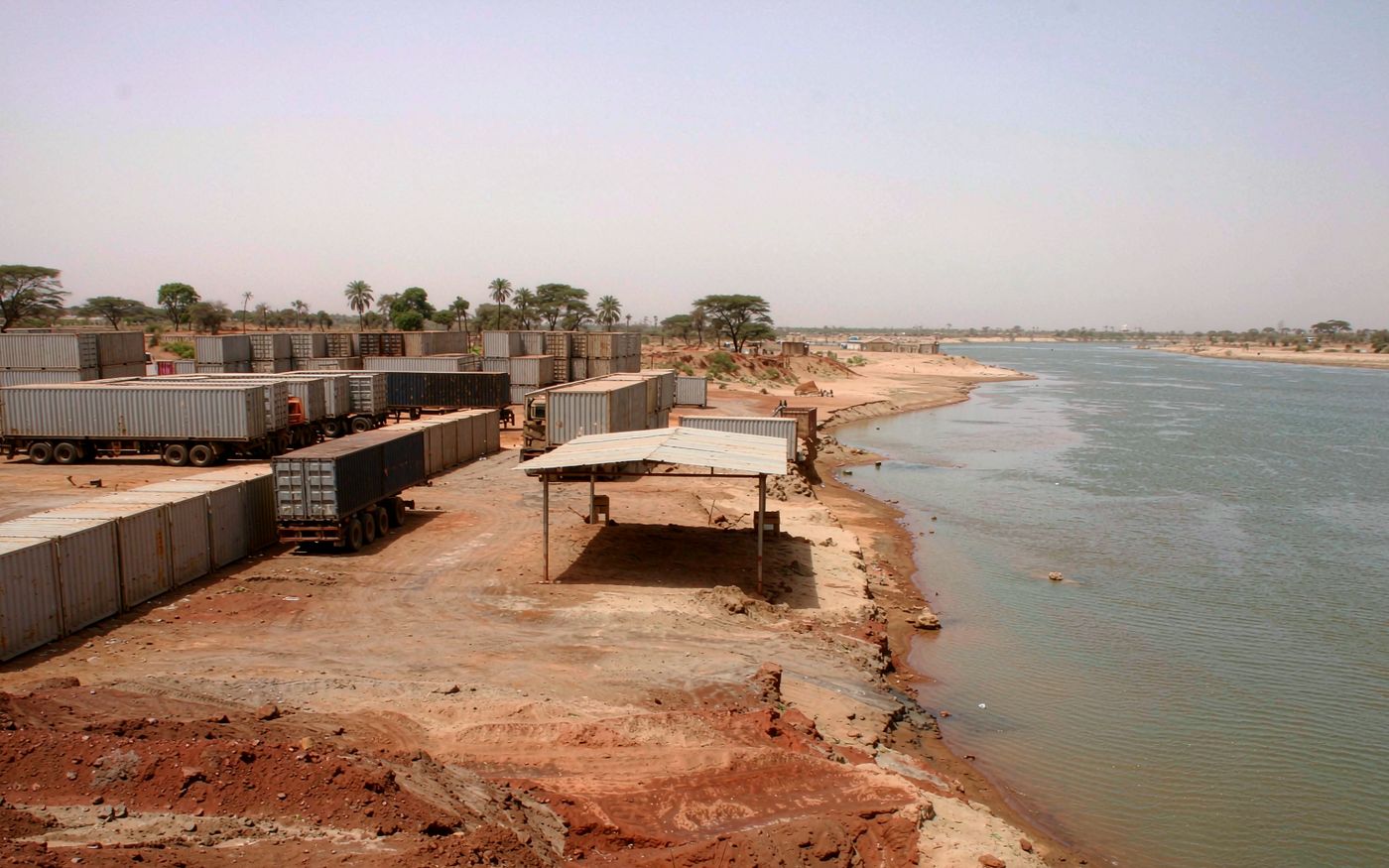
Shipping from China to Chad, step by step
Goodhope Freight is a licensed NVOCC based in Shenzhen, registered as GD20230925153335, and has been moving cargo out of China since 2012. To Chad we route full containers and shared containers by sea into Douala or Kribi in Cameroon, and from there overland to N'Djamena. We also handle air freight into N'Djamena International Airport and express parcels dispatched from our depot. Every service stops at the port, the airport or the depot. Your consignee arranges import clearance and collection.
Chad is a large, landlocked country in the middle of the continent, around eighteen million people, with an economy built on oil and agriculture and a geography that makes logistics expensive. Its capital sits roughly seventeen hundred kilometres from the nearest working seaport, and almost everything imported travels that distance by road.
Two things decide whether a first Chad shipment works. Cargo needs two cargo tracking notes, one for Chad and one for the Cameroonian transit port, and both must be validated before the vessel arrives. And the tax bill is not just duty and value-added tax: a group of community and statistical levies sits on top of both.
This guide is written for a buyer who has never imported from China before. It sets out how the corridor works, why two tracking notes are required, where the tariff bands sit, how the eighteen per cent tax and the levies are calculated, and what the excise rates do to certain product lines.
At a glance
Landlocked, served overland from Douala and increasingly from Kribi in Cameroon · Inland destination: N'Djamena, roughly seventeen hundred kilometres from the coast · Airport: N'Djamena International (NDJ) · Currency: Central African CFA franc (XAF) · CEMAC common external tariff in four bands: 5, 10, 20 and 30 per cent · VAT at 18 per cent · Two cargo tracking notes required: one for Chad and one for the Cameroonian transit port · Community, statistical and regional levies applied on top · Excise up to 25 per cent, and 51 per cent on new vehicles · Documentation in French
How your cargo moves: China to Chad
Eight steps from your supplier's door to yours. The last four are the ones shaped by local rules.
- Pickup from your supplierWe collect the goods anywhere in China and bring them to our consolidation point.
- Export clearanceChina customs declaration filed and released before the goods move to the port.
- Both tracking notes validatedThe Chad note and the Cameroonian transit note are issued together, before the vessel arrives.
- Loading and main carriageContainer loaded, sealed and shipped to Douala or Kribi.
- Bonded transit and overland haulTransit through Cameroon and road haulage through the corridor to N'Djamena.
- Entry lodged at destinationYour broker files the declaration in French with codes and the tracking note references.
- Duty, levies and VAT assessedThe band rate, the stacked levies and the 18 per cent tax are applied and settled.
- Release and collectionOnce everything is satisfied your buyer collects. There is no onward delivery service.
Duty rates, VAT rates and clearance times move, and the figure that applies to your goods is the one set for your commodity code on the day of clearance. We check the current position against your code before your goods sail and confirm it to you in writing — ask for that check when you request a quote.
A country of distance: N'Djamena sits a long way from any port
Chad is landlocked and large, and its capital sits roughly seventeen hundred kilometres from the coast. That single fact shapes every quotation on the route, because the inland leg is a bigger share of both cost and risk here than it is on almost any comparable lane. The practical consequence is that the sea freight figure is the smaller half of the story. A quote that ends at the Cameroonian port is not a quote to Chad, and a buyer comparing two forwarders on the ocean leg alone is comparing the wrong numbers. It also means transit time is dominated by the road. The ocean leg is predictable; the corridor is not, varying with season, road conditions, border throughput and how the transit bond has been arranged. Plan against the corridor, not the sailing.Douala and Kribi, and the corridor that carries almost everything
Douala is Chad's principal gateway and has been for decades, handling the great majority of imports moving up the corridor. Kribi, the newer deep-water port, is increasingly used as capacity and congestion dictate, and some rotations now favour it. Which one your cargo uses is usually decided by the carrier's rotation and by berth availability rather than by your preference. What matters to you is that the inland arrangements are made against the port actually used, because the road leg differs. We name the discharge port and the corridor on the quotation, and we say which one we would pick and why at the time of booking. If you are comparing quotations, check that both are quoting to the same point, because a Douala price and an N'Djamena price are not the same thing.Two tracking notes, not one
Chad requires a cargo tracking note for all sea freight with a final destination in the country, validated before the vessel arrives. Because the cargo transits through Cameroon, a separate Cameroonian tracking note is also required for the port call. This is the most common source of trouble on the route and it is entirely avoidable. The two certificates are separate applications processed independently. Having the Chad note does not satisfy the Cameroonian port requirement, and having the Cameroonian note does not get your goods into Chad. Validation should be completed before the vessel arrives, and the number must appear on the transport documents. We apply for both together as part of the booking, from a single document set, and we confirm both references before the vessel sails rather than after.Four bands, from essentials at five to consumer goods at thirty
Chad applies the CEMAC common external tariff, a schedule shared with its neighbours rather than written in N'Djamena. It has four bands: five per cent for essential goods, ten per cent for raw materials and equipment, twenty per cent for intermediate goods and thirty per cent for consumer goods. The band structure matters more than any headline figure. Production equipment, agricultural inputs and raw materials generally sit in the lower bands, while finished retail goods sit at the top. That spread is usually worth more than any freight difference between carriers. So the useful question is which band your code falls into, not what Chad charges. We check your codes against the current position before your goods sail, and we will tell you plainly if a line is going to cost more than you assumed when you placed the order.Working out the tax on a figure built up in stages
Imports are subject to value-added tax at eighteen per cent, assessed on a base that includes the duty rather than on your invoice amount. The arithmetic is where most first-time costings go wrong. A buyer takes eighteen per cent of the invoice value, budgets that, and then meets a charge calculated on a figure that includes freight and duty. The rate was right and the base was wrong. Work it through in the right order: transaction value, then freight and insurance to reach the customs value, then the band rate to get the duty, then the levies described below, then eighteen per cent across the total. It takes minutes and removes the largest single source of surprise on this route.The smaller charges sitting alongside duty and tax
Chad is unusual in how many small charges sit alongside duty and value-added tax. A community integration tax and business-law levy together come to around one and a half per cent. A statistical levy of roughly two per cent applies to the value of imports. An African Union levy, a regional integration contribution and a presumptive income tax each add their own fraction, and a statistical fee runs on a sliding scale. Individually each looks trivial and collectively they are not. A costing that accounts for the band and the eighteen per cent tax but ignores the levies will come in short by a margin you will notice. We set them out as their own lines on the quotation so you can see exactly what is being applied. They are the destination's charges rather than ours, and you should be able to see each one before you commit.Excise, and the 51 per cent rate on new vehicles
Excise applies to a defined group of products and runs well above the tariff bands. Luxury goods attract twenty per cent, tobacco and alcohol twenty-five per cent, and new motor vehicles fifty-one per cent. The rate on new vehicles is the one that reshapes a costing. A buyer importing vehicles who has budgeted the thirty per cent consumer band and the eighteen per cent tax will find excise more than doubling the duty line, and it is assessed before the tax is applied rather than after. The answer is not to avoid these products but to cost them before purchase. If your order includes vehicles, alcohol, tobacco or luxury lines, tell us at quotation stage and we will set out the full treatment rather than letting your consignee discover it at clearance.French and Arabic on the paperwork
French is the working language of the customs administration and the declaration, the commercial invoice and the packing list are expected in it. Preparing bilingual documents at origin in China costs very little; arranging translation after the goods have crossed a continent costs days. Descriptions carry as much weight as language. A generic description invites a clarification request, and on an inland consignment a clarification request means the goods stay where they are while correspondence goes back and forth. We reconcile your supplier's invoice and packing list at our consolidation point before departure, matching documents to cartons physically. Anything that disagrees is resolved in China, where a phone call fixes it.Clearing inland: documents decide the pace
Clearance is lodged at destination by your consignee's licensed broker, on a commercial invoice with genuine detail and value, a packing list matching it carton for carton, the bill of lading, and both tracking note references. On a corridor this long, a document error is not an administrative inconvenience, it is a delay measured in weeks. The reconciliation that is a courtesy on a short route is the whole game here. Importers should also expect examination to happen. With the goods sitting a long way from the port, packing that allows a container to be opened and resealed without damage is worth specifying up front.Packing for heat, dust and a long convoy
The overland leg is hard on cargo. A container is discharged, trucked, held at a border, trucked again and then handled at destination, over road that includes long rough stretches, in heat and dust. Export-grade strapping, proper dunnage, filled voids and sealed inner packaging are baseline. Anything fragile should be packed as though it will be handled several more times than you expect, because it will be. Moisture and dust protection for anything absorbent or sensitive is worth specifying, and timber packaging must be treated and marked to the international standard with the certificate in hand before departure. There is no cheap remedy for uncertified timber once a consignment has been refused.Our responsibilities, and the ones your importer keeps
We handle collection anywhere in China, export clearance, consolidation, both cargo tracking notes, main carriage to Douala or Kribi, and the transit documentation that carries the consignment inland. Your buyer handles arrival onward: appointing a licensed broker, lodging the declaration in French, paying the band rate, the levies and the eighteen per cent tax, satisfying any examination or standards requirement, and collecting at N'Djamena. We quote the sea leg and the inland leg as separate lines. On a route where the road is the dominant part of both cost and risk, that separation is the only honest way to show you where your money is going.Starting a first Chad consignment
Send us the commodity in enough detail to classify it, the volume and weight, the pickup address in China, and whether your goods are essentials, raw materials and equipment, intermediate goods or finished consumer products. Tell us specifically about any vehicle, alcohol, tobacco or luxury line, because excise on those changes the costing substantially. We will confirm the discharge port and corridor, apply for both tracking notes together, check your codes, and quote the sea leg, the inland leg and the destination levies separately. Start with one shared container and a generous schedule. It tells you how your supplier packs for a road journey this long, how responsive your broker is, and how much margin you genuinely need, for considerably less than a full container would cost you to learn the same things.Real stories on the China to Chad lane
Five shipments bought in China and delivered into Chad, told end to end — where the order came from, how it moved, where it nearly went wrong, and how it finished. Client names are withheld at their request; the situations and the handling are what we deal with on this lane.
Drilling support equipment for a contractor
The purchase. A contractor supporting oilfield work bought pumps, generators, steel pipe fittings, filters and workshop consumables from suppliers in Shandong and Jiangsu.
The move. We collected both lots, consolidated into one 40HC, validated the Chad and Cameroonian tracking notes together, and shipped to Douala with bonded transit through the corridor to N'Djamena.
Where it nearly went wrong. The filters and consumables arrived in thin woven sacks that split during the overland leg, and the steel fittings had no corrosion protection despite the dust and heat of the corridor.
How it finished. We made export-grade sacks and sealed, corrosion-protected packing a condition of collection on the repeat and inspected both lots before sealing. The second container arrived intact.
A shipment held at the transit port for want of a second note
The purchase. A buyer obtained the Chad tracking note on the assumption that a single certificate covered the whole journey including the Cameroonian port call.
The move. One 20GP consolidated and shipped to Douala, with the Chad note in place and the Cameroonian transit note absent.
Where it nearly went wrong. The two certificates are separate applications processed independently, and the Chad note does not satisfy the port requirement. Cargo was held at the transit port, accruing demurrage while the second note was obtained.
How it finished. We now apply for both notes together from a single document set on every Chad booking and confirm both references before the vessel sails. Nothing since has been held for that reason.
Vehicles costed without the excise line
The purchase. A dealer imported new vehicles and costed the consignment on the consumer goods band plus value-added tax.
The move. Vehicles shipped to Douala with overland transit to N'Djamena, declared with engine specification and codes.
Where it nearly went wrong. New motor vehicles attract excise at 51 per cent, assessed before the tax is applied. A costing built on the band and the tax alone understated the bill very substantially indeed.
How it finished. We set out the full treatment at quotation stage once the vehicles were declared. The dealer rebuilt the retail pricing model before the goods sailed rather than absorbing the difference on arrival.
A costing that left the levies out
The purchase. An importer of building materials budgeted duty and the eighteen per cent tax but did not account for the smaller charges applied on top.
The move. One 40HC shipped to Kribi with overland transit to N'Djamena, declared line by line.
Where it nearly went wrong. Chad applies a community integration tax and business-law levy together around one and a half per cent, a statistical levy of roughly two per cent, and several smaller regional and income charges. Individually trivial, collectively they were worth having in the budget.
How it finished. We set every levy out on its own line on the quotation. The importer has used the same breakdown for every consignment since and budgets accurately.
Documents in English at a French-language customs
The purchase. A first-time importer supplied a commercial invoice and packing list in English only, prepared by the factory as a matter of routine.
The move. One 20GP routed through Douala with transit to N'Djamena, with the entry lodged by the consignee's broker on arrival.
Where it nearly went wrong. The customs administration works in French, and English descriptions invite a clarification request. On an inland consignment, a clarification request means the goods stay where they are while correspondence goes back and forth.
How it finished. We now require bilingual invoices and packing lists for Chad as a condition of collection. Subsequent consignments have cleared without a document query.
Why importers use Goodhope on this lane
Six things that are different about working with us on China to Chad shipments.
Get an N'Djamena shipment priced
Tell us the commodity in enough detail to classify it, the volume, the pickup address in China and which tariff band your goods fall into. We will confirm the discharge port and corridor, apply for both tracking notes together, check your codes, and quote the sea leg, the inland leg and the destination levies separately.
Get a quote Talk to usRelated pages
Frequently asked questions
Does Chad need one cargo tracking note or two?
Two. A Chad tracking note is required for all sea freight with a final destination in the country, and because cargo transits through Cameroon a separate Cameroonian tracking note is required for the port call. They are separate applications processed independently, and one does not satisfy the other.
When must the tracking notes be validated?
Before the vessel arrives at the transit or destination port, and the number must appear on the transport documents. We apply for both together from a single document set and confirm both references before the vessel sails.
How does cargo reach Chad?
By sea to Douala, or increasingly Kribi, in Cameroon, then overland through the corridor to N'Djamena, roughly seventeen hundred kilometres from the coast. The road leg dominates both cost and transit time.
What duty rates apply?
The CEMAC common external tariff in four bands: 5 per cent for essential goods, 10 per cent for raw materials and equipment, 20 per cent for intermediate goods and 30 per cent for consumer goods. Your commodity code decides the band.
How is VAT calculated?
Value-added tax is charged at 18 per cent on a base that includes the duty. Work it through in order: transaction value, then freight and insurance to reach the customs value, then the band rate, then the levies, then 18 per cent across the total.
What other charges apply?
A community integration tax and business-law levy together around 1.5 per cent, a statistical levy of roughly 2 per cent, an African Union levy, a regional integration contribution, a presumptive income tax and a sliding-scale statistical fee. Each is small and collectively they are worth budgeting for.
What excise rates apply?
Luxury goods at 20 per cent, tobacco and alcohol at 25 per cent, and new motor vehicles at 51 per cent. Excise is assessed before value-added tax is applied, so it materially increases the tax base as well as the duty line.
Do documents have to be in French?
French is the working language of the customs administration, and the declaration, invoice and packing list are expected in it. Preparing bilingual documents at origin in China costs very little and removes an entire category of delay.
Do you offer door-to-door delivery?
No. Sea freight runs port-to-port to Douala or Kribi with the inland movement quoted and arranged separately. Air freight is airport-to-airport to N'Djamena International, and express courier dispatch ends at the depot.
How should cargo be packed for this route?
The overland leg includes long rough stretches in heat and dust. Export-grade strapping, dunnage, filled voids, sealed inner packaging, moisture and dust protection are baseline, and timber packaging must be treated and marked to the international standard with the certificate in hand.