Packages, contents and weight, carton by carton. The declaration copies the package count and both weights from this page, and the terminal weighs the box against what you declared.
Fields 15Totals that feed the entry 4Unit errors to avoid 2
The packing list is the only document that states how many packages are in the box and what they weigh. Customs copies both figures onto the declaration, and the terminal compares them against the container it actually weighs. There is no arguing with a scale.
Four totals, all of them load-bearing
Packages, quantity, gross weight, net weight. Each one reappears on the declaration. Three right and one wrong is not a small error — it is a manifest mismatch that stops the container loading.
The column that gets copied instead of summed
Gross weight is the usual casualty: per-carton weight entered as a line total, or the last line's figure repeated in the total row. Add the column; do not assume the bottom number.
SPECIMEN
Packing list (15 fields)
Header block for the parties and the routing, item table for the cartons, total row for the four sums, marks at the foot.
Packing list
SPECIMEN · PACKING LIST
3To MessrsDUTCH TRADING B.V.
1Date2026-11-02
2Invoice no.SG-20261102-01
4Contract no.SC20261102
5Shipped byEVER GIVEN / 1128E
6From - ToShenzhen - Rotterdam
7Terms of paymentT/T 30% deposit, balance against B/L copy
8Ctn. no.
9Description & specifications
10Pkg
11Quantity
12G.W. (kg)
13N.W. (kg)
1-20
E-book screen protector, 7 inch 3-layer PET with silicone adhesion layer, 29 pcs per carton
20 CTNS
580 PCS
300
250
14Total
20
580
300
250
15Shipping marksDUTCH TRADING B.V. / ROTTERDAM / C/NO. 1-20 / G.W. 300 KGS / MADE IN CHINA
Check the arithmetic before the file leaves your desk: 29 pcs per carton x 20 cartons = 580 PCS, and 580 PCS must also appear as the declaration quantity. Gross 300 minus net 250 leaves 50 kg of packaging for 20 cartons.
FIELD NOTES
All fifteen fields
Header and routingFields 1 to 7
1
Date
How to fill
The date the packing list is prepared. Usually the same as, or one day after, the invoice date.
Example
2026-11-02
Cross-check
On or before the declaration date; on or after the invoice date.
Watch out
A packing list dated after the container was loaded means the figures were reconstructed, not counted.
2
Invoice numberRequired
How to fill
The invoice this packing list belongs to. One invoice, one packing list per vessel.
Example
SG-20261102-01
Cross-check
Identical to the invoice number; it is the hook between the two documents.
Watch out
A blank invoice reference leaves customs with two unattached documents and no way to link the quantities.
3
To Messrs
How to fill
The buyer or consignee, exactly as on the invoice.
Example
DUTCH TRADING B.V.
Cross-check
Sold-to on the invoice, overseas consignee on the declaration.
Watch out
An abbreviated name here and a full legal name on the invoice reads as two different customers.
4
Contract number
How to fill
The sales contract this shipment executes.
Example
SC20261102
Cross-check
Contract number on the invoice and field 17 on the declaration.
Watch out
Missing contract number breaks the link that a tax refund review follows from entry back to sale.
5
Shipped by
How to fill
Vessel and voyage, or flight number for air cargo. The same string as the declaration field 11.
Example
EVER GIVEN / 1128E
Cross-check
Declaration field 11, booking confirmation, bill of lading.
Watch out
A booking-stage name such as TBN left in place of the final vessel is a mismatch at loading.
6
From - To
How to fill
Port of loading and port of discharge. City names are enough; add the country where the port name is ambiguous.
Example
Shenzhen to Rotterdam
Cross-check
Port of exit and port of destination on the declaration; port of loading and discharge on the bill of lading.
Watch out
A routing line that ends somewhere other than the declared port of destination contradicts the entry.
7
Terms of payment
How to fill
How and when the buyer pays: T/T 30 days after bill of lading, L/C at sight, 30 percent deposit balance before shipment.
Example
T/T 30% deposit, balance against B/L copy
Cross-check
Payment clause in the contract.
Watch out
A payment term that differs from the contract is a discrepancy a bank will pick up before customs ever sees it.
Carton tableFields 8 to 13
8
Carton number
How to fill
The package sequence. Where all cartons are identical, one range is enough: C/NO. 1-20. Where contents differ, one line per carton range.
Example
C/NO. 1-20
Cross-check
Marks painted on the cartons, package count on the declaration field 23.
Watch out
A range that does not add up to the declared package count is the fastest way to fail a manifest match.
9
Description and specificationsRequired
How to fill
What is in the carton, by carton range where the contents differ. Include the packing configuration: units per carton, inner box count.
Example
E-book screen protector, 7 inch, 29 pcs per carton
Cross-check
Invoice description and declaration goods name; the carton-level detail is what an inspector compares.
Watch out
One line covering the whole shipment when the cartons actually hold different products makes item-by-item inspection impossible.
10
Packages (Pkg)
How to fill
The number of cartons, pallets or cases in that line. Sum of this column is the package count.
Example
20 CTNS
Cross-check
Declaration field 23 and the manifest package count.
Watch out
Counting pallets on some lines and cartons on others makes the total meaningless.
11
Quantity
How to fill
Units in that line, with the unit of measure used on the invoice. Where the customs legal unit differs, state the sold unit here and let the declaration carry the conversion.
Example
580 PCS
Cross-check
Invoice quantity; declaration field 36 after conversion.
Watch out
Quantity per carton times cartons not equalling the line quantity is the arithmetic error reviewers find first.
12
Gross weight
How to fill
Weight of that line including packaging. Either per carton or as a line total, but state which.
Example
300 KGS
Cross-check
Declaration field 24; sum of the column equals the declared gross weight.
Watch out
Per-carton weight entered as if it were the line total multiplies a 20-carton shipment by 20.
13
Net weight
How to fill
Weight of the goods alone in that line, excluding cartons and dunnage. Never greater than gross.
Example
250 KGS
Cross-check
Declaration field 25.
Watch out
Net weight copied from the gross column is a logic error the system rejects at validation.
Totals and marksFields 14 to 15
14
Total row
How to fill
Sums for packages, quantity, gross weight and net weight. Four numbers, each of which appears on the declaration.
Example
20 CTNS / 580 PCS / 300 KGS / 250 KGS
Cross-check
Declaration fields 23 to 25 and the goods item totals.
Watch out
Three of the four totals correct and one wrong is the normal failure: the column that was copied rather than summed.
15
Marks
How to fill
The shipping marks as painted on the cartons: consignee, port, carton range, gross weight, country of origin.
Example
DUTCH TRADING B.V. / ROTTERDAM / C/NO. 1-20 / G.W. 300 KGS / MADE IN CHINA
Cross-check
Invoice marks block and the marks field on the declaration.
Watch out
Marks on the document that were never painted on the cartons are found at inspection, when it is too late to fix cheaply.
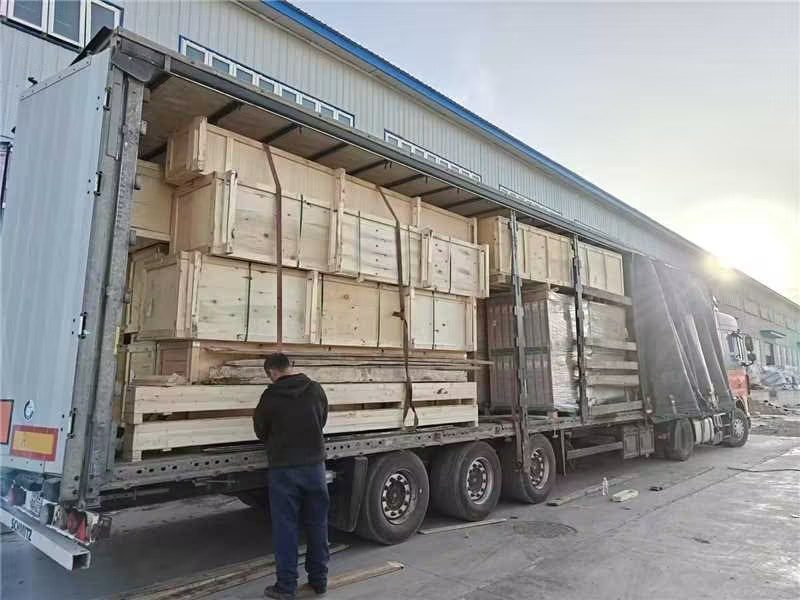
Solid timber crates are packaging: they add to the package count and to the gross weight, and as regulated wood they carry an ISPM 15 treatment that has to be declared. Plywood is exempt from the treatment. Solid wood is not.
ARITHMETIC
Four checks before filing
Check
Rule
Failure mode
Quantity per carton
Units per carton x cartons in the range = line quantity
Line quantity does not equal the invoice quantity
Package count
Sum of the Pkg column = declaration field 23 = manifest packages
Terminal refuses the container at gate-in
Gross weight
Sum of the G.W. column = declaration field 24 = container weight less tare
Weight discrepancy, container held for verification
Net versus gross
Net weight is less than gross; the gap is packaging
Net above gross, system rejects the entry
QUESTIONS
Four questions on packing lists
Does the packing list need to be signed?
Not for customs. It is a shipping document, not a declaration, and no seal or signature is required on the copy filed with the entry.
Some buyers ask for a signed and stamped copy for their own import file. That is fine — just keep the figures identical to the version attached to the entry.
What if the cartons hold mixed products?
Then the list runs one line per carton range, not one line for the shipment. A carton range of 1-8 holding product A and 9-20 holding product B is two lines with their own quantities and weights.
Mixed cartons — several SKUs in the same box — are harder. State the contents of the carton and split the quantity proportionally, or repack so each carton range is homogeneous. Inspection is item-by-item, and mixed cartons with a single line item cannot be verified.
Why do the weights have to match the manifest exactly?
Because the terminal weighs the container and compares it against the manifest, which is built from your documents. Where the declared gross weight and the actual weight diverge past tolerance, the container is held for verification or rolled to a later vessel.
The tolerance exists for scale variation, not for a unit error. Entering metric tons as kilograms is a 1,000-fold difference and no terminal will load it.
One packing list for several containers?
Yes, with the carton number column carrying the container split: C/NO. 1-380 in container one, 381-760 in container two.
The declaration, however, is filed per transport document. If the containers sail on the same vessel under one bill of lading, one entry covers both; if they sail separately, you need two entries and the packing list should be split to match.
Goodhope Freight files export declarations at Shekou, Yantian, Chiwan, Mawan and Dachan Bay every working day. Send us the invoice, packing list and product details — we check them against customs requirements before filing, so a rejected entry does not cost you a sailing.