
Fuzhou, Fujian, China · Jiangyin and Mawei container terminals · FCL exports
Fuzhou Port Container Drayage
GoodHope Freight runs container drayage at Fuzhou Port, the container gateway for Fujian and the wider southeast coast. We pull an empty from Jiangyin on the Fuqing coast or from the Min River terminals at Mawei, deliver it to your supplier, and gate the loaded box back before the vessel's cut-off. Drayage is the short-haul truck move between a port and a factory or warehouse; in China the same job is usually called container trucking.
- 20ft / 40ft / 40ft HC / 45ft HC
- Jiangyin and Mawei terminals
- Heavy loads and dual 20s
- Open top and flat rack
- Reefer and dangerous goods
- Pre-pulls and rail ramp transfers
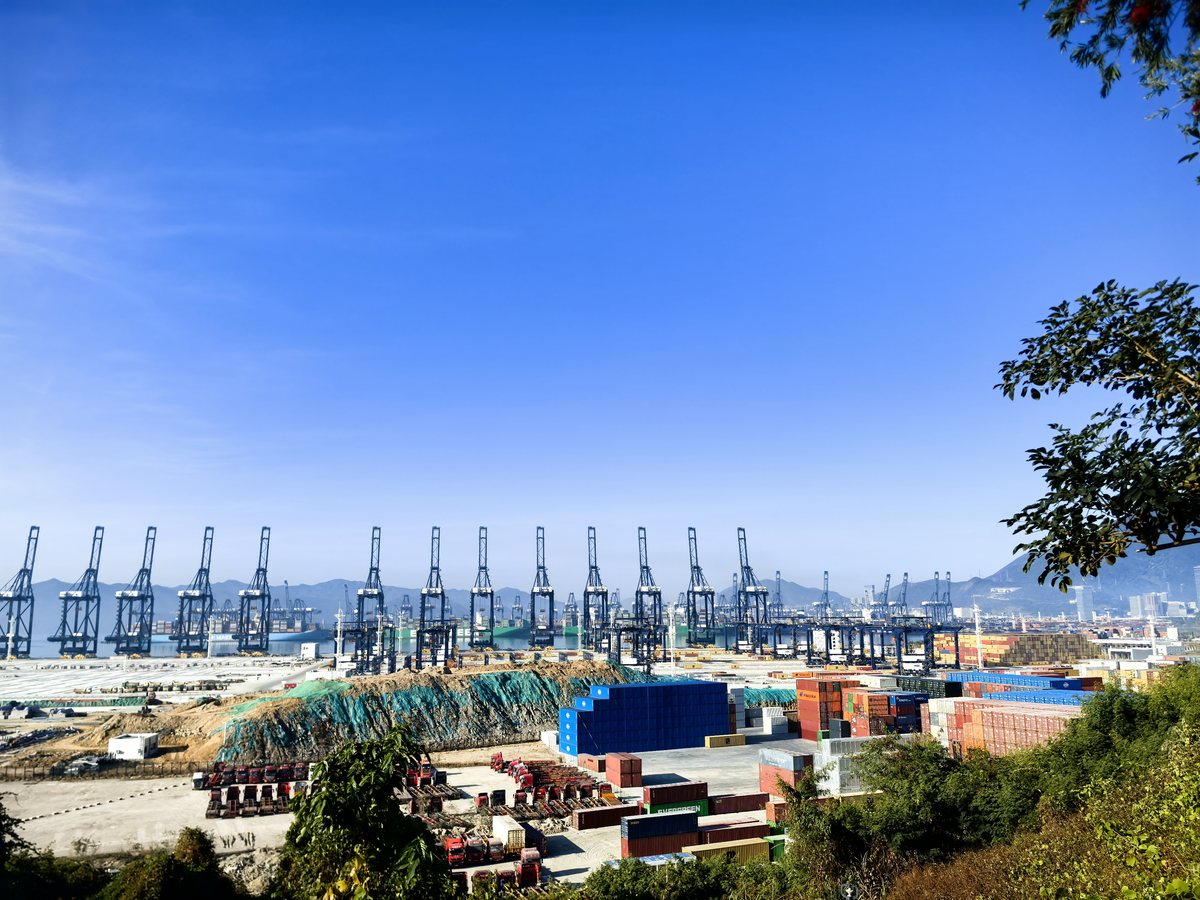
This leg decides your sailing when you buy FOB or FCA from a Fujian factory and nominate your own carrier. The line releases the empty; someone still has to position it, get it loaded, weigh it and gate it in before the terminal closes. Our dispatch desk works on China time (GMT+8), in the same time zone as the plant, the terminal and the customs broker.
Fuzhou Port is not one terminal. Jiangyin, on the Fuqing coast, carries more than 60 percent of the port's container volume and more than 95 percent of its foreign-trade boxes, with the deep-sea strings concentrated there. The Min River inner port at Mawei handles the near-sea, Taiwan and feeder traffic through Qingzhou, Haiying and the Mawei Port Qingzhou wharf, which have run as one integrated operation since late 2025. The two areas have different approach roads, different gate rules and different cut-off behavior, which is why the terminal matters as much as the address when you ask for a rate.
The port itself is fast, and that changes how trucking has to be planned. In the 2025 Container Port Performance Index published by the World Bank and S&P Global in June 2026, Fuzhou ranked first out of more than 400 ports, up from 96th in 2021, with average vessel time in port of 15.4 hours and 12.17 hours at berth. A port that turns ships that quickly does not hold a slot open for a late truck. Your box has to arrive inside its window, or it waits for the next vessel.
What a Fuzhou drayage move covers
Your supplier's address sets the lane. The regions below are grouped by what they mean for scheduling, not by administrative map.
| Factory region | Common locations | What it means for your booking |
|---|---|---|
| Fuzhou urban and inner suburbs | Cangshan, Jin'an, Mawei, Minhou, Yongtai, Minqing | Runs to Jiangyin cross the coastal approach south of the city. City truck restrictions and morning peak affect the loading window, not the gate slot. |
| Fuqing and the Jiangyin port city | Rongqiao, Yuanhong, Jiangyin port economic zone, Xincuo, Yuxi | Short coastal legs. Same-day empty pickup, loading and gate-in is realistic. Petrochemical and new-material plants need the weight cap and DG status confirmed before dispatch. |
| Changle and the coastal new city | Changle, Jinfeng, Zhanggang, Wensha, Songxia | Songxia handles grain and bulk, not containers. Boxes still move through Jiangyin or Mawei, so do not plan a container lane around the Songxia berths. |
| Lianjiang, Luoyuan and Ningde | Lianjiang, Kemen, Luoyuan, Ningde, Fu'an, Xiapu | Northbound cross-city lanes. Luoyuan Bay is bulk ore and coal, so container cargo routes back to Jiangyin. |
| Putian, Quanzhou and southern Fujian | Putian, Hanjiang, Xianyou, Quanzhou, Jinjiang | Long cross-city hauls with a high empty-return ratio. Rate the lane on the actual address, not on the city name. |
| Nanping, Sanming and inland Fujian | Nanping, Jianyang, Sanming, Yong'an, Shaxian | Mountain routes with grades and tunnels. Heavy boxes need braking and speed briefings; rail is often the better answer for the long leg. |
| Jiangxi and inland provinces | Nanchang, Shangrao, Yingtan, Hefei, Xiangyang | Sea-rail via the Jiangyin port railway spur. The truck does the ramp-to-terminal leg and the schedule is set by the train. |
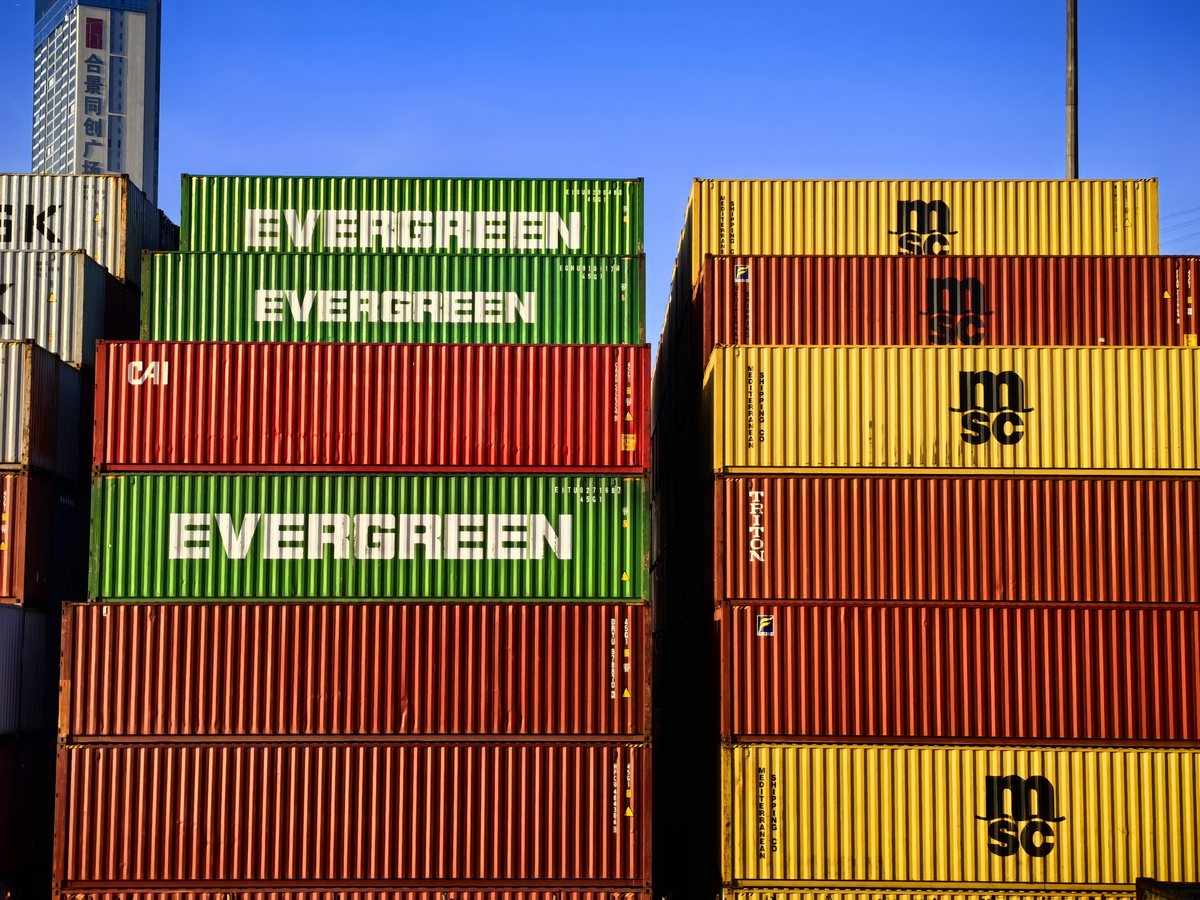
Routing the same cargo through Jiangyin instead of Mawei changes the lane, the terminal rules and the charge structure. Confirm the load port before you ask for a drayage rate.
Container types and trucking setup
Standard dry boxes are dispatched by size. Plant access and cargo weight decide the chassis.
| Container | Common shorthand | Typical cargo | Trucking note |
|---|---|---|---|
| 20ft standard dry | 20GP, one TEU | Tile, stone, seafood, metal parts, chemical raw materials | Short chassis. Dense cargo means axle weight is checked first, and two 20ft boxes can sometimes share one chassis. |
| 40ft standard dry | 40GP, one FEU | Footwear, furniture, building materials, general cargo | Standard chassis. The plant needs room for a 40ft rig to enter and turn. |
| 40ft high cube | 40HQ or 40HC | Light bulky goods, appliances, handicrafts, textiles | Extra height. Check overhead clearance at the plant gate and on the approach road. Availability is better than 45ft in Fuzhou. |
| 45ft high cube | 45HQ | High-volume light cargo, consolidated orders | Needs a longer chassis and carrier confirmation. Stock is thinner than 40HQ, so check empty availability before you promise a loading date. |
A trucking order should state the loading date, the plant name and address, a contact on site, the commodity, the actual gross weight, the container type and count, the Incoterm, and the vessel cut-off. Wood packaging bound for Australia, New Zealand, the US or Canada may need fumigation or a phytosanitary certificate before loading starts.
Use the carrier's container specification for internal dimensions, not a rule of thumb. Confirm the plant can take the truck length before the driver arrives; reloading in a nearby yard adds a full extra handling and can eat the gate window.
Heavy containers and dual 20s
Fujian ships a lot of stone, tile, seafood and metal, so weight shows up early in the booking conversation.
Overweight loads
Tile, stone, metal goods, steel coil, frozen seafood and chemical powders are the usual heavy cargoes on this coast. The weight question gets settled at booking, not at the gate. We confirm the carrier's cap for the sailing and declare the actual gross weight before the empty is released.
After loading, the shipment gets a Verified Gross Mass (VGM), the SOLAS-required certified container weight that has to match the booking and the export declaration. If the scale reading exceeds the cap, the load is reduced, split or rolled. Jiangyin's smart gate compares box number, truck number and appointment data automatically, so an overweight box is stopped at the gate rather than discovered at the quay.
Dual 20s on one chassis
Dual 20s means one tractor pulls two 20ft containers at once. It is common when each box is dense and the combined weight still fits road axle limits. Whether it works depends on both gross weights, whether the plants share an address or sit on the same route, chassis length and the terminal's gate rules for doubles. Fuqing and Changle have a lot of same-address double-20 orders, but the rate reduction is confirmed per booking, not assumed.
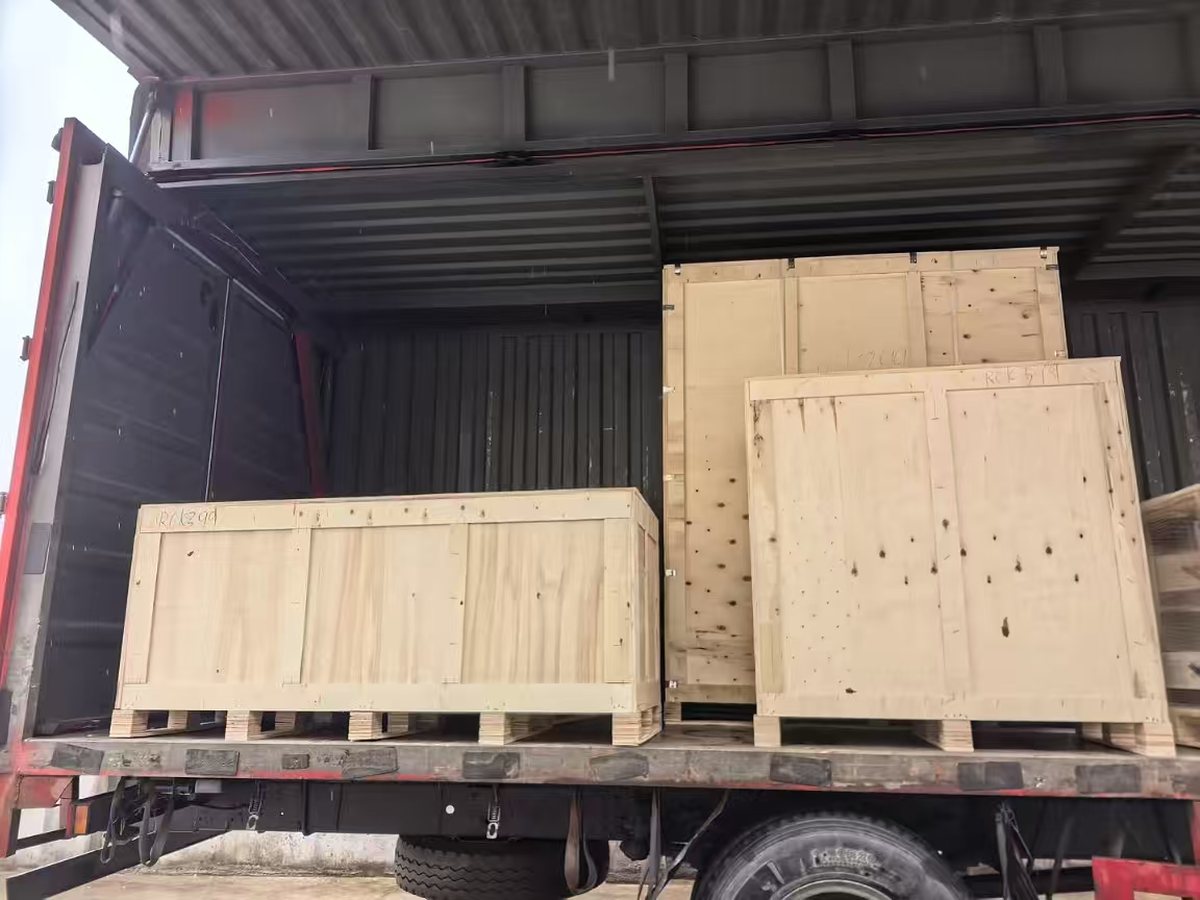
Open-top and flat-rack moves
Both types carry cargo that will not fit through the doors of a standard dry box, and both are approved shipment by shipment.
Open-top containers
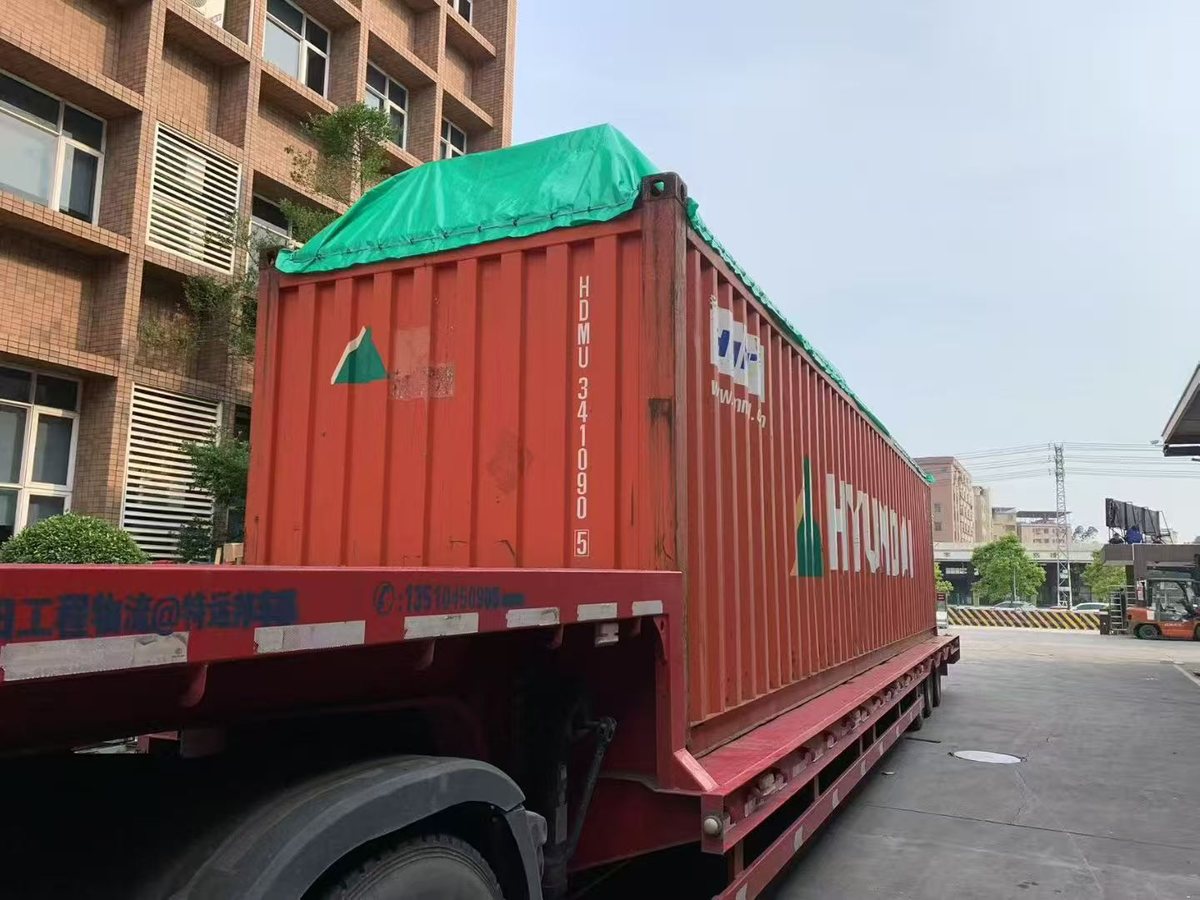
An open-top container (OT) has a removable roof so cargo can be lowered in by crane. It suits tall machinery, glass and equipment that fits the footprint but not the height. A tarpaulin and lashing straps close the top. Total height affects road clearance, so bridge heights, overhead lines and the plant's door frame get checked before the truck rolls, and mountain routes inland get checked twice.
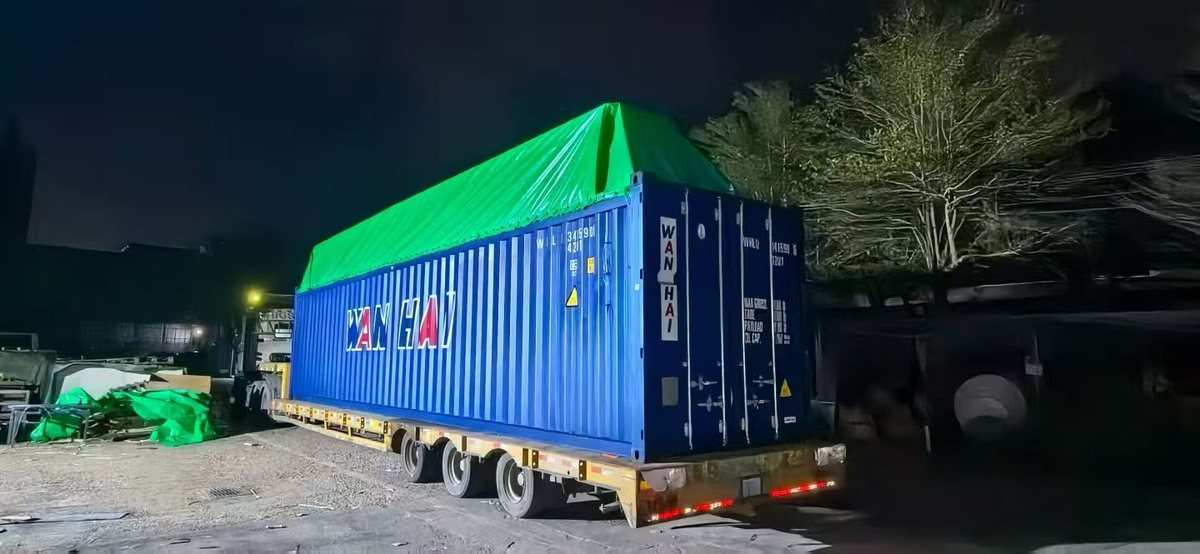
Flat-rack containers
A flat-rack container (FR) has no roof or side walls, only a floor and end frames. It carries wide, long or side-loaded cargo. The shipper arranges weather protection and the lashing plan, and marks the center of gravity and support points on the packing drawing. Both OT and FR are out-of-gauge (OOG) solutions. Flat-rack stock in Fuzhou is thinner than dry equipment, so confirm the unit and the carrier's approval before you build the loading plan around it.
Dangerous goods and ISO tanks
The road leg runs on licensed equipment and the paperwork is checked before a tractor is assigned.
Dangerous goods (DG) means cargo declared under the dangerous goods transport rules, and the highway leg needs qualified vehicles, trained drivers and, where the class requires it, an escort. An ISO tank is a tank container built into a standard frame for liquids or gases, and it travels with its own inspection certificate and filling record.
| Document or condition | What we check |
|---|---|
| Packaging certificate for dangerous goods | Matches the class, packaging type and quantity, and is inside its validity |
| Safety data sheet (MSDS or SDS) | Proper shipping name, UN number, class, emergency response, transport conditions |
| DG booking confirmation and release | Carrier accepts that class, that container type and that terminal |
| Digital DG declaration record | Jiangyin runs a digital declaration system; the declared data has to match what the terminal receives |
| Road transport license and escort plan | Vehicle, driver, escort qualification and tank inspection certificate |
| Terminal acceptance rules | DG gate window, stacking position and declaration timing, per terminal notice |
A terminal will not accept the box when the paperwork is incomplete or the class is misdeclared. The Bitou berths 8 and 9 upgrade at Jiangyin completed acceptance in September 2026, lifting the berths to 150,000 dwt class with 900,000 TEU of annual design capacity and added dangerous goods container support, but DG boxes still run through their own declaration and appointment channel.
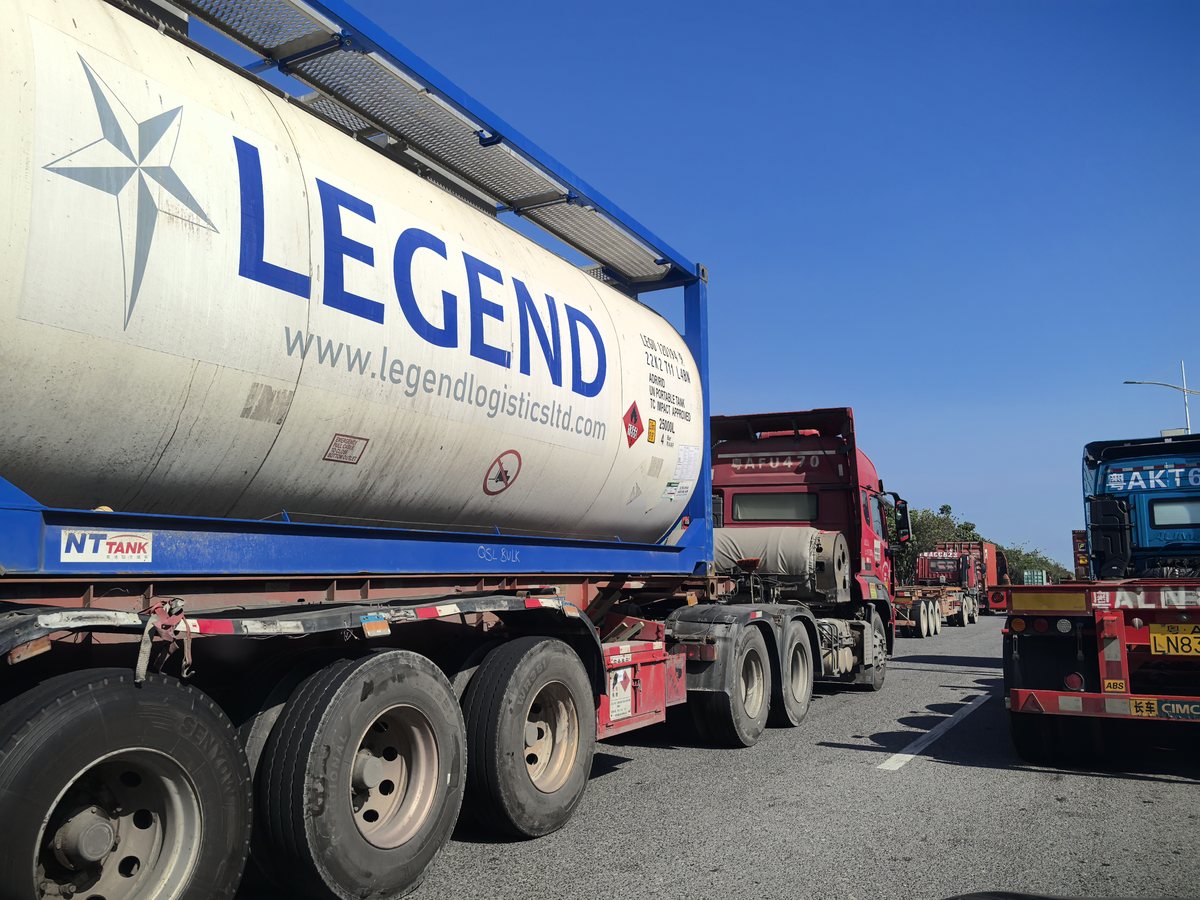
DG trucking starts with complete documents. Confirm the carrier and terminal acceptance first, then lock the slot, so a truck is never sent to a gate that will refuse the box.
Refrigerated container moves
Temperature control, power supply and a short road leg matter more than the rate on this cargo.
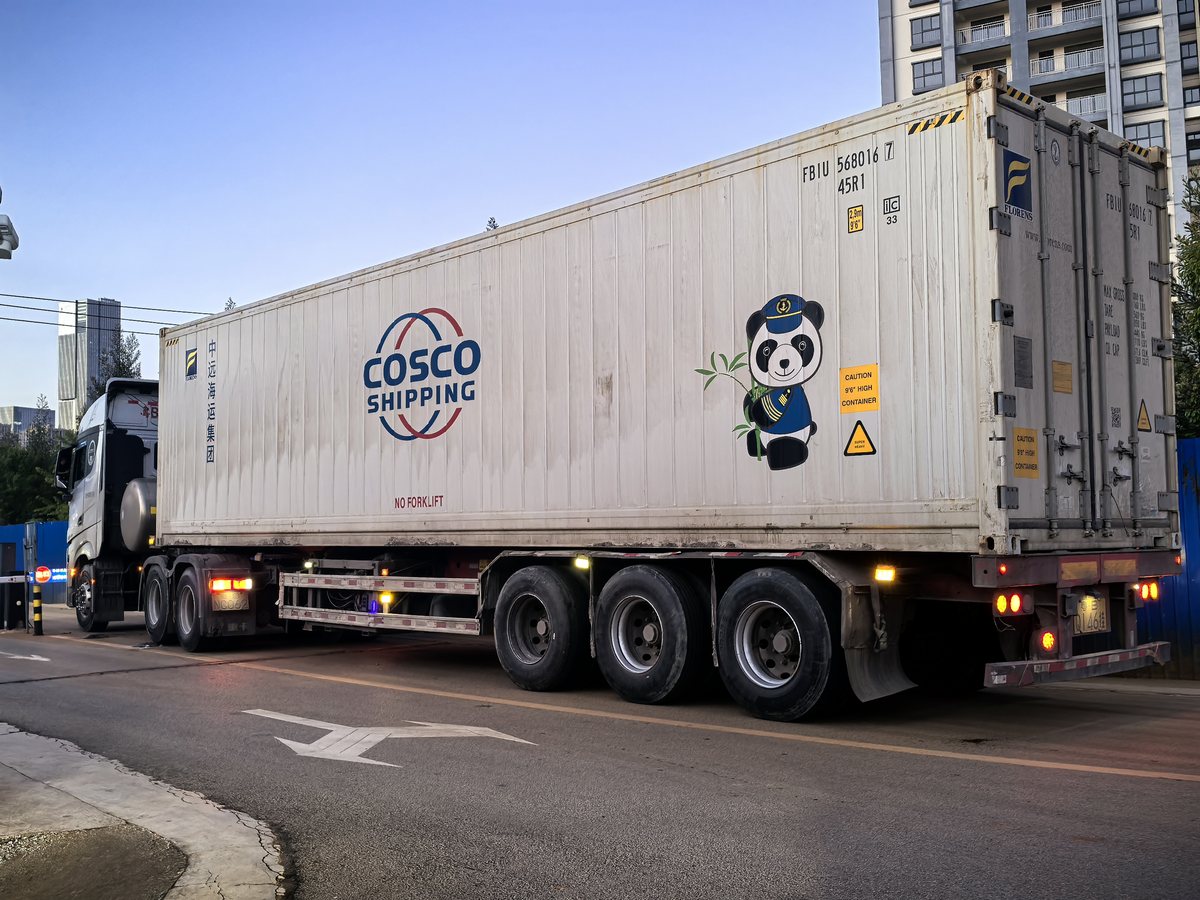
A reefer needs a set temperature, a ventilation setting and a pre-cool before loading. On the road there is no shore power, so the chassis carries a genset or the box runs on its own machinery. The box is checked and pre-cooled before the plant opens its doors, and the temperature log is kept as part of the record.
Fujian exports seafood, fruit, edible fungi and frozen food in volume, and Fuzhou runs direct cold-chain services into Southeast Asia. Reefer equipment and slots tighten in peak season, so confirm both before you commit a loading date. Keep the road time between plant and terminal inside a window you can defend, and confirm genset and plug availability if the box is pre-pulled.
The commodity and the declaration elements have to match the customs paperwork. Temperature set point, ventilation opening and recording method are written into the shipping instruction once, so nothing gets changed mid-flow. Every door opening during loading costs temperature recovery time, so agree the loading sequence with the plant before the truck arrives.
Oversized and project cargo
When the cargo is bigger than the box outline, the route plan is part of the quote.
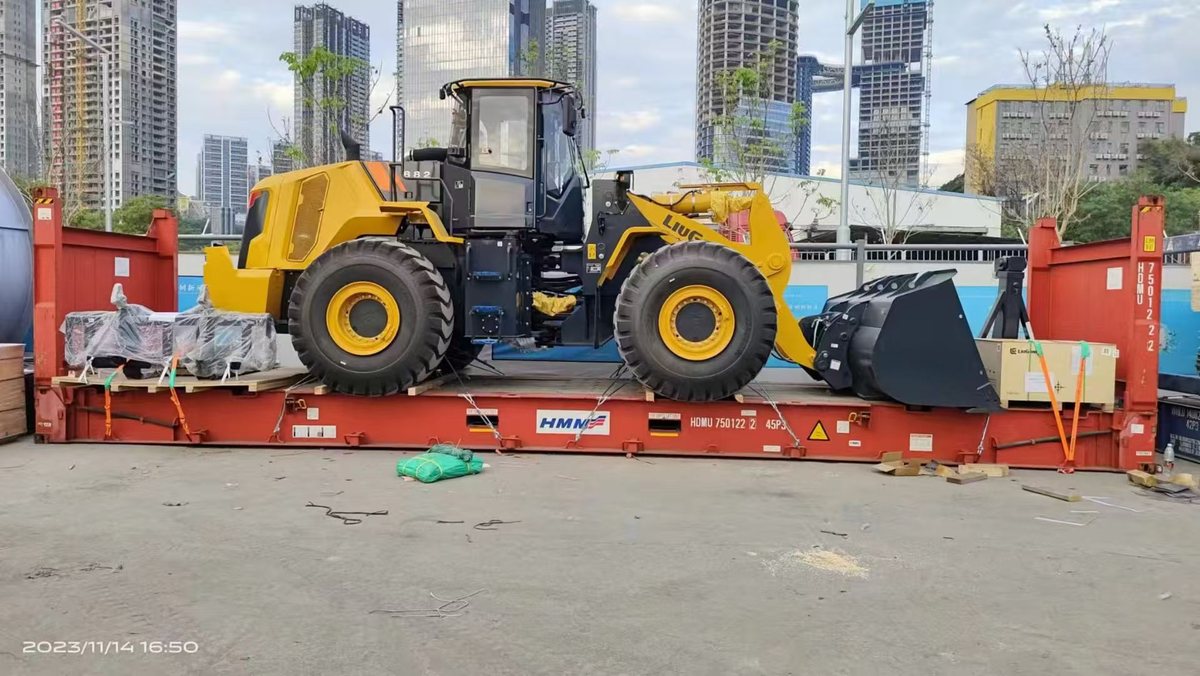
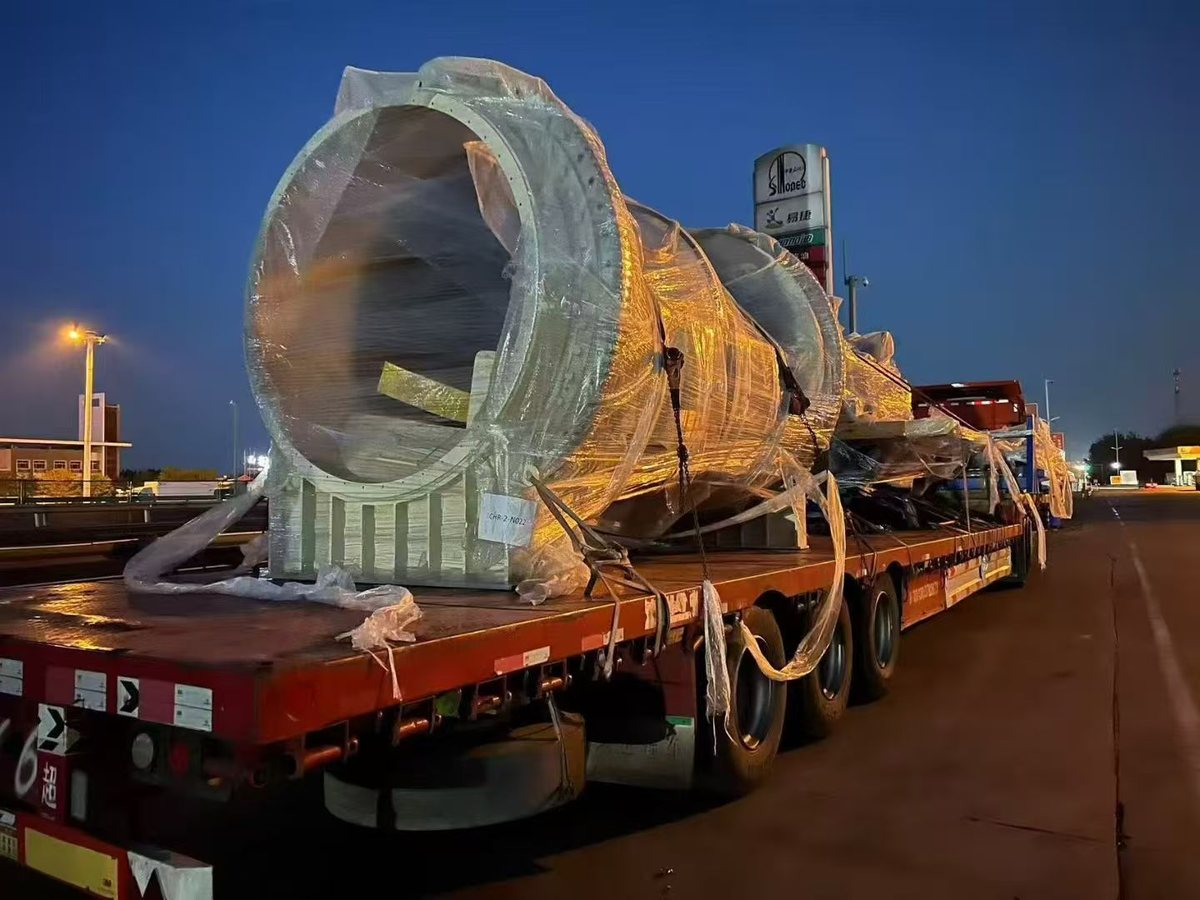
Machinery, tanks, molds and production lines that exceed the standard container outline move on lowbed trailers, extendable platforms or flat racks, selected on actual dimensions, gross weight, center of gravity and support points. The loading plan states lifting points, lashing points, dunnage positions and the turning radius needed en route.
Route survey covers the plant exit road, highway entrances, bridge height and weight limits and the terminal approach. Oversize transport permits are applied for in advance with the authorities along the route. Mountain roads in northern and western Fujian have grades and tight bends, so travel windows and escort requirements get confirmed with local traffic police before dispatch.
After loading, lashing and weather protection are rechecked point by point, and the packing drawing, weight list and photographs travel with the truck. When the dimensions are outside the normal range, terminal acceptance and vessel stowage are confirmed separately, and the schedule is not built backward from a standard container cut-off.
Other drayage work we coordinate
Fuzhou moves often connect the terminal to a yard, warehouse, rail ramp or another customs point.
Pre-pull and yard storage
Pulling the empty early and holding it outside the terminal covers a plant that is not ready or a tight appointment window. Free storage days and yard conditions are confirmed when the job is booked.
Split pickup and empty return
When the pickup terminal and the return terminal differ, or the box goes back empty after loading was canceled, the move is priced as a split or empty return rather than a standard round trip.
Transloading and warehousing
Goods from several suppliers are consolidated at a warehouse and stuffed into one container, which suits orders spread across many small factories.
Rail ramp and sea-rail
The Jiangyin port railway spur connects the terminal to inland ramps. We handle terminal-to-ramp and ramp-to-terminal legs, timed to the fixed train schedule.
Bonded and transit transfers
Trucks moving under customs transit need a customs record and electronic locks. We coordinate the handover documents at the transfer point.
On-site services
Weighing, box numbering, loading photographs, fumigation, temporary highway tolls for re-routed boxes and document handling are arranged per instruction and billed at cost.
We also cover the other Chinese seaports, rail ramps and land border points, so a shipment that changes gateway does not need a second trucking partner. Lane and document requirements are confirmed per destination terminal.
From empty pickup to gate-in
The schedule is built backward from the CY cut-off. Each step has an owner and a document.
- Release and shipping orderThe carrier or its agent issues the shipping order (S/O), which names the pickup yard, container type and quantity, vessel and voyage, and the release validity. Formats and pickup points differ by carrier, so the documents are complete before a tractor is assigned.
- Smart Port appointment and activationEmpty pickup, import full pickup and return moves are booked on the Smart Port Cloud Platform. A designated-empty booking is made by box number or by owner, size and type; an undesignated booking by owner, size, type and quantity. The appointment must then be assigned to a tractor and activated. Only an activated booking opens the gate.
- Empty pickup and inspectionThe driver collects the box in the booked slot and checks box number, seal and condition. Qingzhou runs a paperless equipment interchange receipt (EIR): the truck number is bound to the driver's phone, the gate reads it, the instruction is pushed to the phone and the barrier lifts when the box number matches. Condition is still a human check, so damage is photographed and swapped on the spot.
- Delivery and factory loadingThe empty goes to the plant at the agreed time. Confirm the yard can take the rig length and has a platform or forklift. Cargo is secured by type: dunnage to spread weight on dense loads, diagonal lashing on machinery, airbags in cartons.
- Weighing, sealing and recordsAfter loading the box is weighed for VGM, sealed and photographed. The seal number has to match the export declaration and the bill of lading. Weight discrepancies are fixed before the gate, not discovered at it.
- Return to yard or direct gate-inDepending on the carrier and terminal, the box goes back to a yard for consolidation or straight from the plant to the terminal. Inspection or co-loading means yard first; a tight but clean box can go direct. Jiangyin and Mawei are separate systems, so the pickup and return terminals have to match the booking.
- Gate-in and customs releaseThe box enters in its appointment slot and the gate verifies box, seal and booking. Customs cut-off, when the release message must be at the terminal, and CY cut-off, when the terminal stops accepting laden boxes, are checked separately.
| Exception | How it is handled |
|---|---|
| Appointment booked but not activated | Assign the tractor and activate; the gate stays closed until the status shows activated |
| Box or seal number does not match the booking | Reconcile with the release, then rebook; the gate will not lift a barrier on a mismatch |
| No empty at the nominated yard | Ask the carrier for another yard or box; pre-pull from an alternative depot if time allows |
| Plant not ready or loading incomplete | Split the load, roll to the next vessel, or hold and re-sequence the gate slot |
| Gross weight above the cap | Reduce, split or rebook; confirm the cap at booking, not at the gate |
| Pickup and return terminals differ | Amend the booking or price as a split move; confirm the carrier allows the combination |
| Release message not at the terminal | Push the box and the documents on one thread so the gate and the release land together |
Fuzhou turns vessels quickly, so the terminal window is tight. Queues build in peak season, after typhoons and when several sailings bunch up. Plan from the tightest CY cut-off you have, not from the average.
Appointments, activation and the vessel window
The appointment platform is the part of Fuzhou drayage most often misunderstood by importers used to other Chinese ports.
Every empty pickup, import full pickup and return move is booked on the Smart Port Cloud Platform operated by the Fuzhou port container business. There are two booking styles for empties. A designated booking names the box, either by container number or by owner, size and type. An undesignated booking asks for owner, size, type and quantity, and the system rejects the request when the available count is short. Import fulls are booked by bill of lading, and several can be booked in one batch. The return type is set at booking as either no return that day or empty return.
The rule that catches people out: an appointment number is not permission to enter. The platform shows the booking as waiting for a tractor, then as waiting for activation once a truck is assigned, and only then as activated. A truck arrives at a barrier that reads the plate, the box and the booking together, and an unactivated booking does not open it.
Since September 21, 2026, the platform's appointment service is linked directly to local fleet dispatch systems. A trucking company can book from its own dispatch screen, query vessel schedules, assign the driver and activate in one pass. A batch that used to take minutes of manual entry per box is generated in under a minute. Jiangyin's smart gate has cut truck processing time from about 1.5 minutes to under 25 seconds, and Qingzhou's paperless EIR cut gate document handling from about 2 minutes to about 30 seconds per box.
| Channel | Where it applies | What to know |
|---|---|---|
| Smart Port Cloud Platform | Jiangyin and Qingzhou | Standard entry point for empty, import full and return bookings; must be activated before gate entry |
| Fleet dispatch integration | Jiangyin, since September 21, 2026 | Bulk booking, vessel schedule lookup, driver dispatch and activation from the fleet's own system |
| Paperless EIR | Qingzhou | Truck number bound to the driver's phone, automatic box match at the gate, barrier lifts on a clean match |
| Carrier sailing notice | All terminals | SI, customs and CY cut-offs are issued per sailing; re-check before dispatch |
Slot availability changes with yard conditions, vessel schedule and system load, so the bookable window is checked again on the day of dispatch. After a typhoon, terminals reopen laden and empty acceptance at different times, and the recovery notice governs. A no-show without cancellation is logged against the fleet and repeated no-shows affect future booking rights, so an unused slot is released rather than abandoned.
What a drayage quote includes
Rates are quoted line by line. Nothing is bundled into a single number that later grows accessorials.
| Line item | What triggers it |
|---|---|
| Base trucking rate | Loading address, container size and terminal. 20ft and 40ft are priced separately, and distance bands apply on long lanes. Jiangyin and Mawei price differently because the approach roads differ. |
| Overweight surcharge | Gross weight above the carrier or terminal threshold, charged on the excess. Thresholds differ by terminal, so the cap is confirmed per sailing. |
| Dual 20 discount | Two 20ft boxes on one chassis, applied per box when the lane qualifies. Short lanes carry a smaller reduction. |
| Waiting and overnight hold | Time beyond the agreed free period at a plant or yard, billed hourly, plus a separate hold charge for a loading that runs overnight. |
| Pre-pull | Empty pulled early and stored outside the terminal, with a set number of free storage days. |
| Empty return | Box returned unloaded after a canceled loading, charged as a proportion of the base rate. |
| Split pickup or return | Pickup and return at different terminals or yards, priced as a one-way or split move. |
| Yard handling | Terminal or depot lift and booking fees, which differ between 20GP and 40HQ. |
| Pass-through items | Weighing, box numbering, temporary tolls, document handling, fumigation and similar costs, billed at cost with receipts. |
The line items above reflect how Chinese domestic trucking rate cards are structured. They describe what gets charged and why, not what we would charge you. Rates move with the address, the box, the cargo weight, the sailing and terminal rules, and the binding number is the written quote. Ask for the free waiting period and the invoice type (standard or VAT special invoice) at the same time.
Drayage and China export customs
A laden box can be at the gate and still miss the vessel if the release is not there. The two clocks run separately.
Fuzhou's export chain is heavily digitized. The Jiangyin terminal operating system is connected to the customs-enterprise-port data platform, so release status, inspection holds and declaration data reach the terminal in real time. Inspection booking and container moves are handled on the same online platform, pre-scanning plus AI image review sits behind the inspection process, and same-day release for export cargo runs above 90 percent. When trucking and customs are handled by one team, box number, seal, VGM, packing list and release status are checked on one thread and an exception is caught before the cut-off rather than after it.
Documents checked first
Release, EIR, packing list and declaration elements are verified before dispatch, so nothing gets added after the box is at the gate.
Slot locked early
The gate slot is booked and activated before the loading time is fixed, not after the truck is loaded and rolling.
Weight and condition on file
Gross weight is declared at booking, box condition is photographed at pickup, seal and VGM are recorded after loading.
Live status back to you
Plate, driver, box and seal are sent after pickup, with gate-in and return updates as they happen.
Related reading: China export customs clearance and the export documents checklist.
Field notes: nine things that go wrong on a Fuzhou move
Drawn from day-to-day dispatch. Names, vessel dates and outcomes are left out on purpose; the point is the order of handling, not a success story.
Cut-off moved, loading not started
On the ground The plant finishes late in the afternoon, the vessel closes next morning, and the export documents are still being amended. A normal pickup, load, return and gate sequence no longer fits the remaining slots.
What we do Confirm the customs cut-off, the bookable gate window, the release status and the terminal acceptance time first, then set the loading hour backward from there. A box that can go direct skips the yard. If it cannot make the vessel, we say so early and price a pre-pull or a roll instead of chasing a sailing that has already gone.
Overweight after weighing
On the ground Stone or frozen cargo is loaded and the scale shows a VGM above the carrier's cap for that sailing. The gate will not take the box.
What we do Confirm the cap at booking and write it into the loading instruction before the plant starts. If the box is already over, the options are unloading part of the cargo, splitting into a second box or rolling to a sailing with a higher allowance. Jiangyin and Mawei do not share a threshold, so a terminal switch means a fresh check.
Night loading only
On the ground The plant runs a night shift, or city truck restrictions keep day moves off the route. The yard lights, the dock and the gate guard are all set up for nights, and an early truck sits outside.
What we do The dispatch note states the arrival hour, the site contact and how to enter. Lighting, dock height and night loading conditions are confirmed in advance. Night work and any resulting hold charge are priced in the quote, not argued at the gate.
Loading runs past a day
On the ground Several suppliers, or cargo that is not ready, keeps one box at the plant for two days. The tractor is stuck, later jobs slip, and the waiting cost lands on the invoice.
What we do Check the readiness before dispatch and price three options when a cross-day job is likely: hold the truck, drop the box and send a second tractor, or move the cargo to a warehouse for stuffing. Free time, hold rate and re-dispatch cost are approved before the truck leaves.
No empty at the nominated yard
On the ground The release is issued but the nominated yard has no unit of that type. 45ft high cubes, open tops and flat racks are the usual gaps in Fuzhou, and the sailing does not wait.
What we do Check release status and S/O validity, then ask the carrier to change the yard or release another box. If time is short, we pre-pull from an alternative depot, re-sequence the loading and gate slots, and state the vessel risk plainly.
Laden box refused at the yard
On the ground The acceptance window has not opened, the yard is full, or the truck arrives outside its slot. The box is turned away and the tractor waits outside on the clock.
What we do Confirm the acceptance window, the slot and the yard status before the return run. If the window is closed, we price an off-dock hold or a direct terminal delivery and compare that with waiting. An unused slot is canceled, not abandoned.
The empty is worn out
On the ground Rust, a deformed panel, a damp or oily floor, a tired door gasket or a smell inside. It is found after loading, and the return inspection tries to put it on the shipper.
What we do Inspect against the EIR at pickup and photograph anything wrong. If the box is already loaded, the carrier is asked for a swap or a repair, a transload is arranged when needed, and the condition record goes to the customer and the customs file.
Appointment not activated
On the ground The booking exists but still shows waiting for a tractor or waiting for activation. Or the box number was keyed wrong, or the plate is not bound to the driver's phone, and the smart gate reads nothing. The truck blocks the lane while the queue behind it waits.
What we do Three checks before the truck leaves: is the booking activated, do box and seal match the release, is the plate bound to the driver's phone. Fix it in the system, not at the barrier, because the barrier only believes the system.
Waiting for the truck
On the ground Gate queues, traffic control, a typhoon recovery day, or an earlier job that held the driver too long. The plant's loading crew stands idle and the cut-off gets eaten hour by hour.
What we do Plate, driver phone and ETA go out after pickup, with updates at arrival, load complete, departure and gate-in. If a delay appears, the slot is moved and the plant is told, so the wait stays inside a window we control.
A second tier of problems runs through the same chain: a plant that cannot take a 40ft rig, a seal number that disagrees with the declaration, a VGM that was never filed, a loading address changed at the last minute, tarpaulins and lashing that do not survive rain, DG or reefer paperwork that does not match the slot, and a mountain route closed by traffic control. Most of these are visible before a truck is assigned.
Very few of these failures are mechanical. Most are the document, equipment, appointment and release clocks running out of step. Checking release status, box condition, weight cap, plant access, appointment activation and customs data in one pass before dispatch costs less than fixing any one of them at the gate.
Why importers use us for Fuzhou drayage
Four questions come up in almost every inquiry: is the price clear, will the truck arrive, will the cost change, and who fixes it when something breaks.
One quote, itemized
Base rate, heavy load, pre-pull, hold, empty return, split move and pass-through costs are listed with what is included, what is not, the free waiting period and the invoice type. No accessorial appears for the first time on the final bill.
No peak-season repricing
Around Chinese New Year, after a typhoon and when sailings bunch up, the confirmed rate stands. If you change the address or the date, or the carrier and terminal introduce a real new charge, we tell you with the document before it is billed.
Priced on the lane
Address, box, gross weight and terminal set the rate. Long lanes are not padded and short lanes are not squeezed. When two 20s genuinely qualify as dual 20s, the reduction is applied rather than quietly kept.
Equipment and loading safety
Vehicles and drivers are verifiable, and DG, reefer and oversize work runs on dedicated equipment and trained staff. Dense cargo gets dunnage, machinery gets diagonal lashing, and pickup inspection and loading are photographed.
A status at every step
Plate, driver phone, box and seal after pickup; arrival, load complete, departure and gate-in as they happen. When something goes wrong you get an alternative plan first and a cost discussion second.
Trucking and customs on one thread
Box, seal, VGM, packing list and release status are checked by one team, so the box and the documents move together instead of passing messages between a trucker, a broker and a shipper.
Both Fuzhou terminals, one contact
Jiangyin and the Mawei terminals at Qingzhou, Haiying and the Mawei Port Qingzhou wharf are covered, along with the rail ramp and every factory region on this page. Switching terminal or moving to sea-rail does not change your contact.
A fixed order for exceptions
Cut-off pressure, overweight, overnight hold, no equipment and unactivated appointments are turned into a pre-dispatch checklist. Conditions are checked before a truck is committed, which removes most of the waiting and re-planning at the gate.
Rates are binding only in the written quote. These commitments apply to the Fuzhou drayage work we perform; carrier, terminal and depot charges and operating rules are applied as published by those parties at the time of the move.
Frequently asked questions
Questions that come up in quotes and dispatch, including how exceptions are priced and documented.
What does a Fuzhou drayage move cost?
A Fuzhou drayage rate is built from the factory address, the container size, which terminal the box is booked through, and whether the job needs a pre-pull or runs into an overweight surcharge. Jiangyin sits on the Fuqing coast and Mawei sits up the Min River, so the two lanes price differently even for the same factory. Send the loading address, container count, cargo gross weight, vessel and voyage, terminal and cut-off, and you get a line-item quote with the accessorials spelled out separately.
How much time should I allow from empty pickup to gate-in?
Build the schedule backward from the CY cut-off, not forward from the factory finish time. The chain runs through release, a Smart Port appointment that has to be dispatched and activated, empty pickup, factory loading, weighing and sealing, then the return run and the gate slot. Jiangyin is a coastal terminal with a long approach from Fuzhou city, and Mawei is upriver, so neither is a short city run. Leave a buffer for the gate queue and for a plant that loads slower than promised.
What are dual 20s, and can two 20ft boxes share one chassis?
Dual 20s means one tractor pulls two 20ft containers in a single trip. It is used when each box is dense and the combined weight still sits inside road axle limits. Whether it works depends on both gross weights, whether the two plants are at the same address or on the same route, chassis length and the terminal's rules for doubles. Send both weights and the loading sequence, and dispatch will confirm the setup and whether the lane qualifies for a rate reduction.
How do you handle an overweight container at Fuzhou?
The weight question is settled at booking. We confirm the carrier's cap for that sailing and declare the actual gross weight before the empty is released. After loading, the box gets a Verified Gross Mass (VGM), the SOLAS weight declaration that has to match the booking and the export declaration. If the scale reading is over the cap, the load is reduced, split or rolled. Jiangyin's smart gate compares box number, truck number and appointment data automatically, so an overweight box gets stopped at the gate rather than at the quay.
Do I need a gate appointment at Jiangyin or Mawei?
Yes. Empty pickup, import full pickup and return moves are all booked through the Smart Port Cloud Platform run by the Fuzhou port container operator. The detail that catches importers and new truckers is the status chain: an appointment number alone does not get a truck in. The booking has to be assigned to a tractor and then activated, and only an activated appointment opens the gate. Since September 21, 2026, the platform's appointment API is wired into local trucking dispatch systems, so a fleet can book in bulk, dispatch the driver and activate in one pass.
Can the truck load at my supplier's factory in Fuqing or Changle?
Yes. The standard move is empty pickup at the terminal or a designated yard, delivery to the plant, loading, then the return run. Fuqing, Changle, Minhou, Lianjiang, Luoyuan and the Fuzhou urban districts are all covered, and Putian and Ningde are routine cross-city lanes. Before dispatch we confirm the plant can take a 40ft or 45ft rig, that there is a loading platform or forklift, and that night loading has lighting and gate clearance. A plant that cannot take the truck means a reload in a nearby yard, which costs a full extra handling.
What is the difference between SI cut-off, customs cut-off and CY cut-off?
SI cut-off is when shipping instructions and manifest data must reach the carrier. Customs cut-off is when the release message has to be at the terminal, or the box cannot be loaded. CY cut-off, also called gate-in deadline, is when the terminal stops accepting laden containers. They run in that order, but the gaps are set by the carrier and terminal per sailing, so they differ by voyage and by vessel. Trucking plans against the CY cut-off, customs works to the customs cut-off, and documents work to the SI cut-off. Never use one of the three as a proxy for the others.
What happens if the empty container is in poor condition?
Inspect it against the equipment interchange receipt (EIR) before it leaves the yard: holes, dents, a damp or oily floor, damaged door gaskets, odor or residue inside. Report and photograph any defect on the spot and ask for a swap. Qingzhou terminal has moved to a paperless EIR, where the box number is matched automatically at the gate, but nobody's system checks a soft floor for you. Damage found after loading is usually treated as shipper responsibility at return, and cartons may already be damp.
Can you move dangerous goods containers from Fuzhou?
Yes, when the paperwork and the equipment line up. The road leg runs on licensed vehicles with trained drivers and, where required, an escort. We check the packaging certificate, the safety data sheet (MSDS or SDS), the carrier's DG booking confirmation and the release before dispatch. Jiangyin runs a digital dangerous goods declaration system, and the Bitou berths 8 and 9 upgrade completed in September 2026 added DG container handling capacity. DG boxes still follow their own appointment window and stacking rules, so they cannot be slotted into a standard dry container appointment.
What is different about reefer drayage?
A reefer needs a set temperature, a ventilation setting and a pre-cool before loading. On the road there is no shore power, so the chassis carries a genset or the box runs on its own machinery, and the temperature log is kept for the record. Fujian exports a lot of seafood, fruit, edible fungi and frozen food, and Fuzhou has direct cold-chain services into Southeast Asia, so reefer equipment gets tight in peak season. Confirm the box and the slot early, keep the road time short, and agree with the plant how often the door will be opened during loading.
What if there is no empty container at the nominated yard?
Check the release status and the shipping order validity first, then ask the carrier to switch the yard or release a different box number. 45ft high cubes, open tops and flat racks are always thinner on the ground than 20GP and 40HQ in Fuzhou. When the sailing cannot move, we arrange a pickup at an alternative yard or a pre-pull and re-sequence the loading and gate slots, and we tell you the vessel risk straight rather than parking a truck outside a depot and billing the wait.
How are waiting time and overnight holds charged?
Waiting beyond the agreed free time at a plant or yard is charged by the hour, and a loading that runs overnight carries a separate hold charge. Free time, the billing unit and the overnight rate are stated on the quote, not negotiated at the gate. If a job looks like it will run past a day, we price three options before dispatch: hold the truck, drop the box and send a second tractor, or move the cargo to a warehouse for stuffing. You pick with the numbers in front of you.
Can drayage and export customs be handled by one team?
Yes, and for Fuzhou it is the practical choice. Container number, seal number, VGM, packing list and release status get checked on one thread. Fuzhou's export chain is heavily digitized: the terminal operating system is linked to the customs-enterprise-port data platform, inspection booking and container moves are handled online, and same-day release for export cargo runs above 90 percent. A box queuing outside the gate while the release is still pending misses the cut-off and generates storage, re-booking and detention costs.
How does rail fit with drayage at Fuzhou?
The Jiangyin port railway spur is in service and a joint port-rail dispatch center coordinates rail, road and quay work on one plan, cutting a single train's handling time from 4.5 hours to 2.25 hours. Services run to Hefei in Anhui and Xiangyang in Hubei, with a cold-chain link into Southeast Asia. In practice the truck does the short leg: terminal to rail ramp, or ramp to terminal after discharge. Box number, seal and Customs lock status are checked at each handover, and the trucking window is built around the fixed train schedule, not the other way round.
Get a Fuzhou drayage quote
Send the loading address, container type and count, cargo gross weight, commodity, vessel and voyage, the terminal (Jiangyin or Mawei) and the cut-off, plus whether export customs is needed. That is enough for a workable plan and an itemized rate. For DG, reefer, oversize or overweight cargo, attach the documents or the packing drawing.
Phone / WeChat / WhatsApp: +86 18933455525 | Email: sales007@goodhopefreight.com
