
Shandong, China · Shijiu container terminal · empty pickup, loading, gate-in
Rizhao Port Container Drayage
GoodHope Freight arranges container drayage at Rizhao Port in Shandong, China, with the work concentrated at the Shijiu port area container terminal, including the automated west zone. We pull the empty from the nominated depot, deliver it to your factory, and gate the loaded box back in before cut-off. Standard dry, heavy and dual-20 moves, open top, flat rack, dangerous goods, reefer and out-of-gauge cargo are all in scope. Most loading points are in Rizhao itself, Linyi, Weifang and Zibo; boxes railed in from Henan, Shanxi and Shaanxi are handled as rail-ramp moves.
- 20ft / 40ft / 40ft HC / 45ft HC
- Heavy loads and dual 20s
- Open top and flat rack
- Reefer and dangerous goods
- Rail-ramp and pre-pull
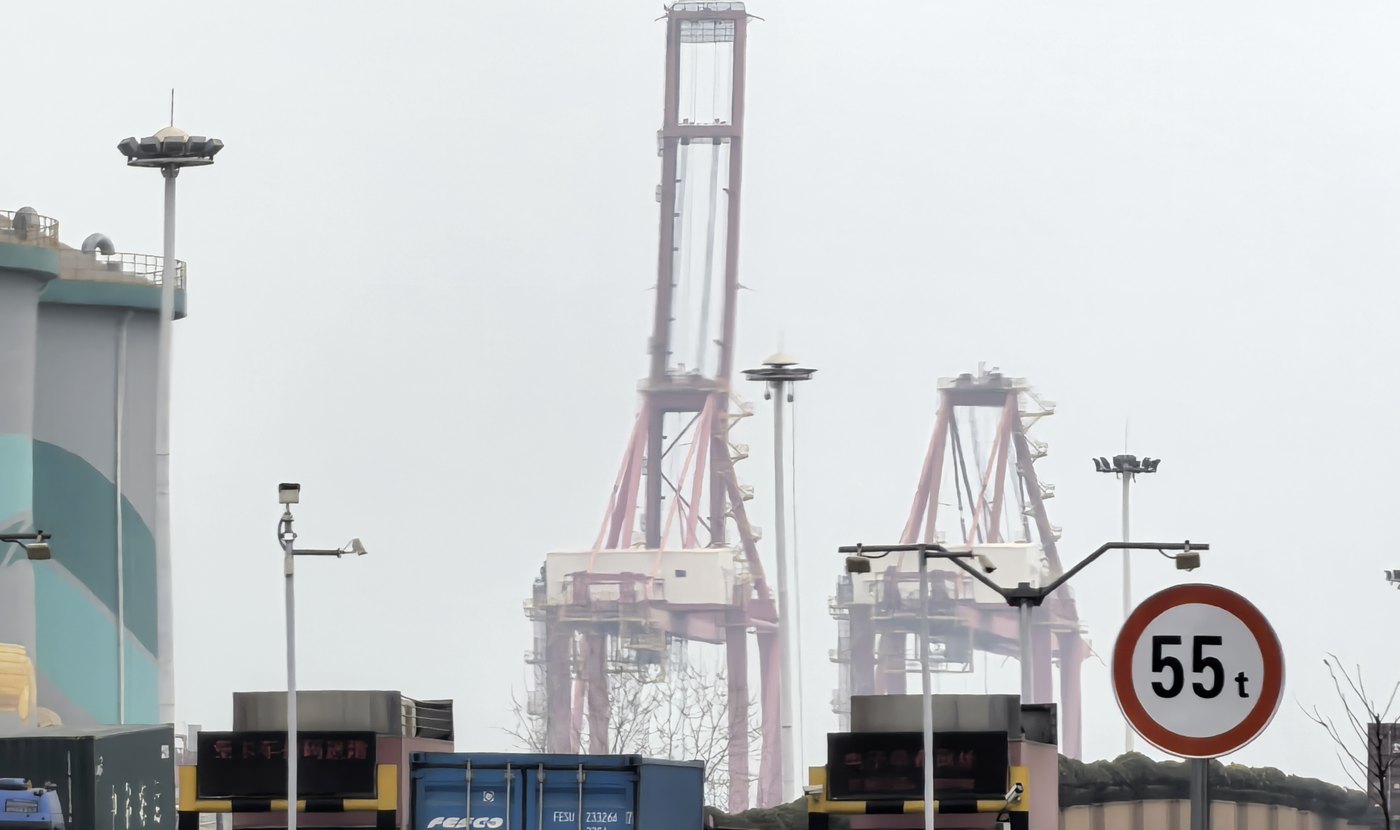
This leg decides your sailing when you buy FOB or FCA from a Shandong factory and nominate your own carrier. The carrier releases the empty, but somebody still has to position the box, get it loaded at the plant, weigh it and gate it in before the terminal stops receiving. At Rizhao that sequence runs through one specific port area: the port is split into Shijiu and Lanshan, container handling sits at Shijiu, and the automated west zone there has its own gate routine. Lanshan handles crude oil, ore and timber, with container capacity planned rather than operating. The terminal named on the booking slip, not the city name, decides the lane, the gate and the appointment window.
GoodHope Freight is a Shenzhen-based forwarder. Our scope covers ocean FCL and LCL port to port, air freight to airport, road transport and in-transit moves to Afghanistan. Drayage on this page is the China-side trucking leg of an ocean FCL booking. Rizhao also sits on two rail corridors of roughly 1,000 km each — the Wari line and the Xinhe-Yanzhou-Rizhao line — so a share of the boxes here arrive by block train from Henan, Shanxi and Shaanxi and only shuttle the last few kilometers into the gate. Rail-ramp work is scheduled against train arrival and the terminal receiving window, which is a different clock from a straight road haul. Say which model you are on when you ask for a rate.
What a Rizhao drayage move covers
Your supplier's location sets the trucking plan. The regions below are described by what they mean for scheduling.
| Factory region | Common locations | What it means for your booking |
|---|---|---|
| Rizhao local | Donggang, Lanshan, Wulian, Juxian, Rizhao E&D Zone | Short runs to Shijiu. Same-day empty pickup, loading and gate-in is realistic when the release and the appointment line up. |
| Linyi and southern Shandong | Lanshan, Hedong, Feixian, Tancheng, Lanling, Linshu | Roughly 130 km by road. Panel, hardware, willow ware and wholesale-market cargo; align loading with the consolidation schedule. |
| Weifang, Zibo and central Shandong | Shouguang, Zhucheng, Qingzhou, Linqu, Zhangdian, Zhoucun, Huantai | Mid-distance runs. Agricultural products and dense chemical or building material loads need axle weight and plant clearance checked before dispatch. |
| Jinan, Dezhou and northwest Shandong | Zhangqiu, Licheng, Qihe, Yucheng, Liaocheng | Long hauls. Build in a gate-queue buffer during peak weeks; a pre-pull is often the cheaper answer. |
| Rail-ramp boxes from Henan, Shanxi, Shaanxi | Zhengzhou, Shangqiu, Luoyang, Lüliang, Linfen, Xi'an | Boxes arrive by block train and shuttle into the gate. Match the move to the train arrival and the terminal receiving window. |
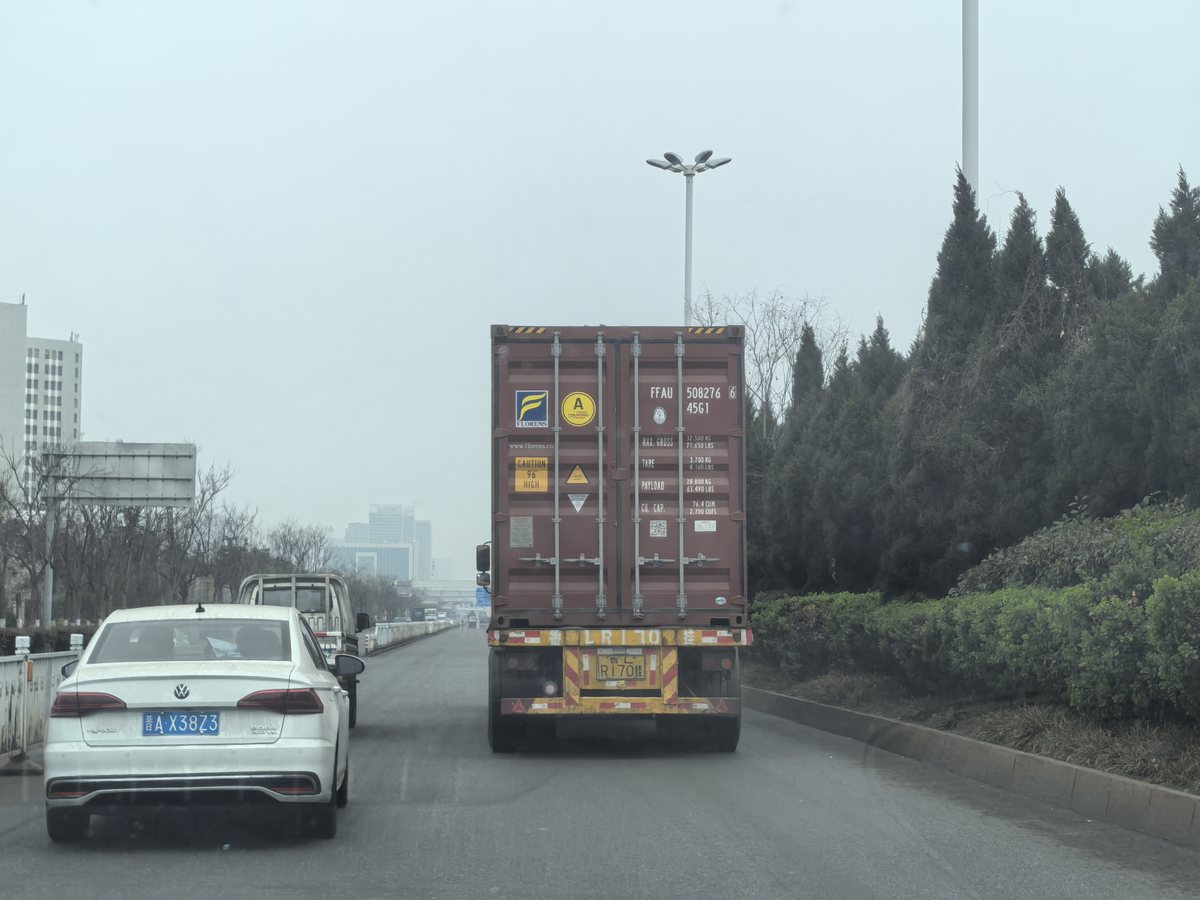
Moving the same cargo through Qingdao or Lianyungang, or shifting the work from Shijiu to Lanshan, changes the weight thresholds, the appointment system and the rate structure. Confirm the load terminal before asking for a drayage quote.
Container types and trucking setup
Standard dry containers are dispatched by size. Plant access and cargo weight decide the chassis.
| Container | Common shorthand | Typical cargo | Trucking note |
|---|---|---|---|
| 20ft standard dry | 20GP, one TEU | Tile, stone, metal parts, chemical raw materials | Short chassis. Dense cargo means axle weight gets checked first; two 20ft boxes can sometimes share one chassis. |
| 40ft standard dry | 40GP, one FEU | Furniture, building materials, general cargo | Standard chassis. The plant needs room for a 40ft rig to enter and turn. |
| 40ft high cube | 40HQ or 40HC | Light bulky goods, appliances, textiles | Extra height. Check overhead clearance at the plant gate and along the approach road. |
| 45ft high cube | 45HQ | High-volume light cargo, consolidated orders | Needs a longer chassis and carrier confirmation. Not every depot stocks this size, so check empty availability first. |
A trucking order should state the loading date, the factory name and address, a contact on site, the commodity, the actual gross weight, the container type and count, the Incoterm, and the vessel cut-off. Wood packaging bound for Australia, New Zealand, the US or Canada may need fumigation or a phytosanitary certificate, and that has to happen before the loaded box goes through the gate rather than after.
Use the carrier's container specification for internal dimensions, not a rule of thumb. Confirm the plant can take the truck length before the driver arrives; reloading in a nearby yard adds a full extra handling.
Heavy containers and two 20s on one chassis
Rizhao moves a lot of ore, coal and steel, so heavy cargo is normal traffic here rather than an exception.
Overweight loads
Tile, stone, metal goods, steel coil and chemical powders are the usual heavy cargoes. The weight question gets settled at booking, not at the gate. We confirm the carrier's weight cap for the sailing and declare the actual gross weight before the empty is released.
After loading, the shipment gets a Verified Gross Mass (VGM), the SOLAS-required certified container weight that has to match the booking and the export declaration. If the scale reading exceeds the cap, the load has to be reduced, split or rolled to the next sailing. Sending an overweight box to the gate and hoping does not work: the terminal refuses it, the appointment slot is wasted, and the fix costs more than a re-load at the plant.
Weight thresholds are set per carrier and per terminal, and the Rizhao figure is not the Shenzhen or Ningbo figure. Where a published industry rate table exists, it describes how a surcharge is built, not what we charge. Ask for the threshold in writing on the quote.
Dual 20s on one chassis
Two 20ft boxes behind one tractor works when both boxes are loaded at the same plant or on the same route, and when the combined gross weight stays inside road axle limits. The chassis length, the loading sequence and the terminal's gate rules all matter. Send both gross weights and both loading addresses before dispatch, and the planner will confirm whether the pair is viable rather than discovering it at the yard.
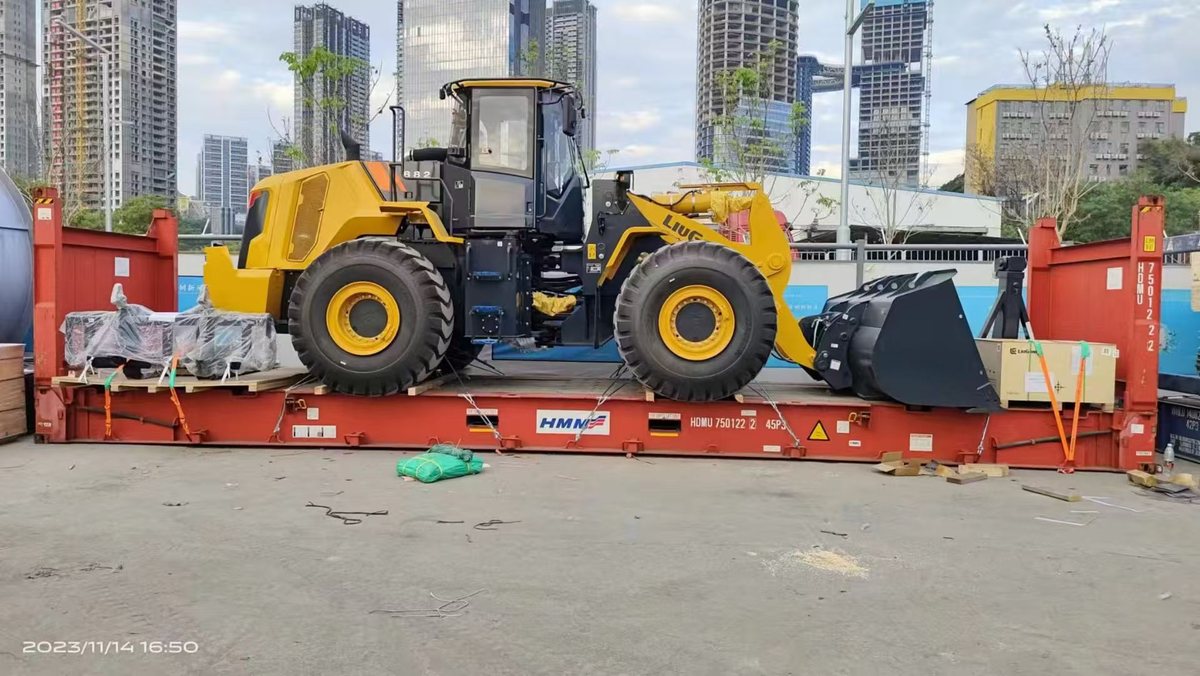
A dual-20 move usually earns a per-box discount, smaller on short runs. The discount describes the cost structure; the binding figure is the written quote.
Open-top and flat-rack containers
Both are for cargo that will not fit through the doors of a standard dry box.
Open-top containers
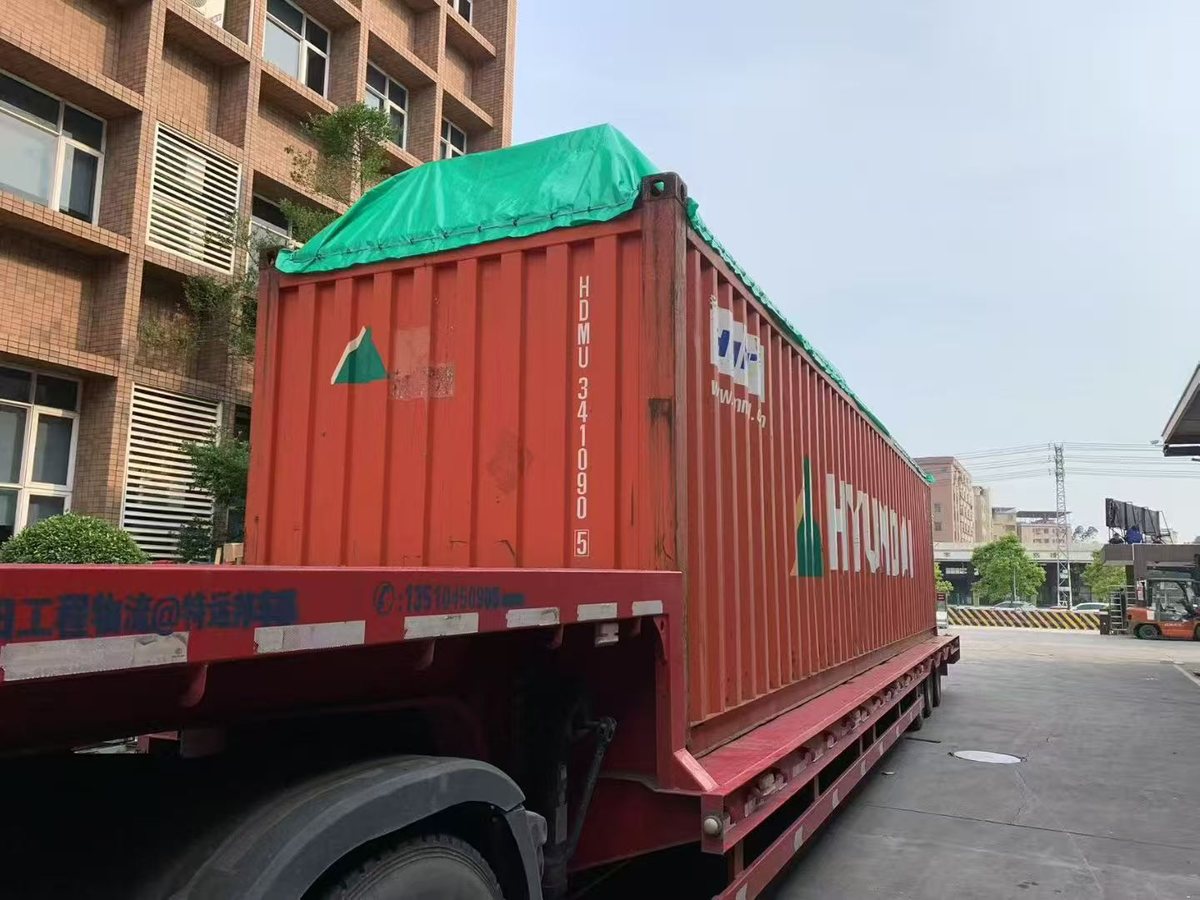
An open-top box has a removable roof, so the cargo is loaded from above by crane. It suits machinery, glass and equipment that is over height but still inside the box footprint. After loading, the roof is replaced by a tarpaulin and lashing. Route clearance matters: check height barriers, bridge clearances and the plant gate before the truck leaves the yard.
Flat-rack containers
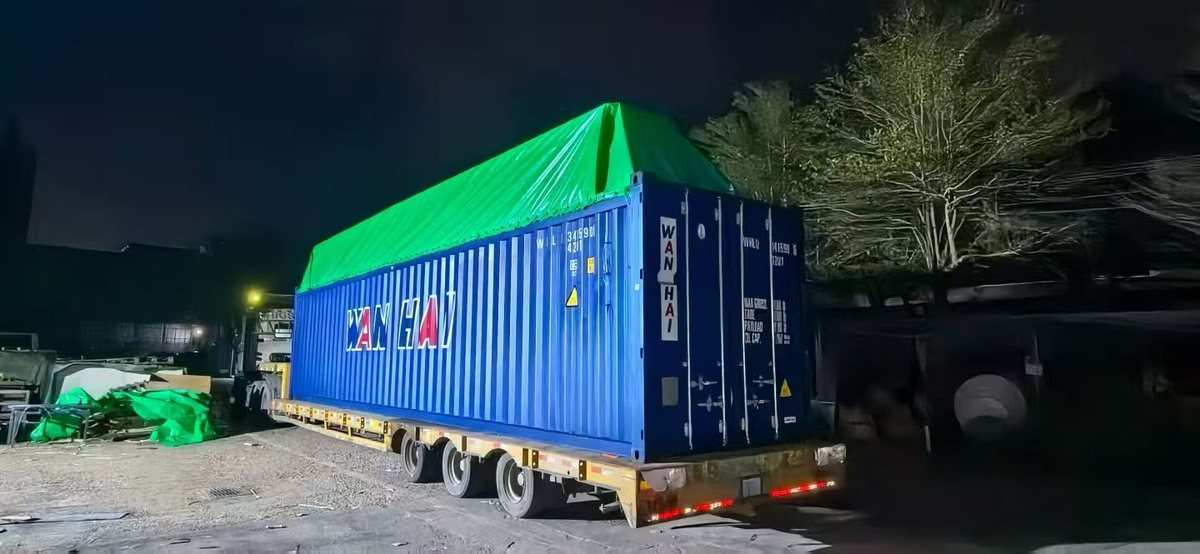
A flat rack has a floor and end walls but no sides or roof, which is how over-width and over-length cargo travels. The shipper is responsible for waterproofing and lashing, and the center of gravity has to be marked on the loading plan. Flat racks and open tops are both out-of-gauge (OOG) moves, so the carrier's acceptance and the terminal's receiving rules get confirmed per booking rather than assumed from the last shipment.
Dangerous goods and ISO tanks
Rizhao runs DG boxes through a separate filing and inspection channel, not the ordinary gate flow.
The road leg for dangerous goods (DG) moves on vehicles and with drivers licensed for the class, and the paperwork is checked line by line before dispatch. ISO tanks carrying liquid or gas chemicals also need a tank inspection certificate and a filling record on top of the DG documents.
At Rizhao the sequence starts upstream of the truck. The manufacturer and the booking agent file the company, the product and the packing location on the Luhaitong platform; the fleet, vehicle and driver are filed separately. The empty goes to the nominated inspection point at the Luhaitong yard, and only a box that passes inspection can be loaded. Loading is filmed in stages and uploaded for review, and the loaded box declaration is entered by the booking agent. If the filing or the documents are incomplete, the terminal will not receive the box.
| Document or condition | What gets checked |
|---|---|
| Dangerous goods packaging certificate | Matches the class, the packaging type and the quantity, and is inside its validity |
| Safety data sheet (MSDS / SDS) | Proper shipping name, UN number, class, emergency response and transport conditions |
| DG booking confirmation and release | Carrier accepts the class, the box type and the terminal |
| Road transport licence and escort | Vehicle, driver and escort qualifications, plus the tank certificate where relevant |
| Terminal receiving rules | Inspection point, gate window, stack position and declaration timing — at Rizhao this runs through the Luhaitong yard and a dedicated gate |
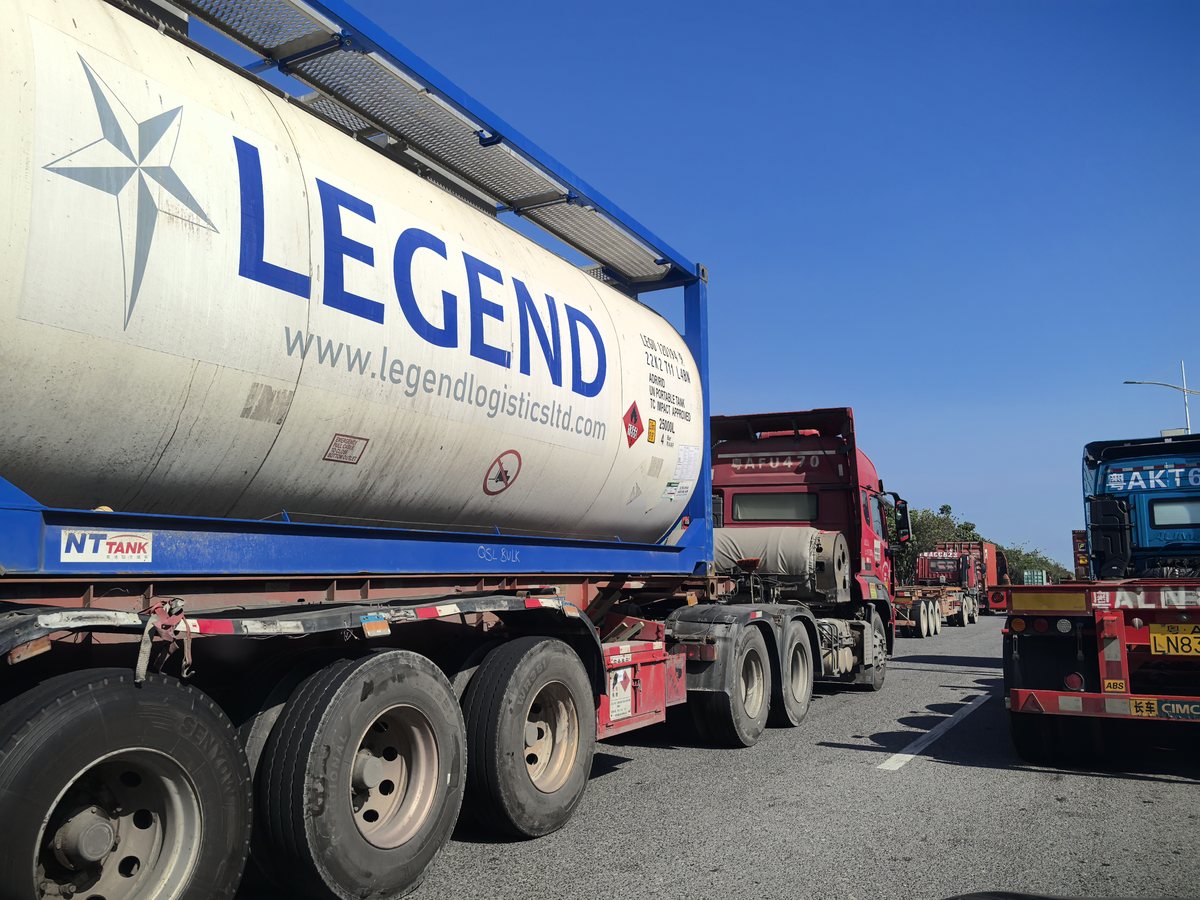
DG dispatch starts from complete documents and a completed platform filing, never from an available truck. Confirm the carrier's acceptance and the terminal's receiving conditions first, then lock the appointment slot.
Refrigerated container moves
Temperature compliance is a data problem as much as a trucking problem.
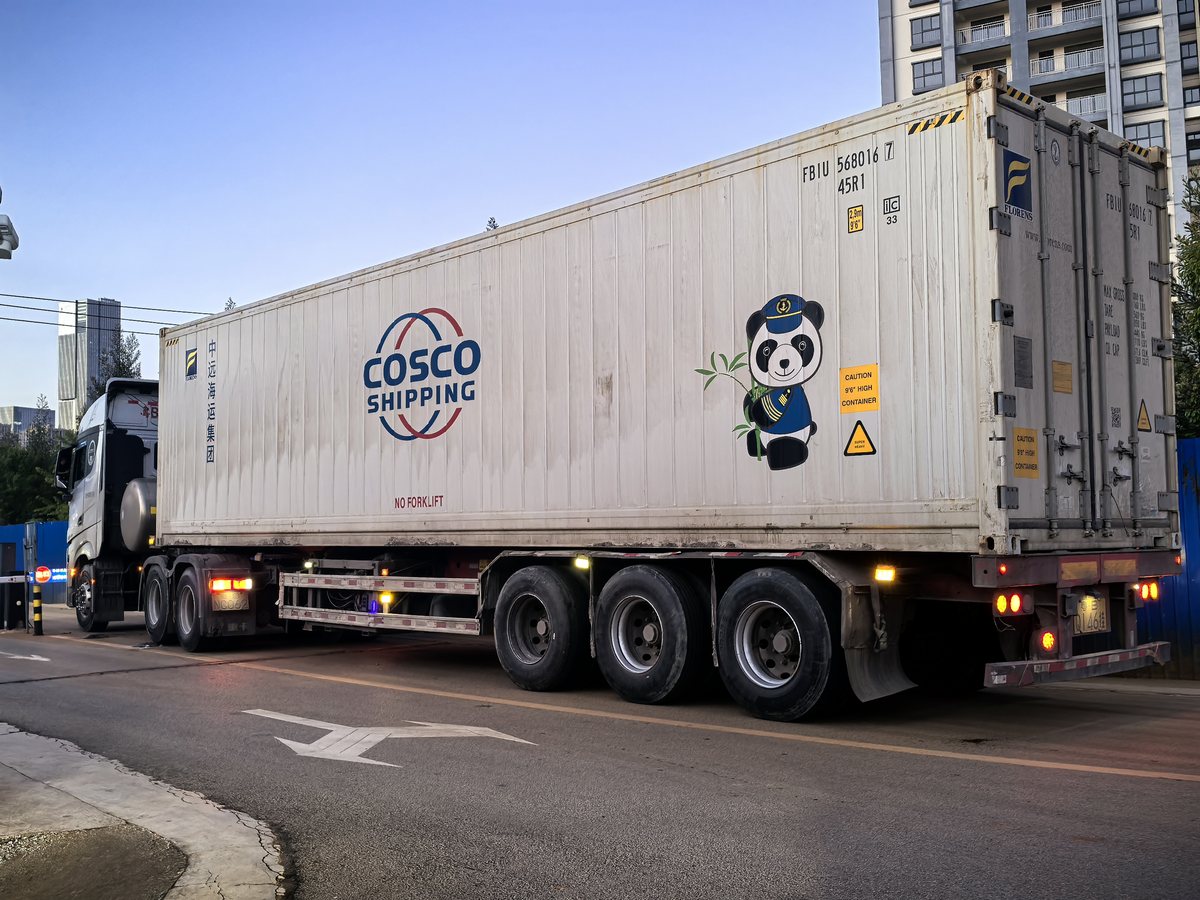
Confirm the set point, the ventilation setting, the pre-cooling requirement and how the unit will be powered before the box is released. If the chassis cannot plug into shore power, the move needs a genset or a chassis with an integrated generator. Pre-cooling and a box inspection happen before loading; after loading, the temperature is recorded and the data logger is kept with the shipment file.
Rizhao runs cold-chain lanes for agricultural cargo, including fresh onions and frozen pumpkin, and reefer data feeds the terminal's operating system for remote monitoring. Plug positions and reefer receiving hours follow the Shijiu yard's daily arrangement, so the trucking schedule has to be built around the yard's working window. On a pre-pull, confirm the off-dock power supply and the free-storage period at the same time.
Oversized and project cargo
When the cargo is outside the box profile, the route survey comes before the rate.
Large equipment, construction machinery, tanks, molds and production lines travel on low-bed trailers, extendable flats or flat racks. The chassis is chosen from the actual dimensions, gross weight, center of gravity and support points, and the loading plan states the lifting points, the lashing points, the dunnage positions and the turning radius required en route.
The survey covers the plant exit road, the highway entrance, bridge height and weight limits, and the terminal approach. Where an oversize transport permit is required, it is applied for in advance with the authorities along the route. Rizhao's container terminal uses unmanned intelligent gates: the truck needs an activated job on the Yungangtong platform and passes the gate with the combined electronic pass and the driver's ID card. Oversize vehicles follow the gate conditions of the day and on-site direction, and the vehicle dimensions are declared ahead of time where needed.
Cargo outside the standard envelope is received and stowed under separate terminal confirmation. Do not plan it against the cut-off of an ordinary dry box.
Other drayage work we coordinate
Rizhao moves rarely stand alone. They connect to yards, warehouses, rail ramps and land ports.
Pre-pulls
Pull the empty early and hold it off-dock when the plant is not ready or the appointment quota is tight. Free storage and off-dock conditions are confirmed at booking.
Empty returns
When a loaded box is cancelled after pickup, the empty goes back under the return rules of the depot that released it.
Split pickup and return
Pickup and return at different terminals or depots is quoted as a split move, not as a standard round trip.
Warehouse loading
Cargo from several suppliers is consolidated at a warehouse and loaded into one box, which suits multi-supplier orders.
Rail ramp moves
Block trains link Rizhao with inland ramps such as Zhengzhou, Xi'an, Lüliang and Linfen. Boxes are railed to the ramp or shuttled from the ramp into the gate, timed to the train and the receiving window.
Land port transfers
Transit cargo handled at a land port needs a customs-registered vehicle and an electronic seal; the handover is coordinated with the broker.
From empty pickup to gate-in
Each step has a document and an owner. The schedule is built backward from the cut-off.
- Release and shipping order. The booking confirmation is exchanged for a release against the carrier or its agent. The depot, the box type and count, the vessel and voyage and the pickup validity are checked before a truck is assigned.
- Empty pickup and inspection. The driver collects the box against the equipment interchange receipt (EIR) and checks the number, the seal and the condition. Damage, deformation or contamination is recorded and photographed on the spot, and the box is swapped before it leaves the yard.
- Delivery and loading. The empty arrives at the agreed time. The plant must have room for the rig, a loading platform or a forklift. Dense cargo goes on dunnage to spread the load, machinery is lashed diagonally, and cartons are braced with airbags.
- Weighing, sealing and records. The loaded box is weighed for VGM, sealed, and photographed at the cargo face, the lashing and the seal. The seal number has to match the export declaration and the bill of lading.
- Return to yard or direct gate-in. Depending on the carrier and terminal, the box goes back to a yard for consolidation or straight from the plant to the terminal. Yard first when inspection or consolidation is needed; direct when time is tight and nothing needs checking.
- Appointment and delivery. The truck arrives inside the booked slot and the gate verifies the box, the seal and the documents. At Rizhao the terminal gate is unmanned: the job is activated on Yungangtong, the driver passes with the combined electronic pass and the ID card, and the system checks the vessel schedule, the charges and the release status at activation. Exceptions are routed to a buffer area instead of the main gate lane.
- Customs release. The customs cut-off and the terminal cut-off are two different deadlines. The release message has to reach the terminal before receiving closes, not before the vessel sails.
| Exception | Handling |
|---|---|
| No empty at the nominated depot | Ask the carrier to re-nominate the depot or release an alternative box source |
| Plant not ready to load | Confirm progress early; split the move or roll to the next sailing |
| Gross weight over the cap | Declare at booking and adjust the load at the plant, not at the gate |
| Seal or documents do not match | Re-seal, correct the record, notify the carrier and the broker |
| Gate queue or system outage | Arrive inside the slot, keep a buffer, watch the terminal notices |
| Release message not received | Push the box and the documents on the same timeline; never send the box ahead of the release |
Every step can queue. Shijiu handles a high daily volume of box trucks, and waits stretch in peak weeks, after a wind-related closure and when several sailings close together. Plan against the tightest cut-off.
Gate appointments and the vessel window
At Rizhao the appointment is a platform transaction, and the gate checks it automatically.
Rizhao container terminal works on a book first, then appoint, then enter sequence. The export box is appointed and dispatched on the Yungangtong platform, and the truck arrives inside the locked slot. Without an appointment, or outside the slot, the gate may refuse the box. Receiving windows and daily quotas move with the sailing schedule and the terminal's notices, so the authority is the latest notice from Shandong Port Rizhao Port Container Branch.
The booking and dispatch work sits on one platform: the carrier or agent releases the box, the fleet books the appointment and the driver activates the job in the same system. The gate is unmanned and reads a combined electronic pass — appointment code, box verification code and electronic bill of lading — together with the driver's ID, and a pre-check validates the vessel schedule, the charges and the release status at activation. After a platform upgrade or an app version change, re-book and re-dispatch per the terminal notice instead of reusing an old job.
Once booked, arrive inside the slot. Early or late arrival can be turned away, and a no-show that is not cancelled is recorded and counts against future booking rights. A wider receiving window or a higher quota never means the loaded box can go in early; the locked slot is the real receiving time.
| Platform or channel | Main use | What the trucking side must know |
|---|---|---|
| Yungangtong (app and platform) | Appointment, dispatch, booking, status and online payment | No weighbridge entry without an activated job; gate pass uses the combined code and the ID card |
| Zhoudao / Luhaitong | New appointment and dispatch entry; DG filing, box inspection and loading video review | DG boxes are filed before dispatch; re-book after a platform upgrade |
| Terminal notices and service desk | Receiving windows, quotas, gate organization, closure and restart notices | Re-check before every shipment; never dispatch on last week's slot |
Gate organization and the approach route follow the terminal and the traffic police on the day, and port roads run one way as signed. Put the terminal, the gate and the slot on the dispatch order, and let the driver follow the route pushed by the platform.
What a drayage quote includes
Base haulage is priced by lane. Everything else is priced by what actually happens.
| Charge | What triggers it |
|---|---|
| Base haulage | Priced by loading address, box size and terminal; 20ft and 40ft are separate rates and long lanes are banded by distance |
| Overweight surcharge | Charged on the tonnage above the carrier or terminal threshold; the Rizhao threshold differs from southern Chinese ports, and a change of terminal means a fresh calculation |
| Dual-20 discount | Two 20ft boxes on one chassis earn a per-box reduction, smaller on short runs; the written quote is the binding figure |
| Waiting and overnight hold | Hourly after the free waiting time at the plant or yard; a loading that runs overnight is charged as an overnight hold |
| Pre-pull | Charged when the empty is pulled early and held off-dock, with a free-storage allowance that depends on the depot |
| Empty return | Charged as a share of base haulage when a released empty goes back without being loaded |
| Split move | Charged separately when pickup and return sit at different terminals or depots |
| Depot handling | Depot fees for releasing and receiving a box differ between 20GP and 40HQ |
| Pass-through items | Box numbering, weighing, temporary highway charges, documentation and fumigation are billed at cost as instructed |
The list above follows the structure of published industry rate tables and explains how charges are built. It is not a quotation. Amounts move with the loading address, the box type, the gross weight, the sailing and the terminal rules. Ask for the inclusions, the free waiting time and the invoice type on the written quote.
Drayage and China export customs
A box at the gate without a release message is a box that misses the cut-off.
Gate-in requires the customs release to have reached the terminal. A truck queuing outside the port while the release is still pending loses the slot, and the recovery costs — re-stow, re-booking, container rent — land on the shipment. When trucking and export filing sit with one team, the box number, the seal number, the VGM, the packing list and the declaration elements are checked on the same thread and exceptions are caught before the cut-off.
Document requirements at Rizhao vary by commodity: general cargo, dangerous goods, chemicals, food and cold-chain agricultural products each carry their own paperwork and inspection. Wood packaging bound for Australia, New Zealand, the US or Canada needs phytosanitary treatment or fumigation. The clearance process is described on China export customs clearance, and the document set is listed on the export documents checklist.
Paperwork checked early
Release, EIR, packing list and declaration elements are checked before dispatch, so nothing gets patched after the box is at the gate.
Appointment locked first
The slot is booked off the vessel schedule and the cut-off, then the loading time is set against it — not the other way round.
Weight and condition on file
Gross weight is declared at booking, box condition is photographed at pickup, and the seal and VGM are recorded after loading.
Milestones you can forward
Plate number, driver, box number and seal go out after pickup; arrival, loading, departure and gate-in are reported as they happen.
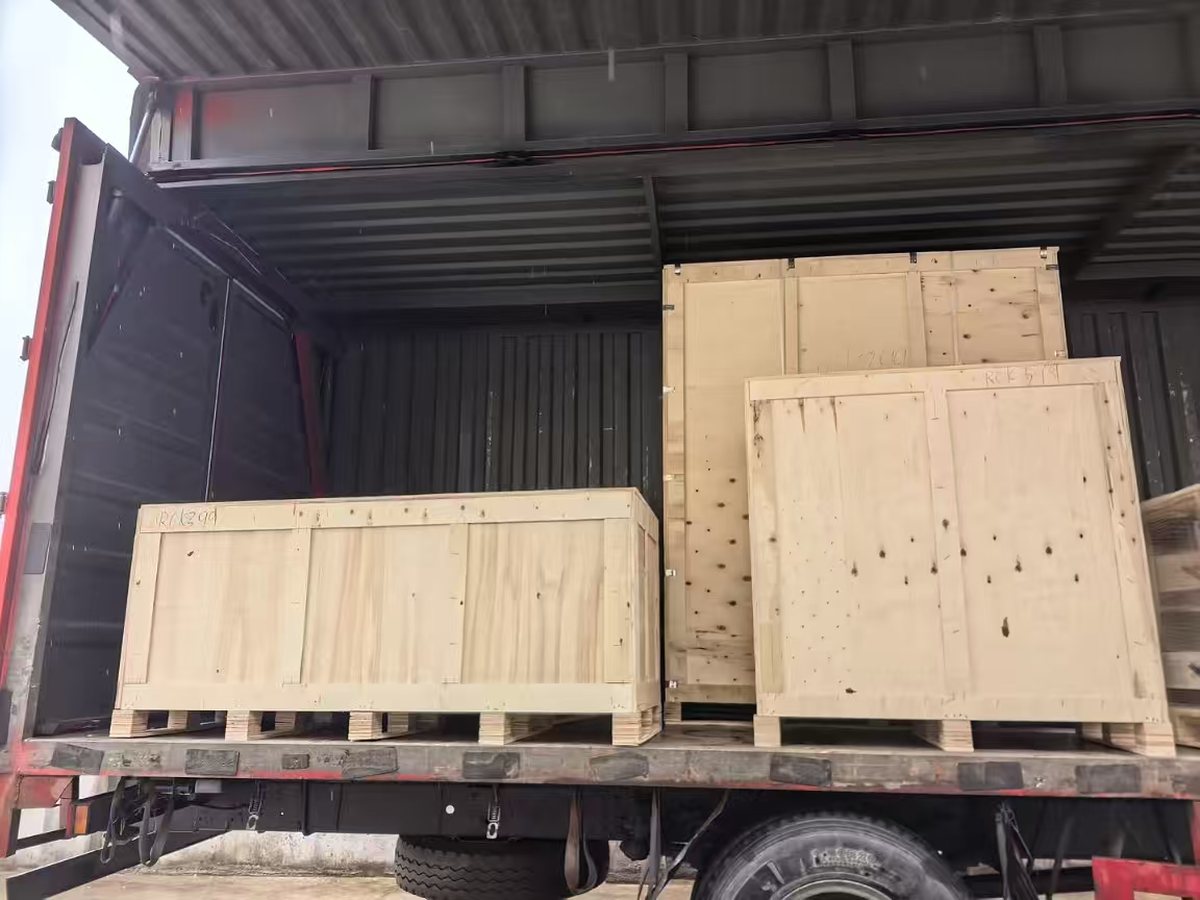
Field notes: eight problems that derail a Rizhao move
Drawn from the situations that repeat in daily dispatch. No client names, no specific sailings — the point is the order of handling.
A late factory finish before cut-off
The plant finishes in the afternoon, the box closes the next morning, and the declaration is still being amended. Pull, load, return and book in the normal order, and the window is probably gone.
Work backward from the cut-off, the receiving window, the release status and the slots still open. A direct gate-in skips the yard when nothing needs checking, and the documents move in parallel with the truck. If it cannot be done, say so early and offer a pre-pull or the next sailing instead of a promise.
A load over the carrier's weight cap
Tile, stone and metal parts weighed after loading come in above the carrier's or terminal's cap, and the gate refuses the box.
Declare the gross weight at booking and confirm the cap for that sailing, then write the limit into the plant's loading instruction. At the plant, reduce, split or re-book. Thresholds differ between Shandong and southern China, and a change of terminal means recalculating.
Loading that only happens on the night shift
Daytime truck restrictions or a night-shift crew mean the forklift, the dock and the gate guard are all on a night schedule. An early truck waits outside.
The dispatch order states the night arrival time, the site contact and how to get in. Lighting, dock access and night loading conditions are confirmed beforehand, and the overnight charge is quoted up front rather than negotiated on the spot.
Loading that spills into a second day
Several suppliers, or stock that is not ready, turns one box into a two-day job. The truck sits at the plant and the following bookings fall apart.
Check consolidation progress before dispatch. If a second day is likely, compare the overnight hold, an off-dock drop with a second dispatch, and warehouse consolidation, then quote all three so the choice is made on cost rather than on the day.
No empty container at the nominated depot
The release is issued but the depot has no box of that size. 45HQ, open top and flat rack are the usual shortages, and the sailing does not wait.
Check the release status and the shipping order validity, then ask the carrier to re-nominate the depot or approve a substitute. On a tight schedule, pull from another depot or pre-pull and re-sequence the loading and gate-in, telling the client the schedule risk plainly.
A terminal or yard that refuses the loaded box
Receiving has not opened, the yard is full, or the truck arrives outside its slot. The box is rejected and the vehicle waits outside on the clock.
Confirm the receiving window, the slot and the yard status before returning. If the window is closed, use an off-dock drop or a direct gate-in, and price the drop, the re-handling and the storage before deciding to wait. Cancel a slot that will not be used.
An empty that arrives in poor condition
Rust, a deformed frame, a damp floor, a leaking door seal or a lingering smell — found after loading, and then blamed on the shipper at return.
Inspect against the EIR at pickup and photograph everything. If the problem shows up after loading, ask the carrier to approve a swap or a repair, transload if needed, and send the condition record to the client and the broker so the return is not disputed.
A gate transaction that will not process
The EIR will not print, the box number does not match the manifest, the booking has no release, or the system is down. The driver arrives and cannot deliver, burning a slot.
Check the shipping order, the booking confirmation, the vessel and voyage, the box number and the seal at the source before printing anything. No paperwork, no empty truck at the gate. If the slot cannot be used, cancel or re-book early; no-shows are recorded against future bookings.
Most of these failures sit in documents, empty supply, appointments or release timing rather than in the truck. Checking the release status, the box condition, the weight cap, the plant access, the slot and the declaration in one pass before dispatch costs less than fixing any of them at the gate.
Why importers use us for Rizhao drayage
Price transparency, trucks that arrive, charges that do not move, and somebody who answers when something goes wrong.
Line-item quotes
Base haulage, overweight, pre-pull, overnight, empty return, split moves and pass-through items are listed with what is included, what is not, the free waiting time and the invoice type.
No peak-season surcharge
Booked rates hold through the Spring Festival period, National Day, the restart after a wind closure and weeks when sailings bunch up. Genuine new terminal or carrier charges are passed on with evidence, told in advance.
Rates built on the actual lane
Priced from the loading address, the box size, the gross weight and the terminal. No inflated long hauls, no loss-leader short hauls with charges added later.
Vetted carriers and safe loading
Vehicles and drivers are checkable, DG, reefer and out-of-gauge cargo go on dedicated equipment, and box inspection and lashing are photographed.
Milestones you can forward
Plate number, driver contact, box number and seal after pickup; arrival, loading, departure and gate-in as they happen. When something slips, an alternative comes before an explanation.
One team for trucking and filing
Box number, seal, VGM, packing list and release are checked by one team, so the truck and the declaration move together.
Coverage beyond Rizhao
Rizhao, Lanshan, Qingdao and Lianyungang terminals, plus rail ramps at Zhengzhou, Xi'an and Linyi and land ports. Switching terminal or moving to rail keeps the same contact.
A fixed playbook for exceptions
Late finishes, overweight boxes, overnight holds, missing empties and failed gate transactions run off a pre-dispatch checklist, so the fix happens before the truck moves.
Rates are confirmed on a written quotation. The practices above describe how we run Rizhao drayage; carrier, terminal, depot and statutory charges follow the rules in force on the day.
Frequently asked questions
Answers to the questions importers ask before booking a Rizhao drayage move.
How much does container drayage at Rizhao cost?
There is no flat per-container price. A quote combines the loading address, the box size, the terminal, whether a pre-pull is needed and whether the cargo is overweight. Send the loading address, the box type and count, the gross weight, the vessel and voyage and the cut-off, and the quote can be built. Beyond base haulage, expect overweight, waiting, overnight, pre-pull, split-move, empty-return and depot charges, each listed as included or excluded.
How much time should I allow between empty pickup and gate-in?
Work backward from the cut-off rather than forward from the factory finish date. Empty release, yard queues, inspection, loading, weighing, sealing and the gate appointment each take time, and peak weeks, the restart after a wind closure and bunched sailings stretch them. Leave the buffer at the terminal end, not at the plant end, so there is still room to re-book a slot.
Can two 20ft containers move on one chassis?
Often yes, when both boxes load at the same plant or on the same route and the combined gross weight stays inside road axle limits. Chassis length, loading order and the terminal's gate rules all count. Send both gross weights and both addresses before dispatch; the planner confirms the pairing rather than discovering the problem at the yard.
What happens if my container is overweight?
The carrier sets a weight cap for the sailing and the terminal sets its own limit. We declare gross weight at booking and confirm the cap before the empty is released. After loading, VGM is measured and matched to the booking and the declaration. If the reading is over the cap, the load is reduced, split or rolled. The Rizhao threshold is not the Shenzhen or Ningbo figure, so a terminal change means recalculating the surcharge.
What documents does a dangerous goods box need at Rizhao?
A dangerous goods packaging certificate, a safety data sheet, a DG booking confirmation accepted by the carrier, the road transport licence and escort details, and a tank certificate for ISO tanks. On top of that, Rizhao requires the manufacturer and the booking agent to file the company, product and packing location on the Luhaitong platform, with the fleet, vehicle and driver filed separately. The empty is inspected at the Luhaitong yard and the loading is filmed for review. Incomplete filing means the terminal will not receive the box.
What does a reefer move need before pickup?
A confirmed set point, ventilation setting and pre-cooling requirement, plus a decision on how the unit is powered on the road. If the chassis cannot take shore power, the move needs a genset or a generator chassis. Pre-cooling and box inspection happen before loading, and the temperature record is kept after. Plug positions and reefer receiving hours at Shijiu follow the yard's daily arrangement, so the schedule is built around that window.
What is the difference between an open top and a flat rack?
An open top has a removable roof and cargo goes in from above, covered with a tarpaulin afterwards — good for over-height cargo that still fits the box footprint. A flat rack has no sides or roof and takes over-width or over-length cargo, with the shipper responsible for waterproofing and lashing. Both are out-of-gauge moves and both need the carrier's acceptance and the terminal's receiving rules confirmed per booking.
Do I need a gate appointment at Rizhao?
Yes. The terminal works on a book first, then appoint, then enter sequence. The export box is appointed and dispatched on Yungangtong, and the truck must arrive inside the locked slot; without an appointment or outside the slot the gate may refuse it. Put the terminal, the gate and the slot on the dispatch order and check the receiving window on the platform and the terminal notices before every shipment.
Can I change an appointment, and what does a no-show cost?
Change it on the platform before the slot expires instead of letting the truck fail to appear. Missed slots without cancellation are recorded, and repeated no-shows affect future booking rights. When a sailing change moves the receiving window, re-check the existing appointment so the truck does not arrive inside a slot that no longer matches the terminal's working window.
Can trucking and export filing be handled by different companies?
Yes, provided the release message and the box are on the same timeline. Gate-in needs the customs release to have reached the terminal; a box queuing outside the port without a release misses the cut-off. With one team on both, the box number, seal, VGM and declaration elements are checked together. If the work is split, agree the handover points and the escalation contact in writing.
Is there a surcharge during the Spring Festival peak?
Booked rates hold through the Spring Festival period, National Day, the restart after a wind closure and weeks when sailings bunch up. Genuine new terminal or carrier charges are passed on with evidence and told in advance. Overnight holds, waiting time and empty returns are charged as work performed under the rate card, which is a different thing from a peak surcharge.
How are overnight holds and waiting time charged?
Waiting beyond the free time stated on the quote is charged hourly, and a loading that runs overnight is charged as an overnight hold. Both are written on the dispatch order before the truck moves. When stock may not be ready, compare the hold, an off-dock drop with a second dispatch, and warehouse consolidation — usually cheaper than keeping a truck and driver parked at the plant.
Can a damaged or very old empty container be swapped?
At pickup, inspect against the EIR and photograph the box. If the frame is deformed, the floor is damp or oily, the door seal leaks or there is a smell, register it and ask the depot to swap the box before it leaves. If the problem only shows up after loading, ask the carrier to approve a swap or repair and transload if needed, and send the condition record to the client and the broker.
What if there is no empty at the depot, or the gate will not process the box?
Check the release status, the shipping order validity, the booking confirmation and the vessel and voyage before assigning an empty truck. If there is no box, ask the carrier to re-nominate the depot or approve a substitute size; if the gate transaction fails, trace the box number, the manifest and the data source before re-processing. Cancel or re-book a slot that will not be used.
Get a drayage quote for Rizhao
Send the loading address, box type and count, gross weight, commodity, vessel and voyage, cut-off and whether export filing is needed.
Dangerous goods, reefer, out-of-gauge and overweight cargo: attach the documents or the loading drawing with the enquiry so the first answer is usable rather than a list of questions.
Phone / WeChat / WhatsApp: 008618933455525 | Email: sales009@goodhope86.com
