
Lianyungang, Jiangsu · Miaoling container terminals · empty pickup, loading, gate-in
Lianyungang Port Container Drayage
Drayage is the short-haul truck move that puts a container between a port and a factory. At Lianyungang we collect the empty from the Miaoling container district, deliver it to your supplier across northern Jiangsu or southern Shandong, and return the laden box to the terminal before the gate window closes. Standard, heavy, dual-20, open-top, flat-rack, dangerous goods, ISO tank, reefer, out-of-gauge and customs exam runs are all inside the scope.
- 20ft to 45ft dry
- Overweight and dual 20s
- Open-top and flat rack
- DG, ISO tanks, reefer
- OOG and exam runs
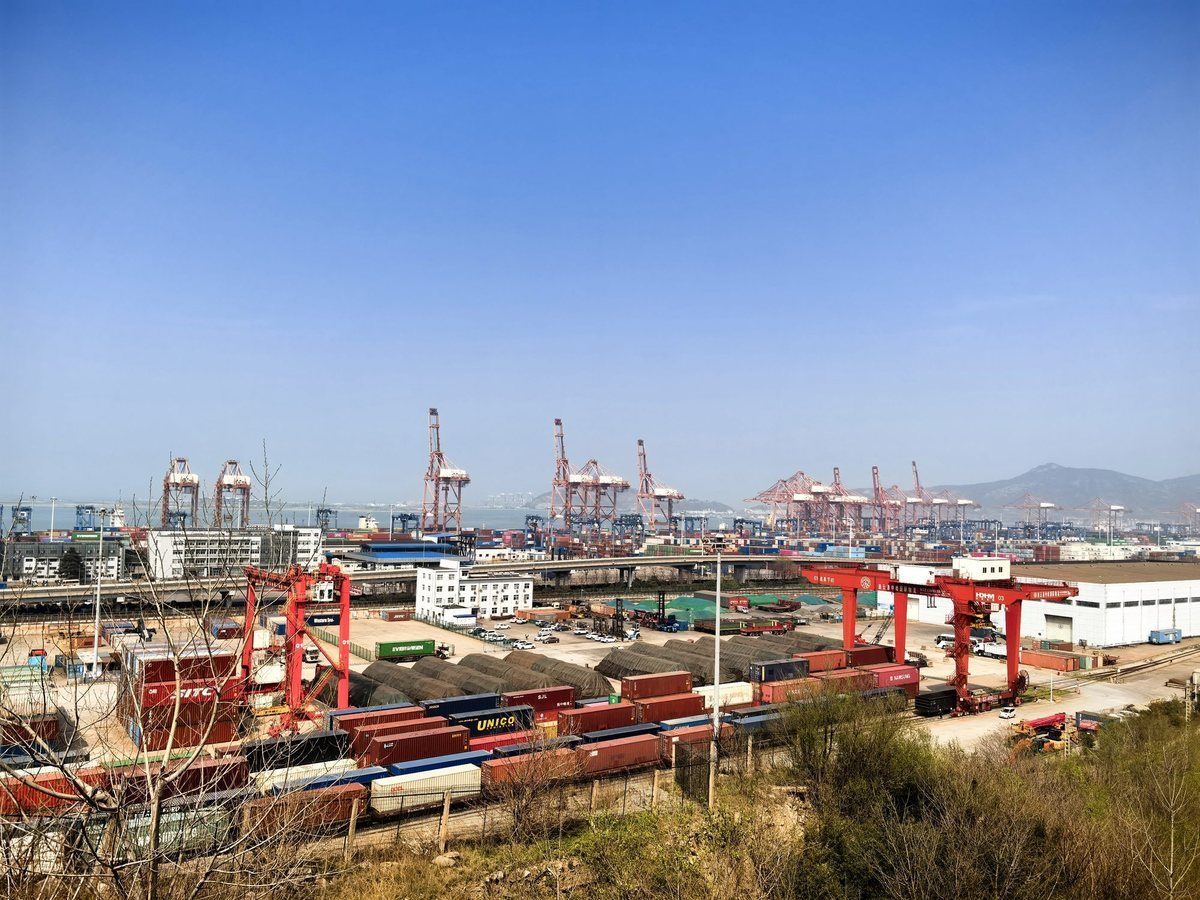
This leg matters when you buy FOB or FCA from a factory in Jiangsu, Shandong, Henan or Anhui and nominate your own carrier. The line releases the empty, but somebody still has to position the box, load it, weigh it and gate it in on time. Our dispatch desk works on China time (GMT+8), in the same time zone as the factory, the terminal and the customs broker.
GoodHope Freight is a Shenzhen-based freight forwarder. Our scope covers ocean FCL and LCL on a port-to-port basis, air freight to airport, road transport and in-transit moves to Afghanistan. Drayage on this page is the China-side trucking leg of an ocean FCL shipment.
One local detail changes how you plan the week. Lianyungang normally takes the laden box into the terminal and stacks it before customs releases, then loads against the release. Shanghai and Yangshan work the other way round. If your schedule assumes a release-first port, build the sequence differently here.
Where the truck goes: the Lianyungang hinterland
Lianyungang is the eastern end of the New Eurasian Land Bridge. Freight comes by road from northern Jiangsu and southern Shandong, and by rail from much further west.
| Factory region | Common locations | What it means for your booking |
|---|---|---|
| Lianyungang area | Haizhou, Lianyun, the economic development zone, Ganyu, Donghai, Guanyun, Guannan | Short runs. Empty pickup, loading and gate-in in one day is realistic when the release and the gate window line up. Check which port district the booking actually names. |
| Suqian and Huai'an | Shuyang, Siyang, Sucheng, Huaiyin, Lianshui | Nursery stock, panel products and light goods. Many plants sit on county roads, so confirm a 40ft rig can enter and turn before dispatch. |
| Xuzhou and Pizhou | Xuzhou economic zone, Tongshan, Jiawang, Pizhou, Xinyi | Construction machinery and panel products. Heavy cargo, so axle weight and the plant's lifting equipment get settled first. |
| Southern and southwestern Shandong | Linyi, Tancheng, Lanling, Cangshan, Lanshan, Zaozhuang, Jining, Heze | Cross-province runs. Vegetables, garlic and panel products dominate; reoffer and dry cargo are planned on separate trucks. |
| Yancheng and Nantong | Xiangshui, Binhai, Sheyang, Dafeng | Longer coastal runs. Schedule against the terminal cut-off and consider a pre-pull in peak weeks. |
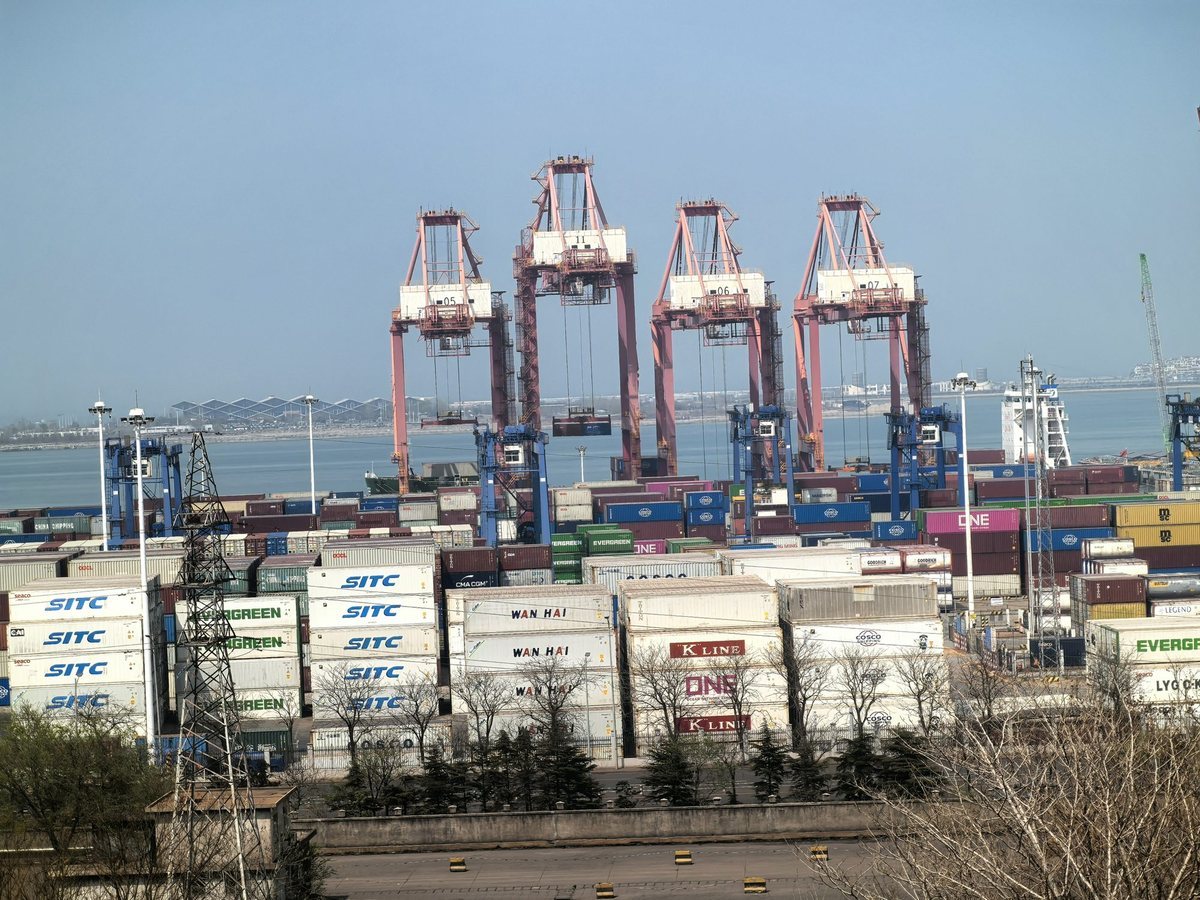
The port runs one main area plus two wings. Miaoling handles containers, Xugou, Qitai and Dadi handle breakbulk and bulk, Xuwei handles crude and liquid chemicals, and Ganyu and Guanhe handle dry bulk and barge traffic. Sending a truck to the wrong district is not a small detour, and re-routing a stacked box afterwards means new paperwork.
Container types and trucking setup
Dry boxes are dispatched by size. Plant access and cargo weight decide the chassis.
| Container | Common shorthand | Typical cargo | Trucking note |
|---|---|---|---|
| 20ft standard dry | 20GP, one TEU | Quartz sand, glass, fertilizer, metal parts, chemical raw materials | Short chassis. Dense cargo means axle weight is checked first; two 20ft boxes can sometimes share one chassis. |
| 40ft standard dry | 40GP, one FEU | Plywood, furniture, building materials, general cargo | Standard chassis. The plant needs room for a 40ft rig to enter and turn. |
| 40ft high cube | 40HQ, 40HC | Light bulky goods, appliances, textiles, produce | Extra height. Check overhead clearance at the plant gate and along the approach road. |
| 45ft high cube | 45HQ | High-volume light cargo, consolidated orders | Needs a longer chassis and carrier confirmation. Not every depot stocks this size, so check empty availability first. |
A trucking order should state the loading date, the factory name and address, a contact on site, the commodity, the actual gross weight, the container type and count, the Incoterm, and the vessel cut-off. Wood packaging, plywood and panel products bound for Australia, New Zealand, the US or Canada may need fumigation or a phytosanitary certificate before loading starts.
Use the carrier's container specification for internal dimensions, not a rule of thumb. Confirm the plant can take the truck length before the driver arrives. Around Lianyungang there are fewer yards that can rehandle a rejected box than around Shenzhen, so a mis-loaded container costs more time to fix.
Heavy containers and two 20s on one chassis
Overweight loads
Plywood, fertilizer, quartz sand, glass, steel and metal goods are the usual heavy cargoes out of this region. The weight question gets settled at booking, not at the gate: we confirm the carrier's cap for the sailing and the actual gross weight is declared before the empty is released.
After loading, the shipment gets a Verified Gross Mass (VGM), the SOLAS-required certified container weight that has to match the booking and the export declaration. If the scale reading exceeds the cap, the load is reduced, split or rolled. Sending an overweight box to the gate wastes the window and risks the cut-off.
Dual 20s on one chassis
Dual 20s means one tractor pulls two 20ft containers at once. It is common when each box is dense and the combined weight still fits road axle limits. Whether it works depends on both gross weights, whether the plants share an address or sit on the same route, chassis length, and the terminal's rules for doubles at the gate.
The real saving is not the rate difference, it is the trip you do not make. Loading points in northern Jiangsu and southern Shandong sit one to two hundred kilometres from Miaoling, so running two small boxes separately doubles the fuel, the tolls and the driver hours. Where the two boxes can be collected from one address or one route, dual 20s usually wins. Where they cannot, forcing it is not worth the axle risk.
Open-top and flat-rack containers
For cargo that will not fit a standard dry box. Dimensions and center of gravity are declared at booking.
Open-top containers
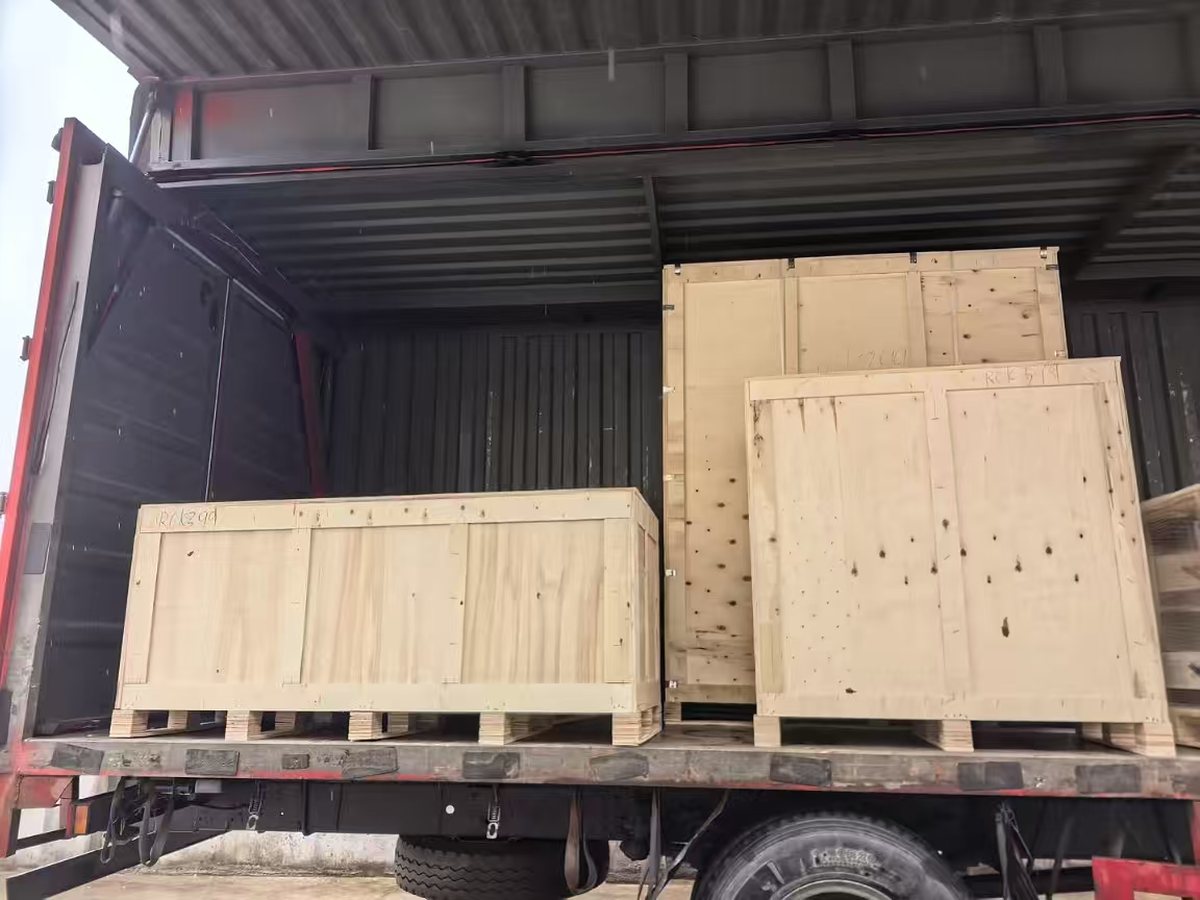
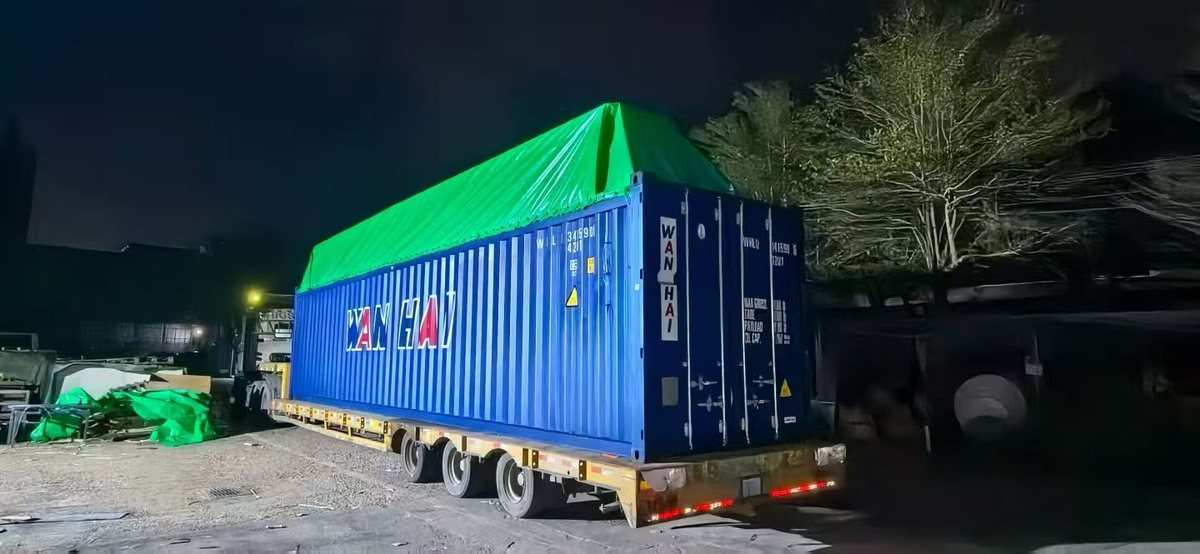
An open-top box has a removable roof, so the cargo is loaded from above and covered with a tarp and lashing. It suits machinery, glass and equipment that is over height but still within the box footprint. Because the cargo sits proud of the box, the route matters: overhead clearance at the plant gate, on the approach road and at the terminal entrance is checked before dispatch.
Flat racks
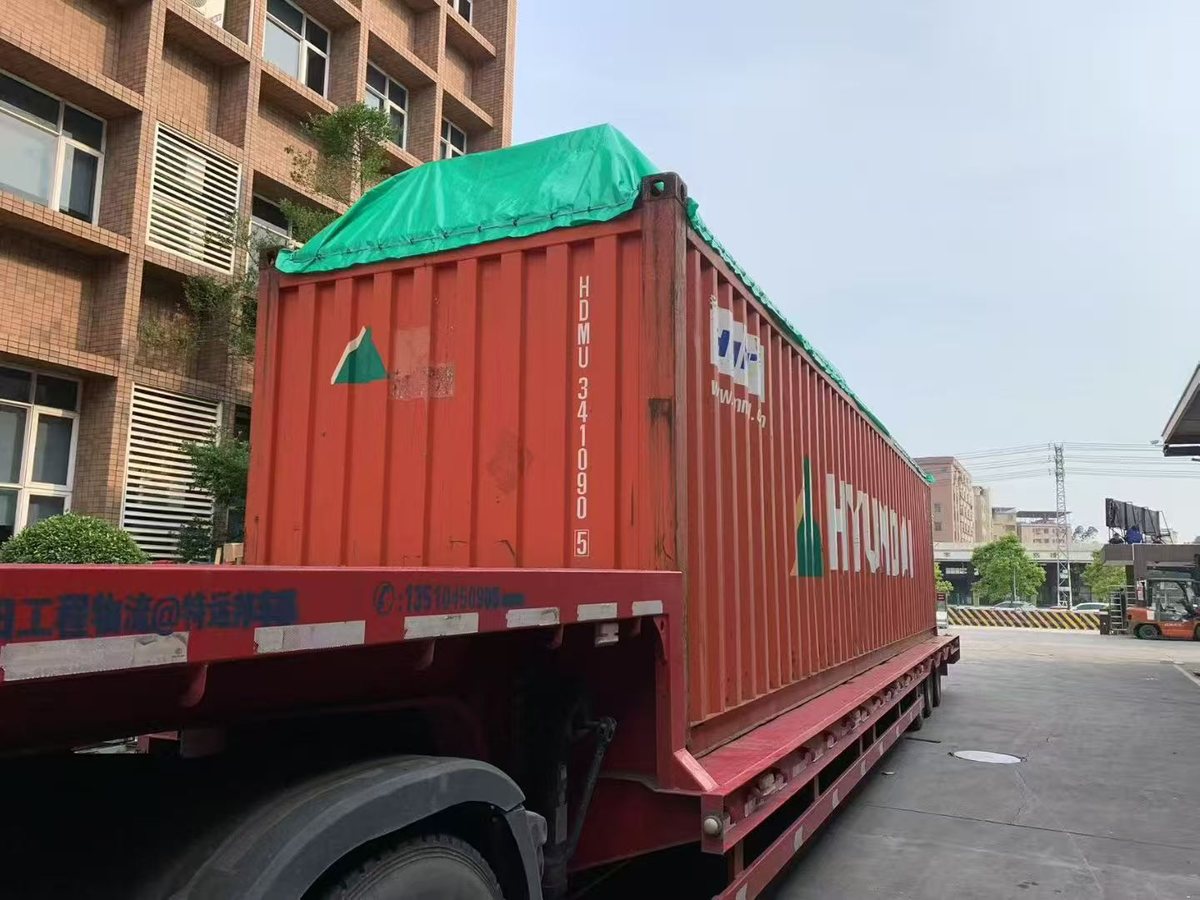
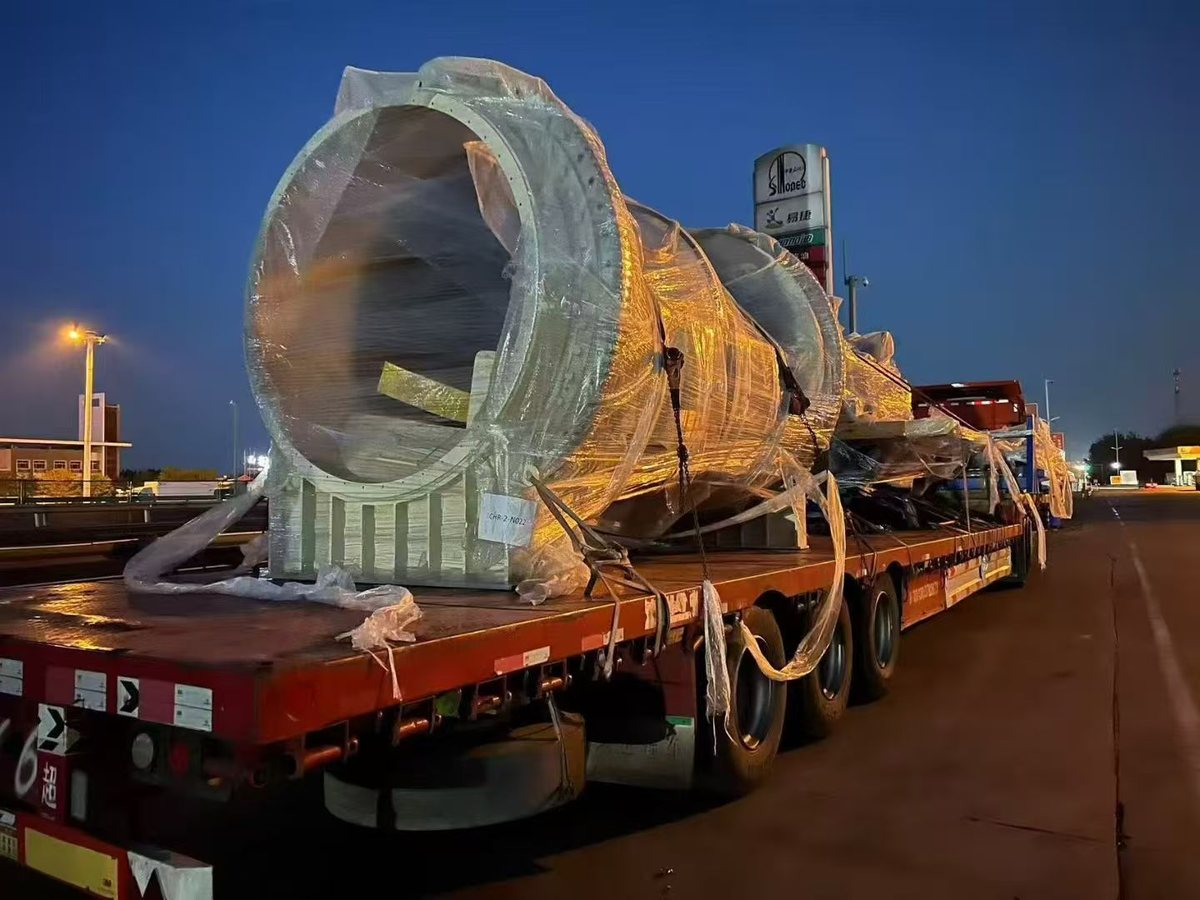
A flat rack has a floor and end walls but no roof or sides, which makes it the choice for over-width, over-length or side-loaded cargo. The shipper provides weather protection and lashing and marks the center of gravity and support points on the stow plan. Machine tools, wind components, transformers and packaged plant shipped out of Lianyungang often travel this way, and they are all out-of-gauge moves that need the space and the lashing confirmed per booking.
Dangerous goods and ISO tanks
Dangerous goods travel on the road leg with a qualified tractor and driver, and sometimes an escort. Documents and vehicle details are checked line by line before dispatch. An ISO tank adds the tank inspection certificate and the filling record.
At Lianyungang the district matters as much as the class. Crude and liquid chemicals work out of Xuwei, containerized DG moves through Miaoling, and the two have different gates, different operating qualifications and different notice periods. A booking that says only "Lianyungang" is not enough to plan a DG truck.
| Document or condition | What gets checked |
|---|---|
| Packaging certificate for dangerous goods | Matches the class, the packaging type and the quantity, and is still valid |
| MSDS or SDS | Proper shipping name, UN number, hazard class, emergency response, transport conditions |
| DG booking confirmation and release | Carrier accepts the class and the box type for that service |
| Road transport qualification and escort | Tractor, driver, escort qualification and tank inspection certificate |
| Terminal acceptance rules | Gate window, stacking position and declaration timing for DG boxes |
Without complete documents, or where the declared class does not match, the terminal will not accept the box. DG units usually run on their own window and channel, so a standard slot cannot be substituted. Batteries, liquids, powders and chemicals differ enough on the road leg that the booking desk confirms each one against the specific terminal and sailing.
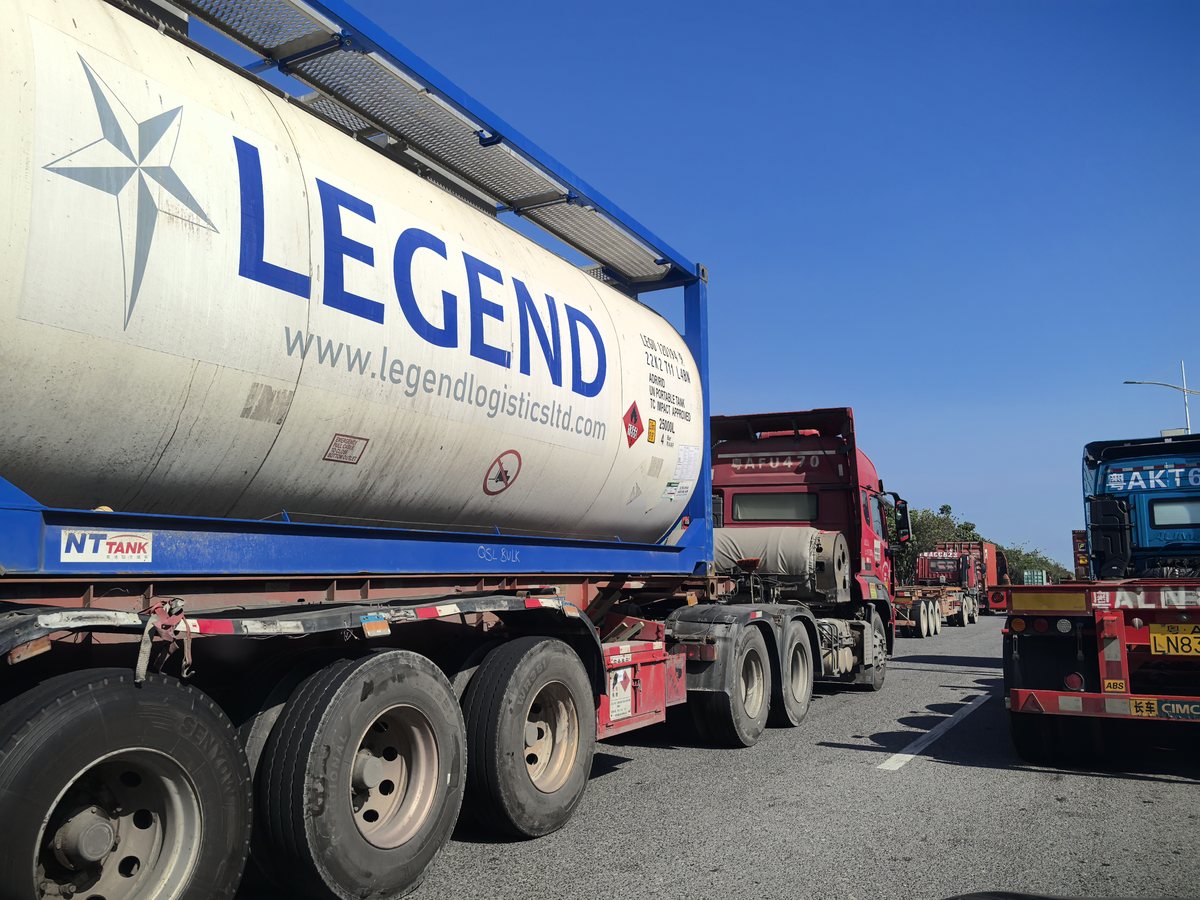
DG dispatch starts with paperwork, not with a truck. Confirm the terminal's acceptance conditions first, then lock the gate window, so the unit does not arrive with nowhere to go.
Refrigerated container moves
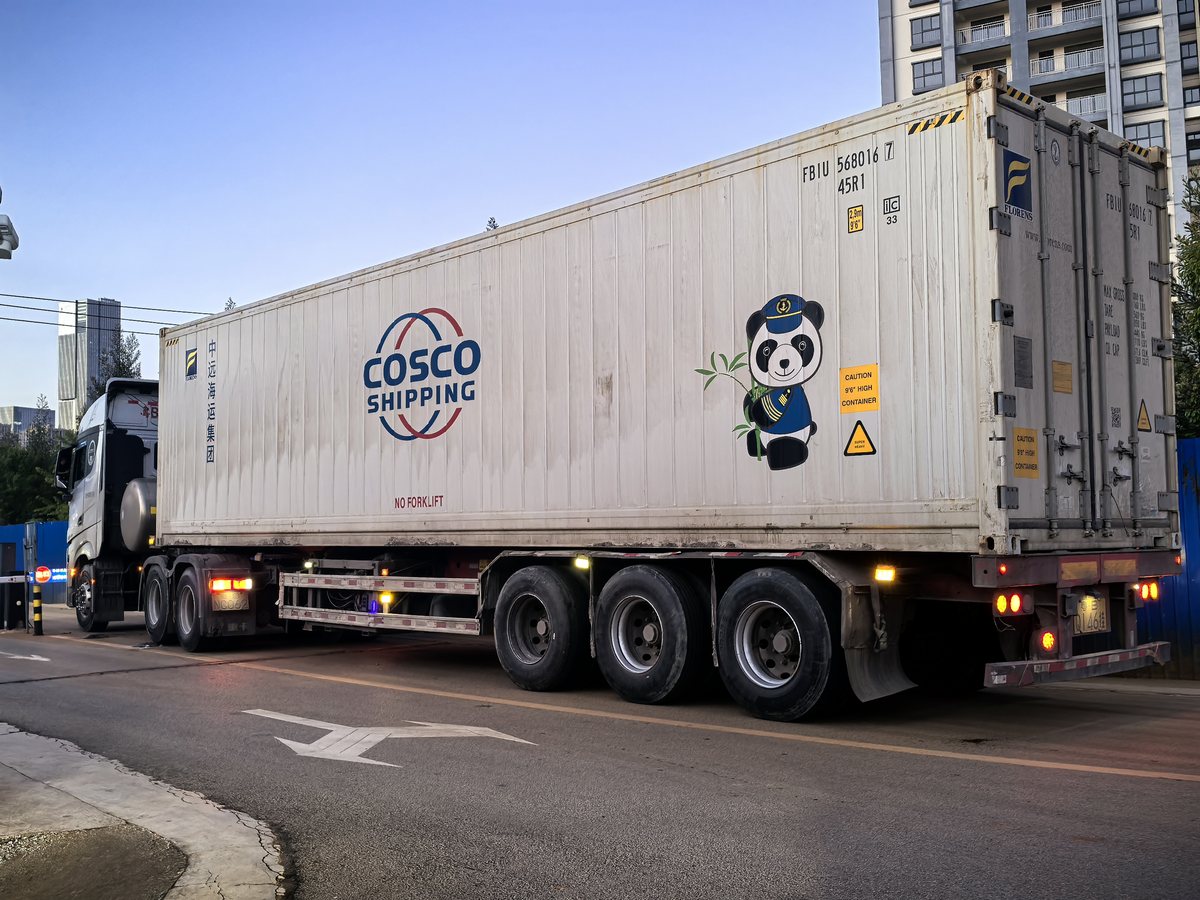
Confirm the set point, the ventilation setting, the pre-cooling requirement and how the box will be powered for the whole road leg. Where shore power is not available, the chassis carries a clip-on genset or a generator set. Pre-cooling and a box inspection happen before loading, and the temperature recorder data is kept afterwards.
Lianyungang reefer exports are mostly vegetables, fruit, seafood and prepared food from Ganyu, Donghai, Guanyun and the Lanling and Cangshan area of Shandong. These cargoes have narrow loading windows: vegetables need to cool after harvest, seafood needs to hit the freeze line after processing. Move the loading time and the quality suffers, so the truck is scheduled around the plant's process rather than the fleet's availability.
A pre-pulled reefer needs a power source at the holding point and a clear free-storage period. The port's published container measures include a free-storage allowance for laden import and export boxes, announced in 2019 as six days with extensions for larger shippers, and the current figure is set by the terminal. Once that runs out, storage applies, and a reefer adds plug-in power on top.
Oversized and project cargo
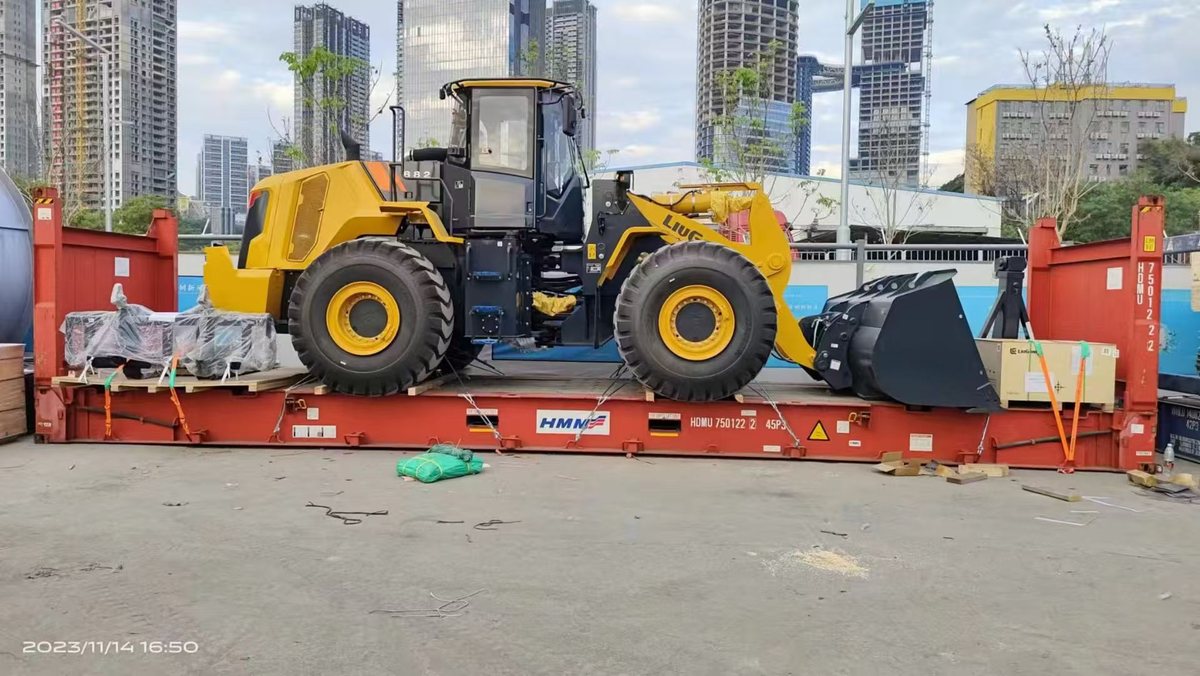
Plant, construction machinery, wind components, tanks, molds and production lines that fall outside a standard box footprint move on a lowbed, an extendable trailer or a flat rack, matched to the real dimensions, gross weight, center of gravity and support points. The loading plan states the lifting points, the lashing points, the dunnage positions and the turning radius required en route.
The sources here are fairly specific: construction machinery from Xuzhou and Jining, wind components from Yancheng and Nantong, and chemical plant equipment from the local and southern Shandong industrial belt. The route survey covers the plant exit road, the expressway entrance, bridge and culvert limits, and the terminal approach. Oversize permits are applied for in advance, and a cross-province move needs a permit on each side.
Containers at Lianyungang sit in Miaoling, while breakbulk and heavylift work sits at Xugou, Qitai and Dadi, so a project move may not go through a container terminal at all. It can load straight onto a breakbulk vessel, and then the loading sequence has to match the terminal's plan rather than a container cut-off.
Other drayage work we coordinate
Drayage around Lianyungang rarely ends at the gate. These are the adjacent moves that come up on the same file.
Pre-pulls
Pulling the empty early and holding it off-terminal when stock is late or the terminal is tight. Free storage and the holding conditions are agreed in advance.
Empty returns
A box pulled but never loaded goes back under the return rules in the quote. Better to agree that before dispatch than to argue after.
Split pickup and return
Where the empty comes from one terminal and the laden box goes back to another, the move is quoted as a split. It is common when a booking changes terminal after the empty is out.
Customs exam runs
A held box leaves the gate, runs to the exam yard outside the port, is examined and re-enters on a new window. The most local-specific move on this page, and the one most likely to sink a sailing.
Rail ramp and train moves
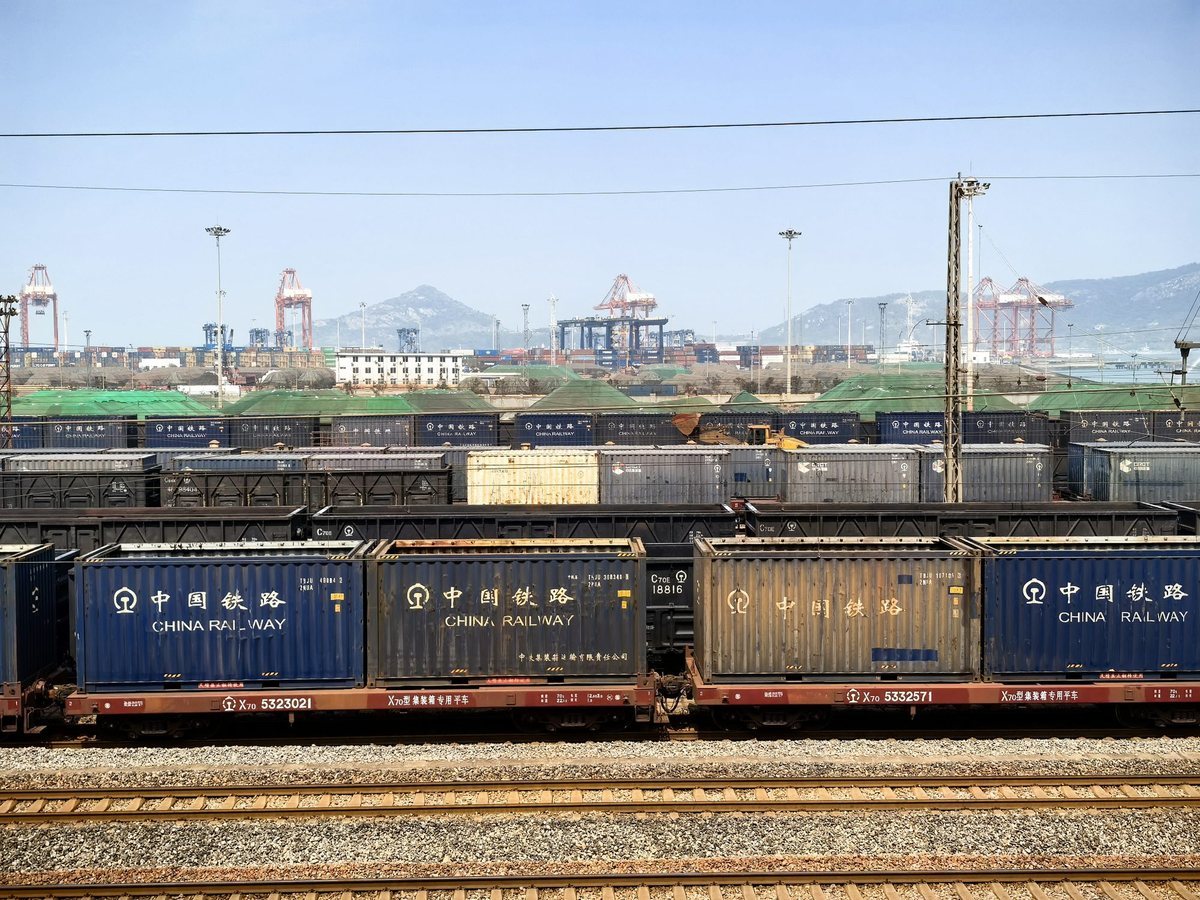
Lianyungang moved 943,000 TEU by sea-rail in 2025 and ran 915 China-Europe block trains. Trucking between the terminal and the rail yard is scheduled against the train, not the vessel.
Warehouse loading
Goods from several suppliers consolidated at a warehouse and loaded into one box. It suits an order with multiple vendors, and it avoids holding a truck at a plant that is not ready.
We also arrange weighing, container-number marking, loading photos, fumigation and documentation runs, billed per item as instructed.
From empty pickup to gate-in
Plan backward from the terminal cut-off. Steps five and seven are where Lianyungang differs most from a southern Chinese port.
- Release and equipment orderWith the booking confirmed, we obtain the shipping order, check the depot, the container size and count, the vessel and the pickup validity. Lianyungang runs electronic delivery orders and electronic equipment interchange receipts, so most of this is handled online, but the depot still has to be named against the right terminal.
- Empty pickup and condition checkThe driver collects the box against the EIR, checks number, seal and condition, and photographs anything doubtful. Rust, distortion, a wet or oily floor, a bad door seal or an odor is registered at the depot and the box is swapped before it leaves.
- Delivery and factory loadingThe empty arrives at the agreed time. The plant confirms it can take the truck length and has a dock or forklift. Dense cargo is spread with dunnage, machinery is lashed corner to corner, cartons are braced with airbags.
- Weighing, sealing and recordsThe laden box is weighed for VGM, sealed, and the seal number recorded with photos of the stow, the lashing and the seal. Those details have to match the export declaration and the bill of lading.
- Laden gate-inHere the local sequence applies: the box gates in and is stacked before customs releases, so the truck cannot hold back waiting for a release that has not come. The port publishes a 40-minute target per box for gate-in and pickup work, but that target covers the terminal transaction, not the queue on the approach road.
- Release and loadingOnce the release reaches the terminal, the box is loaded against it, with number, seal, weight and description checked again. If customs selects the box, it leaves the gate for the exam yard and comes back on a fresh window.
- Three cut-offs, checked separatelyDocumentation cut-off, customs cut-off and terminal cut-off are three different deadlines. Lianyungang accepts advance declarations up to seven days before the cargo reaches the supervised area, and the whole consignment must arrive within seven days of the declaration, or the entry is canceled. Declaring early with cargo still weeks away does not work.
| Exception | How it is handled |
|---|---|
| No empty at the depot, or the release expired | Request another depot or a substitute from the line |
| Factory not finished | Track the stock, split the load or roll to the next sailing |
| Gross weight over the carrier cap | Reduce the load, split the boxes or re-book |
| Seal does not match the documents | Re-seal and notify the carrier and the customs desk |
| Box selected for inspection | Drop at the exam yard, request a new gate window in parallel |
| Release not through | Push both tracks: box in the yard, release in the system |
The hard part is not one leg moving fast. It is three tracks staying in step: the box in the yard, the release through, and the terminal loading against it. Any one of them stalling keeps the vessel waiting, so the schedule is built from the terminal cut-off backward.
Gate windows, terminal layout and the rail connection
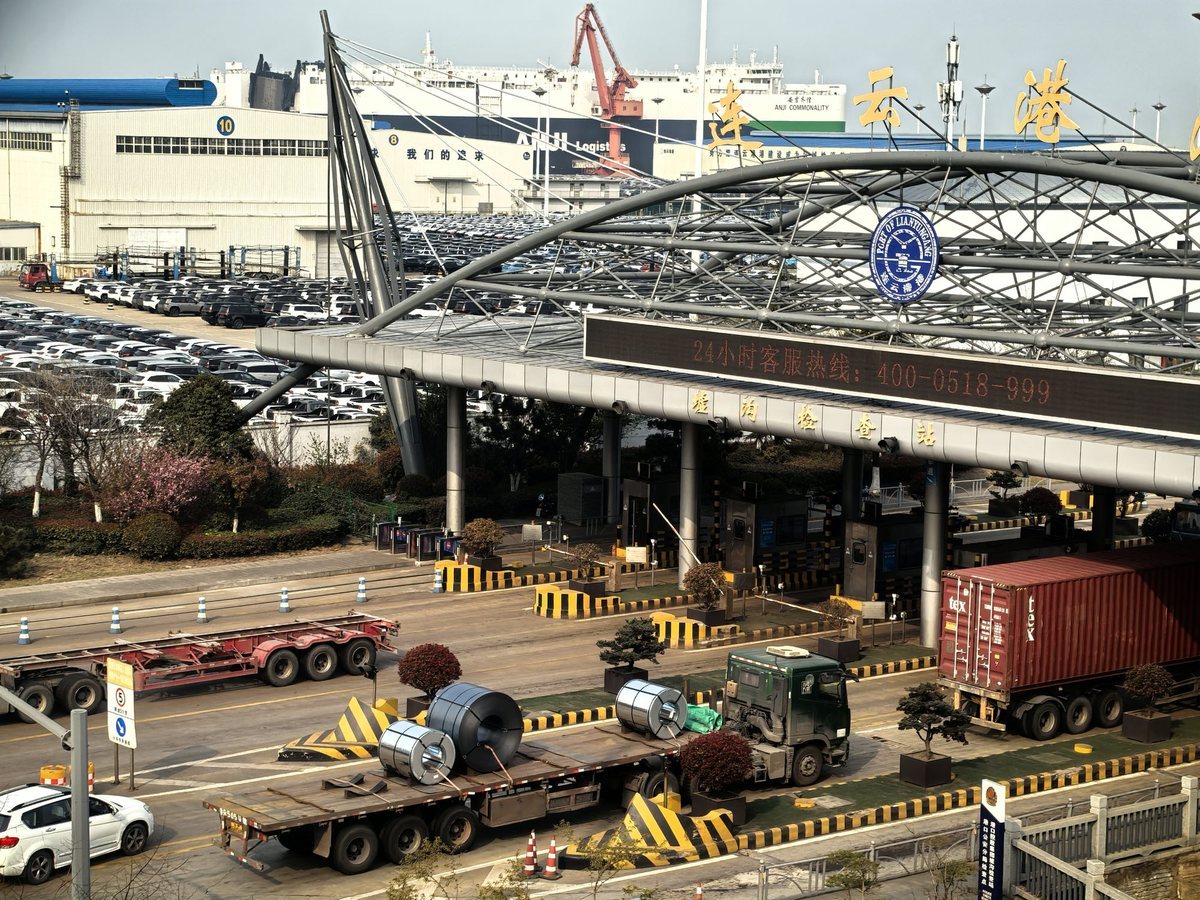
Container terminals at Lianyungang allocate gate-in windows against the vessel and the yard plan, so a laden box enters on an assigned window rather than on arrival. Confirm that window with the terminal and the carrier before dispatch; it moves with the sailing. The port's public commitments are a 40-minute target per container for gate-in and pickup work, a 24-hour dispatch desk monitoring every truck from gate to completion, and a service line on 400-0518-999 for gate queries.
Three changes in recent years affect how a drayage schedule is built. A combined-task arrangement lets one gate transaction cover both an empty pickup and a laden delivery, so the truck does not leave and re-enter twice. New smart gates add one inbound and one outbound automated lane to spread the peak. And export boxes can go straight from the plant to the terminal in one step, skipping the off-dock depot that used to receive the box first and truck it in afterwards.
For you as the shipper, that last point is worth knowing: the delivery address on the trucking order has to name the terminal, not just the port. A box routed to the wrong terminal is a re-handle, not a redirect.
| District | Cargo and facilities | Drayage implication |
|---|---|---|
| Main area, Miaoling | Containers: NICT at berths 28 to 31, plus the NOCT terminal | Empty pickup, laden return and exam runs. Confirm the terminal, not just the port. |
| Main area, Xugou, Qitai and Dadi | Breakbulk, project cargo and bulk, including a 300,000 dwt ore berth at Qitai | Heavylift and breakbulk moves that may never touch a container terminal |
| Southern wing, Xuwei | Crude and liquid chemicals, including two 300,000 dwt crude berths | ISO tanks and DG, with separate access and qualification requirements |
| Northern wing, Ganyu | Dry bulk, grain and oil, LNG, with 100,000 dwt general and liquid berths | Bulk short-haul and barge connections |
| Southern wing, Guanhe | Barge and river-sea berths, six 10,000 dwt general bulk berths | Inland waterway distribution, not interchangeable with the main area |
Berths 25 to 27 at Miaoling are being rebuilt into one 150,000 dwt and one 200,000 dwt automated container berth with a design capacity of 1.78 million TEU. The automated scheduling system at NOCT went live in January 2026, covering yard receiving, vessel handling and truck dispatch. While the works run, berth allocation shifts, so recheck which terminal your vessel is on instead of assuming last year's arrangement still applies.
What a drayage quote includes
Chinese trucking is quoted line by line. The base rate covers the move; the extras are triggered by something specific.
| Quote line | What triggers it |
|---|---|
| Base trucking rate | Loading address, container size and terminal. Long inland legs carry more mileage than a Pearl River Delta move, so the rate is mileage-led. |
| Overweight | Gross weight above the carrier's cap for the sailing, or a tractor upgrade for a dense load |
| Dual 20 discount | Two 20ft boxes on one chassis, where the combined weight and the route allow it. The reduction is stated per box. |
| Detention and overnight hold | Waiting beyond the free period in the quote, billed hourly, plus an overnight charge when loading runs past midnight |
| Exam run and re-entry | Box selected for inspection: the run to the yard outside the port, the return and the new gate window |
| Pre-pull | Empty pulled early and held off-terminal, including the free days and the holding conditions |
| Empty return | A pulled box that is never loaded and has to go back to the depot |
| Split pickup or return | The empty comes from one terminal and the laden box returns to another |
| Ancillary items | Marker boards, weighing, toll for a temporary route, documentation runs and fumigation, billed as instructed |
These are the charge categories, not a rate card and not a quotation. Figures move with the loading address, container type, cargo weight, sailing and terminal rules. Ask for a written line-item quote and check what each line covers, the free waiting period, and whether the invoice will be a standard or a VAT special invoice.
Drayage and China export customs
The trucking leg and the export filing are two tracks running at the same time, not two steps in a row.
At Lianyungang the laden box normally enters the terminal and is stacked before customs releases, then the terminal loads against the release. A box that never reaches the gate cannot sail however early the declaration went in, and a box in the yard without a release just sits there. Where the trucking desk and the customs desk are the same team, container number, seal number, VGM, packing list, manifest and declaration data are checked against each other on one file. Change any one of those values without pushing the update and the terminal's planning system will not accept the box, which is a data problem rather than a gate problem.
Two details worth planning around. The exam yard sits outside the port, so a selected box costs a round trip plus a fresh window. And advance declaration is available up to seven days before the cargo reaches the supervised area, but the whole consignment must arrive within seven days of the declaration or the entry is canceled. See Lianyungang port export customs clearance for the filing side, and the container trucking and factory loading guide for loading practice.
Paperwork checked early
Release, EIR, packing list and declaration data are checked before dispatch, not after the box is stacked.
Window locked first
The gate window is booked from the terminal cut-off backward, then the loading time is set to fit it.
Weight and condition on file
Gross weight declared at booking, box condition photographed at pickup, seal and VGM recorded after loading.
Exam plan ready
If the box is held, the yard drop and the re-entry request happen in parallel, not one after the other.
Field notes: nine problems that derail a Lianyungang move
These are the situations that come up on the dispatch desk. Names, vessel dates and outcomes are left out on purpose: the point is the order of handling, not a success story.
A late factory finish before the terminal cut-off
The plant finishes in the afternoon, the box is due at the terminal the next morning and the export documents are still being corrected. Run in the normal order and the window is gone before the truck leaves.
Handling Read the terminal cut-off, the current gate window, the release status and the manifest first, then set the loading time backward from there. At Lianyungang the box has to be in the yard, so a release that is still pending does not change the truck plan. If the window cannot be met, we offer a pre-pull or a roll to the next sailing the same day, and say plainly which of the two is realistic.
An overweight box after the scale reading
Quartz sand, glass or fertilizer is loaded, weighed, and the VGM comes back above the carrier's cap for the sailing. The terminal will not take it.
Handling Settle the cap at booking and put the number into the loading instruction before the truck arrives. On the spot, the load is reduced, split or re-booked. Around Lianyungang, yards that can de-van at short notice are scarce and de-vanning usually means a run back to the plant, so the recovery costs more time than it would in Shenzhen.
Loading that only happens on the night shift
A vegetable or seafood plant runs its dock at night to match the harvest or the processing line. The forklift, the bay and the gate pass all follow the night crew, so an early truck waits outside.
Handling The trucking order states the night arrival time, the site contact and the entry procedure, and the lighting, bay and night loading conditions are confirmed in advance. Night work and any overnight hold are priced when the job is quoted, not negotiated at the gate.
Loading that spills into a second day
Several suppliers consolidate into one box, or the stock is short, and the truck sits at the plant for two days. Everything behind it slips and the waiting charge lands on a shipment that was not supposed to have one.
Handling We check the stock position before dispatch and, where a second day looks likely, compare three options: hold overnight, drop the box and send a second tractor, or load at a warehouse. Free waiting time, the overnight rate and any re-dispatch charge are put in writing before the truck is committed.
No empty at the nominated depot
The release is issued but the depot has no box of that size. 45HQ, open-top and flat-rack units are the usual shortages, and the vessel does not wait.
Handling Check release status, the shipping order validity and alternative depots, then ask the line for a substitute or a reassignment. If time is short, a pre-pull or a pickup from another depot is arranged and the loading and gate windows are reset against it, with the schedule risk passed to you the same day.
A laden box that cannot get into the terminal
Bunched sailings, a gate peak or a window that does not line up leaves the box outside on the clock. It shows up after a typhoon or a cold snap, when everything restarts at once.
Handling Confirm the current window and the yard status before returning the box. If the window is not open, compare an off-dock hold against moving the loading time, and cost the drop, the extra lift and the storage before choosing. The 40-minute target covers the terminal transaction, not the approach queue, so it is not a planning number for the whole leg.
An empty that arrives in poor condition
Rust, distortion, a wet or oily floor, a weak door seal or an odor, discovered after loading. On return the damage can be attributed to the shipper, and cartons or produce can be damaged by moisture.
Handling The box is checked against the EIR and photographed at pickup, and a replacement is requested before the truck leaves the depot. If the problem surfaces after loading, we ask the line for a swap or a repair and arrange a transload where needed, then pass the condition record to you and to the customs desk so the return inspection does not turn into a claim.
A gate transaction that will not process
The electronic equipment interchange receipt will not issue, the container number does not match the manifest, the booking is not released, or the system is down. The driver arrives and cannot hand the box over.
Handling Fix the data before the truck moves. We check the shipping order, the booking confirmation, the vessel, the container number and the seal number at the source. Lianyungang runs manifest, declaration and VGM through three separate feeds, so any stale value surfaces at the gate. A window that cannot be used is canceled or moved rather than left as a no-show.
A box selected for inspection
Customs holds the box for a physical exam. The exam yard is outside the port at Lianyungang, so the container leaves the gate, runs to the yard, is examined and has to re-enter the terminal, which needs a new window.
Handling Drop the box at the yard and request the re-entry slot at the same time, so the two waits overlap instead of stacking. The packing list and loading photos travel with the container so the exam clears in one visit. The extra run and the re-entry are quoted as their own line, and we say so when the job is priced rather than after the fact.
A second tier of problems runs on the same playbook: a 40ft rig that cannot enter the plant, a seal number that does not match the declaration, a VGM that was never filed, a loading address that changes after dispatch, a tarp that does not survive the rain, DG or reefer paperwork that does not match the gate window, and a booking that named the port but not the terminal. Most of these are findable before the truck is dispatched.
Very few of these are truck failures. They are paperwork, empty supply, gate windows and release timing falling out of step. Checking those four before dispatch costs a phone call; fixing them at the gate costs a day.
Why importers use us for Lianyungang drayage
Four things get asked on every quote: is the price clear, will the truck show up, will the number change, and who fixes it when something breaks. These are the rules we set before dispatch.
Line-item quotes
Base rate, overweight, pre-pull, overnight hold, empty return, split moves, exam runs and ancillary items are listed separately, with what is included, the free waiting period and the invoice type. Nothing is explained for the first time on the final invoice.
No Chinese New Year surcharge
A confirmed quote holds through Chinese New Year, the October holidays, post-typhoon backlogs and bunched sailings. Changes you request, and fees the terminal or carrier actually introduces, are billed with the document attached and flagged before they hit the invoice.
Rates built on the actual lane
Priced on loading address, container size, gross weight and terminal, not on a headline per-box number. Long inland legs are not padded and short runs are not squeezed, and a dual-20 discount is given where the boxes genuinely qualify.
Vetted carriers and safe loading
Tractor and driver records are checked. DG, reefer and out-of-gauge work goes to equipment and crews qualified for it. Dense loads are spread on dunnage, machinery is lashed diagonally, and the pickup check and the loaded stow are photographed.
Milestones you can forward
After pickup we send the plate number, driver contact, container number and seal number, then update at arrival, completion, gate-in and release. When something goes wrong you get the alternative plan first and the cost second.
One team for trucking and export filing
Lianyungang wants the box in the yard before the release, so the two tracks have to run together. Container number, seal number, VGM, packing list, manifest and release sit on one file instead of being relayed between a trucker, a broker and you.
Coverage beyond the container gate
Miaoling for containers, Xugou, Qitai and Dadi for breakbulk, Xuwei for liquid bulk, Ganyu and Guanhe for dry bulk, plus the rail yards and the land border crossings. Change district or switch to sea-rail and the contact stays the same.
A fixed playbook for exceptions
Late finish, overweight, overnight hold, no empty, failed gate transaction and customs exam each have a written order of handling. Conditions are checked before a truck is committed, which is what keeps the waiting and the surprises down.
Quotes are issued as written quotations. These practices cover the Lianyungang drayage work we handle; carrier, terminal and depot charges and the operating rules behind them follow the current instructions of the party that sets them.
Frequently asked questions
Questions that come up on quotes and on dispatch, including cost, documents and what happens when a box is held.
How much does container drayage at Lianyungang cost?
There is no flat per-container price. A quote combines the plant location, container size, which terminal you are booked through, gross weight, and whether the move needs a pre-pull, an exam run or an overnight hold. Send the loading address, container count and size, gross weight, vessel and the cut-off, and we return a written line-item quote. Ask what each line includes, because detention, overweight, empty return, split pickup and exam runs are quoted separately in China.
How much time should I allow between empty pickup and gate-in?
Work backward from the terminal cut-off, not forward from the factory finish date. Release, yard queues, condition check, loading, weighing, sealing and the gate slot each take time and each can queue. At Lianyungang there is one extra step: the laden box normally gates in and gets stacked before customs releases it, so the truck cannot wait for the release to come through. Peak weeks and bunched sailings stretch every leg.
Which terminal does my container go through at Lianyungang?
Container traffic sits in the Miaoling district of the main port area, split between NICT (berths 28 to 31) and the newer NOCT terminal. Breakbulk and bulk berths sit at Xugou, Qitai and Dadi, liquid bulk at Xuwei, and barge or coaster cargo at Ganyu and Guanhe. Booking "Lianyungang" is not enough: the empty depot, the gate and the vessel all follow the terminal, so confirm which one before dispatch.
Can two 20ft containers ride on one chassis?
Yes, when both boxes are dense and the combined weight still fits road axle limits. Whether it works depends on both gross weights, whether the plants share an address or sit on the same route, chassis length, and the terminal's rules for doubles at the gate. Send both weights and the loading sequence and dispatch will confirm the setup.
How do you handle an overweight container?
Settle the weight at booking. We confirm the carrier's cap for the sailing and declare the actual gross weight before the empty is released. After loading, the shipment gets a Verified Gross Mass (VGM), the SOLAS-required certified weight that has to match the booking and the export declaration. If the scale reading exceeds the cap, the load is reduced, split or rolled. At Lianyungang that matters more than at a Pearl River Delta port: plywood, fertilizer, quartz sand and glass are the usual heavy cargoes, and a yard that can de-van a box on short notice is not always nearby.
What paperwork does a dangerous goods or ISO tank move need?
A DG move needs the packaging certificate for dangerous goods, an MSDS or SDS, a tractor and driver with hazmat road transport qualification, an escort where required, and a carrier booking that accepts the class. An ISO tank adds the tank inspection certificate and the filling record. At Lianyungang, liquid bulk and crude work out of Xuwei while containerized DG moves through Miaoling, and the gate, the operating qualification and the notice periods are different. Confirm the district, not just the port.
What does a reefer move need?
Confirm the set point, ventilation and pre-cooling requirement, and how the box will be powered on the road. When shore power is not available, the chassis carries a genset. Pre-cooling and a box inspection happen before loading, and the temperature recorder data is kept afterward. Lianyungang reefer exports are mostly vegetables, fruit, seafood and prepared food from Ganyu, Donghai, Guanyun and southern Shandong, where the loading window follows the harvest or the freeze line rather than the truck's schedule.
Open-top or flat rack: which one do I need?
Open-top for cargo that is over height but still inside the box footprint, loaded from above and covered with a tarp and lashing. Flat rack for over-width, over-length or side-loaded cargo, where the shipper provides weather protection and lashing and marks the center of gravity on the stow plan. Both are out-of-gauge solutions, so the dimensions and the center of gravity are declared at booking, and the truck is matched to a lowbed or extendable trailer. Machine tools, wind components and transformers shipped out of Lianyungang often travel this way.
Do I need a gate appointment at Lianyungang?
Container terminals there allocate gate-in windows against the vessel and the yard plan, so the laden box enters on an assigned window rather than whenever the truck arrives. Confirm the window with the terminal and the carrier before dispatch, because it moves with the sailing. The port publishes a commitment of 40 minutes or less per container for gate-in and pickup work, runs a 24-hour dispatch desk, and takes gate queries on its service line 400-0518-999. A single-box target is not the same as a total door-to-gate time, so keep your own buffer.
What happens if customs selects the container for inspection?
The inspection yard at Lianyungang sits outside the port area. A held box has to leave the gate, run to the yard, be examined, and then re-enter the terminal, which needs a fresh gate window. We drop the box at the yard immediately, request the re-entry slot in parallel, and keep the packing list and photos with the container so the exam clears in one pass. This exam run is quoted as its own line, not folded into the base rate.
Laden gate-in before release? How does that work?
That is the local sequence: the laden box gates in and is stacked, customs releases, and the terminal loads against the release. It is the reverse of Shanghai and Yangshan, where the box needs a release before it enters. Practically, the trucking leg cannot wait for the release, and a release that arrives late leaves the box sitting in the yard. Container number, seal number, VGM, packing list and manifest have to stay in step on both tracks.
Can I keep my own trucker and use you for customs only?
Yes, as long as trucking and the China export filing stay on the same timeline. Container and seal numbers, VGM and declaration data all have to land at the terminal ahead of the paperwork cut-off. Agree a handover time for documents and name one person on each side who can be reached when the gate or the customs system throws an error.
Do you add a surcharge during Chinese New Year?
A confirmed quote keeps its rate through Chinese New Year, the October holidays and post-typhoon backlogs. We do not raise an agreed drayage rate because trucks get tight. Changes you request after dispatch, and fees actually introduced by the carrier, terminal or depot, are billed separately with the supporting document. Overnight holds and detention are operational charges with a stated rate, not a seasonal markup.
What if the depot has no empties or the gate transaction fails?
We check release status, the S/O expiry, the booking confirmation and the vessel details before dispatch, and we do not send a truck on incomplete paperwork. With no empty at the depot, we request another depot or an approved substitute from the line. 45HQ, open-top and flat-rack boxes are the ones most likely to be short. If the electronic equipment interchange receipt will not issue, we fix the underlying data first, because Lianyungang runs the manifest, the declaration and the VGM through three separate feeds and a stale value will stop the box at the gate.
Get a drayage quote for Lianyungang
Send the loading address, container type and count, gross weight, commodity, vessel and voyage, the terminal your booking names, and the documentation and terminal cut-offs. Add the DG paperwork or the stow plan where it applies. That is enough to come back with an executable plan and a line-item quote.
Phone / WeChat / WhatsApp: +86 189 3345 5525 | Email: sales007@goodhopefreight.com
