China and Iceland signed the agreement on April 15, 2013, and it entered into force on July 1, 2014 — the first free trade agreement China concluded with a European country. That history explains why Icelandic brokers see far fewer of these certificates than they do Form E or Form A, and why the form itself looks like a plain CO with an extra box rather than a branded FTA document.
The filing rules live in two instruments. The Measures on the Administration of Origin for Import and Export Goods under the China–Iceland FTA (GACC Order No. 222, in force July 1, 2014, amended by GACC Order No. 273 of October 28, 2024) set the origin tests and what the certificate has to show. The Measures on the Administration of Certificate of Origin Visas for Export Goods (GACC Order No. 270, in force September 1, 2024) govern acceptance, review, retroactive issuance and amendments.
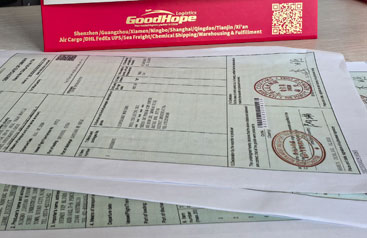
The naming trips people up, so start here. The form carries no letter on its face; it is printed as Certificate of Origin used in FTA between China and Iceland. Exporters, forwarders and the CCPIT system call it Form I, and on a declaration the agreement is code 16. If a buyer asks for “Form I” and receives a plain CO, the entry will not price the way either side expected — and the mistake usually surfaces at the broker's desk, not in the factory.
Origin is decided one of three ways. Wholly obtained in China. Produced entirely from Chinese or Icelandic originating materials. Otherwise, the goods have to pass the product-specific rule for their heading — a tariff shift, a value test or a stated process — and the common value test is a regional value content of at least 40%.
The value test is built on your books, and it is not the formula used in every Chinese FTA. Under Article 6 it runs (FOB value − value of non-originating materials) ÷ FOB value × 100, where the finished goods are valued FOB and the non-originating materials are taken on a landed, CIF basis. Running the calculation on two mismatched bases is the most common arithmetic error we see in a bill of materials.
The agreement also gives you bilateral cumulation (Chinese material counts as Icelandic, and the reverse), a de minimis allowance of 10% of the FOB value where a tariff shift is missed, and a list of seventeen minimal operations — preserving, unpacking and repacking, washing, simple painting or polishing, husking and shelling, sharpening, simple grinding or cutting, screening and grading, simple bottling or bagging, labeling, simple mixing, simple assembly — that never confer origin however complete the paperwork looks.
The distinction that matters: Form I proves the cargo qualifies for the agreement rate. It does not prove the cargo is duty-free. The tariff schedule decides the rate; the origin rule decides eligibility. A certificate that clears one and fails the other is a certificate that gets refused at entry.