Since 2012 NVOCC GD20230925153335 24h Response
+86 13392162503 sales8015@goodhopefreight.com Login
Goodhope Freight
China–Maldives FTA · Export documents · Form MV

China–Maldives FTA Certificate of OriginForm MV — how the treaty rate actually gets claimed at Malé, and what has to be right on the Chinese side

Form MV is the preference certificate for goods made in China and entered in the Maldives. It is filed in China — by your supplier, your supplier's broker, or us — and it is examined by Maldives Customs when your entry is assessed. This page is written for you, the importer of record: what the paper buys you, who can sign it, the deadline that actually binds, the one-year clock, the fourteen boxes, and the details that turn a clean entry into an origin verification.

Jan 1, 2025agreement in force
95%+of tariff lines and trade value at zero
MVcertificate code; agreement code 28
1 yearvalidity from the issue date

Get a Form MV quoteRead the FAQ first

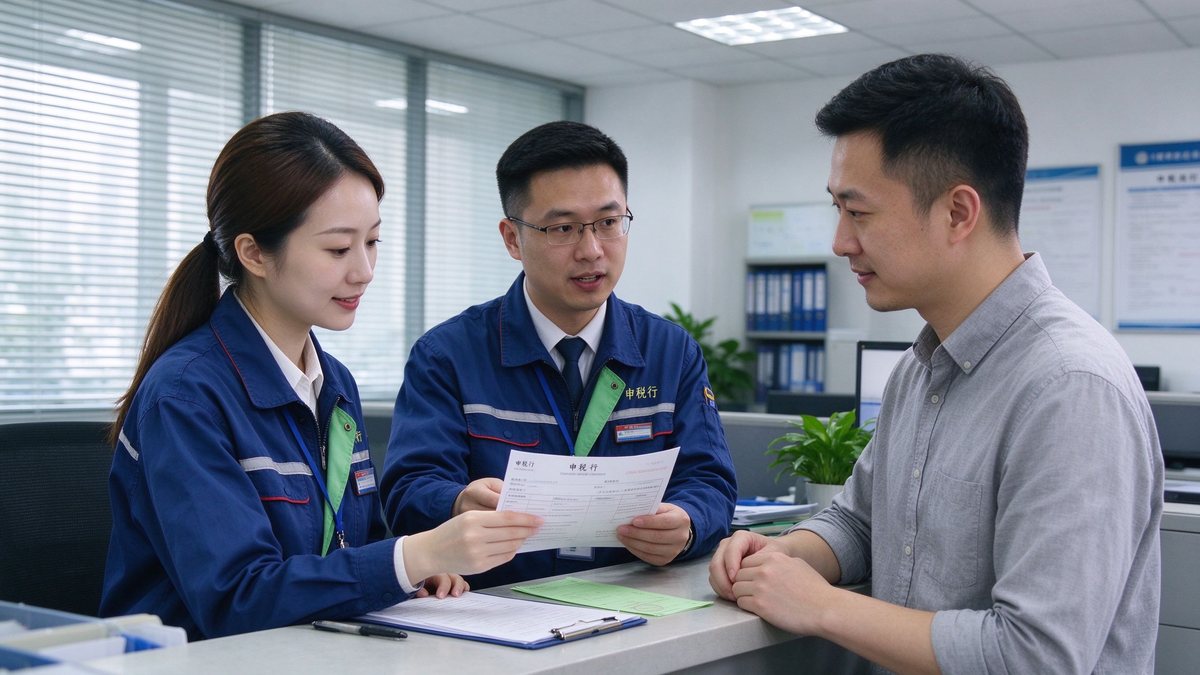
Export documentation staff reviewing a certificate of origin against a commercial invoice at a freight forwarder's desk
The certificate only works if every field matches your invoice, packing list and bill of lading. That is the entire job.

The short version

Form MV — formally the certificate of origin under the China–Maldives Free Trade Agreement — is a preferential origin certificate. In China's filing systems the certificate type code is MV; on the export declaration the agreement code is 28. It is issued by China Customs at the port of export, or by CCPIT, the China Council for the Promotion of International Trade, and its local branches.

It is not a general CO, and not Form A. A CO states where the goods were made and gets your entry assessed at the MFN rate; Form A is the old GSP certificate, and the Maldives is not a GSP donor. Form MV is what lets your broker in Malé declare the agreement rate. Even then the rate depends on your HS line in the Maldivian schedule: both sides commit to zero duty on more than 95% of their tariff lines and trade value, and the Maldives cut 70.3% of its lines to zero the day the agreement took effect.

Who files: your Chinese supplier or the manufacturer, or us under a power of attorney — the certificate always carries their name, never ours. When: before or at shipment, with a retroactive certificate available inside one year of the shipment date. Cost: the issuing office charges nothing; you pay a filing service fee per certificate.

Certificate typePreferential certificate of origin (FTA)
CodesMV certificate — agreement code 28
Issuing officesChina Customs, or CCPIT and local branches
ValidityOne year from the issue date
ReviewSmart review; clean filings often clear the same day
FeeNo visa or stock fee; service fee per certificate
Definition and legal basis

What the certificate actually certifies

Two questions sit on one form: were these goods made in China, and do they meet the rule this agreement sets for the product? Most filings get the first one right and stumble on the second.

The agreement was signed in December 2017 and took effect on January 1, 2025. On the Chinese side, the paper is governed by the origin measures written for this agreement — GACC Announcement No. 201 of 2024, effective January 1, 2025 — and by the general export certificate rules in GACC Order No. 270. Import declaration fields follow GACC Announcement No. 34 of 2021; goods moving through a third country follow Announcement No. 110 of 2024.

The form has fourteen boxes, is completed in English, covers one shipment, carries a unique number, and states the origin criterion in Box 10. It is not a statement that the goods are Chinese. It is a statement that they qualify under this agreement's rules — which is a narrower claim, and the one that gets tested.

Origin is settled one of three ways. The goods are wholly obtained in China. Or they are produced entirely from originating materials. Or non-originating materials were used and the finished product meets the rule written for its tariff line — a change in tariff classification, a value-content threshold, or a required process. Where the line has no specific rule, the fallback is a regional value content of at least 40%: FOB value minus the value of non-originating materials, divided by FOB value.

Most manufactured goods take the third route, which means the question is not where the factory stands. It is what went into the product and whether the arithmetic clears the rule. That is what the issuing office asks at filing, and what Maldives Customs asks months later.

Preferential, not automatic. Form MV moves your entry into the agreement's column; it does not guarantee a zero rate. The tariff schedule sets the rate, the origin rule sets eligibility, and your broker needs both to line up. The certificate is also a six-digit document: the Maldives assesses against its national tariff line, so a classification that shifts after the first six digits can still lose the preference.

Box 10: the origin criterion on the form

  • WO — wholly obtained in China: grown, mined, raised, caught or produced there.
  • WP — produced entirely from originating materials, with no non-originating input.
  • PSR — the product meets its specific rule: tariff shift, value content or process.
  • RVC — regional value content at or above 40%, where the line has no specific rule.

This is the field that decides whether an origin verification is cheap or expensive. It is also the field most often filled in from memory.

Why it matters to you

You are the importer. Here is what this paper is worth.

Your broker files the entry at Malé. When he claims the agreement rate, this certificate is the evidence behind the claim. Without it, the same container is assessed at the general rate — and once the entry is liquidated, that money is gone.

It sets your duty rate

The Maldives moved 70.3% of its tariff lines to zero on day one and phases most of the rest down; together the two schedules cover more than 95% of lines and trade. Form MV is how your goods land in that column instead of the MFN one.

The claim happens at entry, not later

This is not a refund you apply for after clearance. If the certificate is not in the file when the entry is assessed, the shipment is assessed at the general rate. Post-entry recovery exists on paper, runs for months, and does not always succeed.

The paper still travels

China and the Maldives have not connected their origin systems under this agreement, so the certificate is checked as a document rather than pulled from a database. That means the original has to be in the document set before the vessel berths, not in a courier after release.

Four fields your broker will check

The certificate number, the six-digit HS code, the shipper name exactly as it appears on the bill of lading, and an invoice that agrees on value and terms. Most verification requests start with one of the four not matching.

Put it in the purchase order

One line does the work: “Certificate of Origin Form for China–Maldives FTA, issued by GACC or CCPIT, one original, to be provided before shipment.” Add that the supplier bears the cost of any mismatch. It is cheaper than arguing after the container lands.

It is the file in a verification

Maldives Customs can ask the Chinese issuing office to verify origin after release. What answers that request is the certificate, the cost sheet behind the origin criterion, the bill of materials and the supplier invoices. Nothing else substitutes for it.

Where the decision is actually made

Most ocean freight enters the Maldives through Malé, and the entry is assessed there on the documents your broker holds: bill of lading, invoice, packing list and the origin certificate. Resort islands and the outer atolls are served onward by feeder and barge, but the customs decision is made at the first port of entry. The certificate is not a formality attached at the end of the file — it is the one document that determines which duty column the whole entry is assessed in.

That is also why timing matters more than it looks. A certificate issued after departure, or an original that arrives two weeks behind the container, turns a routine entry into a deposit, an exam or an amendment — and storage on a small island runs by the day.

One agreement, one direction. Form MV covers Chinese goods entering the Maldives. Going the other way, Maldivian goods can claim this agreement's rate on entry into China under agreement code 28, using a certificate issued in the Maldives — not this one. A single consignment valued at USD 600 or less can enter China without a certificate, provided the shipment is not split to use the waiver.
Documentation staff checking an origin certificate against invoice and packing list data on screen
A certificate is read against the invoice, packing list and bill of lading. Most mismatches are found at the desk — the expensive ones are found at the border.
Duty math

What the paper is worth, in both directions

The tariff cuts run both ways and on different timetables. Exporters usually ask what the Maldives gave; importers should also know what China gave, because the same agreement and the same certificate format cover the return leg.

DirectionWhat the schedule doesWhat it means at the desk
China to the Maldives Both sides commit to zero duty on more than 95% of tariff lines and trade value. The Maldives cuts 70.3% of its lines to zero when the agreement takes effect, with the rest phased. Machinery and electrical goods, furniture, steel, ships, ceramics, flowers, vegetables, fruit, processed fish and hotel supplies are in scope The certificate does not shave a few points off the bill. It moves eligible goods into the agreement column, and a large share of them straight to zero. Without it, the same goods are assessed at the general rate
Maldives to China China cuts 91.1% of its lines to zero on entry into force, with the rest phased. Maldivian fish and fishery products, nuts and wood decorations benefit The importer in China files under agreement code 28 with a Maldivian certificate, plus invoice and through transport document. One consignment at USD 600 or less is exempt from the certificate

Four real reductions, because percentages hide the point

In GACC's published examples from the first weeks of the agreement, mattresses and seating went from 5% to zero, cat food from 25% to zero, stationery and gifts from 10% to zero, and laminated glass from 20% to zero. The pattern is the same in every case: one certificate moves the line to zero, and the saving is calculated on the value of the shipment, not on a discount rate.

Rates are line-specific. The examples show the size of the cut, not a rate for every product in the category. Before quoting a landed cost, check the exact HS line in the agreement's schedule and in the Maldivian tariff; two goods that look alike can sit in different columns.

Zero duty is not zero tax

The Maldives also collects goods and services tax on imports, and that tax is not waived by Form MV. Resort delivery, inter-island freight and port charges sit on top. Build the landed cost from the whole stack, or the first invoice after clearance will look worse than the saving suggested.

Trade remedies run on a separate track

Anti-dumping, countervailing and safeguard duties are imposed under separate procedures. A valid certificate does not shield a shipment from them.

Check the line before you file

Pull the HS line from the agreement's tariff schedule — the schedule published with the FTA text — and confirm it carries a preference this year. If the line is out of scope or the margin is trivial, the certificate is not worth the filing cost, and saying so early is part of the service.

Issuing offices

Where to get it: two official channels, one agent route

Only two kinds of office in China can issue Form MV — China Customs and CCPIT with its local branches. Both are legally valid and the Maldives accepts both. Which one gets used usually comes down to what your supplier already files through, or what your credit stipulates.

ChannelWhere it is filedUse it when
China Customs
Government issuer, at the port of export
Single Window (singlewindow.cn) → origin certificate → China–Maldives FTA; or Internet + Customs (online.customs.gov.cn) → origin management → certificate issuance You want the certificate tied to the export declaration, with the electronic seal and self-printing — the default route for most cargo
CCPIT
Chamber issuer, CCPIT and local branches
CCPIT origin certificate system at co.ccpit.org, handled by the local branch Your buyer or letter of credit asks for a chamber document or a chamber stamp, or your supplier already files everything through CCPIT
Agent filing
Forwarder or broker, on your supplier's behalf
The same Customs or CCPIT system, under a power of attorney Your supplier has no registration yet, a thin documents desk, or shipments spread across several ports

Self-printing was built in from day one

Unlike older agreements that added self-printing years later, this one was listed as self-printable in the implementing announcement itself (GACC Announcement No. 201 of 2024). The filing goes into the system, the authority reviews it online, and once it clears the certificate is printed on A4, in color, double-sided, carrying the electronic seal and the declarant's signature. That printout has the same legal effect as a counter-issued certificate. A counter pickup is still possible; it is simply not necessary.

There is no residency requirement. Any customs house and any local CCPIT branch accepts an online filing. Cargo out of Shenzhen and the Pearl River Delta is usually filed with Shenzhen Customs or CCPIT Shenzhen, which keeps review and follow-up in one time zone and one phone call. Cargo moving through Guangzhou, Nansha, Huangpu, Ningbo, Shanghai, Qingdao, Tianjin or Xiamen is filed with the office that matches the port of export.

Port of export versus supplier's address: the exporter address, the routing and the port of departure printed on the certificate have to describe the actual shipment. A Shenzhen supplier shipping out of Ningbo still shows the Ningbo routing — otherwise your broker's first comparison against the bill of lading raises a question that takes a week to answer.
Three lines we do not cross: no borrowed company name, no value edited to lower your duty, no HS code steered into a cheaper line. Each is a false declaration, each is the declarant's legal exposure, and each is exactly what an origin verification is designed to find.
Chinese customs administration building where export certificates of origin are reviewed and issued
The certificate is issued by the Chinese side and accepted by the Maldives side. The paper has to satisfy both.
Who applies

Who can file: three routes, one name on the form

The rule is short. The shipper or the manufacturer may apply directly, or appoint an agent with a signed power of attorney. In daily practice that produces three arrangements, and none of them puts our name on your certificate.

The factory files

The manufacturer registers, keeps its profile current and files its own certificates. Best control over the origin criterion, and it works well when the product range is narrow and the documents desk is staffed.

The trading company files

The exporter applies in its own name, so the certificate name matches the invoice and the bill of lading it issued. The usual setup for high-volume shippers with a dedicated documents team.

We file as agent

We prepare and file on your supplier's behalf. The certificate still carries the shipper's or manufacturer's name. The usual route for a supplier with no registration yet, a thin documents desk, or shipments spread across several ports.

The first-application threshold

Before the first filing, the company profile has to exist in the system: unified social credit code, Chinese and English name and address, contact details. A company already registered with customs as an importer or exporter can sync that record instead of re-entering it. Self-printing also requires the company seal and the declarant's signature to be uploaded and authorized. When an agent files, the entrustment is maintained in the e-port system and the power of attorney is uploaded there.

Our line: we file certificates; we do not sell them. The name on the certificate, on the invoice and on the bill of lading has to point at one real transaction. We decline borrowed company names, invented goods descriptions and altered values. A false origin declaration is the declarant's legal exposure, and customs can act on it long after the container is gone.
Timing

When to file: before or at shipment, then a one-year backstop

This is the rule that catches shippers working from habit. The certificate is issued before or at the time of shipment, and the form needs the departure date, the vessel or flight and the discharge port — none of which exist until the booking is confirmed. Miss that window and you are into the retroactive process, with its own marking and its own commercial risk.

Booking confirmed

The clock starts

Departure date, vessel and voyage or flight number, discharge port are fixed. Pull the invoice, packing list, HS code and the material breakdown.

Before filing

Origin tested

Check whether the line has a specific rule, then calculate the tariff shift or the 40% value content. This is the part that gets skipped and comes back later.

At filing

Filed and reviewed

Filed in the Customs or CCPIT system, reviewed on the documents, self-printed once it clears. Check the seal, the number and the signature.

Departure

Original moves

PDF goes ahead so your broker can pre-clear; the original travels with the shipping documents or by courier. Both should beat the vessel.

If the window was missed

It can still be done, within one year of the shipment date. Submit the bill of lading or air waybill as proof of the shipment date, and the certificate is issued retroactively, marked ISSUED RETROSPECTIVELY in Box 5, with validity running one year from the issue date. The exception exists for force majeure or another justified reason — not as a routine workaround.

Two practical cautions. Some letters of credit refuse a retroactively issued certificate outright, and a certificate dated after the bill of lading is the first thing a broker notices when the file does not quite add up. If it can be filed on time, file on time.

SituationRuleWhat shows on the certificate
Standard issueIssued before or at shipment; valid one year from the issue dateNormal form, no special marking
Retroactive issueWhere force majeure or another justified reason prevented timely filing, issued within one year of the shipment dateBox 5 marked ISSUED RETROSPECTIVELY
AmendmentRequested within one year of issue; original returned and an amendment application filedReissued under the amendment procedure; original canceled
Certified true copyOriginal lost, stolen or damaged and confirmed unused; requested while the original is still validMarked CERTIFIED TRUE COPY OF THE ORIGINAL CERTIFICATE OF ORIGIN NUMBER … DATED …; same validity as the original
Small-value waiverOne consignment with a customs value of USD 600 or less; splitting a shipment to use the waiver is not allowedCertificate number field in the import declaration reads XJE00000

Three dates, kept apart

The issue date starts the one-year validity clock. The shipment date on the bill of lading or air waybill decides whether the certificate counts as retroactive. The application date in Box 13 must be the real filing date, never backdated. In a clean file the invoice date comes before the shipment date and no later than the application and certification dates.

What it costs

The issuing office charges no visa fee and no certificate stock fee — the charges were abolished under the 2017 fee review, and the certificate stock is not billed either. Self-printing uses your own A4 paper and printer. What you actually pay is the filing service fee, plus rush handling, amendments, extra originals, courier and any chamber or consular legalization. Our quotes are per certificate, with each item listed; we do not fold the fee into a freight rate.

Speed is a document question, not a promise. Clean filings go through smart review and often clear the same day. A product that has never been registered, a name that does not match the export declaration, or an HS line with a classification question will take longer. We quote the service, not a guaranteed hour.
Process

Eight steps from paperwork to a certificate that clears

Self-filing and agent filing walk the same official path. What changes is who fills the form, who checks it, and who does the rework when a field is wrong. Form MV adds one step a CO does not have: settling the origin criterion before anything is submitted.

Confirm the rate, not just the certificate

Check your HS line in the Maldivian schedule first. If the line carries no preference, or the saving is trivial, the certificate may not be worth filing.

Settle the origin criterion

Map the bill of materials, then decide between wholly obtained, tariff shift, process or the 40% value content. Write down the arithmetic you used.

Reconcile the three documents

Invoice, packing list and bill of lading: number, date, value, package count, gross and net weight, marks. Every field on the certificate is copied from these.

File online

Enter company and goods data, description taken line by line from the invoice, six-digit HS code in Box 9, origin criterion in Box 10, up to 50 line items.

Follow the review

Watch the receipt. Rejections usually come back as a list — consignee country not matching the import country, criterion inconsistent with the supporting field, producer code wrong.

Issue and print

Self-print A4 in color, double-sided, or collect at the counter. Check the number, the seal, the signature and the fourteen boxes before the paper leaves the desk.

Send it ahead of the cargo

PDF to your broker immediately, original with the documents or by courier. Ask him to check the certificate number against the entry reference.

Archive for three years

Certificate copy and application file, kept three years from issue. That is the file you produce if an origin verification lands two years later.

The step that gets certificates bounced is Box 10. Declaring wholly obtained when imported materials went in, claiming 40% on a cost sheet that adds up to 31%, or ticking a tariff shift that never happened — these are not documentation errors, they are false declarations. The issuing office can ask for the bill of materials and the cost build-up, and the Maldives can ask again after release. One wrong field means an amendment, and the clock belongs to the vessel.
The form

The fourteen boxes, and where filings go wrong

The certificate is completed in English, box by box. Below is what belongs in each one, with the errors that send a certificate back for amendment.

BoxWhat goes in itWhat trips people up
1. ExporterFull name, detailed address and country of the registered Chinese exporterTwo companies in one box; abbreviated address; name that does not match the export declaration
2. ProducerEvery producer's full name, address and country; SAME where the producer is the exporter; the confidentiality wording where the producer is withheldNaming one producer when several were involved; producer not matching the product registration
3. ConsigneeName, address and country of the Maldivian consigneeA third-country buyer's name; consignee country that does not match the import country — a common rejection
4. TransportDeparture date, vessel or flight number, port of loading in China, port of discharge in the MaldivesFiled after departure but still showing “***”; loading port outside China; discharge port written as the transshipment port
5. RemarksPO or L/C number as needed; name and country of the third-party invoicing entity; the retroactive marking applied by the systemThird-country invoice not declared here; a Chinese or Maldivian company wrongly treated as a third party
6. Item numberLine numbers for different products in one shipment, up to 50 itemsItem numbers that do not line up with the invoice; more than 50 items without the continuation sheet
7. Marks and numbersShipping marks and package numbers matching the invoice, packing list and cartons; N/M where there are none“As per invoice”, “carton label” and similar used as marks; marks claiming manufacture outside China or the Maldives
8. Packages and descriptionQuantity, package type and a description specific enough for an officer to identify the goods; NUDE CARGO or IN BULK where unpacked“Machinery parts” and similar catch-alls; a contract description that is wrong and not corrected in brackets
9. HS codeSix-digit harmonized system code for each itemEight or ten national digits in the box; a code that does not match the description
10. Origin criterionWO, WP, PSR or RVC, per the rule that applies to the lineCriteria mixed up; an RVC claim with no cost sheet behind it
11. QuantityNormal unit of measure (PCS, PAIRS, SETS); net weight where weight is used, with G.W. added if grossGross and net confused; units that do not match the packing list
12. InvoiceInvoice number and date, matching the invoice used at entryAn invoice date later than the shipment date or the certification date; one invoice cited where several exist
13. DeclarationPlace and date of application, matching the place of certification; authorized signatory; producing country CHINA and importing country MALDIVESA backdated application date; a signature that is not the registered one
14. CertificationPlace and date of issue, the officer's signature and the ORIGIN stampStamp over the text or overlapping the signature; an electronic seal that was never authorized

Two fields that are not on the face of the form but decide the filing: the invoice value is declared on an FOB basis (any currency), and the non-originating content is stated as 0 where there is none and greater than 0 where there is. The producer's unified social credit code — digits 9 to 17 — plus the contact name and phone are declared at filing too, and a mismatch there is enough to stop the application.

An amendment is not a new certificate. The original has to be returned and canceled, and every box other than the one being changed has to stay the same. Trying to “amend” a value, a code and a consignee all at once is a fresh application wearing an amendment's clothes, and the verification trail starts over.
Origin rules

Why this certificate is not yours to tick off

A certificate is one page. Eligibility rests on four tests: wholly obtained, entirely originating materials, the product-specific rule, or regional value content. That is the layer Maldives Customs actually verifies.

WO

Wholly obtained

Live animals born and raised in China, plants grown and harvested there, fish and aquaculture taken there, minerals extracted from its territory, and goods produced entirely from those. Box 10 reads WO.

WP

Entirely originating materials

Goods produced in China using only materials that already qualify as Chinese or Maldivian originating materials. One non-originating input and this criterion no longer applies.

PSR

Product-specific rule

Non-originating materials were used, the product sits on the product-specific list, and it meets that rule — a tariff shift, a value threshold or a required process. Box 10 reads PSR.

RVC

40% regional value content

Non-originating materials were used and the line has no specific rule. Calculate value content under the agreement's formula; at 40% or above, the goods qualify. Box 10 reads RVC.

The 40% arithmetic

Regional value content is the FOB value minus the value of non-originating materials, divided by the FOB value. Non-originating material value is determined under the WTO valuation rules and includes freight and insurance to the place of production, plus any material of unknown origin. Material used to produce an originating material is not counted twice. The lower the non-originating share, the higher the content — and 40% is the line that has to be cleared.

The 10% tolerance

For goods tested against a tariff shift, non-originating materials that fail the shift are tolerated if their value is no more than 10% of the FOB value and every other requirement is met. This is a narrow allowance: it rescues a marginal tariff shift, not a value-content calculation that lands in the twenties.

Minimal operations do not create origin

If non-originating materials undergo only one or more of the following, the goods do not qualify: preserving them for transport or storage; simple assembly or disassembly; packing, unpacking or repacking for sale or display; slaughter; washing, cleaning, dusting, removing oxide, oil or paint; ironing or pressing textiles; simple painting or polishing; husking, bleaching, polishing or glazing grain; coloring sugar or making sugar cubes; peeling, pitting or shelling fruit, nuts and vegetables; sharpening, simple grinding or simple cutting; filtering, sifting, selecting, classifying, grading or matching; simple bottling, canning, bagging or boxing; affixing marks or labels; simple mixing of like or unlike goods; handling for port convenience; and any combination of these.

Accumulation

Goods originating in China or the Maldives that are used to produce another good in the other country count as originating materials of that country. The rule has real value for two-way production, but only where the input's own origin is documented — unknown-origin material cannot be accumulated.

Direct transport: transit is fine, storage is not

Goods must move between China and the Maldives directly, or through a third country only if the transit is for geographic or transport reasons, the goods do not enter trade or consumption, nothing beyond unloading and reloading and preserving them is done, they stay under customs control throughout, and temporary storage does not exceed three months. Cargo from China to Malé routinely transships at Colombo or Singapore; what keeps it eligible is an unbroken through bill, a non-manipulation certificate where asked, or proof that the container and seal numbers did not change.

The most common way to lose preference without a false statement: the box is opened and repacked at the transshipment port, or the cargo sits in a third-country warehouse for four months waiting for a feeder. The origin is real, the certificate is valid, and the preference is still gone. Write “no devanning, no reprocessing, storage under three months” into the routing instructions.

The six-month verification window

Where the importing authority doubts the certificate or the origin of the goods, it can ask the exporting side's issuing body to verify. If no response, or an insufficient one, arrives within six months of the request, the goods are not entitled to the agreement rate. That window is why the supporting file has to exist before the question is asked, not after.

Certificate types

MV vs. a CO, and why there is no second option for the Maldives

Every one of these documents is called a certificate of origin. Whether one saves duty depends entirely on which agreement it belongs to — and for the Maldives there is exactly one agreement on the table.

CertificateCodeValid forDuty relief
China–Maldives FTA (Form MV)MVThe MaldivesYes — per the agreement schedule
General certificate of origin (CO)COAny destination, no country restrictionNo — origin proof only, assessed at MFN
GSP certificate (Form A)APreference-giving countriesNo — the Maldives is not a GSP donor
RCEP certificateRCASEAN ten plus China, Japan, Korea, Australia, New ZealandYes, but the Maldives is not a party
APTA certificateBBangladesh, India, Korea, Sri Lanka, Laos, MongoliaYes, but the Maldives is not a member

Why “pick the cheaper certificate” does not apply here

Korea is the usual example of a destination where several agreements overlap: APTA, the China–Korea FTA and RCEP all apply, and the right answer is whichever produces the lower rate for that product. The Maldives is the opposite case. It is not in RCEP, not in APTA, and not a GSP donor country. The China–Maldives FTA, in force since January 1, 2025, is the only preferential arrangement between the two countries.

So if you want the agreement rate at Malé, you need a Form MV. There is no alternate certificate to compare and no second schedule to check. The only comparison worth doing is whether your HS line is in the schedule at all.

Do not substitute a CO. A general certificate of origin supports the MFN rate and trade statistics. Present it as a preference claim and the entry is rejected — and by then the container is already on the quay, accruing storage while a new certificate is filed in China.

What a broker will ask you for

  • The certificate number, so it can be entered against the entry reference.
  • The six-digit HS code on the certificate, so it can be checked against the national tariff line.
  • The shipper name exactly as it appears on the bill of lading.
  • An invoice that agrees with the certificate on value and terms.

Four fields. Most verification requests start with one of them not matching.

Verification risk

Why some Form MV shipments get pulled for verification

Getting the certificate issued is the easy half. When Maldives Customs opens an origin verification, the question is rarely whether a certificate exists. It is whether the certificate holds up.

An origin criterion nobody can support

Wholly obtained declared on imported materials, or a 40% claim the cost sheet does not reach. This is the heaviest category: a declaration problem, not a paperwork problem, and both sides can pursue it.

A description too broad to identify the goods

“Machinery”, “parts”, “goods” describe nothing. The description follows the invoice: product name, specification, model, quantity and HS code, with the manufacturer named where the form requires it.

An HS code that does not match

The certificate carries six digits; the Maldives assesses against its national line. Where the classification differs, the schedule entry differs too, and the preference disappears even though the certificate looks fine.

An undeclared third-country invoice

A Hong Kong or Singapore entity invoices the goods, the box is not ticked, Box 5 is blank, and Box 1 names a company that did not issue the invoice. That is a file that cannot be reconciled.

A transshipment that broke the rule

Devanned at Colombo, repacked at Singapore, or stored for four months. The transport rule fails on facts, not on paperwork, and no certificate can repair it after the fact.

A retroactive certificate with no explanation

Issued after departure and marked as such is legitimate. Issued after departure and left unexplained invites the question. Where a credit or a buyer refuses retroactive documents, no explanation fixes it.

What a verification actually costs

The importing authority can ask the Chinese issuing body to verify origin after the goods are released. While that runs, preference may be suspended: the container can be held, a cash deposit demanded, or duty assessed at the general rate. If the answer does not satisfy the authority, the deposit is forfeited and the difference is collected with interest.

For a supplier there is one effective defense: settle the origin criterion and align the three document sets before anything is filed, not after a query arrives. That is why our routine starts with a cross-check and only then opens the filing system.

FAQ

Questions importers ask

The questions that come back most often from buyers in the Maldives and their brokers, answered with the rule rather than the sales pitch.

What is Form MV, in plain terms?

Form MV is the certificate of origin for the China–Maldives Free Trade Agreement, in force since January 1, 2025. It certifies that the goods were produced in China and meet the agreement's origin rule, which is what lets your broker in the Maldives declare the agreement rate instead of the general one. In China's filing systems the certificate type code is MV; on the export declaration the agreement code is 28.

Why do I, the importer, need this certificate?

Because the treaty rate is not handed out automatically. Your broker has to claim it when the entry is assessed, and the certificate is the evidence behind that claim. Without it, the same container is assessed at the Maldives' general rate — often 5%, 10%, 20% or more depending on the line. The certificate is applied for in China by your supplier, but you are the one whose duty bill depends on it.

Is Form MV the same as a general CO or Form A?

No. A general CO is non-preferential: it proves where the goods were made and supports the MFN rate. Form A is the old GSP certificate, and the Maldives is not a GSP donor country, so it buys nothing there. Form MV is a preferential certificate valid only for this agreement, and it is the only document that supports the treaty rate at Malé.

Who issues Form MV in China, and can a forwarder file it?

Two kinds of office: China Customs at the port of export, and CCPIT — the China Council for the Promotion of International Trade — with its local branches. Both issue certificates the Maldives accepts. A forwarder can prepare and file on the shipper's behalf under a power of attorney, but the certificate stays in the shipper's or manufacturer's name. We do not sell certificates or lend a company name.

Does Form MV make the shipment duty-free?

It makes the shipment eligible for the agreement rate, which is not always zero. Both countries put more than 95% of their tariff lines and trade value at zero, and the Maldives cut 70.3% of its lines to zero on day one; the rest step down on a schedule. Your rate depends on where your HS line sits this year, and the goods still have to meet the origin rule.

When should it be filed, and can it be filed after departure?

Before or at shipment — that is the normal window, and the form needs the departure date, the vessel or flight and the discharge port, so the booking has to be confirmed first. If the window is missed, a retroactive certificate can be issued within one year of the shipment date, marked ISSUED RETROSPECTIVELY in Box 5. Some letters of credit refuse retroactive documents, so file on time when you can.

How long is the certificate valid?

One year from the date of issue — including a retroactive certificate, whose clock starts at issue rather than at shipment. Amendments must be requested within one year of issue, and a certified true copy can be issued while the original is still valid. After that, the only route is a new application.

How many items fit on one certificate, and how many digits for the HS code?

Up to 50 line items on one certificate, all from the same shipment, numbered to match the invoice. The HS box takes six digits under the harmonized system. The Maldives will assess against its own national tariff line, so the first six digits have to agree, and the goods description has to be specific enough for an officer to identify the product.

What does it cost, and how fast is it?

The issuing office charges no visa fee and no certificate stock fee. What you pay is the filing service fee, quoted per certificate, plus any rush handling, amendment, extra original or courier cost. Clean filings move through smart review, often the same day; a first-time product registration, a name or HS mismatch, or a manual review will take longer.

How do I handle a third-country invoice, for example from Hong Kong?

Declare it. Tick the third-party invoice box at filing and put the invoicing entity's name and country in Box 5. Companies in China and the Maldives are not third parties for this purpose. Box 1 still names the actual Chinese exporter, not the Hong Kong company, and the invoice number, date and value must match the invoice your broker uses at entry.

Can an origin declaration replace the certificate?

For shipments into the Maldives, the working rule is a certificate issued by an authorized body; the agreement's implementing measures are built around the certificate. Whether a self-declaration by an approved exporter will be accepted is a question for Maldives Customs and China's current announcement — do not assume it because another agreement allows it.

Why do some Form MV shipments get pulled for verification?

Usually not because a certificate is missing, but because it does not hold up: an origin criterion the factory cannot support, a description too vague to identify the goods, an HS code that does not match the invoice, a third-country invoice that was never declared, a transshipment that broke the direct-transport rule, or a retroactive certificate nobody explained. The Maldives can ask the Chinese issuing office to verify, and preference can be suspended while that runs.

How we work

How Goodhope handles Form MV

We are a freight forwarder and documentation desk in Shenzhen, working out of Futian. Export declarations, origin certificates, fumigation, commodity inspection and legalization for one order are delivered through one window wherever the rules allow it.

Origin tested before the system opens

Wholly obtained, tariff shift, process or 40% value content — we settle it on the bill of materials and the cost build-up first, then file. A criterion written from memory is the one that gets verified.

Timing built backwards from the vessel

The certificate is issued before or at shipment. For a tight booking we work back from the confirmed departure date rather than discovering the deadline on the last day.

Any China port, one desk

Cargo out of Shenzhen, Guangzhou, Nansha, Huangpu, Ningbo, Shanghai, Qingdao, Tianjin or Xiamen is filed with the office that matches the port of export, so the certificate and the routing agree.

PDF first, original follows

The PDF goes out as soon as the certificate clears so your broker can pre-clear the entry. The original ships with the documents or by courier, and the file is kept for the three-year retention period.

Related services and reading

Compiled by the documentation desk at Goodhope Logistics (China) Limited. Sources: the China–Maldives Free Trade Agreement; the Measures of the Customs of the People's Republic of China on the Administration of the Origin of Import and Export Goods under the China–Maldives Free Trade Agreement (GACC Announcement No. 201 of 2024, effective January 1, 2025); the Measures for the Administration of Certificate of Origin Visa for Export Goods (GACC Order No. 270); GACC Announcement No. 34 of 2021 on declaration fields; GACC Announcement No. 110 of 2024 on documents for goods carried through a third country; the fee review under Cai Shui [2017] No. 20; and GACC's published guidance and press releases on the agreement's entry into force. Tariff schedules, filing portals and origin rules change — the schedule in force at Maldives Customs and the rules applied by your issuing office in China prevail. Last updated: November 10, 2026.

Send the invoice, the packing list and the HS code.

We will tell you whether the line carries preference, what the origin criterion needs to be, and what the certificate costs to file — from Shenzhen, for cargo out of any China port, with the original moving ahead of the vessel.

call us: +86 13392162503