It moves your entry off the MFN column
Same goods, same tariff line, two different rates. The certificate's direct worth is the spread between them: the wider the spread, the more the certificate is worth chasing.

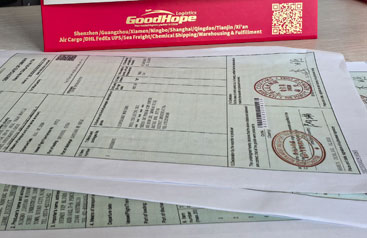
The formal name is the certificate of origin under the Regional Comprehensive Economic Partnership. China Customs files it under certificate type code RC; brokers and traders just call it the RC certificate or Form RC, and the form itself is headed FORM RCEP / REGIONAL COMPREHENSIVE ECONOMIC PARTNERSHIP AGREEMENT / CERTIFICATE OF ORIGIN. China Customs or CCPIT issues it in English, the certificate goes on the export declaration as preferential agreement code 22, and your broker uses it to claim the RCEP rate in Japan, Korea, the ten ASEAN states, Australia or New Zealand. Below: who issues it, who may apply, when it has to be filed, how regional cumulation works in practice, what the one-year validity and retroactive rules mean for your entry, what it costs, and why some certificates lose the preference after the container is gone.

RCEP has 15 members: the ten ASEAN states plus China, Japan, Korea, Australia and New Zealand. The agreement took effect on January 1, 2022 for China, Japan, New Zealand, Australia, Brunei, Cambodia, Laos, Singapore, Thailand and Vietnam; Korea followed on February 1, 2022, Malaysia on March 18, 2022, Myanmar on May 1, 2022, Indonesia on January 2, 2023 and the Philippines on June 2, 2023. All 15 are now in force. The RC certificate is the official paper that proves a shipment holds RCEP origin, so the importing customs authority can assess the agreement rate.
It is not the same document as a plain CO. A CO is non-preferential: it supports the MFN rate and trade statistics and earns you nothing under the agreement. Only the RC certificate lets your entry be assessed at the agreement rate. And holding the certificate does not mean zero duty — the rate depends on where that tariff line sits in the destination country's schedule this year, and the goods still have to pass the origin rule. RCEP adds two mechanics most bilateral deals do not have: regional cumulation, where originating inputs from any of the 15 members count together, and a country-of-origin determination, because each member cuts tariffs on its own schedule and the same goods can face different rates in different markets.
Who files: the exporter or its agent, or the manufacturer in China or its agent, either directly or through an appointed agent holding a signed power of attorney. When: before shipment, valid one year from issue. If it could not be filed in time for a reasonable cause, it can be issued retroactively within one year of the shipment date and is marked ISSUED RETROACTIVELY. Cost: no official visa fee; what you pay is the agent's service fee.
RCEP covers roughly 2.2 billion people and is one of the largest trade agreements ever signed: launched by ASEAN in 2012, signed by all 15 parties on November 15, 2020, in force since January 2022. Its value is not the signature. It is two concrete things — tariff cuts and rules of origin — and the certificate is where those two meet a single shipment.
On the Chinese side the rules sit in three layers. The Measures on the Administration of Origin for Import and Export Goods under the Regional Comprehensive Economic Partnership (GACC Order No. 255, in force January 1, 2022, amended by Order No. 273 on October 28, 2024) govern the origin test, the conditions a certificate must satisfy, and the procedure for claiming the rate on import and export. The Measures on the Administration of Certificate of Origin Visas for Export Goods (GACC Order No. 270, in force September 1, 2024) govern application, review, issuance, retroactive issuance and amendments, with their time limits. GACC Announcement No. 106 of 2021 sets the filing particulars for the agreement, including preferential agreement code 22. The old origin-certificate company registration was abolished on November 1, 2023 (GACC Announcement No. 136 of 2023), so an exporter can apply directly through the China International Trade Single Window, the “Internet + Customs” portal, or the CCPIT filing system.
Origin is decided one of three ways: wholly obtained or produced in a member; produced entirely from originating materials; or produced using non-originating materials that still satisfy the product-specific rule — a tariff classification change, a regional value content, a manufacturing process, or another stated requirement. The third route is how almost every manufactured good qualifies, and the threshold differs by tariff line, not by product category.
Regional value content is calculated two ways under Article 7 of the measures. The build-down method: (FOB value − value of non-originating materials) ÷ FOB value × 100. The build-up method: (value of originating materials + direct labor + direct overhead + profit + other costs) ÷ FOB value × 100. When a non-originating material is acquired inside a member, its value is the earliest ascertainable price paid or payable there, plus freight, insurance and packing to the producer, plus any duty and brokerage that was not waived or refunded.
Four rules are worth memorizing. Regional cumulation: goods or materials originating in one member, used in production in another, are treated as originating there — inputs from all 15 can be added together. That is the real difference from most bilateral deals, and it is why a product carrying Japanese, Korean or ASEAN parts often clears the RCEP threshold when it would fail a bilateral one. De minimis: where a tariff classification change is missed, non-originating materials up to 10% of the FOB value still leave the goods originating. Minimal operations: diluting, disassembling, simple painting or polishing, husking, shelling, labeling, simple mixing and the like never confer origin. Direct consignment: the goods must not pass through another country, or must pass only through unloading, storage and operations needed to keep them in condition, under that country's customs control and with no other processing.
The last layer is specific to RCEP: country of origin. Because each member cuts tariffs on its own schedule, the same goods can face a different agreement rate in different markets, so the certificate and the entry both have to state the country of origin. Goods that qualify and appear on the importing member's Special Goods List are attributed to the exporting member where the exporting member's value content is at least 20%. Goods not on that list are attributed under the three origin routes, and where that still fails, to the member supplying the largest share of originating material value. If origin genuinely cannot be determined, the entry is filed under “origin unknown (highest rate among the members concerned)” — letter code HRA, numeric code 801 — or “highest rate of all members” (HRB, 802). Read that backwards and it tells you how much a wrong origin box costs.
Labeling, simple mixing, repacking and disassembly sit on the minimal-operations list. No certificate can turn those into origin after the fact.
Your broker files the entry with your own customs authority. To claim the RCEP rate, that authority needs this certificate to confirm the goods hold RCEP origin. Without it, the same shipment is assessed at the MFN rate — and the gap between the two is the value of the paper.
Same goods, same tariff line, two different rates. The certificate's direct worth is the spread between them: the wider the spread, the more the certificate is worth chasing.
China and Japan never signed a bilateral free trade agreement. RCEP is the first and so far only tariff-reduction arrangement between them. For Chinese-origin goods entered in Japan, the only acceptable preferential proof is an RCEP certificate or an origin declaration from an approved exporter.
ASEAN, Korea, Australia and New Zealand each have their own agreement with China. One tariff line can carry two or three preferential rates — or only one agreement whose origin rule your goods actually meet. RCEP's cumulation is broader, so a product with parts from other members often clears RCEP when it fails the bilateral test, which widens your options.
Cargo that moves through or is re-exported from another member without processing can carry a back-to-back certificate of origin (type code BR), issued against the original RCEP proof. That carries Korean or ASEAN origin into Japan or another member market, with the same validity as the original.
Letters of credit opened by importers routinely call for “RCEP Certificate of Origin in one original.” A missing or mismatched certificate is a discrepancy that can hold up negotiation, so the certificate number, issue date and consignee have to match the credit terms exactly.
Customs can verify a preferential entry after release by asking China Customs or the issuing office. If no reply arrives within 90 days of the request, or the reply does not establish the certificate's authenticity and the origin status, the goods lose the agreement rate and the duty shortfall is recovered.
Inside China there are two issuers: China Customs, and CCPIT with its local branches. Under Order No. 255, direct and subordinated customs offices and the China Council for the Promotion of International Trade and its local branches are all recognized issuing authorities. Certificates from either carry the same legal effect and are accepted by the importing authority; which one you use depends on your contract, the credit, or what your buyer asks for.
| Channel | What it is | Where you file | Best fit |
|---|---|---|---|
| China Customs | Official issuing authority (direct and subordinated offices) | “Internet + Customs” at online.customs.gov.cn → duty services → origin administration → certificate issuance; or the Single Window at singlewindow.cn → certificates of origin → RCEP | When the certificate needs to line up with the export declaration and the electronic origin data, or the destination authority already exchanges origin data electronically with China |
| CCPIT | Chamber issuing body (CCPIT and local branches) | CCPIT origin certificate system at co.ccpit.org / declare.ecoccpit.net | When the buyer or the credit specifies a chamber certificate, needs a chamber stamp, or the company already files through the CCPIT system |
The process is fully electronic. The company files in the system, the issuing office reviews online, and once approved the certificate is self-printed or collected at the counter. Self-printing means a color print on A4: the file already carries the customs seal, the authorized signature and the company seal and signature, it has the same effect as a pre-printed certificate, and it is ready to use without a trip to the counter for a stamp.
Self-printing is rolled out destination by destination. For RC certificates it currently covers shipments to Japan, Korea, Australia, New Zealand, Singapore and Indonesia; GACC Announcement No. 106 of 2024 added RCEP certificates for Vietnam from September 1, 2024. For other members the certificate is issued at the counter or in another form as the issuing office requires — the Single Window certificate list and the type actually selectable at filing are the operative source.
There is also a de minimis value line on the import side: where the dutiable value of originating goods in one consignment does not exceed USD 200, the origin proof may be waived when claiming the agreement rate — but not where the shipment was split to get under the line. There is no matching small-value exemption on the export side: under RCEP an origin declaration can only be issued by an approved exporter, so ordinary exporters still work through the certificate.
The reverse direction runs the same way. Goods from other members entering China at the agreement rate rely on an RCEP certificate issued by that member's authority, and China Customs verifies it under the same rules. Where no valid proof exists at the time of import, the importer may file a supplementary declaration on origin and post duty security before the clearance formalities are completed; after they are completed, a late claim does not adjust duty already collected.
The rule is short. The exporter or its agent, and the manufacturer in China or its agent, may apply to a Chinese issuing office; an agent needs a signed power of attorney. The applicant files truthfully, submits the invoice and the material that supports origin and country of origin, and answers for the accuracy of all of it. In practice that produces three ways of getting the job done.
A manufacturer files in its own name. Best control, and the only party that really knows material sources and cost build-up, which is exactly what a value calculation needs.
A trader files in its own name, matching the invoice and the bill of lading. Works well where volume is steady and there is a dedicated documents desk.
We prepare and file, and the certificate still names the exporter or the manufacturer. The usual fit: thin documentation staff, shipments out of several ports, or origin rules and cumulation nobody in-house has time to run.
Before the first filing. Company registration for origin certificates was abolished on November 1, 2023, so there is no pre-approval step. A company profile still has to exist in the system: unified social credit code, Chinese and English name and address, contacts. For self-printing, the company's Chinese and English seals and the declarant's signature have to be uploaded and authorized. When we file as agent, the entrustment is recorded in the e-port system and the power of attorney is attached.
The approved exporter route. An enterprise holding China Customs Authorized Economic Operator advanced status, which knows the relevant origin rules and keeps a complete origin record system, can be recognized by its customs office and issue its own origin declarations instead of filing a certificate for every shipment. Under RCEP only such enterprises may issue declarations, and the exporting member must have notified the other members of the enterprise. For steady, high-frequency, small-lot shipping this saves time and money — the barrier is corporate qualification and internal control, not paperwork.
The measures require the certificate to be applied for before the goods are shipped, and it is valid one year from the date of issue. That is not a formality: the form carries the means of transport and route, the departure date, and the bill of lading or air waybill number, none of which is fixed until the booking is confirmed.
Departure date, vessel and voyage or flight number, port of discharge (Tokyo, Yokohama, Busan, Singapore, Sydney, Auckland and so on). Start pulling the invoice, packing list and the destination tariff code.
Check whether the heading carries a product-specific rule — a tariff shift, a value content or a process — then run the rule. Where a value test applies, build the calculation and keep the bill of materials behind it.
Filed in the Customs or CCPIT system with the origin criterion box stating what was actually used, and the description taken line by line from the commercial invoice.
The issuing office completes review within two business days. Self-print in color on A4; the PDF goes to your broker for pre-filing, the original travels with the documents.
Article 36 of the measures leaves room. Where the applicant could not apply before shipment because of negligence or another reasonable cause, it may apply for retroactive issuance within one year of the shipment date, and the certificate is marked ISSUED RETROACTIVELY. Under Article 11 of the visa measures, the request has to come with the bill of lading or other transport document; the office issues it once the file passes review, and refuses goods that were returned or whose origin cannot be established. Under Article 15 the retroactive certificate runs one year from the shipment date.
Three other remedies get confused with retroactive issuance. An amendment: where the certificate contains an error or needs supplementing, the applicant may ask the original issuing office within one year of issue, and the office either corrects the original with a signature and seal at the correction or issues a new certificate and voids the old one. A certified true copy: where the original is lost or damaged, a copy may be requested within one year of issue, carrying the same number and date, marked CERTIFIED TRUE COPY, and treated as the original. A back-to-back certificate: where goods transit or are re-exported from a member without processing, a back-to-back certificate (type code BR) is issued against the original, with the same validity, and the quantities split out may not exceed what the original covers.
The practical constraint sits outside the rules. An issue date later than the shipment date is exactly what your broker and the issuing bank compare, some credits refuse a retroactive certificate outright, and some buyers ask for a written explanation. If it can be filed on time, file on time.

Filing yourself and filing through an agent walk the same official path. What changes is who fills the form, who checks it, and who redoes the work when a field is wrong. The RC certificate carries two steps a plain CO does not: settling the origin criterion, and nailing down the country of origin.
Confirm the destination member and that the goods sit inside its schedule. Where the same line can go under several agreements, compare rates and origin rules and take the route you can actually satisfy at the lower rate.
Run the product-specific rule. A value route needs a cost build-up and material sources; a tariff-shift route needs the input list; anything leaning on cumulation needs the suppliers' origin proof on file.
Decide it under the Special Goods List and the exporting member's value content. This box decides which agreement rate your broker applies — a wrong entry is a wrong discount.
Commercial invoice, packing list, and bill of lading or air waybill. Reconcile invoice number, date, value, package count, gross and net weight, and shipping marks.
Enter company and goods details, select RCEP certificate of origin, state the criterion you actually used, and carry the real routing — direct or transshipped.
Filed with Customs or CCPIT; the office responds within two business days. If the file is incomplete it tells you everything that needs fixing in one pass.
Self-print or collect at the counter, then read the certificate before it leaves your desk: number, seal, authorized signature, English completion, and the origin box against what you filed.
PDF out immediately so your broker can pre-file, original with the documents or by courier. Certificate copy and application file are kept three years from issue — that is the file a verification asks for.
The list is short. One item on it is heavier than the rest — the origin support, including the source of any cumulated material. That is where the RC certificate differs from a plain CO, and where review questions usually start.
Two separate numbers paid to two different parties: the official fee charged by the issuing office, and the fee charged by whoever prepares and files the certificate.
Under the Ministry of Finance and the National Development and Reform Commission's review of administrative charges, issuing offices do not charge a visa fee for export origin certificates. China Customs publishes “no charge” in its public fee schedule and the CCPIT system publishes the same; certificate stock, review and the electronic seal are not billed to the applicant.
What we charge covers labor: running the origin test, assembling the cumulation file, reconciling the three document sets, filing, chasing the receipt, printing and delivering, and reworking an error. One certificate, one price, itemized on the quote.
For the same shipment you usually hold more than one origin option. What separates them is not the name — it is whether the certificate earns a preference, in which market, and at which rate.
| Certificate | Code | Covers | How it relates to RC |
|---|---|---|---|
| RCEP certificate of origin | RC | ASEAN ten plus China, Japan, Korea, Australia, New Zealand | The preferential certificate under RCEP; filed on the export declaration as agreement code 22 |
| RCEP back-to-back certificate | BR | Same members, where goods transit or are re-exported | Issued against the original RCEP proof, with the same validity |
| Certificate of origin — CO | CO | Any destination, no agreement needed | Non-preferential; proves origin only, supports the MFN rate, grants nothing |
| China–ASEAN FTA — Form E | E | ASEAN ten | Runs alongside RCEP; compare rate and origin rule per line, then pick one |
| China–Korea FTA — Form K | K | Korea | Runs alongside RCEP; the Asia-Pacific Trade Agreement is a third option on that lane |
| China–Australia FTA — CHAFTA | — | Australia | Runs alongside RCEP; take whichever schedule is better |
| China–New Zealand FTA | — | New Zealand | Runs alongside RCEP; the bilateral deal is deeper and wins on most lines |
| China–Japan | RC | Japan | No bilateral agreement exists; RCEP is the only route |
| CPTPP | — | Japan, Australia, New Zealand and others; China is not a party | Chinese authorities do not issue CPTPP origin certificates, so it cannot be used |
Three tests decide it: the goods must sit in that agreement's tariff schedule, they must satisfy that agreement's origin rule, and the rate on offer this year has to be compared. Often more than one agreement passes all three, and then you take the lower rate; where rates tie, look at practicalities — whether that certificate can be self-printed, and whether the destination authority already exchanges origin data electronically with China.
RCEP wins on practical grounds more often than people expect. Regional cumulation lets inputs from all 15 members add up, so a product with Japanese, Korean or ASEAN content can clear the RCEP value threshold while failing a bilateral one. The country-of-origin mechanic works the other way too: where the certificate does not state a country of origin, or the full source of originating material can be shown, the importer may ask for the most favorable rate available under the agreement. Used properly, the duty saved usually dwarfs the cost of one more certificate.
The other half of the truth is plain: not every shipment is worth a certificate. If the line is already at MFN zero, or that member does not cut the product, a certificate only adds document cost. That has to be checked line by line against the schedule, not guessed by product category.
Issuance is the easy half. Destination customs examines preferential entries after release, and the question is rarely whether a certificate exists — it is whether the certificate reads correctly and the numbers behind it hold.
Declaring wholly obtained while using imported parts, treating non-member material as cumulable, or certifying a value test the numbers never reached. This is the classic RC failure and the most expensive one.
Each member cuts tariffs differently, so the origin box decides the rate. A wrong attribution — or applying the general rule where the Special Goods List applies — leaves your entry assessed at a rate it did not earn, and the difference is recovered.
“Machine,” “parts,” “goods” describe nothing. The certificate has to list item by item: name, specification, model, quantity and tariff code, with the producer named where required.
You declare under your own national tariff. The first six digits match China's HS code; the rest may not. The schedule follows your national code, so a misaligned suffix means no preference.
Invoice number, date, value, package count, weights or marks differing between invoice, packing list, bill of lading and the entry is an open door to refusal. Amending documents costs far more than preparing them once.
Issued after the shipment date without ISSUED RETROACTIVELY, or carrying handwriting and overstamped corrections, invites a challenge on authenticity. Corrections must be signed and sealed by the issuing office.
Cargo routed through Hong Kong, Busan or Singapore must only undergo logistics operations there, with no other processing, under local customs control. RCEP sets no fixed dwell-time limit; what matters is the nature of the operations and the customs status.
If no reply reaches the destination authority within 90 days of its request, or the reply does not establish authenticity and origin, the goods lose the agreement rate. For an on-site verification the deadline is 30 days, with the same consequence.
During the check the importer can usually take release against a duty security, but the entry is settled on the outcome. If the goods still fail the preference, the duty shortfall is recovered and arrears interest can follow; the storage and detention charges from a container sitting at the terminal often hurt more than the duty itself. The export side carries cost too: an issuing office asked to verify will pull contracts, invoices, ledgers and production records, and the exporter has to keep the file that supports origin and country of origin for three years.
The only defense that works is built at the document stage — origin calculated correctly, the three document sets aligned — not in an explanation after the verification lands. That is why we settle origin before we open the filing screen.
The twelve questions that come up most often from buyers and their brokers, answered with the rule rather than the sales pitch.
Yes — one document, several names. The formal name is the certificate of origin under the Regional Comprehensive Economic Partnership; China Customs files it under certificate type code RC, and brokers and traders call it the RC certificate or Form RC. The form is headed FORM RCEP and CERTIFICATE OF ORIGIN. It goes on the export declaration as preferential agreement code 22 and is completed in English.
RCEP has 15 members: Brunei, Cambodia, Indonesia, Laos, Malaysia, Myanmar, the Philippines, Singapore, Thailand and Vietnam, plus China, Japan, Korea, Australia and New Zealand. Chinese-origin goods shipped to any of the other 14 can claim the agreement rate on a Chinese-issued RC certificate — provided the line sits in that member's schedule and the goods meet the origin rule.
No. Each member cuts duty line by line and year by year, and some products sit outside the schedule or in a transition period. The rate depends on where your tariff line sits this year, and the goods must still clear the origin rule. Import VAT, consumption tax and similar levies are not reduced by the certificate.
The issuing office completes its review within two business days of receiving the application. With a clean file and a settled origin criterion, most certificates issue the same day or the next, and a self-printed copy is ready to use immediately with the same effect as a pre-printed one.
China Customs and CCPIT charge no visa fee for an export origin certificate. What you pay is the agent's service fee, quoted per certificate and itemized by certificate type, rush handling, amendments or reissues, and any chamber stamp or consular legalization — no hidden add-ons.
The exporter or its agent, or the manufacturer in China or its agent, may apply; an agent needs a signed power of attorney. When we file for you the certificate stays in the exporter's or manufacturer's name — we do not sell certificates. An approved exporter can issue its own origin declaration instead of filing per shipment.
No pre-registration. Company registration for origin certificates was abolished on November 1, 2023, so a company can apply directly through the Single Window, the Internet + Customs portal or the CCPIT system. A company profile still has to be created in the system — credit code, Chinese and English name and address — and self-printing requires the company seals and the declarant's signature to be uploaded and authorized.
Three routes: wholly obtained or produced in a member; produced entirely from originating materials; or produced with non-originating materials that still satisfy the product-specific rule — a tariff shift, a regional value content, a process, or another stated requirement. Value content runs either as (FOB minus non-originating materials) divided by FOB, or as the sum of originating materials, labor, overhead, profit and other costs divided by FOB. Regional cumulation lets inputs from all 15 members count together, and where a tariff shift is missed, non-originating materials up to 10% of FOB still leave the goods originating. Labeling, diluting and simple mixing never do.
Yes, within limits. Where the application could not be made before shipment for negligence or another reasonable cause, it can be filed retroactively within one year of the shipment date, with the bill of lading or other transport document attached. The certificate is marked ISSUED RETROACTIVELY and runs one year from the shipment date. Returned goods and goods whose origin cannot be established are refused. Some credits and some buyers will not accept a retroactive certificate, so filing before shipment is still the better plan.
One year from the date of issue; a back-to-back certificate follows the original's validity. Inside that window the certificate can be amended — the office corrects the original with a signature and seal, or issues a new certificate and voids the old one. If the original is lost or damaged, a certified true copy can be requested within one year, with the same number and date, treated as the original. After expiry you file again.
Only if the direct consignment rule is met: no transit at all, or transit limited to unloading, storage and operations needed to keep the goods in condition, with no other processing, under that country's customs control. RCEP sets no fixed cap on how long the goods may stay, so the test is the nature of the operations and the customs status — settle the routing at booking, with your broker, not after the certificate is filed.
Because China and Japan have no bilateral free trade agreement. RCEP is the first and still the only tariff-reduction arrangement between them, so the only acceptable preferential proof for Chinese-origin goods entered in Japan is an RCEP certificate or an RCEP origin declaration from an approved exporter. Japan phases its cuts by tariff line, so the rate has to be checked for the current year.
We are a freight forwarder and documentation desk in Shenzhen, working out of Futian: export declarations, origin certificates, fumigation, commodity inspection and legalization for one order delivered through one window wherever the rules allow it.
The product-specific rule and the value threshold for that line are checked, and cumulated material is confirmed usable, before the filing screen is opened. A wrong criterion costs more to amend than to get right.
One line can sit under RCEP, China–Korea, China–ASEAN, CHAFTA and the China–New Zealand FTA at once. We price the rate and test the rule for each, then decide which certificate to issue.
RCEP wants the certificate applied for before shipment, so our filing slot sits after the booking is confirmed and before the vessel loads. Where a retroactive certificate is unavoidable, the bill of lading and export declaration are reconciled with it.
Cargo out of Shenzhen, Guangzhou, Nansha, Huangpu, Ningbo, Shanghai, Qingdao, Tianjin or Xiamen is filed with the office that matches the port of export, so the certificate and the routing agree. The PDF goes to your broker first, the original follows.
Tell us what the goods are made of, where the materials come from, and when the vessel loads. You get an origin assessment, the comparable agreement rates, the issue date we can hold, the document checklist, and an itemized quote for the filing — from Shenzhen, for cargo out of any China port.
