It moves your entry into the duty-free column
New Zealand's tariff schedule still shows rates. Preference is a claim you elect at entry, supported by valid origin evidence. No certificate, no claim — and the entry is assessed at the standard rate.

New Zealand has charged no duty on Chinese-origin goods since 2016. But zero is not automatic at the border — your entry only lands in the duty-free column when it claims the treaty rate and carries the origin evidence to back it up. Form N is that evidence.
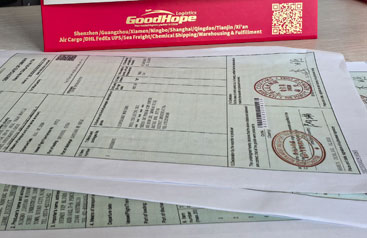
Form N is the preferential certificate of origin issued under the China–New Zealand Free Trade Agreement. Its official name is the Certificate of Origin under the China–New Zealand FTA; in the trade it is called Form N, or the CNZ certificate. The certificate number carries the treaty identifier N, and the whole document is completed in English.
It is issued by China Customs at the port of export or by CCPIT and its local branches, filed online, and normally self-printed on A4 with the electronic seal and signature. You file before or at the time of shipment; if that window is missed, a retroactive certificate can still be requested within one year of the shipment date, and the certificate stays valid for 12 months from issue.
What it buys you: New Zealand eliminated duty on 100% of Chinese-origin tariff lines on January 1, 2016. Zero duty is claimed at entry, and the entry needs origin evidence. Without it, your broker files at the most-favored-nation rate — which on apparel, footwear, textiles and some manufactured goods is real money, not a rounding error.
Two governments signed the China–New Zealand FTA in April 2008 and put it into force that October. An upgrade protocol followed, effective April 7, 2022, which rewrote the origin rules and the paperwork. Form N is the certificate that operates under those rules today.
The document itself is a single page of blocks: exporter, consignee, transport details, marks and package numbers, description of goods with HS code and quantity, invoice number and date, origin criterion, and the issuing office's declaration, signature and seal. It carries the word ORIGINAL, a unique certificate number, and it declares the basis on which the goods qualify as Chinese origin. A certificate that leaves the origin-criterion box vague, or that claims a rule the shipment does not meet, is a certificate waiting to be pulled.
The Chinese side works to two instruments: the revised measures on origin administration under the China–New Zealand FTA (GACC Announcement No. 32 of 2022, effective April 7, 2022), which is the rulebook on how origin is decided, and the measures on the administration of certificate of origin visas (GACC Order No. 270, effective September 1, 2024), which governs filing, review, issuance, amendment and retroactive issuance.
Origin is decided one of three ways. Wholly obtained: grown, raised, mined, caught or produced entirely in China or New Zealand. Produced exclusively from originating materials: everything that went into the goods already qualifies. Product-specific rule in Annex 1: non-originating materials were used, but the finished goods meet the rule set for their tariff line — a tariff classification change, a regional value content threshold, or a required manufacturing process. That third route is how almost all manufactured exports qualify.
Where value content is the test, the calculation is (FOB value − value of non-originating materials) ÷ FOB value × 100%. Three supporting rules matter as much as the main one: bilateral cumulation (materials originating in either country count as originating in the other), de minimis (non-originating materials up to 10% of the FOB value are disregarded, but only for tariff-change rules), and direct transport (goods may pass through a third country, but may stay there no more than 12 months and may not undergo anything beyond unloading, storage and operations needed to preserve them).
The certificate covers one shipment. Split consignments need separate certificates, and a certificate cannot be reused for a later shipment of similar goods.
Your name is on the entry, so the duty assessment, the verification and the penalty exposure all land on your side of the transaction. Form N is the document that puts your goods in the zero column and keeps them there.
New Zealand's tariff schedule still shows rates. Preference is a claim you elect at entry, supported by valid origin evidence. No certificate, no claim — and the entry is assessed at the standard rate.
Most machinery, chemicals and raw materials enter at zero anyway, so the certificate changes nothing. Apparel, footwear, textiles, bags and a range of finished consumer goods are where the difference shows up, and where the certificate earns its keep.
Your customs broker needs the certificate number and issue date to link the preference claim to the entry. Late paperwork means an entry filed at the wrong rate, then an amendment, a refund claim, or a post-entry correction.
New Zealand Customs runs origin verifications on preference claims. The certificate, the invoice, the bill of materials and the production record are what you produce. A clean file closes the query; a thin file loses the preference.
Anti-dumping and safeguard actions, quota administration and import statistics are all built on origin. The certificate is the record behind the number when a case file is opened years later.
Landed cost is duty plus GST plus freight plus clearance. Take duty out of the model and the purchase price you can afford rises accordingly. That is the real argument for the certificate, and it is decided before the order ships.
Only two types of office in China can issue a Form N — China Customs, and CCPIT with its local branches. Both produce a certificate New Zealand accepts, and both are filed online. Which one you use is usually decided by your contract, your letter of credit, or your supplier's existing registration.
| Channel | What it is | Where it is filed | Use it when |
|---|---|---|---|
| China Customs | Government issuing authority — the customs house at the port of export | Internet + Customs at online.customs.gov.cn (origin certificate module), or the Single Window at singlewindow.cn | You want the certificate tied to the export declaration and to the electronic origin data that New Zealand can query directly |
| CCPIT | Chamber issuer — the China Council for the Promotion of International Trade and its local branches | CCPIT origin certificate system at co.ccpit.org, or declare.ecoccpit.net | Your buyer or bank wants a chamber-issued certificate, or your supplier already files everything through CCPIT |
Filing is electronic end to end. Submit in one of the systems above, the authority reviews it online, and once it clears you print the certificate yourself — A4, color, double-sided, with the electronic seal and the authorized signature. That printout has the same legal effect as a pre-printed form. China–New Zealand certificates sit on the self-print list, so a paper original collected at the counter is optional, not routine.
There is no residency requirement. Any customs house or local CCPIT branch will take an online filing. Cargo out of Shenzhen and the Pearl River Delta is normally filed with Shenzhen Customs or CCPIT Shenzhen, which keeps review and rework in one place. Cargo out of Ningbo, Shanghai, Qingdao, Tianjin, Xiamen or Guangzhou is filed with the office that matches the port of export.
The rule is short. The exporter named on the certificate, or the manufacturer of the goods, may apply — directly or through an agent holding a signed power of attorney filed with the issuing office. In practice that produces three arrangements, plus one alternative route for frequent shippers.
The manufacturer registers, maintains its own profile and files its own certificates. Tightest control over origin data, and it works well when the product range is narrow and the documents desk is staffed.
The exporter applies in its own name, so the certificate matches the invoice and the bill of lading it issued. The usual arrangement for high-volume exporters with a dedicated documents team.
The certificate still carries your supplier's name or yours — never ours. This is the route for importers whose supplier has no registration, no documents desk, or cargo spread across several ports.
After the upgrade protocol, a certificate is no longer the only way to claim the preference. A Chinese exporter approved by customs as an approved exporter may issue its own origin declaration on the invoice or another commercial document, without filing a certificate at all. That declaration is valid for 12 months from the date it is made, and is accepted on the same basis as a certificate. For a supplier shipping the same product mix every month with clean origin records, it removes a step. For a single shipment or a new product, the certificate is simpler, and it is what most buyers still ask for. The approval regime sits in the Measures for the Administration of Approved Exporters (GACC Order No. 254).
The rule says the application is made before or at the time of shipment. That is not bureaucratic fussiness. The certificate carries the transport details — departure date, vessel and voyage or flight number, port of discharge — and none of those exist until the booking is confirmed.
Departure date, vessel or flight and discharge port are fixed. Pull the invoice, packing list, HS code and the origin support for the goods.
Decide which Annex 1 rule your product meets and gather the bill of materials or cost breakdown that proves it. Do this before filing, not after a query.
The authority completes review within two business days. Self-print, then check the number, the seal, the signature and the ORIGINAL marking.
PDF goes out ahead so your New Zealand broker can pre-file the entry; the original travels with the shipping documents or by courier.
All is not lost. A retroactive certificate can be requested within one year of the shipment date, filed with the bill of lading or air waybill as proof of the date of shipment. If it passes review it is issued and annotated ISSUED RETROSPECTIVELY, and it remains valid for one year from the shipment date rather than from the issue date. Two limits are worth knowing: no retroactive certificate is issued where the goods have been returned or where origin cannot be verified, and some letters of credit refuse a certificate dated after the bill of lading.
Filing it yourself and having us file it walk the same official path. What changes is who fills the form, who checks it against the rest of the file, and who does the rework when a field is wrong.
Destination New Zealand, goods of Chinese origin, and a tariff line where duty is actually charged. If duty is zero at the standard rate anyway, the certificate is paperwork for the file, not a saving.
Read the Annex 1 rule for your tariff line, then work out whether the goods are wholly obtained, made from originating materials, or meet a tariff change, value-content or process rule.
Bill of materials, supplier invoices for the non-originating inputs, cost build-up if value content is the test. This is the file that answers a verification six months later.
Invoice, packing list and bill of lading. Invoice number and date, value, package count, gross and net weight, marks — all four corners have to agree before anything is filed.
Exporter and consignee details, transport and routing, goods description taken line by line from the invoice, HS code, origin criterion. No catch-all words in the description box.
Customs or CCPIT reviews within two business days and normally lists every needed correction in one pass, which is why a clean file saves a full round trip.
Self-print A4 color, double-sided, or collect at the counter. Check certificate number, seal, signature and the ORIGINAL marking before the page leaves the office.
PDF to your broker immediately, original with the documents or by courier. Keep the certificate copy and the application file for three years — that is the record produced when a verification arrives.
The list is short, and one item on it is longer than a plain CO requires: Form N asks for evidence of origin, and that is the part reviewers and foreign customs both read closely.
Two separate charges, two separate reasons. The issuing office charges no visa fee for an origin certificate, and neither China Customs nor CCPIT publishes one. What you pay is the agent's service fee for doing the work.
China Customs issues origin certificates without a visa charge, and CCPIT's public fee schedule shows the same. Review, certificate format, electronic seal and electronic signature are not billed to the applicant.
What we charge covers the filing work — settling the origin criterion, assembling the support file, reconciling the three documents, filing, tracking the review, printing and delivery, and rework if a field is wrong. Quoted per certificate, one price per certificate.
These three documents look similar on the page and do different jobs at the border. Filing the wrong one is the most common reason a preference claim fails on arrival.
| Document | Treaty code | What it does at a New Zealand entry | Use it when |
|---|---|---|---|
| Form N — China–New Zealand FTA certificate of origin | N | Supports the FTA claim: duty-free entry on Chinese-origin goods, provided the Annex 1 rule for the tariff line is met. | Goods are Chinese origin and duty would otherwise be charged. The default choice for China-to-New Zealand cargo. |
| CO — non-preferential certificate of origin | C | Proves Chinese origin only. No treaty rate, no duty reduction; supports the standard rate column and origin-based controls. | Your buyer, bank or broker asks for proof of origin without a preference claim, or the destination has no agreement with China. |
| RCEP certificate — Regional Comprehensive Economic Partnership | RC | Another route to the same zero duty, on the RCEP rule rather than the China–New Zealand rule. The rate cannot beat zero. | Your product fails the China–New Zealand origin rule but meets the RCEP rule, or your supply chain spans several RCEP countries. |
| Approved exporter declaration | — | Same preference as Form N, declared by an approved exporter on the invoice instead of on a certificate. Valid 12 months. | The supplier is approved, ships the same product mix repeatedly, and wants to skip the certificate filing step. |
Issuance is the start, not the end. New Zealand Customs verifies preference claims after entry, and the question in a verification is rarely "is there a certificate" — it is "does this certificate hold up".
Imported components declared as wholly obtained, or a value-content claim that never reached the threshold. The heaviest category, and the one that survives an audit years later.
"Machine parts", "fittings", "goods" — that is not a description. Each invoice line needs the item, the specification, the model and the quantity, with the HS code beside it.
The code on the Chinese export declaration and the New Zealand tariff line can differ in structure, and the Annex 1 rule applies to the New Zealand line. A code that maps to the wrong line can put the goods outside the rule.
Invoice date, value, package count, gross weight, marks — a difference against the packing list, bill of lading or entry is an invitation to look closer. Amendments cost more than clean filings.
Cargo routed through Hong Kong, Singapore or another hub needs proof that it stayed under 12 months and was not manipulated. No through bill of lading or non-manipulation record leaves the direct-transport condition unproven.
A certificate out of its 12-month validity, or one issued after shipment without the retroactive annotation, does not support the claim. The entry then sits at the standard rate until it is corrected.
The questions importers actually send us, answered without the treaty language.
Yes, for the lines where duty is charged. New Zealand zeroed out tariffs on Chinese-origin goods in 2016, but preference is claimed at entry and has to be supported by valid origin evidence. Plenty of product lines are duty-free at the standard rate anyway, so the certificate changes nothing there; apparel, footwear, textiles, bags and various finished goods are where the saving lives.
A regular CO only certifies that the goods are Chinese. Form N certifies origin under a specific treaty and supports the treaty rate. Both come from the same two types of office, both are filed online, but only Form N lets your broker claim duty-free treatment.
The exporter named on the certificate, or the manufacturer of the goods. Either may appoint an agent with a signed power of attorney filed with the issuing office. When we file on your behalf, the certificate stays in your supplier's name or yours — never in ours.
The issuing office completes review within two business days of accepting the filing. With clean documents most certificates clear in one working day. A same-day request depends on that day's queue and has to be arranged before the filing, not after.
The issuing authority charges no visa fee — China Customs and CCPIT both publish a zero charge. What you pay is the agent's service fee, quoted per certificate and itemized by the work involved: origin analysis, filing, rush handling, amendment, chamber stamp or courier.
Yes, within one year of the shipment date, filed with the bill of lading or air waybill as proof of that date. It is issued and annotated as issued retrospectively, and stays valid for one year from the shipment date. Two caveats: no retroactive certificate where the goods were returned or origin cannot be verified, and some letters of credit refuse a certificate dated after the bill of lading.
Twelve months from the date of issue, and it has to be in force on the date the entry is filed in New Zealand. Amendments and reissues carry the same validity as the original, so a correction late in the cycle does not buy you another year.
Yes. Form N is completed in English, with a unique certificate number that includes the treaty identifier N, a declaration of the origin criterion, and the issuing office's authorized signature and seal. Handwritten corrections on the certificate are not the way to fix a mistake — request an amendment instead.
Whichever rule Annex 1 of the agreement sets for your tariff line: a change in tariff classification, a regional value content threshold, or a specific manufacturing process. Value content is calculated as (FOB value minus the value of non-originating materials) divided by FOB value. Non-originating materials up to 10% of the FOB value may be disregarded, but only where the rule is a tariff change.
Yes. Bilateral cumulation treats materials originating in either country as originating in the other, so Chinese content in a New Zealand-made input, or the reverse, counts toward the rule. Keep the supplier declarations that prove the originating status of those inputs; cumulation is only as good as the paper behind it.
Direct transport allows a third-country stop as long as the goods stay no more than 12 months, are not manipulated beyond unloading, storage, repacking for preservation or similar handling, and remain under customs control. Keep the through bill of lading, the discharge and reload records, and any non-manipulation certificate — without them the condition is unproven at verification.
It sends an origin verification request to the exporter or the issuing authority. If no satisfactory response is received within six months of the request, the preference is not applied and the goods are assessed at the non-preferential rate. The certificate, the bill of materials and the production record are what close the query.
That works, filed on a third-party invoice basis with the corresponding remark, declared when you apply. The certificate still names the actual exporter, and the invoice number, date and value have to match what your broker files in New Zealand. Tell us the structure before we file rather than after the certificate is printed.
Tell us the New Zealand tariff line, the Incoterms and what your broker has asked for. You get a certificate recommendation, the document checklist and an itemized quote for the filing — handled in Shenzhen, for cargo out of any China port.
