China and Pakistan signed the free trade agreement on November 24, 2006; it entered into force on July 1, 2007, and an early harvest program had been reducing duties on selected products since January 1, 2006. The second phase protocol, signed in 2019, entered into force on December 1, 2019 and applied its tariff cuts from January 1, 2020: the share of lines at zero duty moved from 35% toward 75%, with another 5% of lines receiving a 20% concession rather than full elimination.
The filing rules sit in two layers. The origin tests and the certificate come from the agreement’s Rules of Origin and its Operational Procedures for the Visa of Origin Certificates — the second document is where the 15-day and one-year windows live. On the Chinese side, the Measures on the Administration of Certificate of Origin Visas for Export Goods (GACC Order No. 270, in force September 1, 2024) govern acceptance, review, retroactive issuance and amendments. For Pakistani goods moving the other way into China, the check runs under the Measures on the Administration of Origin of Import Goods under the China–Pakistan FTA (GACC Order No. 162, in force July 1, 2007, amended by Order No. 198 in 2010). On the export declaration, the certificate is code 07.
Origin is decided one of three ways. Wholly obtained: grown, raised, mined, caught or produced entirely in China. Produced entirely from originating materials: every input is itself Chinese or Pakistani under the agreement. Otherwise, the goods have to pass the product-specific rule for their heading — a tariff shift, a value test or a stated process — and where no product-specific rule applies, the fallback is a regional value content of at least 40%.
The value test is not a margin calculation. It is (FOB value − value of non-originating materials) ÷ FOB value × 100, it has to be built on the books you keep, and Chinese and Pakistani originating material can be cumulated on both sides. On top of that come the exclusions: simple assembly, labeling, repacking, diluting, sorting and similar minimal operations never confer origin, however much paperwork surrounds them, and the goods must move directly — a third country may only handle unloading, storage or splitting, with no entry into trade or consumption and no processing.
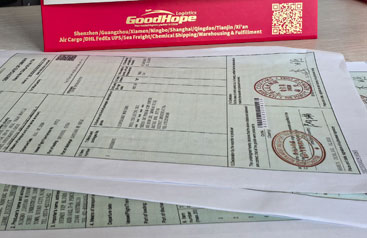
The distinction that matters: Form P proves the cargo is eligible for the agreement rate. It does not prove the cargo is duty-free. The tariff schedule decides the rate; the origin rule decides eligibility. A certificate that clears one and fails the other is a certificate that gets refused at entry.