
Home / Shipping to Ecuador / How to Ship from China to Ecuador
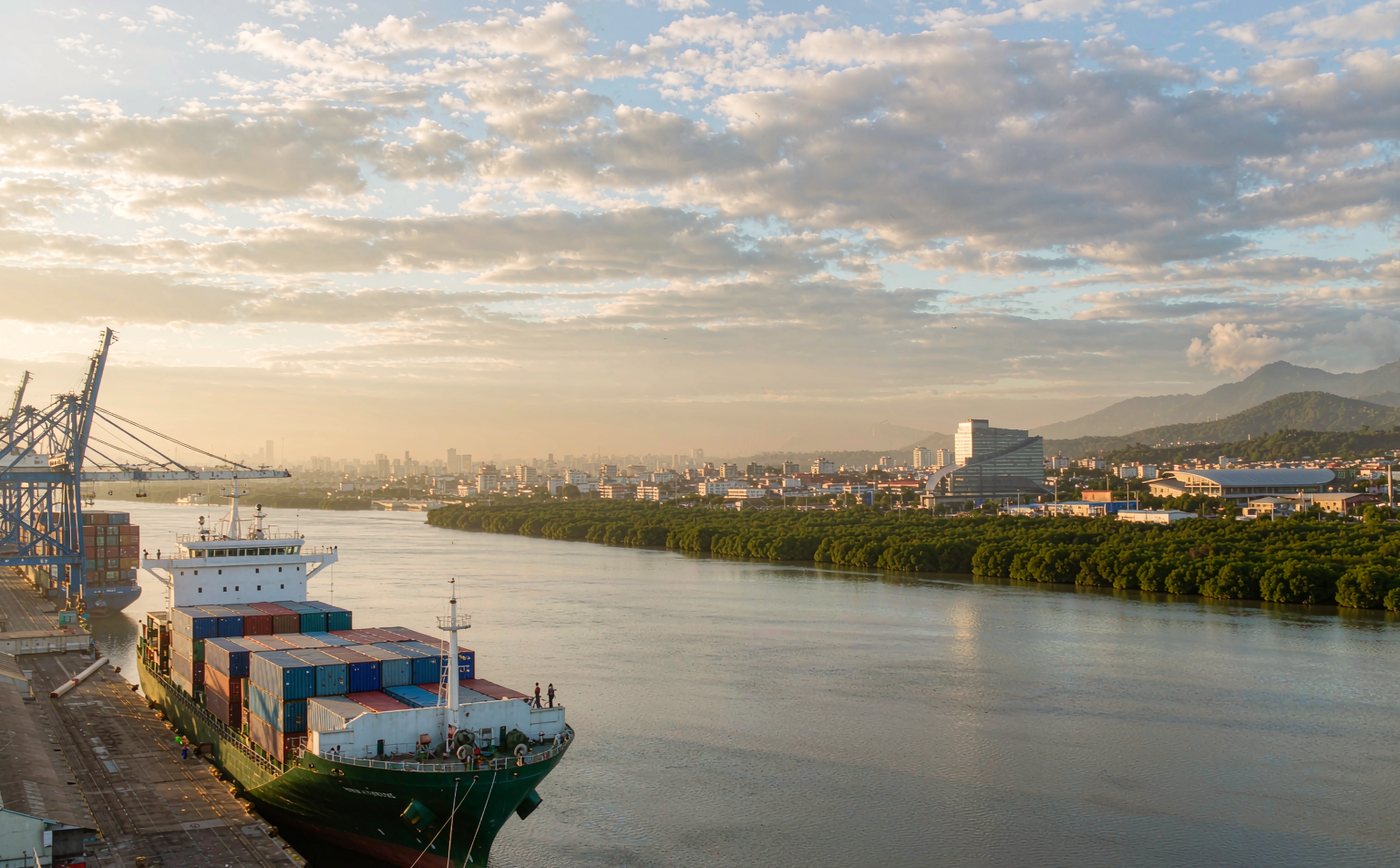
How to Ship from China to Ecuador: Guayaquil, Form R & IVA
Ecuador runs on US dollars, and that changes the arithmetic before anything else does. The US dollar has been the official currency since 2000, so customs values are struck in dollars, there is no official conversion rate applied to your declaration, and there is no currency risk sitting inside the tax calculation. Compare that with Colombia, where the tax office publishes its own exchange rate and a weakening peso quietly raises your landed cost between placing the order and clearing it, and you can see why Ecuador is the easier of the two to model.
The second thing is that the duty is largely solved, and the certificate is not the hard part either. The China–Ecuador free trade agreement has been in force since 1 May 2024 and takes roughly sixty percent of tariff lines to zero immediately. You claim that with a certificate of origin — and here is the trap: it is Form R, not Form F. Form F is the China–Chile certificate. Several forwarder articles get this wrong, and a supplier working from the wrong reference will hand you a document that does nothing at the Ecuadorian border.
The third thing is that the real gatekeeper here is not customs, it is product certification. Ecuador's standards body regulates more than two hundred product categories, and regulated consumer goods are not released without conformity certification. That process is measured in weeks, costs real money per product, and has to be started before the goods ship. Importers who spend their energy on the duty line and discover the certification requirement at arrival have optimised the wrong thing.
At a glance
Currency: the US dollar, officially, since 2000 — no conversion in the customs calculation. · Trade agreement: China–Ecuador FTA in force since 1 May 2024; around 60% of lines at zero immediately. · Certificate: Form R, in English, issued by China Customs or CCPIT — plus a liberation code that must be entered at filing. · Arancel: 0–45% by tariff line, averaging around 10%; zero on liberalised lines. · FODINFA: 0.5% of CIF, on all products. · IVA: 15% on CIF plus duty plus FODINFA. · Broker: a licensed customs agent files through the ECUAPASS single window. · Gateways: Guayaquil, Posorja, Manta. · Air gateways: Quito and Guayaquil. · Sea transit: 27–36 days port to port.
How your cargo moves: China to Ecuador
Eight steps from your supplier's door to yours. The last four are the ones shaped by local rules.
- Pickup from your supplierWe collect the goods anywhere in China and bring them to our consolidation point.
- Export clearanceChina customs declaration filed and released before the goods move to the port.
- Loading and departureContainer loaded, sealed and handed to the carrier at the Chinese port.
- Main carriageOcean, air or rail movement booked on the route agreed for your cargo.
- Arrival at the gatewayDischarge at the port or airport of entry, recorded on the carrier's manifest.
- Import clearanceCustoms declaration filed locally, with duty and tax assessed on the declared value.
- Customs releaseGoods released into free circulation once duty and tax are settled.
- Final deliveryOnward movement to your delivery address, warehouse or nominated depot.
Duty rates, VAT rates and clearance times move, and the figure that applies to your goods is the one set for your commodity code on the day of clearance. We check the current position against your code before your goods sail and confirm it to you in writing — ask for that check when you request a quote.
What this guide covers, and the currency underneath it
This is written for a buyer outside China bringing goods from a Chinese supplier into Ecuador who wants to understand the route end to end — which port, which registrations, which certificate, what the tax bill looks like, what has to be certified before shipping, and where the schedule slips.
We cover the free trade agreement and the certificate that claims it, the code that has to be entered for the preference to apply at all, the tariff bands and what the agreement leaves out, IVA and the FODINFA levy, the currency outflow tax that people mistake for a customs charge, the three ports and the tidal window that moves the berth, product certification and the prohibitions, transit times and the deadlines before departure, and the document discipline that decides whether a clearance takes two days or two weeks.
We do not publish freight rates here. Rates into Ecuador move with fuel, capacity and season, and a printed number is stale before it is useful. For a live figure on your lane, send the details through the quote request and we will price the actual cargo. Any figure you should re-check against current official sources before relying on it is marked.
Why the dollar matters more than it sounds
Worth dwelling on for a moment, because it is easy to skim past. In most importing markets there is a moment in the process where your dollars get converted into local currency at a rate you do not control, and the tax is then calculated on the converted figure. In Colombia that rate is published by the tax office every couple of weeks. In Ecuador there is no such step: the value is dollars, the duty is dollars, the IVA is dollars.
Two practical consequences. Your landed cost model has no currency line in it, so a quotation you give today holds better than it would elsewhere in the region. And your comparisons against local wholesale prices are cleaner, because you are not comparing a dollar figure to a peso figure that has moved since you last looked.
The 2024 agreement, and the certificate that is not Form F
The China–Ecuador free trade agreement was signed in 2023 and entered into force on 1 May 2024. Its effect on the duty line is large: roughly sixty percent of tariff lines went to zero immediately, with the remainder staged down over periods ranging from five to twenty years, and a smaller group excluded from liberalisation altogether.
The preference is claimed with a Form R certificate of origin, issued in China by China Customs or by the China Council for the Promotion of International Trade. Applications can be made through either channel and the two are equivalent in effect.
Get the form reference right. Form R is Ecuador. Form F is Chile. Form E is China–ASEAN. Several published guides describe the Ecuador certificate as Form F, which is simply wrong, and a supplier who has shipped to Chile or Southeast Asia before will produce the wrong document without noticing. Check the letter before the vessel sails.
What the Form R has to do
- Completed in English — this is a requirement of the agreement, not a preference.
- Issued before shipment, in the ordinary course. It is valid for one year from the date of issue, and it can be issued retrospectively — within a year of shipment — bearing the wording "ISSUED RETROSPECTIVELY". Treat retrospective issue as a fallback, because it costs time and cash flow.
- Every field matching the rest of the set: description, quantity, FOB value and carton numbers must agree exactly with the commercial invoice and the packing list.
- Origin criteria met in substance: wholly obtained, wholly produced from originating materials, a product-specific rule involving a change in tariff classification, or a regional value content of at least forty percent. For goods genuinely manufactured in China, this is usually straightforward.
Records have to be retained for three years by both the exporter and the importer. In practice that means keeping the certificate, the invoice set and the transport documents together and retrievable, which is easy if you set up a folder per shipment and hard if you do not.
The code nobody enters
Here is the detail that costs importers the most money on this lane, and it is not about the certificate at all.
To apply the preferential rate, a liberation code has to be entered in the preferential trade agreement field of the declaration when the import declaration is filed — reported as code 0808 in the TPCI field of the ECUAPASS system. If it is not entered, the preference does not apply, even with a perfectly valid Form R in the file.
That is worth repeating because it is such an unusual failure mode. Nothing about your paperwork is wrong. The certificate exists, it is correct, it is timely. And the duty is charged anyway, because a field on a screen was left blank. It is a data-entry step that no document can substitute for.
Confirm it before filing. Ask your agent, in writing, that the liberation code will be entered on your declaration and that the HS code on the certificate matches the one on the invoice. On this lane those two fields are worth more than any rate negotiation.
What the agreement deliberately leaves out
Free trade agreements are political documents, and the exclusions tell you where the domestic industry lobbied hardest. In Ecuador's case roughly eight hundred tariff lines are excluded from liberalisation entirely. The categories reported as excluded include:
| Excluded or staged category | What that means for you |
|---|---|
| Textiles, apparel and footwear | Either excluded or on long staging. Duty remains a real line in the landed cost. |
| White goods | Staged or excluded — check the line rather than assuming. |
| Wood, board and timber products | Excluded from immediate liberalisation. |
| Tyres and automotive parts | Staged over long periods on many lines. |
| Flat ceramics | Excluded. Note the contrast with Colombia, where ceramics carry a floor-price anti-dumping measure instead. |
| Iron wire and profiles | Excluded — and note that the same category appears on Colombia's steel measures. It is a recurring trouble spot across the region. |
The practical instruction is the same one that applies to every staged agreement: look up your line, do not assume. "We have a free trade agreement" is not the same statement as "our product enters at zero". Between the immediate group, the five-to-ten-year group, the fifteen-to-twenty-year group and the excluded group, the answer for your specific code is one of four quite different numbers, and only the lookup tells you which.
IVA at fifteen, FODINFA at half a percent, and nothing else
Ecuador's import tax calculation is short, which is pleasant after some of its neighbours. There are three lines.
| Charge | Rate | Charged on |
|---|---|---|
| Arancel (duty) | 0–45% by tariff line, averaging around 10% | CIF |
| FODINFA (child-development fund) | 0.5% | CIF, on all products |
| IVA | 15% | CIF plus duty plus FODINFA |
Note the base for IVA: it is charged on the duty-inclusive amount, so the duty does not just cost the duty — it also enlarges the base that IVA is calculated on. And note that IVA went up from twelve to fifteen percent in April 2024, so any costing you have from before that date is understated by three points on a large base.
Worked on a hypothetical CIF of US$10,000 with duty at zero under the agreement: FODINFA of US$50, and IVA of fifteen percent on US$10,050 — about US$1,508. Without the certificate, at a notional ten percent duty, the duty is US$1,000 and IVA is charged on US$11,050 — about US$1,658, plus the US$1,000. The certificate is worth the duty and the IVA on the duty.
For a registered Ecuadorian business, IVA is creditable in the ordinary way. There is also a selective consumption tax that applies to a short list of goods — alcohol, tobacco, perfume and some electronics — which is worth checking if your product sits anywhere near that list.
The five percent tax that is not a customs duty
Now for the one that confuses people, and that most guides get wrong.
Ecuador has a tax on currency leaving the country — the ISD, at around five percent. It is levied on money remitted abroad. It is not a customs duty. It does not appear in the customs liquidation, it is not calculated on CIF, and it should not be added to a duty estimate.
But it is a genuine cost of the transaction, because paying your Chinese supplier means sending dollars out of Ecuador, which is precisely what the tax targets. So it belongs in your landed cost model — in the payment section, not the customs section.
Where to put it. Add the ISD to the cost of paying the supplier, alongside the exchange spread and the bank fee. Do not add it to the customs calculation. Getting this wrong in either direction produces a landed cost that does not reconcile with what actually happens.
The reason it matters commercially: an Ecuadorian buyer comparing your quote against a local wholesaler's price is comparing a figure that includes the ISD against one that does not. If you have not said so, your offer looks worse than it is. Say it.
Guayaquil, Posorja and the window the tide decides
Three ports receive containers from China, and they are genuinely different propositions.
| Port | What it is | When to choose it |
|---|---|---|
| Guayaquil | The historic gateway on the Guayas River. Handles the large majority of Ecuador's containerised imports, with the widest choice of sailings from Asia and usually the most competitive rates. | The default. Choose it for frequency, service choice and price. |
| Posorja | A deep-water terminal south of Guayaquil, operating since 2019, able to berth the largest vessels calling Ecuador. | Choose it for the biggest ships and, frequently, less congestion at discharge. Some carriers quote it at or below Guayaquil. |
| Manta | A Pacific-coast port in Manabí serving the coast and the central sierra. | Only where your destination justifies it — direct Asia services are thin, so most boxes arrive by feeder. |
The detail that makes Guayaquil distinctive is that its berths are tidal. If your vessel waits two days for water, the berth window moves — and so does the start of your free-time clock. It is one of very few major container ports where the tide is a planning variable, and it is worth knowing before you commit to a delivery date.
That same tidal sensitivity has a second consequence. Because the stow plan on a river berth is weight-sensitive, a container declared late or inaccurately on weight can be rolled even when space exists. Weigh the cargo, file the verified gross mass accurately and on time, and remember that a twenty-foot container is legally capped at around 30.48 tonnes gross — which dense goods from China exceed more easily than people expect.
Manta, and why the feeder surcharge rarely pays
Manta deserves a sentence of its own because importers ask about it and the answer is nearly always no.
The port itself is fine and it serves a real region. The problem is the shipping: direct Asia services are thin, so most containers arrive on a feeder from Guayaquil or via Panama. That adds a handling step, a surcharge and several days, and it adds a second schedule that can be missed.
The exception is genuine cargo destined for the northern coast or Manabí, where the inland haul from Guayaquil is long enough that the feeder premium is smaller than the trucking it saves. Quote both and compare delivered-to-door. For anything going to Quito or Guayaquil itself, the feeder leg is pure cost.
INEN certification, and starting it before you ship
If there is one thing to take from this guide, it is this: on the China–Ecuador lane, duty is usually solved and certification is usually the problem.
INEN, the Ecuadorian standards body, issues technical regulations covering more than two hundred product categories, including household articles. Regulated consumer goods require conformity certification, and without it the cargo is not released. Whether a given product falls under a specific regulation has to be checked line by line — some household categories are covered and others are not — so this is a question for your agent at quotation stage, not a guess.
| What it involves | What to plan for |
|---|---|
| Scope | 200+ product categories under technical regulation. Food-contact plastics are covered by a specific regulation; other lines must be checked individually. |
| Cost of first certification | Reported in the range of US$1,000–5,000 per product. |
| Time | Commonly quoted at 30–60 days, with longer cases reported. |
| Interaction with the FTA | From 2026 the certification is expected to be linked to the Form R, and a mismatch in HS code between the two documents can cause the system to intercept the cargo. |
That last row is the one to internalise. The point of a single consistent HS code across every document is not tidiness — on this lane a mismatch between the certificate and the certification can stop the container in the system.
Start it first. Certification takes weeks and costs per product. If you are launching a range, decide which lines you are certifying before you order them, and treat the certification timeline as the lead time of the project.
Two related regulators finish the picture. ARCSA handles health-related registrations — cosmetics, food and supplements. AGROCALIDAD issues phytosanitary documentation for agricultural goods. If a guide tells you Ecuador uses INVIMA, that is Colombia's authority; the names get mixed up regularly in published material.
One more practical note for electrical goods: Ecuador runs on 110 volts at 60 hertz, and electrical products need type approval. Confirm the voltage and frequency with your supplier before production, because equipment built for 220 volts is not a problem you can solve at the destination.
What cannot come into Ecuador at all
Some categories are not a paperwork problem. They are prohibited, and the goods are seized.
- Used and refurbished electronics — prohibited. Not "restricted", not "subject to permit". Do not ship second-hand phones, laptops or appliances.
- Used clothing and used footwear — prohibited.
- Agricultural products without phytosanitary documentation — not prohibited, but they will not clear without it.
- Certain pesticides and chemicals, and cultural artefacts — restricted or prohibited.
The reason this belongs high up the page is that the failure is total and unrecoverable. With a missing certificate you pay more duty and learn something. With a prohibited import you lose the goods and possibly the freight. If your business model involves graded second-hand stock, check the prohibition before you buy, because there is no clearance route to discover afterwards.
Spanish labels on retail packaging
Consumer goods imported for retail sale need Spanish-language labelling. Goods arriving without it can be held at customs until the issue is resolved, or re-exported at your expense.
The important word there is retail. This is about the packaging the consumer sees, not the shipping carton — and it means the instruction has to reach the factory floor in China, not the customs agent in Ecuador. A label applied after import is not a solution; a label specified in the production order is.
Include the labelling requirement in the purchase order with the artwork approved before production starts. It is one of the cheapest things on this page to get right and one of the most annoying to get wrong, because the cargo is already sitting in a terminal when you find out.
Following a shipment from Chiwan to a warehouse in Quito
An abstract description is harder to hold onto than a concrete one, so here is an ordinary shipment end to end.
Certification decided, before ordering
You confirm with your agent whether the product falls under an INEN technical regulation, and if so you start the certification now — because it takes weeks and the goods cannot be released without it.
Order placed, Form R requested
The order goes in with a supplier in Guangdong on FOB Chiwan. The Form R is requested at the same time — specifying R, not F — to be issued in English before shipment, with descriptions that will match the commercial invoice exactly.
Production, labelling, and the weight
Spanish retail labels are specified and approved before production. Cartons are weighed properly, because verified gross mass is filed against real figures and the river berth at Guayaquil is weight-sensitive.
The cut-off chain, which is where the week is lost
Booking is confirmed two to three weeks out. Shipping instructions go in 48–72 hours before departure, the VGM 24 hours before loading, and the container gates in three to five days before sailing. Miss the gate-in and the box waits for the next vessel — this, not the ocean, is where most schedules slip.
The voyage
The box is on the water for roughly twenty-seven to thirty-six days to Guayaquil or Posorja. You have the tracking reference and an estimated arrival.
Declaration filed, with the code
Your agent files through ECUAPASS with the invoice, packing list, transport document and Form R — and enters the liberation code in the preferential trade agreement field. Without that entry the zero rate does not apply.
A channel is assigned
Customs assigns automatic, documentary or physical inspection. Automatic releases on the documents; documentary means the papers are reviewed; physical means the container is opened, typically adding two to four working days. The assignment is risk-profiled and partly random — what you control is whether the paperwork answers questions by itself.
Tax, release, and the truck north
Duty, FODINFA and IVA are assessed and paid. On release the container is collected inside the storage free window and trucked up to Quito — roughly eight to ten hours, climbing from sea level to the sierra.
Add it up and a clean shipment runs roughly five to seven weeks from factory to warehouse door, of which the voyage is the largest block and the pre-departure week is the most commonly wasted one.
Transit times, and the week you can lose before departure
These are the headline figures, but the interesting part is what sits in front of them.
| Stage | Timing | What goes wrong |
|---|---|---|
| Booking confirmation | 14–21 days before departure | Booking after the cut-off means waiting for next week's vessel |
| Shipping instructions | 48–72 hours before departure | Wrong consignee or description forces a bill-of-lading amendment, with a fee |
| Verified gross mass | 24 hours before loading | Wrong or late VGM means the container is not loaded |
| Cargo cut-off and gate-in | 3–5 days before departure | Late gate-in is the single biggest cause of rollovers on this lane |
| Ocean leg to Guayaquil or Posorja | 27–36 days | Tidal berth windows and congestion at the far end |
| Clearance and inland to Quito | Several days plus 8–10 hours trucking | Physical inspection adds 2–4 working days |
The pattern worth noticing: five of the six rows are things that happen before the ship moves. Importers who think of this lane as a month on the water are optimising the wrong month.
Door-to-door including clearance and delivery commonly runs 32–45 days. Air freight runs roughly five to ten days and express courier four to eight.
Flying it in, and the two airports that matter
Ecuador has two airports that handle the bulk of international air cargo, and which one you use depends on where the goods are going.
Quito
Serves the capital and the northern sierra. Note the altitude: Quito sits high in the Andes, and high-altitude airfields affect aircraft performance and payload on long sectors. It is the right choice for cargo destined for the capital.
Guayaquil
At sea level, on the coast, and close to the country's main port and industrial base. For cargo going to the coast, or for heavy or dense shipments where the altitude penalty at Quito matters, this is often the better airport.
Air earns its cost in the familiar circumstances: high-value and light goods, a launch or a production line waiting, samples and first trial orders, spare parts holding up installed equipment. It does not earn its cost for dense, bulky, low-value cargo, and it does nothing at all to shorten a certification process — a container flown in still waits for the same paperwork.
The pattern we see most often on this lane is a hybrid: fly the first ninety days of a new product line to prove demand, then containerise once weekly sales justify a shipment that takes a month. Our air freight and sea freight pages set out what we handle on each mode.
Consolidation, and where the free time is shortest
Below container volumes, cargo travels as LCL, sharing space with other importers and charged by volume. On this lane LCL runs longer than FCL because consolidation at origin and deconsolidation at destination both take time.
The destination end is where it hurts. Ecuadorian free time is short: terminal storage is commonly around five to seven days, with container detention after pick-up around seven to fourteen. Once those windows close, daily charges begin and they compound.
That matters more for LCL than for FCL, because deconsolidated cargo generally gets a shorter storage window and cannot be collected until it has been separated out. Two things that generate storage bills — a short window and a wait before collection — meet precisely here.
Above roughly fifteen cubic metres, price a twenty-foot container against the LCL option before booking. If you are buying from several Chinese suppliers, consolidating them into one container at origin is usually better again — which is what our warehouse and consolidation service is for.
The tax register, and matching the consignee on the bill
Commercial imports into Ecuador run against an RUC, the taxpayer register maintained by the revenue service. It is the identifier the declaration is filed against, and it has to be active before anything can be lodged.
The structural detail to note: the consignee named on the bill of lading has to match the importer of record. You cannot consign to one party and import as another. If you have no Ecuadorian entity, you need a local importer, a representative arrangement or an importer-of-record service — settled before the vessel sails, not discovered at the terminal.
Declarations are filed electronically through ECUAPASS, the single window, by a licensed customs agent. Self-filing is not available for ordinary commercial cargo. The agent prepares and files the declaration and acts for the importer; the importer remains the party the assessment is raised against.
Three kinds of inspection, and what each one costs in days
Once the declaration is filed it goes into a channel, known as the aforo. There are three, and the difference between them is measured in days.
Automatic
Released on the documents without inspection. This is the outcome a clean, complete file is aiming for.
Documentary
The papers are reviewed against the declaration. Resolved in days rather than weeks when the documents agree with each other.
The third is physical, where the container is opened and examined. It typically adds two to four working days, and with short storage free time those days are charged.
The channel is assigned by risk profiling with a random element, so you cannot choose it and neither can your agent. What you can influence is the input: declarations whose documents agree with each other, whose HS code is consistent across every record, and whose value is substantiated, land in the faster channels far more often. That is a documentation discipline, not a relationship.
Demurrage, detention and the river clock
Two different clocks run on an imported container in Ecuador, and they are not the same length.
- Almacenaje — terminal storage, charged by the terminal once the free storage period expires. Commonly around five to seven days.
- Detention — the time you hold the container after picking it up, commonly around seven to fourteen days free. Charged daily once it lapses.
Overlap them with the tidal factor described earlier and you get the distinctive risk on this lane: a vessel that waits two days for water shifts the berth window, which shifts discharge, which starts both clocks later than you planned but not later than the terminal thinks. Your free time can be shorter in practice than it looked on paper.
Two habits prevent almost all of it. Have the complete document set with your agent a week before estimated arrival so the declaration is filed and ready. And get both free-time periods in writing before you book, from the terminal and the carrier separately.
Company purchases, and personal belongings into Ecuador
Commercial stock and personal effects are different exercises, and the gap between them is wider here than in most markets because of the prohibitions.
Company purchases are imported against an RUC, declared by a licensed agent through ECUAPASS, taxed at the duty rate for the line plus FODINFA and fifteen percent IVA, and the IVA is creditable for a registered business. If the goods are regulated consumer products, they need INEN certification before release. If they are used electronics or used clothing, they cannot come in at all.
Personal belongings and household goods belong to someone relocating. They are assessed on a different basis, they need a detailed inventory and evidence of a change of residence, and — importantly — they are second-hand by nature, which brings the prohibitions into view. Used household effects are generally treated more favourably than commercial second-hand cargo, but the treatment is not automatic, and used electronics remain a hard problem even in a personal shipment.
If you are moving a household rather than buying stock, say so at the beginning, and check the electronics question before you pack.
Altitude, the Andes, and getting inland
Ecuador is small by South American standards but it is not flat, and the geography shapes the inland leg more than the distance suggests.
- Guayaquil is at sea level, on the coast, and is the country's commercial and port centre.
- Quito, the capital, sits high in the Andes — around 2,850 metres. The road up from the coast is roughly eight to ten hours.
- Cuenca, in the southern sierra, is around four to five hours from the coast.
Two consequences follow. Altitude affects vehicles and engines as much as it affects aircraft, so anything with a combustion engine or a combustion-related rating should be specified for it. And the inland leg is long enough in hours that collecting the container early in the free-time window genuinely matters — a container cleared late on a Friday does not reach Quito before the weekend.
The Ecuadorian calendar, and booking around it
The schedule on this lane responds to the usual forces, with one local addition.
- Chinese New Year — the origin-side shutdown. Production stops before it and ramps slowly afterwards, and the pre-holiday rush tightens capacity.
- September to November — the peak season into Ecuador. Book three to four weeks ahead in this window.
- First quarter — generally the softest period for rates. If your inventory planning allows it, this is when to book.
- Tidal windows at Guayaquil — local, specific to this lane, and worth a day or two of buffer on any date you commit to.
The mitigation is the same one that works everywhere and it matters more here than most places: book earlier than feels necessary, and file the documents early so that the arrival end is not the constraint.
Paying a Chinese supplier, and the tax on money going out
Two separate money questions sit behind the shipment.
The first is how you pay the supplier. Chinese suppliers typically quote in US dollars, with a deposit before production and the balance before or shortly after shipment. Whichever channel you use, keep a clean, traceable record of payment against the invoice, because the declared value has to be defensible and the simplest way to make it defensible is a payment trail that matches it.
The second is the ISD — the tax on currency leaving Ecuador, discussed earlier. It is not a customs charge, but it is a real cost of paying a Chinese supplier, and it belongs in the landed cost alongside the bank fee and any exchange spread rather than in the duty calculation.
Note what is not in this section: there is no currency conversion risk inside the customs calculation, because the country runs on dollars. That is the structural advantage this lane has over its neighbours, and it is worth using when you are quoting a buyer who has imported elsewhere in the region.
The paperwork your agent files, and when it has to arrive
Because storage free time is short and the declaration has to be ready early, timing matters as much as content on this lane.
| Document | What it has to do |
|---|---|
| Commercial invoice | Show exporter, importer's RUC, HS code, unit values and the true transaction value. It must match the Form R line by line. |
| Packing list | Carton count, dimensions and weights — real figures, because verified gross mass depends on them. |
| Bill of lading or air waybill | Consignee matching the importer of record. An error here means an amendment, a fee and a delay. |
| Form R certificate of origin | Issued in China in English, in time, matching the invoice exactly. Not Form F. |
| INEN certification | Where the product is regulated. Started weeks before shipping, with the same HS code as the certificate. |
| ARCSA or AGROCALIDAD documentation | Health registrations for cosmetics, food and supplements; phytosanitary for agricultural goods. |
| Dangerous goods documentation | Safety data sheet and test report for batteries or cells; a dangerous goods declaration where the cargo is classed. |
Then the two checks that matter most here, in order. First, the liberation code must be entered on the declaration or the preference is lost regardless of the paperwork. Second, one HS code across every record — invoice, packing list, certificate, certification and declaration — because a mismatch can stop the container in the system.
Those two are worth more on this lane than any rate negotiation, and both are free.
Related pages
Frequently asked questions
Is there a free trade agreement between China and Ecuador?
Yes. It entered into force on 1 May 2024, with roughly sixty percent of tariff lines going to zero immediately and the remainder staged over five to twenty years, plus a group excluded entirely. The preference is claimed with a Form R certificate of origin and requires a liberation code to be entered at filing.
Is the certificate for Ecuador Form F or Form R?
Form R, issued by China Customs or CCPIT, completed in English and valid for one year. Form F belongs to the China–Chile agreement and Form E to China–ASEAN. Several published guides get this wrong, so check the letter before the vessel sails.
What is the liberation code and why does it matter?
It is the code entered in the preferential trade agreement field of the declaration when the import declaration is filed. Without it the preference does not apply, even with a valid certificate in the file — which is why confirming it with your agent before filing is worth more than most of the rest of the paperwork put together.
How much duty and tax will I pay importing into Ecuador?
Duty runs from zero to around forty-five percent by tariff line, averaging about ten percent, falling to zero on liberalised lines with a valid Form R. FODINFA is 0.5 percent of CIF on all products, and IVA of fifteen percent is charged on CIF plus duty plus FODINFA. IVA was raised from twelve percent in April 2024.
What is INEN certification and when should I start it?
INEN issues technical regulations covering more than two hundred product categories, and regulated consumer goods are not released without conformity certification. First certification is reported at roughly US$1,000–5,000 per product and thirty to sixty days. Start it before the goods ship.
Can I import used electronics or used clothing into Ecuador?
No. Used and refurbished electronics are prohibited, as are used clothing and used footwear. These are not permit cases — the goods are seized. Check before you buy, because there is no clearance route to discover afterwards.
Which port should I use in Ecuador?
Guayaquil is the default, with the widest sailing choice and usually the best rates. Posorja is the deep-water alternative that berths the largest vessels and often clears with less congestion. Manta suits northern-coast cargo but usually arrives by feeder with a surcharge and extra days.
How long does sea freight take from China to Ecuador?
The ocean leg to Guayaquil or Posorja runs roughly twenty-seven to thirty-six days port to port, with door-to-door including clearance and inland delivery at about thirty-two to forty-five days. Air runs five to ten days and express four to eight. Most schedules actually slip before departure, not at sea.
What is the ISD and does it apply at customs?
It is a tax on currency leaving the country, not a customs duty. It does not appear in the customs liquidation and is not calculated on CIF, so it should not be added to a duty estimate — but it is a real cost, because paying a Chinese supplier is exactly the transaction it targets.
Does Ecuador use US dollars?
Yes, officially since 2000. Customs values are struck in dollars, there is no official conversion rate applied to the declaration, and there is no currency risk inside the customs calculation — a genuine structural advantage over neighbours where a weak local currency raises the landed cost between order and clearance.
Why importers use Goodhope on this lane
Six things that are different about working with us on China to Ecuador shipments.
Case notes for first-time Ecuador buyers
Five shipments bought in China and delivered into Ecuador, told end to end — where the order came from, how it moved, where it nearly went wrong, and how it finished. Client names are withheld at their request; the situations and the handling are what we deal with on this lane.
The certificate · Form R, not Form F · Chiwan to Guayaquil
The purchase. A buyer new to importing asked us for a Form F, having used one on a shipment to Chile.
The move. Full container with a Form R issued in English by China Customs or CCPIT, and the liberation code recorded at filing.
Where it nearly went wrong. This lane uses its own certificate and its own code, and the certificate has to be in English. Arriving with the wrong document loses the preference even when the goods qualify for it.
How it finished. We issued the correct certificate before sailing. Around sixty per cent of his lines came in at zero.
The liberation code · preference denied · Shenzhen to Ecuador
The purchase. A first-time buyer had the right certificate but nobody entered the code at filing.
The move. Sea freight with the code checked against the declaration before submission.
Where it nearly went wrong. The preference runs through a code entered at filing, not through the paper certificate alone. A missing code means the line is assessed at the standard tariff regardless of what the certificate says.
How it finished. We added the code to the pre-filing check. His claims have been accepted every time since.
What the agreement leaves out · quoting · Ningbo to Ecuador
The purchase. A buyer assumed the agreement zeroed everything and quoted his customer accordingly.
The move. Full container with each line checked against the agreement rather than assumed preferential.
Where it nearly went wrong. The agreement covers a large share of lines immediately and deliberately leaves others out, with staged treatment on the rest. Assuming blanket zero puts you on the wrong side of the standard rate on the lines that were never included.
How it finished. We checked line by line before he quoted. Two lines he had assumed were free came in near the top of the schedule, and he repriced before committing.
INEN certification · started too late · Guangzhou to Ecuador
The purchase. A buyer importing regulated products assumed certification could run while the goods were on the water.
The move. Sea freight with conformity certification started before production finished.
Where it nearly went wrong. Certification here is a process with its own duration, not a form you complete at the port. Starting it at booking means your container arrives to wait rather than to clear, and it waits at your cost on the shortest free time of any of the ports on this coast.
How it finished. We moved certification ahead of freight on his second order. Nothing has waited since.
Zero duty is not zero charges · FODINFA · Shanghai to Posorja
The purchase. A buyer whose line qualified for zero duty assumed the customs side of his invoice would be blank.
The move. Full container with duty at zero, the half per cent charge applied, and the fifteen per cent calculated on the full base.
Where it nearly went wrong. The development charge of half a per cent applies to every consignment whatever the duty rate, and the fifteen per cent is charged on CIF plus duty plus that charge. A zero-duty line still produces a real assessment.
How it finished. We put every line on his quote even where duty was zero. His landed cost has been right on every shipment.
Why importers use Goodhope on this lane
Six things that are different about working with us on China to Ecuador shipments.
Request a quote on your Ecuador shipment
Tell us what you are shipping, from where, how much it weighs and measures, and where in Ecuador it needs to arrive. We will come back within 24 hours with an itemised plan — Guayaquil against Posorja, transit time on each, the duty and IVA position for your tariff line including FODINFA, whether your product needs INEN certification, and the documents and certificates your shipment will need.
Get a Free Quote Explore Ecuador Services