
Home / Shipping to Equatorial Guinea / How to Ship from China to Equatorial Guinea
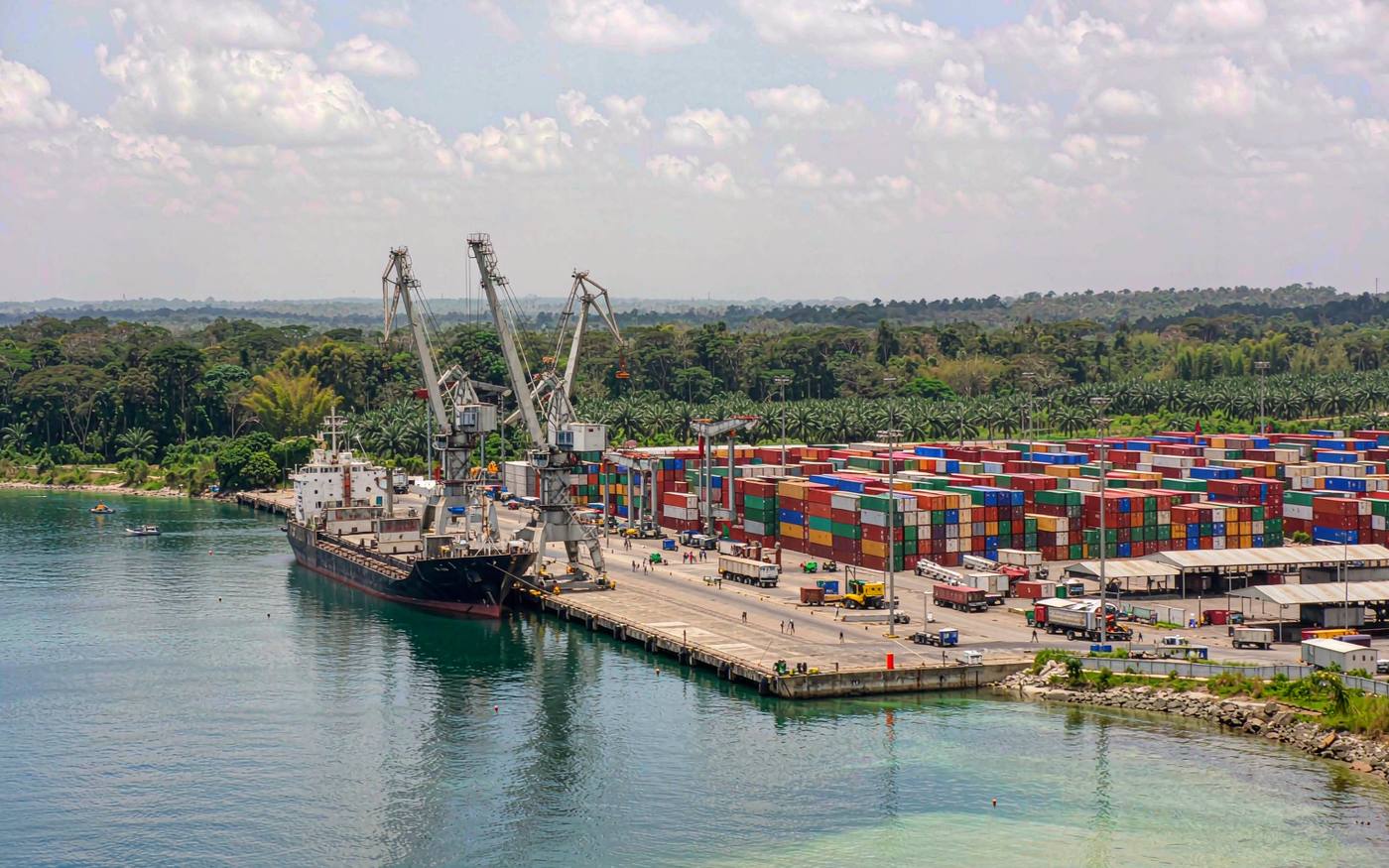
Shipping from China to Equatorial Guinea, step by step
Goodhope Freight is a licensed NVOCC based in Shenzhen, registered as GD20230925153335, and has been moving cargo out of China since 2012. To Equatorial Guinea we run full containers and shared containers port-to-port into Bata on the mainland and into Malabo and Luba on Bioko Island, air freight airport-to-airport into Malabo International, and express parcels dispatched from our depot. Every service stops at the port, the airport or the depot. Your consignee arranges import clearance and collection.
Equatorial Guinea is unusual among African states for having a coastline and an island capital. The mainland region, Río Muni, is where Bata sits and where most of the population lives. The capital, Malabo, sits on Bioko Island off the coast, and a newer deep-water port at Luba serves the island's southern side.
Two things shape the costing. The country applies the CEMAC common external tariff with four bands, and value-added tax here is fifteen per cent with reduced lines beneath it. Spanish is the language the customs administration works in, and the paperwork is expected in it.
This guide is written for a buyer who has never imported from China before. It explains which port your cargo should land at and why that choice is not a small one, how the tariff bands and the fifteen per cent tax work together, where the reduced rates apply, what excise adds, and why preparing documents in Spanish at origin saves more than it costs.
At a glance
Main ports: Bata on the mainland, plus Malabo and Luba on Bioko Island · Main airport: Malabo International (SSG), with Bata (BSG) on the mainland · Currency: Central African CFA franc (XAF) · CEMAC common external tariff in four bands: 5, 10, 20 and 30 per cent · VAT at 15 per cent, with a reduced band and a nil band beneath it · Community integration tax of 1 per cent and business-law levy of 0.05 per cent · Excise on alcohol, beverages, tobacco and vehicles, with vehicles rated by engine power · Declarations through ASYCUDA World · Documentation in Spanish
How your cargo moves: China to Equatorial Guinea
Eight steps from your supplier's door to yours. The last four are the ones shaped by local rules.
- Pickup from your supplierWe collect the goods anywhere in China and bring them to our consolidation point.
- Export clearanceChina customs declaration filed and released before the goods move to the port.
- Loading and departureContainer loaded, sealed and handed to the carrier at a Chinese port.
- Main carriage to the Gulf of GuineaServices reach the region with a relay, and the relay determines your arrival window.
- Discharge at Bata, Malabo or LubaThe port is chosen for where your consignee operates, on the mainland or on Bioko.
- Entry lodged in SpanishYour broker files the declaration through ASYCUDA World with codes and values.
- Duty, tax and excise assessedThe band rate, the 15 per cent tax and any excise are applied and settled.
- Release and collectionOnce satisfied your buyer collects. There is no onward delivery service.
Duty rates, VAT rates and clearance times move, and the figure that applies to your goods is the one set for your commodity code on the day of clearance. We check the current position against your code before your goods sail and confirm it to you in writing — ask for that check when you request a quote.
Two ports on an island and one on the mainland
Equatorial Guinea does not have a single national gateway. Bata serves the mainland region and is the country's largest city. Malabo serves the capital on Bioko Island, and Luba is a deep-water port on the island's southern side developed to handle larger vessels and bulk movements. For most commercial imports the choice comes down to where your consignee actually operates. Sending goods to Malabo when the business is in Bata creates a domestic movement across water that nobody budgeted for, and the reverse is just as awkward. We confirm the discharge port with you at booking rather than defaulting to the capital. It is a five-minute conversation at the start and an expensive correction later.Bata or Malabo: which one your cargo should land at
Bata handles the bulk of commercial volume for the mainland population and has the better road connections for distribution across Río Muni. Malabo serves government, services and the island's own commercial demand, and it is where the international airport is. Luba is worth knowing about for project cargo and for consignments that benefit from deeper water and more handling space. It is not a consumer distribution point, but for heavy or oversized pieces it can be the right answer where the others are not. The practical test is simple: ask where the goods will be used rather than where the capital is. We will tell you which port we would route through and what the onward movement involves, so the decision is made on evidence rather than on habit.Four bands, applied under the customs union tariff
The country is a member of the Economic and Monetary Community of Central Africa and applies the community's common external tariff rather than a schedule drawn up locally. It has four bands: five per cent for essential goods, ten per cent for raw materials and equipment, twenty per cent for intermediate goods and thirty per cent for consumer goods. Bands matter more than any single figure. Construction equipment, agricultural inputs and production machinery generally sit in the lower bands, while finished retail goods sit at the top, and the spread between them usually exceeds whatever difference exists between carriers. So the question worth asking is which band your code falls into. We check your codes against the current position before anything sails, and we will say plainly if a line is more expensive than you expected.Which tax band your goods fall into, and why it varies
Imports are subject to value-added tax at fifteen per cent, which is lower than in several of the country's neighbours. That figure is the one to use for most goods, but it is not the only one in the schedule. The tax is assessed on a base that includes duty rather than on your invoice amount. Work it through in order: transaction value, then freight and insurance to reach the customs value, then the band rate, then fifteen per cent across the total. Getting that order right is the difference between a landed cost that holds and one that does not. Most first-time costings take the tax as a percentage of the invoice, which understates it by a margin worth having.Where the reduced rates apply, and where they do not
Below the standard band sits a reduced rate of five per cent, which applies to basic foodstuffs and to books. A nil band applies to certain medical goods and to some building materials. Those reliefs are specific rather than thematic. Basic food is covered, prepared or luxury food generally is not. Certain medical goods qualify, most do not. Assuming a category is relieved because part of it is will produce a costing that is wrong in the places that matter. If your order includes food, medical supplies or construction material, tell us at quotation stage. We will check which band each code falls into rather than letting your consignee discover the answer at clearance.Excise on drink, tobacco and vehicles
Excise applies to a defined group of products at rates well above the tariff bands. Alcoholic and non-alcoholic beverages and tobacco products attract a rate around thirty per cent, alongside specific components charged by volume or quantity. Vehicles are rated by engine power rather than by value, which behaves differently from an ad valorem rate. A larger engine carries a heavier charge regardless of what the vehicle cost, and a fleet order can therefore be taxed quite differently from how it was priced. Where a line attracts both excise and tax, excise is assessed first and forms part of the base the tax is applied to. Those lines compound rather than adding politely, so they should be costed before purchase rather than explained afterwards.Spanish on every document, and what skipping it costs
Spanish is the language of the customs administration, and the declaration, the commercial invoice and the packing list are expected in it. English documents are not automatically refused, but they are queried, and queries are resolved in days rather than minutes. Translation prepared in China costs very little. Translation arranged after arrival costs storage, because the goods sit where they are while it is sorted out. This is the cheapest risk on the route to eliminate and one of the most commonly ignored. Descriptions matter as much as language. A generic description invites a clarification request, and the more specific your invoice is, the less there is to query.Clearing through ASYCUDA, and the documents behind the entry
Declarations are lodged electronically through ASYCUDA World, and the entry rests on the standard document set: a commercial invoice with genuine detail and value, a packing list matching it carton for carton, the bill of lading or air waybill, and any certificate the commodity requires. Electronic lodgement is not the same as forgiving lodgement. The system checks consistency, and a declaration whose documents disagree with each other will be held until someone reconciles them. That is why we reconcile your supplier's invoice and packing list at our consolidation point before departure, matching documents to cartons physically. Discrepancies resolved in China cost a phone call.Packing for equatorial humidity on a Gulf of Guinea quay
This is a genuinely humid destination. Cargo discharged at Bata, Malabo or Luba sits in hot wet air, often outdoors, and anything absorbent or metallic suffers for it. Export-grade strapping, proper dunnage, filled voids, moisture barriers and corrosion protection for metal are baseline requirements rather than upgrades. Sealed inner packaging with desiccant is worth specifying for anything sensitive. Timber packaging must be treated and marked to the international standard with the certificate in hand before departure. Quarantine is enforced, and remediating uncertified timber after arrival is slow and expensive.What we handle, and what your consignee must
We handle collection anywhere in China, export clearance, consolidation, loading, the booking to the port you have chosen, and the document set in Spanish that your broker needs to lodge a clean entry. Your buyer handles arrival onward: appointing a licensed broker, lodging the declaration, paying the band rate, the fifteen per cent tax, any excise and the community levies, satisfying quarantine, and collecting at the port. We quote each charge as its own line. With freight, duty, tax and destination charges each carrying real weight, and with three possible discharge ports, a line-by-line quote is the only honest way to judge anything here.Sending a first Equatorial Guinea consignment
Send us the commodity in enough detail to classify it, the volume and weight, the pickup address in China, and whether your consignee operates on the mainland or on Bioko. That last answer decides the discharge port. Tell us specifically about any beverage, tobacco, vehicle, medical or construction material line, because those are where the reduced bands and the excise rates change the answer. We will check your codes, confirm the port, and quote each charge separately. Start with one shared container. It tells you how long clearance takes for your product, how your supplier packs for equatorial humidity, and whether your consignee's broker responds quickly, all for considerably less than a full container would cost you to learn the same three things.End to end on the China to Equatorial Guinea lane
Five shipments bought in China and delivered into Equatorial Guinea, told end to end — where the order came from, how it moved, where it nearly went wrong, and how it finished. Client names are withheld at their request; the situations and the handling are what we deal with on this lane.
Hotel refurbishment material for Malabo
The purchase. A hospitality operator bought case goods, tile, bathroom fittings, lighting and soft furnishings from three suppliers in Guangdong for a staged refurbishment in Malabo.
The move. We collected all three lots, consolidated into one 40HC and shipped port-to-port to Malabo, with the discharge port confirmed against where the site actually was rather than defaulted to the capital.
Where it nearly went wrong. The soft furnishings arrived in standard domestic cartons with no moisture barrier. In equatorial humidity, with time on the quay, several cartons softened and the contents arrived marked.
How it finished. We specified sealed inner packaging with desiccant on the repeat order and inspected before sealing. The second container arrived clean and cleared without a query.
Building materials and the reduced band question
The purchase. A contractor imported cement, steelwork, roofing sheet and sanitaryware for a project on the mainland, and assumed all construction material attracted the same treatment.
The move. One 40HC shipped to Bata, declared line by line rather than as building materials generally.
Where it nearly went wrong. Some building materials qualify for the nil band while others do not, and the relief is specific to the code rather than to the category. A blanket assumption understated the tax on one part of the order and overstated it on another.
How it finished. We checked each code before sailing and set out the band and the tax treatment line by line. The contractor repriced the project while the goods were still in China.
Beverages costed without the excise component
The purchase. A distributor ordered canned beverages and bottled drinks from two suppliers in Fujian and costed the consignment on the tariff band and value-added tax alone.
The move. One 20GP consolidated to Bata, with the beverage lines declared at quotation stage.
Where it nearly went wrong. Beverages attract excise at around thirty per cent alongside the tariff band, and excise is assessed before the tax is applied, so it increases both the duty line and the base the tax is charged on.
How it finished. We set out the full treatment once the lines were declared. The distributor rebuilt the retail pricing before the container sailed rather than discovering the difference at clearance.
Vehicles rated by engine power rather than by price
The purchase. A buyer imported two vehicles of similar value but different engine specification, and costed excise as a percentage of the purchase price for both.
The move. Both vehicles shipped to Bata on one bill of lading, declared with full engine specification.
Where it nearly went wrong. Excise on vehicles is rated by engine power rather than by value, so the two vehicles were taxed differently despite costing roughly the same. A single blended assumption got both lines wrong.
How it finished. We now ask for engine specification at quotation stage for any vehicle consignment. Subsequent orders have been costed accurately, and the buyer quotes to customers with confidence.
English documents at a Spanish-language customs
The purchase. A first-time importer supplied a commercial invoice and packing list in English only, prepared by the factory as a matter of routine.
The move. One 20GP shipped to Malabo, with the entry lodged by the consignee's broker on arrival.
Where it nearly went wrong. The customs administration works in Spanish, and English descriptions are queried. A query means the goods stay where they are, accruing storage while the paperwork is put right.
How it finished. We now require bilingual invoices and packing lists for Equatorial Guinea as a condition of collection. Subsequent consignments have cleared without a document query.
Why importers use Goodhope on this lane
Six things that are different about working with us on China to Equatorial Guinea shipments.
Get a Bata shipment priced
Tell us the commodity in enough detail to classify it, the volume, the pickup address in China and whether your consignee operates on the mainland or on Bioko. We will confirm the discharge port, check your codes and band, and quote freight, duty, tax and destination charges on separate lines.
Get a quote Talk to usRelated pages
Frequently asked questions
Which port does my cargo land at?
Bata on the mainland, or Malabo and Luba on Bioko Island. The choice is decided by where your consignee operates rather than by where the capital is, and we confirm it with you at booking rather than defaulting.
What duty rates apply?
The CEMAC common external tariff in four bands: 5 per cent for essential goods, 10 per cent for raw materials and equipment, 20 per cent for intermediate goods and 30 per cent for consumer goods. Your commodity code decides the band.
What is the rate of value-added tax?
Fifteen per cent is the standard rate, assessed on a base that includes duty. A reduced rate of five per cent applies to basic foodstuffs and books, and a nil rate to certain medical goods and some building materials.
What excise applies?
Alcoholic and non-alcoholic beverages and tobacco products attract a rate around thirty per cent alongside specific components, and vehicles are rated by engine power. Excise is assessed before value-added tax is applied, so it increases the tax base as well.
Are there other charges beyond duty and tax?
Yes. A community integration tax of 1 per cent and a business-law levy of 0.05 per cent apply to imports from outside the customs union. They are small individually and we set them out on their own lines so you can see them.
Do documents have to be in Spanish?
Spanish is the working language of the customs administration, and the declaration, invoice and packing list are expected in it. English documents are queried rather than automatically refused, and preparing bilingual documents at origin in China costs very little.
How are declarations lodged?
Electronically through ASYCUDA World, on a commercial invoice with genuine detail and value, a packing list matching it carton for carton, the bill of lading or air waybill, and any certificate the commodity requires. The system checks consistency, so documents that disagree are held.
Do you offer door-to-door delivery?
No. Sea freight is port-to-port to Bata, Malabo or Luba, air freight is airport-to-airport to Malabo International, and express courier dispatch ends at the depot. Your consignee appoints a broker, pays duty, tax and local charges, satisfies quarantine and collects.
Can lithium batteries be shipped?
Built-in and packed-with lithium batteries can be carried with proper declaration, documentation and packaging. Standalone battery shipments and other dangerous goods classes are assessed individually and must be declared at quotation stage so we can book with a carrier that accepts the class.
How should cargo be packed?
Equatorial humidity is hard on cargo that sits outdoors on a quay. Export-grade strapping, dunnage, filled voids, moisture barriers, sealed inner packaging with desiccant and corrosion protection for metal are baseline, and timber packaging must be treated and marked to the international standard.