
Home / Shipping to Eswatini / How to Ship from China to Eswatini
Shipping from China to Eswatini, step by step
Goodhope Freight is a licensed NVOCC based in Shenzhen, registered as GD20230925153335, and has been moving cargo out of China since 2012. To Eswatini we route full containers and shared containers by sea into Maputo in Mozambique or Durban in South Africa, and from there overland to the Matsapha inland container depot. We also handle air freight into King Mswati III International Airport and express parcels dispatched from our depot. Every service stops at the port, the airport or the depot. Your consignee arranges import clearance and collection.
Eswatini is a small landlocked kingdom of around one point two million people between South Africa and Mozambique. Its currency, the lilangeni, is pegged one to one with the South African rand, which removes exchange risk against its largest neighbour and simplifies costing considerably.
The country is a member of the Southern African Customs Union, and that is the most useful thing to understand about importing here. It applies the union's common external tariff rather than a schedule of its own, and goods moving within the union are treated differently from goods arriving from China.
This guide is written for a buyer who has never imported from China before. It explains how a landlocked kingdom is actually served, why clearance happens inland rather than at the port, how the shared tariff and the fifteen per cent tax work, and what the declaration form needs before your goods reach a border.
At a glance
Landlocked, served overland from Maputo in Mozambique or Durban and Richards Bay in South Africa · Inland clearance point: the Matsapha container depot near Manzini · Airport: King Mswati III International (SHO) · Currency: lilangeni (SZL), pegged one to one with the South African rand · Customs authority: the Eswatini Revenue Authority, working through ASYCUDA World · Southern African Customs Union common external tariff, shared with four neighbours · VAT at 15 per cent on the duty-inclusive value, with basic food and agricultural inputs at nil · Declarations lodged on the SAD 500 form · Tax identification number required before entry · Goods from within the customs union attract no duty but still attract VAT
How your cargo moves: China to Eswatini
Eight steps from your supplier's door to yours. The last four are the ones shaped by local rules.
- Pickup from your supplierWe collect the goods anywhere in China and bring them to our consolidation point.
- Export clearanceChina customs declaration filed and released before the goods move to the port.
- Loading and main carriageContainer loaded, sealed and shipped to Maputo or Durban.
- Transit and overland haulMovement by road or rail through the border post and onward to the inland depot.
- Arrival at the Matsapha depotContainers are moved inland and entered at the depot rather than at the seaport.
- Declaration lodged on the SAD 500Your broker files electronically through ASYCUDA World, with the tax number and codes.
- Duty and VAT assessedThe tariff rate and the 15 per cent tax are applied to the duty-inclusive value and settled.
- Release and collectionOnce satisfied your buyer collects at the depot. There is no onward delivery service.
Duty rates, VAT rates and clearance times move, and the figure that applies to your goods is the one set for your commodity code on the day of clearance. We check the current position against your code before your goods sail and confirm it to you in writing — ask for that check when you request a quote.
Landlocked, and cleared inland at Matsapha
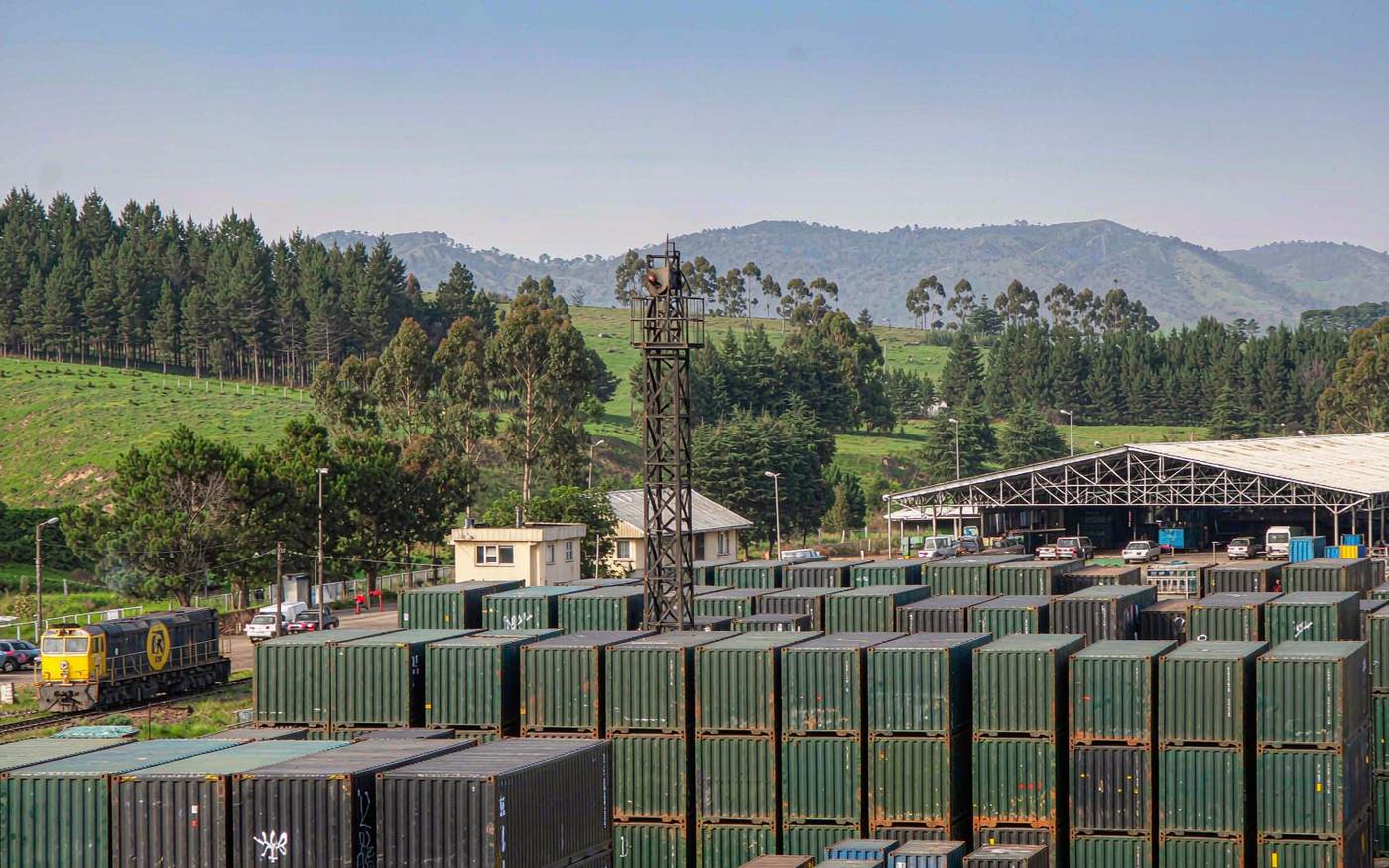
Eswatini has no coastline, so every consignment enters through a neighbour's port and then travels overland. What distinguishes it from many landlocked destinations is that clearance does not happen at the port: containers are moved inland and entered at the Matsapha container depot near Manzini. That arrangement is a real advantage. It means examination, assessment and release happen close to where most businesses operate, rather than at a congested seaport in another country where your consignee has no presence. It also changes who needs to be ready and when. Your broker works at Matsapha rather than at the port, your documents need to be complete before the container reaches the depot, and storage accrues inland rather than at the terminal.Maputo or Durban: two gateways, two border posts
Maputo in Mozambique is generally the faster and more cost-effective gateway for Eswatini's trade, with the border at Lomahasha and Namaacha. Durban and Richards Bay in South Africa are the alternative, with the busiest crossing at Ngwenya and Oshoek. The choice is rarely about distance alone. It turns on how well the corridor is performing, how quickly trucks or rail slots are available at the port, and whether your carrier's rotation favours one coast over the other. We look at what is moving reliably at the time of booking and say which gateway we would use and why. Changing gateway after booking is possible, but it costs time and money that did not need to be spent.One tariff book, shared with four neighbours
Eswatini is a member of the Southern African Customs Union alongside Botswana, Lesotho, Namibia and South Africa, and it applies the union's common external tariff rather than a schedule written locally. That means the duty treatment your goods receive is the same they would receive landing in any of the other four. This is genuinely useful for a buyer working across the region. A costing built for one member state transfers to the others with far less rework than a national tariff would allow, because the classification and the rates are shared. It also explains the treatment of regional goods. Products arriving from within the customs union attract no duty at all, while goods from outside it, including everything from China, are assessed under the common external tariff. Ask for the rate on your code rather than any headline figure.Where the tax applies, and which lines sit at nil
Imports attract value-added tax at fifteen per cent, assessed on the customs value plus the duty. The base therefore includes the tariff rather than being the amount on your factory invoice. Basic food items and agricultural inputs sit at nil. That relief is specific to the code, so a mixed grocery or farming order needs to be declared line by line rather than under one description, or everything attracts tax rather than only the lines that should. Build the figure up in the right order: transaction value, then freight and insurance to reach the customs value, then the tariff rate, then fifteen per cent across the total. It takes minutes and removes the most common costing error on the route.The SAD 500, and the codes that make it work
Declarations are lodged electronically through ASYCUDA World on the SAD 500 form, the single administrative document used across the customs union. Supporting documents are scanned and attached to the declaration rather than presented separately. The form carries a customs procedure code, entered in box 37, which tells the system what is being done with the goods. Getting that code right is not a formality: it determines the treatment applied and it is one of the fields a broker cannot sensibly guess. Because the system is built around classification, vague descriptions cause more trouble here than in a manual environment. A consignment described as general merchandise will be queried, and a query at an inland depot still means storage. We reconcile your supplier's invoice and packing list at our consolidation point before departure, matching documents to cartons physically, so that what is declared is what is actually inside.Registration your importer needs before any entry is lodged
Importers need a tax identification number before an entry can be lodged. It is issued by the revenue authority and it is a prerequisite rather than a nicety. If your consignee is importing commercially for the first time, this is the item to sort out earliest. Discovering the requirement once the container has crossed a border and is sitting at the depot is the slowest and most expensive way to learn it. There is also a useful arrangement with the South African revenue authority covering tax already paid there, subject to the invoice meeting qualifying criteria. If your goods move through South Africa, ask us whether it applies to your consignment.Clearing at an inland depot rather than a seaport
Clearance typically completes within a few working days once documents are in order, which is quick by regional standards, and it completes at Matsapha rather than at the port of discharge. The practical implication is that the inland depot is the critical point in the chain. Documents need to be complete before the container arrives there, and your broker needs to be appointed and briefed before it does rather than after. We pre-alert the broker before the vessel sails and send the document pack ahead of the container. That single habit removes most of the delay that would otherwise accumulate at the depot.Rail, road, and which one suits your consignment
Eswatini Railways links the country to the neighbouring networks, and containerised cargo can move by rail as well as by road. Road is more flexible and generally faster for smaller consignments; rail can be better for heavier, regular volume. For a first shipment, road is usually the simpler choice and the one with fewer interfaces. Rail becomes worth examining once you have regular volume and a predictable pattern to plan against. Either way the border crossing is the variable. Both crossings are well established by regional standards, but they are still borders, and a document that does not match at a border costs more than it would anywhere inland.Packing for a short haul at the end of a long one
The overland leg into Eswatini is short by landlocked standards, which tempts buyers into relaxing their packing. That is a mistake, because the consignment has already crossed an ocean and been handled at a port before the road leg begins. Export-grade strapping, proper dunnage, filled voids and sealed inner packaging remain baseline. The goods have been handled several times before they ever reach the truck. Timber packaging must be treated and marked to the international standard with the certificate in hand before departure. Quarantine controls in southern Africa are enforced, and there is no cheap remedy for uncertified timber once a consignment is held.Who does what between the port and the depot
We handle collection anywhere in China, export clearance, consolidation, main carriage to Maputo or Durban, and the transit documentation and document pack that carry the consignment inland. Your buyer handles arrival onward: appointing a licensed clearing agent, holding a tax identification number, lodging the SAD 500 through ASYCUDA World, paying the tariff and the fifteen per cent tax, satisfying any standards or quarantine requirement, and collecting at Matsapha. We quote the sea leg and the inland leg as separate lines. On a route where the goods cross one border and are cleared at a depot in a third place, that separation is the only way you can see what you are paying for.Booking a first Eswatini consignment
Send us the commodity in enough detail to classify it under the common external tariff, the volume and weight, and the pickup address in China. Tell us whether your consignee is registered for tax yet, because that decides how early we need to start. We will confirm the gateway and the border crossing, check your codes against the current tariff position, and quote the sea leg and the inland leg separately. Ask us for the worked duty-and-tax example before you fix your selling price. Start with one shared container. It tells you how your supplier packs, how quickly your clearing agent responds at Matsapha, and how the border is performing on the day, for considerably less than a full container would cost you to learn the same three things.Field notes on the China to Eswatini lane
Five shipments bought in China and delivered into Eswatini, told end to end — where the order came from, how it moved, where it nearly went wrong, and how it finished. Client names are withheld at their request; the situations and the handling are what we deal with on this lane.
Textile machinery for a factory near Manzini
The purchase. A garment manufacturer bought sewing machines, cutting tables, spare motors and workroom fittings from two suppliers in Zhejiang to add a production line.
The move. We collected both lots, consolidated into one 40HC and shipped to Maputo with overland movement to the Matsapha depot, pre-alerting the broker before the vessel sailed.
Where it nearly went wrong. The spare motors shipped with no corrosion protection, which is a poor decision on any ocean route and a worse one when the container then sits at an inland depot.
How it finished. We required vapour corrosion protection and sealed inner packaging on the repeat. The parts arrived clean and the line went in on schedule.
A first-time importer with no tax number
The purchase. A consignee importing commercially for the first time arranged the shipment before registering with the revenue authority.
The move. One 20GP routed through Durban with transit to Matsapha, and the declaration prepared by the consignee's agent on arrival.
Where it nearly went wrong. An entry cannot be lodged on the SAD 500 without a tax identification number. The container waited at the depot while registration was completed, which is the slowest and most expensive place to discover a prerequisite.
How it finished. We now flag tax-number registration at quotation stage for any first-time commercial importer on this route. Subsequent consignments have been lodged the day they arrived.
A mixed grocery order declared as one line
The purchase. A retailer imported basic foodstuffs together with prepared and packaged grocery lines, and declared the whole order under a single grocery description.
The move. One 20GP consolidated to Maputo with onward movement to Matsapha, later re-declared line by line.
Where it nearly went wrong. Basic food items sit at nil for tax purposes while prepared lines do not. A single description meant everything was assessed alike, which overstated one part of the bill and understated the part that dominated it.
How it finished. We now require line-by-line declarations for mixed food orders as a condition of booking. The retailer has used the same treatment since and budgets accurately.
A procedure code that no one had checked
The purchase. A buyer imported goods for processing and re-export, and the declaration was lodged with a procedure code taken from a previous, unrelated consignment.
The move. One 40HC to Durban with transit to Matsapha, lodged through ASYCUDA World by the consignee's agent.
Where it nearly went wrong. The customs procedure code entered on the SAD 500 determines the treatment applied to the goods. A code carried over from a different kind of import produces an assessment that does not match what is actually being done.
How it finished. We now confirm the intended procedure at quotation stage and pass it to the broker with the document pack. Subsequent entries have been assessed correctly the first time.
Switching gateways when a corridor slowed
The purchase. A regular importer of building materials had always routed through one gateway and did not want to change.
The move. We quoted both gateways on the same consignment and set out what we were seeing on each corridor at the time of booking.
Where it nearly went wrong. Habit had kept the routing on one coast through a period when the other was performing materially better. The difference was not visible in a freight rate but was very visible in transit time.
How it finished. The importer moved to the alternative gateway for that cycle and reverted when conditions changed. Quoting both has been standard practice on their account ever since.
Why importers use Goodhope on this lane
Six things that are different about working with us on China to Eswatini shipments.
Get a Matsapha consignment priced
Tell us the commodity in enough detail to classify it under the common external tariff, the volume, the pickup address in China and whether your consignee is registered for tax. We will confirm the gateway and border crossing, check your codes, and quote the sea leg and the inland leg separately.
Get a quote Talk to usRelated pages
Frequently asked questions
How does cargo reach Eswatini?
By sea to Maputo in Mozambique or Durban and Richards Bay in South Africa, then overland through the border to the Matsapha container depot near Manzini. Maputo is generally faster and more cost-effective; Durban is the established alternative.
Where does customs clearance happen?
At the Matsapha inland container depot rather than at the seaport. That is an advantage, because examination, assessment and release happen close to where most businesses operate, but it means documents must be complete before the container reaches the depot.
What duty rates apply?
Eswatini applies the Southern African Customs Union common external tariff, shared with Botswana, Lesotho, Namibia and South Africa. Goods arriving from within the union attract no duty, while goods from China are assessed under the common external tariff according to their code.
How is VAT calculated?
Value-added tax is charged at 15 per cent on the customs value plus the duty, with basic food items and agricultural inputs at nil. Build the figure up in order: transaction value, then freight and insurance, then the tariff rate, then 15 per cent across the total.
What is the SAD 500?
The single administrative document used across the customs union for declarations. It is lodged electronically through ASYCUDA World with supporting documents attached, and it carries a customs procedure code in box 37 that determines the treatment applied to the goods.
Does my consignee need anything before shipping?
Yes, a tax identification number issued by the revenue authority, without which an entry cannot be lodged. First-time commercial importers should register before the vessel sails rather than discover the requirement once goods are at the depot.
How long does clearance take?
Typically a few working days once documents are in order, which is quick by regional standards. We pre-alert the broker before the vessel sails and send the document pack ahead of the container, which removes most of the delay that would otherwise accumulate.
Is there a rail option?
Yes. Eswatini Railways links into the neighbouring networks and containerised cargo can move by rail as well as by road. Road is simpler and generally faster for smaller or irregular consignments; rail suits heavier, predictable volume.
Do you offer door-to-door delivery?
No. Sea freight runs port-to-port with the inland movement quoted and arranged separately. Air freight is airport-to-airport to King Mswati III International, and express courier dispatch ends at the depot.
What packing standards does this route need?
The same as any ocean route, because the goods have crossed an ocean and been handled at a port before the short road leg begins. Export-grade strapping, dunnage, filled voids, sealed inner packaging and corrosion protection for metal are baseline, and timber packaging must be treated and marked to the international standard.