
Home / Shipping to Lesotho / How to Ship from China to Lesotho
Shipping from China to Lesotho, step by step
Goodhope Freight is a licensed NVOCC based in Shenzhen, registered as GD20230925153335, and has been moving cargo out of China since 2012. To Lesotho we route full containers and shared containers by sea into a South African port and from there overland to Maseru. We also handle air freight into Moshoeshoe I International Airport and express parcels dispatched from our depot. Every service stops at the port, the airport or the depot. Your consignee arranges import clearance and collection.
Lesotho is the only country in the world entirely surrounded by a single other country. It has no coastline, no seaport and no railway of its own worth mentioning for freight, and its terrain is high, mountainous and beautiful. Around two million people live here, and manufacturing, particularly textiles, is a significant part of the economy.
That geography produces one defining characteristic: every consignment enters through South Africa. It also produces two requirements most first-time importers do not expect, an import permit for goods originating outside the customs union, and a set of crossing documents issued before the truck reaches the border.
This guide is written for a buyer who has never imported from China before. It explains how the crossing works, what the permit is for, how the shared tariff and the tax apply, and why the currency arrangement quietly removes a risk you may not have budgeted for.
At a glance
Landlocked and entirely enclosed by South Africa, so all cargo enters through a South African port and a land crossing · Main crossing: Maseru Bridge, with several others in use · Airport: Moshoeshoe I International (MSU) · Currency: loti (LSL), pegged one to one with the South African rand, which is also legal tender · Customs authority: Revenue Services Lesotho, through the ASYCUDA World eCustoms system · Southern African Customs Union common external tariff, shared with four neighbours · Import tax at 15 per cent · Import permit required for goods originating outside the customs union · A proceed-to-border notice and a road manifest govern the final crossing · Documents in English
How your cargo moves: China to Lesotho
Eight steps from your supplier's door to yours. The last four are the ones shaped by local rules.
- Pickup from your supplierWe collect the goods anywhere in China and bring them to our consolidation point.
- Export clearanceChina customs declaration filed and released before the goods move to the port.
- Loading and main carriageContainer loaded, sealed and shipped to a South African port.
- Overland haul to the borderRoad movement through South Africa toward the crossing nominated for your consignment.
- Declaration lodged in advanceYour agent files the entry on eCustoms, with the permit, codes and invoice.
- Permit and charges settledThe tariff band and the import tax are assessed and paid before the crossing.
- Proceed-to-border notice issuedThe system releases the notice and road manifest that let the truck move to the border.
- Crossing and releaseCustoms may inspect. Once released your buyer collects on the Lesotho side.
Duty rates, VAT rates and clearance times move, and the figure that applies to your goods is the one set for your commodity code on the day of clearance. We check the current position against your code before your goods sail and confirm it to you in writing — ask for that check when you request a quote.
Surrounded on every side, with no coast of its own
Lesotho is enclosed on every side by South Africa. There is no seaport, and the practical consequence is that your goods enter South Africa first and then cross a land border to reach the importer. That has one real advantage and one real cost. The advantage is that the port infrastructure you are using is South African, which by regional standards is good. The cost is that you are planning two movements rather than one, and the second ends at a border post. It also means the border, not the port, is the critical point in your chain. Everything else in the schedule can be predicted; the crossing is where variability lives.Choosing the crossing, and what decides it
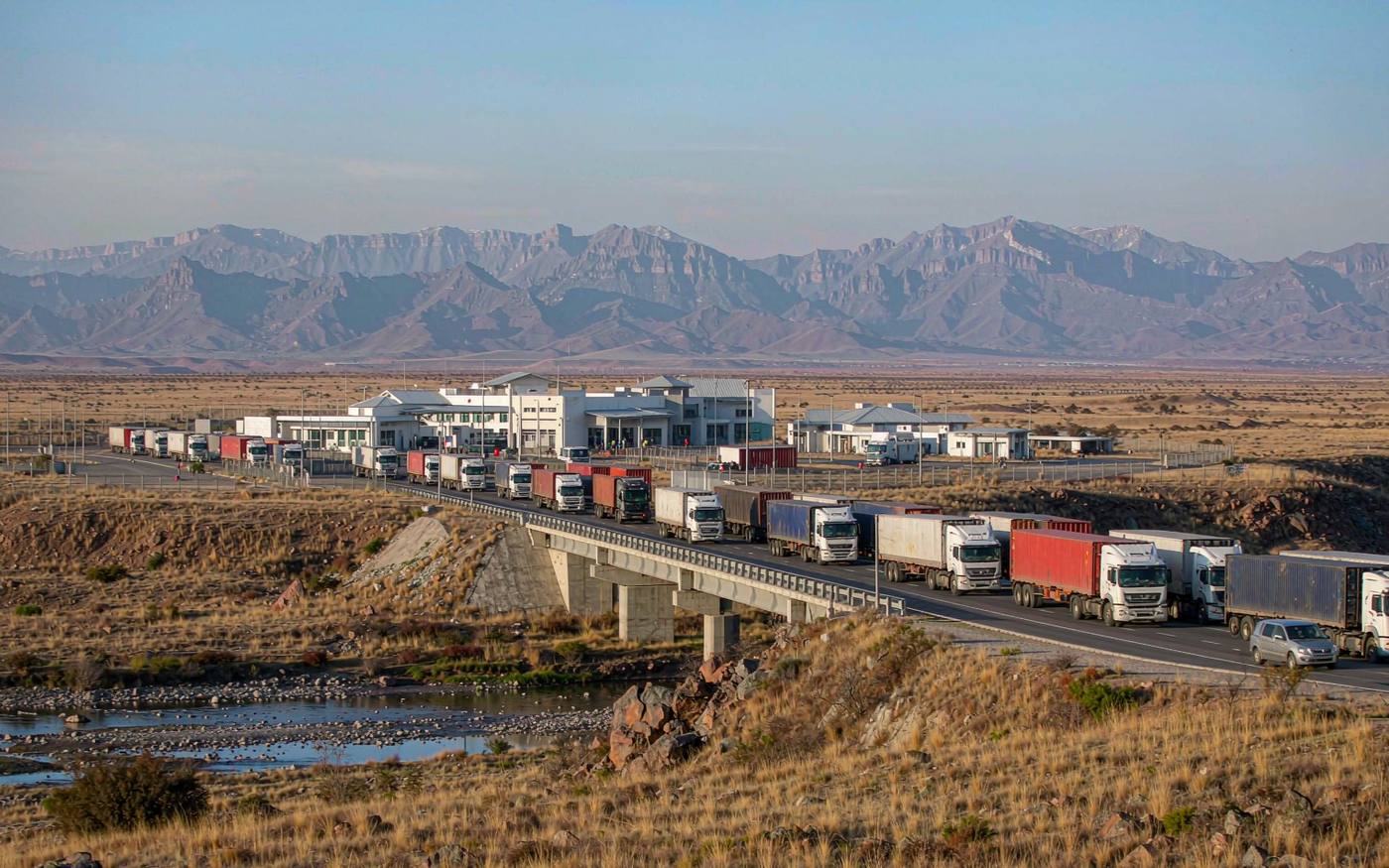
Maseru Bridge is the busiest and best-equipped crossing and handles most commercial traffic, with several other posts in use depending on where in the country your consignee sits and how the queues are running on the day. Which crossing is right is a question about your consignee's location rather than about the map. Sending goods through a post on the wrong side of the country adds a domestic leg nobody budgeted for. We confirm the crossing at booking and tell you what we are seeing on it at the time. It is a short conversation at the start and an expensive correction later.The shared tariff, and why it helps across the region
Lesotho is a member of the Southern African Customs Union alongside Botswana, Eswatini, Namibia and South Africa, and applies the union's common external tariff rather than a schedule written in Maseru. That is useful for a buyer working across the region, because classification and rates are shared. A costing built for one member state transfers to the others with far less rework than a national tariff would allow. It also explains the split in treatment. Goods moving within the union are not liable to import duty, while everything from outside it, including all cargo from China, is assessed under the common external tariff. Ask for the rate on your code rather than any headline figure.How the import tax is assessed, and the figure under it
Imports attract tax at fifteen per cent, assessed on a base that includes the tariff rather than on your invoice amount. Work it through in order: transaction value, then freight and insurance to reach the customs value, then the band rate, then the tax across the total. It takes minutes and removes the most common costing error on the route. The alternative, taking fifteen per cent of the invoice, understates the bill by a margin worth having. Most first-time costings get the rate right and the base wrong, which is the more expensive mistake.The permit that goods from outside the union need
Goods originating outside the customs union require an import permit. This is the requirement most first-time importers miss, because it is easy to assume that a correctly classified entry is all that is needed. The permit belongs early in your plan rather than late in it. Discovering it once the container has crossed a continent and is waiting at a border post is the slowest and most expensive way to learn it. Goods moving within the union follow a different route, requiring a valid tax invoice rather than a permit. Which of the two applies to you depends on where the goods came from, not on where they were shipped from.The proceed-to-border notice, and the road manifest
The eCustoms system issues a proceed-to-border notice and a road manifest once the declaration has been processed and the charges settled. The notice is what allows a consignment to move to the border for inspection and release. Declare in advance. The notice is issued after the declaration is processed, and if it has not appeared within a day the system is telling you something is wrong with the entry rather than that you should simply wait. The road manifest, also called a road consignment note, lists what the truck is carrying. It needs to agree with the declaration, and it is the document border officers actually work from.Inspection is chosen by the system, not by an officer
Whether a consignment is examined is decided by the risk engine in the eCustoms system rather than by an individual at the border. That is a more consistent process than a manual one, and it is not something you can influence on the day. What you can influence is whether the declaration is clean. A consignment that can be opened and resealed without damage, with documents that match what is inside, turns an examination from an event into a formality. It also argues against collapsing unrelated product lines into one vague description to simplify the paperwork. The simplification lasts until the container is opened.Loti and rand, and why the currency risk disappears
The loti has been pegged one to one with the South African rand since the common monetary area arrangements of the 1970s, and the rand is legal tender alongside it. For an importer that removes a risk most buyers in this region carry. Costs incurred in South Africa, which is most of the transit and handling cost on this route, convert at a fixed rate rather than at a moving one. It also makes quoting simpler. A landed cost built in rand holds in loti, and there is no exchange margin to allow for between the port and the destination.Rebates for manufacturers, and how they are claimed
Importers may apply for a duty rebate on goods from outside the union, and there are categories of export-related rebate applied to imports of raw materials and inputs used in manufacturing. Applications are made to the relevant trade desk before the goods are cleared, not after. That timing is the whole point: a rebate applied for after clearance is a rebate you are unlikely to receive. If your consignee is importing production inputs, say so at quotation stage. We will flag the possibility so it can be raised before the entry is lodged rather than discovered afterwards.Packing for a mountain crossing at altitude
The final leg runs into high country, and the road in and out includes steep gradients and sharp weather. A container that has crossed an ocean and a subcontinent still has to cope with the last climb. Export-grade strapping, proper dunnage, filled voids and sealed inner packaging are baseline. Secure loading matters more on mountain roads than on flat ones. Timber packaging must be treated and marked to the international standard with the certificate in hand before departure. Quarantine controls in southern Africa are enforced, and there is no cheap remedy for uncertified timber once a consignment is held.Division of work between the port and the crossing
We handle collection anywhere in China, export clearance, consolidation, main carriage to the South African port, and the documentation that carries the consignment overland to the crossing. Your buyer handles arrival onward: appointing a clearing agent or registering to clear directly, obtaining the import permit, lodging the declaration on eCustoms, paying the tariff and the tax, and collecting once the crossing is complete. We quote the sea leg and the overland leg as separate lines. On a route where the goods cross an international border to reach the importer, that separation is the only honest way to show you where the money goes.Booking a first Lesotho consignment
Send us the commodity in enough detail to classify it under the common external tariff, the volume and weight, the pickup address in China, and where in Lesotho your consignee operates. That last answer decides the crossing. Tell us whether the goods are production inputs, because that determines whether a rebate is worth raising, and whether your consignee has an import permit yet. We will check your codes, confirm the crossing, and quote the sea leg and the overland leg separately. Start with one shared container. It tells you how your supplier packs for a mountain crossing, how quickly your agent responds on eCustoms, and how the border is performing on the day, for considerably less than a full container would cost you to learn the same three things.Case notes for new Lesotho buyers
Five shipments bought in China and delivered into Lesotho, told end to end — where the order came from, how it moved, where it nearly went wrong, and how it finished. Client names are withheld at their request; the situations and the handling are what we deal with on this lane.
Textile machinery for a Maseru factory
The purchase. A garment manufacturer bought sewing machines, cutting tables, spare motors and workroom fittings from two suppliers in Zhejiang to add a production line.
The move. We collected both lots, consolidated into one 40HC and shipped to a South African port with the overland leg to Maseru arranged and quoted separately.
Where it nearly went wrong. The spare motors had no corrosion protection, and the gradient and weather of the final climb into high country did the rest. Several arrived with surface rust on machined faces.
How it finished. We required vapour corrosion protection and sealed inner packaging on the repeat. The parts arrived clean and the line went in on schedule.
An import permit discovered at the border
The purchase. A first-time importer arranged the shipment without applying for a permit, on the assumption that a correctly classified entry was sufficient.
The move. One 20GP routed through South Africa with the overland leg to the Maseru crossing, and the entry prepared on arrival.
Where it nearly went wrong. Goods originating outside the customs union require an import permit. Without it the consignment waited at the border, and storage ran from arrival rather than from when the paperwork was finally ready.
How it finished. We now flag the permit at quotation stage for every extra-regional consignment on this route. Subsequent shipments have crossed the day they arrived.
A proceed-to-border notice that never came
The purchase. A buyer's agent lodged the declaration but did not notice that the proceed-to-border notice had not been issued.
The move. One 40HC moved overland toward the crossing with the entry lodged on eCustoms.
Where it nearly went wrong. The notice is issued after the declaration is processed, and if it does not appear within a day the system is signalling a problem with the entry rather than asking you to wait. The truck waited while the entry was corrected.
How it finished. We now confirm the notice has been issued before the truck departs for the border. Nothing since has been held at the crossing for that reason.
Production inputs and a rebate claimed too late
The purchase. A manufacturer imported raw materials and inputs, and asked about a duty rebate after the goods had already cleared.
The move. One 20HC routed through South Africa and crossed at Maseru Bridge, declared line by line.
Where it nearly went wrong. Rebate applications are made to the relevant trade desk before the goods are cleared. One applied for afterwards is one you are unlikely to receive.
How it finished. On the repeat order we raised the possibility at quotation stage so the application could be made in time. The manufacturer has treated it as a standard step ever since.
The wrong crossing for where the goods were going
The purchase. A buyer had always used one crossing because that was what a previous supplier had arranged, without reconsidering where the consignee actually sat.
The move. We quoted the alternative crossings on the same consignment and set out what each would involve domestically.
Where it nearly went wrong. Habit had kept the routing through a post on the wrong side of the country, adding a domestic leg that appeared in the cost but never in the plan.
How it finished. The importer switched to the closer crossing. Reviewing the crossing against the delivery address has been standard practice on their account ever since.
Why importers use Goodhope on this lane
Six things that are different about working with us on China to Lesotho shipments.
Get a Maseru shipment priced
Tell us the commodity in enough detail to classify it under the common external tariff, the volume, the pickup address in China and where in Lesotho your consignee operates. We will confirm the crossing, check your codes, and quote the sea leg and the overland leg separately.
Get a quote Talk to usRelated pages
Frequently asked questions
How does cargo reach Lesotho?
By sea to a South African port and then overland across a land border. Lesotho is entirely enclosed by South Africa, so there is no alternative routing and the border, rather than the port, is the critical point in the schedule.
Which crossing is used?
Maseru Bridge is the busiest and best equipped, with several other posts in use. The right one depends on where your consignee sits rather than on the map, and we confirm it at booking.
Do I need an import permit?
Yes, for goods originating outside the customs union, which includes everything from China. Goods moving within the union follow a different route and require a valid tax invoice instead. Apply before the goods arrive rather than after.
What duty rates apply?
Lesotho applies the Southern African Customs Union common external tariff, shared with Botswana, Eswatini, Namibia and South Africa. Goods from within the union are not liable to duty; goods from China are assessed according to their code.
How is the import tax calculated?
It is charged at 15 per cent on a base that includes the tariff. Work it through in order: transaction value, then freight and insurance to reach the customs value, then the band rate, then the tax across the total.
What is a proceed-to-border notice?
It is issued by the eCustoms system once the declaration has been processed and the charges settled, and it is what allows a consignment to move to the border for inspection and release. If it has not appeared within a day, the entry has a problem.
Will my consignment be inspected?
Whether it is examined is decided by the risk engine in the eCustoms system rather than by an individual, so it cannot be influenced on the day. What you can influence is whether the declaration is clean and the goods can be resealed without damage.
Is there a currency risk?
No, not against the rand. The loti has been pegged one to one with the rand since the 1970s and the rand is legal tender alongside it, so costs incurred in South Africa convert at a fixed rate.
Do you offer door-to-door delivery?
No. Sea freight runs port-to-port with the overland leg quoted and arranged separately. Air freight is airport-to-airport to Moshoeshoe I International, and express courier dispatch ends at the depot.
Can lithium batteries be shipped?
Built-in and packed-with lithium batteries can be carried with proper declaration, documentation and packaging. Standalone battery shipments and other dangerous goods classes are assessed individually and must be declared at quotation stage so we can book with a carrier that accepts the class.