
Home / Shipping to Belize / How to Ship from China to Belize
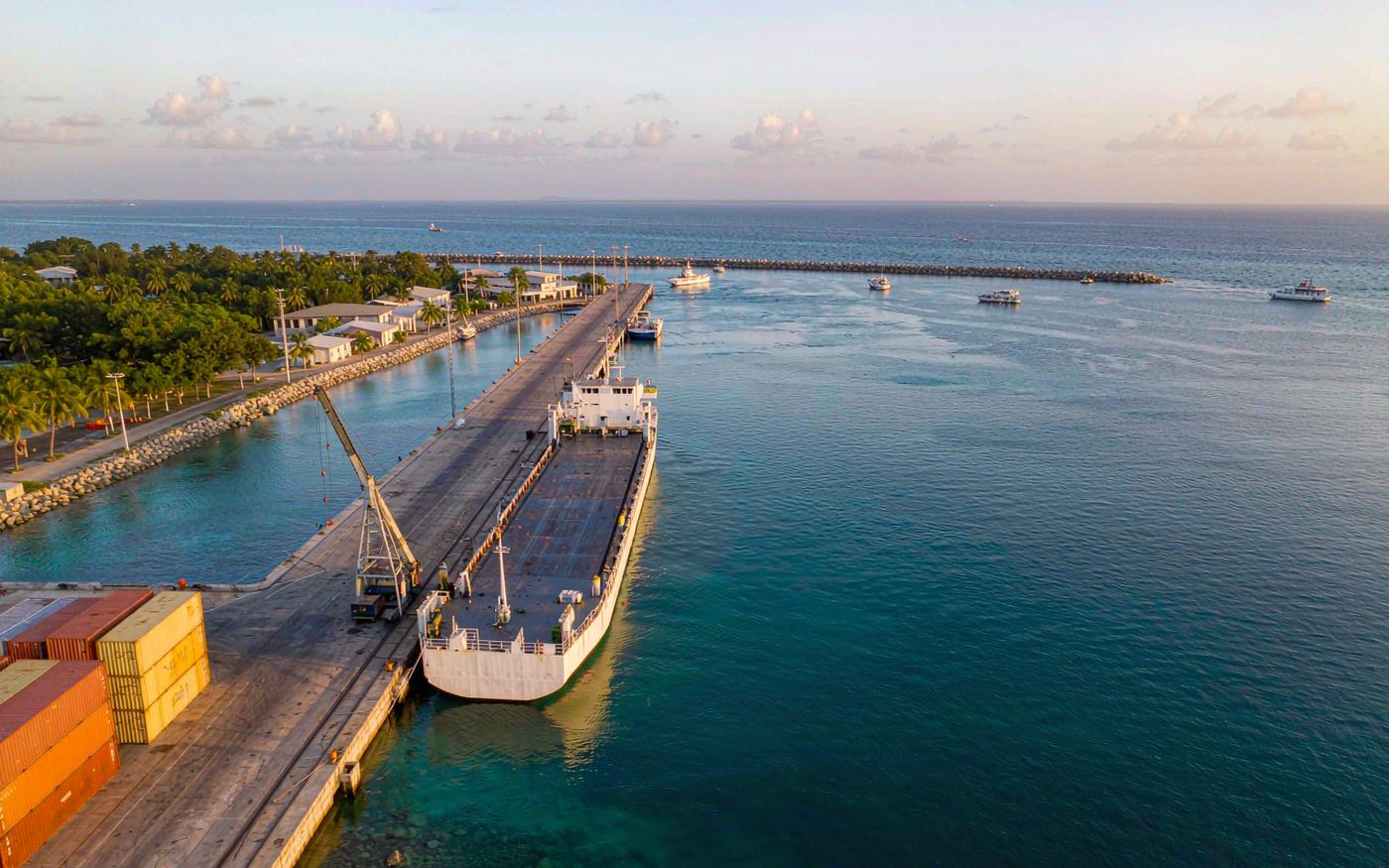
Shipping from China to Belize, step by step
Goodhope Freight is a licensed NVOCC based in Shenzhen, registered as GD20230925153335, and has been moving cargo out of China since 2012. To Belize we route full containers and shared containers by sea into the Port of Belize City and into Big Creek, and we handle air freight into Philip S. W. Goldson International Airport and express parcels dispatched from our depot. Every service stops at the port, the airport or the depot. Your consignee arranges import clearance and collection.
Belize sits on the Caribbean coast of Central America, bordered by Mexico to the north and Guatemala to the west, with a population of roughly four hundred and ten thousand. The economy runs on agriculture, tourism, fishing and services, and the country imports most of what it uses: fuel, machinery and consumer goods.
Two things make this route easier than its neighbours and one makes it harder. It is the only country in Central America where English is the official language, so your documents are not translated. It is a member of the regional common market, so the tariff structure is the regional one. And the bill at the far end is built from five separate charges applied in a fixed order, which is where almost every first costing goes wrong.
This guide is written for a buyer who has never imported from China before. It sets out which port to route through, how the five charges stack and in what sequence, why the order changes the answer, and what the single administrative document your broker files actually contains.
At a glance
On the Caribbean coast of Central America, between Mexico and Guatemala · Population roughly four hundred and ten thousand · Main ports: the Port of Belize City, and Big Creek for bananas and sugar · Main airport: Philip S. W. Goldson International (BZE) · No rail network; road links to the Guatemalan and Mexican borders · Currency: the Belize dollar, pegged to the US dollar · Member of the Caribbean Community, applying the common external tariff · Customs authority: the Belize Customs and Excise Department, through ASYCUDA World · Import duty from nil to forty-five per cent, with a revenue replacement duty on top for goods from outside the common market · An environmental levy charged on the customs value · General sales tax at twelve and a half per cent, charged on the total of all of them · Documents in English
How your cargo moves: China to Belize
Eight steps from your supplier's door to yours. The last four are the ones shaped by local rules.
- Pickup from your supplierWe collect the goods anywhere in China and bring them to our consolidation point.
- Export clearanceChina customs declaration filed and released before the goods move to the port.
- Main carriage to BelizeContainer shipped to the Port of Belize City or to Big Creek, according to the cargo.
- Discharge and yardContainer landed and moved into customs control at the port.
- Entry lodged on the single documentYour agent files on the standard administrative form through the national system.
- Five charges applied in orderDuty, the revenue replacement duty, the levy, the tax and any excise are assessed.
- Release and collectionOnce satisfied your buyer collects. There is no onward delivery service.
- Distribution inlandRoad movement to Belmopan, the districts or the border crossings.
Duty rates, VAT rates and clearance times move, and the figure that applies to your goods is the one set for your commodity code on the day of clearance. We check the current position against your code before your goods sail and confirm it to you in writing — ask for that check when you request a quote.
Two ports, chosen by what you are shipping
Belize has two working seaports and they do different jobs. The Port of Belize City handles the great majority of the country's imports, including most containerised general cargo. Big Creek, in the south, is a deep-water port built around banana and sugar exports. For a container of general goods from China, Belize City is almost always the answer. Big Creek matters for cargo destined for the south or for project and bulk movements, and it is worth asking about rather than assuming. The port you choose decides the inland leg. Belize has no railway, so everything moves by road, and the road network runs to the Mexican and Guatemalan borders as well as inland to Belmopan and the districts.The English-language route
Belize is the only country in Central America where English is the official language, and it is the working language of customs. Declarations, invoices and product descriptions are prepared in English and are not translated. That removes a step that every neighbouring route carries, and it removes a class of error with it: the mistranslated description that gets classified wrong because the translator guessed. Here the description you write is the description assessed. It is not a licence to be vague. The classification still has to be right, and a description that would survive a translation chain will not necessarily survive direct assessment.The regional tariff, and the spread it covers
Belize applies the common external tariff of the Caribbean Community, and import duty runs from nil to forty-five per cent. Industrial products average around twenty per cent, and a range of food items and medicines are zero-rated. At the top of the scale sit certain automobiles and some goods of local sensitivity, including fresh peppers, pepper sauces, live animals and boats. Those lines are deliberately protected, and they are rated accordingly. Classification decides the rate, and the spread from nil to forty-five is as wide as any tariff we work with. The difference between two adjacent codes will usually exceed any freight saving available between carriers, so it is worth checking before the goods sail rather than after.Five charges, in a fixed order
This is the part that most first-time costings get wrong, and it is worth setting out in full. The bill is built from five components applied in a set sequence: import duty on the customs value, then the revenue replacement duty, then the environmental levy, then the general sales tax, plus excise where the goods carry it. The replacement duty is the one people have not met before. It applies to goods from outside the regional common market at rates running from five to fifty per cent, with most around twenty, and it exists as a cost-recovery mechanism rather than as protection. Goods originating within the common market do not pay it. The environmental levy is charged on the customs value, generally at three per cent, with vehicles rated separately. And the general sales tax, at twelve and a half per cent, is charged on the total of everything that came before it.Why the order changes the answer
The sequence is not presentation. Each charge is calculated on a base that includes the ones before it, which means the components compound rather than adding politely. The revenue replacement duty is computed on the customs value plus the import duty. The general sales tax is then computed on the customs value plus the import duty, plus the replacement duty where it applies, plus any excise, plus the environmental levy. A bill worked out in a different order comes out short. We run your consignment through the sequence in the published order. It takes minutes and it removes the largest single source of surprise on this route.The entry document, and the system behind it
Declarations are lodged through ASYCUDA World on the single administrative document, the standard form used for the entry. It carries the classification, the value, the origin and the calculation, and it is what the assessment is built from. Electronic lodgement is not the same as forgiving lodgement. The system checks consistency across the invoice, the packing list, the transport document and the entry, and a declaration whose documents disagree will be held until somebody reconciles them. Clearance typically runs from a few days to a week once documents are in order. We pre-alert the agent before the vessel sails and send the document pack ahead of the container, which removes most of the delay that would otherwise accumulate.Permits, and the lines that need them
A range of goods need an import permit before they can be cleared: firearms, pharmaceuticals, pesticides, used vehicles and some agricultural products among them. Food, animals, plants and plant material require a permit from the ministry responsible for agriculture, and are inspected on arrival. The sanitary and phytosanitary certificate has to travel with the consignment and has to agree with everything else. If any line in your consignment falls into those categories, tell us at quotation stage. A permit applied for after the goods have sailed is a permit applied for too late.The hurricane season, and port capacity
The hurricane season runs from June to November, and it is the main seasonal risk on this route. Port capacity is limited, and a consignment caught by a storm at the wrong moment can be held rather than worked. That argues for planning against the season rather than against an average. If your delivery date is genuinely fixed, say so at the start, because the answer may be to ship earlier rather than to hope. It also argues for packaging that survives sitting. Tropical heat and humidity are constant here, and a container held in the yard through a wet week will find every weakness.Packing for a small terminal and a long road
A container travelling to Belize is discharged at a compact terminal and often moved on by road across a network that is good in places and poor in others. Handling is frequent and the last leg is longer than it looks on a map. Sealed inner packaging, proper dunnage, filled voids and moisture protection are baseline rather than upgrades. Export-grade strapping matters more than usual because of how often the load is transferred. Timber packaging must be treated and marked to the international standard with the certificate in hand before departure. There is no cheap remedy for uncertified timber once a consignment has been refused.Where the port handover happens, and who acts next
We handle collection anywhere in China, export clearance, consolidation, main carriage to Belize City or Big Creek, and the document pack that travels with the container. Your buyer handles arrival onward: appointing a licensed broker, holding the necessary permits, lodging the entry on the single administrative document, paying the five charges, and collecting from the port. We quote the sea leg and the inland leg as separate lines. On a route with no railway and a long final road movement, that separation is the only honest way to show you where the money goes.Sending a first Belize consignment
Send us the commodity in enough detail to classify it, the volume and weight, the pickup address in China, and where in Belize your consignee operates. That last answer decides the port. Tell us the declared value, because it sets the customs value every other charge is built from, and whether any line needs an import permit. We will check your codes, confirm the port, and quote the sea leg and the inland leg separately. Start with one shared container. It tells you how your supplier packs for a small terminal and a long road, how quickly your broker responds on the electronic system, and what the port is doing in that season, for considerably less than a full container would cost you to learn the same three things.Real shipments for new Belize buyers
Five shipments bought in China and delivered into Belize, told end to end — where the order came from, how it moved, where it nearly went wrong, and how it finished. Client names are withheld at their request; the situations and the handling are what we deal with on this lane.
Fittings for a small hotel
The purchase. A hotel operator bought bathroom fittings, tiles, ceiling fans and lighting from two suppliers in Foshan and Zhongshan for a property on the coast.
The move. We collected both lots, consolidated into one 20GP and shipped to the Port of Belize City, with the inland leg quoted separately.
Where it nearly went wrong. The fans arrived in retail cartons with no additional protection, and several were crushed when the container was devanned at a compact terminal with limited space.
How it finished. We made export-grade cartons and strapped pallets a condition of collection on the repeat. The second container arrived intact.
A costing built without the replacement duty
The purchase. A trader costed a general goods consignment using the regional tariff rate and the tax rate only.
The move. One 20GP routed to the Port of Belize City, declared line by line through a licensed broker.
Where it nearly went wrong. Goods from outside the regional common market pay a revenue replacement duty of five to fifty per cent on top of import duty, with most around twenty. A costing built from the tariff and the tax alone omits it entirely.
How it finished. We now set out all five components at quotation stage. The trader's landed cost has matched the assessment on every consignment since.
The sequence worked out in the wrong order
The purchase. A buyer calculated the bill by adding the charges together and applying the tax to the invoice value.
The move. One 20GP of mixed consumer goods routed to Belize City.
Where it nearly went wrong. Each charge is computed on a base that includes the ones before it. The replacement duty is computed on the customs value plus the import duty, and the tax on the total of all of them. Adding them politely instead of compounding them understated the bill.
How it finished. We now run every consignment through the published sequence before quoting. It takes minutes and it is the largest single source of avoidable surprise on this route.
A permit applied for too late
The purchase. A consignee added a line of pesticides to a general goods container without flagging it at quotation stage.
The move. One 20GP routed to Belize City.
Where it nearly went wrong. Pesticides are among the goods that need an import permit before they can be cleared. A permit applied for after the goods have sailed is applied for too late, and the line was held while it was resolved.
How it finished. We now ask about firearms, pharmaceuticals, pesticides, used vehicles and agricultural products explicitly at quotation stage. The consignee moved the line to a separate booking with the permit in hand.
Shipped into the hurricane season without saying so
The purchase. A buyer booked a consignment with a fixed site delivery date, without mentioning that the date sat inside the hurricane season.
The move. One 20GP routed to Belize City, with the inland leg to the coast.
Where it nearly went wrong. The season runs from June to November and port capacity is limited. A consignment caught at the wrong moment is held rather than worked, and the fixed date could not be met from the planned sailing.
How it finished. The buyer now tells us at quotation stage whenever a delivery date is genuinely fixed. Where it sits inside the season, we ship earlier rather than hoping.
Why importers use Goodhope on this lane
Six things that are different about working with us on China to Belize shipments.
Get a Belize City shipment priced
Tell us the commodity in enough detail to classify it, the volume, the declared value, the pickup address in China and where in Belize your consignee operates. We will confirm the port, check your codes, and quote the sea leg and the inland leg separately.
Get a quote Talk to usRelated pages
Frequently asked questions
Which port should I use?
The Port of Belize City for most containerised general cargo, and Big Creek in the south for cargo destined for that region or for project and bulk movements. Belize City handles the great majority of the country's imports.
Do documents need to be in Spanish?
No. Belize is the only country in Central America where English is the official language, and it is the working language of customs. Declarations, invoices and product descriptions are prepared in English and are not translated.
What duty rates apply?
The regional common external tariff, with import duty from nil to forty-five per cent. Industrial products average around twenty. A range of food items and medicines are zero-rated, while certain automobiles, fresh peppers, pepper sauces, live animals and boats sit at the top of the scale.
What is the revenue replacement duty?
A charge applied to goods from outside the regional common market at rates from five to fifty per cent, with most around twenty. It is a cost-recovery mechanism rather than protection, and goods originating within the common market do not pay it.
How is the bill worked out?
Five components in a fixed order: import duty on the customs value, then the revenue replacement duty, then the environmental levy, then the general sales tax at twelve and a half per cent, plus excise where it applies. Each is computed on a base that includes the ones before it, so they compound rather than adding politely.
What is the environmental levy?
A charge on the customs value, generally three per cent, with vehicles rated separately at two to five per cent depending on type. It is included in the base on which the general sales tax is calculated.
Which documents are needed?
The entry is lodged on the single administrative document through ASYCUDA World, supported by the commercial invoice, the packing list, and the bill of lading or airway bill. Permits and sanitary or phytosanitary certificates apply to regulated goods.
Which goods need a permit?
Firearms, pharmaceuticals, pesticides, used vehicles and some agricultural products, among others. Food, animals, plants and plant material require a permit from the ministry responsible for agriculture and are inspected on arrival.
Does the hurricane season matter?
Yes. It runs from June to November and port capacity is limited, so a consignment caught at the wrong moment can be held rather than worked. If your delivery date is genuinely fixed, say so at quotation stage and ship earlier rather than hoping.
Do you offer door-to-door delivery?
No. Sea freight runs port-to-port to Belize City or Big Creek, with the inland leg quoted and arranged separately. Air freight is airport-to-airport to Philip S. W. Goldson International, and express courier dispatch ends at the depot.