
Sourcing
Both can make the order work. Only one of them will still be there when the mould needs changing.
Contents
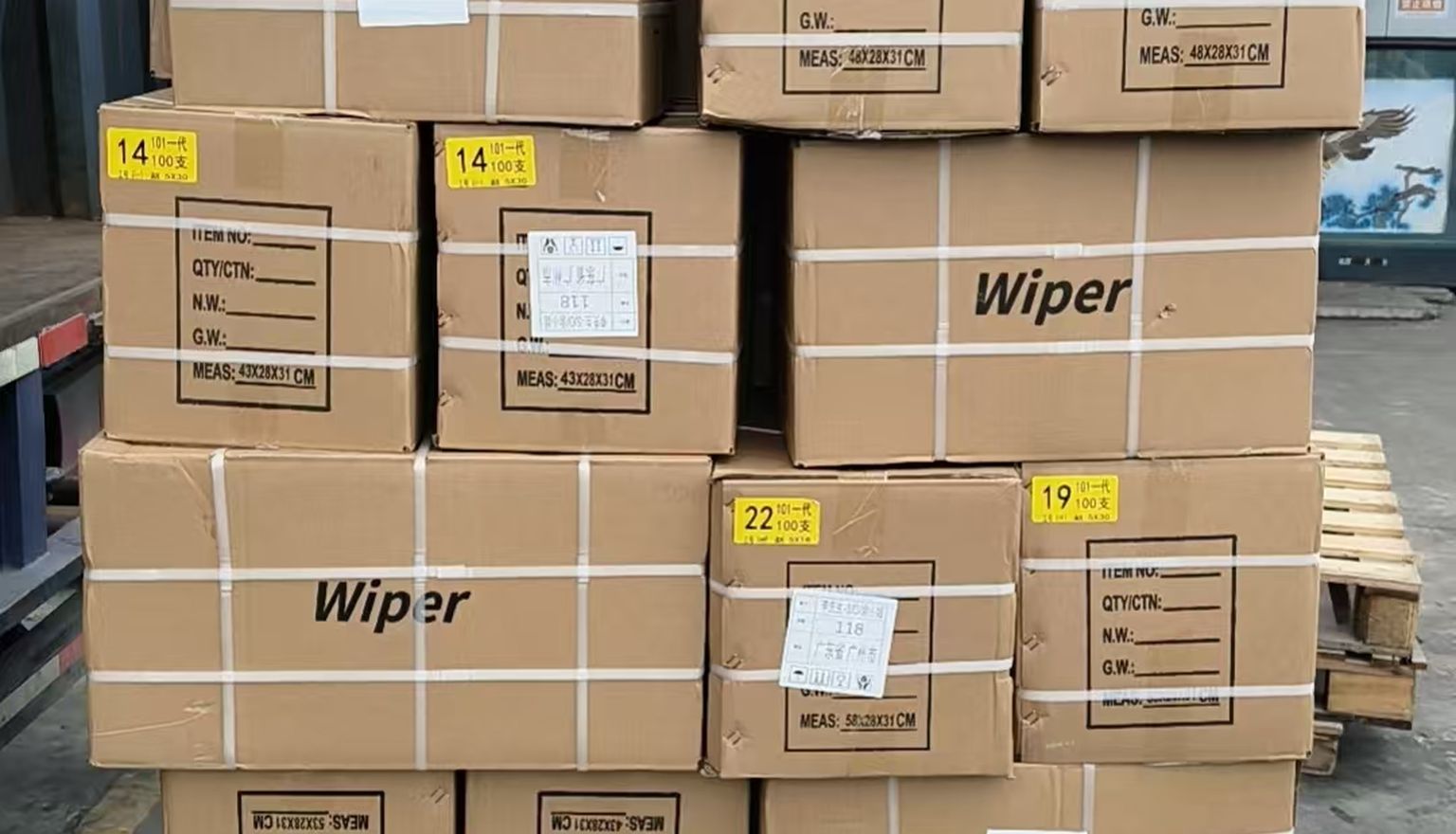
Most buyers ask whether the company at the booth is a factory, and most companies answer yes, because in Chinese export sales the answer is rarely checked. Three questions check it in about five minutes.
What does the business licence say? A Chinese business licence carries a scope of business, and the scope names what the company is permitted to do: manufacture of a named product category, or wholesale and import-export of it. A company whose scope lists trading activities and no manufacturing is a trader, whatever the booth says. The licence is also a public document in the national credit system, which means it can be checked from outside the conversation.
Where is the goods made? Ask for the production address, not the office address. Then ask whether it appears on the business licence as a registered production site. A trader will name a factory; a factory will name its own yard. Both answers are useful, and they are different.
Who writes the specification? A factory's engineer answers technical questions with manufacturing detail, tolerance and machine limits. A trader's salesperson routes the question back to a supplier and returns with a summary. Neither is dishonest, and the difference shows in the depth of the second answer.
The intermediary role exists because it solves real problems, and on a first order it often solves them better than a factory can.
Quantity aggregation. A factory with a minimum order of a container will not run a hundred pieces. A trader with four factories behind them can put your hundred pieces into a run they are already making, which is how a small buyer gets a realistic first order.
Range. Buyers who need five related items from one purchase order are asking a factory to be something it is not. A trader assembles the range, consolidates the cartons and issues one invoice, which is also one export declaration instead of five.
Export competence. Some capable factories have no export licence, no English-speaking documentation staff and no appetite for a foreign buyer's paperwork. A trader absorbs that function, and for a buyer unaccustomed to Chinese export documents, that is worth paying for.
Quality control between factories. A good trader inspects at each subcontractor before the goods reach the consolidation warehouse. That is a service, and on multi-item orders it is frequently better than what a single factory offers.
None of this is free, and the fee is inside the price. That is acceptable as long as you know the fee is there and what it buys.
The assumption that a factory is always cheaper is wrong often enough to be worth examining. There are three situations where the intermediary wins on price.
The first is small quantity. A factory prices a small run by adding a setup charge to a minimum it would rather not break. A trader places the same quantity inside a larger run and pays the marginal cost, which can be below the factory's quoted price for a standalone order.
The second is a product the factory does not really want to export. Some plants sell everything they make domestically and treat export orders as an interruption. Their quoted export price carries a premium for the inconvenience. A trader who specialises in that category has already absorbed the inconvenience.
The third is multi-item consolidation. Five items from five factories means five sets of cartons, five export declarations and five sets of originals. A trader assembling them into one shipment removes a real cost, and that saving can exceed the margin.
Where the factory wins is volume on one item, over time, with a specification that does not change. That is the case where the intermediary's function has stopped adding anything, and where the price difference becomes visible at the third or fourth container.
A factory audit scores a site: buildings, machinery, staffing, systems, calibration, traceability, social compliance. Every one of those findings attaches to a place.
An audit of a trading company scores an office. It can tell you whether the company is real, whether the staff are competent and whether the documentation process is organised. It cannot tell you what the production line looks like, because the production line is somewhere else and may change next month.
The practical answer is to audit the site that will run your order, and to require that the site be named. Ask for the production address in the purchase order. Then send an inspector to that address, not to the office, and check that the goods being made for you are actually there.
This is where a first order through a trader can go wrong in a way that is invisible until it is expensive: the audit is passed, the office is professional, the sample is right, and the production site was never seen by anyone acting for the buyer.
You cannot insist that a supplier be a factory. You can insist on knowing where the goods are made, and on being told when that changes. Two clauses do most of the work.
The named manufacturing site. A line in the purchase order stating the address at which the goods will be produced, and that any change requires the buyer's written approval. It costs nothing to write and it converts an invisible decision into a contract term. On a first order, ask for a photograph of the site with the order paperwork visible, taken during production.
No substitution without approval. A statement that materials, components and subcontractors will not be substituted after sample approval, and that a substitution voids acceptance. This is the clause that catches the most common quality failure in Chinese sourcing, which is not a bad factory but a good factory using a different component because the original was out of stock.
Add the evidence requirement to both. A clause with no evidence is a preference. A clause that names the document, the photograph or the inspection step that proves compliance is a term you can enforce.
Where tooling exists, add a third: who owns it, where it is held, and the buyer's right to retrieve it. That clause only matters once, and on that one occasion it matters more than everything else in the file.
Three variables decide the answer, and none of them is trust.
Order size. Below a factory's minimum, a trader is usually the only route to a realistic first order, and the margin is the price of entry. Above it, the factory is reachable and the margin buys less.
Product complexity. A product with a stable specification, standard materials and few process steps can be bought through anyone. A product with tooling, tight tolerances, regulatory testing or a finish that depends on process control needs the party who controls the process.
Time horizon. A one-off purchase through a trader is efficient. A product line you intend to run for years, with packaging changes, engineering changes and a growing volume, is a relationship worth having directly with the site that makes it.
The common mistake is treating this as a binary at the wrong moment. Buyers start direct with a factory on too small a quantity, then discover the factory will not answer emails about a hundred pieces. Others stay with a trader for four years and pay a margin on a product that became simple at the second container. Both errors are visible in hindsight and avoidable with a date attached to the decision.
Q How can I tell if a Chinese supplier is a factory or a trading company?
Check the business licence scope of business: it names manufacturing, trading, or both. Then ask for the production address and whether it is a registered production site. A trader will name a factory; a factory will name its own yard. Both answers are checkable and both tell you something.
Q Is it cheaper to buy directly from a factory?
Often, above the factory's minimum order and on a stable specification. Below the minimum, or on a multi-item order, a trader can be cheaper because it places your quantity inside a larger run and consolidates the shipment. Price the same order both ways before assuming either answer.
Q What is the biggest risk of buying through a trading company?
Substitution. The sample is made at one plant and the order at another, sometimes with a different material source. A named manufacturing site clause plus a no-substitution clause is what makes the risk visible and arguable.
Q Should I audit a trading company?
Audit the site that will produce your order instead. An audit of a trader's office can confirm the company is real and organised, but every finding that matters attaches to a production floor, and that floor may be a subcontractor you have never seen.
Q Can a trader supply certificates and test reports?
Usually yes, and check whose name is on them. A test report issued to the factory is evidence about that factory's product, and it may not describe the goods in your container if the production site changed. Ask for reports in the name of the party that made your order.
Q When should I move from a trader to the factory?
When the order is above the factory minimum, the specification is stable, and the volume is predictable enough to justify the extra administration. Do it with an overlap: keep the trader for one more order while the direct relationship is tested, rather than switching everything at once.
Related pages
If the order is assembled from more than one plant, tell us the addresses, the ready dates and the carton counts. We will tell you where to consolidate so the shipment leaves as one consignment with one set of documents.
Email sales8015@goodhopefreight.com | WhatsApp & phone +86 133 9216 2503