
Freight Mode
One is a shared box you do not control. The other is your own box, filled from four factories, sealed once. They are priced differently because they are different products.
Contents
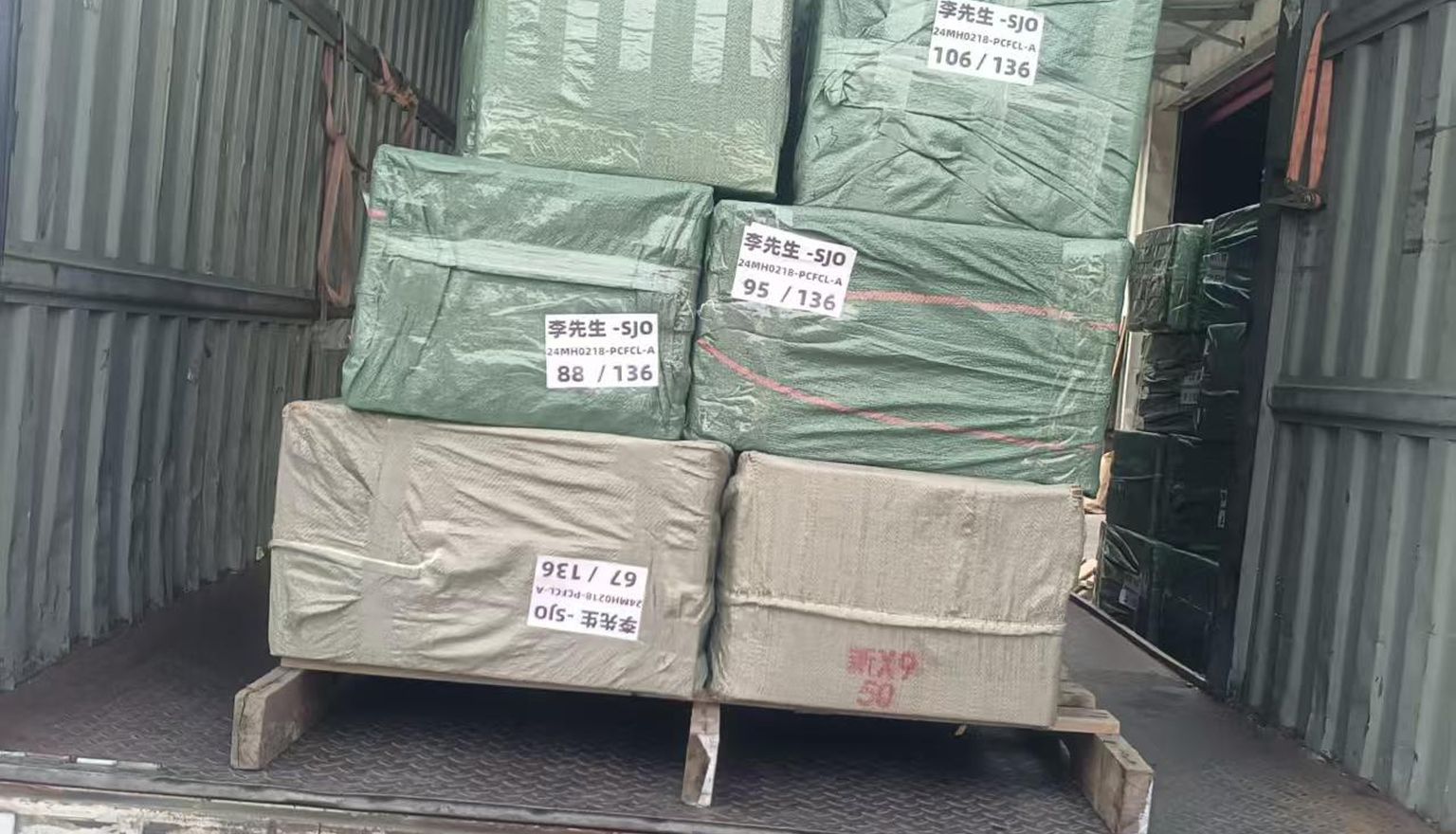
The vocabulary is used loosely, which is why quotes for the same goods can differ by a factor. Groupage and LCL describe the same thing: your cargo travels in a container shared with other shippers, and a consolidator assembles it. Consolidation, in the sense buyers usually mean it, is different: your own container, filled from more than one factory.
In the first case you own a share of a box. In the second you own the box and use it to solve a supply problem.
Both are legitimate. Only one of them lets you control loading, marks and inspection, and that difference is what most of the cost comparison is really about.
In groupage your cartons go to a container freight station, are loaded alongside other shippers' cargo, and are separated again at the destination station. You are charged by the cubic metre or the tonne, with a minimum of about one cubic metre.
The advantages are real. You can move 400 kilograms without buying space you do not need, departures are frequent, and the consolidator handles the assembly work. For samples, a small trial order or a single supplier with a modest quantity, groupage is usually the correct answer.
The disadvantages are equally real. You do not know what else is in the box. Your cartons are handled several extra times. And the destination station will charge for deconsolidation, per cubic metre, with a minimum that can rival the ocean freight on a small shipment.
Consolidation is an FCL booking used to solve a multi-supplier problem. Three or four factories deliver to one warehouse in Shenzhen or Guangzhou. The goods are received, checked against the packing lists, marked per supplier, loaded into a single container in a planned sequence, and sealed once.
The result is one container, one bill of lading, one export declaration and one set of documents at destination. Instead of four shipments arriving on four dates with four customs entries, you get one arrival and one clearance.
The loading plan is where the value sits. Heavy pallets go at the bottom and towards the middle of the box. Different suppliers' cargo is marked and separated so that unloading at destination is not an exercise in identification. Anything that needs to be inspected is placed where it can be reached.
A consolidated container still carries one commodity description per line on the declaration. Mixing four product categories in one box is normal, but it does make the export declaration longer and the customs review more detailed. Allow a day for it rather than an hour.
Direct is the simplest structure and the one most first orders use. One supplier, one factory, one container loaded at the factory gate, one seal, one bill of lading. There is no warehouse step, no receiving check, no cross-supplier coordination.
It is also the cheapest per cubic metre when the volume justifies a container. Nothing is handled twice, and the truck goes from the factory to the terminal without an intermediate stop.
Its limitation is the obvious one. It only works when one supplier can fill a container, and on a first order from a new supplier that is often not the case — the quantity that makes the price work may be less than the quantity that fills the box.
Four conditions, and consolidation pays when most of them are true.
When those hold, the arithmetic usually favours consolidation even after the warehouse costs, because the alternative is three destination clearances, three delivery legs and three sets of arrival charges.
When they do not hold, groupage is cheaper and simpler. A buyer with two suppliers shipping 6 cubic metres each does not need a warehouse; they need two LCL bookings and a note in the calendar for both arrival dates.
Consolidation is not free. A warehouse has to receive goods, and receiving is labour.
Inbound trucking. Each factory delivers to the warehouse instead of the terminal. For a factory in Guangzhou that is a short run; for one in Zhejiang it is a line on the invoice.
Warehouse handling. Charged per cubic metre or per tonne for unloading, checking, marking and reloading, with a minimum per supplier.
Storage. Goods waiting two days for the last supplier occupy space, and space is charged by the day.
Time. The container cannot be gated in until every supplier has delivered. One late factory delays the whole box, which is the single largest risk in the model.
Set against that: one set of origin documentation instead of four, one destination clearance, one delivery, and one arrival charge. On a four-supplier order the saving usually exceeds the warehouse cost, but it is a calculation, not a rule.
It starts with a booking date, chosen backwards from the vessel's cut-off. Every supplier is then given a delivery window that ends at least two days before loading, with the address, the contact, the booking reference and the marking instructions in writing.
As goods arrive they are checked against each packing list: carton count, marks, visible damage. Discrepancies are raised with the supplier while the cargo is still in the warehouse and can still be corrected, which is the main practical benefit of the intermediate stop.
Loading follows a plan rather than the order in which trucks arrived. Heavy at the bottom, one supplier's cargo grouped and marked, anything fragile away from the doors, and the loading photographed before the seal goes on. That photograph is the evidence if a claim is ever made.
Then the container is gated in, the export declaration is filed with all commodity lines, and the bill of lading is issued naming the consolidated quantity. From that point it behaves like any other FCL shipment.
An illustration, with volumes chosen to make the arithmetic visible rather than to price a shipment. A buyer leaves the fair with four suppliers: 8 cubic metres from Foshan, 6 from Dongguan, 5 from Zhongshan and 3 from Guangzhou.
Path one, four LCL bookings. Four deliveries to a container freight station, four sets of origin documents, four destination stations, four deconsolidation charges, four arrival notices and four clearances unless they are deliberately bundled. The freight per cubic metre is competitive; the fixed charges are paid four times.
Path two, one consolidated container. Four deliveries to one warehouse inside a three-day window, one receiving check, one loading plan, one seal, one bill of lading, one arrival, one clearance, one delivery. The warehouse charges for handling; the four arrival charges become one.
The decision usually sits on two questions. Can all four factories deliver inside the same week, and does the total clear about fifteen cubic metres. Two yes answers make path two the cheaper and simpler option. One no answer sends you back to path one, which splits naturally and does not care that one supplier is late.
Q Is groupage the same as LCL?
Yes. Groupage and LCL both describe cargo sharing a container with other shippers and being charged by volume or weight. Consolidation, in the sense used here, is different: your own container filled from several suppliers.
Q How many suppliers can go into one container?
There is no fixed limit, and four to six is common. The practical constraints are the loading plan, the customs description and the delivery window. Beyond about six suppliers the coordination cost starts to exceed the freight saving.
Q Can I consolidate goods from different product categories?
Usually yes, but check two things: whether the goods can legally share a container, and whether the destination customs regime treats the mixed entry differently. Some categories, particularly food, chemicals and anything with a phytosanitary requirement, do not mix well with general cargo.
Q Who arranges the warehouse?
The forwarder, typically. It should be a warehouse that regularly handles consolidation, with a receiving desk, a marked loading area and the ability to photograph the loading. Ask to see where the goods will actually be received.
Q What if one supplier delivers late?
The container waits, or it sails without that supplier's cargo. Waiting costs storage and may miss the cut-off. Sailing without it means the late goods become a separate LCL shipment, which is why the delivery window has to be agreed in writing with every factory before the booking.
Q Does consolidation change the bill of lading?
Yes. You get one bill of lading for the whole container rather than one per supplier, and the shipper on that bill is whoever books the consolidation. If you need each factory named for accounting or letter of credit purposes, raise it before the bill is issued, not after.
Related pages
Send the factory locations, the carton counts and the date each one can deliver. We will tell you whether one box works, or whether groupage is the cheaper answer.
Email sales8015@goodhopefreight.com | WhatsApp & phone +86 133 9216 2503