
Floor Plan
Two days is enough to qualify a shortlist and not enough to see the fair. The difference between buyers who leave with three serious suppliers and buyers who leave with two hundred photographs is the order in which they walk the halls.
Contents
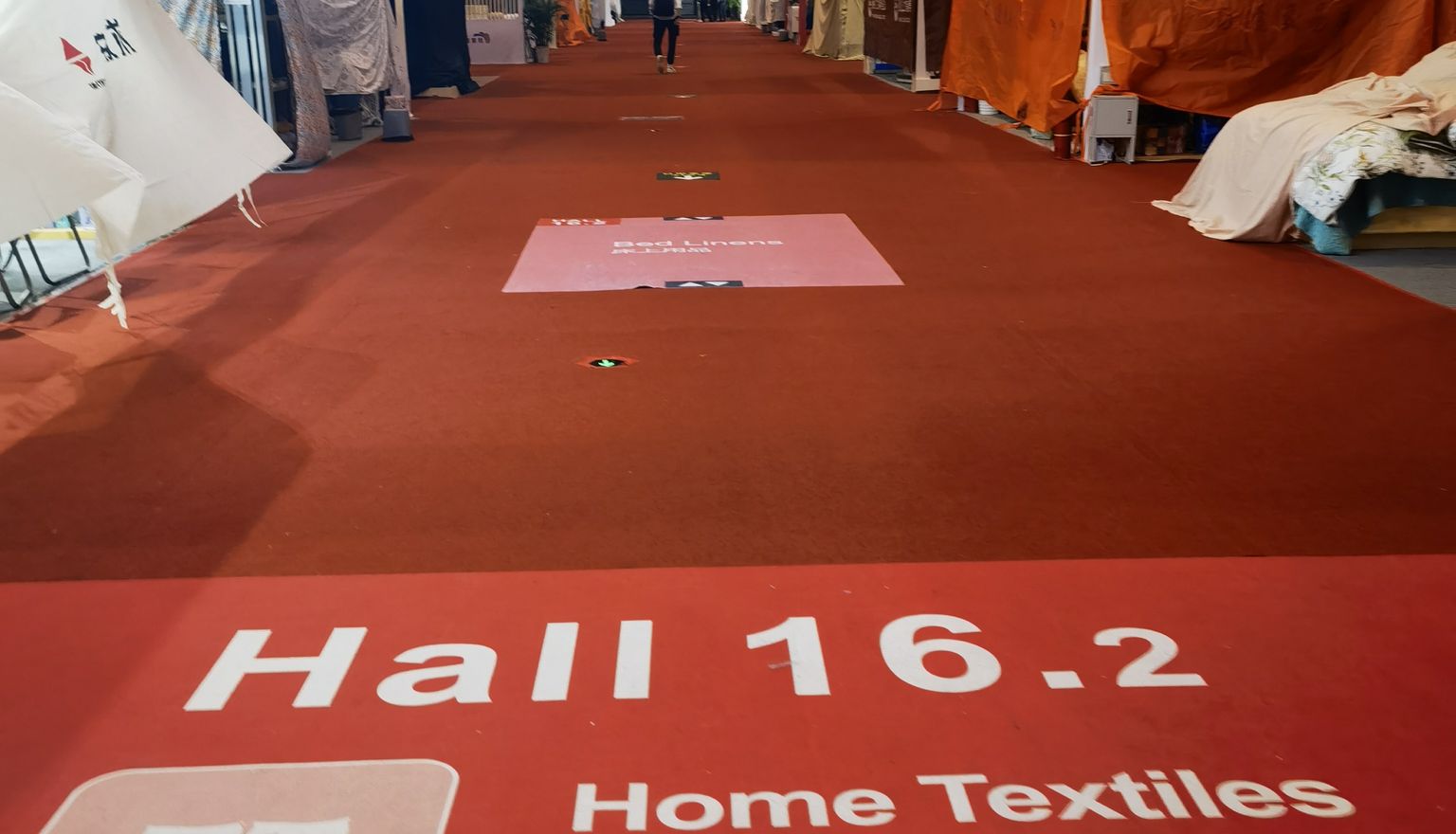
Most buyers arrive with a list of exhibitors copied from the catalogue or the app. The list is sorted alphabetically, by product, or by the order the companies replied to an email. None of those orders has anything to do with the shape of the building, and the building is what you are actually walking through.
Sort the list by hall instead. Halls 1 to 8 sit in Area A, 9 to 13 in Area B, 14 to 16 in Area C, and 17 to 20 in Area D. A day that jumps from hall 3 to hall 12 to hall 19 is a day spent in corridors. Twenty companies in three adjacent halls is a morning.
Then cut the list to what two days can hold. A realistic count for one buyer moving at a working pace is 25 to 35 booths a day, with 8 to 12 of those getting a real conversation. Anything above that is a corridor walk with a catalogue under your arm.
Product groups move between phases. Phase 1 covers electronics, machinery and building materials; Phase 2 consumer goods, gifts, furniture and garden; Phase 3 textiles, footwear, bags, food, office and health products. Confirm your category against the current phase schedule before you book anything, because a hall number from last October may now hold a different industry.
The first morning is not for negotiation. It is for finding out which of your thirty candidates are worth a second visit, and that judgement takes about four minutes per booth if you have decided in advance what you are looking for.
Walk the aisle, read the booth from the outside, and enter only where the display answers your first question. Inside, ask three things: the minimum order quantity for your specification, the price at that quantity, and whether the factory is theirs. Write the answers on the catalogue cover with the booth number, and leave. Samples, catalogues and long explanations all belong to the second visit.
Four minutes is not rude. Exhibitors read the difference between a buyer qualifying and a buyer browsing, and a short precise question gets a better answer than a long vague one.
The morning also settles the geography. By 11:30 you will know whether your suppliers are clustered in one area or spread across three, and whether the afternoon needs one hall or a taxi.
After lunch, go back to the six or eight booths that survived the morning. This is where you sit down, ask for the price ladder at three quantities, look at the sample they keep under the counter rather than the one on the shelf, and get the carton dimensions.
The carton numbers are the ones buyers forget. Length, width, height and gross weight per carton decide your freight cost, and a supplier who cannot produce them in ten minutes has either never exported or is quoting you a product they do not make. Ask for them while the sample is on the table, not in an email three weeks later.
Use the afternoon for the second tier as well, meaning the ten companies that looked unremarkable in the morning but sit in the same hall. Fairs reward the second pass. The famous booth has a queue and a price to match; the booth two aisles away with the same mould and no queue is often the better supplier.
The last hour is the good hour. Between 16:30 and 18:00 the aisles thin and senior staff who spent the day on their feet become available. Conversations that were three minutes at 10:00 become fifteen at 17:00, and some exhibitors will quote a better price to close the day with an enquiry in hand.
Two hours in the hotel room on the first evening are worth more than two extra hours in the halls on the second morning. Photograph every catalogue cover and business card, name the files by booth number, and write one line per supplier saying why they are still on the list.
The sorting question is narrow. Which four companies could actually ship a first order in the next ninety days, at a quantity your cash flow supports, with a product you can legally sell at home? Everything else is a name for next year.
Do not skip this because you are tired. A list of thirty unsorted suppliers on the flight home becomes a list of zero by the following Monday.
The second day has a different job: convert. Return to the shortlist with a written brief — specification, quantity, packaging, delivery window, and the incoterm you want quoted. Ask each of the four for a proforma invoice rather than a price on a card.
A proforma invoice forces the details onto one page: full company name and bank account, unit price, quantity, trade term, port of loading, lead time, payment split and validity. Suppliers who cannot issue one the same day are telling you something useful about how the order will be run.
Keep the afternoon free for the two things that only happen in person. One is the factory visit, which is best arranged for a changeover day between phases when the halls are closed. The other is the second meeting with the one supplier whose price and manner both fit, where you settle the details that decide whether the order is repeatable.
Souvenir aisles, product categories outside your business and booths with no English-speaking staff and no sample you can touch are not worth the walk. The fair is 1.2 million square metres of exhibition space in total; a buyer with two days who tries to see it leaves with nothing.
Skip the opening ceremony hour on day one. Every gate is at its slowest, the badge desks are at their longest, and the first aisle you enter will be crowded with buyers who arrived on the same flight.
Also skip the temptation to negotiate on day one. A price agreed before you have compared alternatives is a price you cannot evaluate, and walking it back the next morning costs you credibility with the one supplier you may need most.
The complex is 4.4 km around the outside, and the walk from Area A to Area C is the better part of twenty minutes at fair-week density. Do that twice in a day and you have spent the time of two supplier meetings in a corridor.
Group your appointments. One area per half-day is the only schedule that holds. If a supplier you want sits alone in another area, put them at the end of the day rather than in the middle, so the walk is followed by a metro ride and not by another meeting you arrive late for.
Allow for security on re-entry. Leaving the complex at lunch to eat outside means a queue back in, and the queue at 13:30 is longer than the one at 12:00.
Two days will not cover a product range with hundreds of variants, and it will not cover two unrelated categories. If your buying list spans kitchenware and power tools, those sit in different phases and different halls, and pretending otherwise produces two shallow days.
Two days also will not replace a factory visit. The booth tells you what a company wants to show; the plant tells you what it can actually produce, and the gap between the two is where first orders go wrong. If the trip is two days at the fair and nothing else, budget a second trip before you place anything above a trial order.
What two days does do well is qualify. Four suppliers, four proforma invoices, four sets of carton dimensions and a clear idea of which one you trust. That is a successful fair.
Q Is two days enough for the Canton Fair?
For one product category and a prepared shortlist, yes. Two days supports roughly 25 to 35 booths a day and four serious supplier conversations. It does not support two unrelated categories, a full range review, or factory visits on the same trip.
Q Should I visit in the morning or the afternoon?
Both, for different reasons. Mornings are better for qualifying at speed because staff are fresh and the aisles still move. Late afternoon, from about 16:30, is better for detailed conversation because the crowd thins and senior staff are available.
Q How many booths can I realistically cover in a day?
Twenty-five to thirty-five with a prepared list sorted by hall. Buyers who arrive without a shortlist typically cover fewer, because the first two hours go into working out where their category actually is.
Q Which gate should I use?
The one closest to the area you are starting in. Gate numbers run 1 to 16 around the complex, and entering at the wrong side can cost twenty minutes before you reach your first booth. Plan the first booth and the gate together.
Q Can I see the whole fair in two days?
No. The venue has twenty numbered halls across four areas and 1.2 million square metres of exhibition space. Buyers who try to see everything spend two days in corridors and leave without a supplier.
Q Do I need a badge for each day?
One buyer badge covers the whole phase you registered for, and re-entry is by the same badge. Register online in advance and collect the card before the phase opens, not on the opening morning.
Related pages
Send us the product, the carton dimensions and the quantity you expect to order. We will tell you what the shipment looks like before you sign anything.
Email sales8015@goodhopefreight.com | WhatsApp & phone +86 133 9216 2503