
Parcels
A courier moves parcels through a sorting hub at speed. That design is why it cannot carry a pallet, cannot wait for a document, and cannot deliver without an address that a driver can find.
Contents
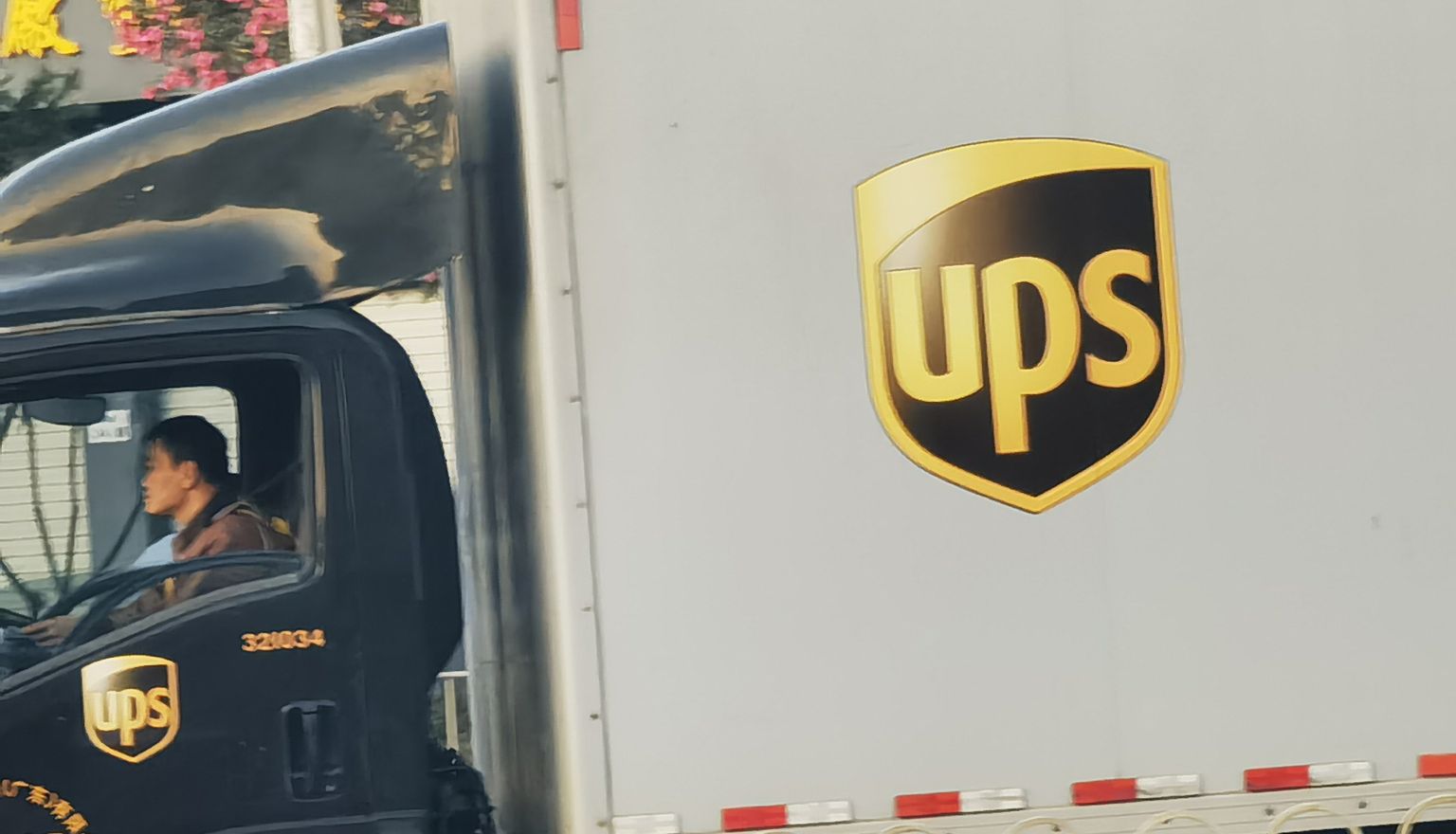
Three different systems move goods from China, and choosing between them is a question about the shape of the cargo rather than the price per kilo.
Express courier is a hub-and-spoke parcel network: pickup at an address, sortation at a gateway, flight, sortation again, delivery to an address. It is fast, it is tracked to the door, and it is built for pieces that one person can lift.
Air freight is an airport-to-airport service on a pallet or in a container, with a forwarder handling the collection, the export declaration and the delivery. It moves hundreds of kilos at a lower rate per kilo and it needs documents before it flies.
LCL sea freight is a shared container: your cargo is consolidated with other shippers' cargo, stuffed at a warehouse, devanned at the destination, and cleared as a commercial import. It is slow and it is cheap per cubic metre.
Most first shipments mix all three: courier for samples, air for a test quantity, LCL for the replenishment.
Express networks publish hard limits, and they are enforced at the counter rather than discussed.
Weight per piece is commonly capped around seventy kilograms, and many carriers apply a lower practical limit per carton before handling surcharges apply. Dimensions are capped by the sortation equipment: a piece that is too long, too wide or too tall simply cannot travel on the belt, and the maximum length plus girth varies by service and destination.
There is also a value ceiling for simplified clearance. Above a threshold that differs by country, a courier shipment is no longer a low-value parcel and becomes a formal entry, which needs an importer, a classification and a duty payment. The threshold changes, so check the current figure for the destination rather than assuming.
The fourth limit is less visible: a courier will not accept a piece it cannot scan. A carton wrapped entirely in tape with no flat surface, or a drum with no label panel, will be refused or relabelled at your expense.
Courier clearance is a service the carrier sells, not a right, and what it can do depends on the value and the product.
Below the low-value threshold in the destination country, many shipments clear on a simplified basis with the carrier acting as the declarant. Above it, a formal entry is required: an importer of record, a classification, a duty and tax calculation, and often a power of attorney for the carrier's broker.
The practical consequence is that a courier shipment of commercial goods can be slower than air freight, because the paperwork happens after the parcel has landed and the parcel waits in a bonded facility while it is sorted out. A forwarder, by contrast, will not load the cargo until the documents are ready.
Where the goods are regulated, food, cosmetics, medical devices, radio equipment, the carrier may decline the shipment entirely rather than clear it. That refusal usually happens at the origin counter, which at least saves the freight.
Five things, and each of them comes up on a first shipment.
It will not deliver to a dock by appointment. It delivers to an address, during a route, and a warehouse that requires a booking window will turn the driver away. It will not guarantee a liftgate, inside delivery or a two-man team unless the service is bought explicitly.
It will not consolidate. Two suppliers shipping to one buyer arrive as two parcels with two freight bills and, above the threshold, two entries.
It will not handle a palletised load, and it will not wait while you obtain a certificate. And it will not accept cargo that has been packed for sea transit: a carton designed to sit on a pallet for a month is often too large and too heavy for a parcel belt.
Knowing this converts a frustrating counter conversation into a decision made at the factory.
Courier pricing is roughly linear in weight, with a step at each half-kilo and a volumetric divisor that punishes light bulky goods. Sea freight is a stepped cost: a container costs the same whether it is half full or full, so the marginal cost of the next cubic metre is close to zero.
The two curves therefore cross. For a few kilos the courier is cheaper and much faster. At around a hundred kilos, air freight starts to win on rate. At a cubic metre or more, LCL sea freight wins on cost by a wide margin and loses on time.
Volumetric weight is what catches people out. Couriers usually divide the volume in cubic centimetres by five thousand or six thousand, so a carton of cushions weighing four kilos can be charged as fifteen. The same carton in a container is charged by the cubic metre, where it is also inefficient but far less expensive.
Run both calculations on the actual carton dimensions before choosing, and remember the destination charges that a courier quote often excludes.
Four categories account for most counter refusals, and each has a route if the paperwork is right.
Batteries are the largest problem. Lithium cells shipped alone are classified as dangerous goods; cells packed with equipment or contained in equipment have their own entries and limits. Many couriers accept them only under a contract, with a declaration and trained staff. A sample device with a battery inside, posted without documentation, is a shipment that gets stopped.
Liquids and powders attract screening and, for anything with a flash point or a chemical hazard, a safety data sheet and a classification. Cosmetics and cleaning products sit here, and so do many industrial samples.
Magnets are refused by air carriers because they interfere with aircraft instruments, unless the field strength is measured and declared below the threshold. A speaker, a motor or a magnetic tool can fail a screening test that nobody warned you about.
Four signals say it is time to stop using a courier.
The shipment needs more than one carton per supplier, because separate parcels lose the consolidation. The total is above roughly a hundred kilos or a cubic metre, because the rate advantage has gone. The goods need a certificate, a classification or a formal entry that the carrier will not handle. Or the delivery address cannot receive a parcel without a booking.
The conversion is not complicated. A forwarder collects from the factory, consolidates at a warehouse, files one export declaration, and books either an air waybill or an LCL shipment. The buyer receives one set of documents instead of five.
Do it before the parcels leave the factory, not after. Retrieving cartons from a courier network and re-routing them into a consolidation is possible and always more expensive than starting correctly.
Customs reads the invoice, not the carton. Three fields decide whether the parcel clears.
A description specific enough to classify, in plain language, naming the material and the use. Not a marketing name, and not a category. Declared value that matches what was actually paid, because an under-declared value on a commercial shipment is a customs offence rather than a saving. And the terms of sale, so the value can be interpreted.
Mark the shipment as a sample only if it genuinely is one and is being provided free of charge. A sample with a commercial value still needs a value declared, and a shipment described as a gift when an invoice exists is a discrepancy waiting to be found.
Keep the courier waybill number with the commercial documents. When a parcel is held, that number is the only handle anyone has on it.
Q How heavy can one courier parcel be?
Commonly around seventy kilograms per piece, with a lower practical limit before handling surcharges apply and hard dimension caps set by sortation equipment. Both figures vary by carrier and service, so check the carrier's own published limits for the specific service rather than assuming a general number.
Q Can a courier clear a commercial shipment?
Above the destination's low-value threshold it becomes a formal entry and the carrier's broker handles it, which requires an importer of record, a classification and a duty payment. The carrier may also decline regulated products. For anything with a certificate requirement, air freight through a forwarder is usually the more predictable route.
Q Why was my battery sample refused?
Because lithium batteries are dangerous goods with specific packing and documentation requirements, and many couriers accept them only under a contract with trained staff and a declaration. A device with a battery inside has its own classification and limits, and posting it undeclared is the most common cause of refusal.
Q When does LCL become cheaper than courier?
The crossover is usually somewhere between one hundred kilos and one cubic metre, depending on the lane and the destination charges. Below that the courier's speed is worth the rate; above it the sea option wins on cost by a margin that grows with volume.
Q Can a courier deliver to an Amazon fulfilment centre?
A small parcel can be delivered to some centres under their small-parcel programme, subject to the current rules and labels. A palletised shipment cannot, because it needs a delivery appointment, and arriving without one results in a refusal.
Q What documents does an express shipment need?
A commercial invoice with a specific description, a declared value, the terms of sale, and the country of origin. Plus a waybill, and for restricted goods the applicable declaration. For a formal entry above the low-value threshold, the carrier will also need importer details and often a power of attorney.
Related pages
If the samples have grown into a pallet, send us the carton count and weights. We will tell you whether it still travels as a parcel and, if not, which consolidation route gets it there without five separate clearance files.
Email sales8015@goodhopefreight.com | WhatsApp & phone +86 133 9216 2503