
Terms
A term is not a price list. It says which party performs which act, and the moment the goods stop being your supplier's problem.
Contents
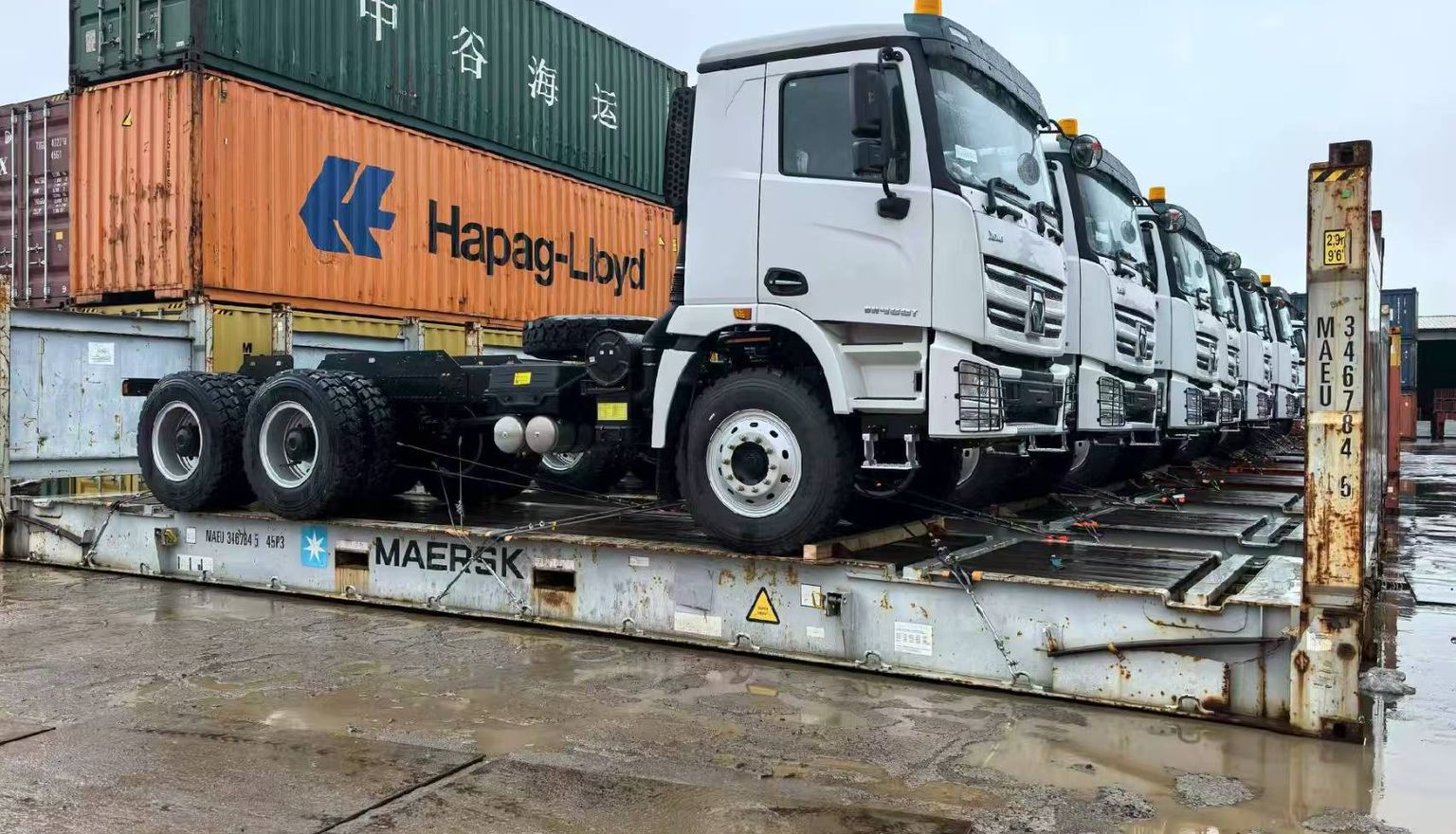
Every Incoterm answers the same three questions, and buyers usually read only the first. Who pays for each leg of the journey. Where the risk passes from seller to buyer. Which party is obliged to perform the acts that make the journey legal, such as export declaration, carriage contract, insurance and import clearance.
The cost question is the one that gets negotiated, because it is the one that appears in a quotation. The risk question is the one that decides who owns a loss, and it does not always pass at the same point as the cost. Under CIF, for example, the seller pays the ocean freight to the destination port, but the risk passes to the buyer when the goods are on board at origin. A container lost mid-voyage is the buyer's loss even though the seller paid the freight.
The obligation question is the one that produces the most expensive surprises, because it involves government rather than money. Three of the four terms below fail at exactly this point: someone assumes the other party can file a declaration they are not entitled to file.
Read a quoted term by asking which of the three the supplier has actually priced. A supplier who quotes DDP without asking for your tax registration number has priced a cost, not an obligation.
Ex Works puts everything on the buyer from the factory door. The seller makes the goods available at their premises and does nothing else. In a domestic sale that is coherent. In a Chinese export it runs into a wall, because the export declaration in China is filed by a party registered to file it, and a foreign buyer is not that party.
In practice an EXW order is handled by an agent, a freight forwarder with a Chinese entity, or the supplier acting as declarant anyway. All three are workarounds, and each one changes who is named on the customs documents. When the declaration is filed, the exporter of record is the party whose name appears, and that name has to match the export invoice and the foreign exchange receipt. A mismatch is a compliance problem for the supplier, not for you, which is why many Chinese suppliers quietly refuse EXW once the paperwork starts.
FCA is the term that fits. Free Carrier asks the seller to clear the goods for export and hand them to the carrier you nominate, at a named place. If that place is the supplier's own yard, the practical difference from EXW is one act: the export declaration. That single act is the reason FCA exists in the 2020 revision as the recommended replacement for EXW in containerised trade.
If a supplier quotes EXW and you have no Chinese entity, ask who will be the exporter on the declaration. The answer will either be FCA in disguise or a fee you have not been shown.
FOB has been the default term in Chinese export for decades, and for a full container it is technically the wrong one. Free On Board was written for cargo that travels over a ship's rail. A container is handed to the carrier at a terminal, days before the vessel arrives, and the seller's control ends at the gate rather than at the rail.
The gap matters when something happens between gate-in and loading. Under FOB the risk passes when the goods are on board. If a container is damaged in the yard, or rolled to a later vessel after gate-in, the question of who bears the loss turns on a point of transfer that FOB places too late for a container terminal. FCA at the named terminal, or at the carrier's depot, puts the transfer where the handover actually happens.
In practice most Chinese suppliers still quote FOB and most buyers still accept it, because the cost allocation is familiar and the local charges are well understood. The risk allocation is the part left unexamined until a claim. If a first order is going to be quoted FOB anyway, at least write the port and the terminal into the term, and agree in writing that the seller's responsibility for the cargo ends at gate-in rather than at the rail.
One thing FOB does do well: it keeps the booking in your name. Your forwarder books the space, holds the bill of lading instructions and controls the release. That is worth more than the technical precision of the term.
CIF obliges the seller to arrange carriage to the named destination port and to insure the goods. Both obligations have a floor written into the rule, and most buyers assume the floor is a wall. It is not.
The insurance requirement under CIF is cover of at least 110 percent of the contract value, in the currency of the contract, on the minimum terms the rule specifies. That minimum maps to Institute Cargo Clauses C, which is a named-perils cover: it responds to total loss, and to a short list of events such as grounding, collision, fire and discharge at a port of distress. It does not respond to water damage from a leaking container roof, to theft from an unstuffed box, or to rough handling that crushes a carton without a related accident.
That gap is where buyers discover the term was cheap. Clause A is the all-risks form and costs more; the difference between A and C on a general cargo is usually small relative to the value of the shipment, and it is the buyer's decision to make before the container sails, not after it is damaged.
Ask for the certificate before loading, not after. Check three things on it: the clauses named, the insured value, and the party named as assured. A certificate issued in the seller's name with a loss payable clause in your favour is normal. A certificate naming the seller with no endorsement is a document you cannot claim on.
Delivered at Place and Delivered Duty Paid look almost identical in a quotation: the seller delivers to a named place in your country. The difference is the import declaration, and it is not a formality.
Under DAP the goods arrive at the named place ready for unloading, with the import not yet cleared. The buyer clears. Under DDP the seller clears for import, pays duty and taxes, and delivers. To do that, the seller needs a party in the destination country who can act as importer of record: a registered entity, a tax number, a deferment account or a bond.
That is why DDP quotations from Chinese suppliers cluster on certain routes and certain products. Where a forwarder can act as importer of record under a consolidated arrangement, the term works. Where the destination requires the buyer to hold the registration, such as the EU with a VAT number and EORI, or the US with a bond and a customs broker, the seller cannot be the importer of record, and a DDP quote is really a DAP quote with a service fee on top.
Ask the question directly: who will be named as importer of record on the entry, and what is their registration number. If the answer is vague, the term is DAP regardless of what the invoice says, and the duty will be your problem at the door.
Every term ends with a place, and the place is where the obligation stops. FCA Shenzhen is not a location, it is a city. FCA at the supplier's yard in Bao'an, loaded on the truck, is an obligation with an address and a moment. The difference between those two is who pays for the truck and who owns the cargo while it waits.
The same trap sits in DAP and DDP. DAP Hamburg means the port. DAP your warehouse in Manchester means a delivery appointment, a tail-lift, a booking window and possibly a ferry. Suppliers quoting a country rather than a place are quoting a price they can withdraw.
Write the place with enough detail that a truck driver could find it: street address, the name of the site, the opening hours if they constrain delivery, and whether unloading equipment is on site. Add the moment the risk passes in words as well as in the three-letter code, because the code alone sends people to the rulebook and the rulebook does not know your warehouse.
Where a term is new to both sides, quote it back to the supplier in one sentence: we are responsible from this point, you are responsible until this point. A supplier who agrees to that sentence has understood the term. A supplier who agrees only to the code has agreed to a price.
Take one order of cartons from a factory in Guangdong to a warehouse in northern Europe, and price it under four terms. The totals will not be far apart. What changes is where the money is spent and who is exposed when something goes wrong.
EXW is the lowest number on the invoice and the highest number of separate arrangements: export declaration, inland trucking, terminal handling, booking, insurance, destination charges. Every one of them is yours, and none of them is visible in the supplier's quotation. FCA moves the export declaration to the seller and leaves the rest with you. CIF hands the ocean freight and minimum insurance to the seller and leaves the destination charges, which are typically the ones buyers underestimate: terminal handling, documentation, delivery order, customs broker, demurrage if the entry is not ready.
DDP is the only term where the total on the quotation is close to the total you pay, which is exactly why it is attractive and exactly why it is often overstated. The seller is estimating a duty rate, a tax treatment and a destination cost base they may not control. When the estimate is wrong, the recovery arrives as a surcharge after the container has sailed.
The useful comparison is not the total. It is the list of things that could go wrong and the name of the party holding each one. Write that list next to the price before you choose the term.
Q Is EXW ever the right term for a Chinese supplier?
Rarely, and only when you have a Chinese entity that can file the export declaration and receive the foreign exchange. Otherwise the declaration has to be filed by someone else, which turns an EXW order into a disguised FCA order with an unexplained fee. Ask who the exporter of record will be.
Q Why do suppliers still quote FOB if FCA is technically better for containers?
Because FOB is the term the market learned, the local charges are standardised around it, and both sides know what the invoice will look like. The cost allocation works. The risk allocation is the part that becomes a problem in a claim, so write the transfer point into the order in words.
Q Does CIF insurance cover water damage inside a container?
Not on the minimum cover CIF requires. Clause C is a named-perils form and does not respond to condensation, leaking container roofs or handling damage without an underlying accident. If those are real risks for your cargo, ask for Clause A cover and check the certificate before loading.
Q Can a Chinese supplier really deliver DDP to my country?
Only where a party in your country can act as importer of record. Many forwarders offer that under a consolidated arrangement for some routes. Where the destination requires the buyer to hold the registration, such as an EU VAT number and EORI, the seller cannot clear, and the quote is DAP with a service fee.
Q Who unloads under DAP?
The buyer. DAP delivery is at the named place ready for unloading, and the buyer takes over from there. If the seller's truck arrives without a tail-lift or a pallet truck and your site cannot unload, the wait is charged to you. Agree the unloading method when the place is named.
Q Do Incoterms say anything about payment?
No. Incoterms cover delivery, cost, risk and a few obligations connected to carriage and clearance. Payment terms, title and quality sit in the contract of sale. A term can make a payment dispute worse by moving control of the documents, but it does not set the payment schedule.
Related pages
Tell us the product, the destination and the term you are being offered. We will tell you which costs that term leaves at your end, and which of them typically arrive as a surprise two weeks after the container lands.
Email sales8015@goodhopefreight.com | WhatsApp & phone +86 133 9216 2503