
Terms
The cheapest thing to change in an export order is a carton dimension, and it is the only change that reduces the freight without reducing the goods.
Contents
Sea freight is priced on cubic metres or on a container. Air freight is priced on chargeable weight, which is the greater of the actual weight and the volumetric weight: length times width times height in centimetres, divided by 6,000 for most carriers. Both numbers come from the carton, and neither comes from the product.
That is the whole argument. A buyer negotiates the unit price for a week and accepts the carton the factory already uses, which is often a carton designed for domestic delivery: slightly too large, single wall, no corner protection, palletised on whatever was in the yard.
The gap between a domestic carton and an export carton is a few percent of the goods value. The gap between a well-designed export carton and a careless one is often ten percent of the freight, and on light bulky goods the freight is the larger number.
A carton of 60 by 40 by 40 centimetres is 96 litres, or 0.096 cubic metres. Reduce the height by five centimetres and it becomes 84 litres, a reduction of 12.5 percent. On a thousand cartons that is twelve cubic metres, which on a Europe lane is a fifth of a container.
Five centimetres is usually available. Cartons are frequently sized to a round number, or inherited from a previous product, or built with an air gap because the factory's existing die was the right price. The factory will not volunteer the change and will not resist it either, if the buyer asks before the order is placed rather than after the goods are packed.
Two rules of thumb help at the quotation stage. First, ask for the carton dimension and the cubic metres per carton on the quotation itself, not as a follow-up email; a supplier who cannot fill that field has not shipped export before. Second, compare quotations on cubic metres per unit of product, not on carton price, because a cheaper carton that is two centimetres deeper costs more in freight than it saves in board.
There is a floor. Cartons have to protect the goods and carry a legible mark, and shaving volume until the product is damaged is a false economy that shows up as a claim rather than as a saving.
Corrugated board is specified by flute and by edge crush, the latter quoted as ECT in kilonewtons per metre or in the older pounds per inch figure.
Humidity is the part buyers underestimate. Board loses a large share of its compression strength at high relative humidity, and a container crossing the tropics sits at high humidity for weeks. A carton that stacks three high in a Guangdong warehouse in April may not stack two high in a Rotterdam warehouse in June, because it arrived soft.
Ask for the board grade in numbers, and for the stacking height the factory has tested. If the answer is "strong", the specification is whatever the carton plant had that week.
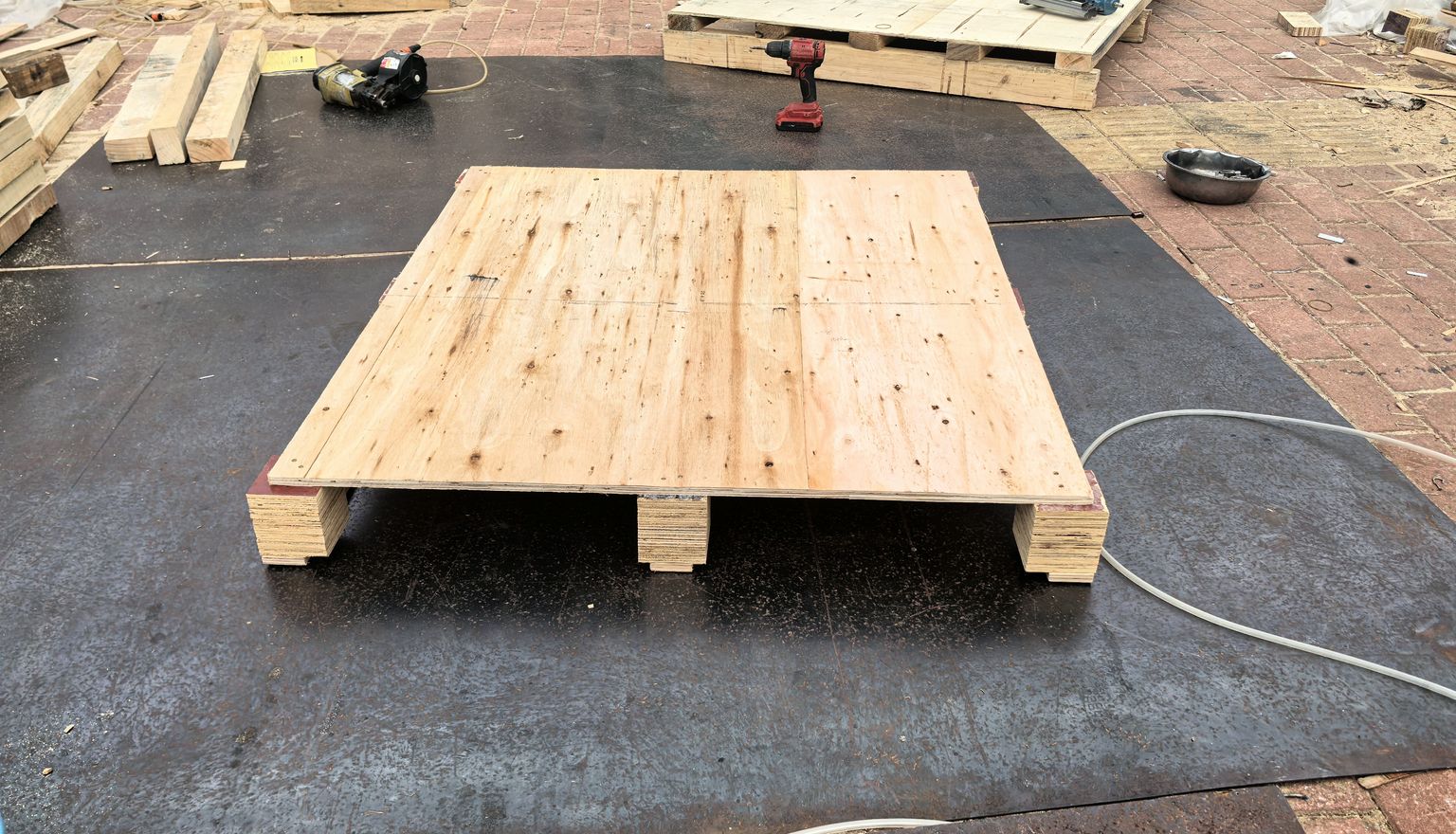
Palletising is the single largest source of wasted space in export shipping, and it is invisible on a quotation.
A standard pallet is 1200 by 1000 millimetres in much of the world, 1200 by 800 in Europe, and 1219 by 1016 in North America. A 40ft container floor is about 12.03 metres by 2.35 metres. Load 1200 by 1000 pallets two abreast and you use 2.0 metres of the 2.35 available, leaving 35 centimetres of unusable width down one side, and the length divides into ten pallets with a gap at the door.
The comparison to run is simple: palletised cubic metres used against loose-loaded cubic metres used, for the same goods. On light bulky cargo the difference is routinely between five and fifteen percent of the container.
Outer cartons protect the goods from the journey; inner packing protects them from each other.
The options, roughly in order of cost: moulded pulp, corrugated inserts, foam, air-filled columns, and a bag. Each has a place, and the choice is usually made by the factory on the basis of what it already owns rather than what the product needs.
Ask for the drop test result rather than the packing description. A factory that has drop tested can give a height and an outcome; one that has not will describe the packing as strong.
Carton marks are not decoration. They are the interface between the factory, the warehouse, the customs officer and the receiver, and each reads a different part of them.
Hand-written marks in marker pen are the clearest signal that the packing was organised at the last minute. They also fade, smudge and get rained on, which is how a carton arrives at destination with no identity.
Packaging specified verbally is packaging that changes. Eight lines in a purchase order fix it.
That last line matters more than it looks. When packaging is charged separately it appears on the commercial invoice as a value, which changes the customs valuation of the shipment. When it is included in the unit price it does not. Either is acceptable; both being true at once is a question at the destination port.
Packaging is the cheapest thing to check at a booth and the thing buyers check least, because the sample is on a shelf and the carton is in the back.
Ask to see the export carton. Not the retail box; the master carton, sealed, with its marks. Then do four things.
Then ask the question that separates a factory from an assembler: how many cubic metres does one carton occupy, and how many cartons fit in a 40ft high cube. A factory that ships regularly answers in seconds. One that quotes containers from a forwarder will estimate, and the estimate will be optimistic.
Pallet dimensions, board grades and container internals above are standard figures. The load plan for an actual order has to be calculated from the carton schedule of that order.
Q How much can better packaging actually save?
On light bulky cargo, five to fifteen percent of the container is a realistic range, coming from carton dimensions, pallet footprint and stacking height. On dense cargo the saving is smaller because freight is driven by weight.
Q What is volumetric weight?
Length times width times height in centimetres divided by 6,000 for most air carriers. The airline charges the greater of that figure and the actual weight, which is why light bulky cargo pays for its shape.
Q Should I palletise or floor load?
Floor loading uses more of the container and needs a loading plan and labour. Palletising is faster to handle at both ends and wastes space. For light bulky goods the arithmetic usually favours floor loading; for dense goods it matters less.
Q Which pallet size should I specify?
1200 by 1000 millimetres is the common international size and fits two abreast in a container with room to spare. 1200 by 800 is the European size and suits retail distribution in Europe. Match the pallet to the destination's handling, not to what the factory has.
Q Does the carton have to be marked with the country of origin?
Where the destination requires it, yes, and it is a legal statement rather than a design choice. The requirement differs by country and by product, so confirm it for the market rather than copying another buyer's carton.
Q Can the factory charge packaging separately?
Yes, and it then appears on the commercial invoice as a value, which affects customs valuation. What causes trouble is charging for it separately while also including it in the unit price.
Related pages
Give us carton dimensions, units per carton and the destination and we will calculate the cubic metres, the load plan and the container that fits, before you commit to a quantity.
Email sales8015@goodhopefreight.com | WhatsApp & phone +86 133 9216 2503